Inspiration
CubeX started with a simple problem: solving a Rubik’s Cube can be frustrating when you don’t know what move to make next. I wanted to create something that makes the solving process more visual, understandable, and easier to follow.
What it does
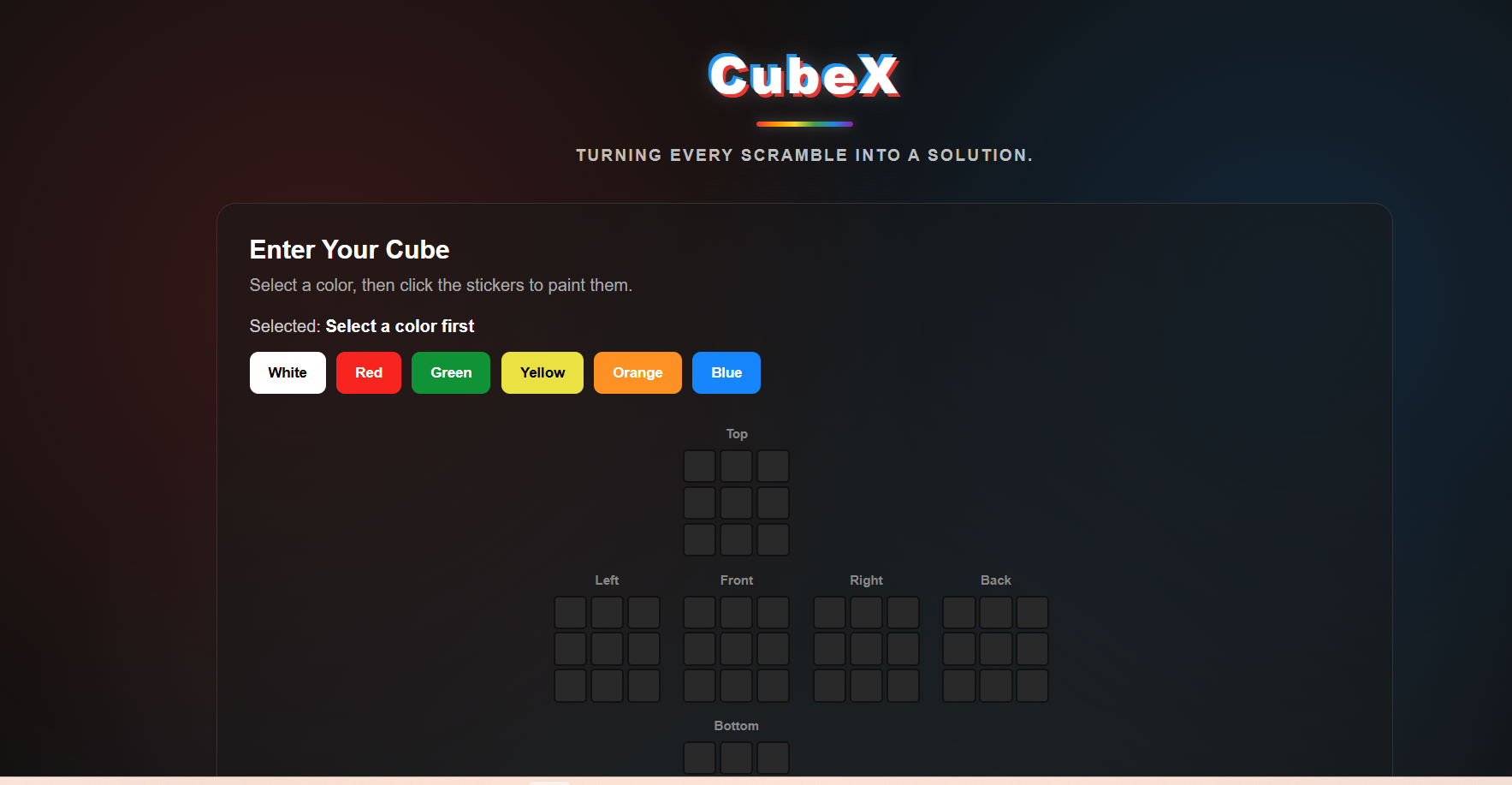
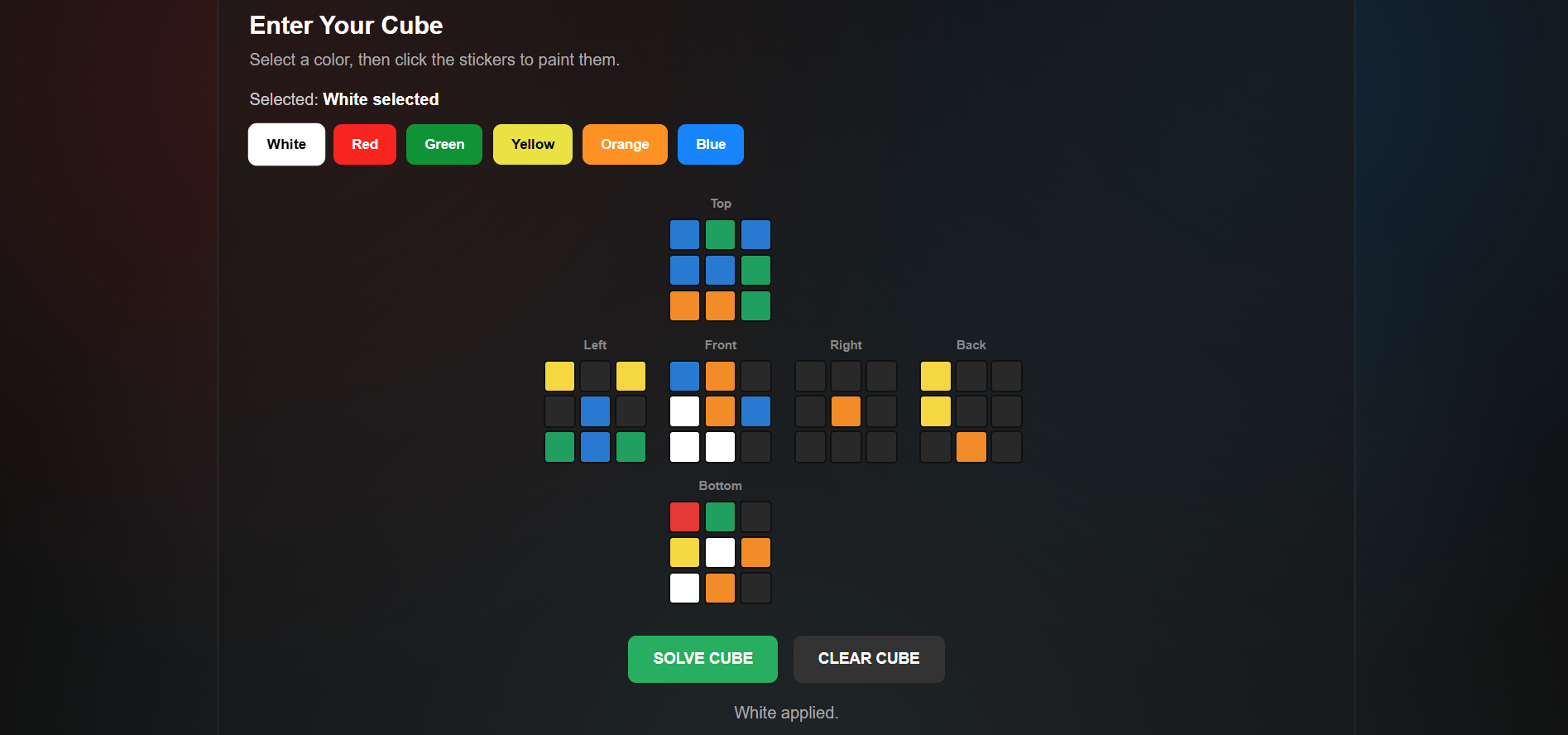
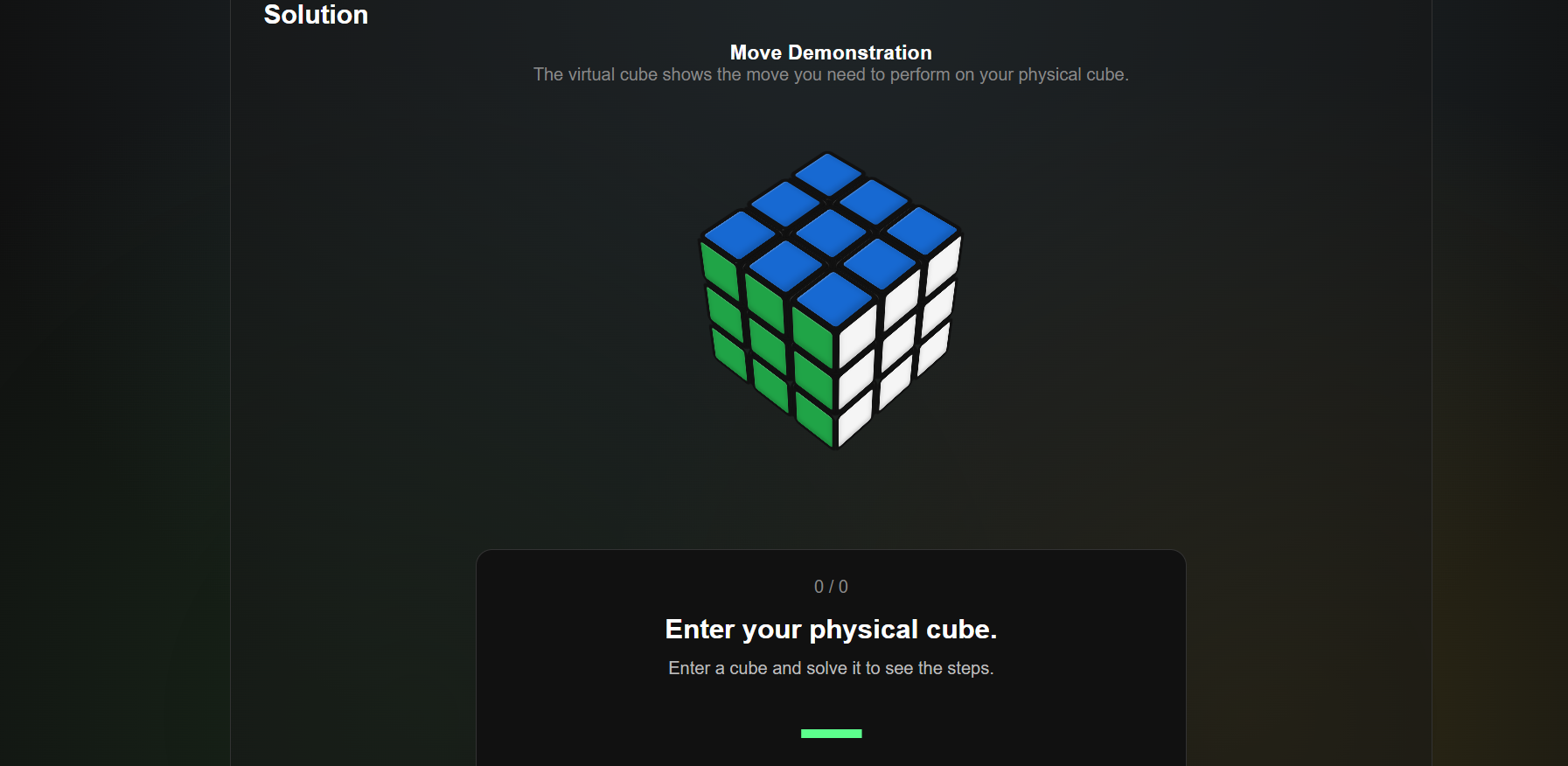
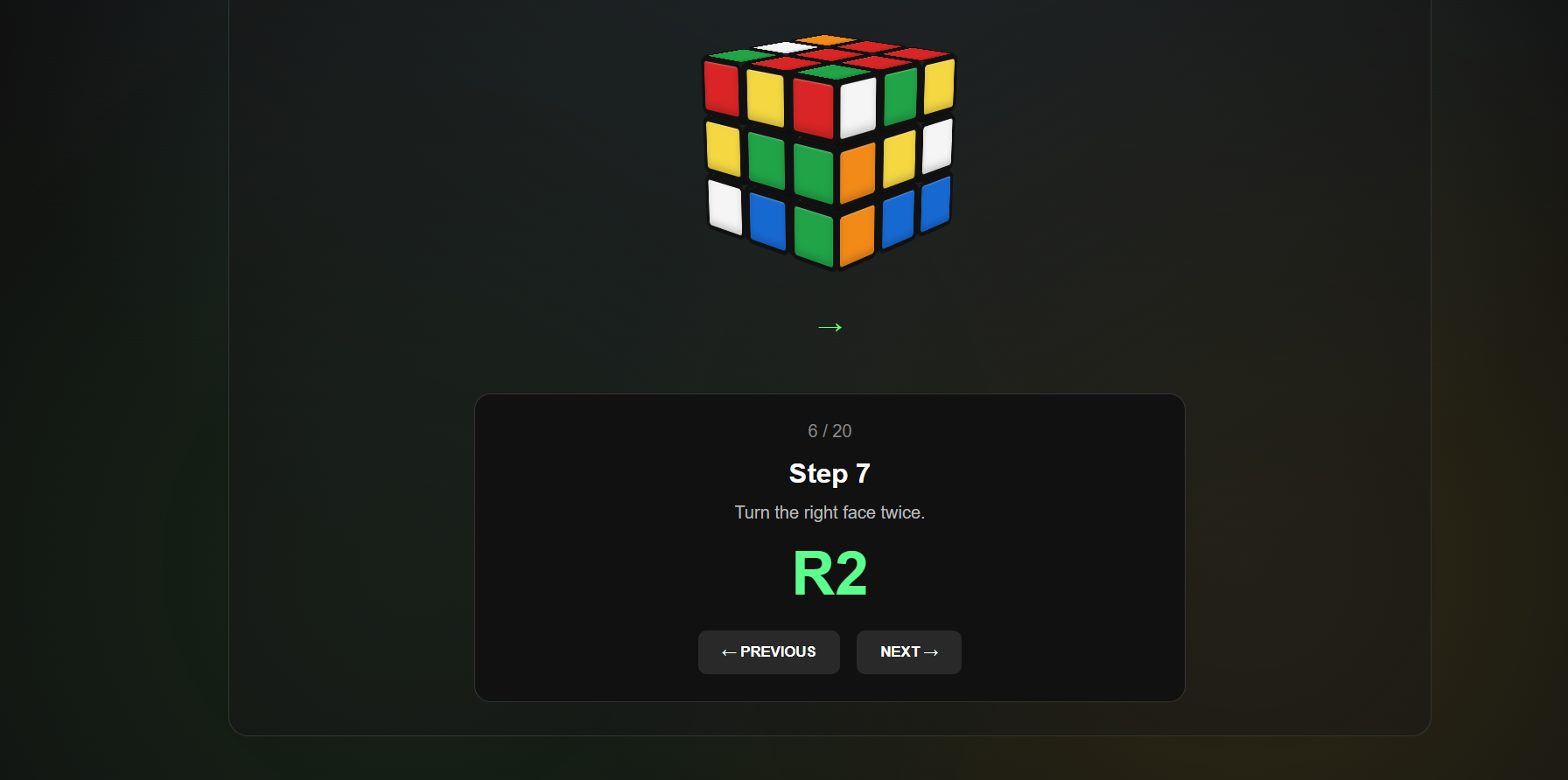
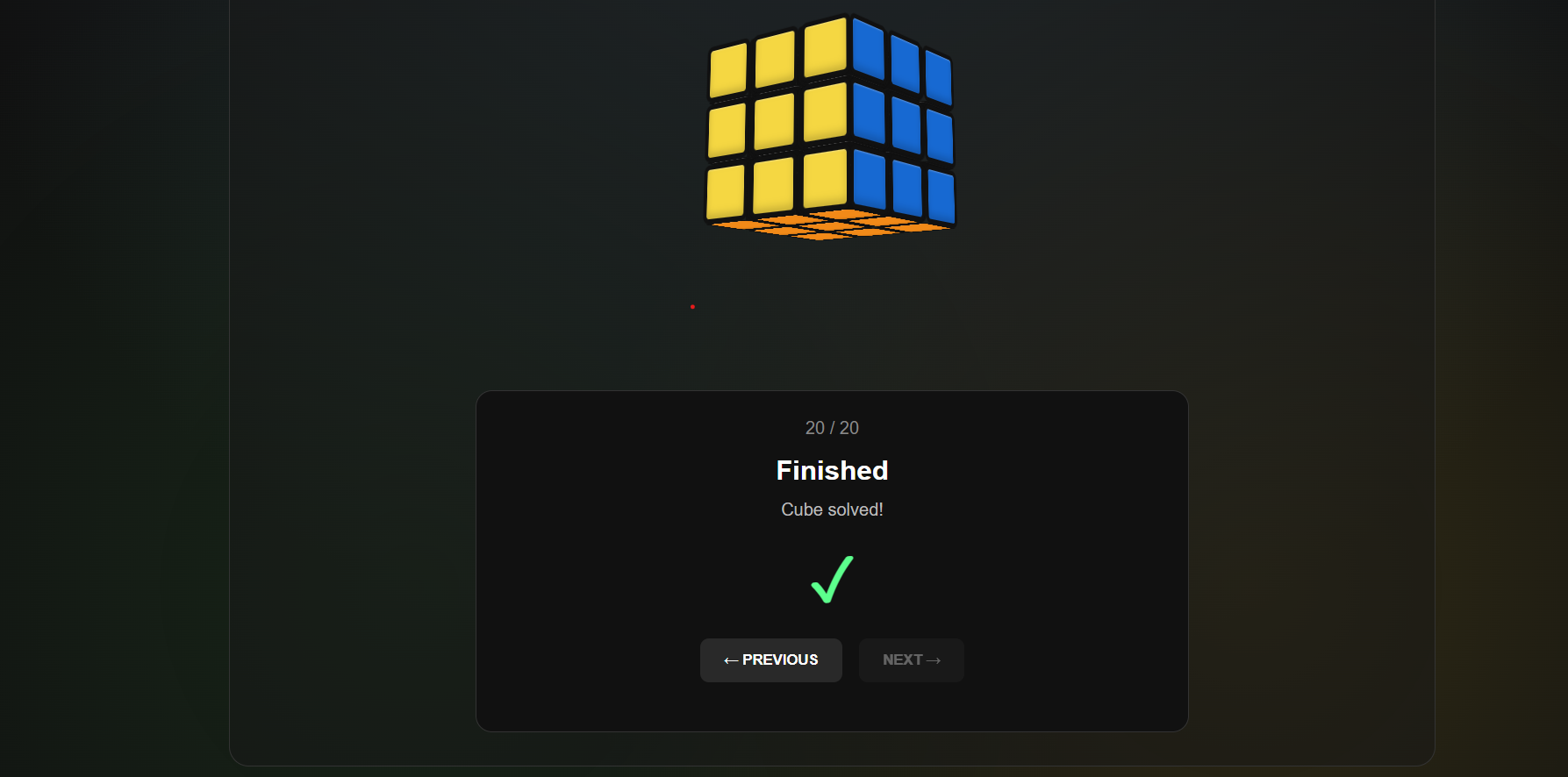
CubeX allows users to enter their cube configuration and generates a solution for it. It shows the exact moves needed, such as R, R2, U, and U2, and visually demonstrates each move on the virtual cube so users can follow along with their physical cube. One feature that makes CubeX different is its bird’s-eye view. Instead of using a rotating 3D cube for the interface, CubeX presents the cube in a clear, flat layout, making it easier to understand where each sticker belongs.
How we built it
CubeX was built from scratch using HTML, CSS, and JavaScript. The project combines the cube’s state, user input, solving logic, move notation, and visual animations into one interactive web application.
Challenges we ran into
One of our biggest challenges was making sure the virtual cube accurately represented the user's input. A Rubik’s Cube has exactly nine stickers of each color, and the position and orientation of the center pieces matter when determining the cube’s state. Making the solution animations match the actual moves was another challenging part of the project.
Accomplishments that we're proud of
We’re proud of turning a complicated solving process into something that feels much easier to understand. We’re especially proud of the bird’s-eye interface and the fact that CubeX doesn’t just provide a solution; it shows users how to actually follow it.
What we learned
Building CubeX taught us a lot about JavaScript logic, user input validation, representing a physical object digitally, and creating animations that accurately reflect real-world movements. It was a tough yet rewarding journey, and seeing the final project come together made all the debugging and problem-solving worth it.
What's next for CubeX
We want to continue improving CubeX by making the animations smoother, improving the interface, and adding more features that make learning and solving the Rubik’s Cube even easier. We also plan to expand this idea into PyramidX, bringing the same easy-to-follow solving experience to the Pyraminx.

Log in or sign up for Devpost to join the conversation.