Inspiration
Earlier this year, I spent a week working at a school with children in Year 1-6 (K-5th Grade). One of the things that struck me most while I was there was often students would come up to me, crying or upset, and they would know they weren’t feeling like their normal selves, but couldn’t explain why. This was an even greater challenge for those who were neurodivergent. Mental and emotional health is just as important as important as your physical health. According to the CDC, a mentally healthy child has a better quality of life, and will develop better social skills, which will certainly benefit them in later life. We teach children to exercise and eat their fruits and vegetables to look after their physical health, but what are we doing to teach them about looking after their mental and emotional health? This inspired me to created Cubby: your mental health buddy as a solution to these problems. All children go through ups and downs, and Cubby is here to help them manage their emotions by giving them healthy coping mechanisms, and encourage their emotional literacy so they can better articulate how they feel and why they do.
What it does
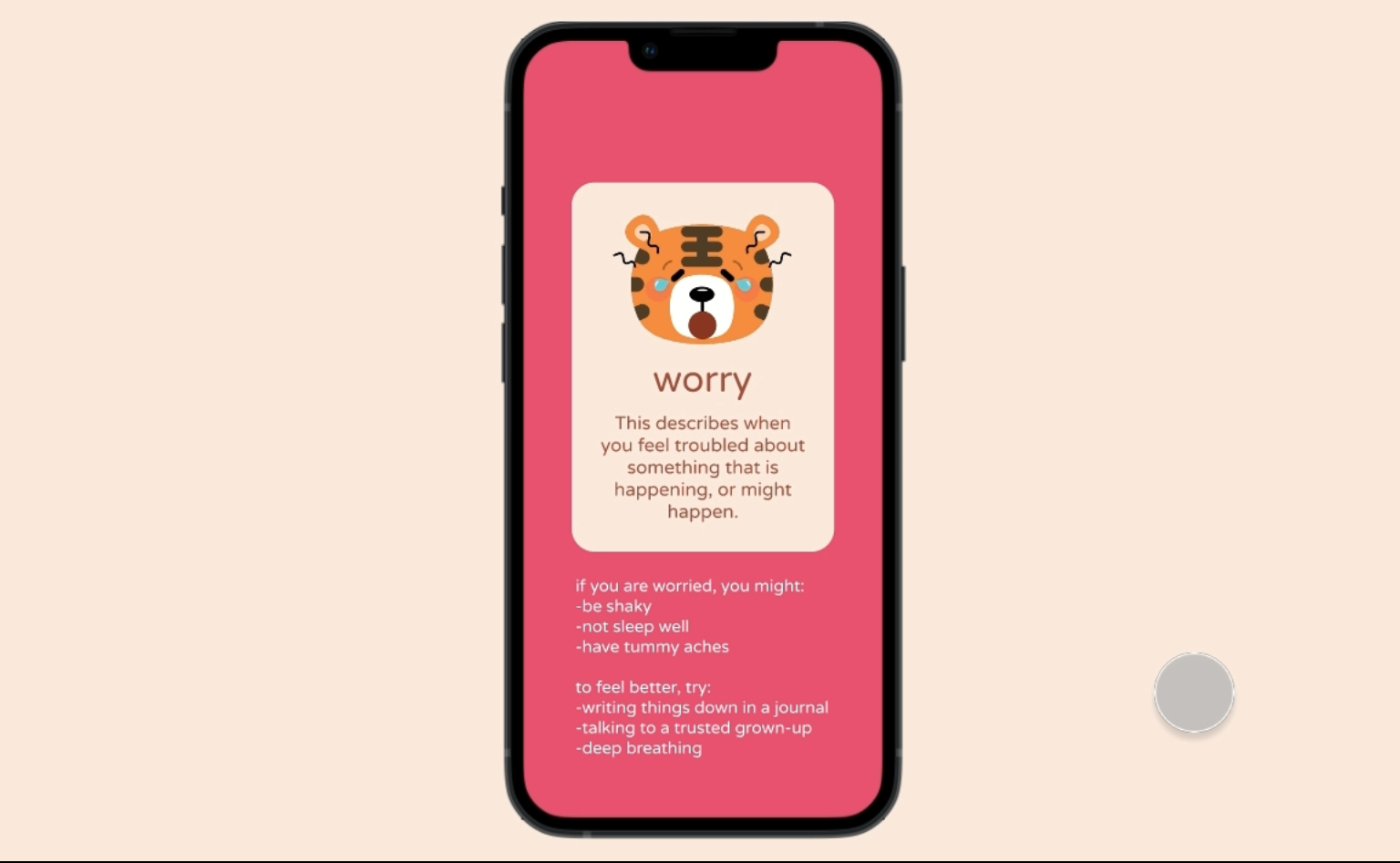
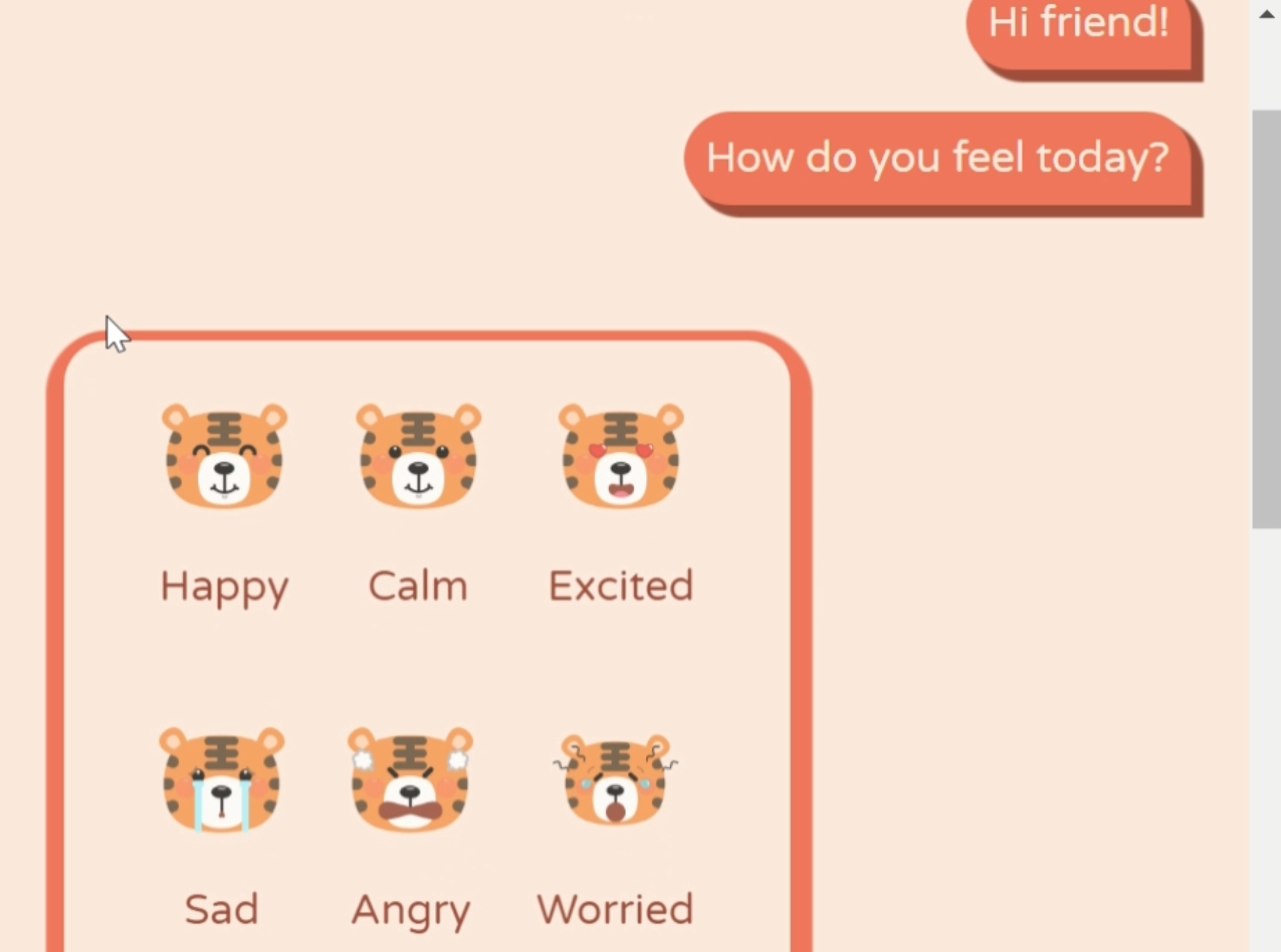
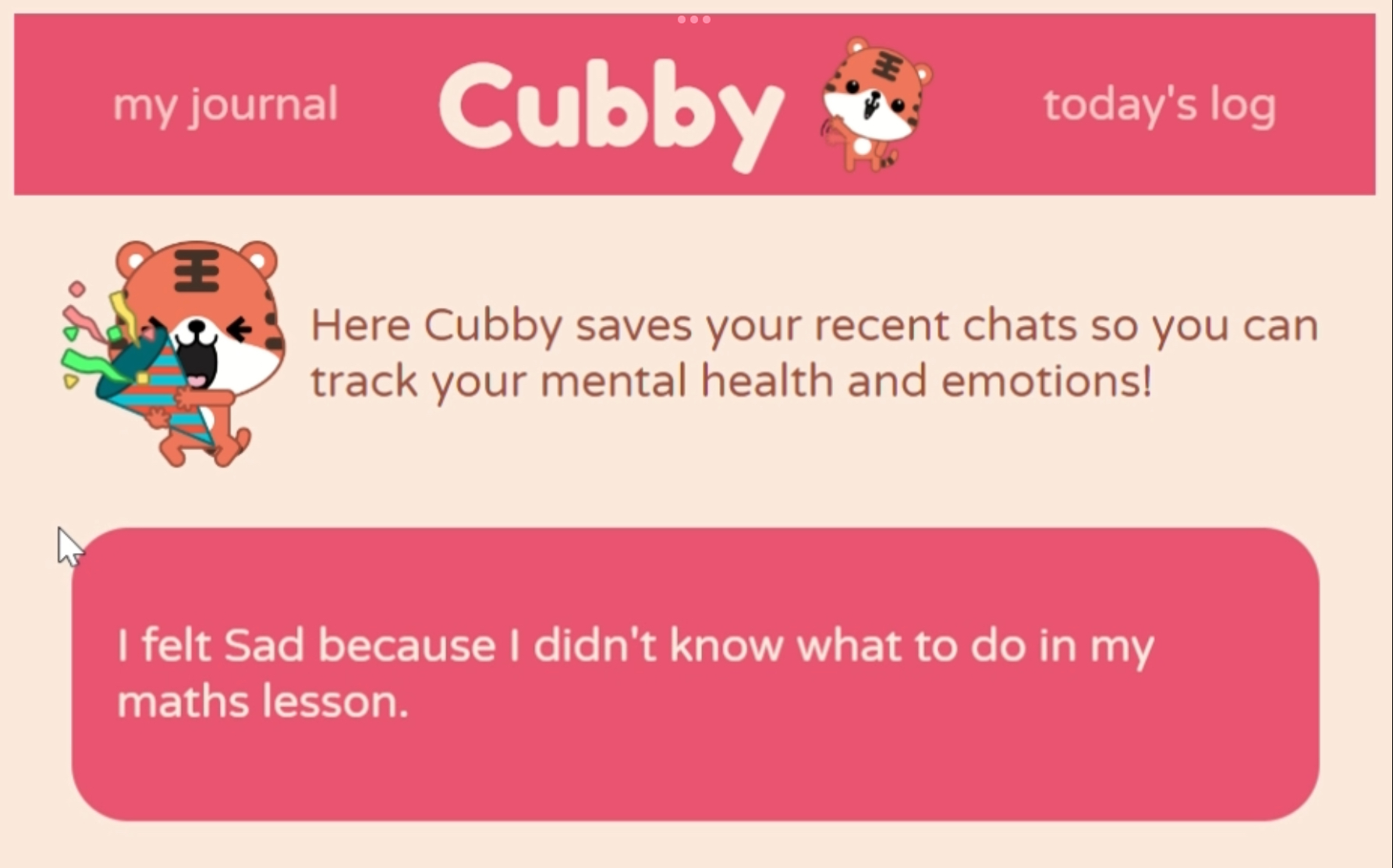
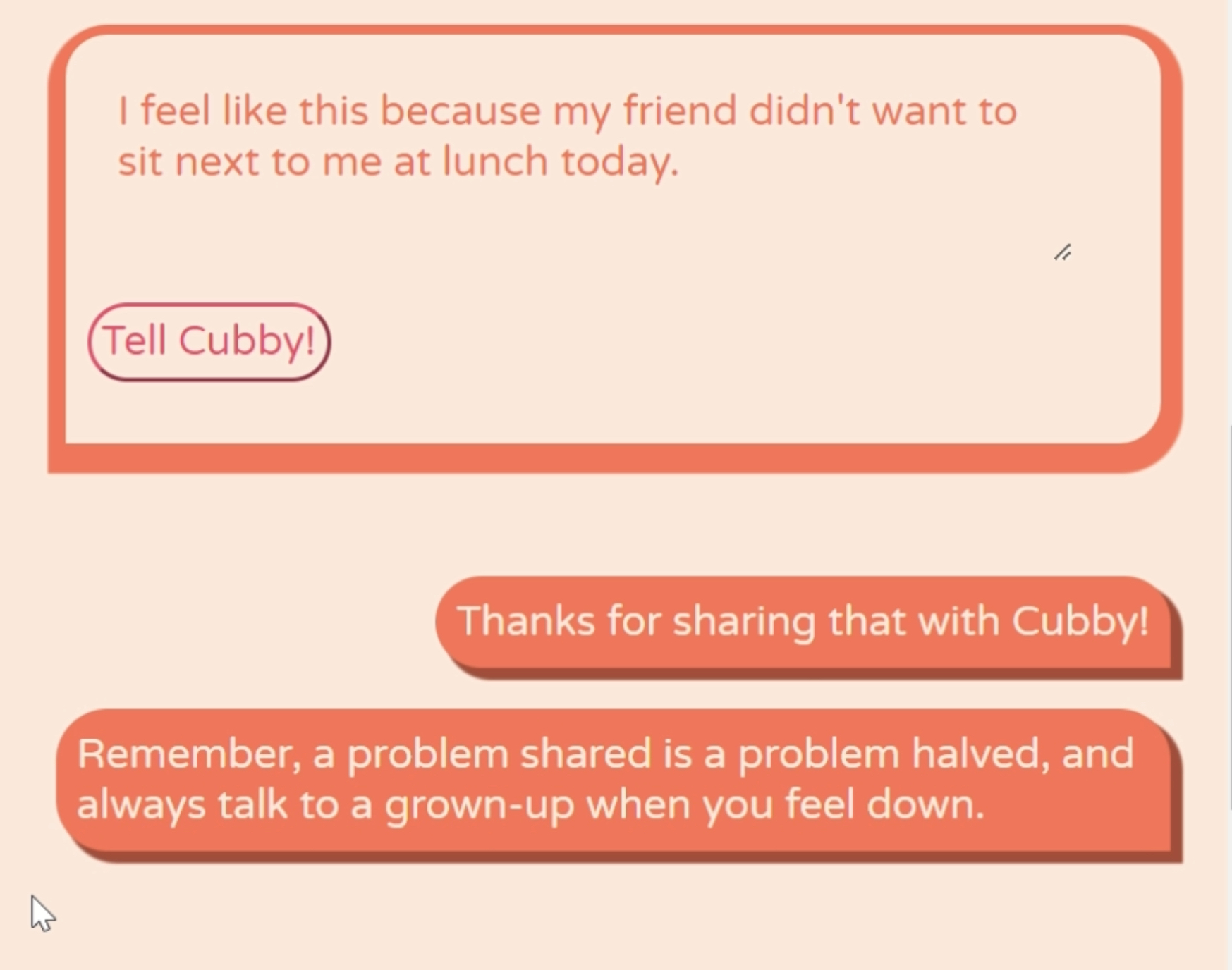
Cubby prompts the user to reflect on their feelings: the child selects the emotion that best fits how they feel, and they can describe what happened to make them feel the way they do. There is the option to send an email report to their parent/guardian so they can monitor their child’s progress without being invasive. It logs entries the user makes so they can look back at how they are improving over time.
How we built it
I built Cubby with HTML, CSS, and JavaScript in VS Code which synced to a GitHub repository. All wireframing was done via Figma and the icons are attributed to aslaiart on flaticon.
Challenges we ran into
JavaScript is not my most proficient coding language, so making my website interactive presented a big challenge. Through research, I identified interactivity/responses to actions as a key element when developing websites for children, so I couldn’t get away with just not using JS. I overcame this by making good use of software documentation, learning from online tutorials, and finding the courage to ask my friends who work in the tech space for their advice. Trying to choose which ideas I reasonably had the time to create to a high quality within the time limit was a challenge in and of itself. I overcame this challenge through effective time management, and choosing to focus my efforts on the products USP of an interactive emotion log, and flesh out the wireframes of my additional ideas rather than trying to get it all done in 24 hours!
Accomplishments that we're proud of
I finally learned how to use GitHub and even GitHub pages to eventually host my project- it was always something that seemed so daunting, so feeling relatively comfortable using it is a huge accomplishment for me. This is the first time I’ve attempted a solo coding project in such a short time period, being able to go from an empty folder to having a website I’m proud of has been really rewarding.
What we learned
I learned that there is always more than one way to do the same thing, but it is important to strike the balance between the most effective way and the least time consuming one. Also, I learned how to code basic animations with CSS and JavaScript- I had no idea how to do it at first, so it was rewarding when I saw my dreams for the site take shape. Above all, I learned the value of reflecting on my own emotions (as hacking definitely took me on a rollercoaster ride) and that is the main message of Cubby: your mental health buddy.
What's next for Cubby: your mental health buddy
Future iterations of Cubby include: providing more support for parents by getting the automated emails up and running where they get a report of what their children submit in the app, and creating a tab with resource for parents so they can continue to support their children on their mental health journey; building out an iOS app version of Cubby for on-the-go use; and most importantly improving the services offered for emotional and mental health education within the site by means of basic needs and emotion lessons. The basic needs course teachings children about their physical, social, and emotional needs, while the emotion lessons take children through different feelings, ‘symptoms’ of those emotions, and game-like quizzes to consolidate their learning. This is so that they can improve their emotional vocabulary and increase their awareness of why they feel the way they do- whether they are feeling on top of the world or down in the dumps.


Log in or sign up for Devpost to join the conversation.