-
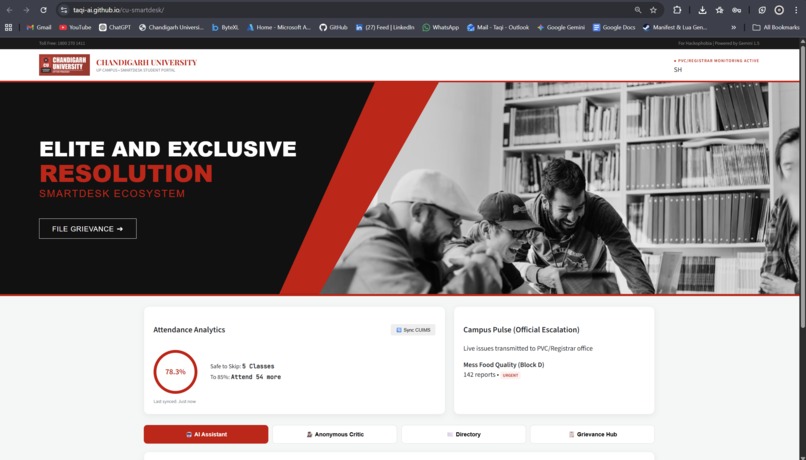
dashboard
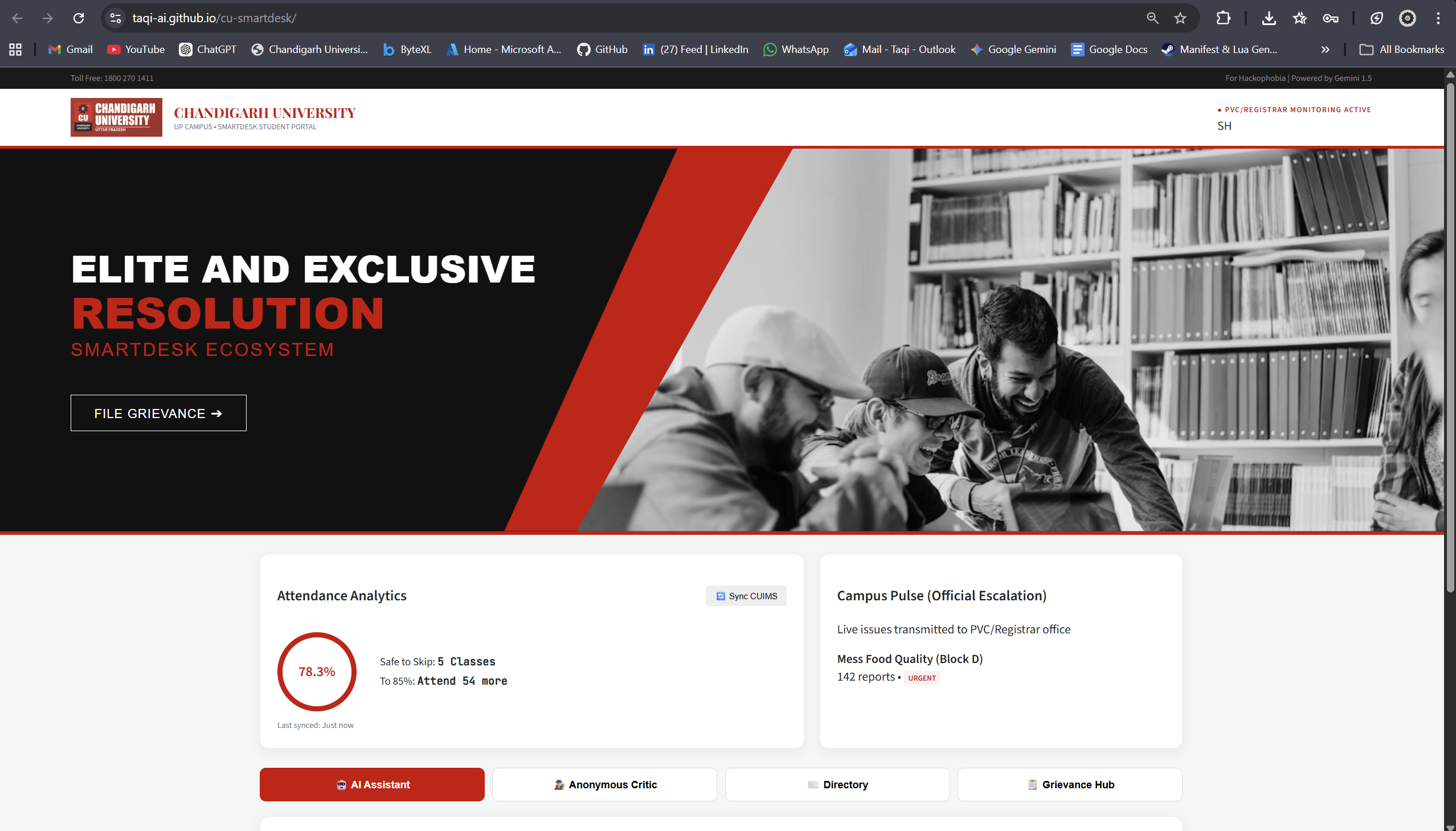
Inspiration
What it doesInspiration
Every student knows the feeling of being trapped in the "Bureaucratic Loop." You check your campus portal (CUIMS), realize a system glitch dropped your scholarship attendance, and suddenly you're stuck. You send emails that go unanswered, visit offices, and waste hours that should be spent studying. Raw data exists on campus, but academic intelligence does not.
We were inspired to build CU SmartDesk to bridge the massive gap between student frustration and administrative action. We wanted to build a "Digital Ombudsman"—an elite, secure platform that doesn't just show a student their problems, but actively resolves them.
What it does CU SmartDesk is an AI-powered student resolution ecosystem featuring three core modules:
Predictive Analytics: An actionable dashboard that instantly calculates exact "Safe-to-Skip" margins and recovery goals for attendance.
Anonymous Critic: A safe space for campus feedback. Our AI acts as an automated moderator—scrubbing abuse and only escalating constructive, verified complaints to the "Campus Pulse" monitor.
Grievance Engine: If a student is stuck, they click one button and the AI drafts a legal-grade, formal escalation letter (referencing institutional guidelines) that can be instantly printed as a PDF and handed to the PVC or Registrar.
How we built it We prioritized speed, security, and low latency.
Frontend: We used a lightweight, pure HTML, CSS, and Vanilla JavaScript stack. We designed an "Elite Institutional UI" using a slate and crimson color palette, dynamic clip-path hero sections, and high-contrast value cards to build immediate user trust.
AI Engine: We integrated Google's Gemini 1.5 Flash API via the stable v1 REST endpoint, chosen specifically for its high efficiency and near-instant response times during real-time text moderation.
DevSecOps & Deployment: We built a secure CI/CD pipeline using GitHub Actions. Instead of hardcoding credentials, our workflow injects the Gemini API Key from GitHub Secrets dynamically during the build step, securely deploying the finalized build to GitHub Pages on a specialized gh-pages branch.
Challenges we ran into Integrating a powerful AI securely into a static frontend presented massive hurdles:
API Key Revocation: Initially, Google's automated security bots flagged and revoked our API key the second it touched our public repository. We had to pivot our entire architecture to implement an encrypted CI/CD pipeline to protect our credentials.
Versioning & Payload Conflicts: We encountered persistent "Model Not Found" (v1beta endpoint) errors. We overcame this by migrating to the stable v1 production line and dynamically restructuring our JSON payload to merge system instructions, bypassing free-tier parameter restrictions.
CORS & Network Blocks: We had to carefully construct our API handshake to survive strict university Wi-Fi firewalls and browser security protocols.
Accomplishments that we're proud of We are incredibly proud of achieving a true Serverless AI Architecture. We managed to build a highly secure, automated deployment pipeline that keeps sensitive credentials entirely hidden without needing a dedicated backend server like Node.js. Furthermore, we successfully translated a frustrating real-world campus problem into a sleek, 1-click digital solution.
What we learned This hackathon was a masterclass in API Lifecycle Management and DevSecOps. We learned that building a great UI is only 10% of the battle; the real challenge is securing your cloud infrastructure, handling automated secret injection, and managing REST endpoint versioning under pressure.

Log in or sign up for Devpost to join the conversation.