-
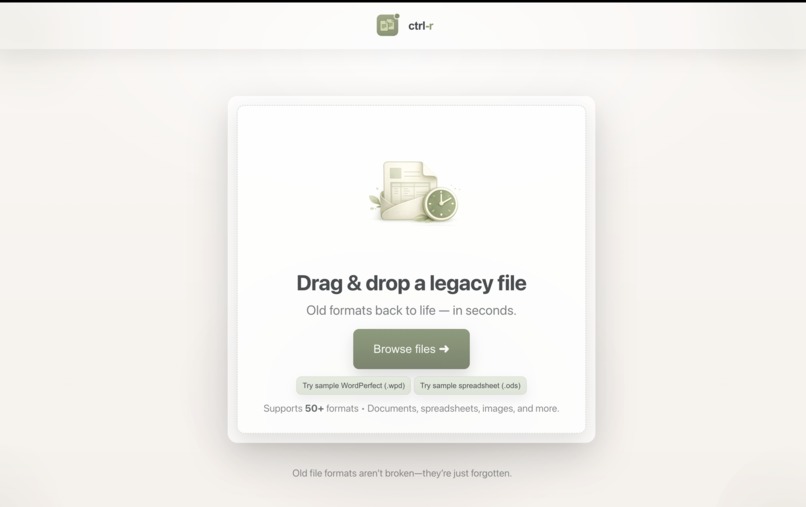
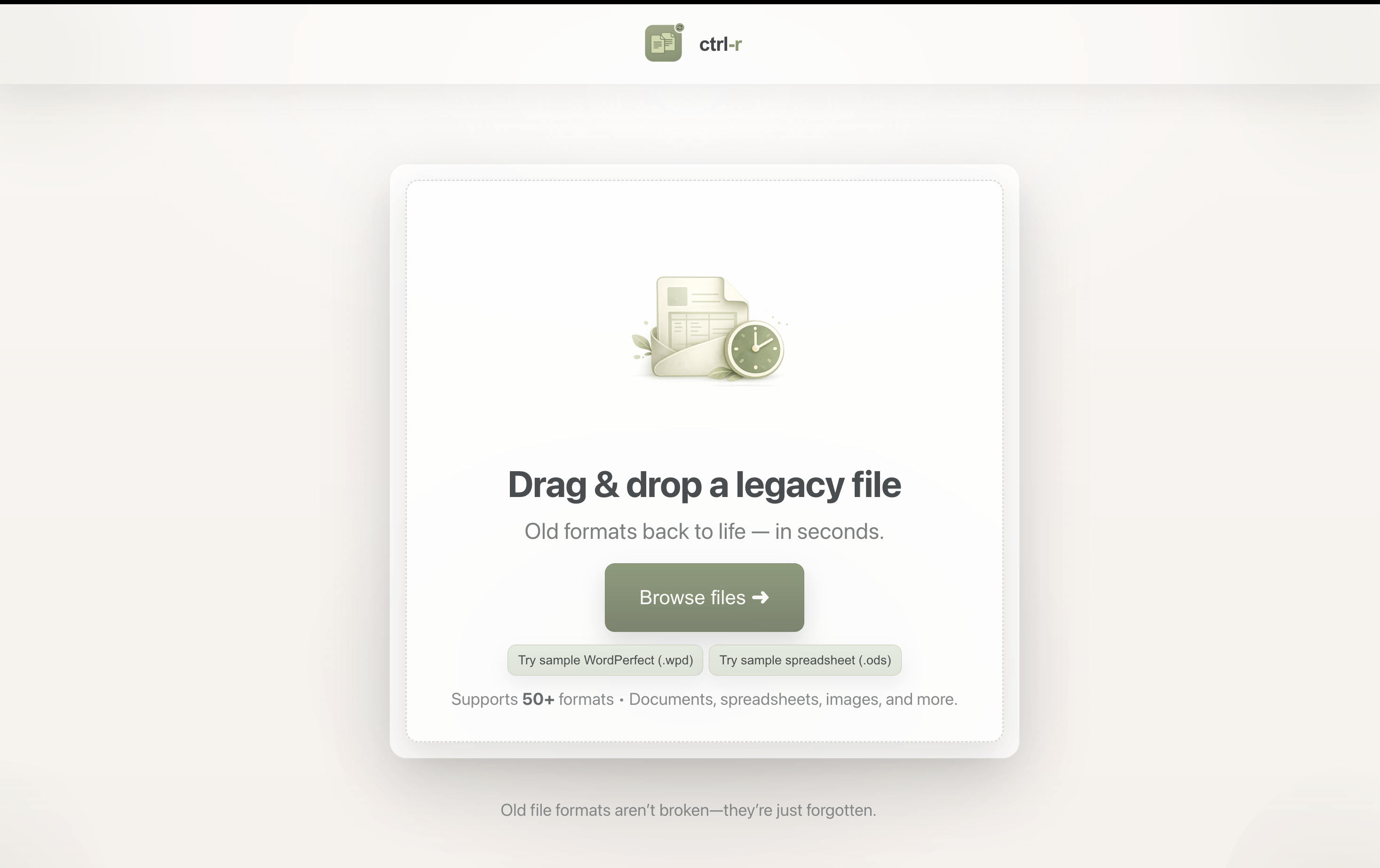
Landing Page
-
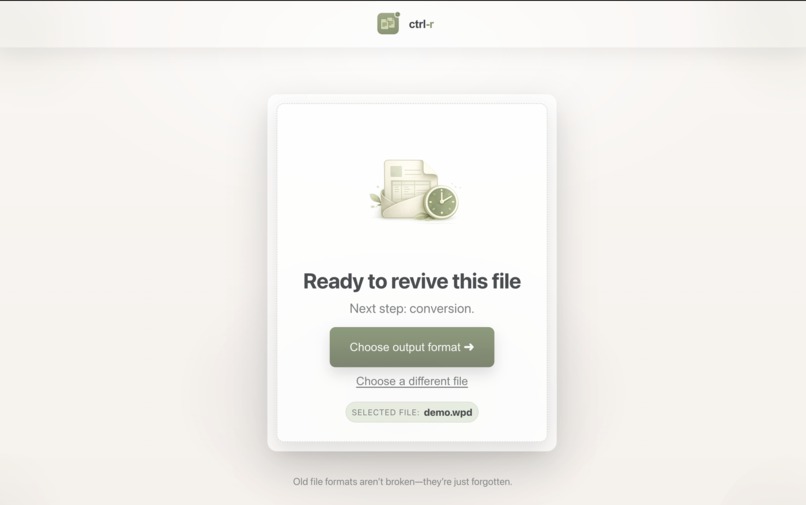
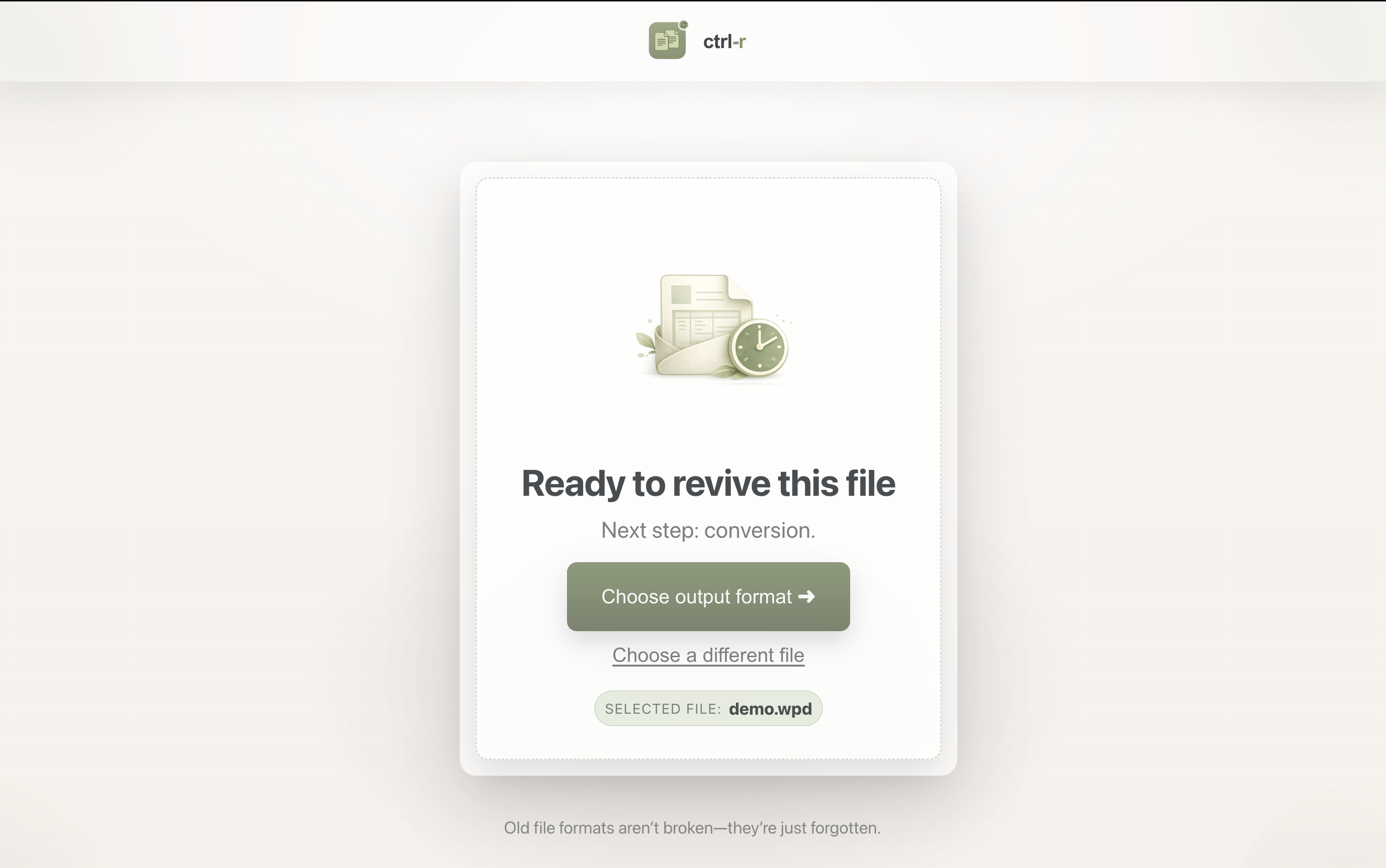
File Upload Page
-
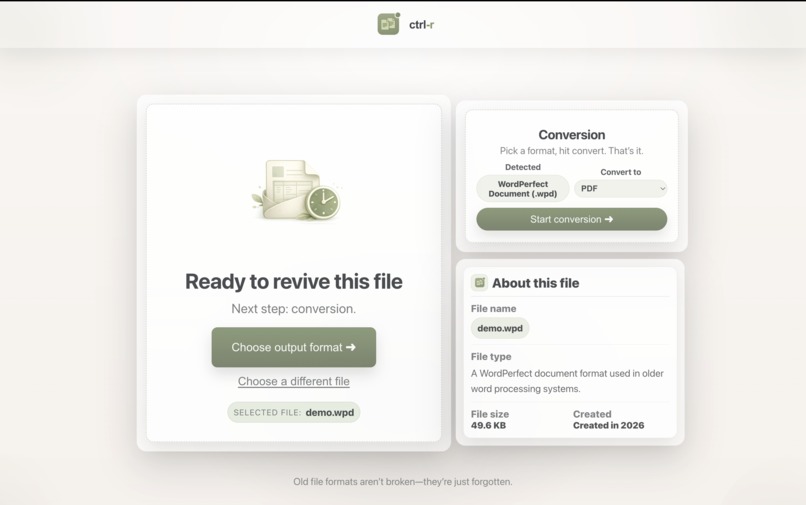
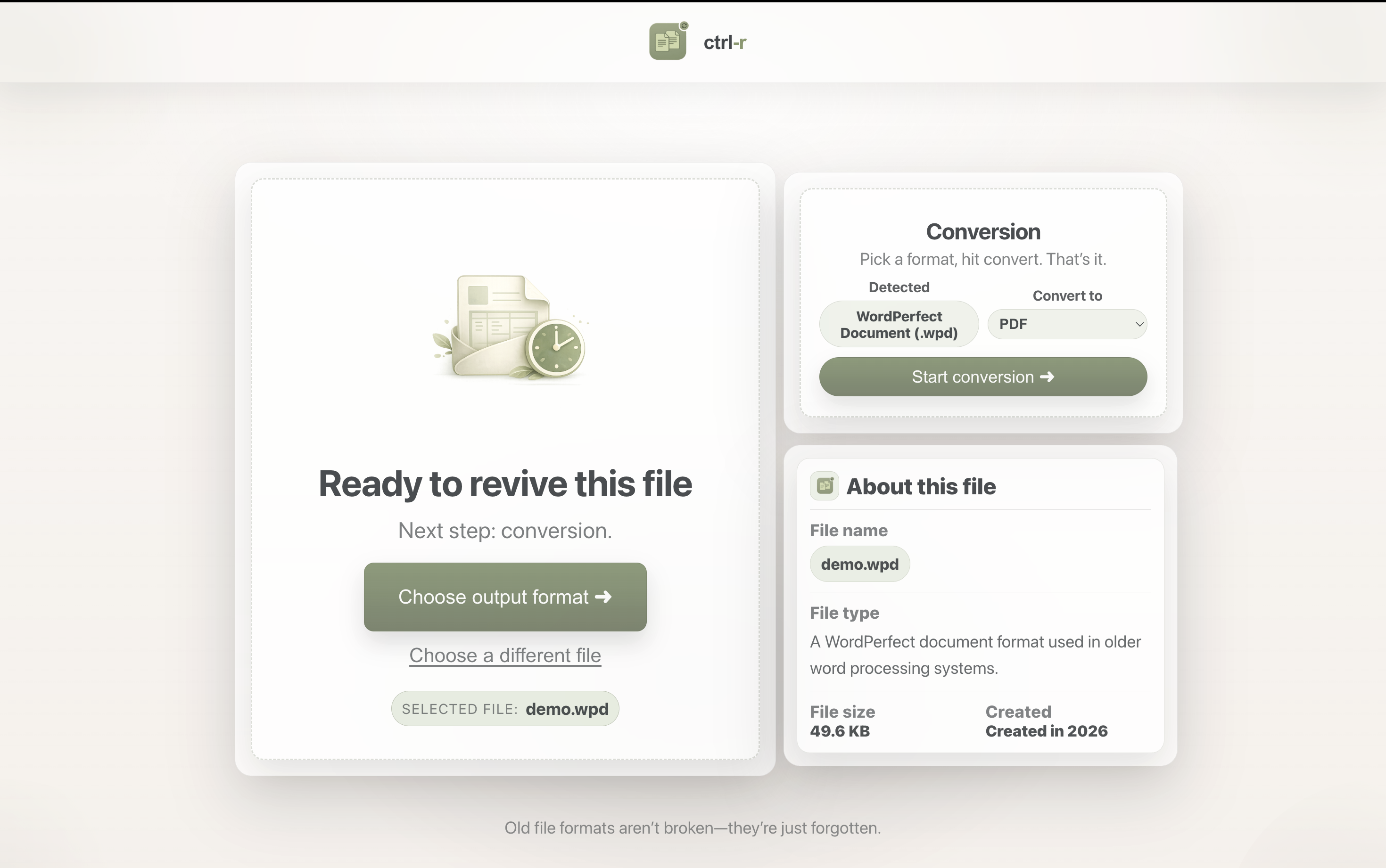
File Converter
-
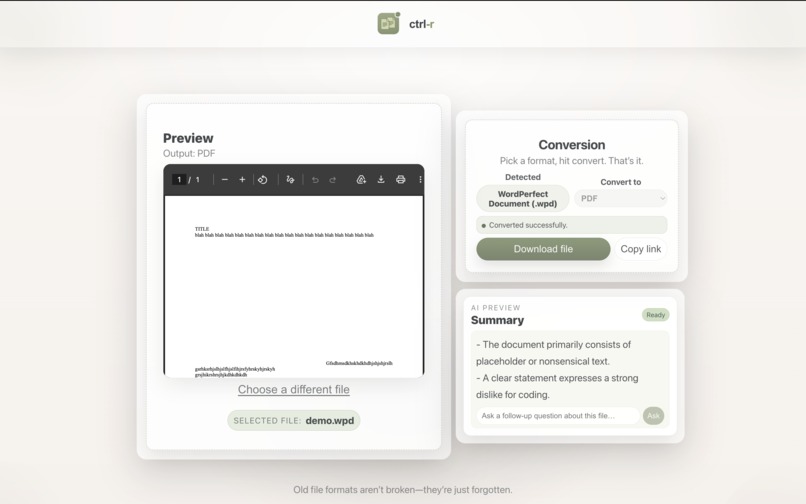
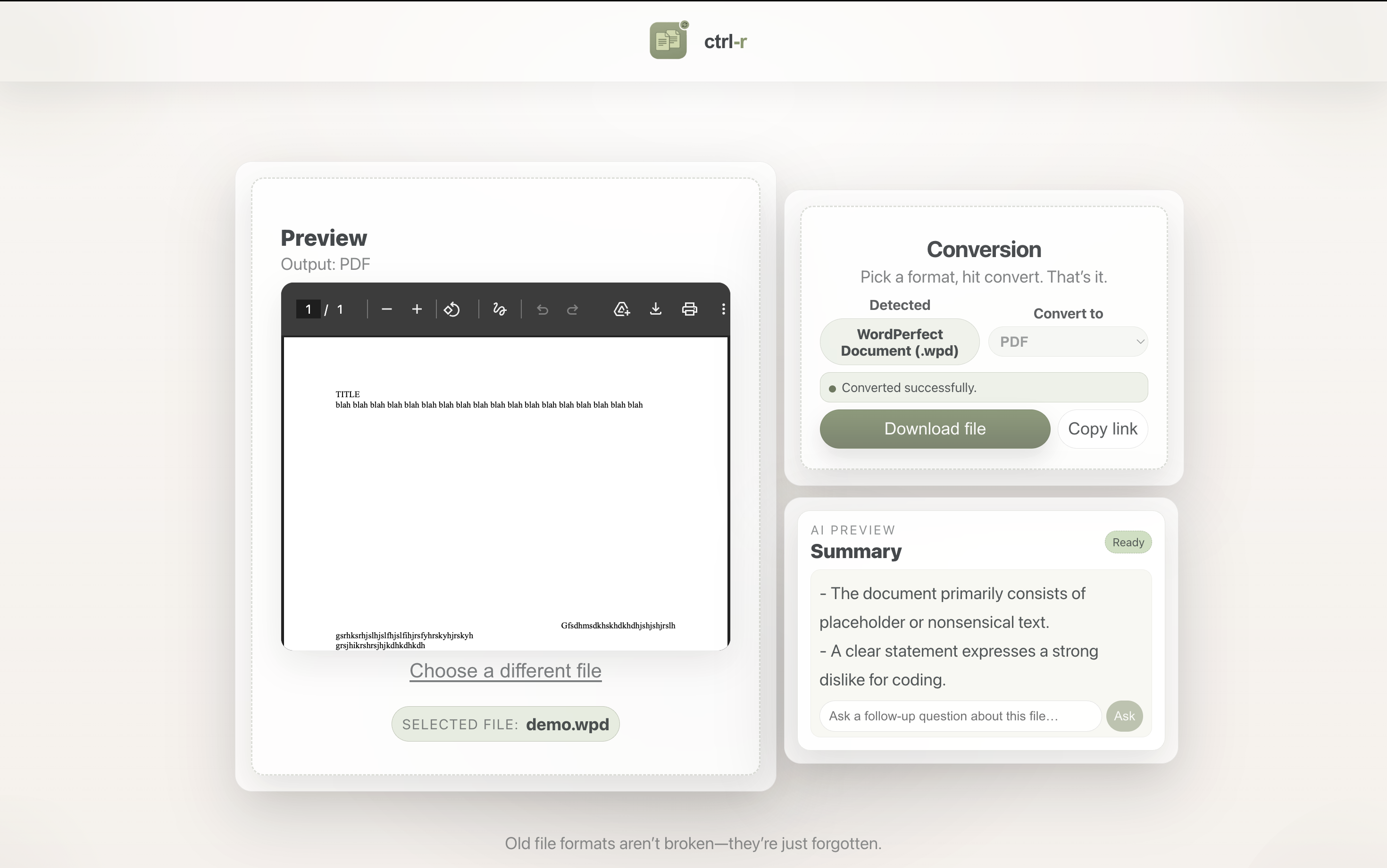
Final File + Summary
Inspiration
Modern tools assume modern file formats. But decades of knowledge still live inside legacy files—WordPerfect documents, old spreadsheets, CAD drawings—that are increasingly difficult or impossible to open. We were inspired by the idea that files aren’t obsolete; access to them is. Ctrl-R was born from the desire to preserve information before it quietly disappears behind outdated software and operating systems.
What it does
Ctrl-R is a web-based tool that revives legacy file formats by converting them into modern, accessible equivalents such as PDF or images. Users can upload an old file, convert it instantly, preview the result in-browser, and download or share the converted output. After conversion, Ctrl-R can also generate an AI-powered summary of the file’s contents and answer follow-up questions, making old documents not just accessible—but understandable.
How we built it
The frontend is built in React, focused on a clean, distraction-free experience that guides users step-by-step. The backend handles file uploads, format-specific conversion pipelines, and AI services for summarization and chat. We designed the system modularly so new legacy formats can be added without rewriting the core flow. Special care was taken to handle large files, previews, and secure file access across environments.
Challenges we ran into
Legacy formats are unpredictable—some lack consistent metadata, others behave differently depending on encoding or file age. Ensuring previews worked reliably across formats and deployment environments (local vs. production) required careful handling of URLs, proxies, and build differences. Balancing a rich UI with performance, especially for large documents, was another key challenge.
Accomplishments that we're proud of
We learned that preservation is as much a UX problem as a technical one. Making legacy data usable requires not just conversion, but clarity, context, and trust. We also gained hands-on experience designing scalable pipelines, handling deployment quirks, and integrating AI meaningfully rather than superficially.
What we learned
We gained hands-on experience designing scalable pipelines, handling deployment quirks, and integrating AI meaningfully rather than superficially.
What's next for Ctrl-R
As Ctrl-R evolves, we plan to expand format support, enable batch and API-based workflows, and place stronger emphasis on security and long-term preservation, ensuring sensitive documents remain protected even after conversion.


Log in or sign up for Devpost to join the conversation.