-
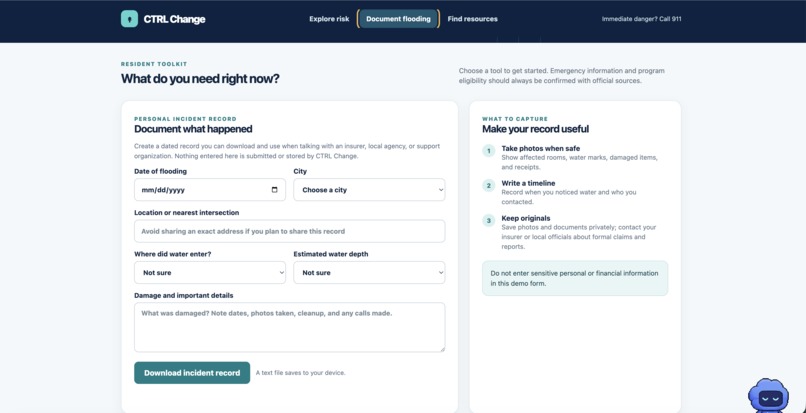
Report a flood
-
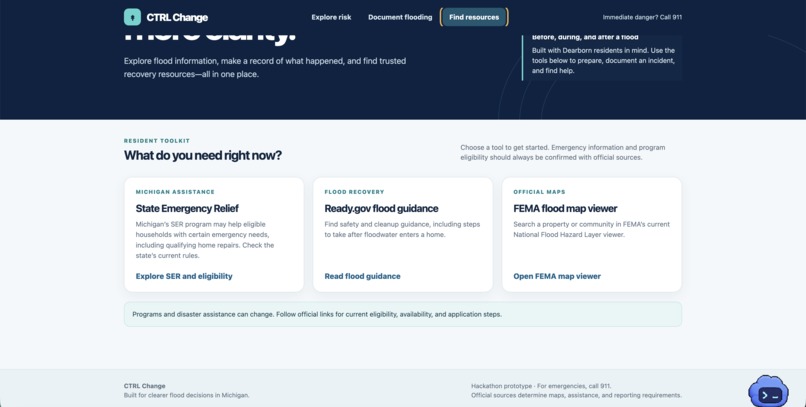
Access resources
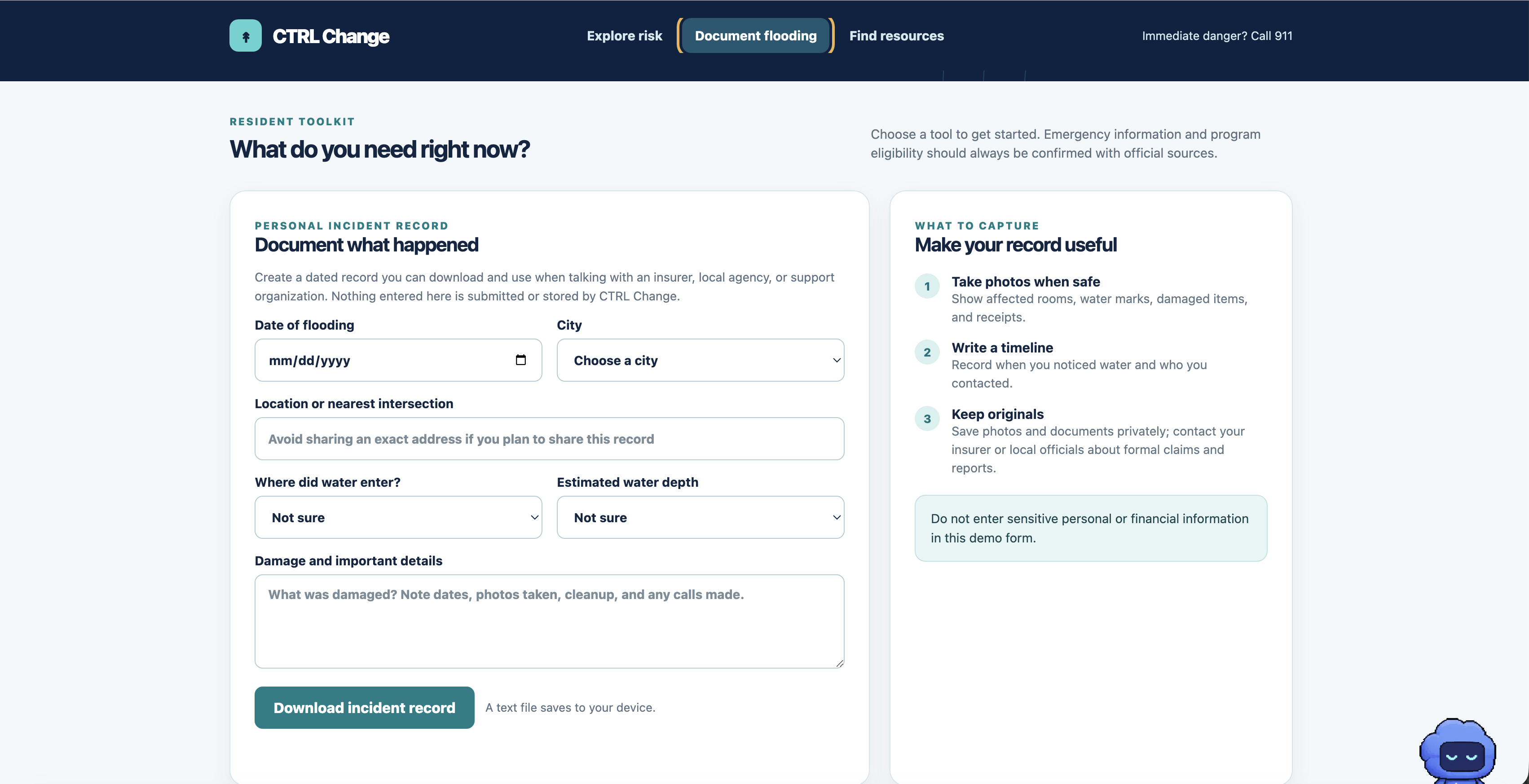
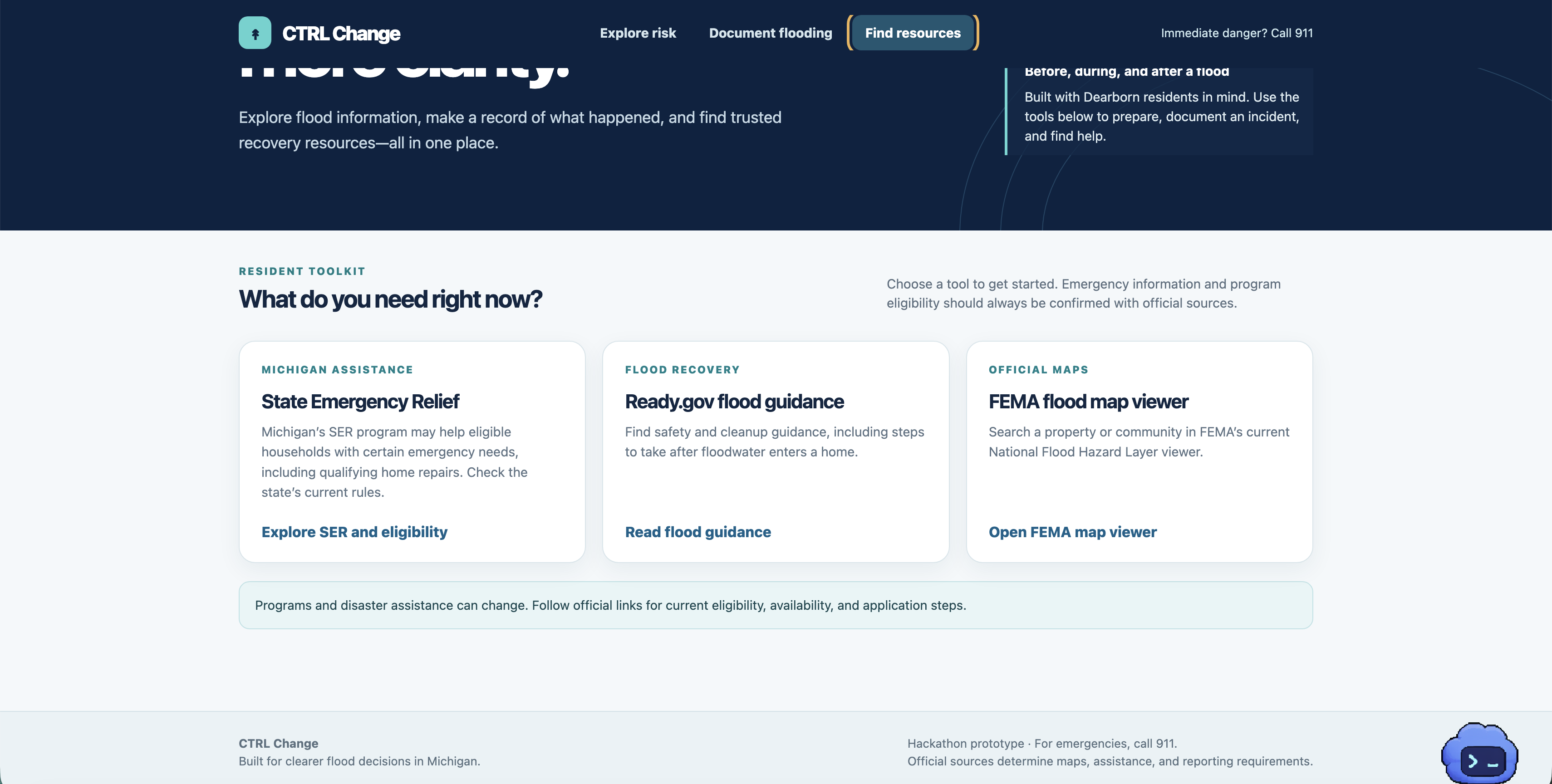
Inspiration: As Dearborn residents, we understand the struggles of dealing with the aftermath of flooding incidents. We’ve seen how flooding can damage homes, disrupt families, and leave residents unsure of what steps to take next. Information about flood risk, reporting, and recovery resources can also be difficult to navigate, especially during an already stressful situation. This inspired us to create CTRL Change, a platform designed to give residents more control before, during, and after a flood. We wanted to create one accessible place where Michigan residents could understand the flood risk in their area, document and report flooding, and find resources that may help with recovery. Beyond helping individual residents, we also wanted to show how community flood reports could reveal recurring problem areas and give communities greater insight into where flooding is happening most frequently. What it does: Our web app, CTRL Change, helps Metro Detroit residents understand flood risk, prepare for flooding, and navigate the aftermath of a flood emergency. Residents can assess their area’s flood risk, report and document flood damage, and find information about resources that may support their recovery. CTRL Change brings these tools together in one accessible platform, making it easier for residents to understand what steps they can take before and after flooding occurs.
How we built it: We built CTRL Change as a web application and utilized Cursor as an AI-assisted development environment to accelerate our development process. We focused on creating a simple and accessible user experience that allows residents to quickly understand flood information, document an incident, and navigate available resources.
Challenges we ran into: One of our biggest challenges was determining how to take complex information surrounding flood risk and emergency assistance and present it in a way that is easy for residents to understand. We also had to prioritize which features would have the greatest impact within the limited timeframe of a hackathon. This pushed us to focus on the complete resident journey and understanding their risk to knowing what steps they can take after a flood.
Accomplishments that we're proud of: We are especially proud that CTRL Change addresses an issue that can disproportionately affect low-income and vulnerable households. Recovering from flooding can be financially difficult, and finding the right information and resources can create another barrier. We created CTRL Change to make this information more accessible and bring greater awareness to residents who may need additional support before and after a disaster.
What we learned: Through our research, we learned more about the challenges low-income households can face when recovering from a disaster and the resources available to Michigan residents. For example, Michigan's State Emergency Relief (SER) program may provide assistance for certain emergency needs to eligible low-income households. This reinforced an important part of our mission: resources can only make an impact when residents know they exist and understand where to find them. CTRL Change aims to help bridge that information gap by educating residents and directing them toward resources they may want to explore.
What's next for CTRL Change: Our next goal is to continue developing CTRL Change beyond the hackathon and explore presenting the concept to the City of Dearborn and local community leaders. We want to use CTRL Change to highlight the challenges residents face before and after flooding while demonstrating how technology can make flood information and recovery resources more accessible. In the future, we hope to incorporate verified real-time data, expand the platform to additional communities across Metro Detroit and Michigan, and work alongside local organizations and government leaders to make CTRL Change a practical tool for building more resilient communities.
Built With
- cursor

Log in or sign up for Devpost to join the conversation.