-
-
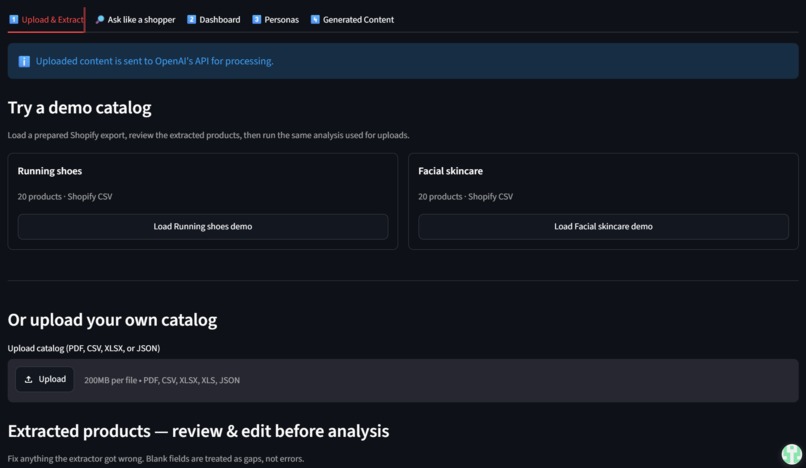
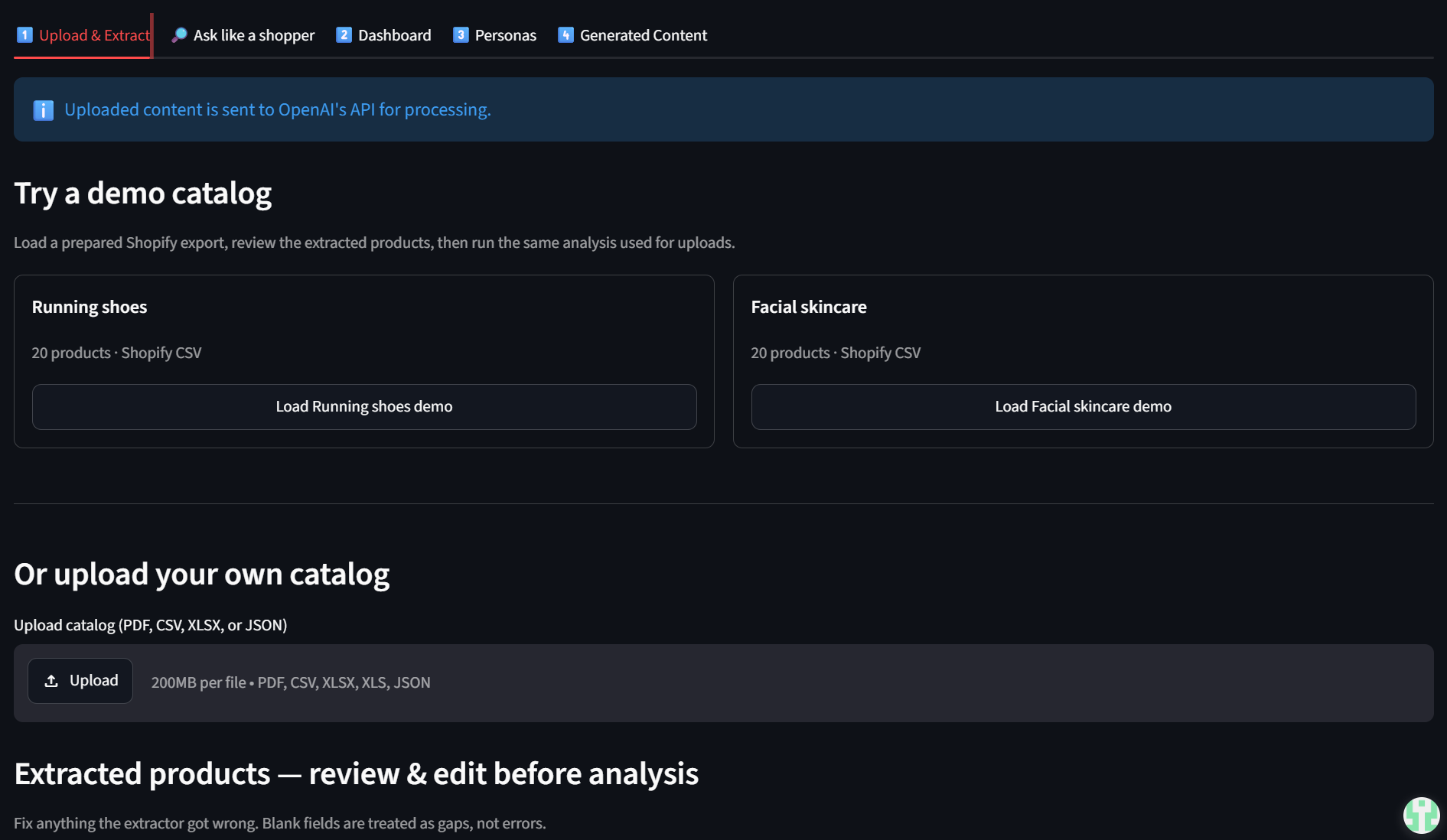
Start: two demo catalogues, or upload your own CSV, XLSX, JSON or PDF.
-
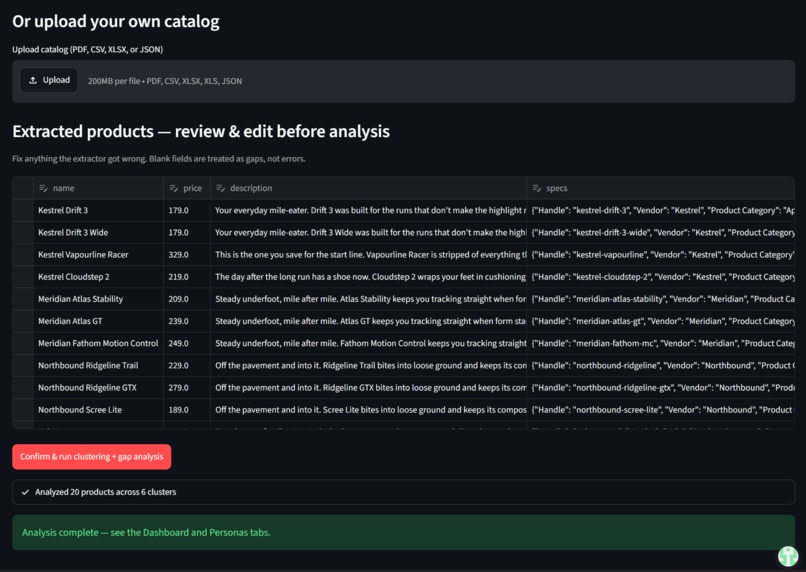
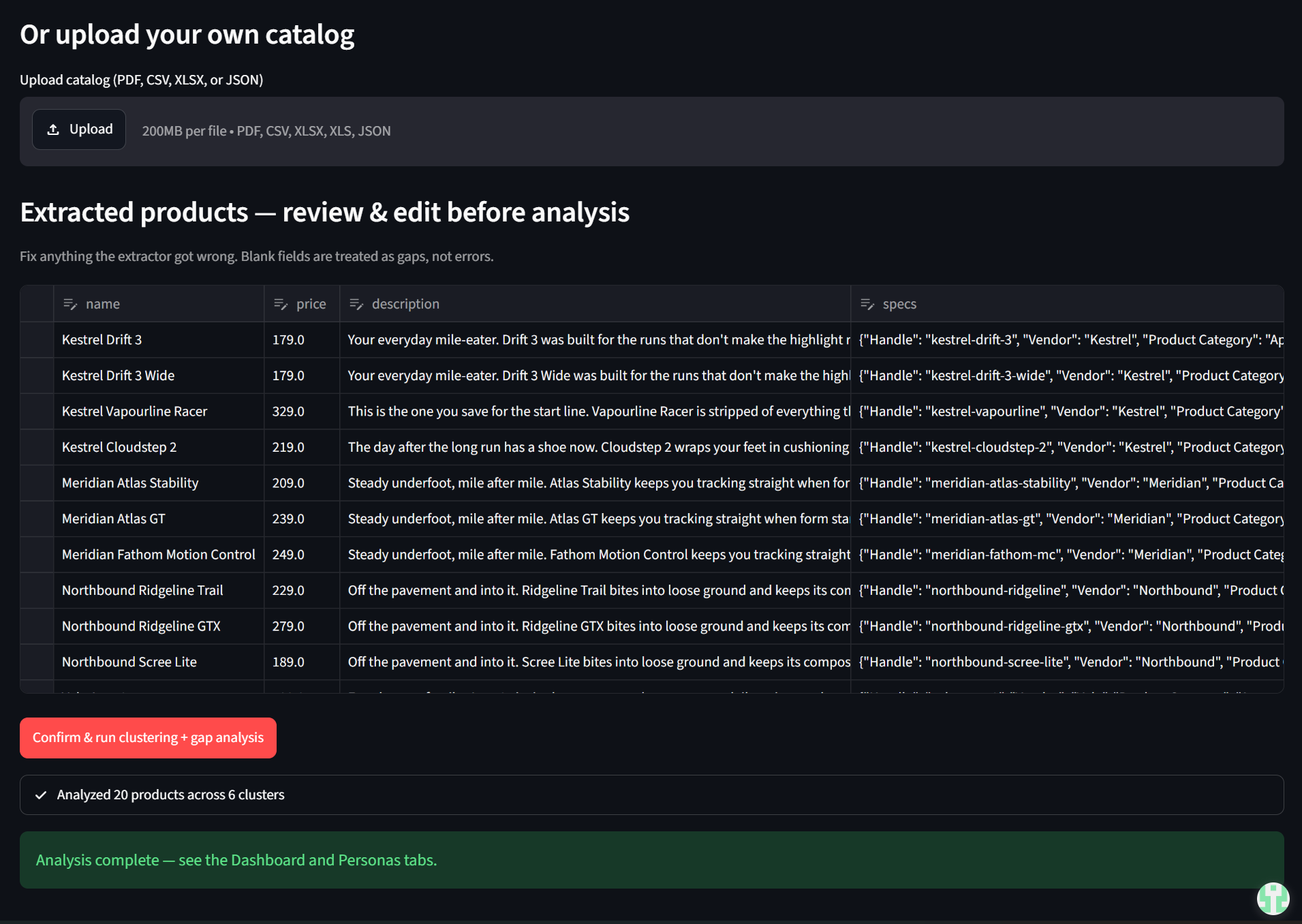
Every extracted product is shown for review before analysis runs, then 20 products resolve into 6 clusters.
-
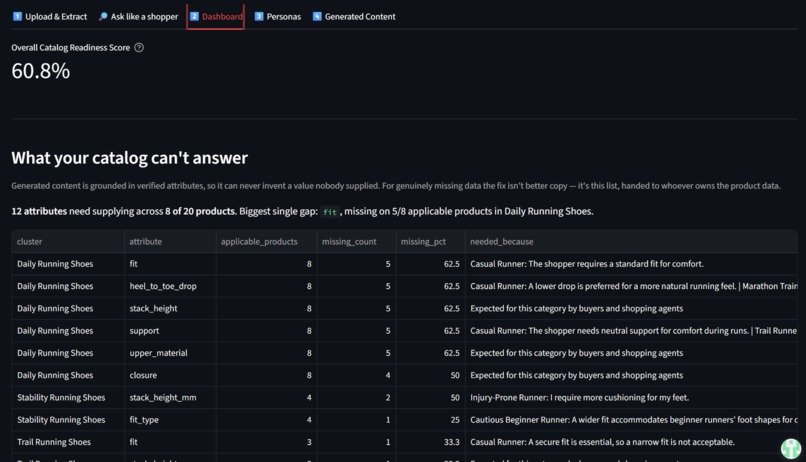
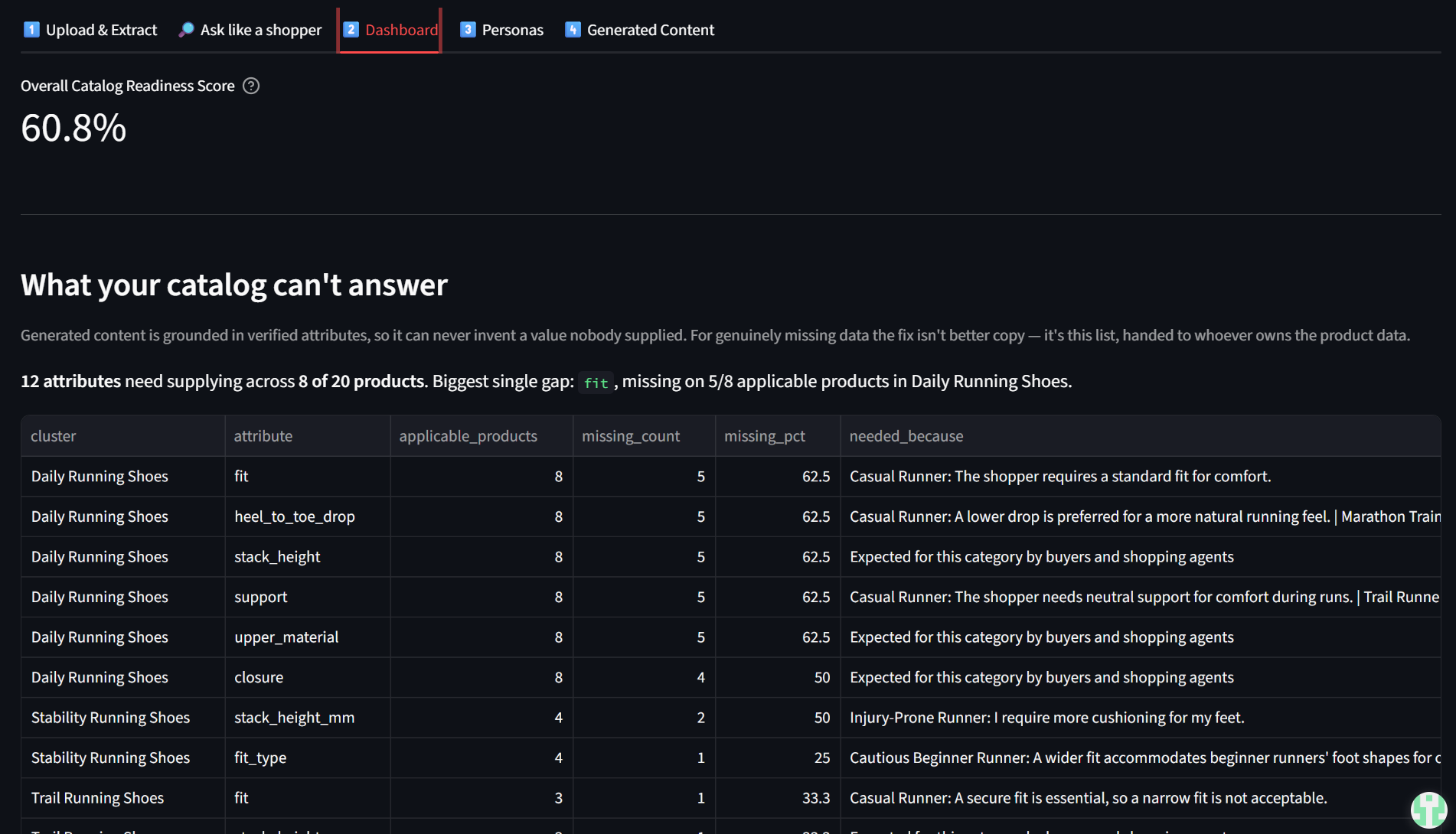
One headline number — 60.8% ready — and a precise list of what's missing.
-
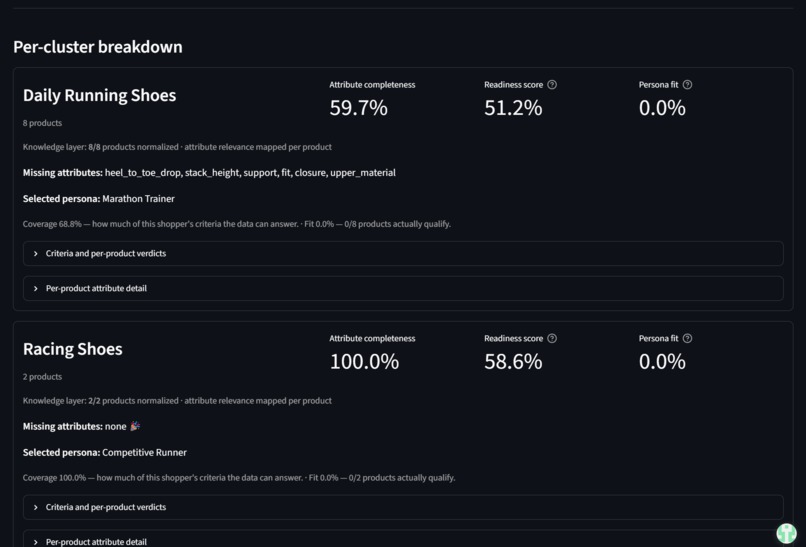
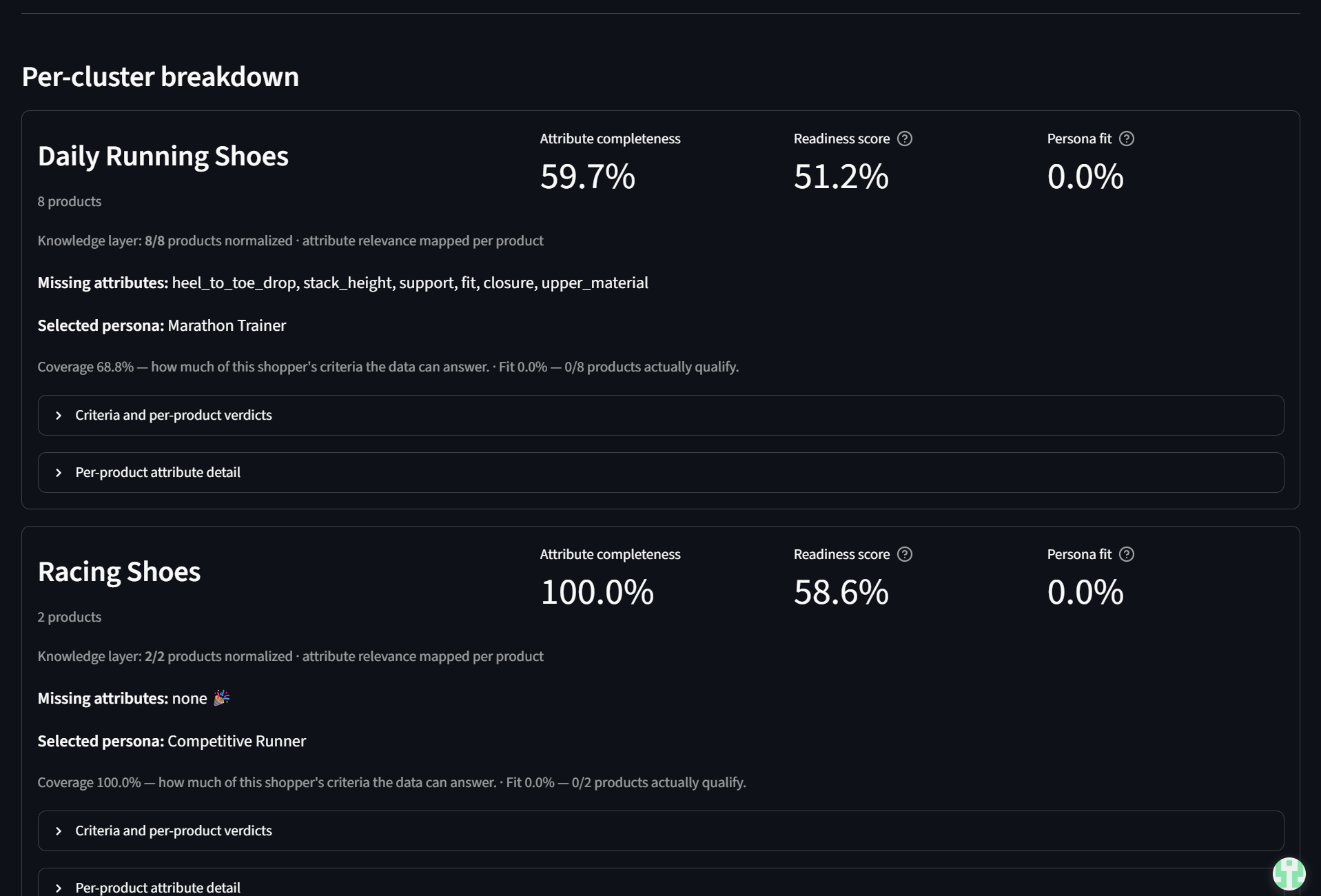
Per-cluster breakdown, and proof that completeness and fit are different problems.
-
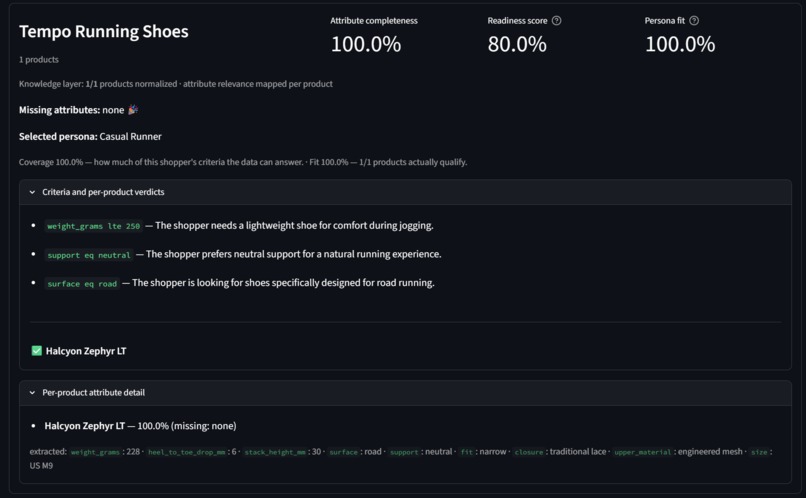
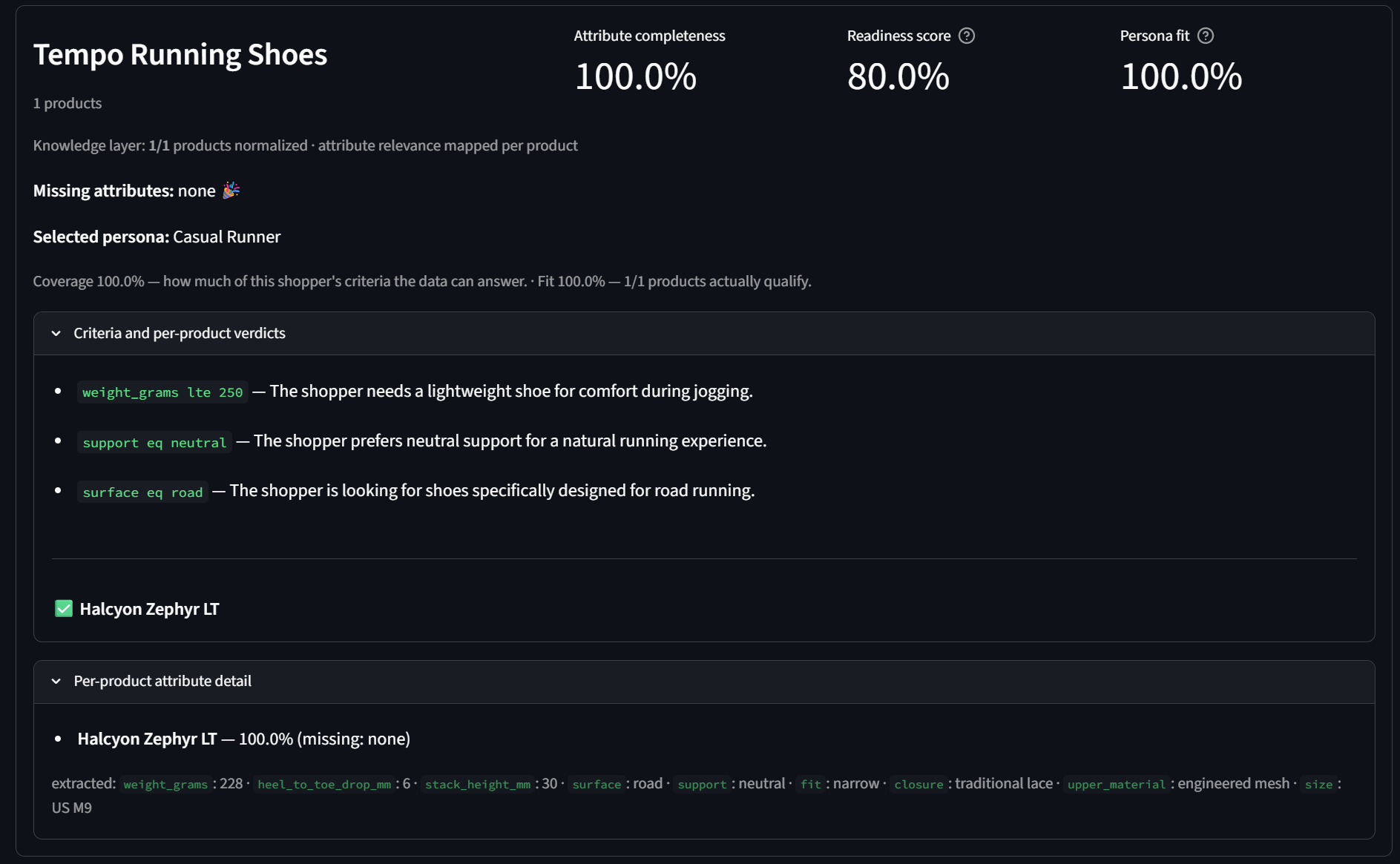
Drill into any cluster to see the exact rules a product passed and every fact extracted from it.
-
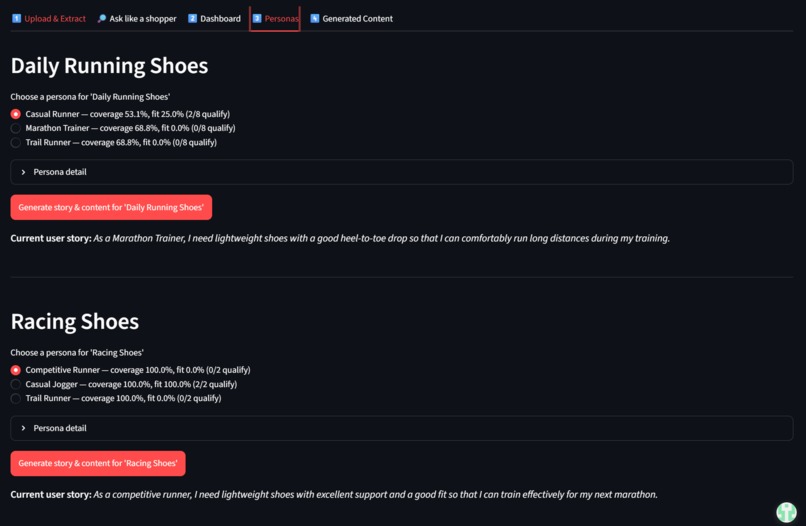
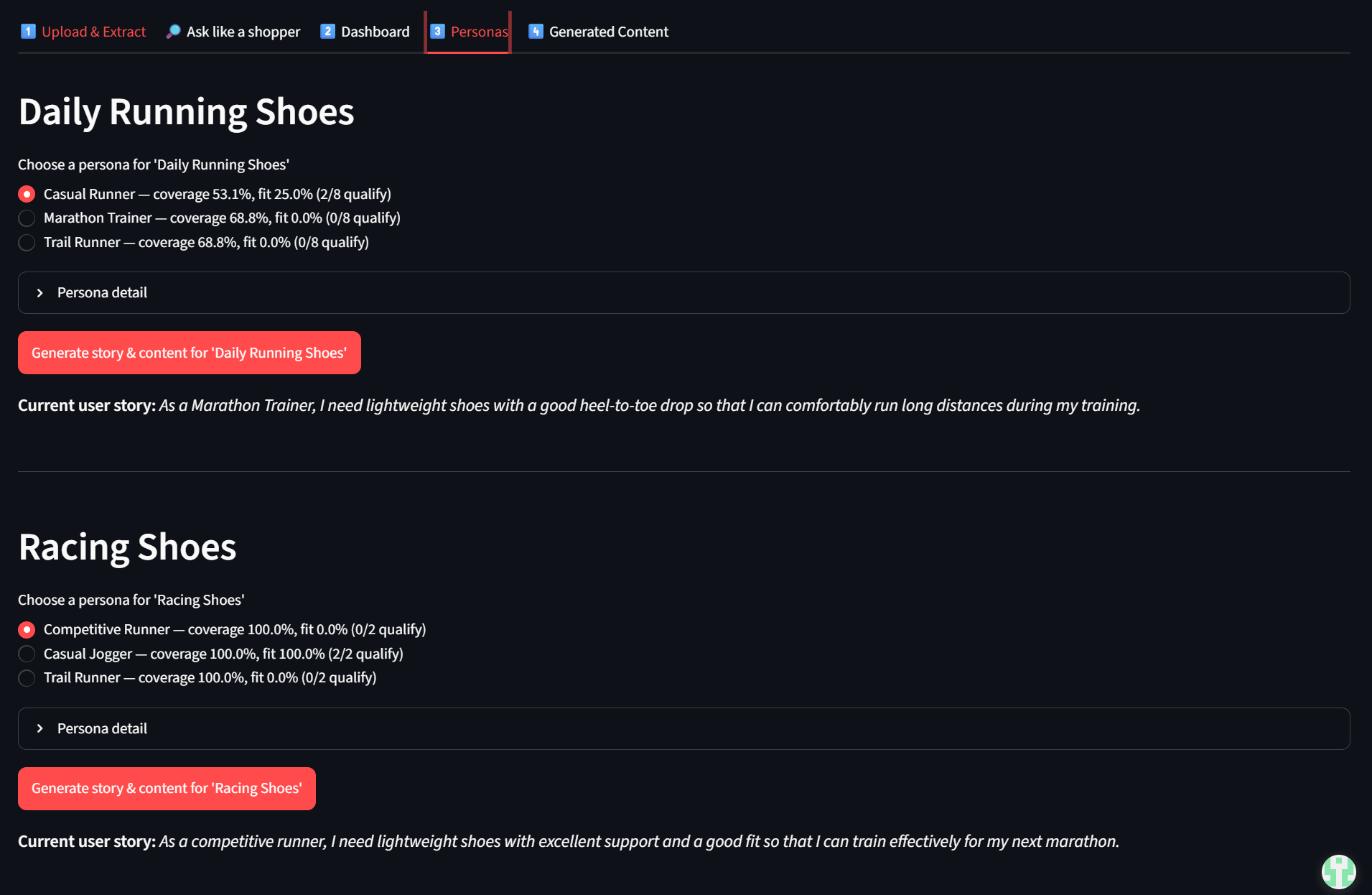
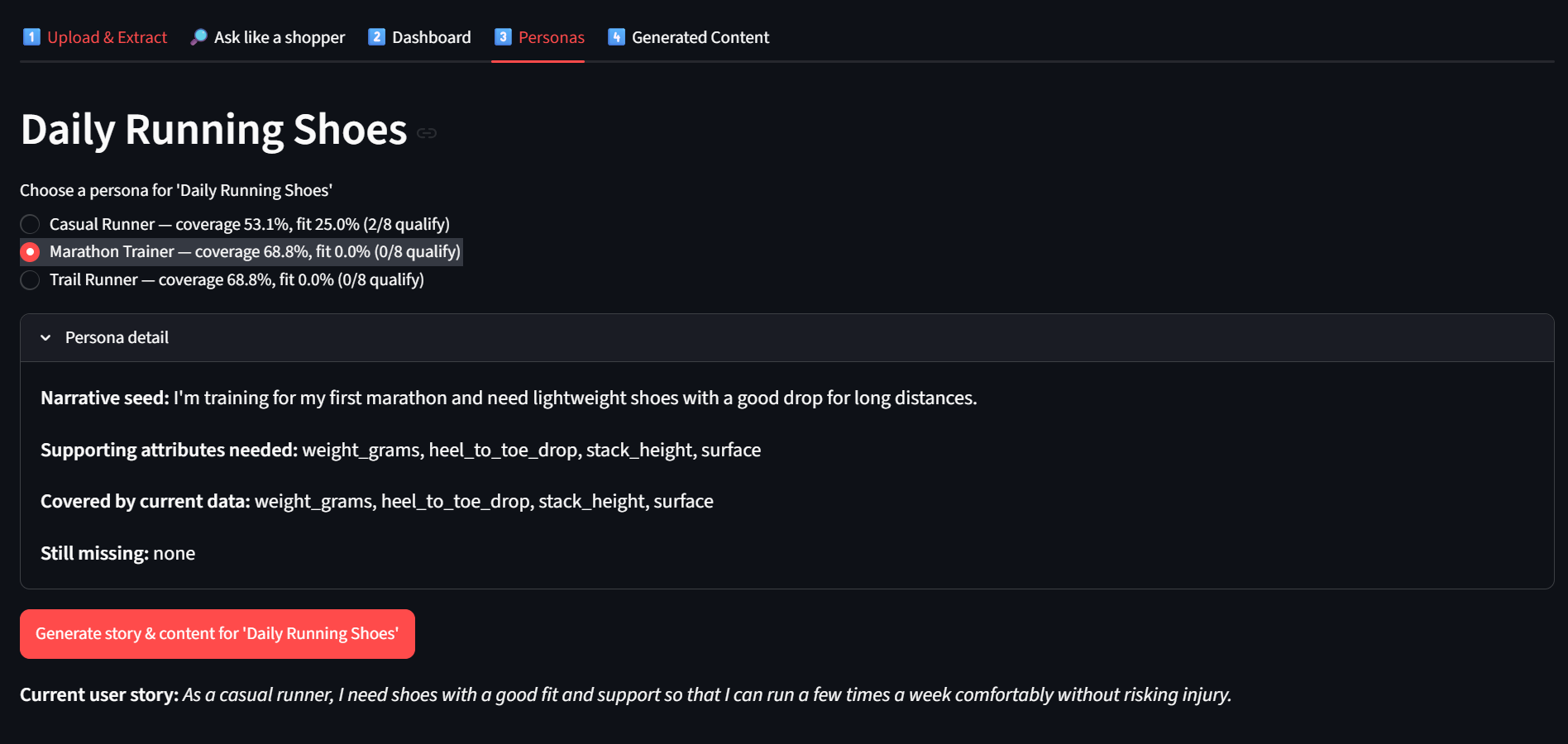
Two numbers per persona: coverage (can we answer them?) and fit (do we suit them?).
-
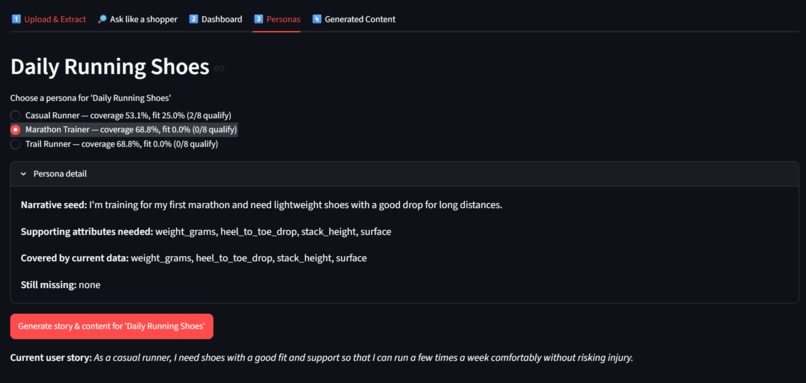
Open any persona to see exactly which attributes it depends on and whether the data supplies them.
-
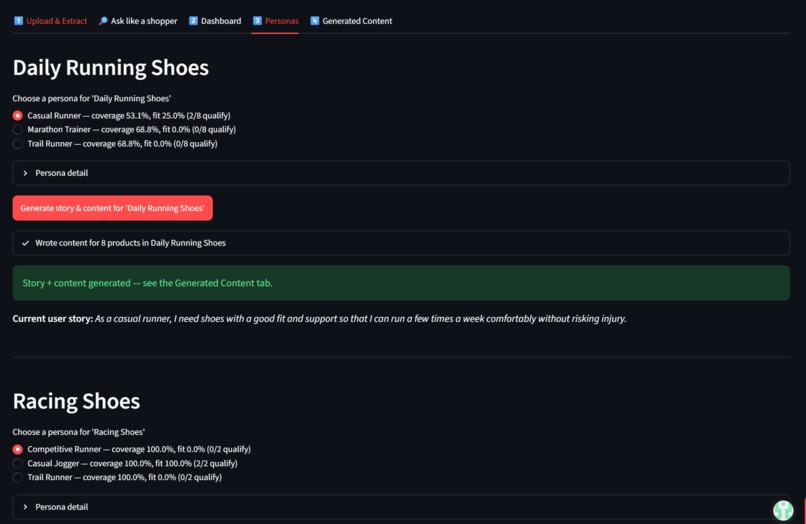
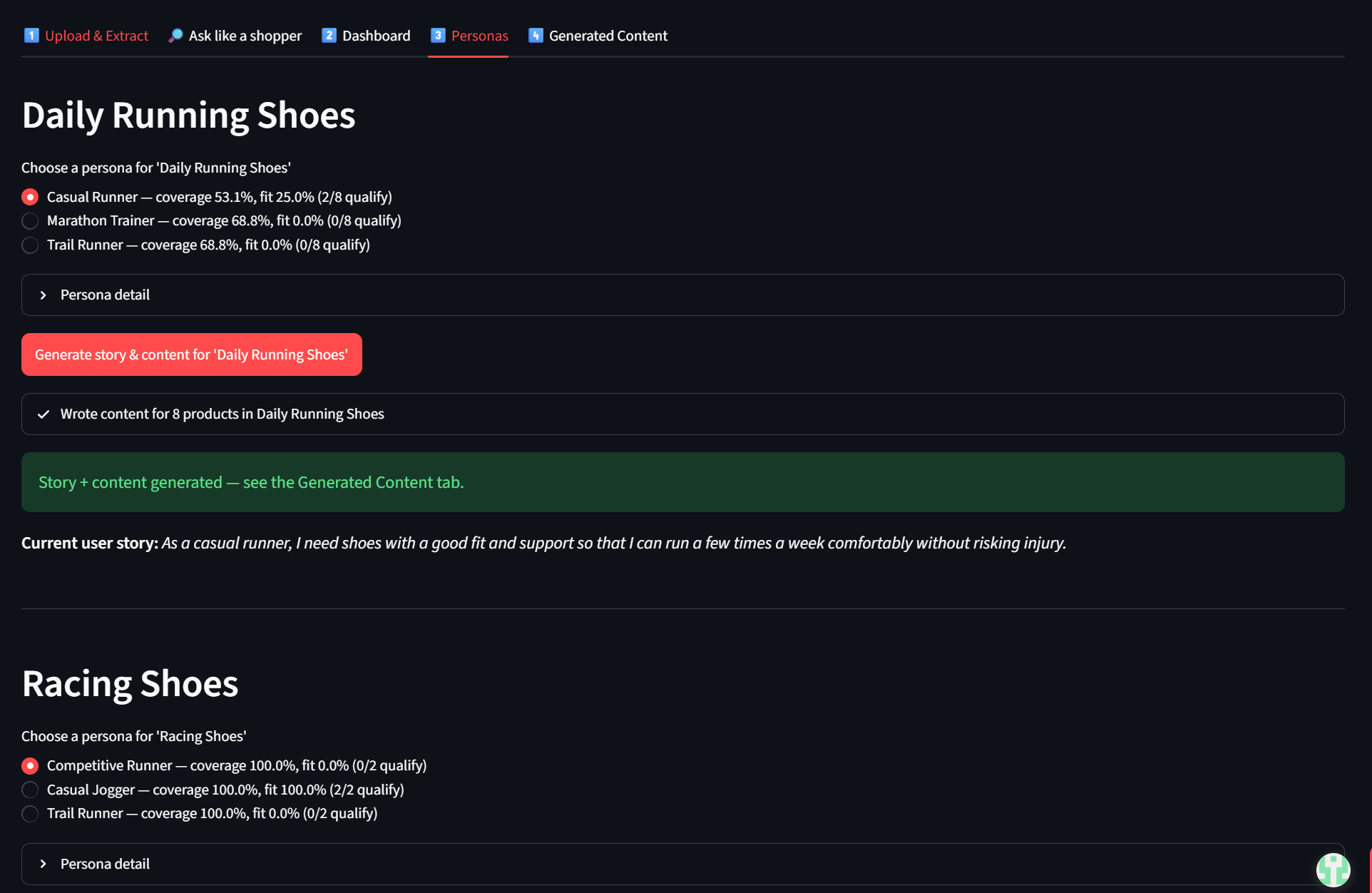
Pick a persona, generate a user story, and write grounded content for all 8 products in the cluster.
-
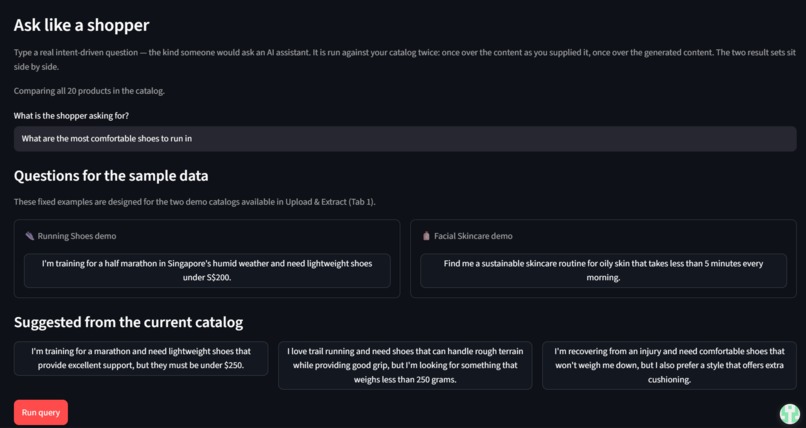
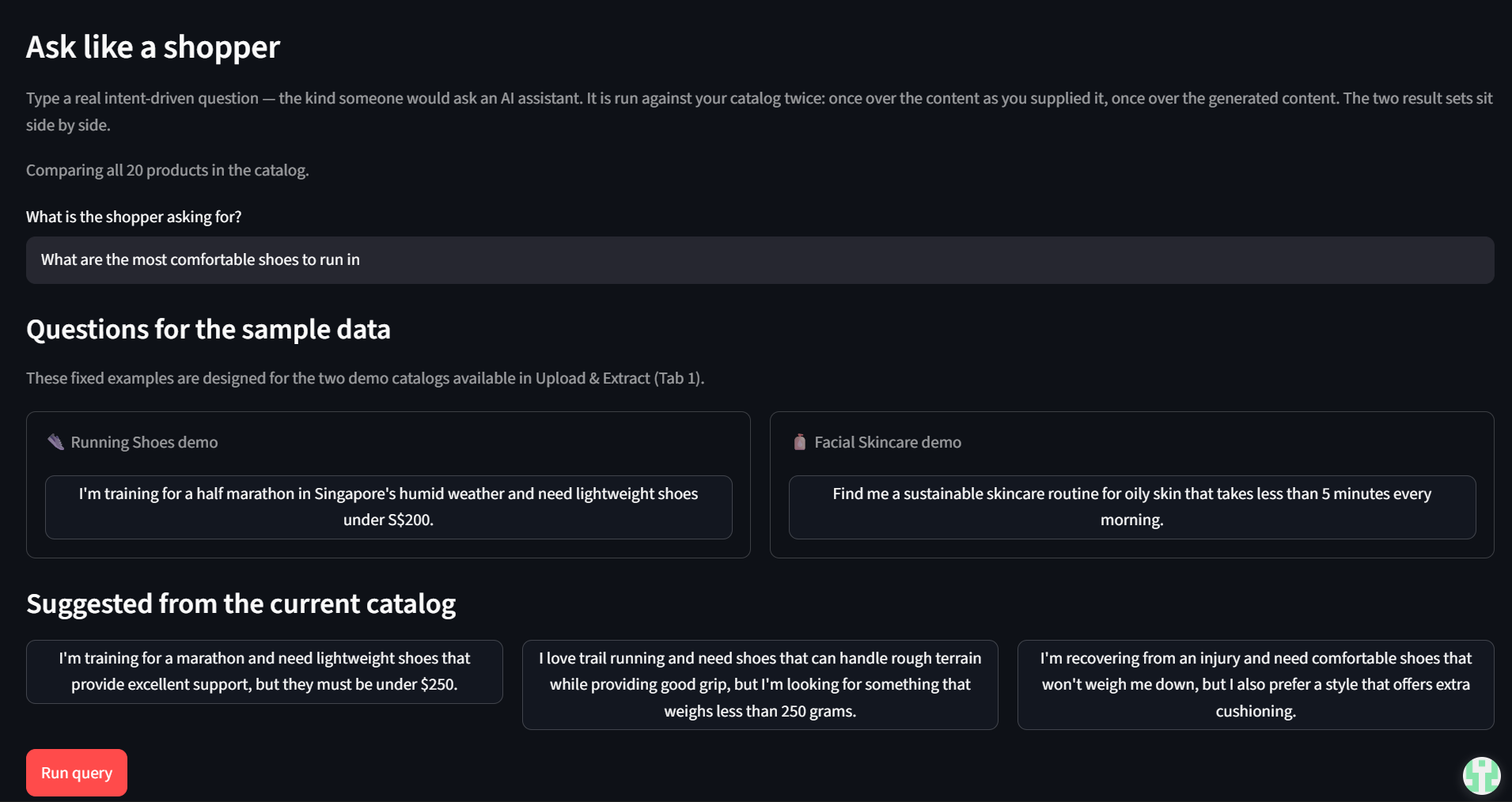
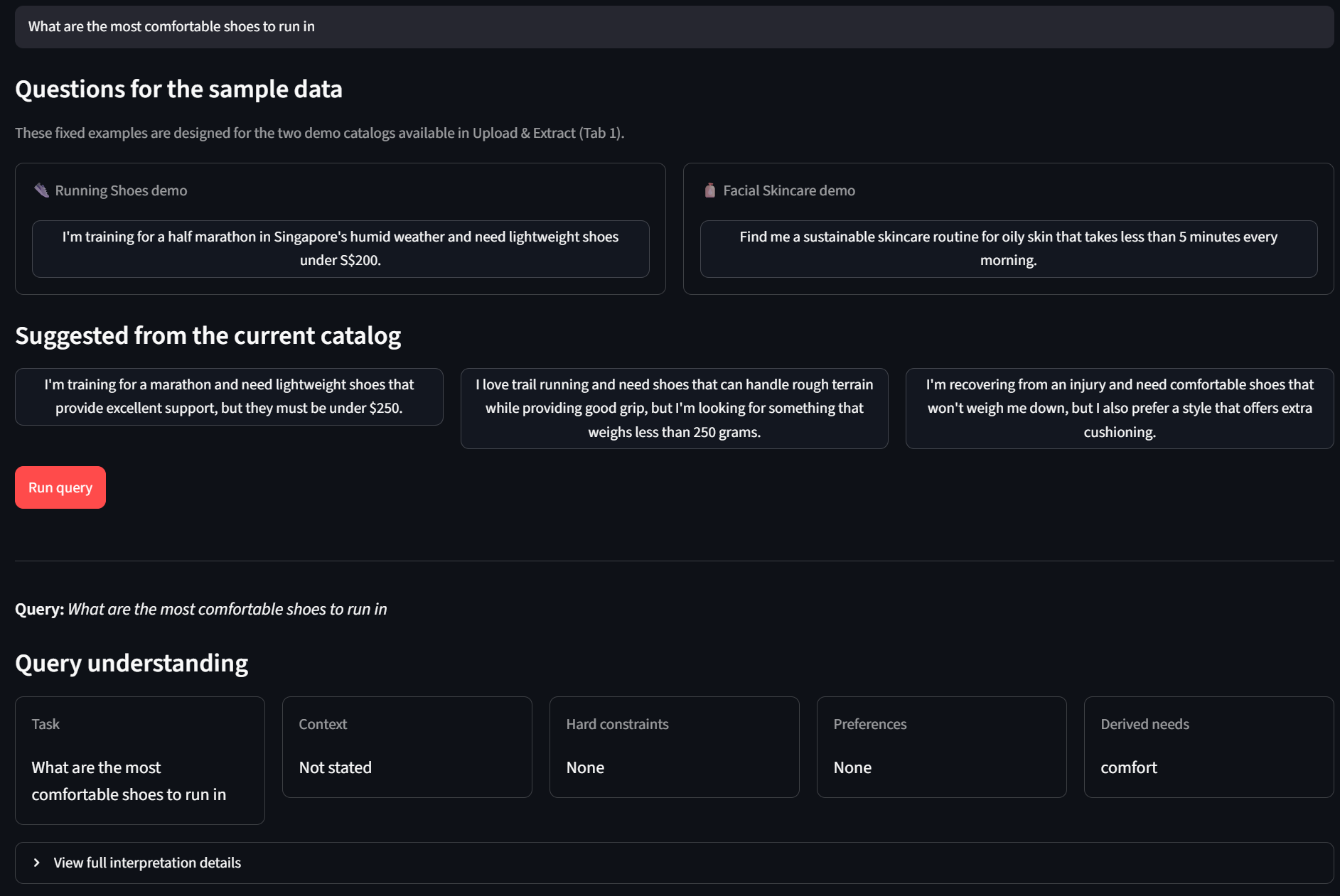
Ask anything. Two fixed demo questions, plus three generated from whatever catalogue is loaded.
-
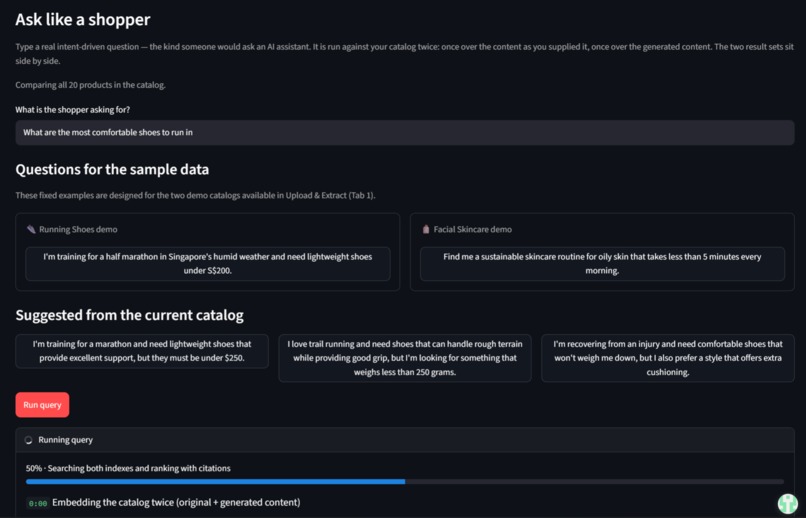
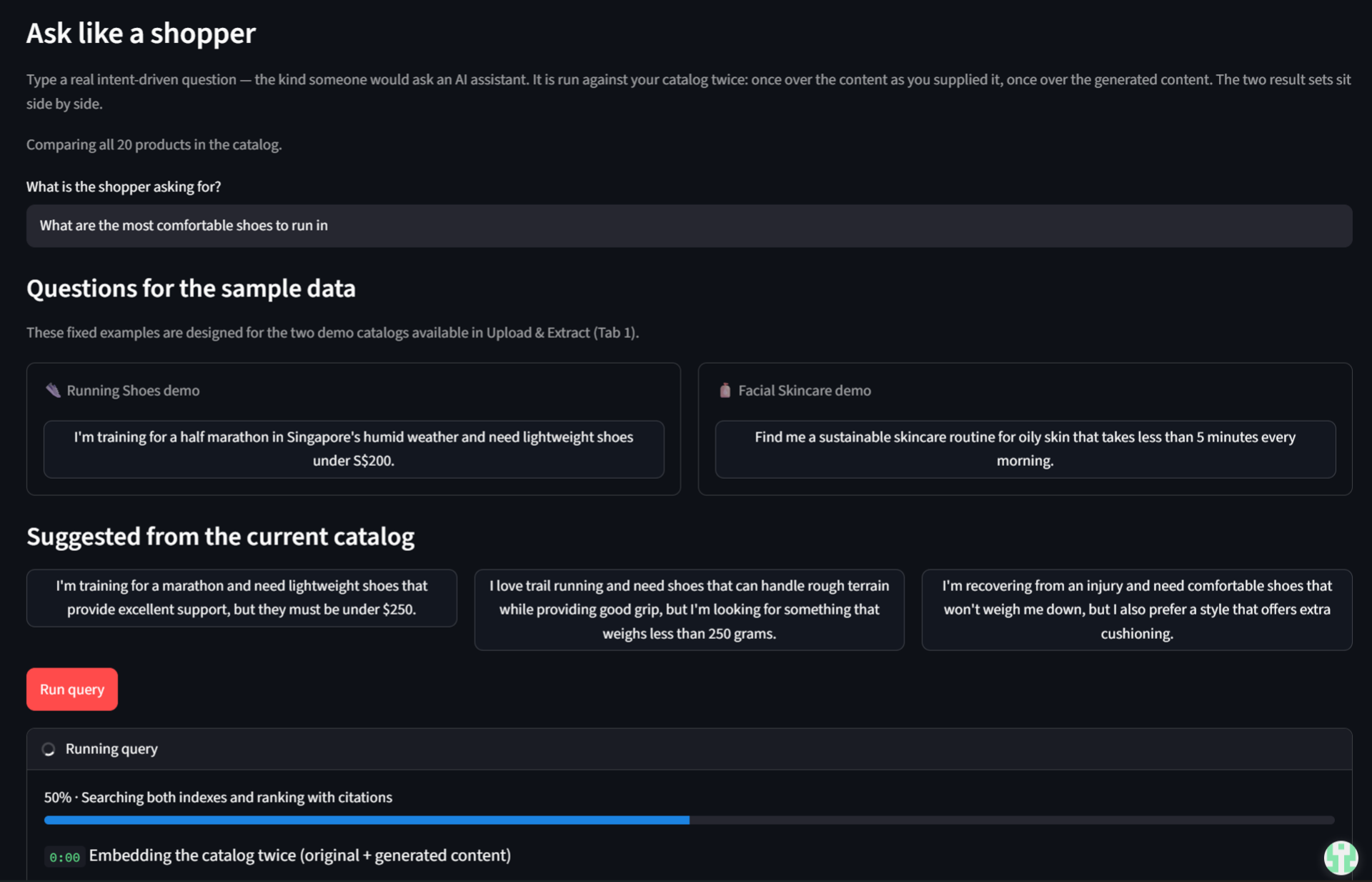
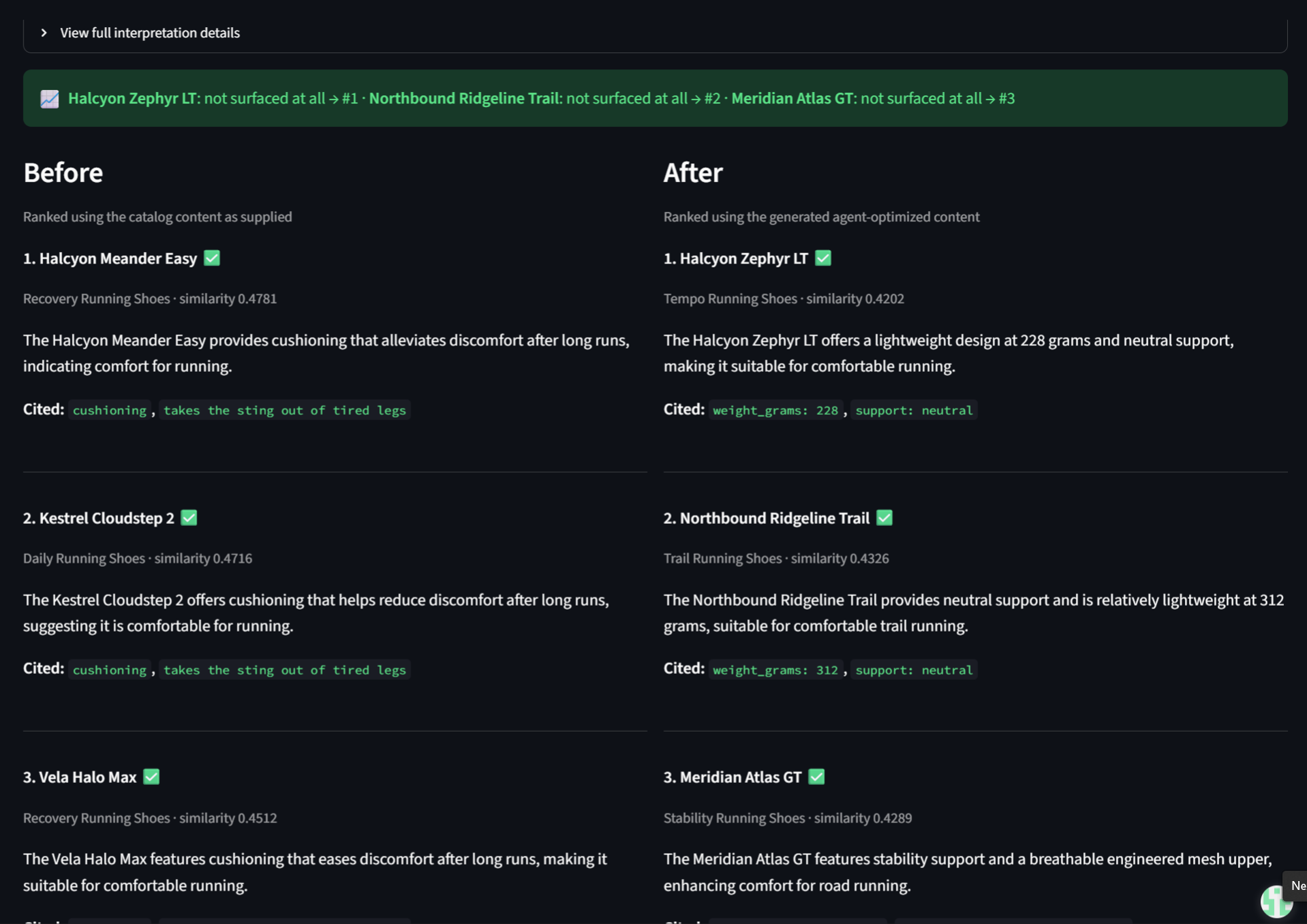
Running a query embeds the catalogue twice, original content and generated content, and ranks both.
-
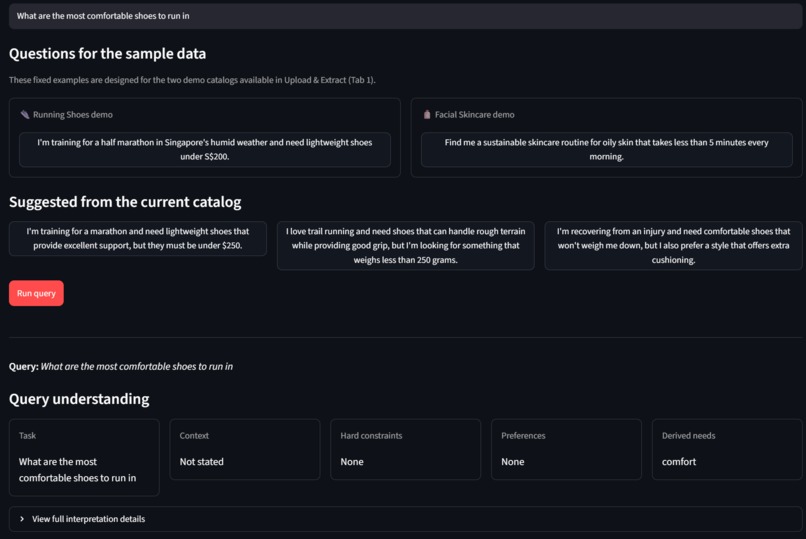
The question is taken apart before anything is searched, and the app admits what it can't infer.
-
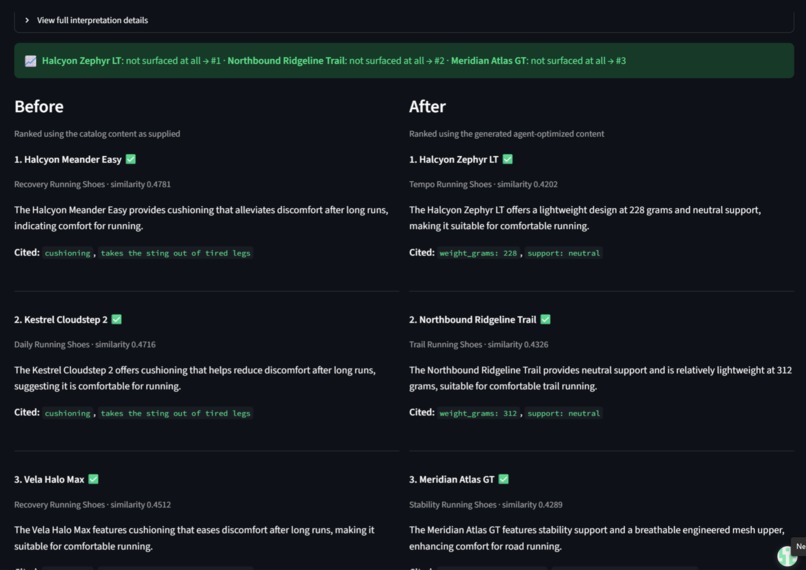
Before and after, side by side: three products that never surfaced now rank #1, #2 and #3.
-
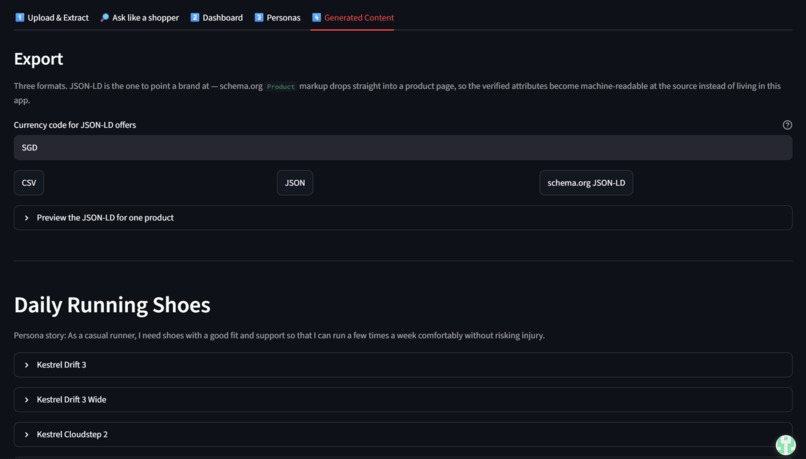
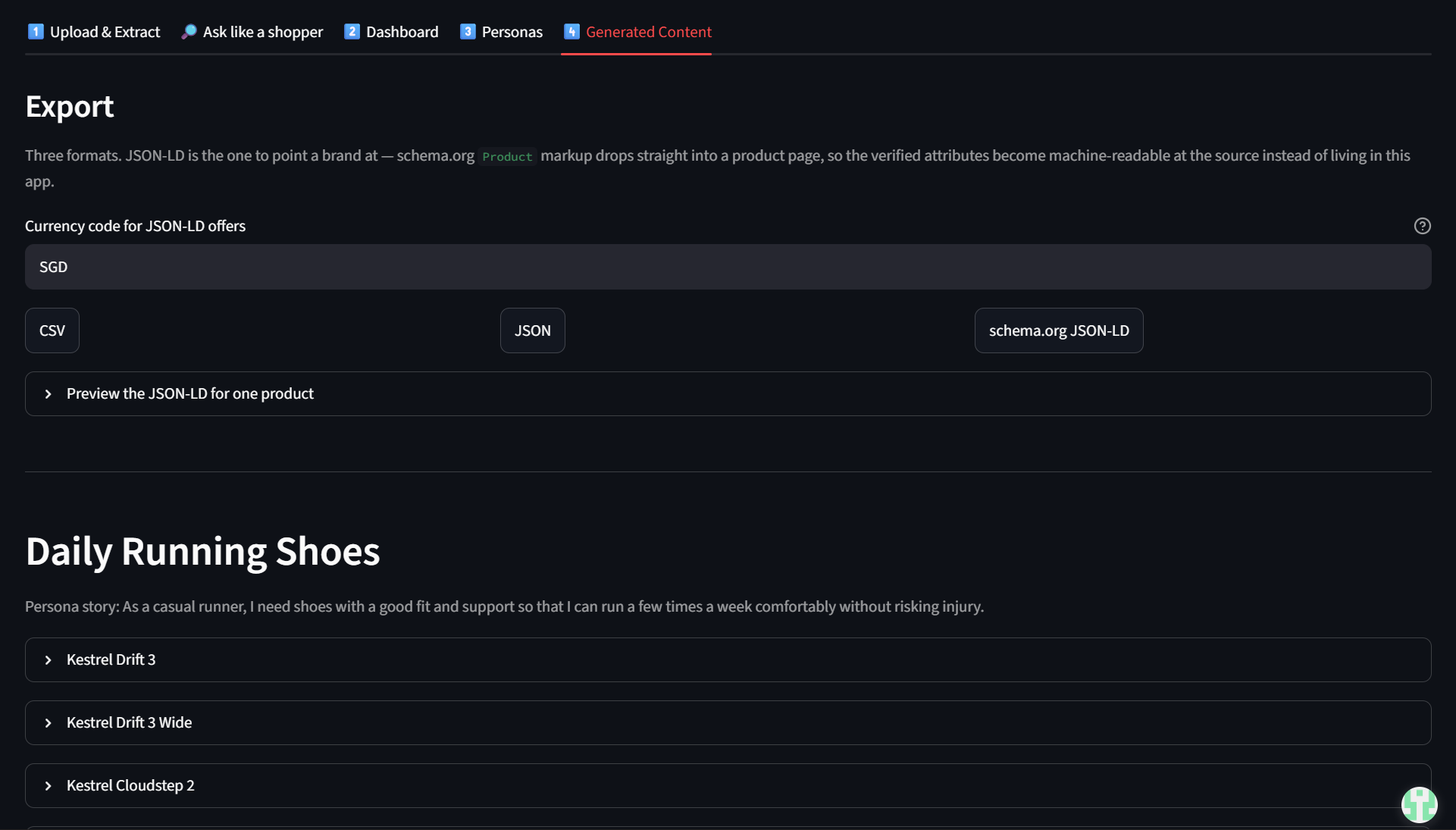
Three export formats, one integration path: CSV, JSON, and schema.org JSON-LD.
-
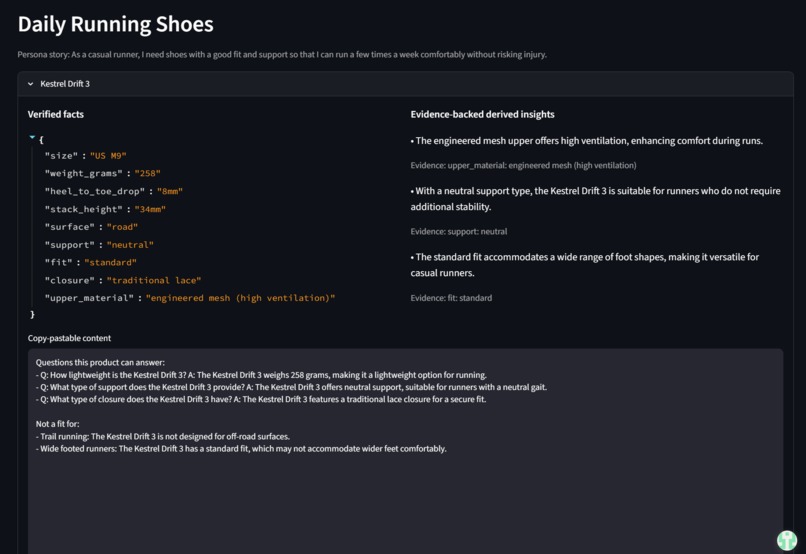
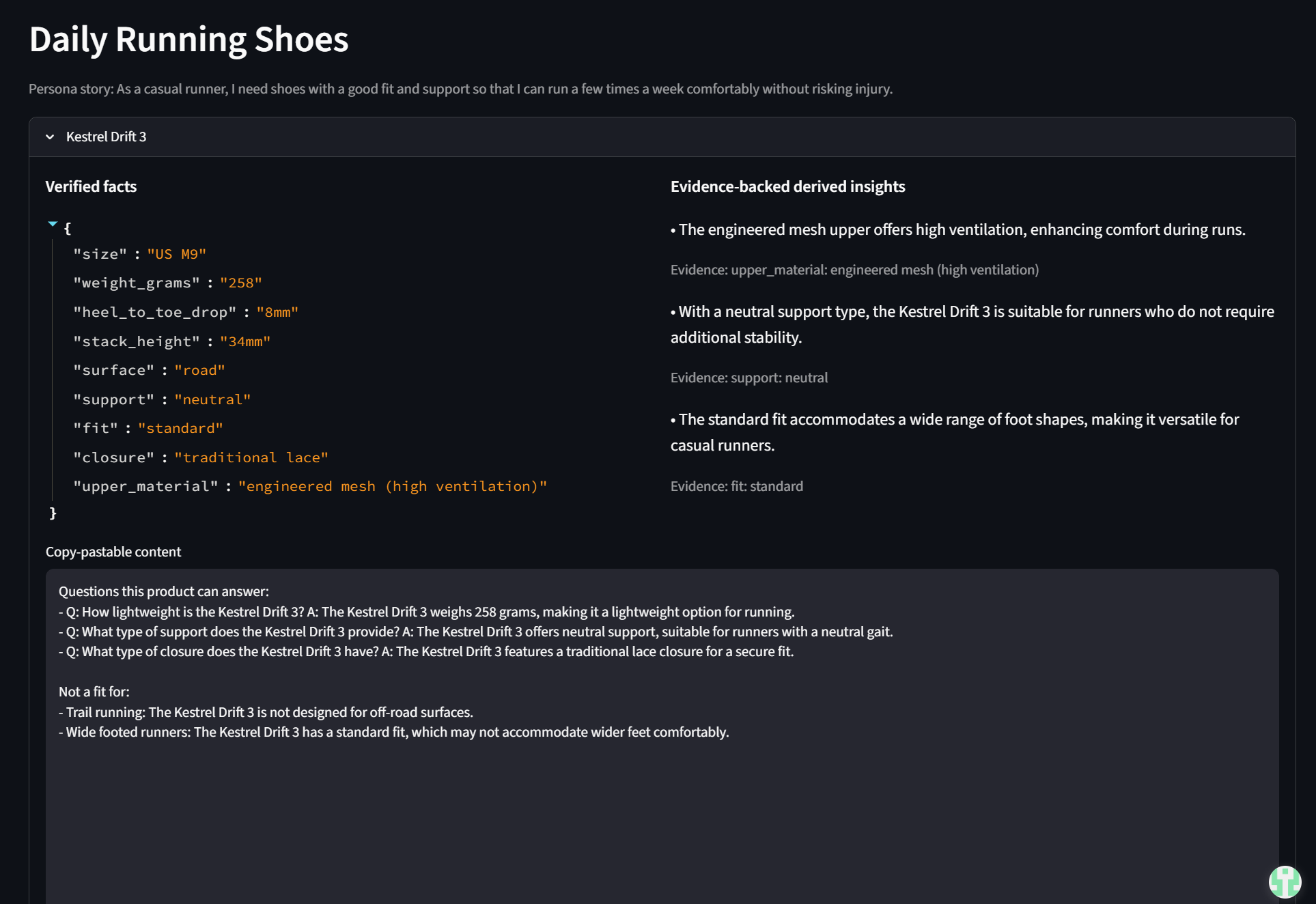
Every generated claim sits next to the verified fact that justifies it.
-

Human In the Loop: What the system refused to publish, and why.

💡 Inspiration
AI agents fail silently on incomplete catalogs. Retailers don't know what's broken or where to start fixing it.
We wanted to measure catalog readiness the way you'd measure any product: objectively, with a score and a fix list.
⚙️ What it does
AgentShopper audits product catalogs and scores how well they support AI agents.
It extracts data from any format (CSV, JSON, PDF), infers optimal schemas, grades fit against real personas using deterministic Python checks, and exports gap reports showing exactly what to fix.
🔧 How we built it
- 📥 Extraction & normalization — Multi-format ingestion with two-pass schema inference and verbatim verification
- 🎯 Deterministic fit scoring — Convert personas into machine-checkable criteria, then run Python evaluation (not LLM guesses)
- 🔀 Dual indexing — Before/after catalog comparison showing impact of fixes
- 🖥️ Streamlit UI — Interactive analysis across 5 tabs (Extract, Ask, Dashboard, Personas, Content)
- 📤 Export formats — CSV for merchandisers, JSON for developers, JSON-LD for embedding
🧗 Challenges we ran into
- Schema inference from sparse, inconsistent product data without overfitting
- Preventing LLM hallucination while still capturing useful reasoning
- Managing LLM costs at scale with smart caching and budget guards
- Complex UI state management across a 7-step analysis pipeline
- Avoiding silent data loss from duplicate cluster names
🏆 Accomplishments that we're proud of
- ✅ Built a system that gives you a readiness score and tells you exactly why
- ✅ Deterministic fit scoring removes guesswork from catalog evaluation
- ✅ Dual indexing proves the concrete impact of fixing data gaps
- ✅ Category-agnostic design means it works on any catalog, day one
- ✅ Caught and documented real architectural bugs in production code
🧠 What we learned
LLM validation layers matter as much as the models themselves.
Deterministic grounding beats magic. Before/after comparison is how you make insights actionable.
And schema inference requires two passes: first to find what's possible, second to verify what's real.
🚀 What's next
- Scale to larger catalogs
- Predict which gaps matter most with predictive models
- Integrate live agent feedback loops
- Expand export formats for different stakeholder needs
Built With
- openai
- python
- streamlit


Log in or sign up for Devpost to join the conversation.