-
-
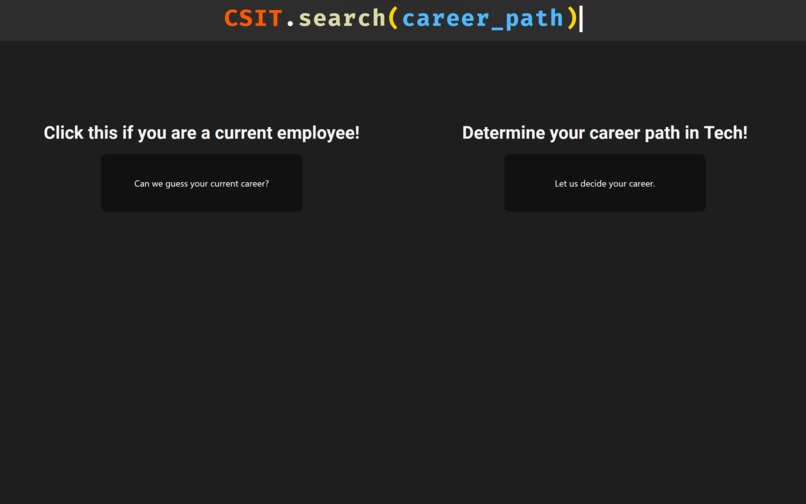
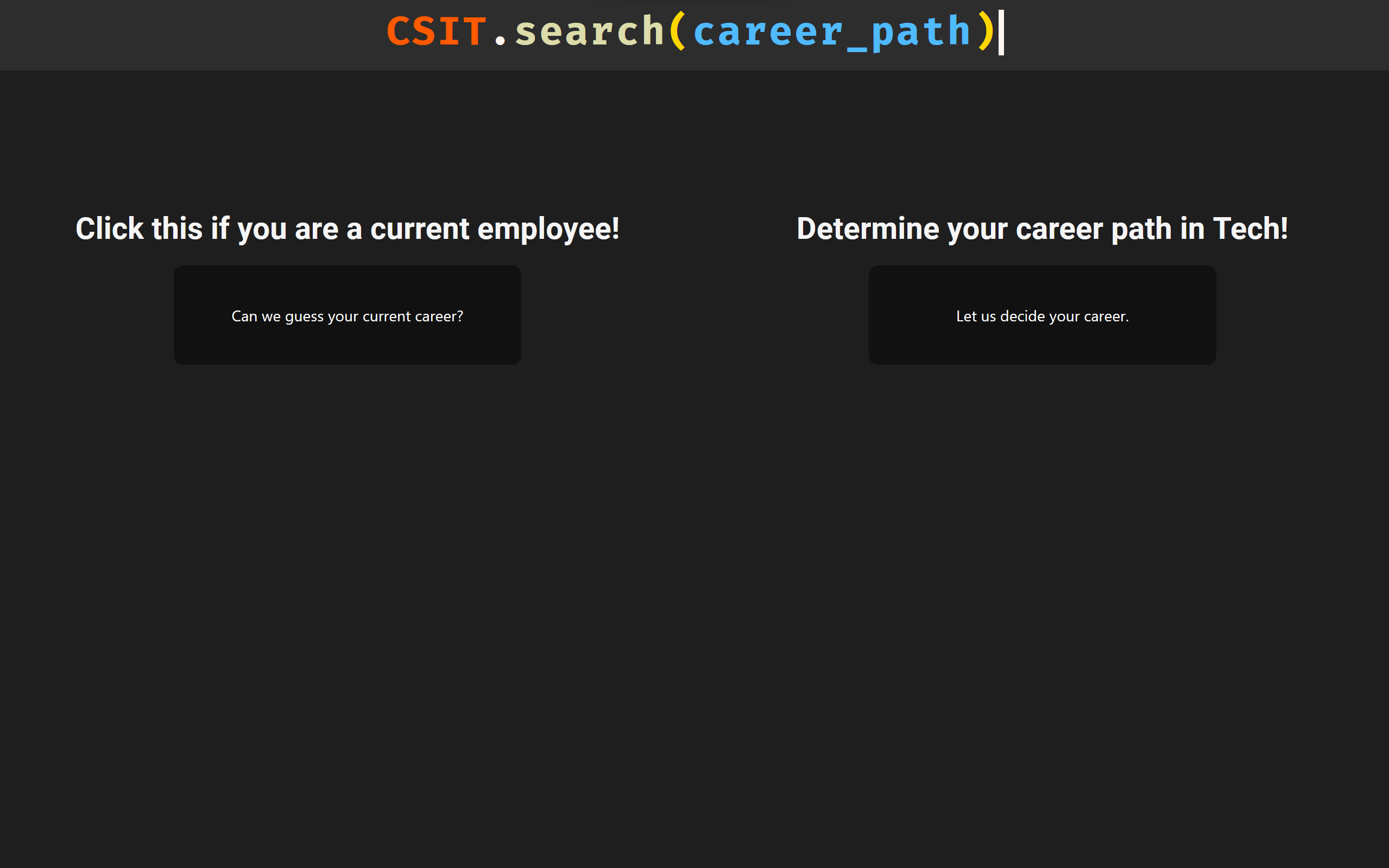
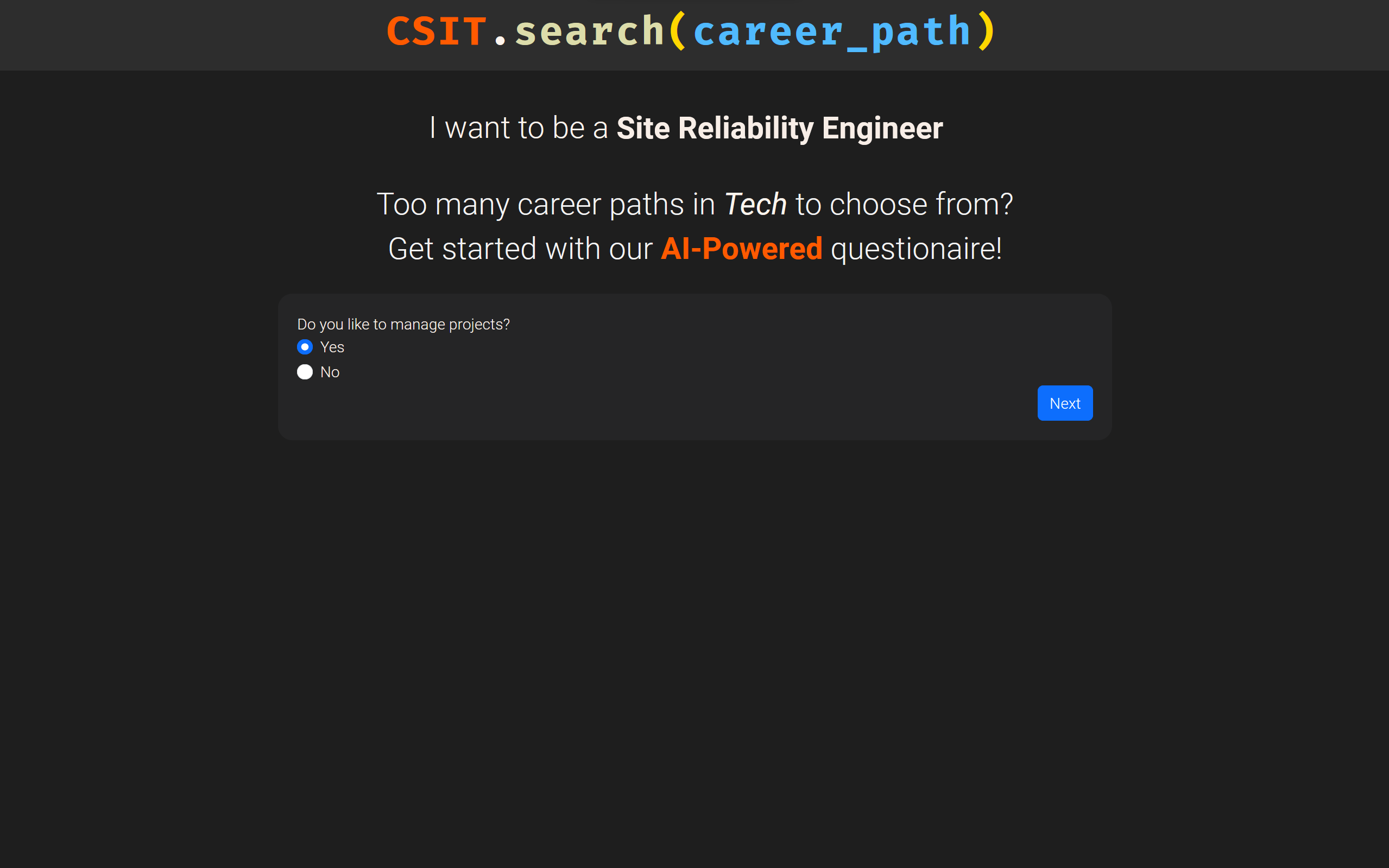
The homepage.
-
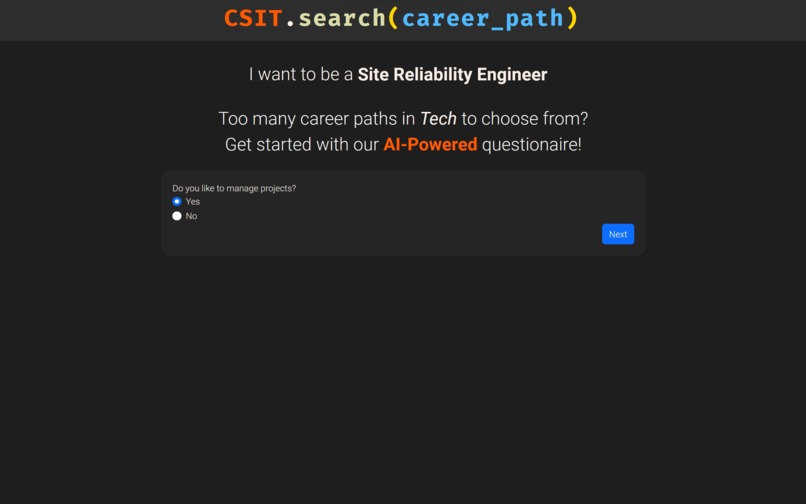
Questions used in Bayes' Algorithm to predict future careers.
-
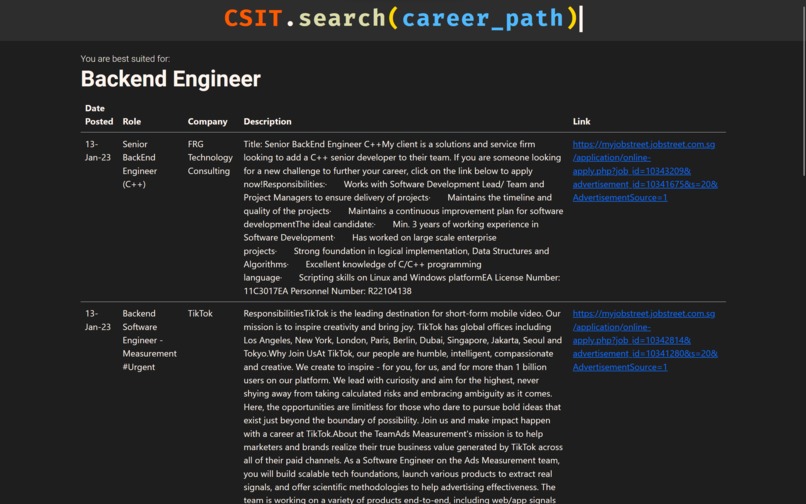
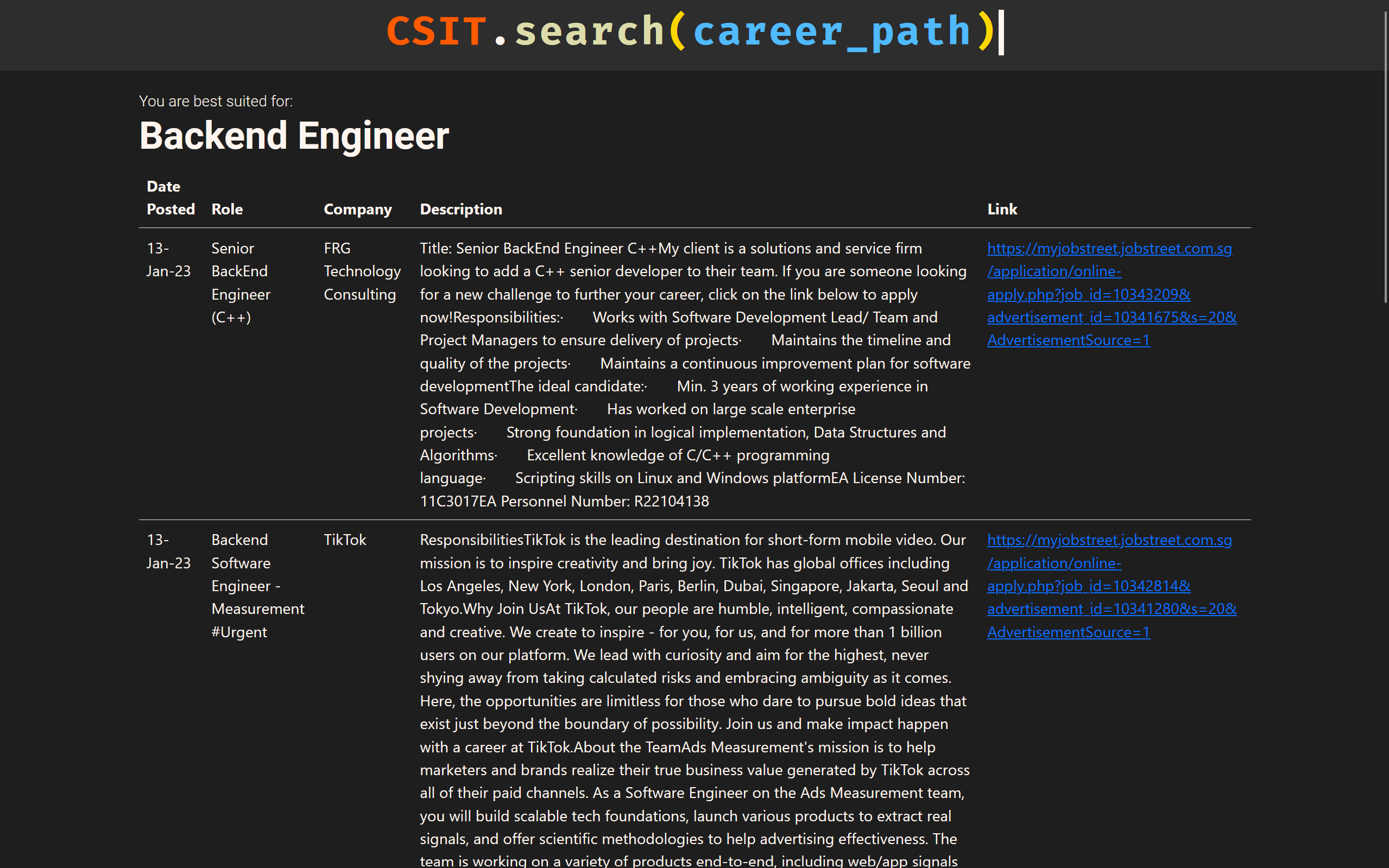
Recommened job listings based on predicted careers.
Inspiration
Our main source of inspiration came from an online guessing game, Akinator, where the "Akinator" attempts to guess a character that a user chooses based on simple questions. Using algorithm techniques similar to the ones used in Akinator, we help job seekers determine their individual career paths in tech.
What it does
The main purpose of the web application is to help job seekers or individuals determine their personalised career path in the Tech industry. Using Machine Learning, our model is able to train itself with input from current professionals in the industry, which makes it more accurate over time. Once our model predicts a career path, web scraping is used to find jobs that matches the predicted career. Links are provided directly to the job application site for users to apply easily.
How we built it
Firstly we split the workload into multiple parts, mainly:
- Web development
- Backend development
- Machine learning model
- Web scraping
For web development, we used Flask, Bootstrap, HTML and CSS to build our web application. Flask is a micro web framework that can be used to build scalable and responsive websites.
For the machine learning model, we used Bayes' Theorem to help determine and predict individual career paths based on probabilities and assigning weights to different answers for each role.
We used Beautiful Soup to help scrape jobs from the jobstreet website based on predicted career paths.
Challenges we ran into
1.Limited time to come up with working prototype, balancing aesthetics vs functionality.
- Communication with team members as this is a virtual hackathon, we held several zoom meetings over a day to make sure we are on the right path and everyone is on track.
- Technical aspects, we had many ideas but we had to scrap some as they were unreasonable to complete within a hackathon.
Accomplishments that we're proud of
We were considering just doing the frontend to show our prototype and idea but we felt that it was not right as we should have a working demo for an hackathon. This increased the difficulty significantly but we managed to do it.
We went out of our comfort zones and each did a part that we were not really sure of. The fact that we have a working demo is impressive by itself.
What we learned
-Time management, Teamwork, Integrity, more knowledge on several libraries.
What's next for CSIT.search(career_path)
1.As we have built a working prototype, it would be easy for us to transition and scale by adding more features or improve on current features. 2.Improve the Bayes algorithm, can introduce decision tree classifiers or use naive Bayes algorithm together to enhance the accuracy of the predictions. 3.Instead of only focusing on tech careers, we can scale it further to different industries like healthcare or business careers.
- Using profiling and alternative methods to maximise suitability of suggested jobs for unique job-seekers

Log in or sign up for Devpost to join the conversation.