-
-
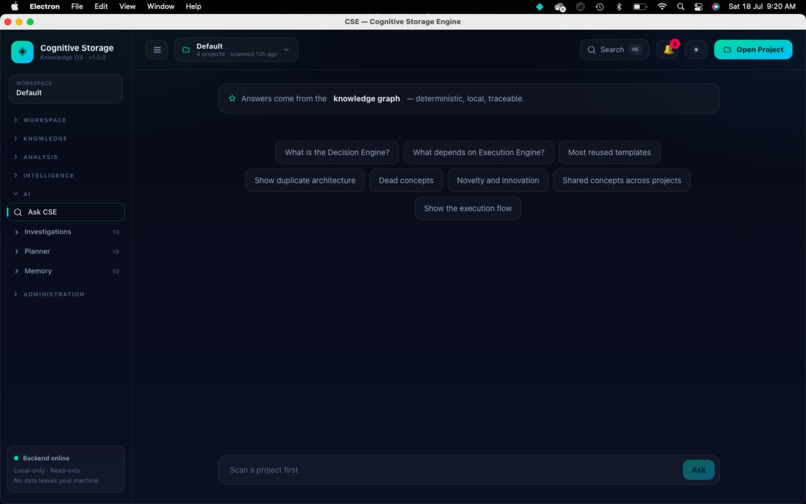
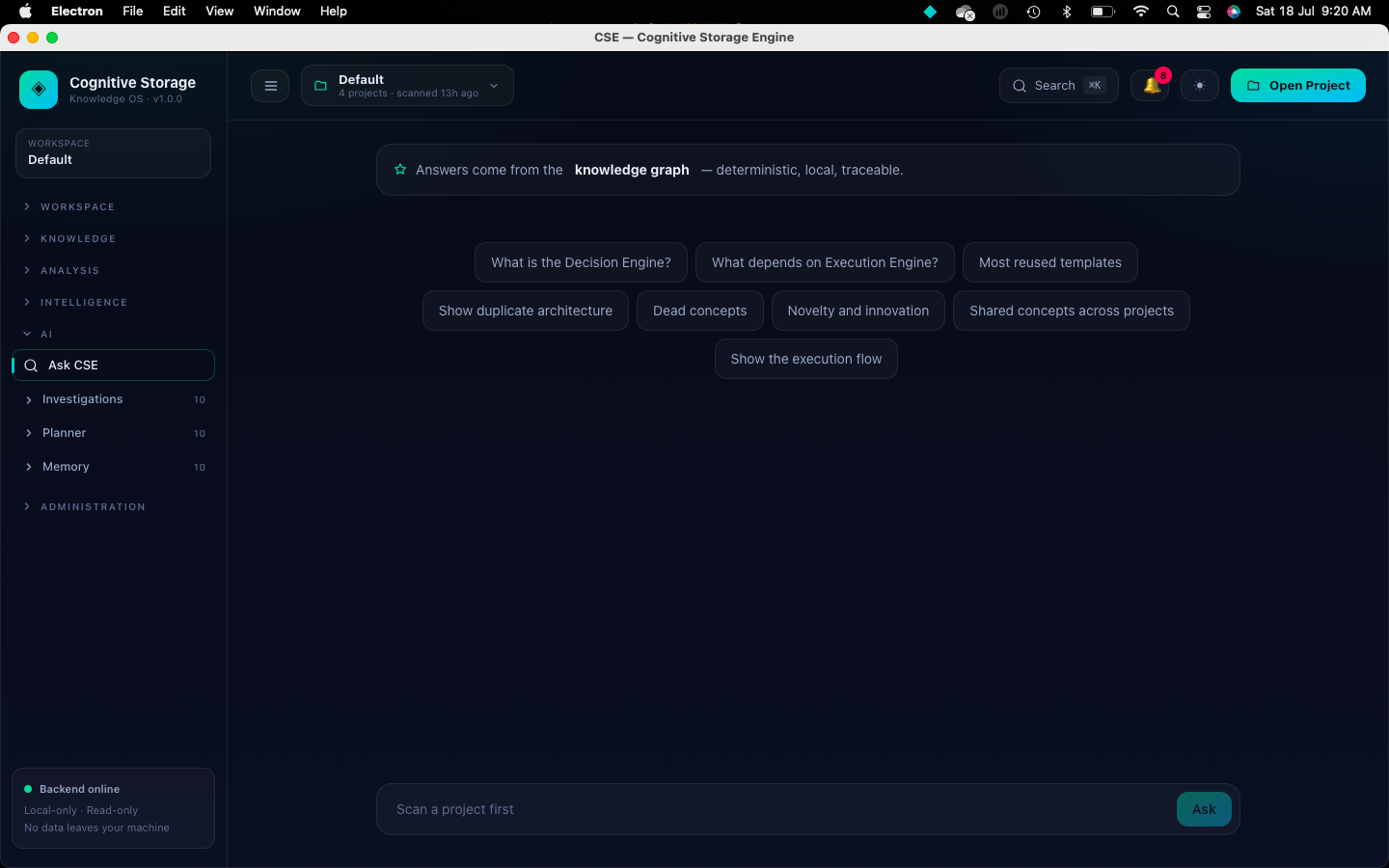
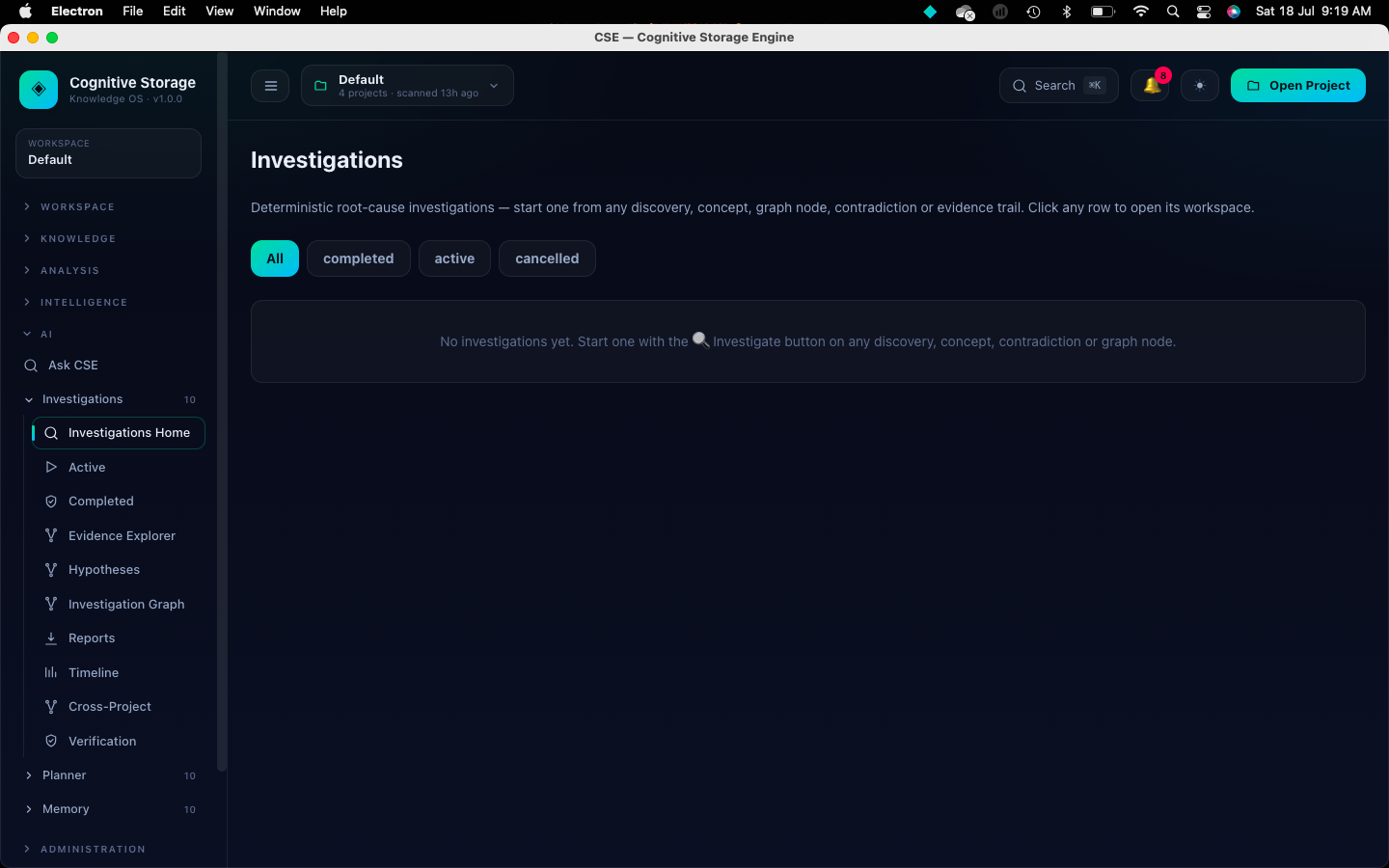
Ask CSE – Natural Language Knowledge Assistant
-
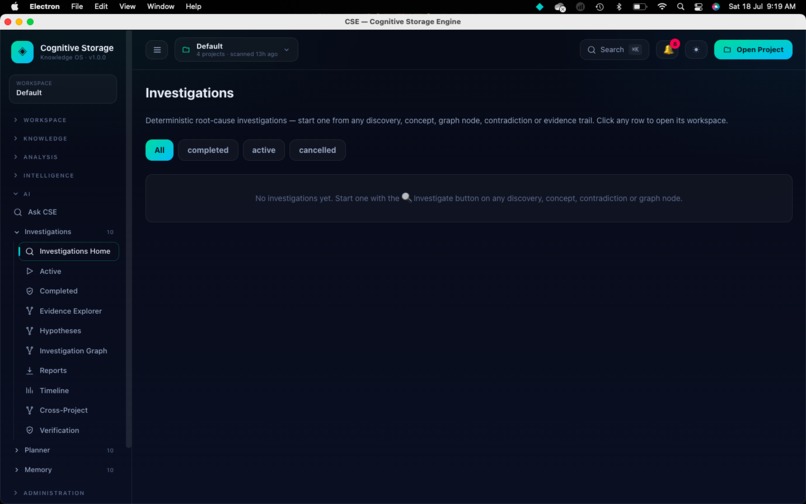
Deterministic Investigation Workspace
-
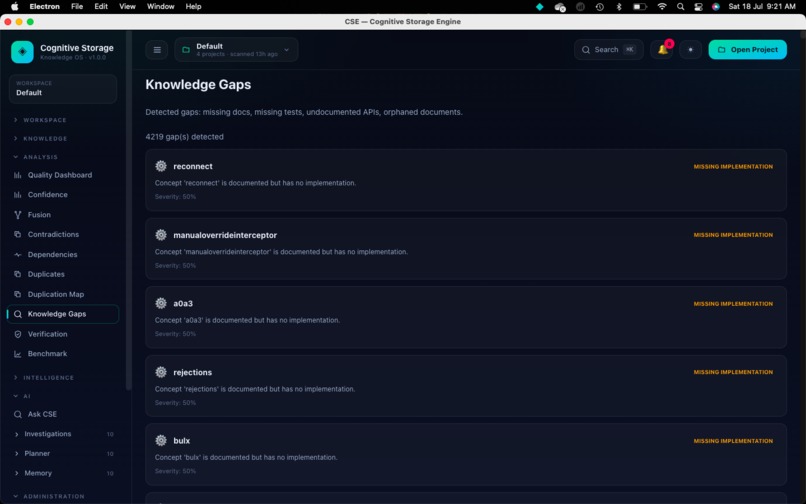
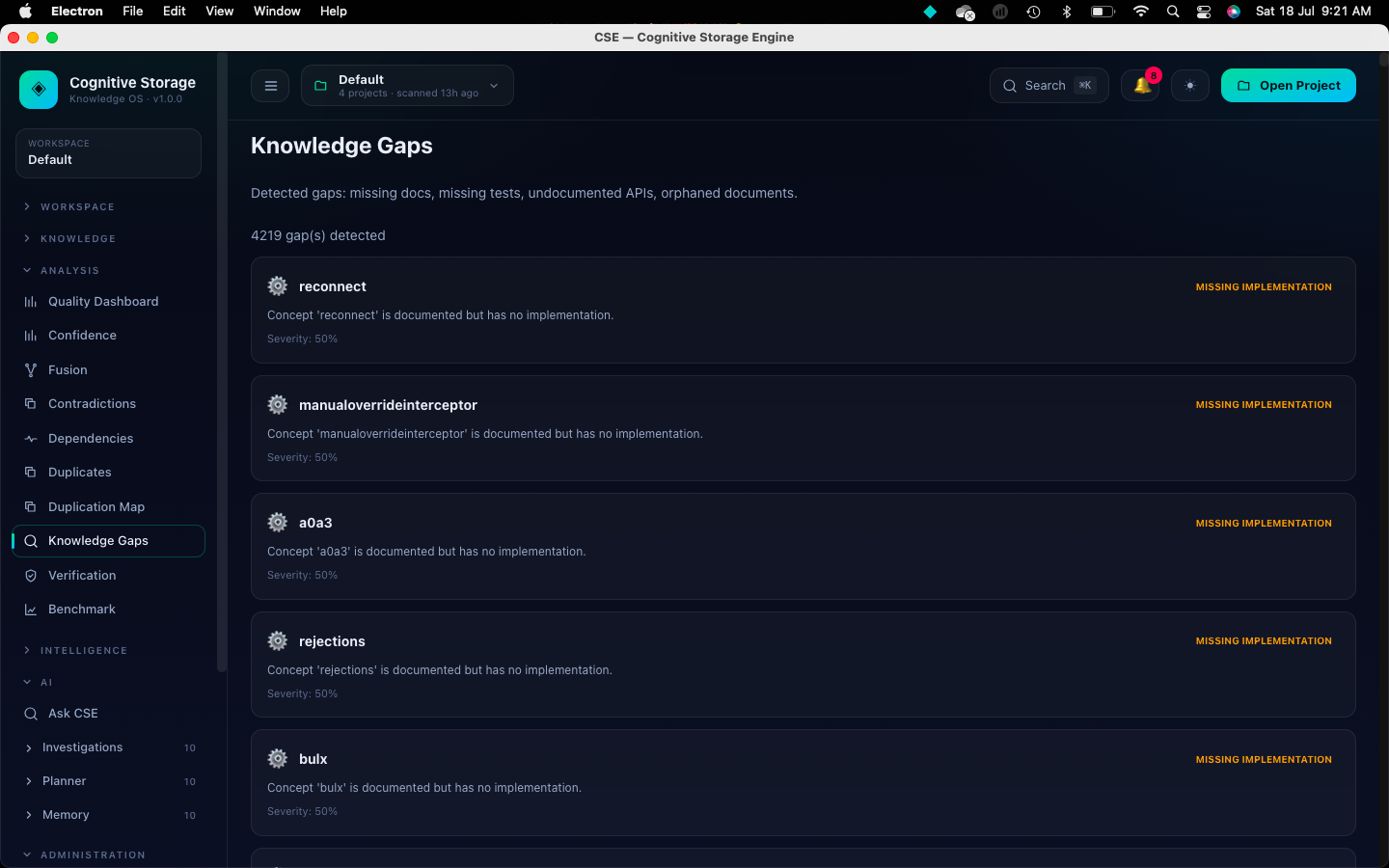
Knowledge Gap Detection & Analysis
-
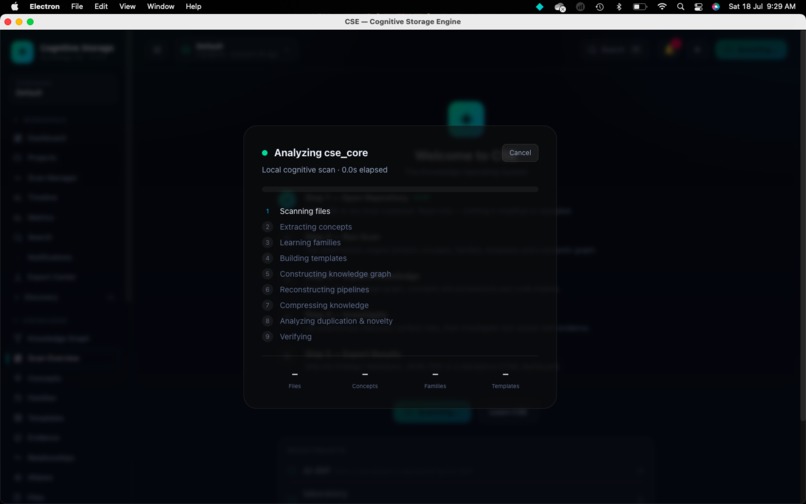
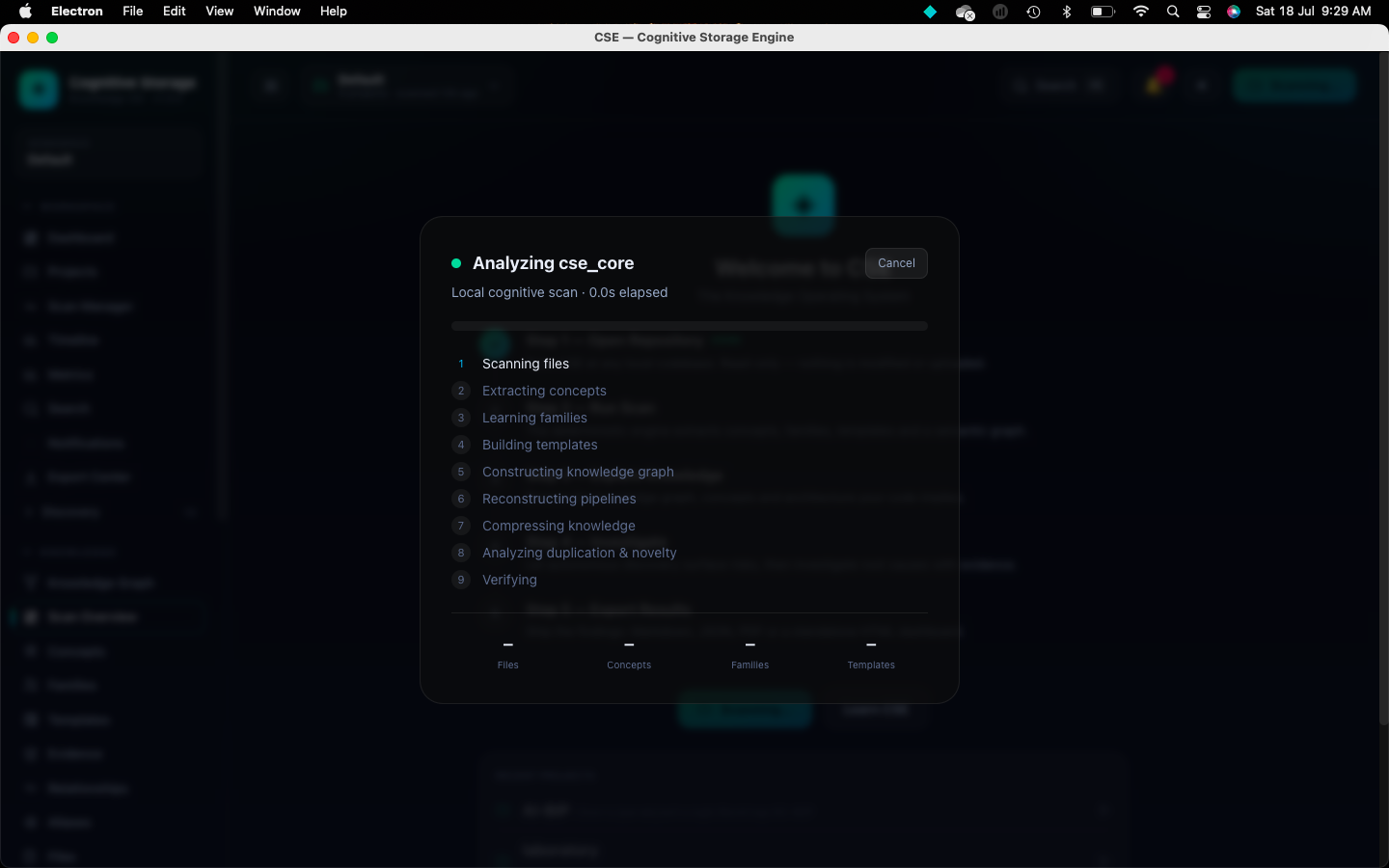
Real-Time Cognitive Repository Analysis
-
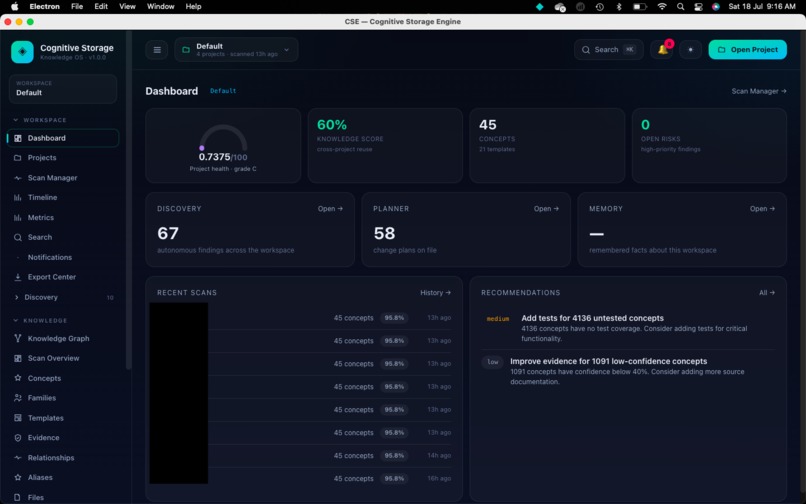
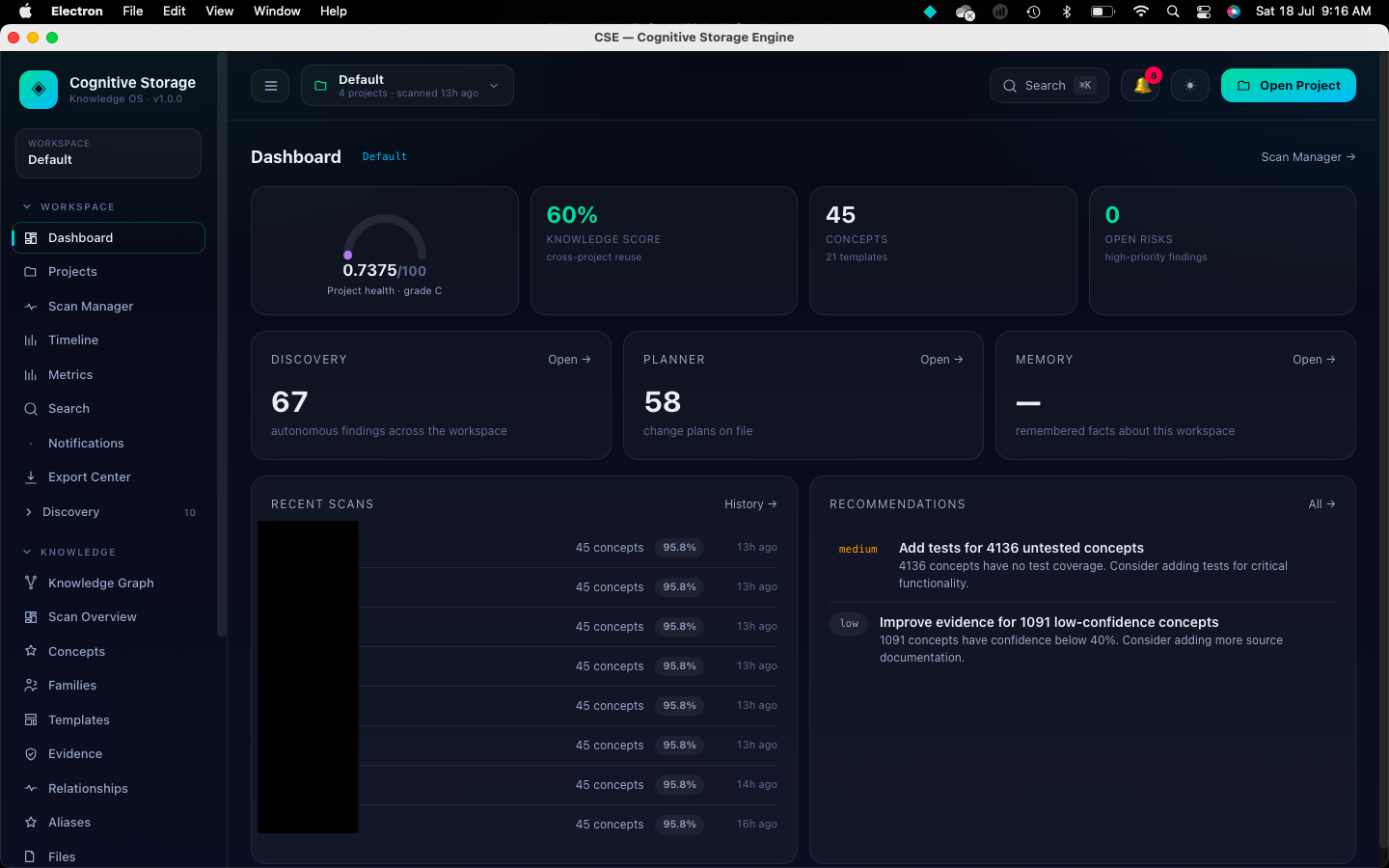
Workspace Dashboard & Project Insights
-
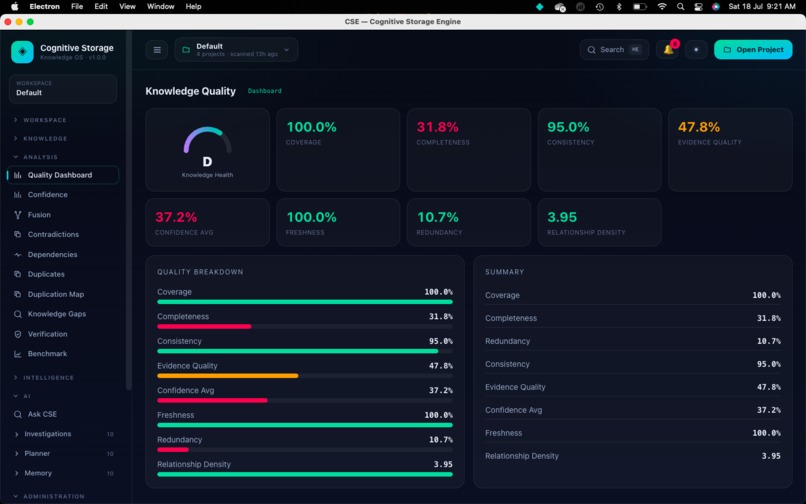
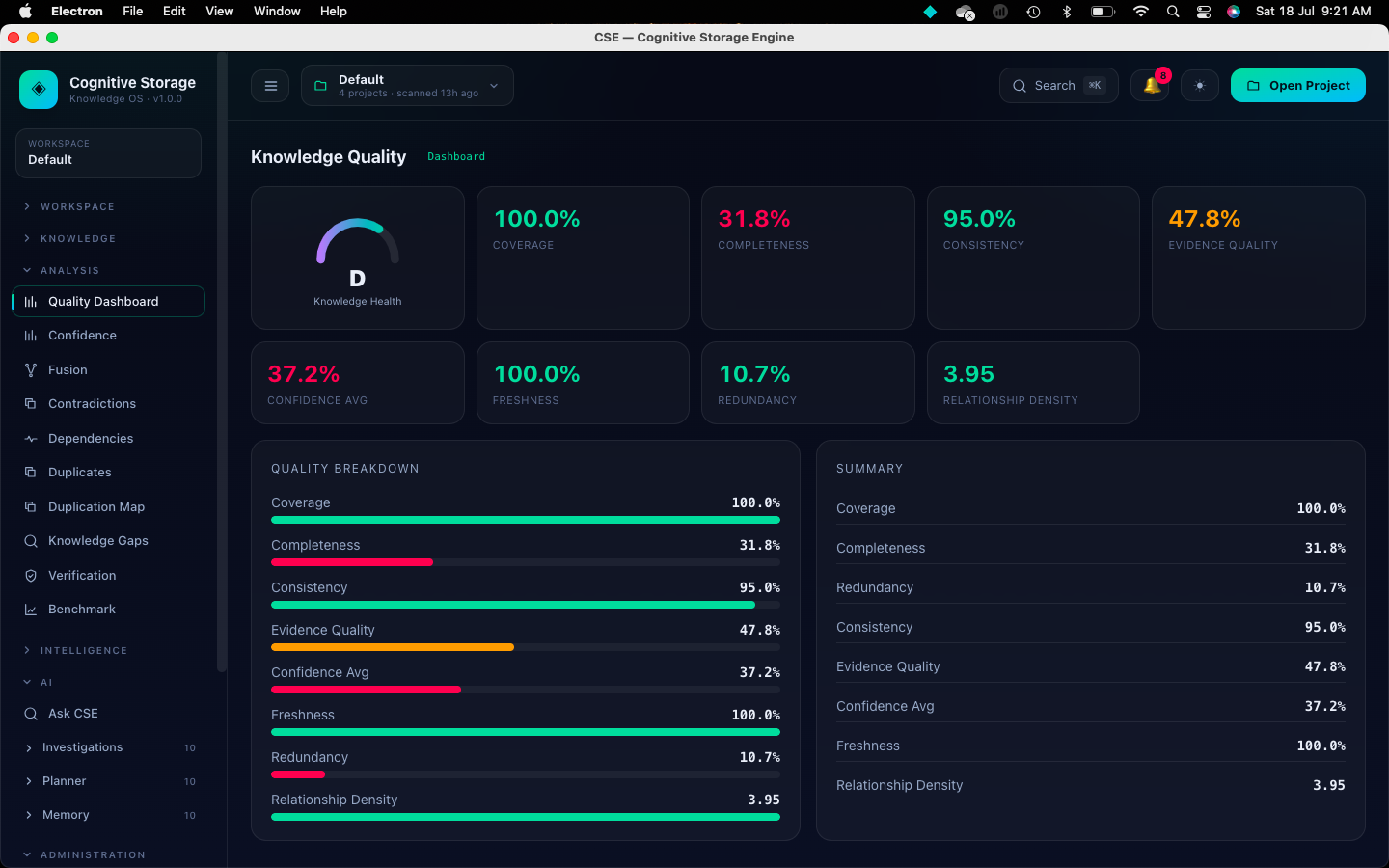
Knowledge Quality Analytics Dashboard
-
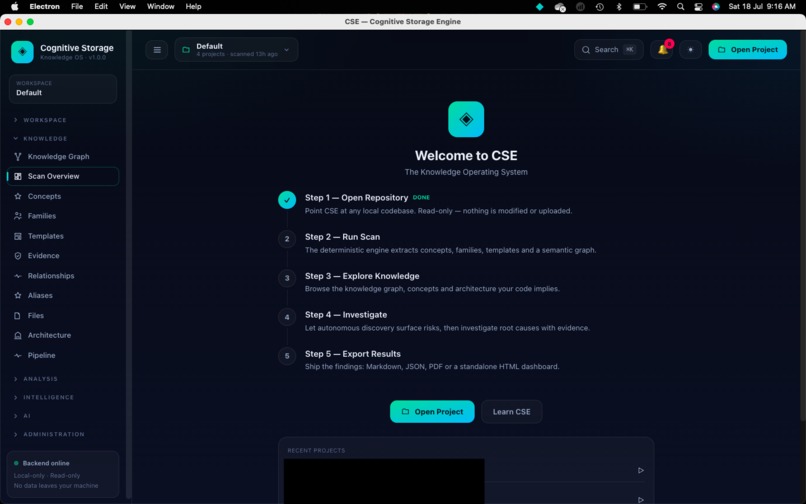
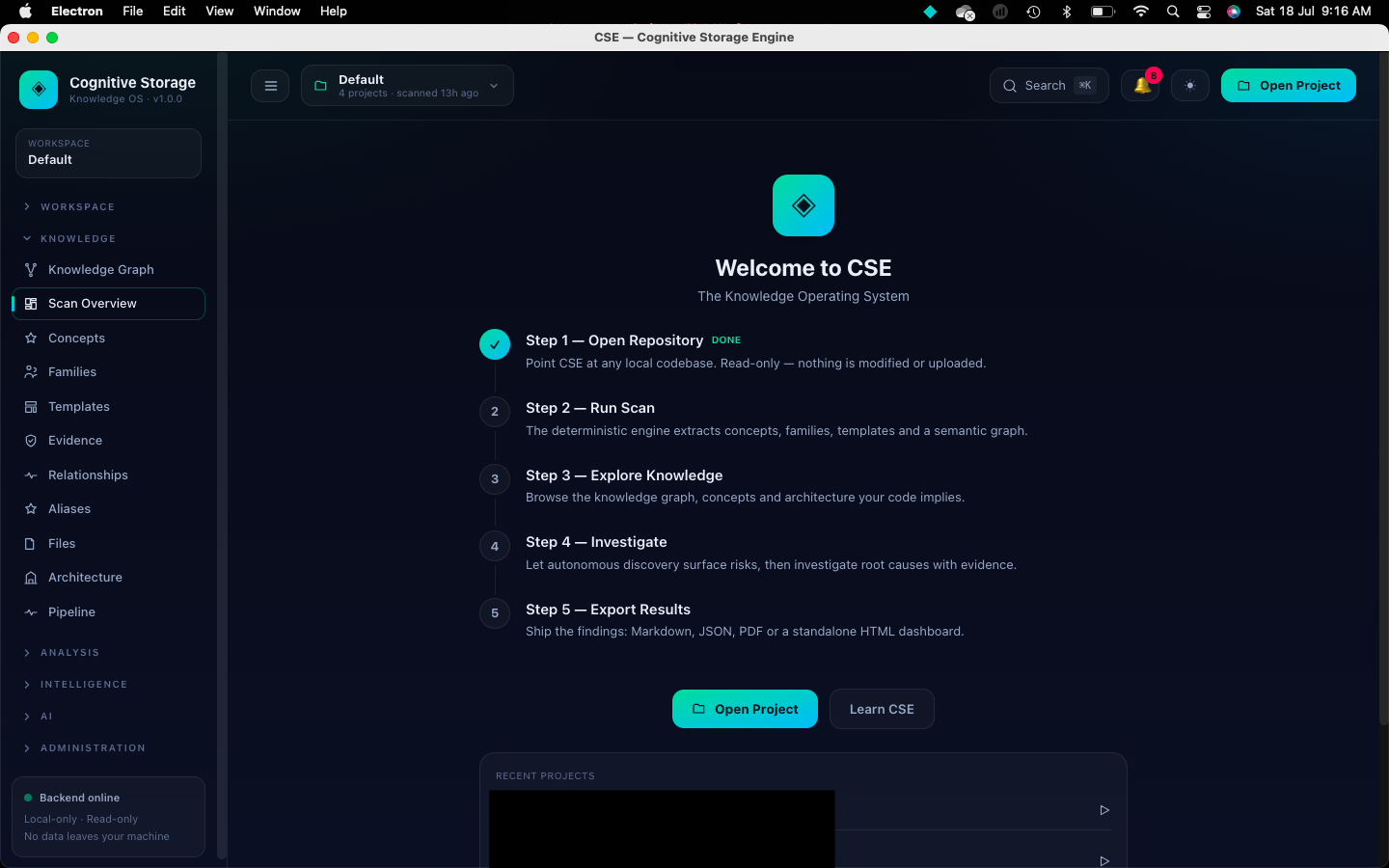
Welcome to CSE – Cognitive Knowledge Engine
-
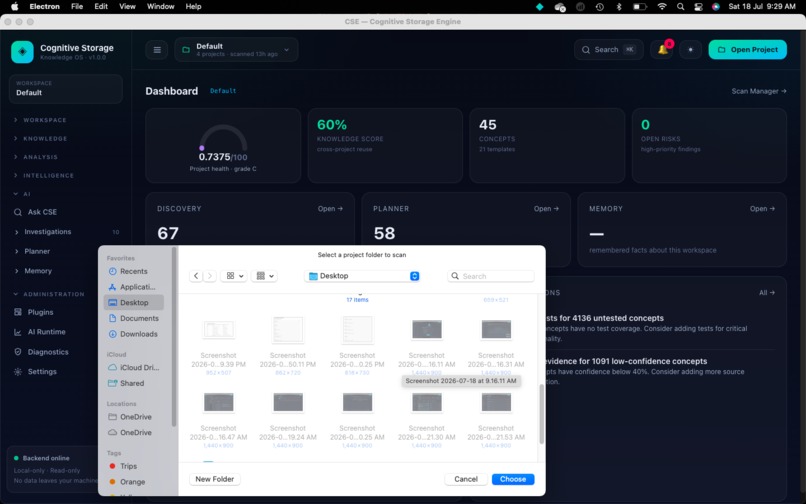
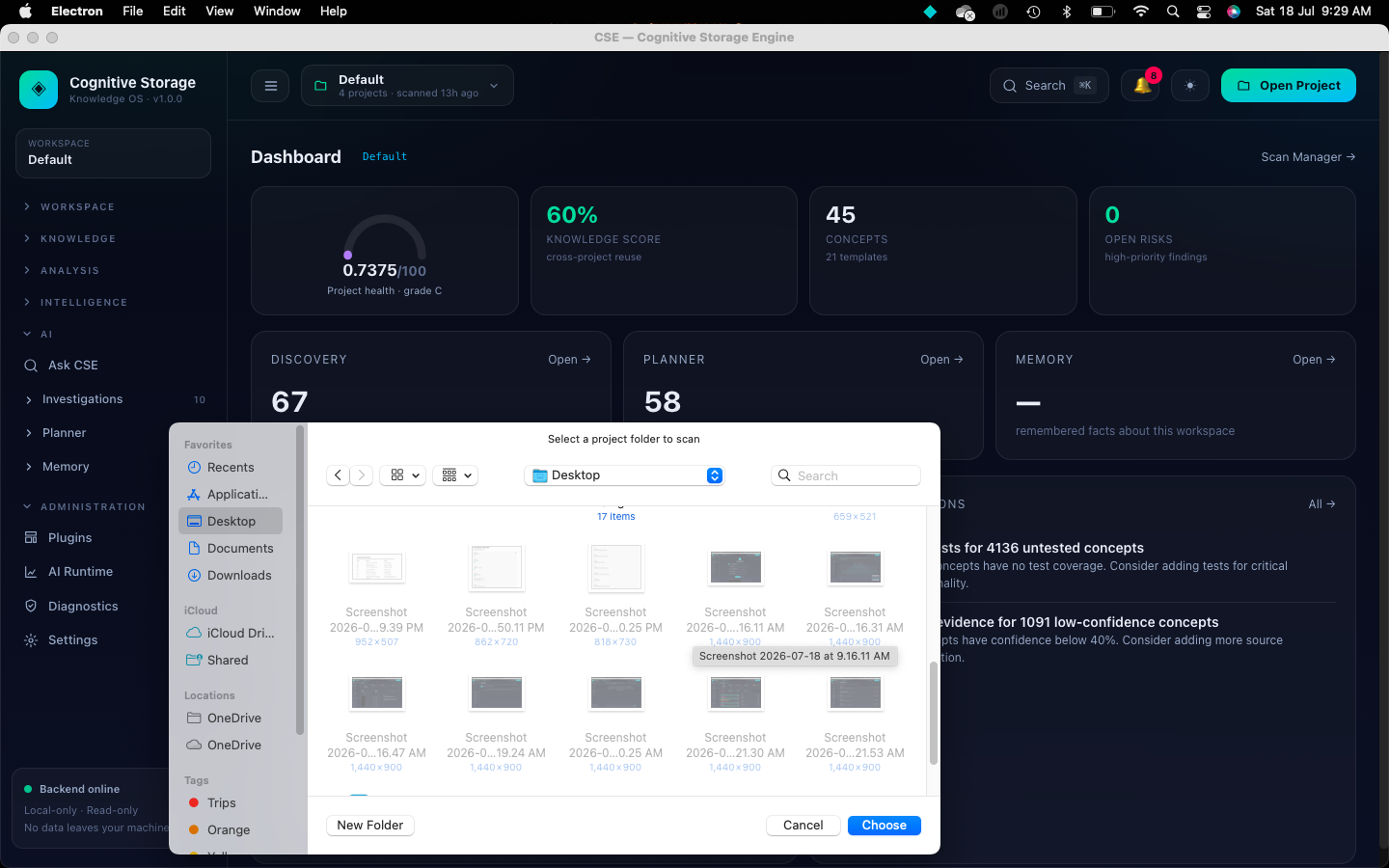
Repository Selection & Local Project Import
-
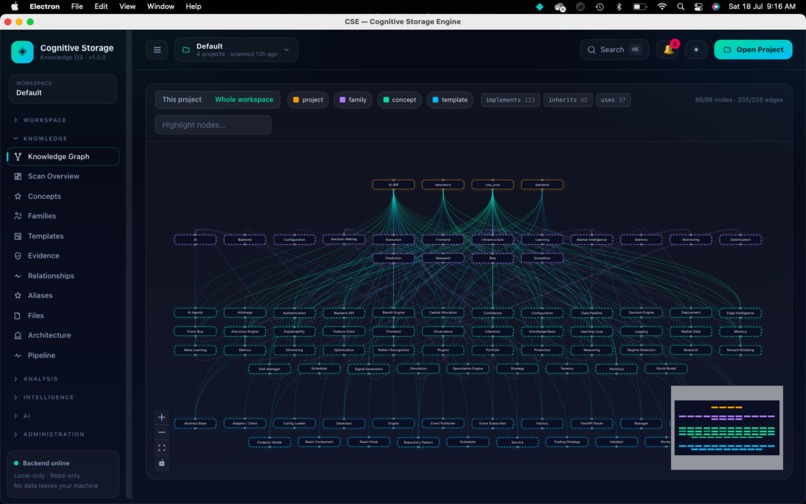
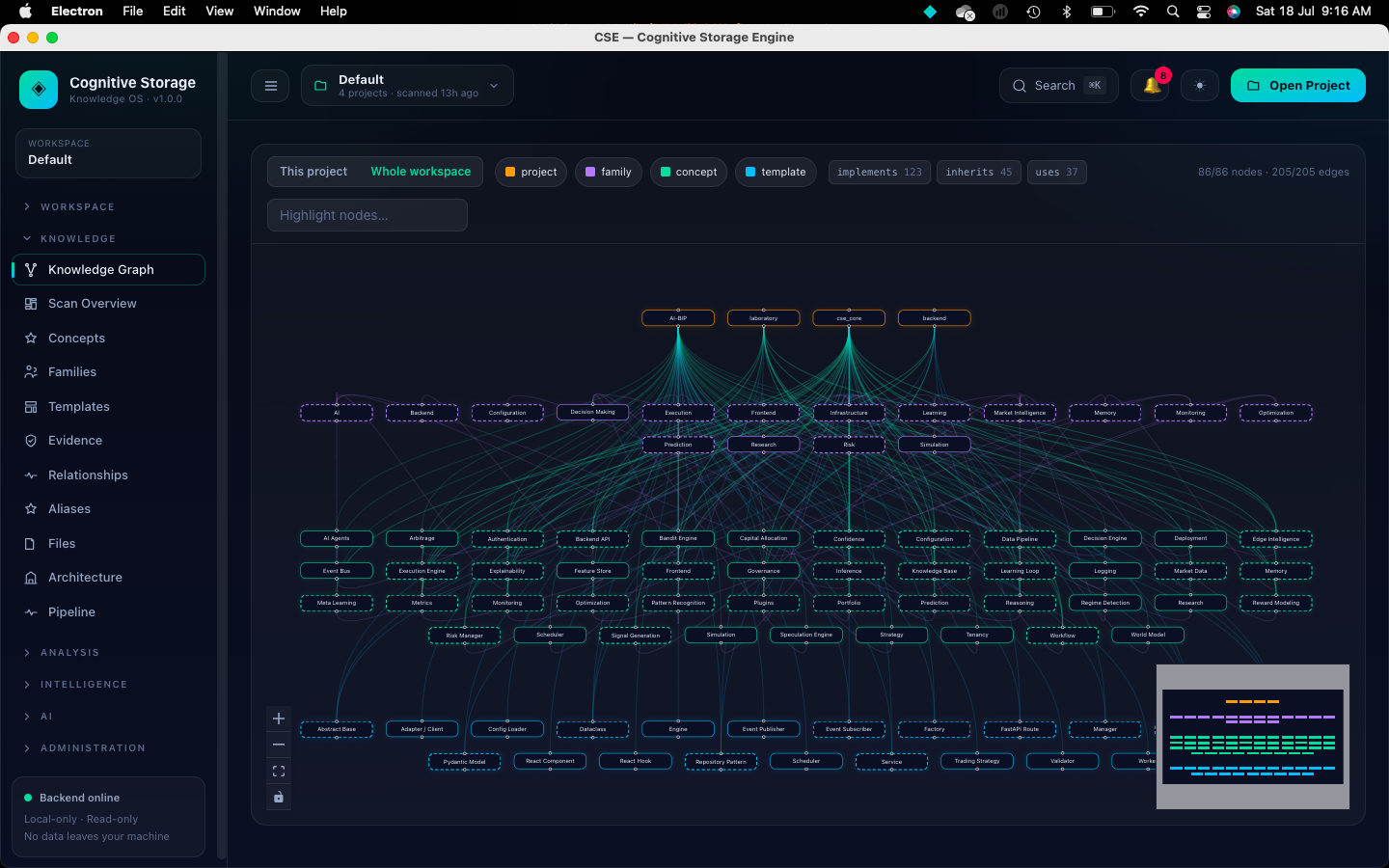
Interactive Semantic Knowledge Graph
-
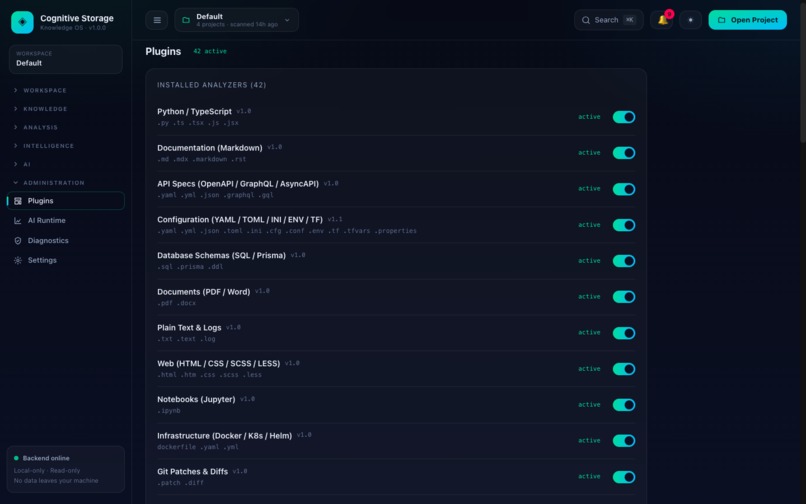
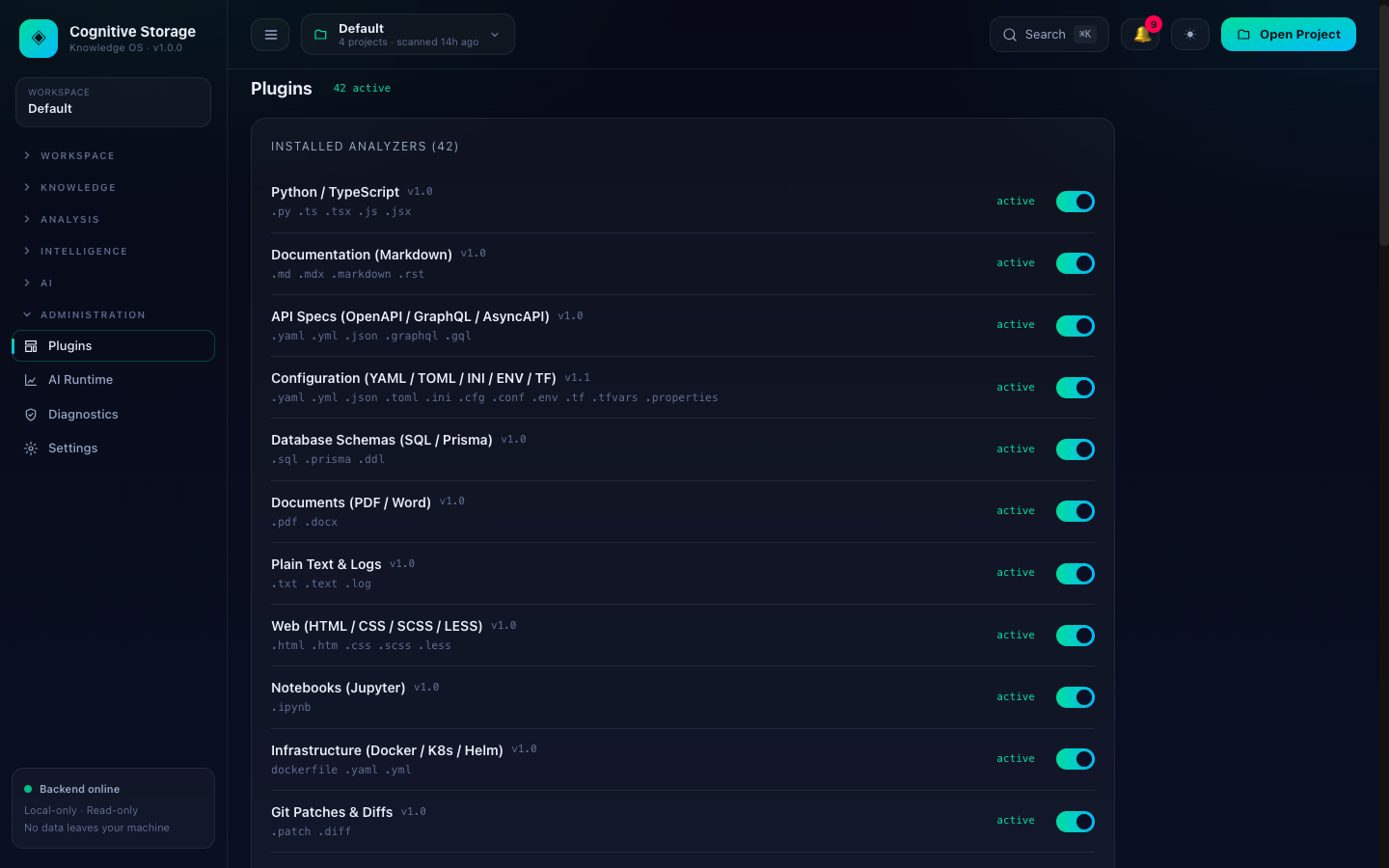
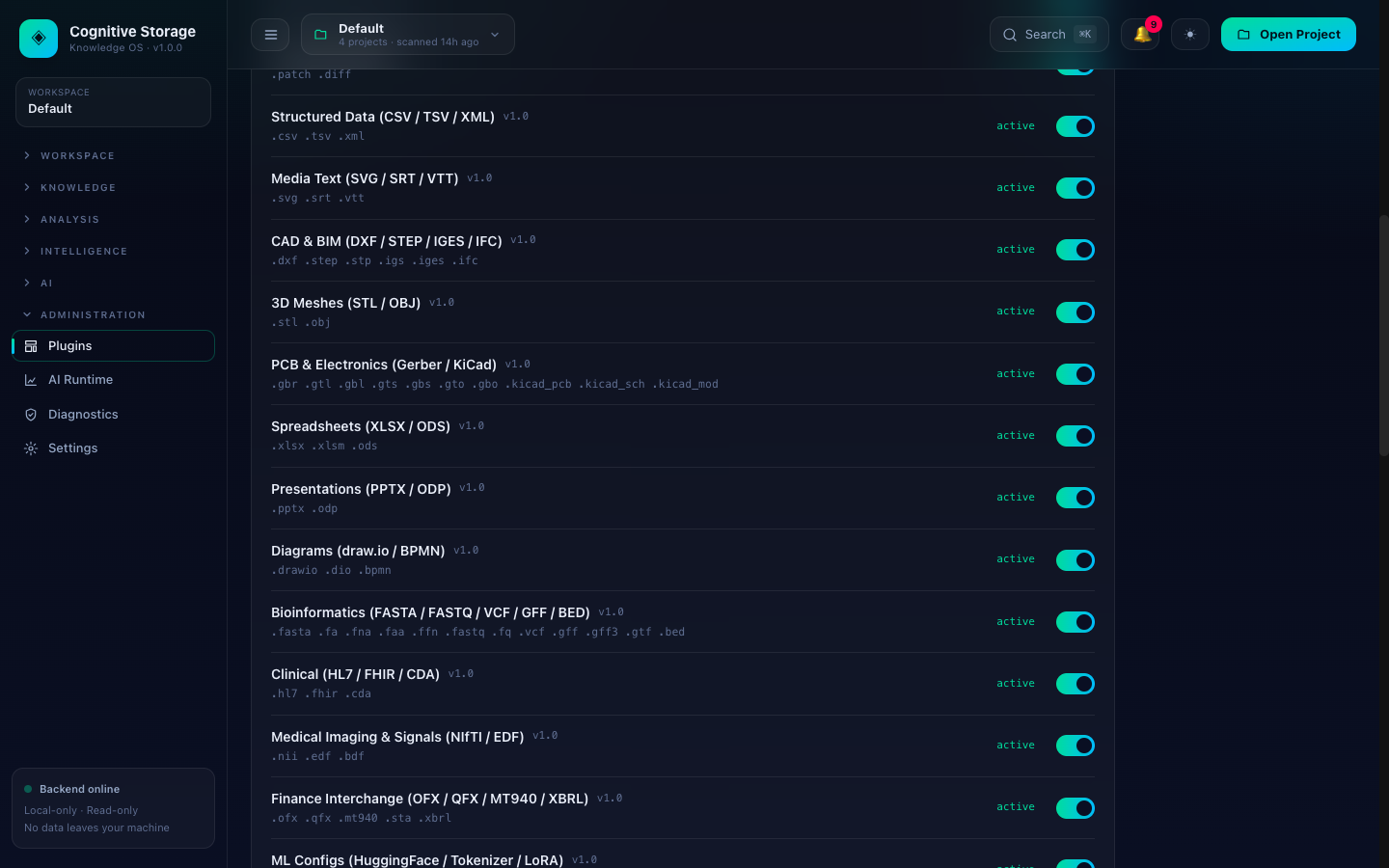
File Format Plug-in
-
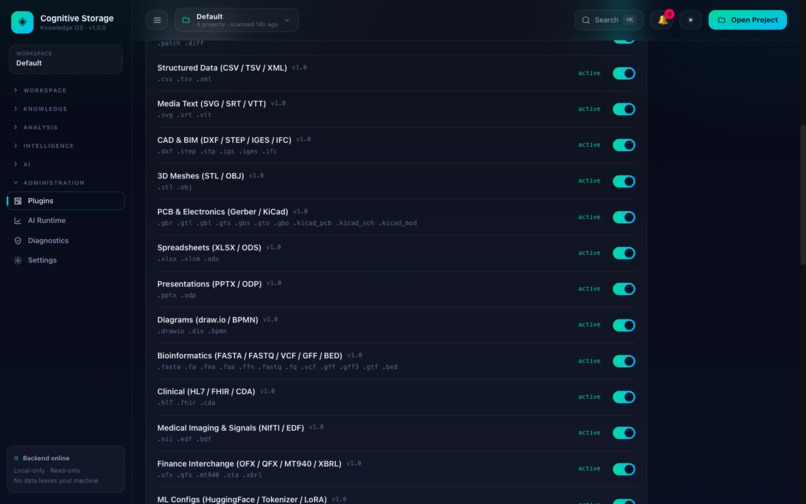
File Format Plug-in
Inspiration
Modern software projects generate enormous amounts of information—source code, documentation, configuration files, logs, notebooks, diagrams, and reports. While search engines and AI assistants can answer isolated questions, they rarely preserve relationships between pieces of knowledge or build a lasting understanding of a project.
I wanted to build a system that doesn't just search information but continuously learns from it, organizes it, and allows developers to investigate complex software as if they were exploring a living knowledge base.
That vision became CSE (Cognitive Storage Engine).
What it does
CSE is an AI-powered cognitive knowledge engine that transforms unstructured information into a persistent, interconnected knowledge graph.
Instead of treating every document independently, CSE understands relationships between files, concepts, technologies, APIs, architectures, and decisions.
The platform currently supports dozens of document and source code formats including source code, Markdown, PDFs, Office documents, notebooks, logs, configuration files, HTML, JSON, YAML, Dockerfiles and many more.
CSE automatically:
- Extracts semantic knowledge
- Builds relationships between entities
- Creates an interactive knowledge graph
- Enables investigation workflows
- Supports incremental reasoning as projects evolve
- Preserves organizational knowledge over time
The result is a searchable cognitive memory rather than a collection of disconnected files.
How I built it
The project combines modern AI workflows with deterministic software engineering.
Major components include:
- Multi-format ingestion pipeline
- Plugin-based analyzer architecture
- Semantic extraction engine
- Typed relationship graph
- Incremental reasoning engine
- Knowledge graph visualization
- Investigation workspace
- Workspace and project management
- Persistent storage layer
- Interactive desktop interface
GPT-5.6 and Codex were used extensively throughout development.
Codex accelerated implementation by generating production-quality code, refactoring large modules, writing automated tests, improving architecture, identifying defects, and helping validate implementation decisions across thousands of lines of code.
GPT-5.6 was used for design discussions, architecture reviews, reasoning about trade-offs, debugging complex workflows, and rapidly iterating on new capabilities.
Rather than replacing engineering decisions, the models acted as collaborative development partners throughout the project.
Challenges
Building a system that understands many different data formats while preserving semantic relationships required designing a modular architecture that could continuously evolve.
Some of the biggest challenges included:
- Supporting heterogeneous file formats
- Building deterministic knowledge extraction
- Scaling relationship generation
- Designing incremental reasoning
- Maintaining fast performance on large repositories
- Creating an intuitive investigation workflow
Balancing extensibility with performance required multiple architectural iterations.
Accomplishments
Some accomplishments include:
- AI-native cognitive knowledge engine
- Multi-format knowledge ingestion
- Persistent semantic knowledge graph
- Investigation workspace
- Relationship-aware reasoning
- Incremental knowledge updates
- Plugin-based architecture
- Interactive desktop application
- Modern developer experience
What I learned
This project reinforced that AI becomes significantly more useful when combined with structured knowledge rather than isolated prompts.
Building persistent semantic memory unlocks entirely new ways for developers to understand, investigate, and maintain complex software systems.
What's next for CSE
The long-term vision is to evolve CSE into a universal knowledge platform capable of understanding not only software repositories but also enterprise documentation, research papers, datasets, APIs, engineering diagrams, and operational knowledge.
Future work includes:
- Collaborative workspaces
- Cloud synchronization
- Multi-user knowledge graphs
- Enterprise integrations
- Advanced reasoning agents
- Natural language investigation
- Large-scale repository intelligence
- Real-time organizational memory
Built With
- api
- application
- artificial
- codex
- css3
- github
- gpt-5.6
- graph
- intelligence
- javascript
- json
- knowledge
- node.js
- openai
- processing
- python
- react
- rest
- sqlite
- typescript
- vite


Log in or sign up for Devpost to join the conversation.