-
-
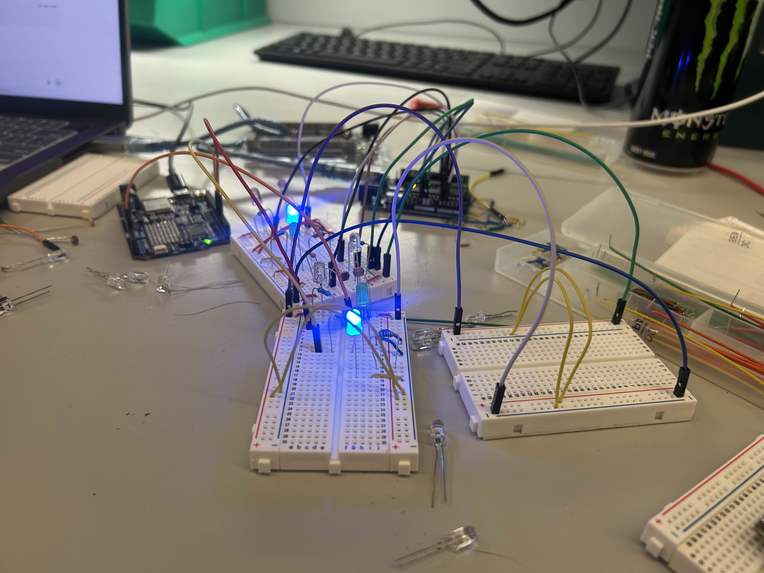
Working hardware
-
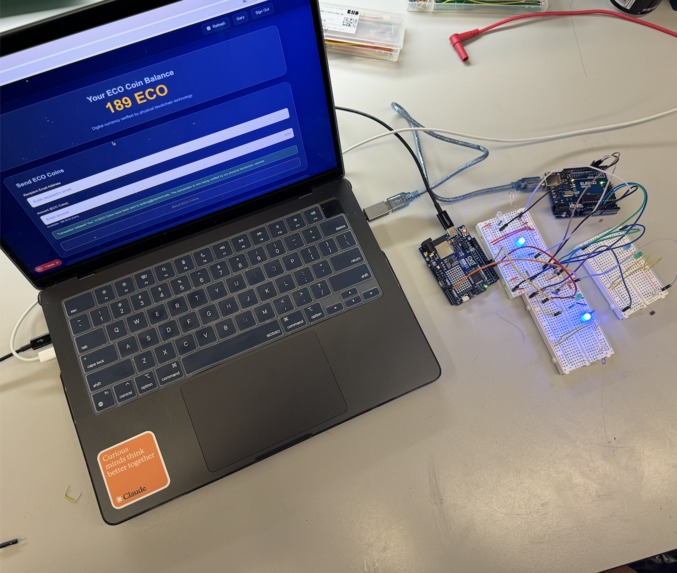
Hardware setup
Inspiration
Proof of work blockchains consume as much energy as small nations. Gigawatts of power are burned on useless hash puzzles that exist only to make consensus expensive. As students, researchers, and global citizens, we set out to rethink consensus. We asked whether it was possible to preserve the essential guarantees of blockchain such as immutability, distributed trust, and Byzantine fault tolerance, while stripping away the waste. CryptoLab is our answer. It is a physical ultra low power blockchain that finalizes blocks using light signals as an attestation step instead of endless mining.
What it does
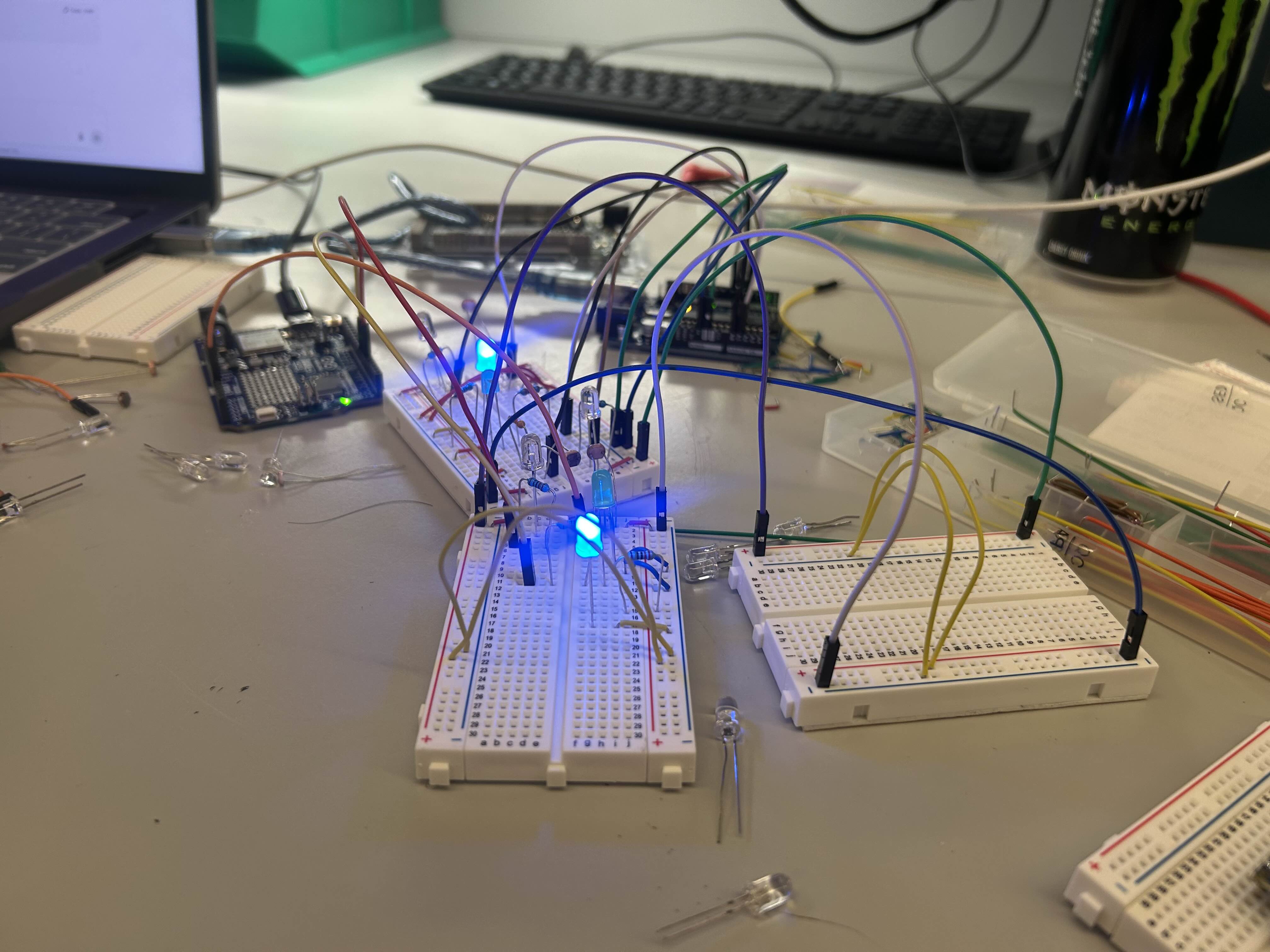
CryptoLab is a live blockchain network built from simple hardware nodes. Each node uses a microcontroller, an LED emitter, and a light sensor. At the start of each round a leader node emits a seed derived blink pattern. Neighboring nodes sample the analog signal through their light detectors, check it against the expected pseudo random sequence, and if it matches they sign a cryptographic witness message. When a quorum of signatures is collected the block is finalized. Transactions remain standard digitally signed messages verified with elliptic curve cryptography. The block header still contains cryptographic hashes that link it to the previous block, preserving immutability and collision resistance. The blink step ensures that no single node can unilaterally append to the chain, while digital signatures guarantee that the ledger remains verifiable by anyone.
How we built it
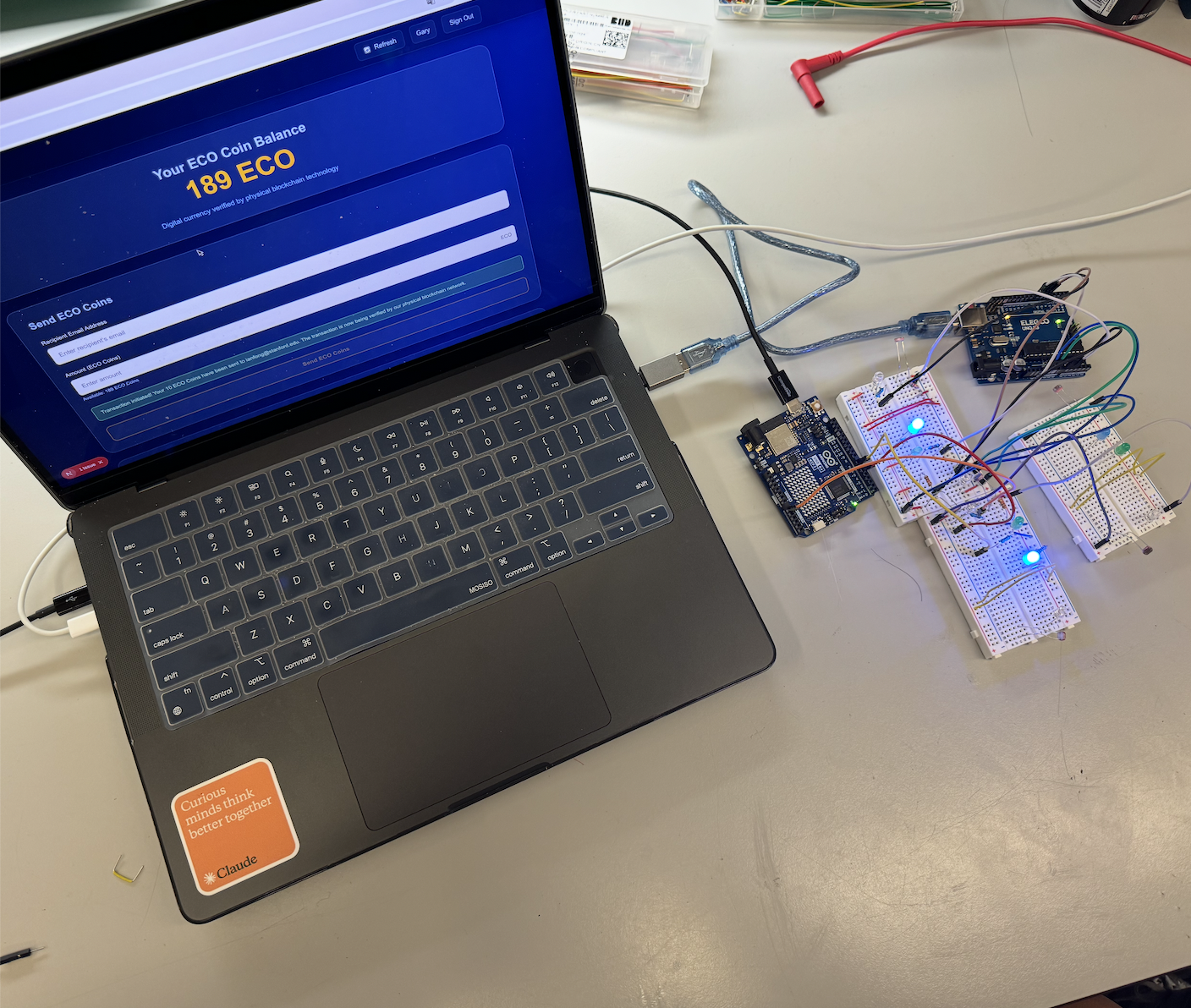
We built each node around an Arduino UNO. The LED is driven by a digital pin through a resistor. The wallet is a React frontend that creates transactions signed with Ed25519 and submits them to any node. Leader selection is round robin, although the design allows for a lottery based on verifiable random functions. Consensus requires a quorum of 1-2 neighboring nodes of witness signatures, providing fault tolerance against both malicious and offline nodes. The network layer runs over WiFi and uses lightweight message passing between microcontrollers. The blink acts as a physical trigger that gates digital agreement.
Challenges we ran into
The analog signal path was the hardest part. Light intensity varied with ambient noise and background light, which made it difficult for the light detectors to pick up on the nearby signals. We had to calibrate thresholds to ensure that readings were consistent enough for consensus.
Accomplishments that we are proud of
We built a blockchain that consumes millijoules instead of megawatts. We showed that the core ideas of consensus, hashing, and digital signatures can be realized in a physical setting with hardware no more complex than a breadboard and a sensor. Watching an LED blink, seeing independent nodes sign witness notes, and then seeing the block propagate and balances update in the wallet gave us a sense of proof that energy waste is not necessary for trust.
What we learned
We learned that blockchain and consensus do not necessarily have to depend on brute force computation. They depend on careful design of signatures, quorums, and verification, all of which can be implemented on hardware through careful planning. We also learned how important it is to think like global citizens when designing technology. A protocol that consumes gigawatts is not sustainable. A protocol that achieves accuracy and reliability at millijoule scale is a step toward a better balance between security and responsibility.


Log in or sign up for Devpost to join the conversation.