-
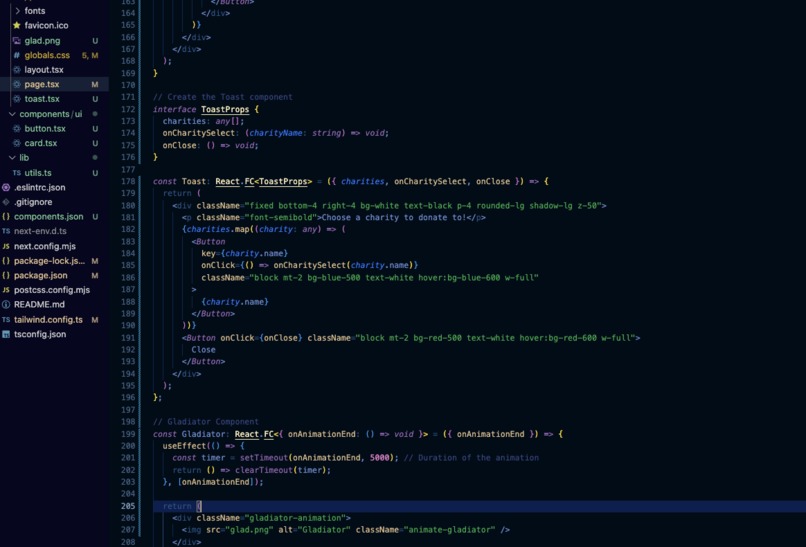
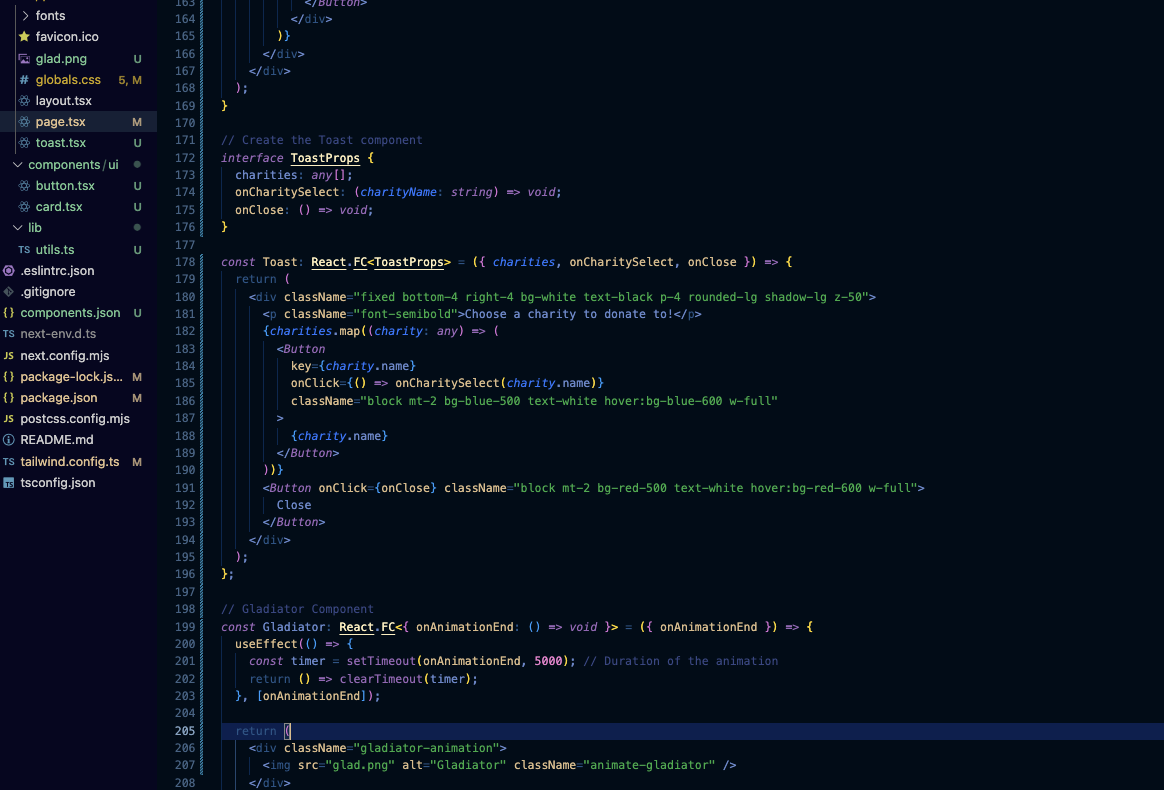
ex of code
-
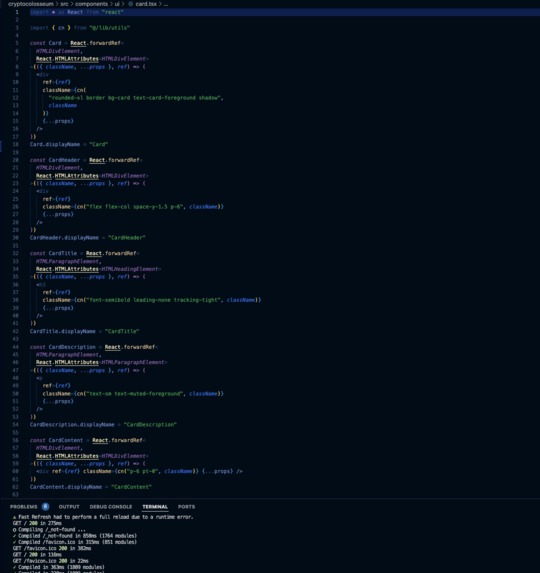
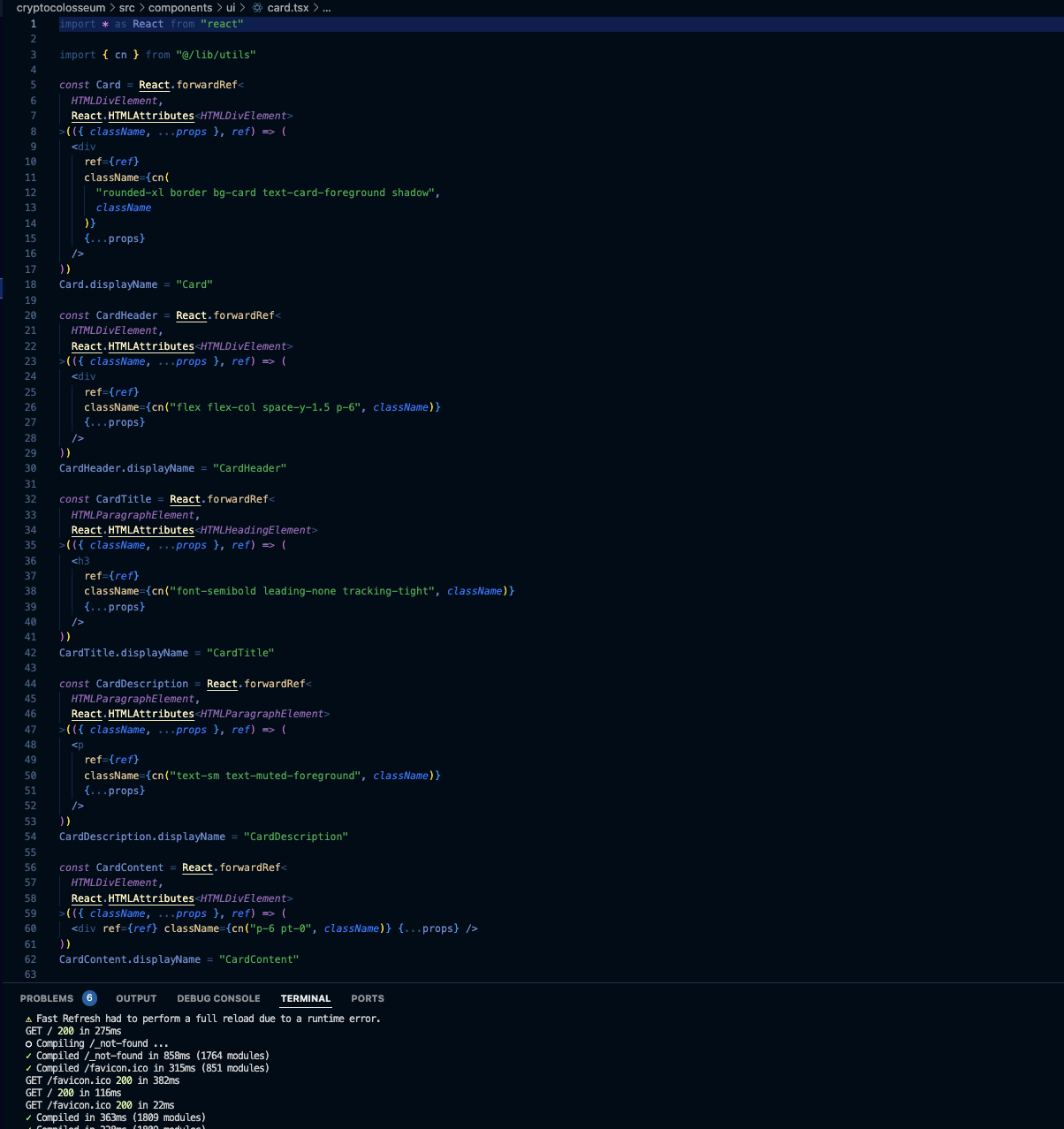
another ex of code
Inspiration
The inspiration for CryptoColosseum came from a desire to make charitable giving more engaging and transparent. The parallels between the spectacle of ancient Roman gladiatorial contests and the modern need for attention-grabbing fundraising campaigns struck us. By combining this historical theme with cutting-edge blockchain technology, we aimed to create a platform that would excite donors and bring a new level of trust to charitable contributions.
What it does
CryptoColosseum is a Web3 application that gamifies charitable donations by turning them into virtual gladiatorial contests. Charities are represented as gladiators, each fighting for their cause. Donors use cryptocurrency to support their chosen charities, with each donation acting as a "vote" that strengthens their gladiator's position. The platform runs in seasons, with the charity-gladiator receiving the most support at the end of each season being declared the victor. Smart contracts automatically distribute the funds to the winning cause, ensuring transparency and immediacy in fund allocation.
How we built it
We built CryptoColosseum using a stack of Web3 technologies:
- Solidity for writing smart contracts that handle donation logic and fund distribution
- Ethereum blockchain for deploying our smart contracts and handling transactions
- Web3.js for interacting with the Ethereum blockchain from our front-end
- React for building a dynamic and responsive user interface
- IPFS for storing charity profiles and campaign materials in a decentralized manner
- MetaMask for wallet integration, allowing easy cryptocurrency donations
Challenges we ran into
- Ensuring fairness in the voting system while preventing potential manipulation
- Optimizing gas fees to make small donations viable
- Designing an engaging user interface that balances the Roman theme with modern UX principles
- Implementing a secure and transparent method for verifying charities on the platform
- Handling the complexities of cross-chain compatibility to accept various cryptocurrencies
Accomplishments that we're proud of
- Successfully implementing a fully decentralized voting and fund distribution system
- Creating an engaging gamification layer that makes donating fun and competitive
- Developing a user-friendly interface that makes Web3 technology accessible to non-tech-savvy users
- Implementing a transparent tracking system where donors can follow their contributions' impact
What we learned
- The intricacies of developing secure and efficient smart contracts
- The importance of user experience design in blockchain applications
- The complexities of integrating traditional charitable organizations with cryptocurrency systems
- The potential of gamification in driving engagement for serious causes
- The challenges and opportunities in creating a decentralized governance model for fund allocation
What's next for CryptoColosseum: Decentralized Charity Battles
- Implementing a DAO (Decentralized Autonomous Organization) structure to allow community governance of the platform
- Expanding to multiple blockchains to increase accessibility and reduce transaction costs
- Developing mobile apps for iOS and Android to reach a broader audience
- Creating educational content to help traditional charities onboard to the platform
- Implementing AI-driven matching to suggest charities to donors based on their interests and donation history
6. Exploring partnerships with major cryptocurrency exchanges for easier onboarding of new users
OUR TECH STACK </>
Languages:
Solidity (for smart contracts) JavaScript/TypeScript (for frontend and backend logic) HTML/CSS (for frontend structure and styling)
Frameworks and Libraries:
React.js (frontend framework) Web3.js (for blockchain interactions) Hardhat (Ethereum development environment) Ethers.js (for Ethereum wallet interactions) Tailwind CSS (for styling)
Blockchain:
Ethereum 2.0 (main blockchain platform), Polygon for scaling Smart Contracts: Solidity with AI-optimized code generation Frontend: React with Next.js, Three.js for 3D visualizations Backend: Node.js, Python for AI services IPFS and Filecoin for decentralized storage
Cloud Services:
AWS Lambda (for serverless backend functions) Amazon S3 (for additional file storage)
Databases:
Amazon DynamoDB (for off-chain data storage)
APIs:
The Graph (for indexing and querying blockchain data) CoinGecko API (for real-time cryptocurrency price data)
DevOps, MLOps, and Other Technologies:
MetaMask (for wallet integration) OpenZeppelin (for secure smart contract development) GitHub Actions (for CI/CD) GitLab CI/CD with MLflow for ML model lifecycle management Kubeflow for ML pipelines Docker (for containerization)
Artificial intelligence, machine learning, deep learning networks, and NLP:
TensorFlow and PyTorch for deep learning models Hugging Face Transformers for NLP tasks OpenAI GPT-4 for advanced language understanding and generation Stable Diffusion for image generation Reinforcement learning for optimizing charity campaign strategies
Data and Analytics:
The Graph for blockchain data indexing BigQuery ML for large-scale data analytics Jupyter notebooks for data science workflows
Cloud and Infrastructure:
Google Cloud Platform with TPU support for AI workloads Kubernetes for orchestrating AI microservices
Testing and Development Tools:
Truffle Suite (for smart contract testing) Ganache (for local blockchain development) Jest (for JavaScript testing) Cypress (for end-to-end testing)
Blockchain Interoperability:
Polkadot for cross-chain communication Chainlink for reliable off-chain data integration
Security:
OpenZeppelin Defender (for smart contract monitoring and management) Slither (for Solidity static analysis)
Monitoring and Analytics:
Amazon CloudWatch (for monitoring and logging) Google Analytics (for user behavior tracking) Prometheus Grafana
Built With
- amazon-cloudwatch
- amazon-dynamodb
- amazon-web-services
- anthropic
- chainlink
- coingecko
- css3
- cypress
- docker
- ethereum
- ethers.js
- filecoin
- ganache
- gcp-tpu
- github-actions
- gitlab
- google-analytics
- grafana
- hardhat
- html5
- hugging-face
- ipfs
- javascript
- jest
- kubeflow
- kubernetes
- lambda
- metamask
- mistral
- mlflow
- nextjs
- openai
- openzeppelin
- openzeppelin-defender
- polkadot
- polygon
- prometheus
- pytorch
- react
- slither
- solidity
- stable-diffusion
- tailwind
- tensorflow
- the-graph
- three.js
- transformers
- truffle-suite
- typescript
- web3js


Log in or sign up for Devpost to join the conversation.