Inspiration
What this pandemic revealed, especially to the younger generations, is the fragility of centralized source of truth for public health. While the scientists urgently need accurate data to develop vaccine and minimize fatality, we have witnessed many failures from trusted authorities to deliver accurate data and information. We believed by moving to a decentralized system, we can (1) allow our government and CDC to strategize the best way to allocate resources like ventilators, masks, nurses, doctors, testing kits, (2) make data-backed decisions on when to place more stringent stay-at-home orders to decrease protests, and (3) keep a source of truth for coronavirus updates to identify actual hidden number of cases.
What it does
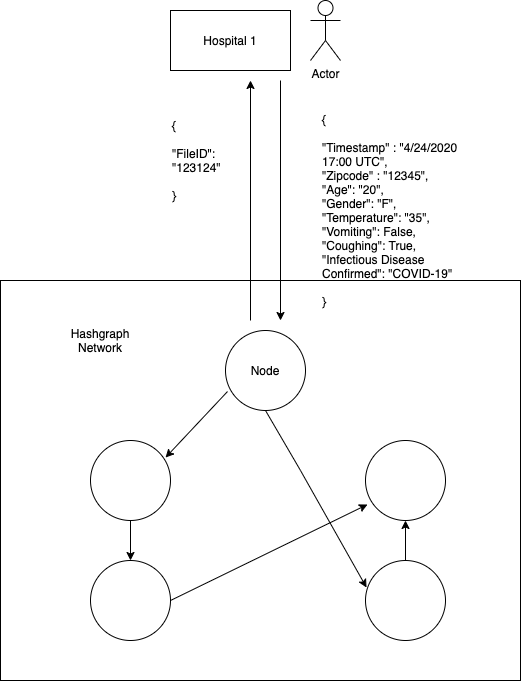
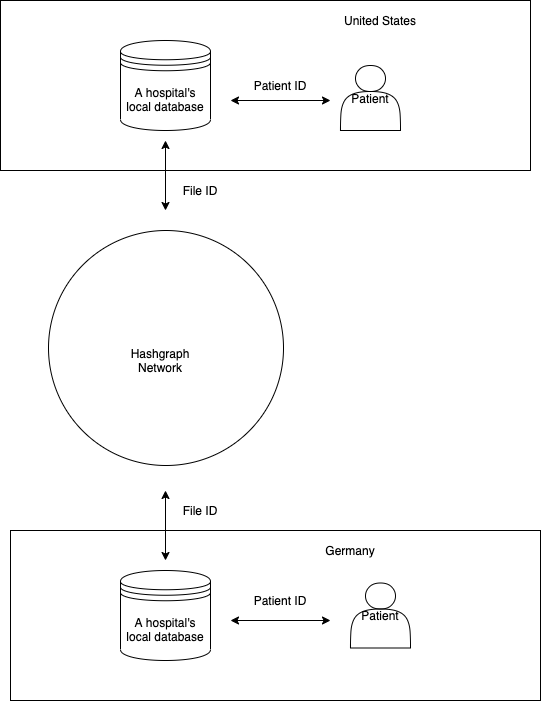
CryptoCare can partner up with a hospital’s local patient database. Whenever the hospital’s database is updated, a file with following content is uploaded to Hashgraph network: { “Timestamp”: “”, “Zipcode”: “”, “Age”: “”, “Gender”: ””, “Confirmed”: ”’, “Temperature”: ””, “Vomiting”: “”, “Coughing”: “” } The unique patient ID within the hospital network is mapped to file ID unique to the Hashgraph network. Hashgraph network can be scaled globally. When a hospital updates their unique patient ID record in their local database, Hashgraph unique file ID will be updated as well. This file can then be read by anyone in the world while securing patient’s privacy.
The web application shows a simple HTML form where you can input above data and upload it as a file to Hashgraph network. After the transaction is complete, the server then queries using the unique file ID, and displays the data back to the user.
How I built it
We used Hedera Hashgraph Javascript SDK and its File Service API to make transactions with the Hedera network in testnet. We used ExpressJS framework and Jade templating to build the web application.
Challenges I ran into
This project was everyone in the team’s first experience with distributed ledger technology. Initially we spent a lot of times trying to understand the new technology first before we got to building. It was challenging but it was worth it as our team had all learned so much.
Accomplishments that I'm proud of
June: "Leveraging the super-cool new Hedera Hashgraph technology."
Kimberly: "Being able to implement a Hedera dapp without any knowledge in DLT was awesome. And though I have used different web dev frameworks, this was my first time working with Express and the programming nuances behind nodeJS. Also rediscovered how difficult front end development is, but overall this was a great experience for me."
Paul: "Creating and designing media to help others better understand our creation and it's purpose."
What I learned
June: "We had learned and developed these skills from zero knowledge: Node JS, Hedera Hashgraph, Express."
Kimberly: "Aside from learning all the unfamiliar technologies, I've learned having a balanced team is really crucial. Everyone has a different skillset to bring to the team which made everything flow much better!"
Paul: "Researching and learning about hashgraphs and blockchains and how they work was very interesting."
What's next for CryptoCare
The CryptoCare application enables you to upload and query patient data in a public Hedera network. The next step for CryptoCare is to incorporate data analytics service to query patient-data and perform basic analysis on it. CryptoCare can be how all the patient data from hospitals around the world get shared with each other to keep a source of truth for patient data and to provide a dataset big enough to extrapolate important medical findings, such as correlation between gender and the number of confirmed cases.
Built With
- css
- express.js
- hashgraph
- hedera
- html
- javascript
- node.js


Log in or sign up for Devpost to join the conversation.