-
-
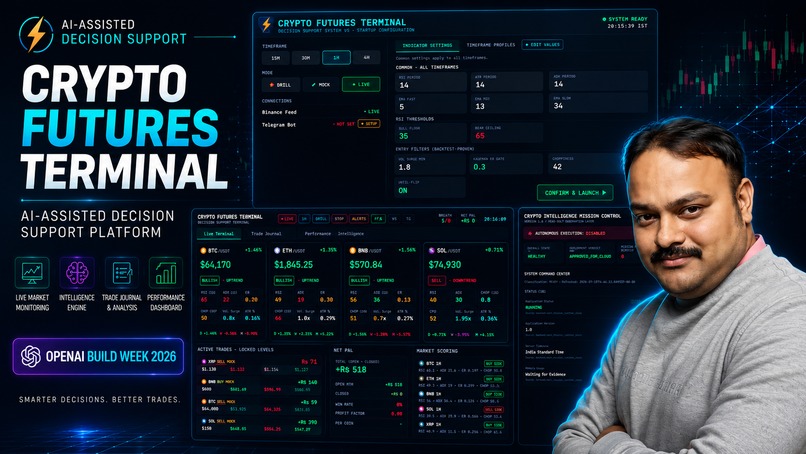
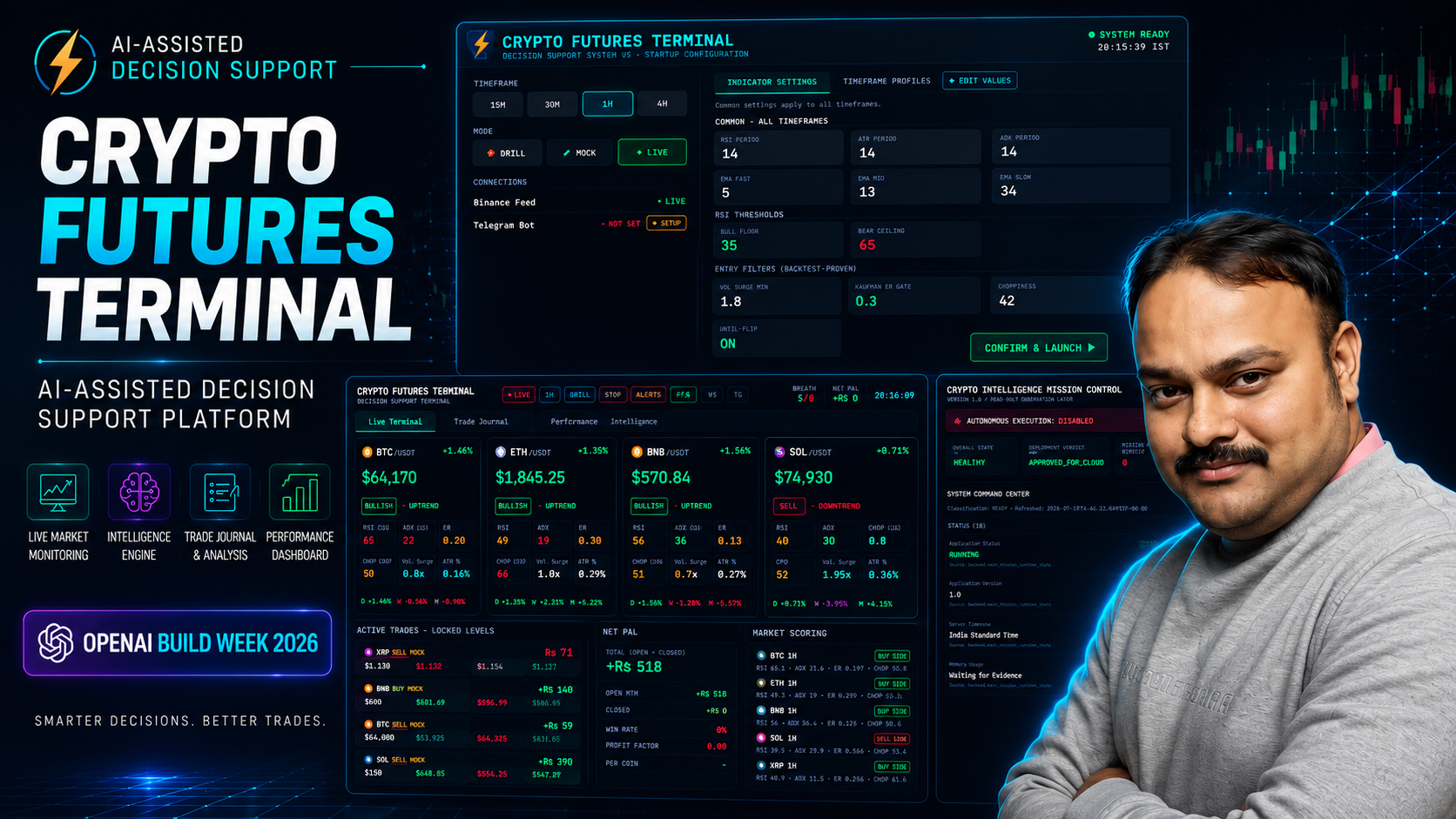
Project Overview AI-Assisted Crypto Futures Decision Support Platform
-
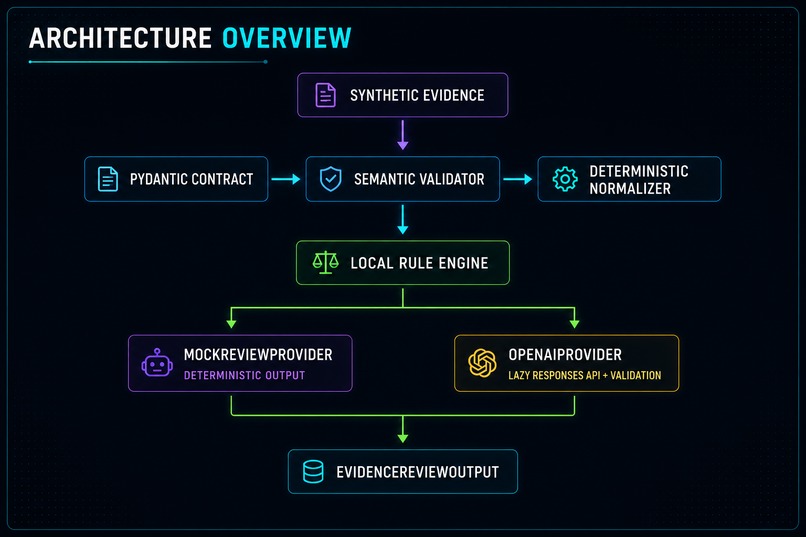
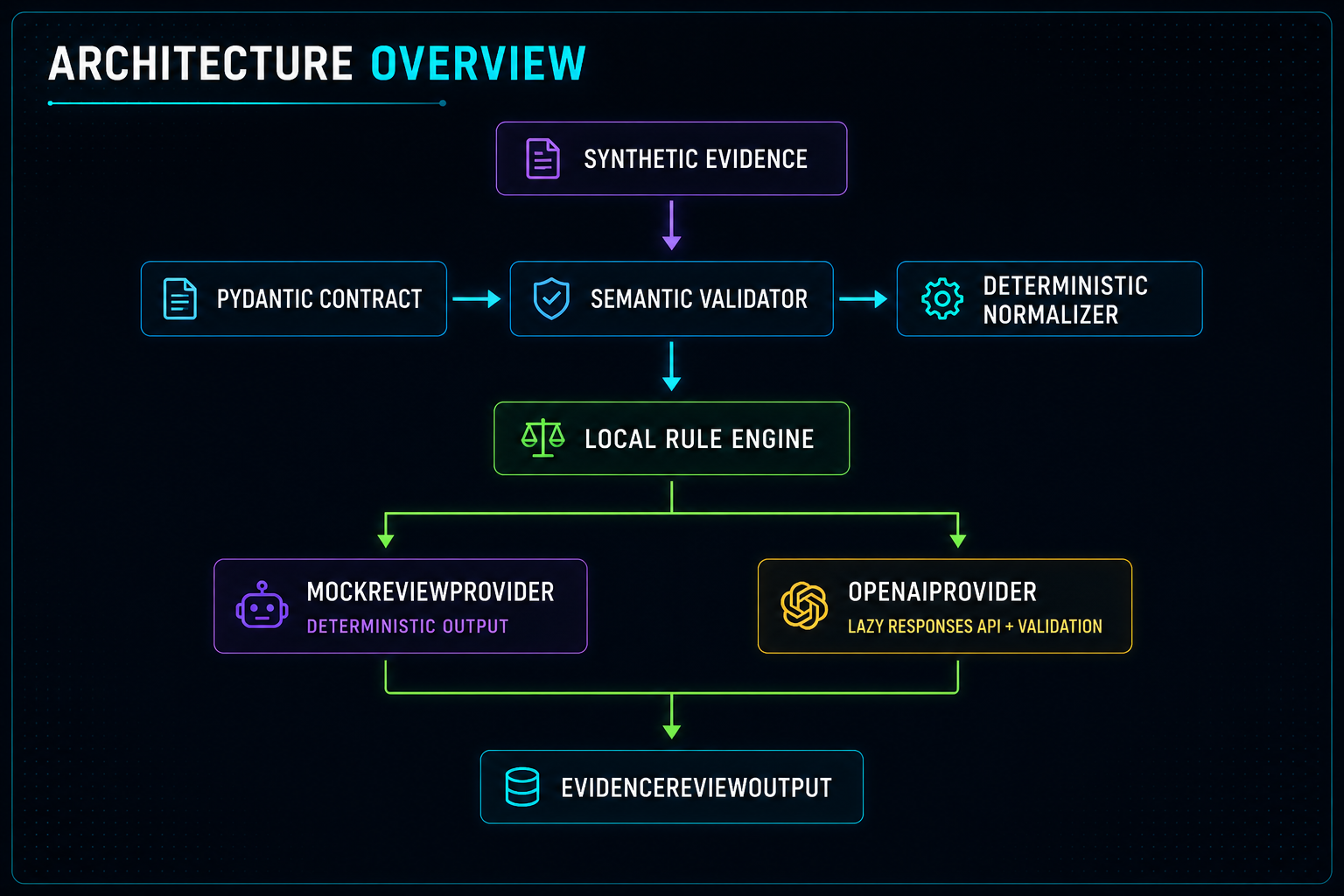
Architecture Overview Evidence validation and AI-assisted review workflow.
-
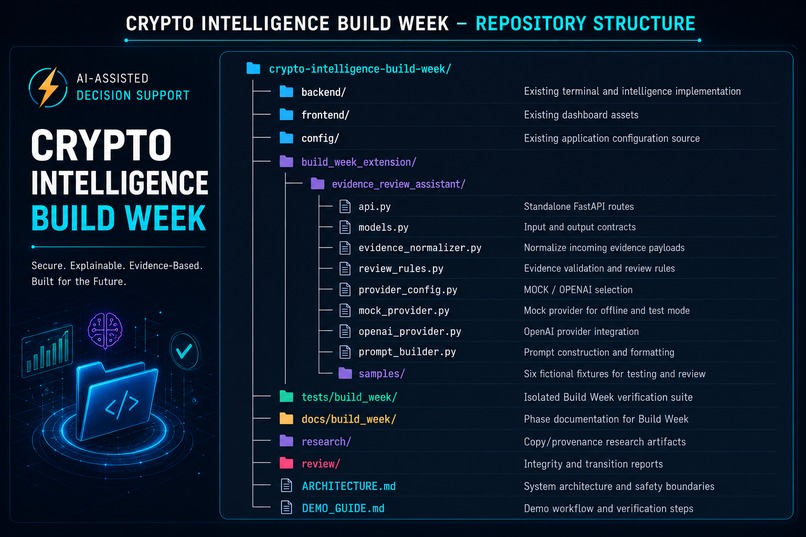
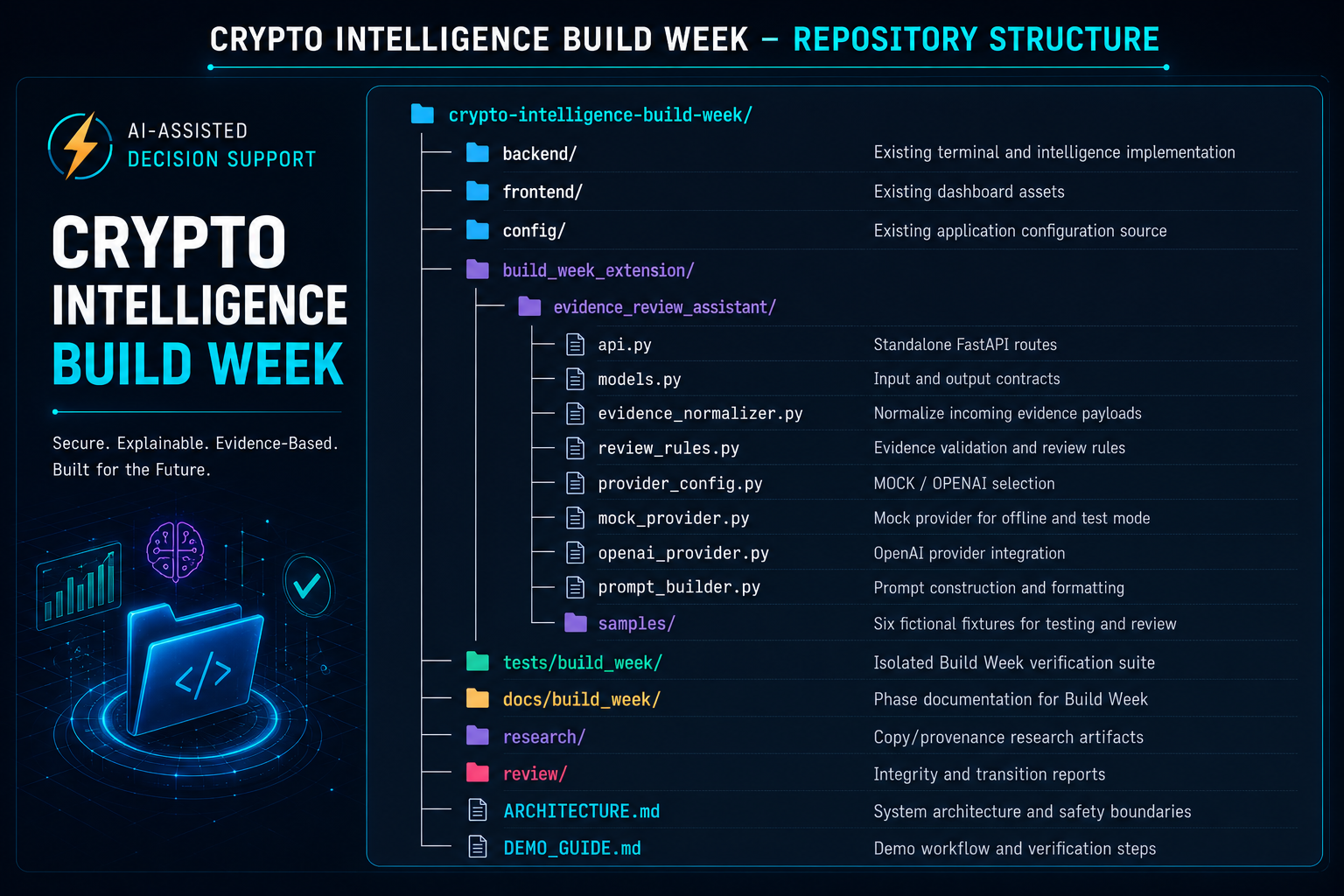
Repository Structure Build Week architecture and project organization.
-
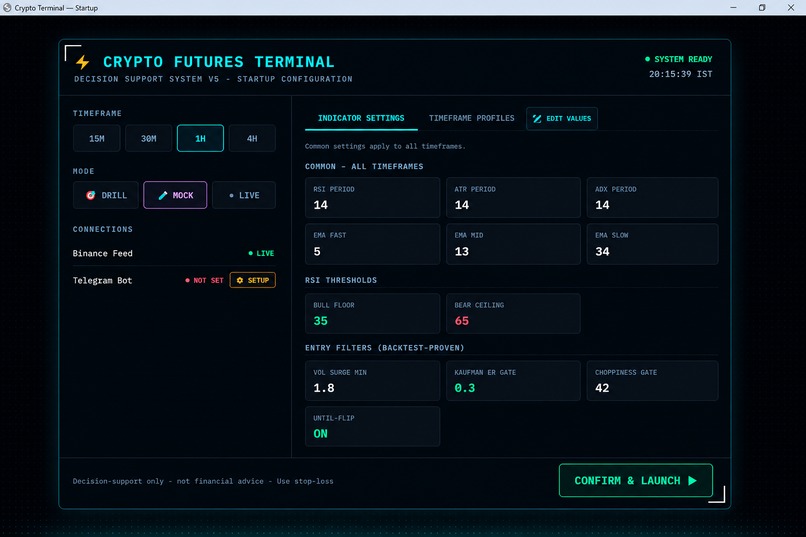
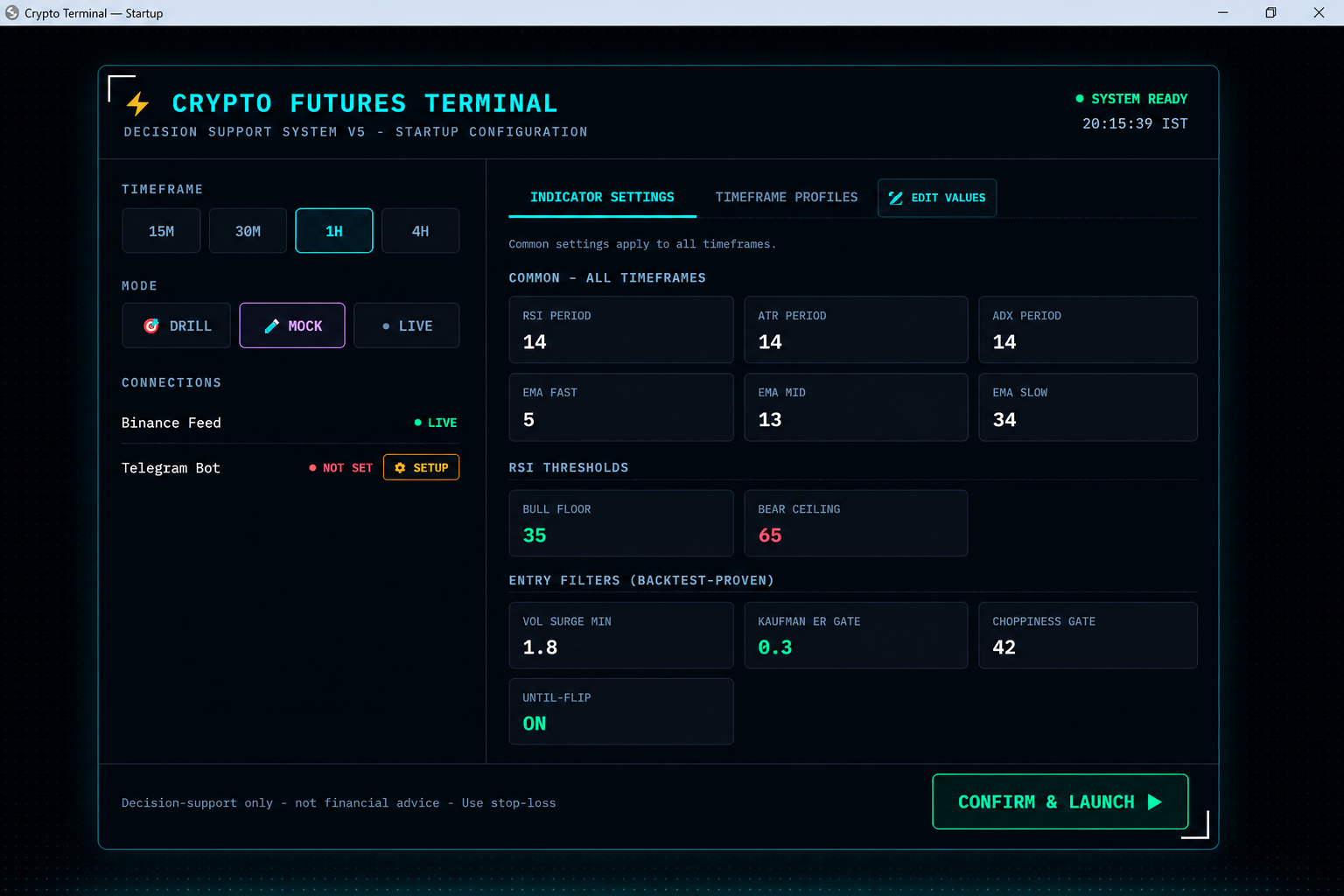
Startup Configuration Configure timeframe, indicators, and launch the terminal.
-
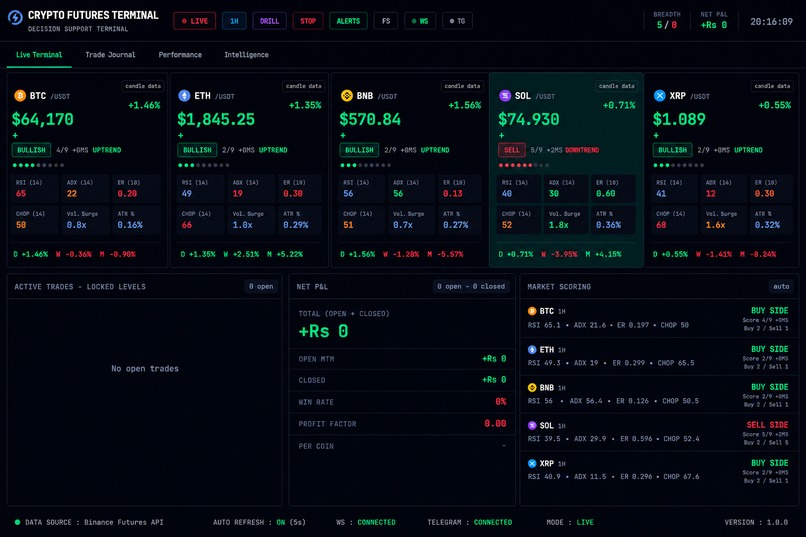
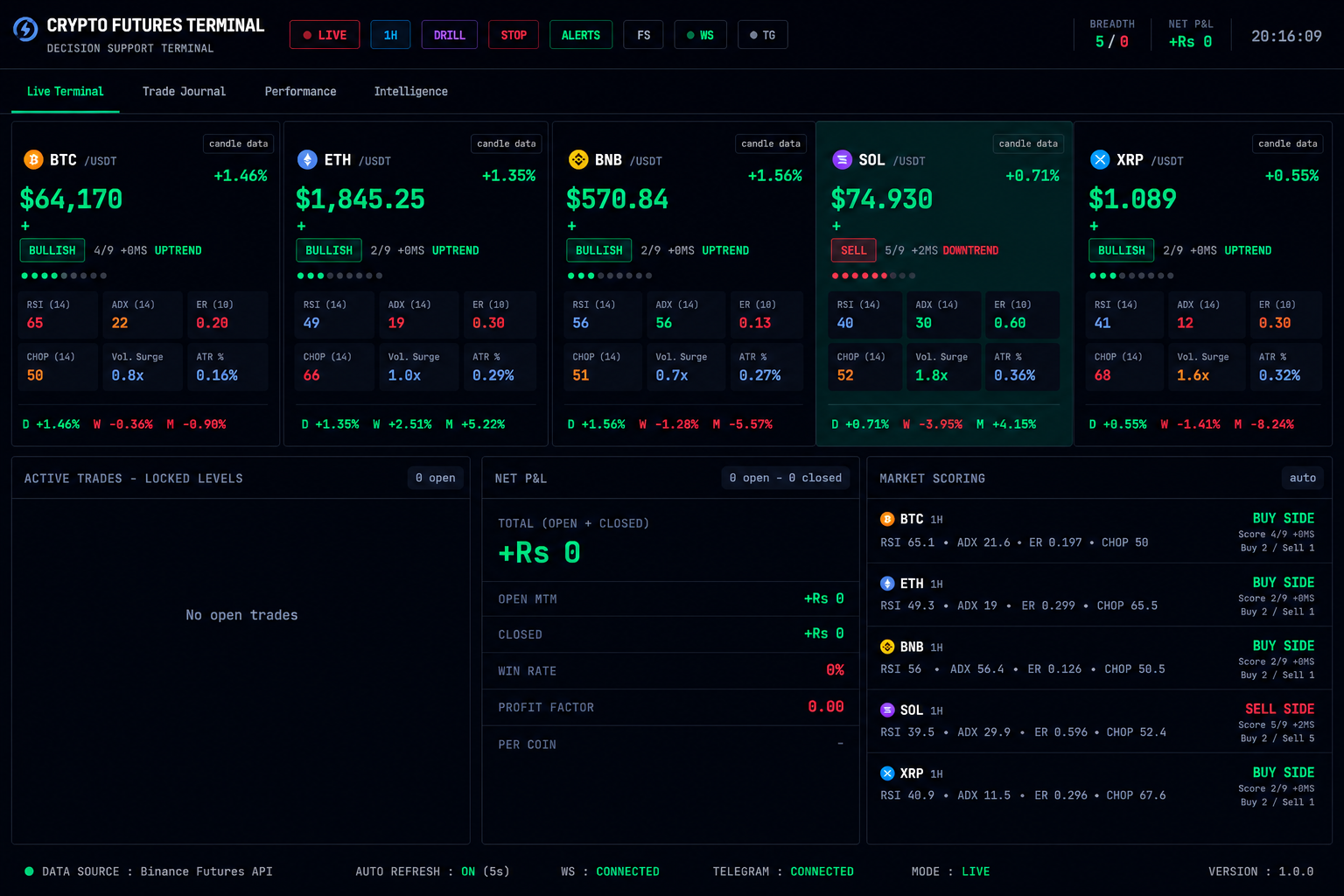
Live Market Dashboard Real-time multi-asset market monitoring and decision support.
-
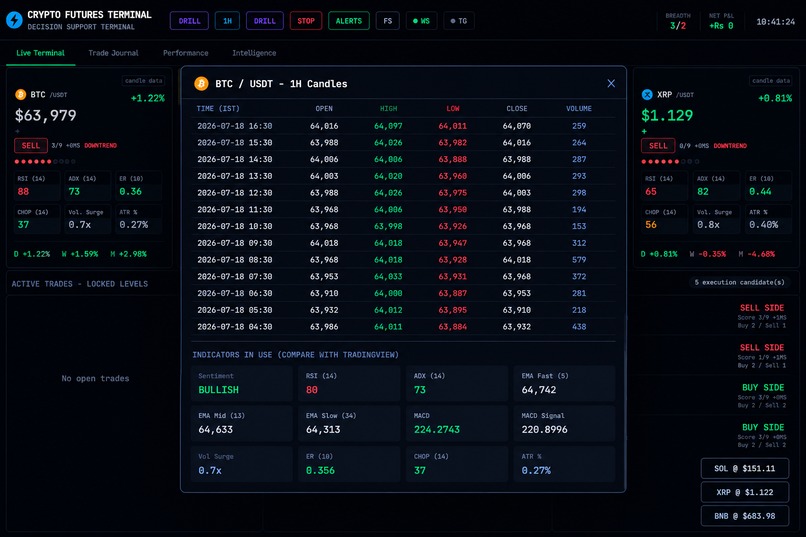
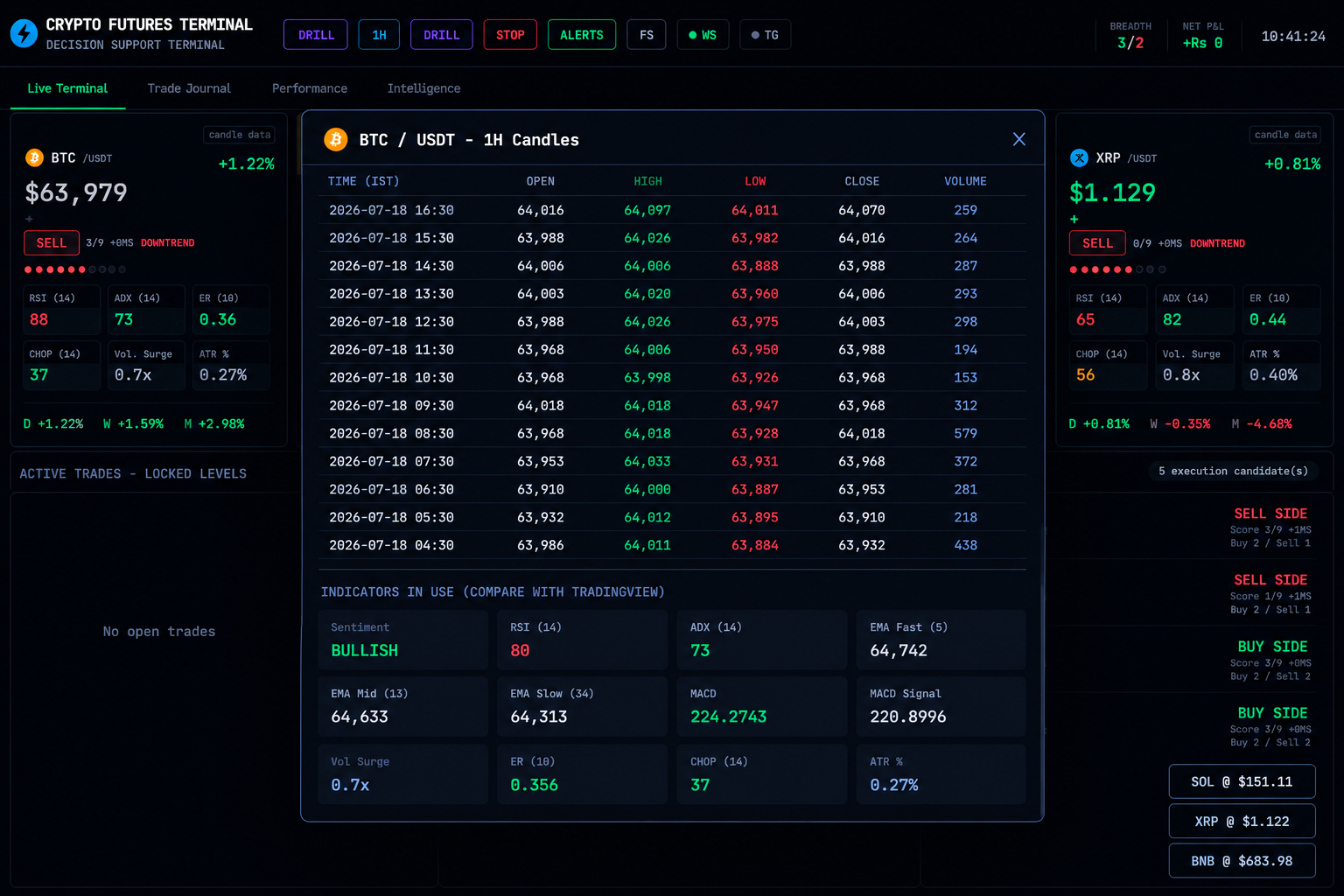
Evidence Review Panel Detailed evidence inspection with indicators and normalized market data.
-
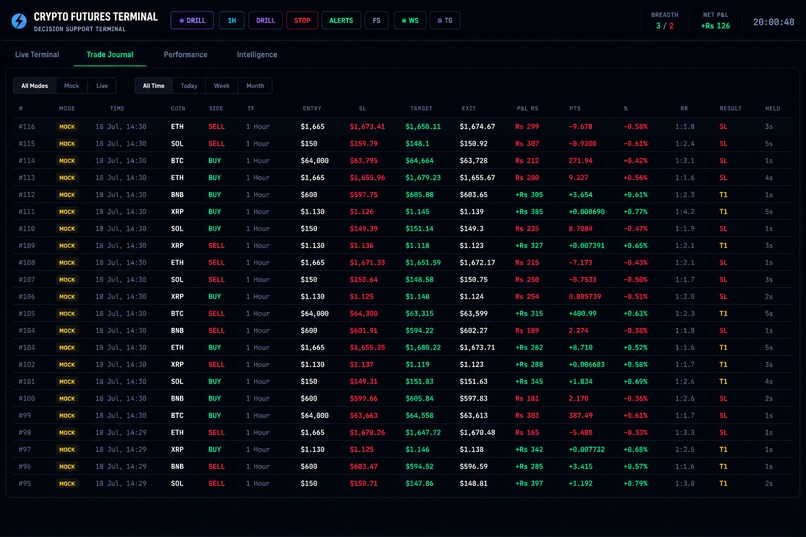
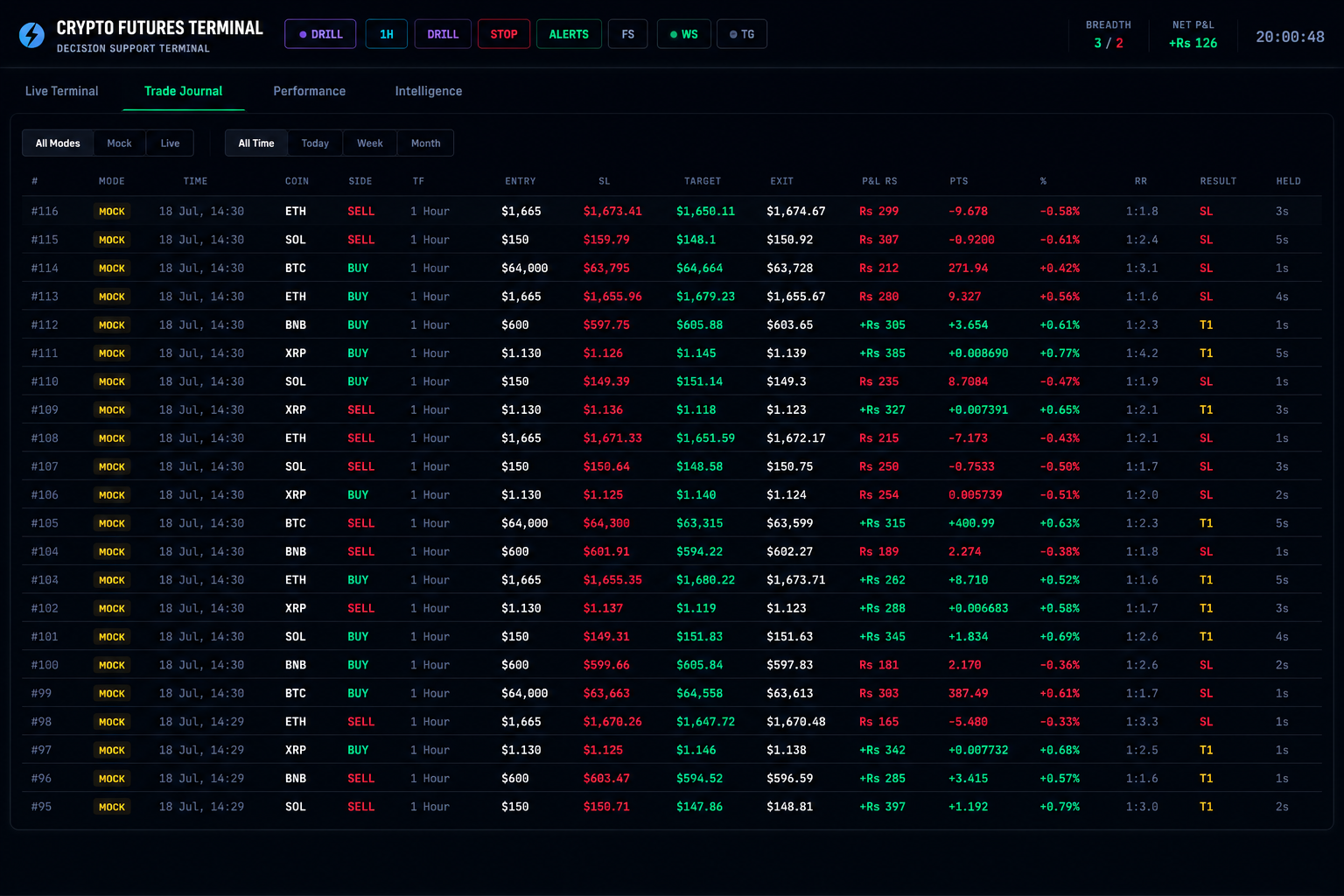
Trade Journal Complete trade history with entry, exit, risk, and performance tracking.
-
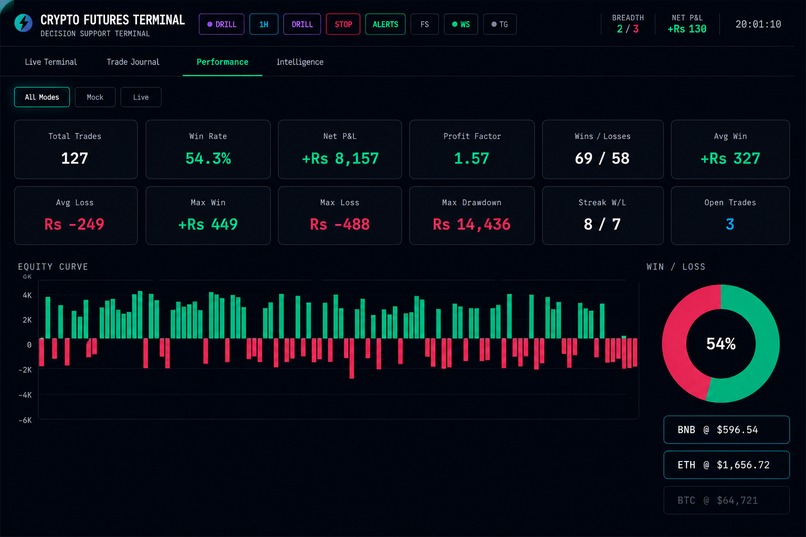
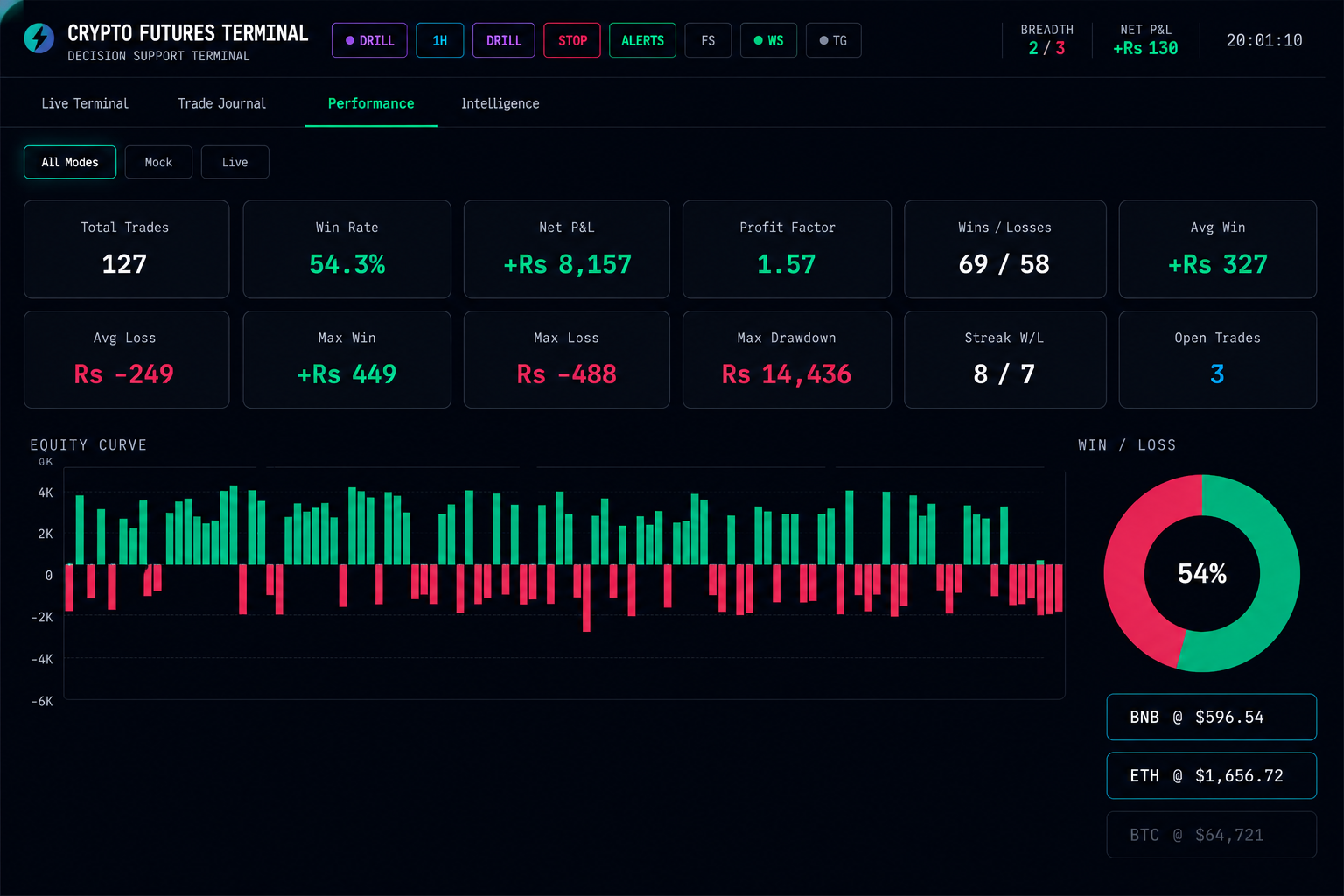
Performance Dashboard Trading analytics, win rate, profit factor, and equity curve.
-
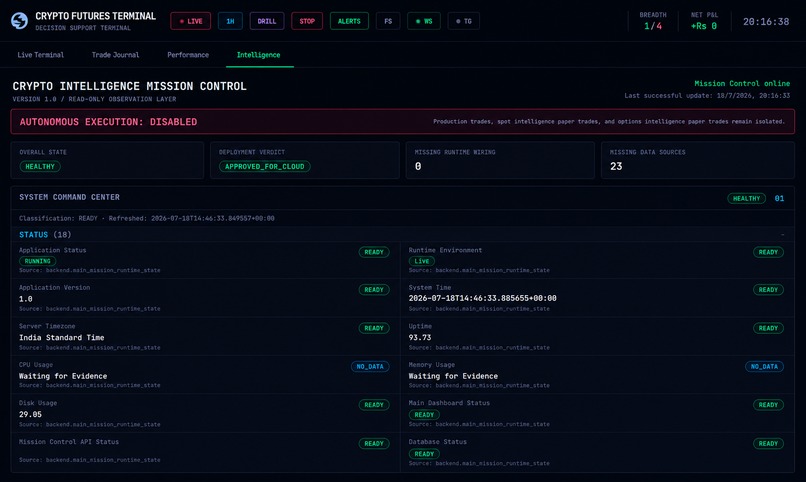
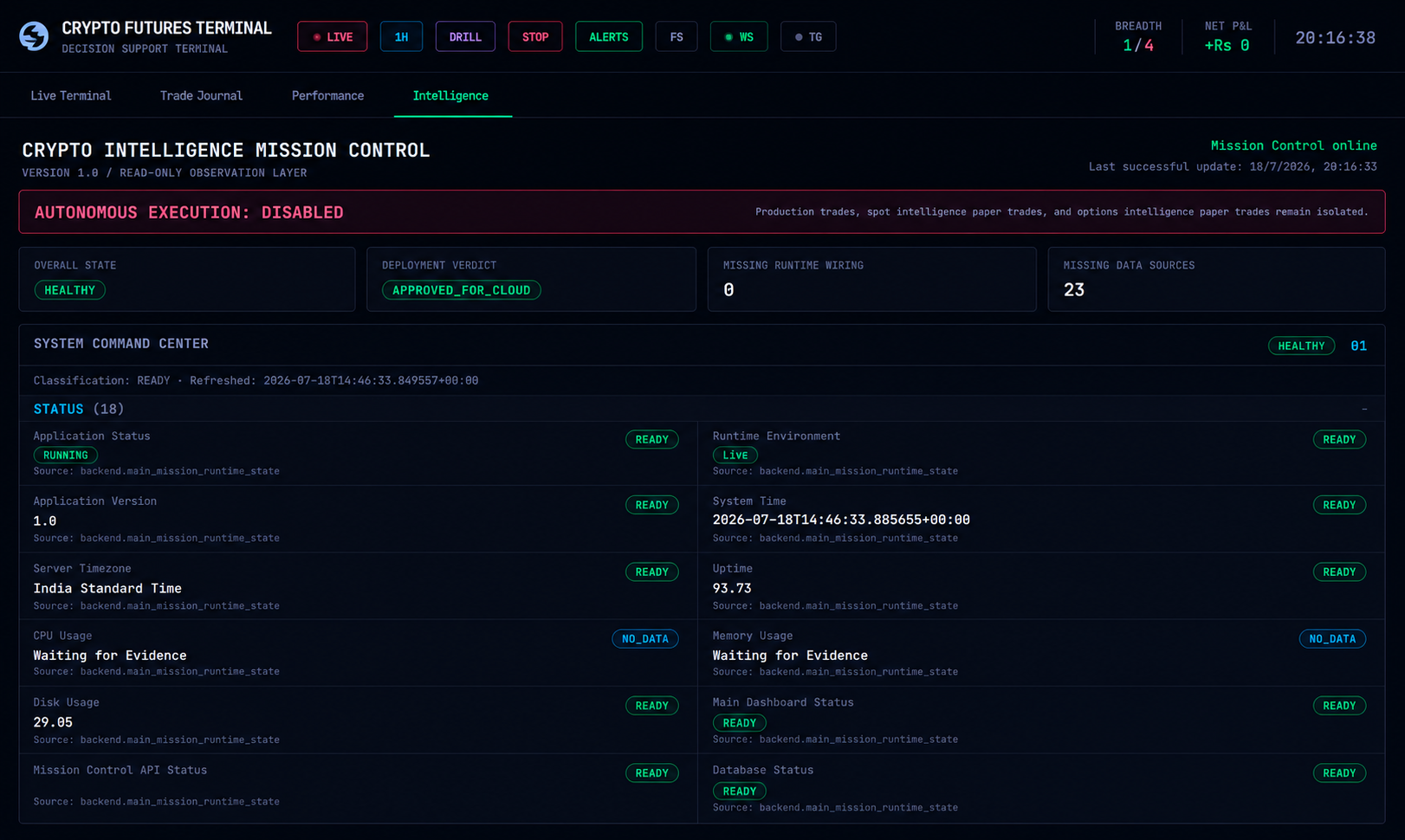
Intelligence Mission Control Read-only intelligence monitoring with safety and deployment status.
Inspiration
Most trading platforms tell users what happened after a trade, but very few explain why it happened. Traders often see a profit or a loss without understanding which signals supported the decision, which factors worked against it, or whether the execution itself could have been improved.
I wanted to build a system that goes beyond reporting results. The goal is to help traders learn from completed trades by reviewing the evidence behind every decision, making post-trade analysis more transparent, explainable, and educational.
What it does
Crypto Intelligence Terminal is an AI-assisted platform for post-trade analysis. It collects and organizes structured trade evidence, reviews completed trades, highlights supporting and opposing signals, identifies execution-quality issues, and presents explainable summaries to help users understand past decisions and improve future ones.
During OpenAI Build Week, I am developing an isolated Evidence Review Assistant that focuses exclusively on reviewing completed trades. It is designed to remain completely separate from live trading and does not place, modify, or manage trades.
How I built it
The project is being developed in Python using FastAPI with a modular architecture that separates trading functionality from analysis and future AI capabilities.
For the Build Week extension, I am implementing a dedicated Evidence Review Assistant with:
- Structured evidence schemas
- Deterministic validation
- Explainable review rules
- Safe, isolated architecture
- Synthetic test scenarios
- Comprehensive testing before AI integration
This staged approach helps ensure that new AI capabilities are introduced in a controlled and verifiable way.
Challenges we ran into
The biggest challenge has been balancing AI assistance with reliability and safety. I wanted every review to remain explainable, reproducible, and supported by available evidence instead of becoming a "black box."
Another challenge was maintaining a strict separation between analytical features and live trading logic so that experimental AI components cannot directly influence trade execution.
Accomplishments that I'm proud of
- Designed a modular architecture with clear separation between trading and analysis.
- Built an explainable evidence review workflow instead of relying on opaque AI decisions.
- Created structured validation and deterministic review rules before introducing AI assistance.
- Established strong safety boundaries that keep analysis isolated from live trade execution.
What I learned
This project reinforced the importance of combining software engineering principles with responsible AI design. Building AI features is not only about generating intelligent responses—it is also about creating systems that are explainable, testable, modular, and safe.
I also learned that carefully separating AI-assisted analysis from execution logic makes complex systems easier to validate, maintain, and extend over time.
What's next
The next milestone is to complete the Build Week AI integration for the Evidence Review Assistant, validate it through structured testing, and continue improving explainability while keeping the trading system read-only and safety-focused.
Future work will focus on richer evidence analysis, improved review quality, and a better learning experience for traders while maintaining strong safety boundaries between AI analysis and trading execution.

Log in or sign up for Devpost to join the conversation.