-
dashboard
Inspiration
I kept getting caught off guard in interviews on questions about my own projects. The "you said you cut latency 40%, how exactly?" kind. Generic question banks are useless for that, and pasting a resume into ChatGPT gives you a different "8/10" every time with no way to tell if you're actually getting better.
What it does
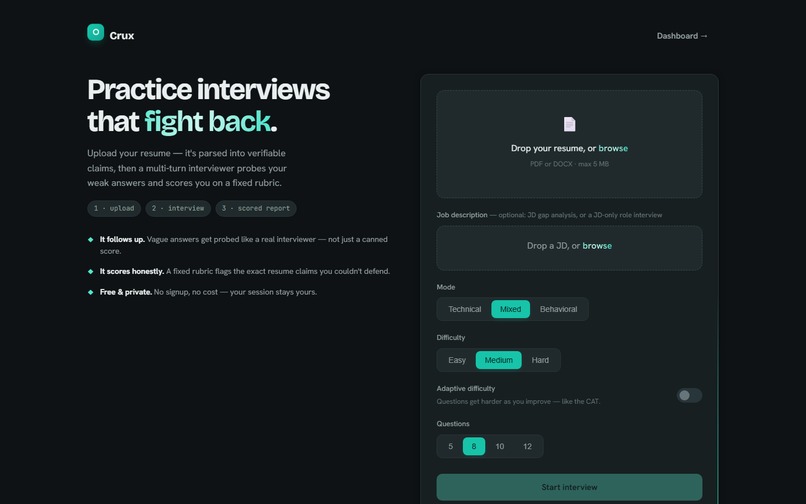
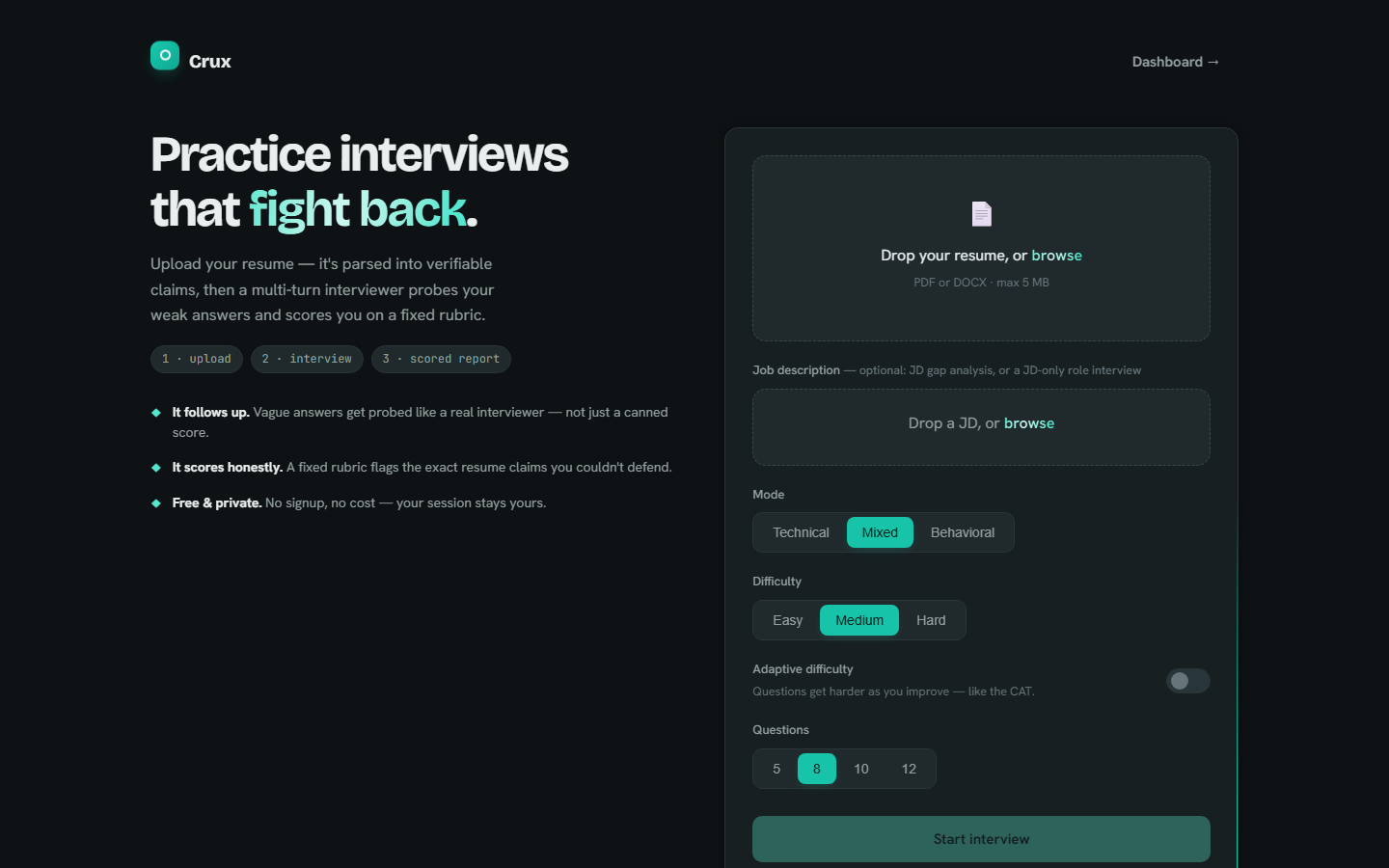
Upload a resume (PDF or DOCX). Crux pulls out the concrete claims, generates questions tied to them, and runs a multi-turn interview over a WebSocket. When an answer is thin, it follows up like a real interviewer would ("what was the cache key and the TTL?"). At the end you get a report: an overall score, a per-category breakdown, which concepts you actually covered, and the claims you couldn't back up. Every session is saved, so you can watch your scores move over time.
One thing I care about: it scores by meaning, not keywords. Your answer and the expected concepts get turned into vectors and compared, so "I cleared the cached copy on every write" counts as cache invalidation even if you never say the word. A correct answer in your own words still scores well.
How I built it
I used my backend and AI knowledge to integrate groq, gemini(for fallback), made frontend with html, css and javascript and made infrastructure by using docker and hugging face spaces.
Challenges we ran into
Major challenge I ran into was how to make it different from chatgpt and other AI tools, but I did not stop and accomplished this task by using vector embedding and llm judge modification.
What we learned
I learned that no problem is big or small if you have correct vision to accomplish it, you don't need anybody to move you towards success, you just need yourself and your family.
What's next for Crux
I want to make it globally accessible and add more features to tackle student's depression in placement season.
Built With
- aiml
- artificial
- css
- docker
- groq
- intelligence
- javascript
- llm
- python

Log in or sign up for Devpost to join the conversation.