-
-
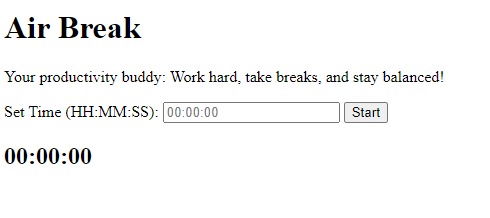
Air Break running
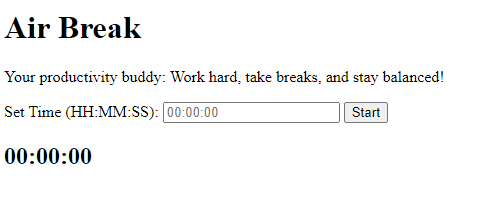
Inspiration
The Air Break project was inspired by the critical need to help software developers maintain a healthy work-life balance while preserving their productivity. In high-pressure environments where prolonged concentration is essential, it is easy to overlook the importance of regular breaks. This tool aims to ensure mental wellness and physical well-being, ultimately extending the long-term productivity and creativity of developers and other tech professionals.
What it does
Air Break serves as a countdown timer designed specifically for individuals working in tech-intensive roles, such as software developers and data scientists. It enables users to designate focused work sessions followed by well-timed breaks. The tool acts as a gentle yet effective reminder to pause, recharge, and resume work refreshed, promoting healthier and more sustainable work habits.
How we built it
We developed Air Break using Python for the backend, HTML, CSS and Javascript for the frontend. This combination provided us with a versatile platform to build a simple yet effective graphical interface. The development process also emphasized collaboration and testing to ensure the tool was robust and user-friendly.
Challenges we ran into
While developing Air Break, we faced significant challenges, such as integrating Azure’s resources to enhance the tool’s capabilities. Additionally, parsing the project into an .exe file for distribution proved to be more complex than anticipated, requiring in-depth research and troubleshooting to achieve satisfactory results.
Accomplishments that we're proud of
One of our greatest achievements was creating a fully functional system using multiple programming languages including Python, HTML, CSS and Javascript and associated frameworks such as flask. The seamless integration of the backend and frontend within the same ecosystem demonstrated the power of Python for rapid development. Additionally, we are proud to have effectively implemented agile product development and project management practices, which enabled us to adapt quickly to challenges and maintain steady progress. Moreover, our team thrived in collaboration, overcoming hurdles together and delivering a functional and meaningful tool.
What we learned
Through this project, we gained valuable insights into the limitations and possibilities of Tkinter for designing and structuring frontend elements. We opted for a GUI developed using HTML, CSS and Javascript as this was more easy to design. We also learned efficient methods to parse Python projects into .exe files, which enhanced our ability to deploy standalone applications.
What's next for Air Break
The next steps for Air Break include enhancing its frontend with more dynamic designs and sound features to make it more engaging. Additionally, we aim to create APIs that allow integration with platforms like VS Code. This would enable automated tracking of time spent in coding sessions, further enhancing its functionality as a break reminder tailored for developers.


Log in or sign up for Devpost to join the conversation.