-
-
title
-
products
-
review
-
assisstant
-
problem
-
home
-
AI
-
merchant
-
occassion
-
pickup
-
finish
-
Handoff
-
payment
-
checkout
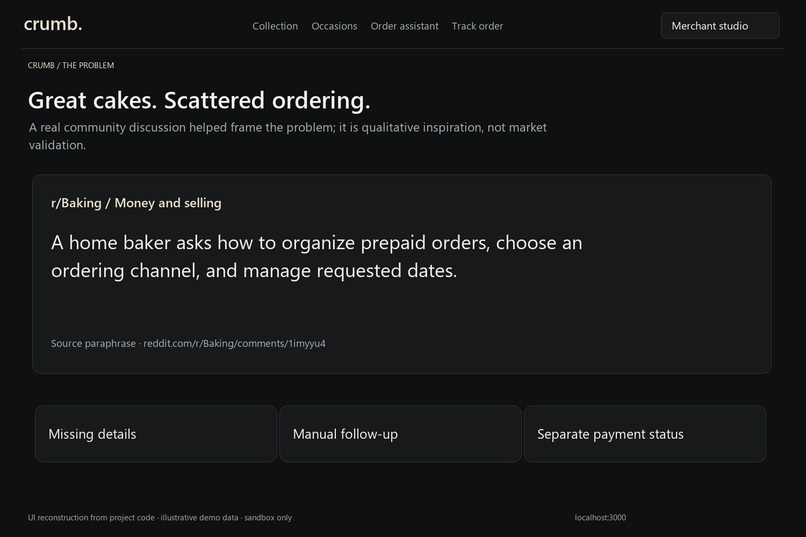
Inspiration
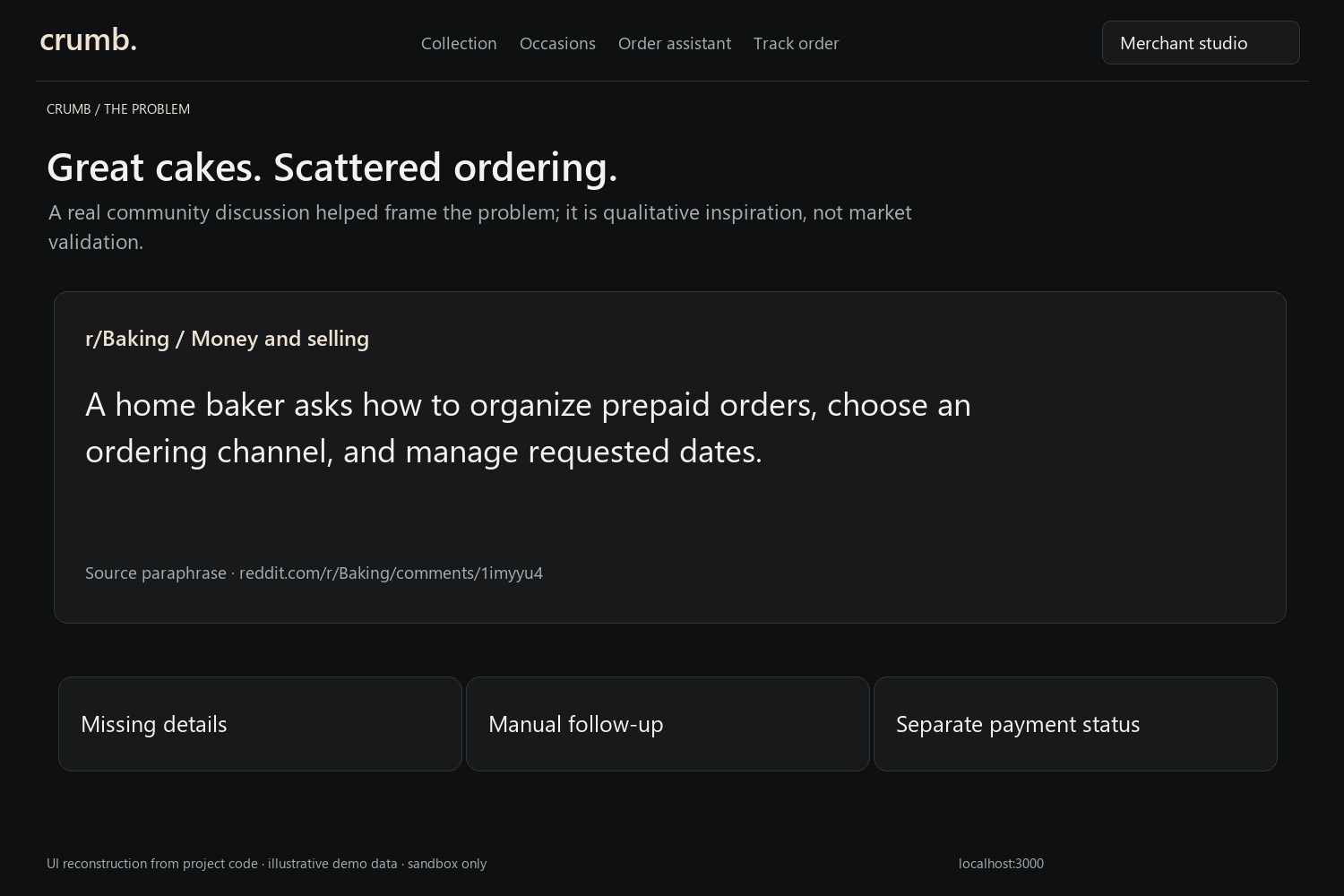
A cake order can begin with a simple message: “I need a birthday cake for Saturday.”
Turning that message into an actionable order takes more work: choosing a product, confirming the date, collecting an inscription, checking special requirements, agreeing on a price, and verifying payment.
We built Crumb to connect those steps in one experience, giving customers clarity and helping bakery staff avoid repeated questions and disconnected payment records.
What it does
Crumb is a bakery-ordering prototype with two connected experiences.
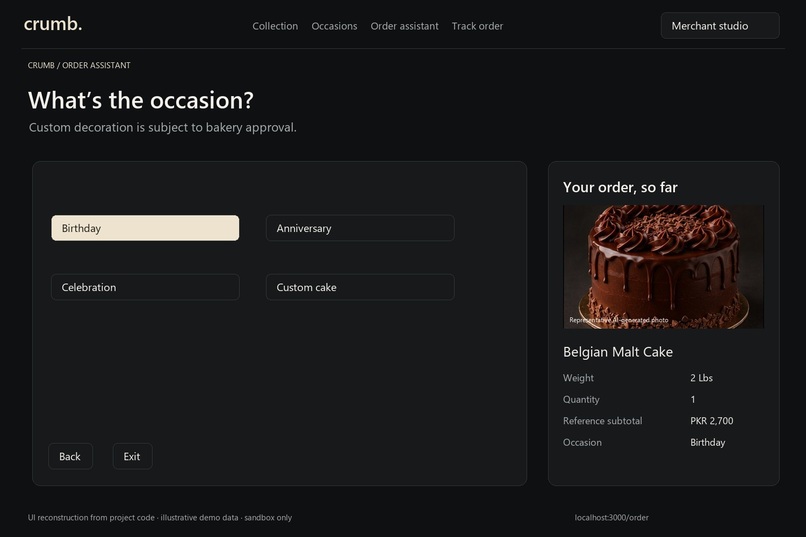
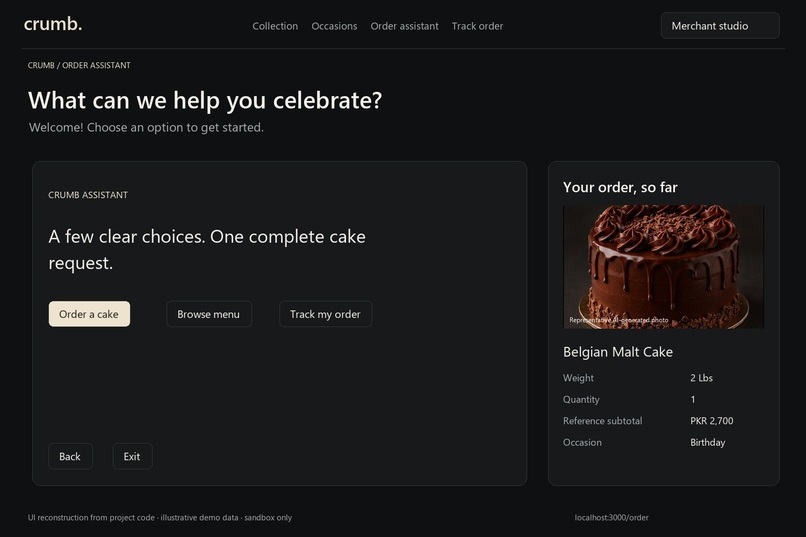
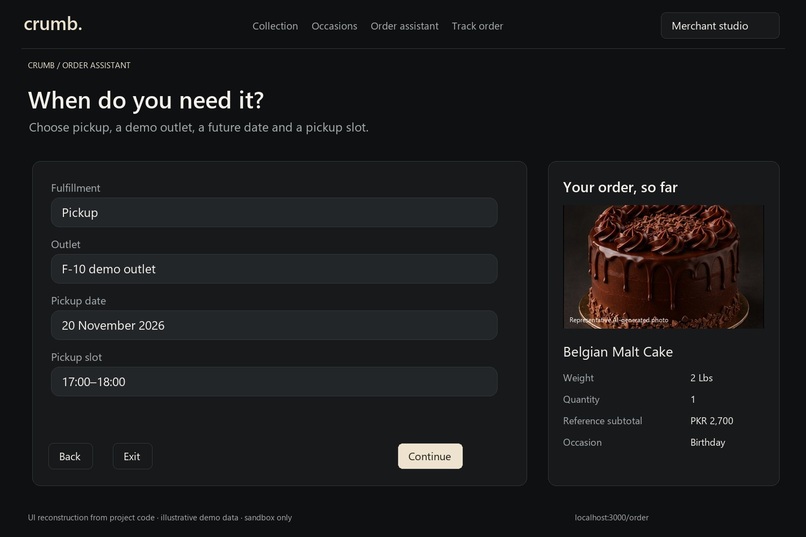
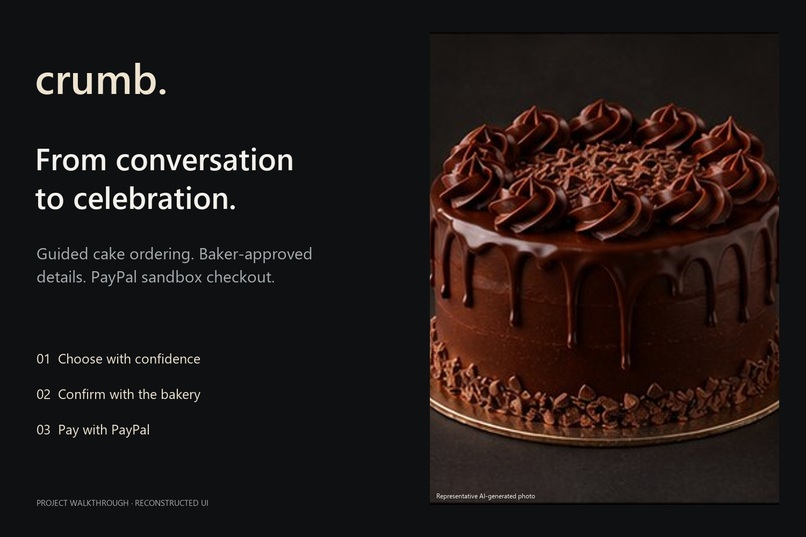
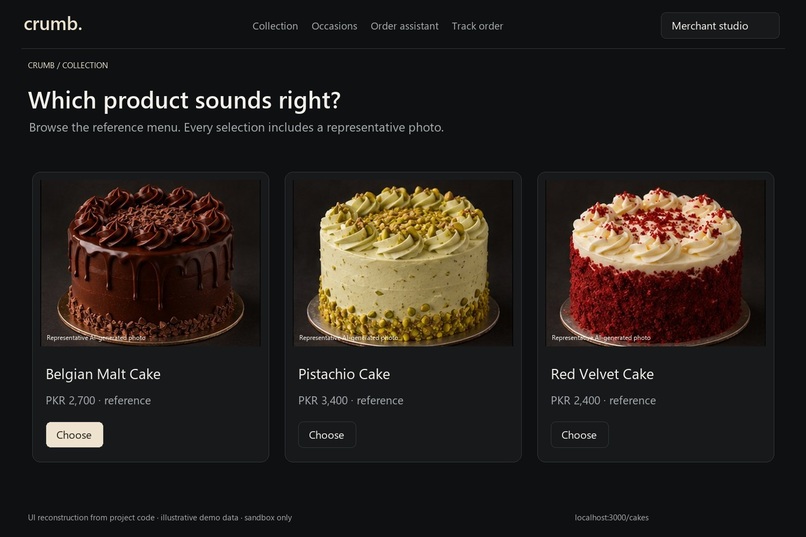
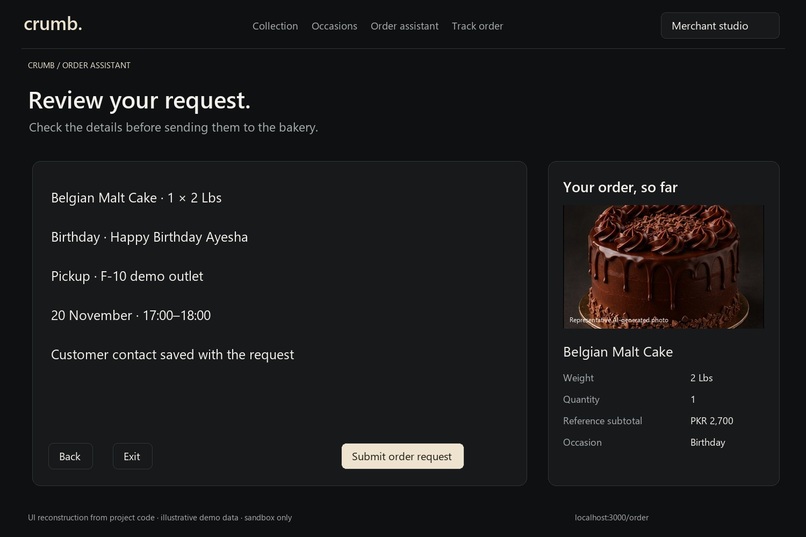
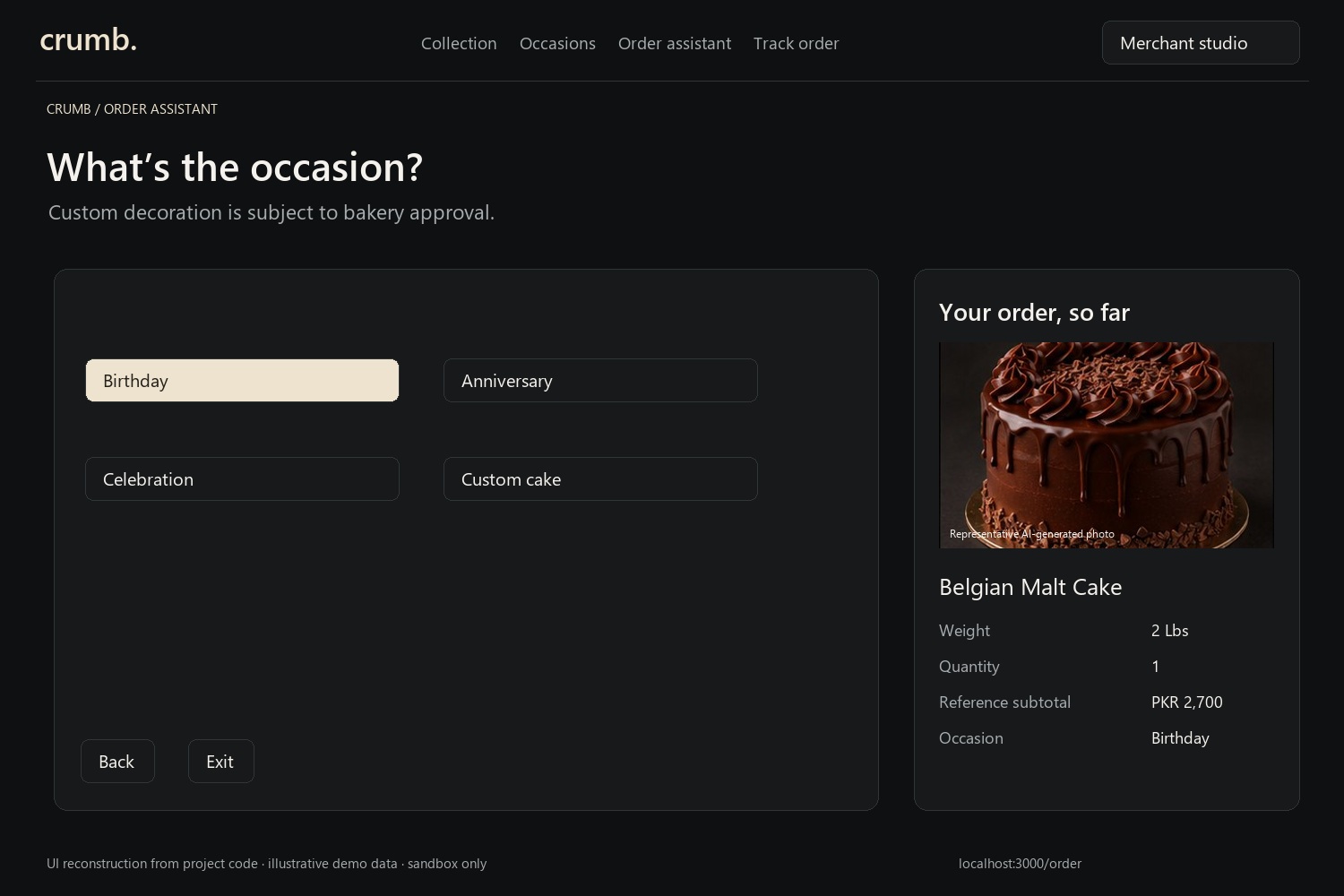
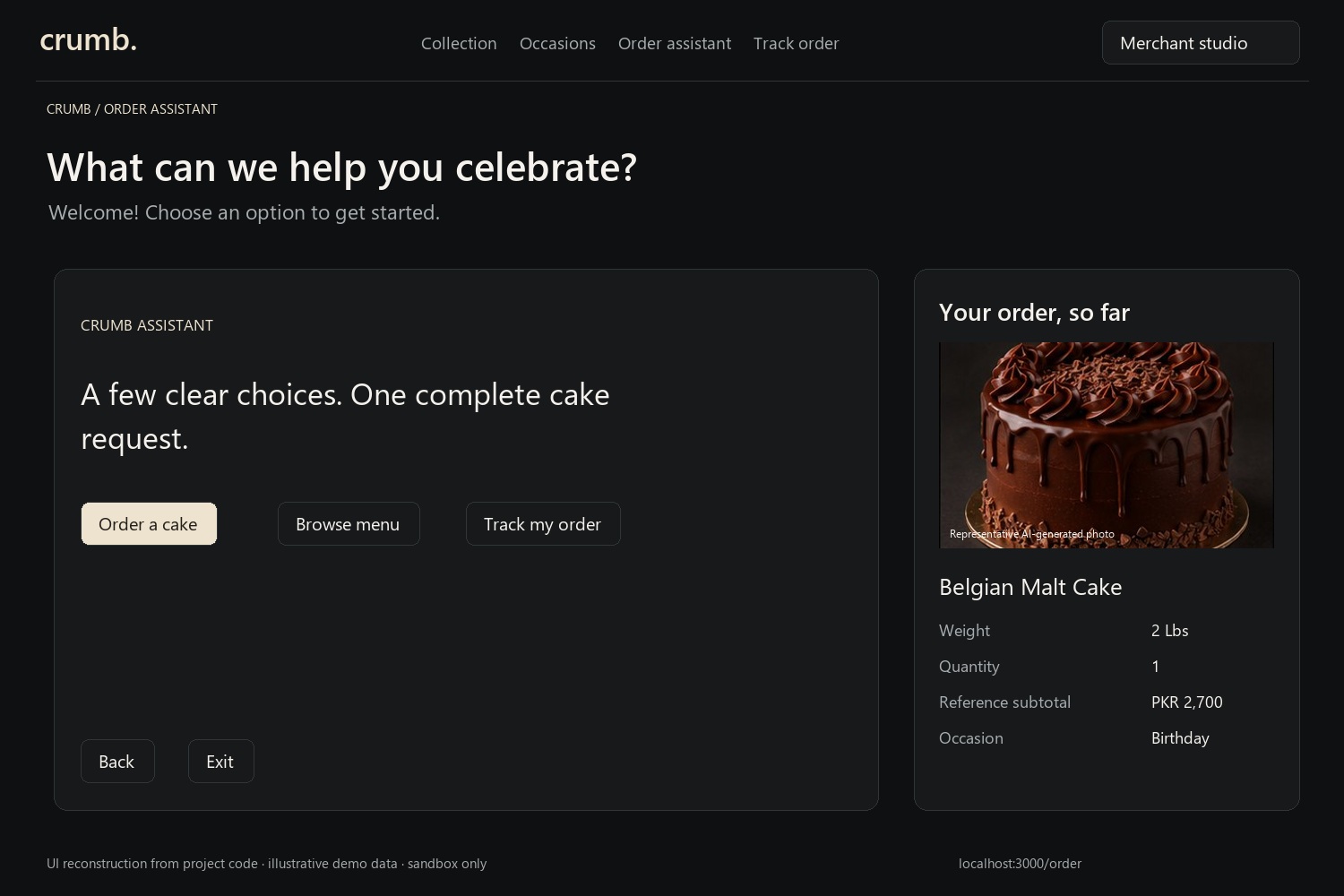
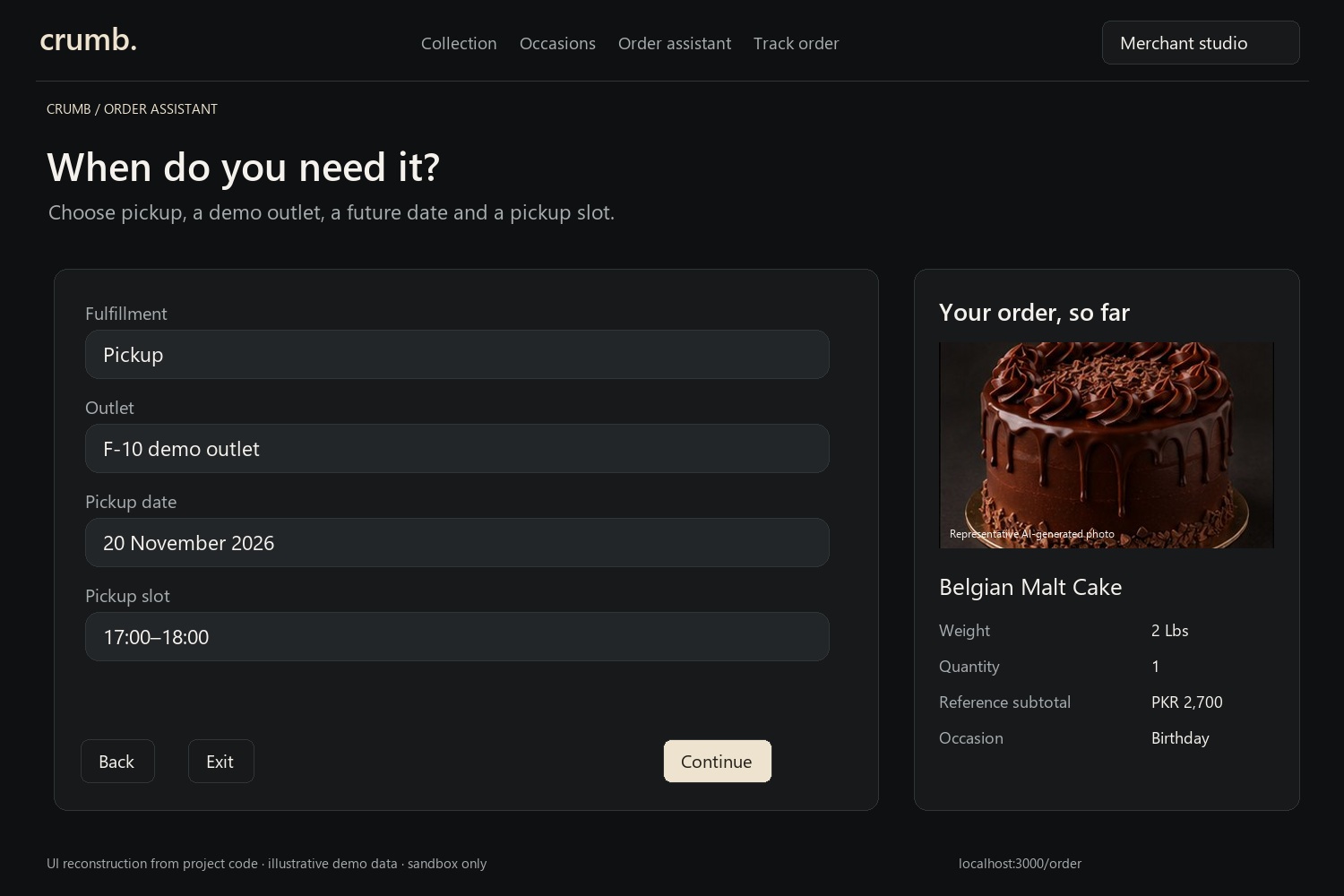
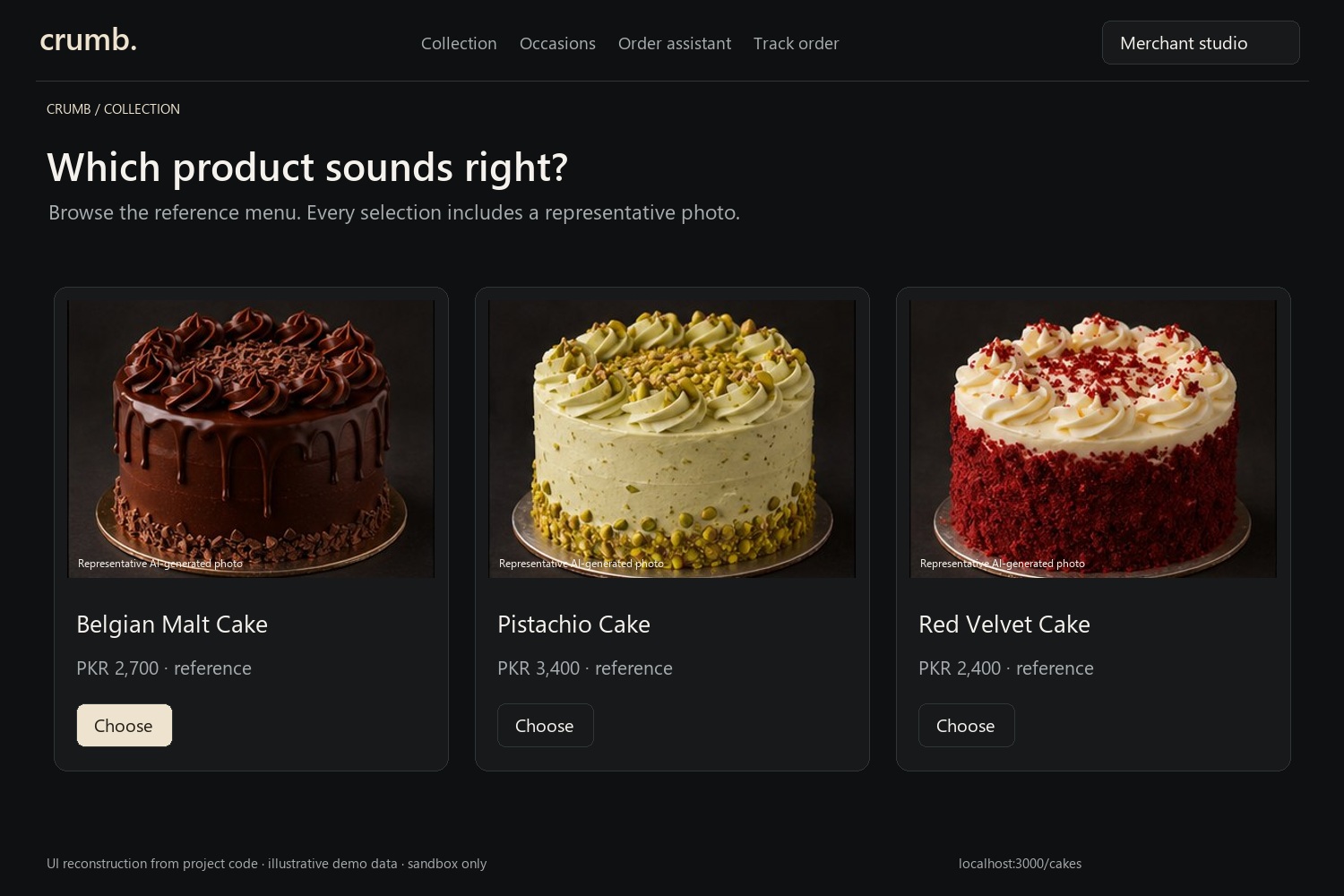
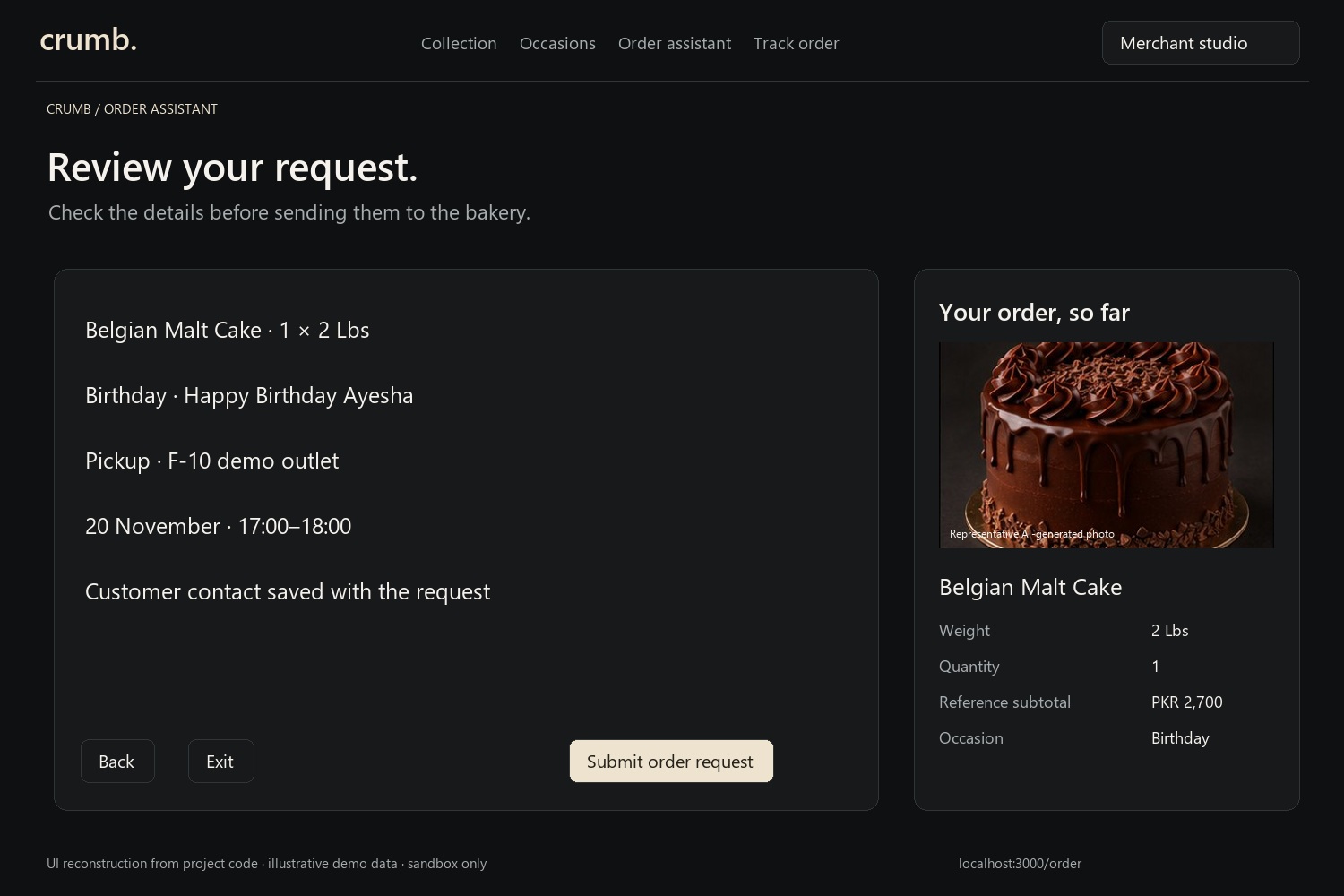
Customers browse a 102-item reference menu and place requests through a guided assistant. Fixed choices handle routine steps, including product selection, quantity, occasion, pickup preferences, and contact information. The selected product’s image appears inside the conversation, with Back and Exit controls.
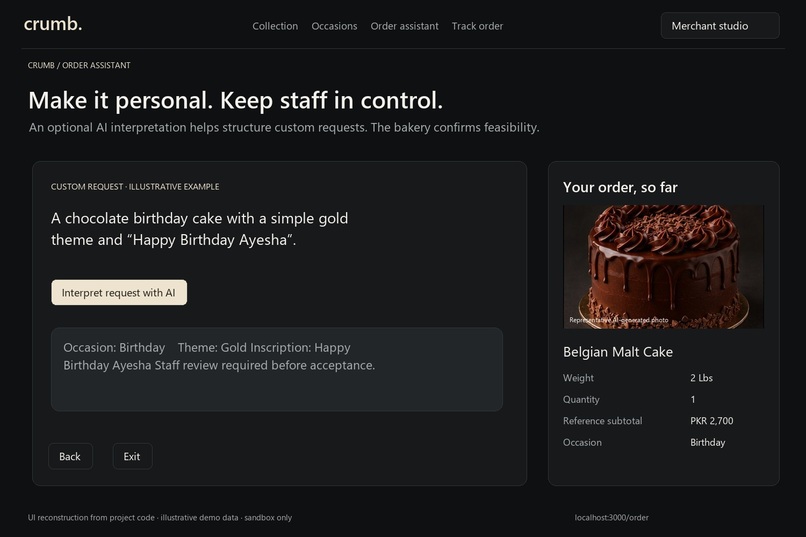
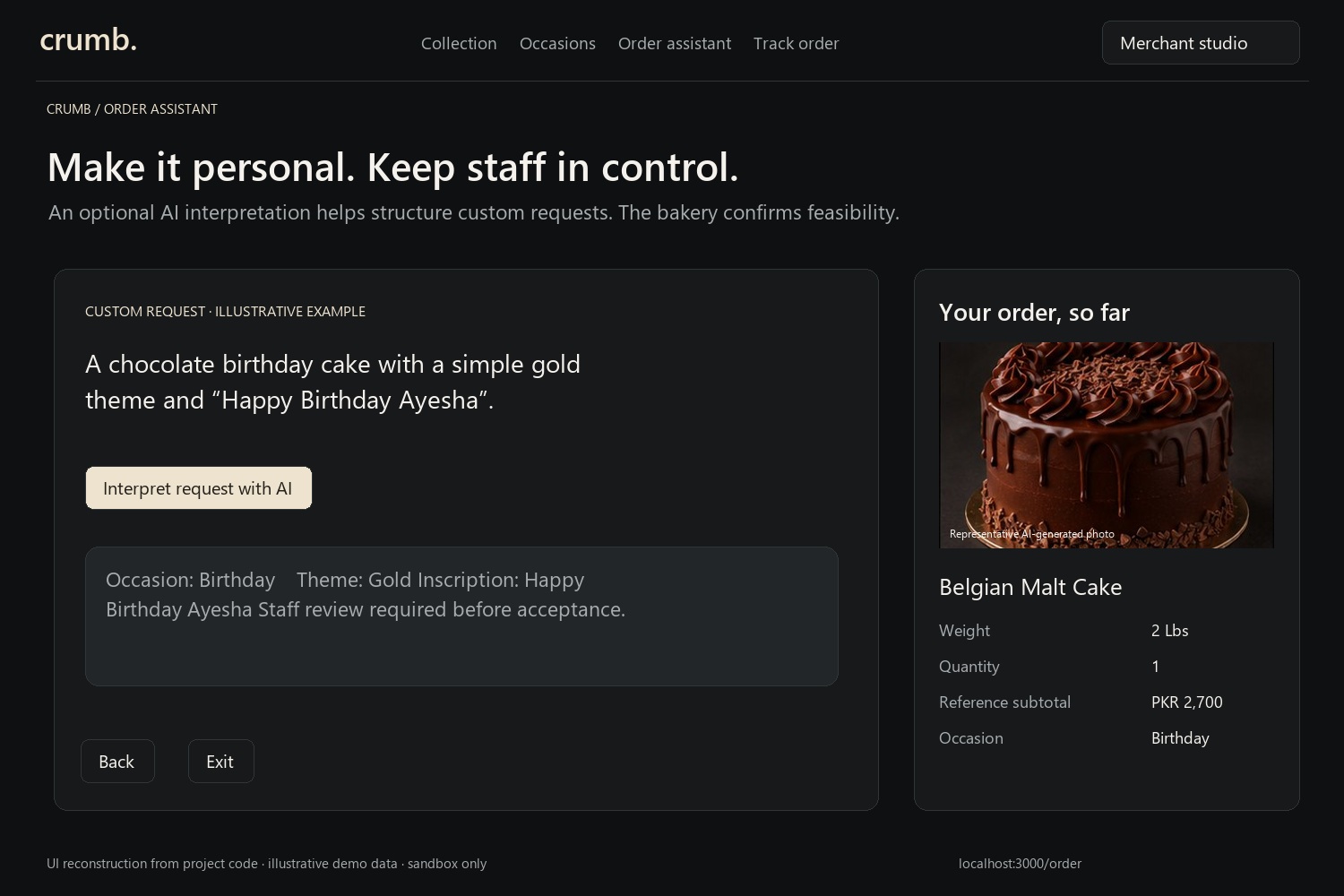
For unusual design requests, customers can explicitly ask AI to organize their description into a structured brief. AI identifies missing information; the bakery remains responsible for feasibility, ingredient confirmation, availability, and pricing. Customers can also submit a description without AI.
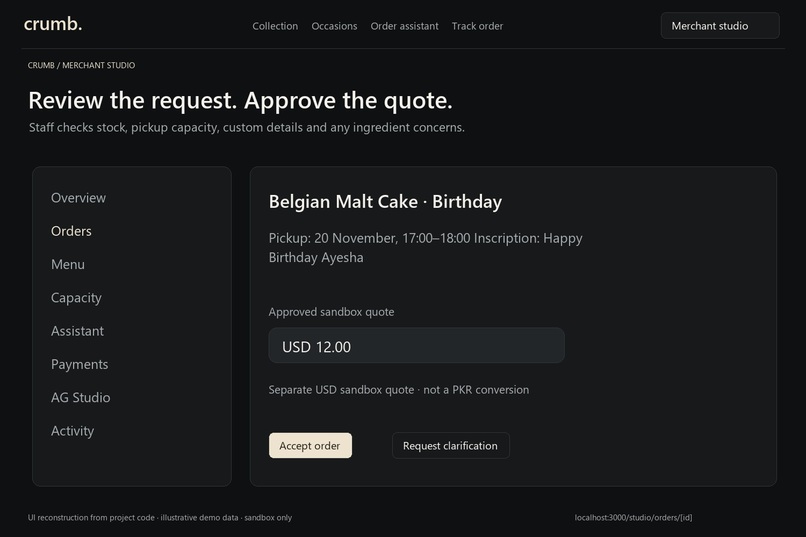
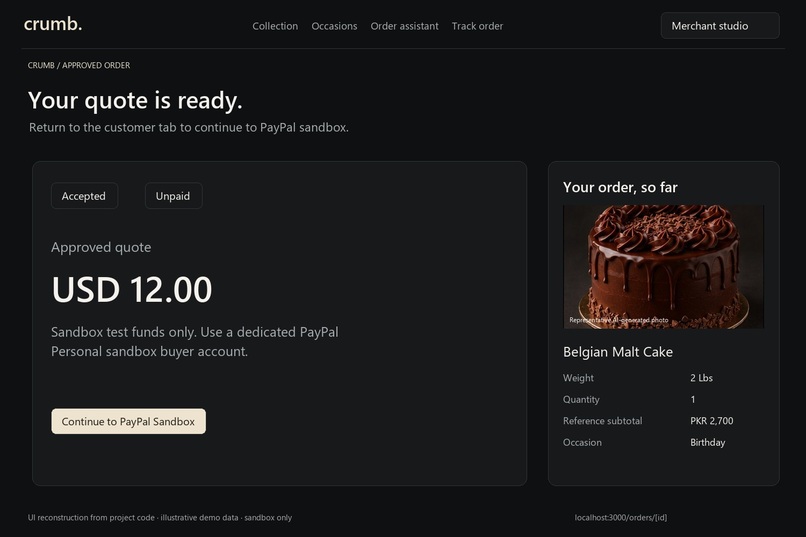
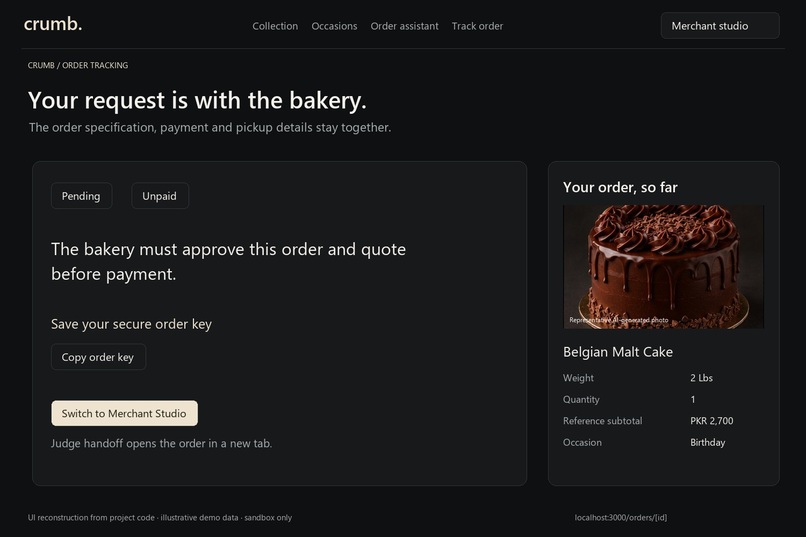
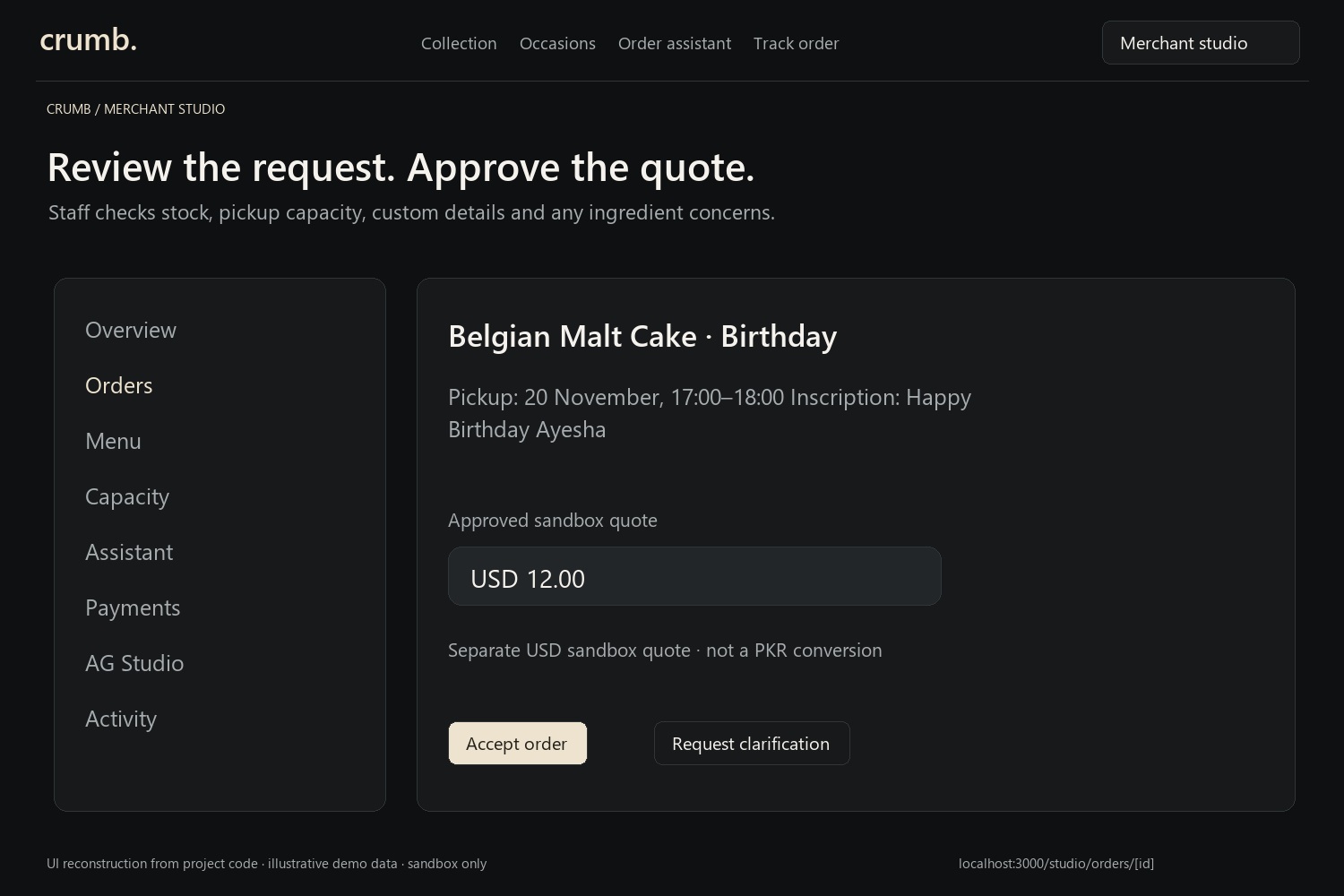
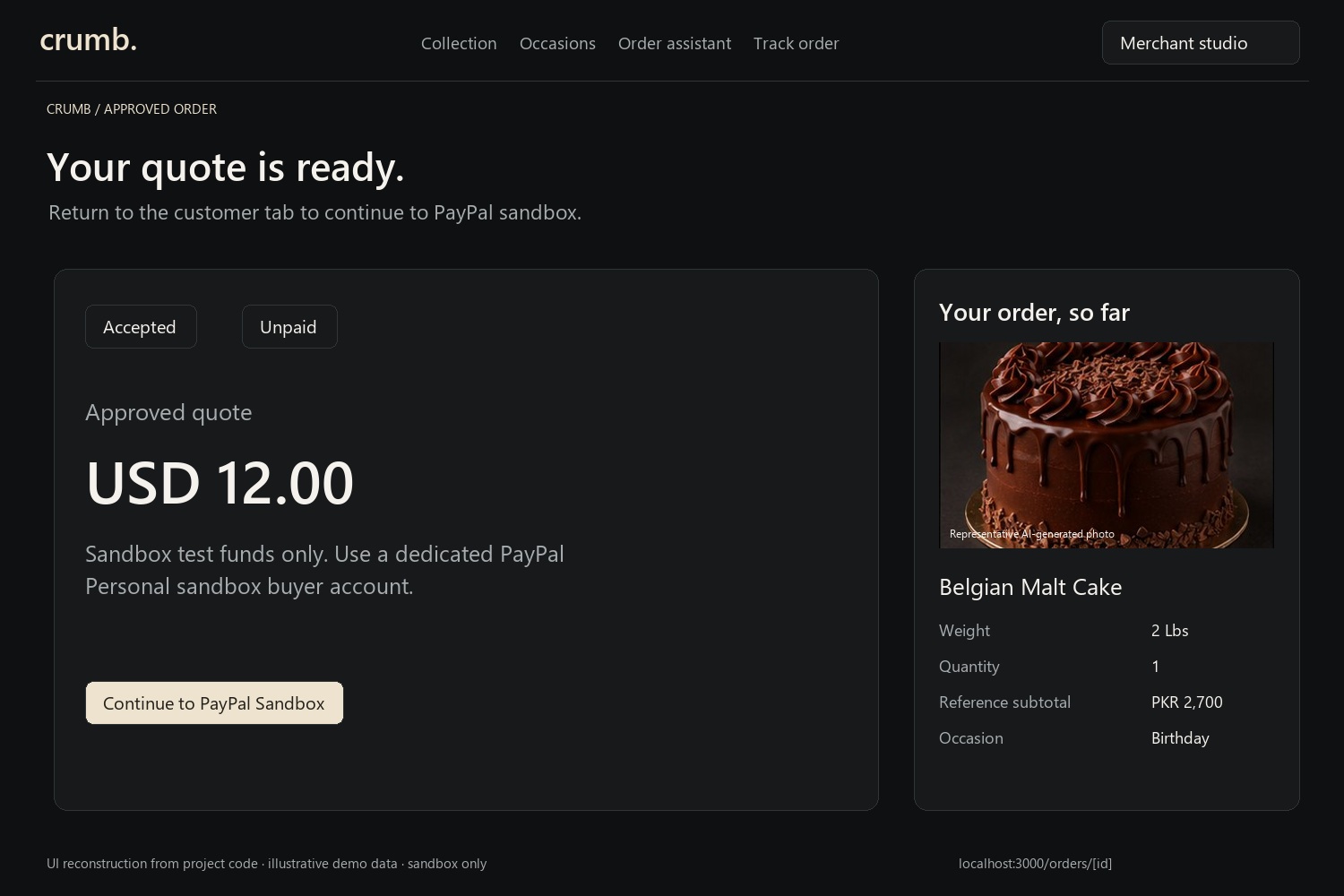
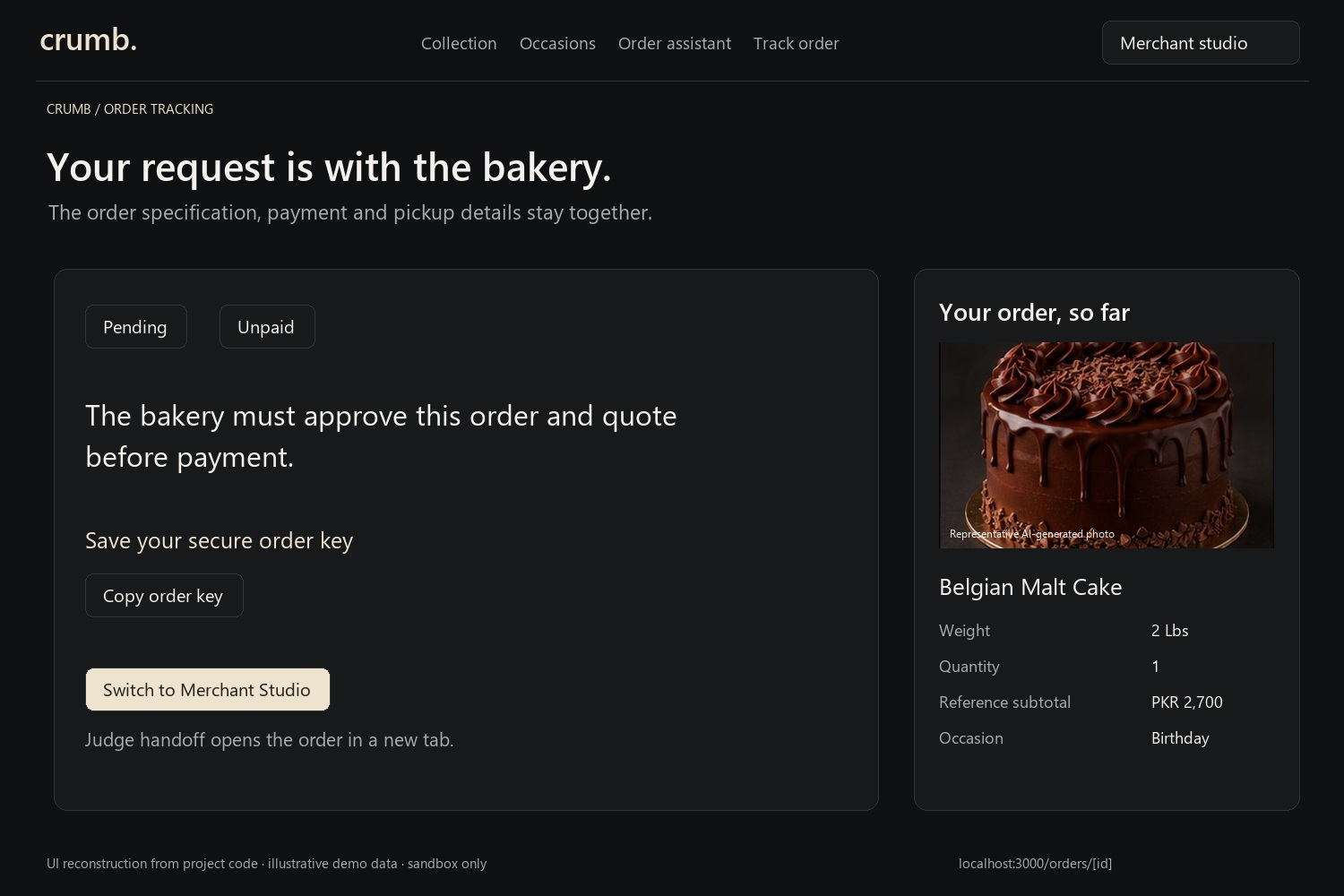
The merchant studio lets staff review requests, ask for clarification, approve a separate sandbox quote, and manage fulfillment. Customers review the accepted specification before continuing to PayPal sandbox checkout.
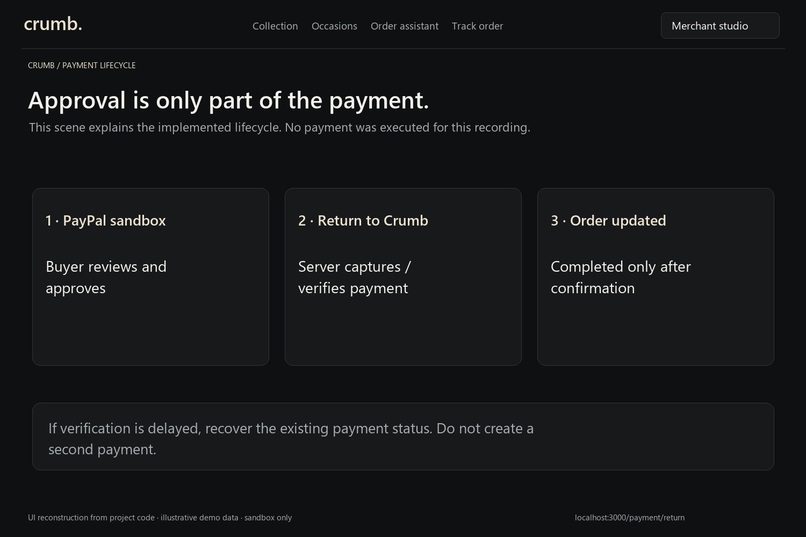
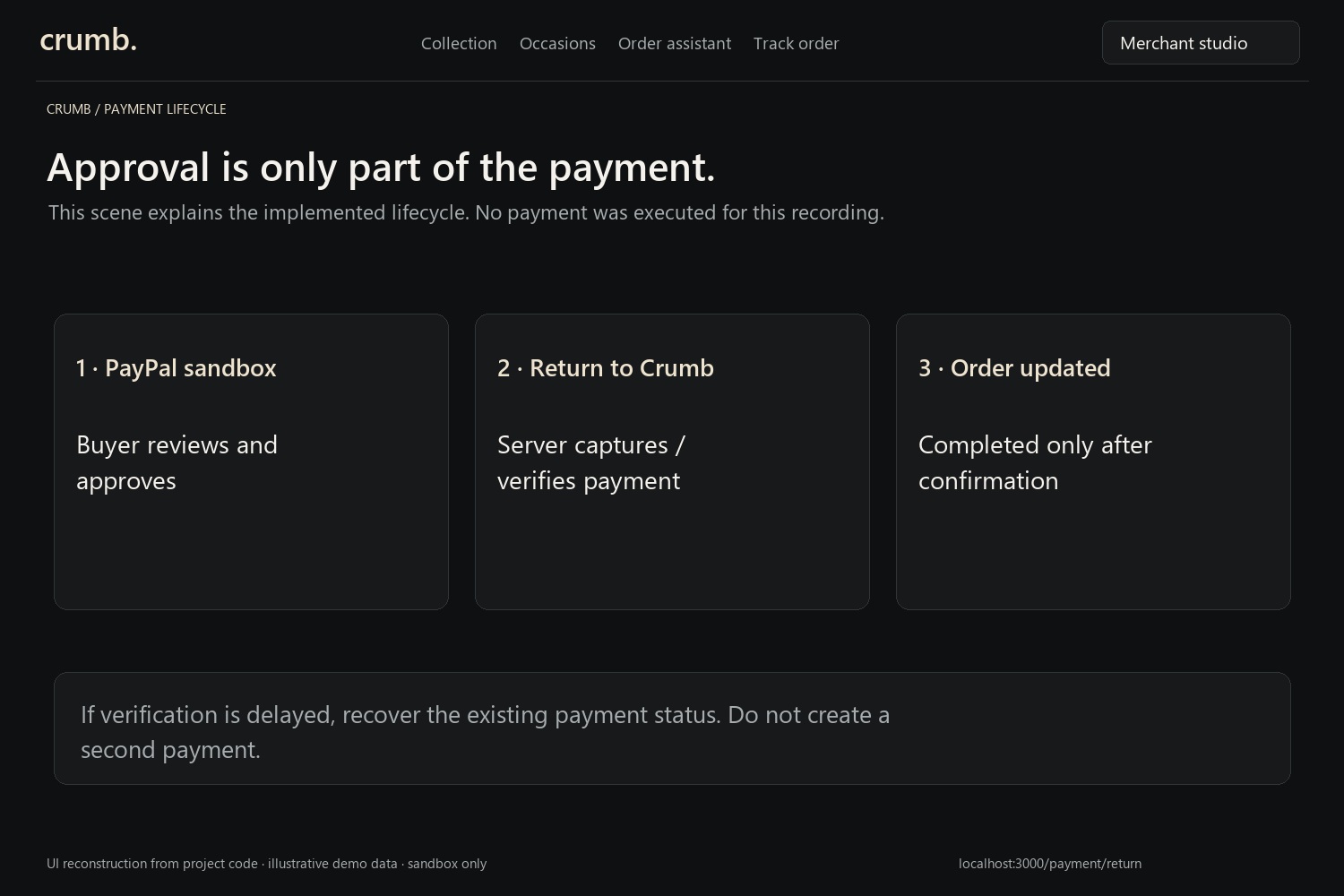
The server verifies payment against the order reference, amount, and currency before allowing production to begin. Payment recovery checks an existing checkout rather than asking customers to pay again.
AG Studio provides an editable analytics workspace backed by order records, including an order grid and fulfillment-volume chart.
How we built it
Crumb uses Next.js and React for the customer interface, merchant studio, and server routes. MongoDB Atlas stores orders, configuration, product overrides, payment state, audit events, and saved dashboard layouts.
PayPal Orders and Payments APIs handle sandbox checkout, capture verification, and approved full refunds. The application includes a verified webhook handler for completed captures.
The AI integration uses the OpenAI Responses API with the configured gpt-5.6-luna model. Requests are deliberately bounded: AI runs only when requested, receives a short custom-order description, returns structured output, and does not control prices or payments.
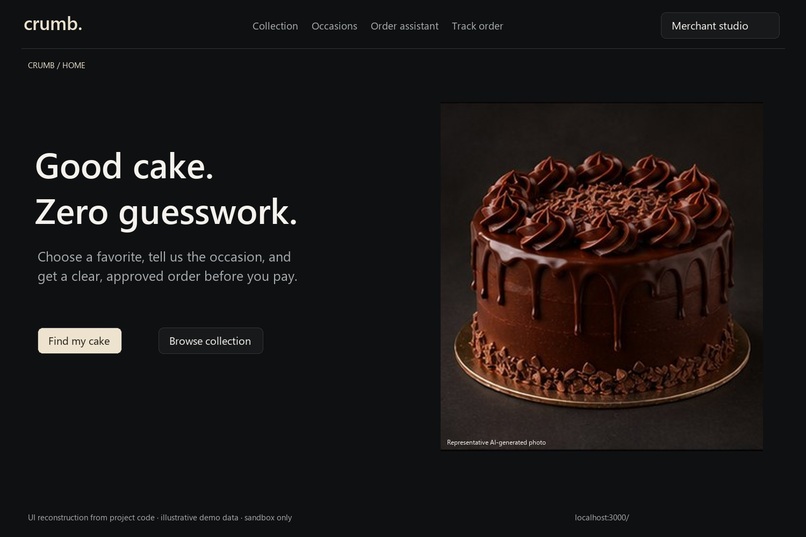
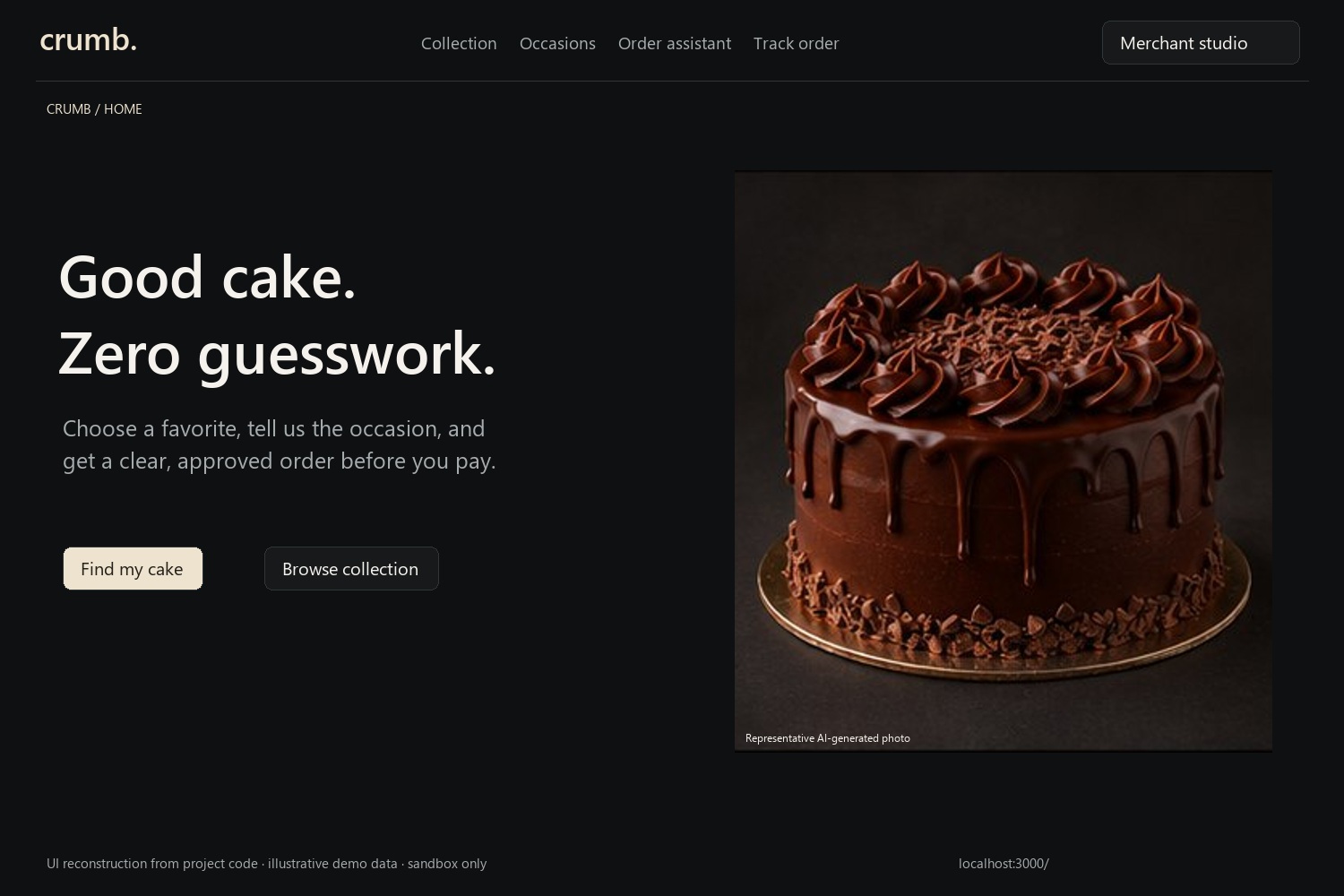
The interface uses an original Crumb identity and representative AI-generated bakery imagery. The supplied menu is reference data; Crumb is independent of Layers.
Challenges we faced
A key challenge was distinguishing customer approval, PayPal approval, completed capture, and the order’s saved payment state. These are separate steps.
We improved the reconciliation flow to handle concurrent verification requests, retrieve complete order details after capture, and recover a completed payment without creating another charge.
We also encountered Atlas DNS discovery failures. We added credential-safe diagnostics and an optional HTTPS DNS discovery path while preserving the stored credentials.
Another design challenge was deciding where AI adds value. We kept routine ordering deterministic and reserved AI for interpreting custom requests.
Accomplishments
- Connected customer ordering, merchant approval, payment verification, and fulfillment.
- Built a guided assistant with in-conversation product imagery and reversible navigation.
- Preserved a manual ordering path when AI is unavailable.
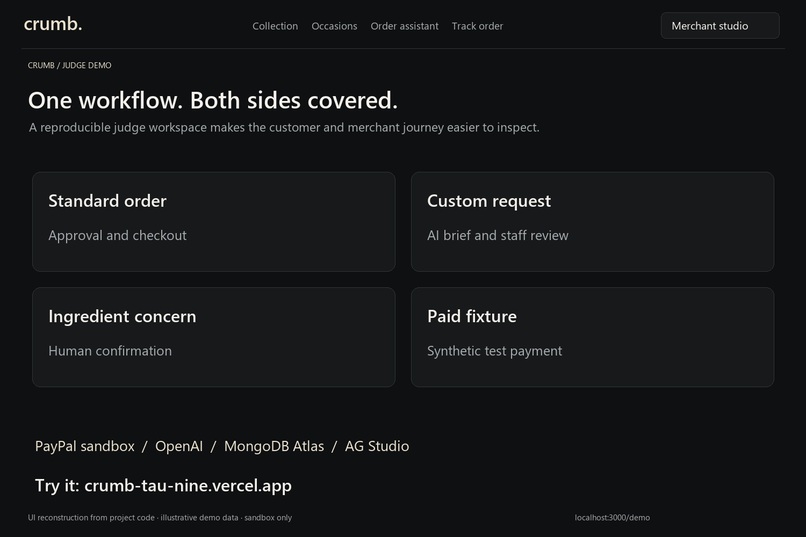
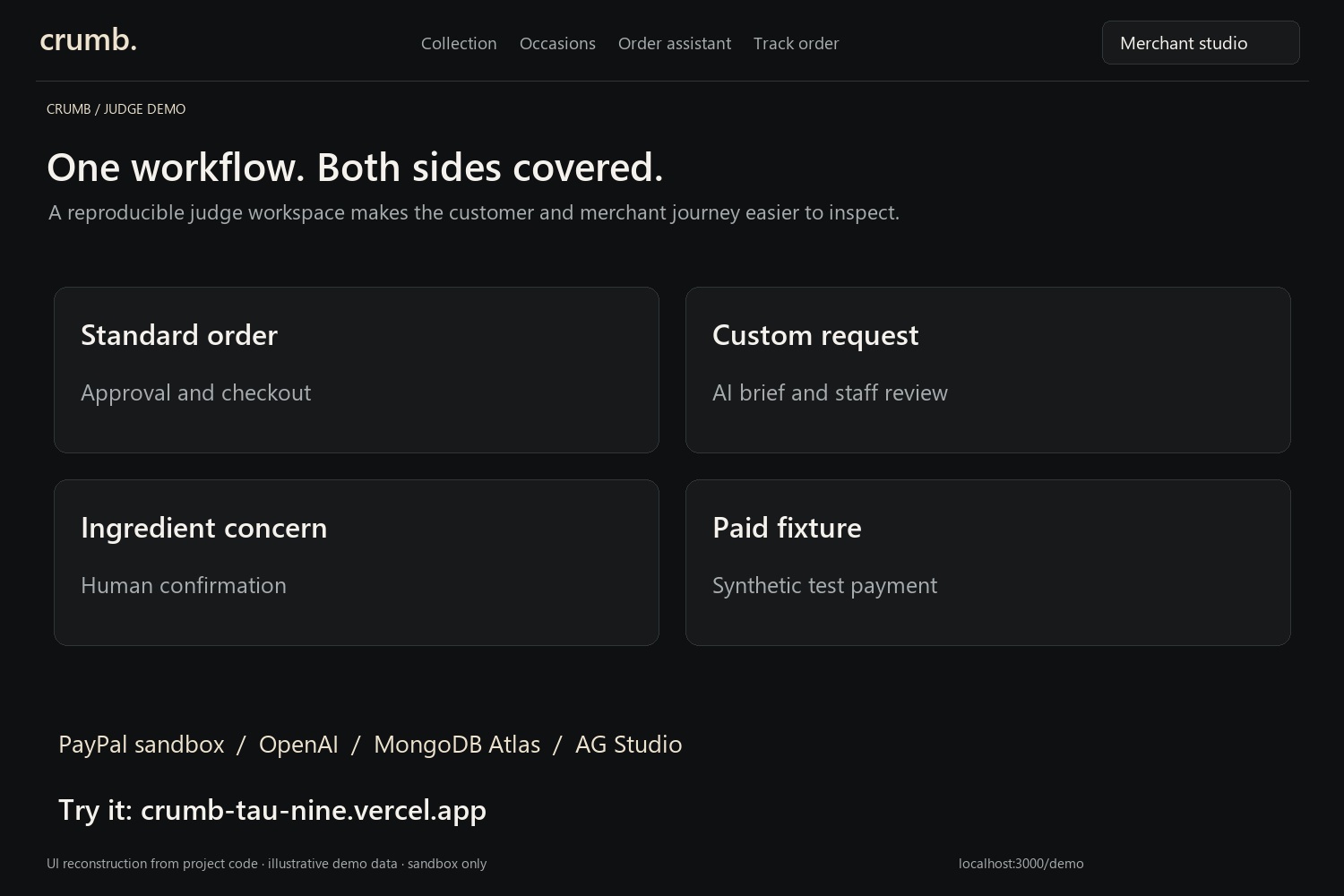
- Added a judge handoff that opens the current order’s merchant review in a new tab.
- Implemented checks for payment matching, capacity, ingredient review, and paid-only production.
- Passed 12 automated tests and the production build during local validation.
What we learned
We learned that reliable payment experiences depend on lifecycle handling, not merely displaying a checkout button.
We also learned to separate AI interpretation from authoritative business decisions. Structured output can help organize a request, while application rules and human approval control commitments and financial actions.
What’s next
Future work includes configurable notifications, richer custom-order quoting, more detailed staff permissions, and additional merchant onboarding.
The current project is a single-bakery hackathon prototype using PayPal sandbox. PKR menu reference prices and approved USD sandbox quotes are separate; no automatic currency conversion is claimed.
