-
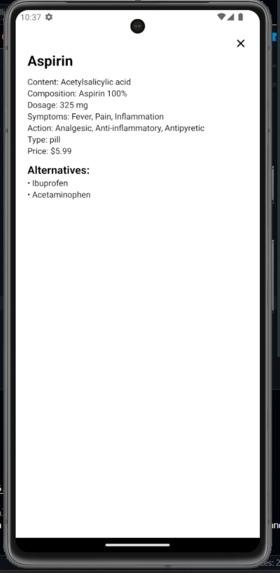
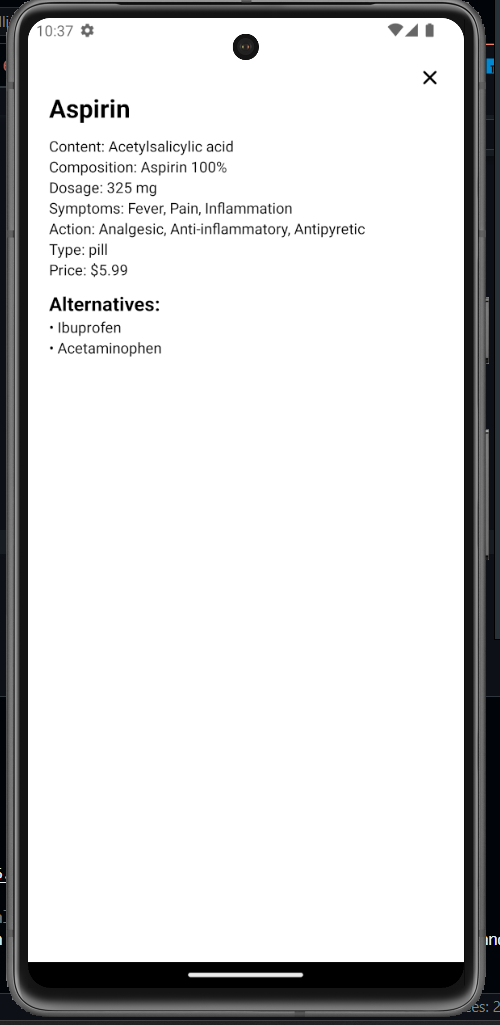
medications and alternatives
-
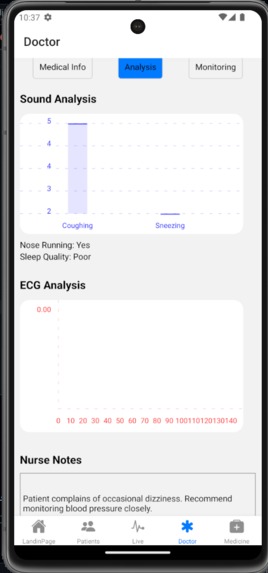
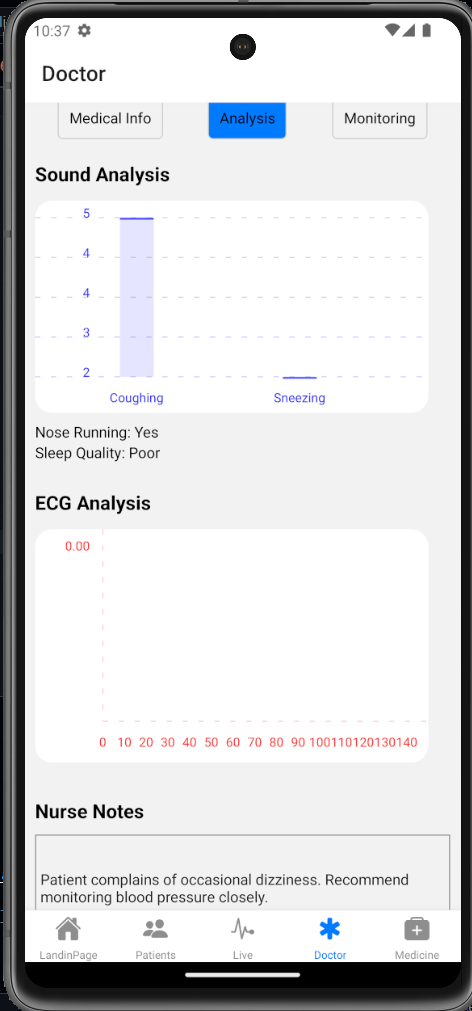
pateint trends
-
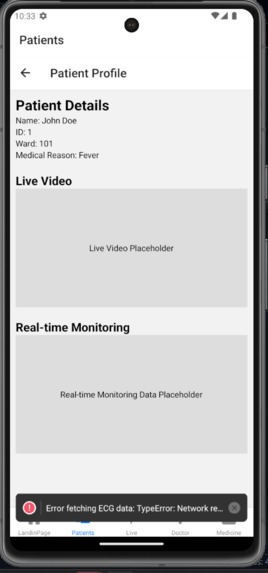
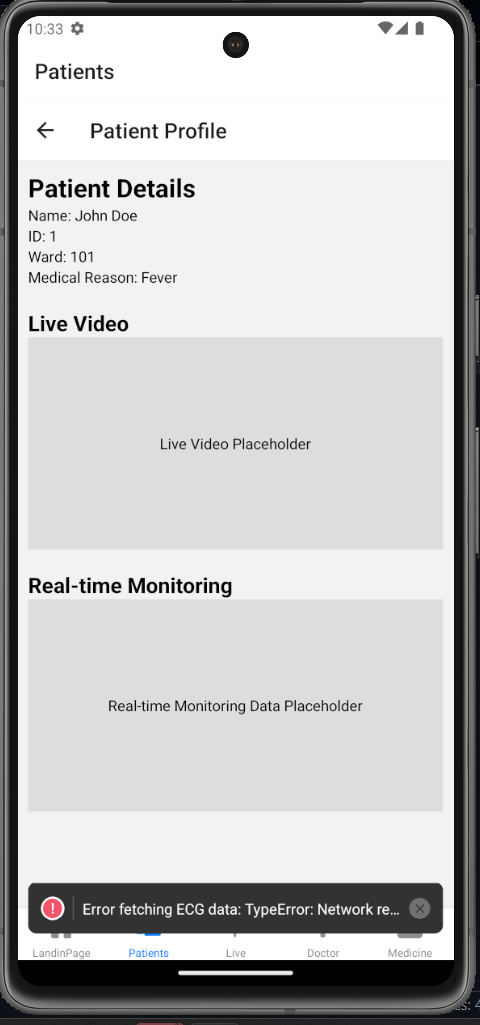
patient camera feed(real time monitoring)
-
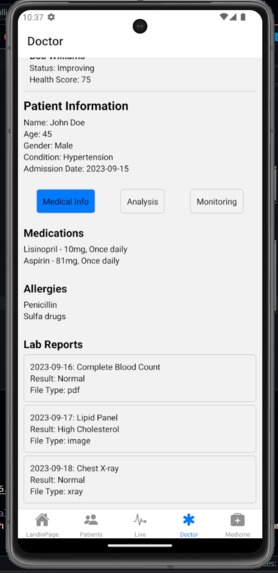
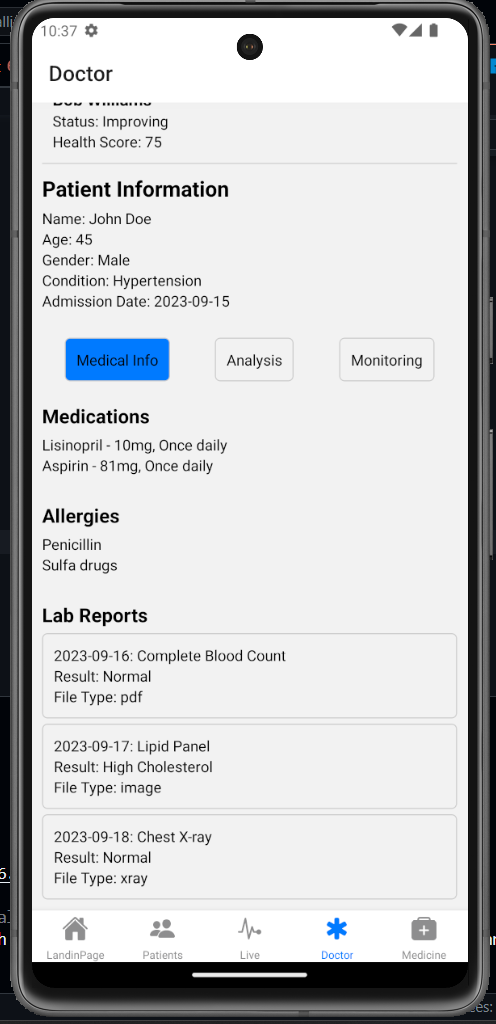
pateint record and doctor info
-
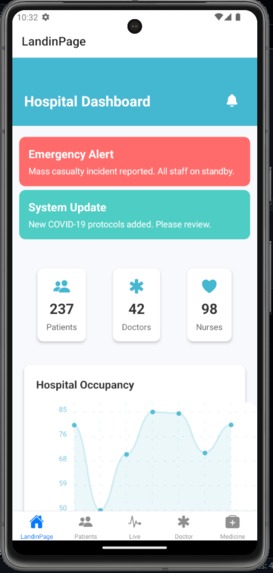
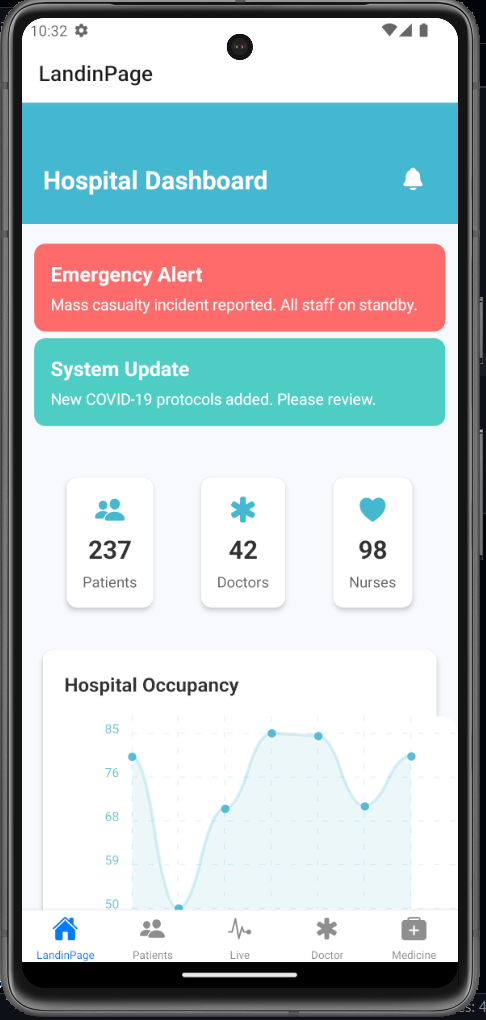
homepage and analytics
Inspiration
Being a Tech enthusiast and a mchine learniong enthusiast we have always been a team ehos fascinating about the wonders of of machine learning .working on the previous projects on machine learning and thne object detection models . we as atemam has always been into building the projects on the securityu and surveillance stack.. this time the ideation was to brainstorm about the idea in healthcare system .. firstly we got into the hospital management system of security and surveillance posture ... later when narrowing down the research we got to a litlle field of icus searching about the same on the internet we ghot to familiarise with the idea known as Tele-Icu's and there came the mind of linking the things remotely so we called it as CriticalLink.
What it does
Our ICU monitoring system revolutionizes patient care by providing a comprehensive, real-time overview of patients' health status. Here's what it does:
Real-Time Data Integration: Collects and integrates data from various medical devices, including heart rate monitors, respiratory monitors, and other essential equipment, ensuring that healthcare professionals have a complete picture of a patient’s condition.
CCTV-Based Monitoring: Employs object detection through CCTV to monitor patient activity and behaviors, such as movement and responsiveness, providing additional context to the data collected from medical devices.
Remote Access via Mobile App: Offers doctors and healthcare staff a user-friendly mobile app to monitor patient health remotely, allowing for timely decision-making regardless of their physical location.
Alert System: Sends instant alerts to healthcare providers in case of abnormal readings or critical changes in a patient’s condition, ensuring immediate attention when it matters most.
Trend Analysis: Enables healthcare professionals to analyze historical patient data, track improvements or declines in health, and tailor treatment plans based on observed trends.
Enhanced Communication: Facilitates seamless communication among the medical team, allowing for better coordination and collaborative decision-making, especially in tele-ICU settings.
How we built it
The development of our ICU monitoring system was a collaborative effort that combined various technologies and methodologies. Here’s a breakdown of how we built it:
Requirement Gathering:
Conducted interviews and surveys with healthcare professionals to understand their needs, pain points, and expectations regarding ICU monitoring systems. Technology Stack Selection:
Chose a robust technology stack, including: Backend: fastapi,python,auth0. Frontend: React Native for the mobile application, allowing cross-platform compatibility. Database: Firebase for storing patient data and historical records. Machine Learning: TensorFlow, pyTorch and OpenCV for implementing AI algorithms and object detection features. Data Integration: Developed APIs to collect and integrate data from various medical devices, ensuring compatibility and real-time data flow into the system.
CCTV Object Detection: Implemented computer vision techniques using OpenCV to monitor patient activity through existing CCTV systems, ensuring compliance with privacy regulations. User Interface Design:
Created a user-friendly mobile app interface, focusing on intuitive navigation, clear visualizations of patient data, and easy access to alerts and insights. Testing and Iteration:
Conducted rigorous testing, including unit tests, integration tests, and user acceptance testing (UAT) with healthcare professionals to gather feedback and refine the system. Deployment:
Established a feedback loop with end-users for ongoing improvements and updates to enhance functionality, user experience, and data accuracy.
Challenges we ran into
Data Integration Issues:
Challenge: Integrating data from multiple medical devices with varying protocols and standards proved complex. Ensuring seamless communication and data flow was a significant hurdle. Solution: We developed a modular API architecture to standardize data input from different devices, allowing for easier integration and future scalability. Real-Time Data Processing:
Challenge: Achieving real-time data processing while managing the influx of data from multiple sources posed a challenge in maintaining system performance. User Acceptance and Training:
Challenge: Getting healthcare professionals to adopt a new system and ensuring they were comfortable using it required significant effort and training. Solution: We are planning to conduct user training sessions and gather feedback to refine the user interface, making it more intuitive and tailored to their needs.
Interoperability with Existing Systems:
Challenge: Integrating our solution with existing hospital systems (like Electronic Health Records) required overcoming technical barriers and ensuring compatibility. Solution: We engaged with healthcare IT professionals to understand existing systems and developed APIs to facilitate smooth interoperability.
Accomplishments that we're proud of
Innovative Integration of Technologies:
We successfully combined sensor data from various medical devices with AI-driven analytics and CCTV-based monitoring. This unique integration allows for a comprehensive view of patient health, which sets our solution apart in the field of critical care. User-Centric Design:
Through extensive feedback from healthcare professionals, we developed an intuitive mobile app interface that enhances user experience. Our commitment to user-centered design ensures that the app meets the needs of doctors and staff effectively. Collaboration with Healthcare Experts:
We are proud of our collaborative efforts with healthcare professionals and IT experts. Their insights have been invaluable in shaping our solution, ensuring it aligns with real-world practices and addresses genuine pain points in ICU care.
What we learned
Importance of User Feedback:
Engaging with healthcare professionals early and often revealed critical pain points and needs. Their feedback was instrumental in refining our design and functionality, highlighting the necessity of a user-centric approach in healthcare technology. Interdisciplinary Collaboration:
Working alongside experts from various fields—medical, IT, and data science—emphasized the importance of collaboration. Diverse perspectives fostered innovation and led to more robust solutions that are well-aligned with real-world challenges.
What's next for CrticalLink
Further Development and Feature Enhancement:
We will prioritize additional features based on user feedback, including advanced analytics, customizable alert systems, and improved visualization tools to provide healthcare professionals with even deeper insights into patient health. Integration of AI Model for Sensor Data Detection:
Develop and implement an AI model to analyze sensor data for detecting health trends and anomalies. This model will enhance predictive capabilities, allowing for proactive interventions and improved patient outcomes.
xplore opportunities to expand CriticalLink beyond ICUs, potentially adapting the system for use in other critical care environments, such as emergency departments and remote monitoring settings.
Built With
- auth0
- firebase
- javascript
- pytorch
- react-native
- tensorflow

Log in or sign up for Devpost to join the conversation.