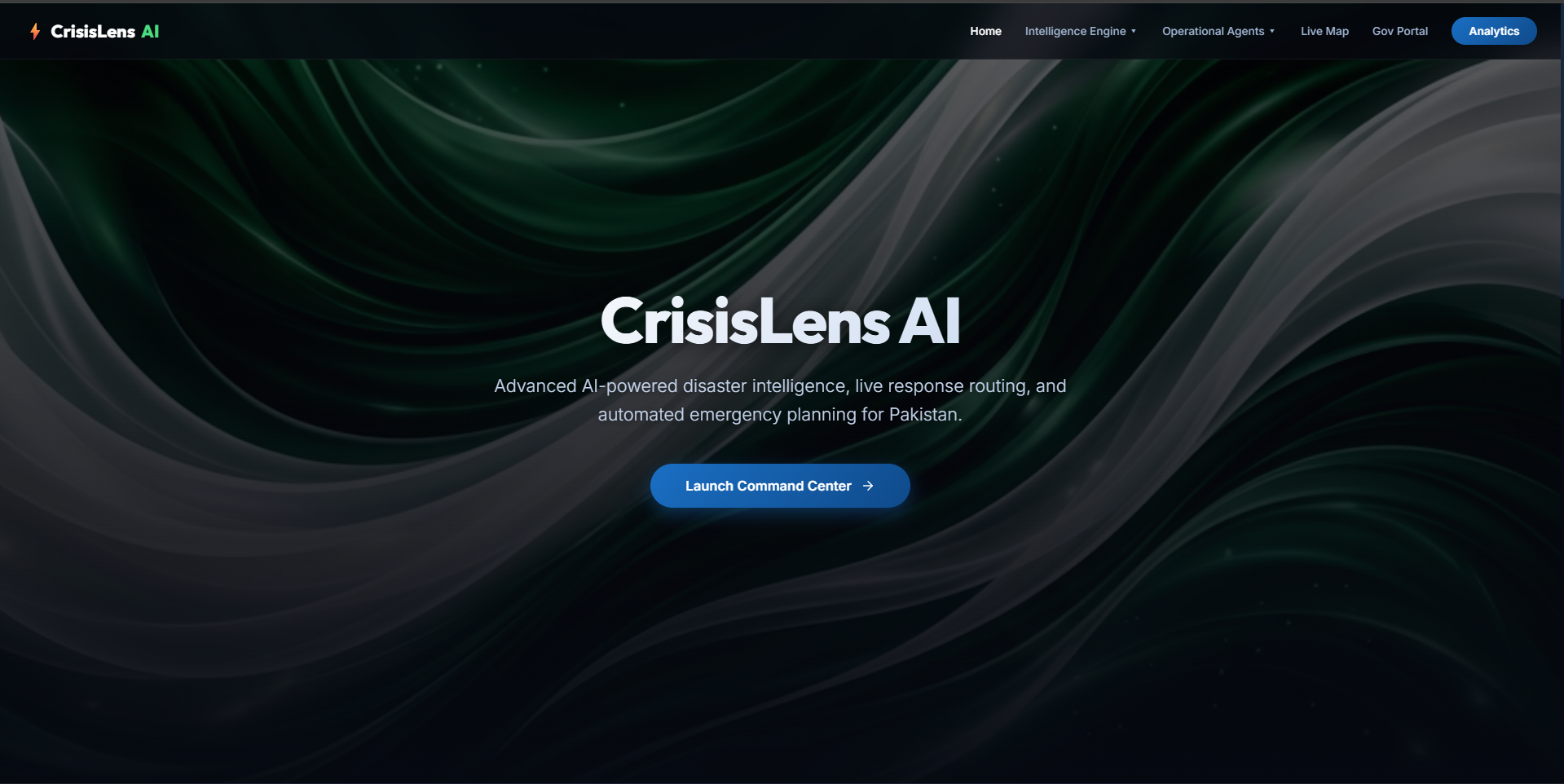
🌍 CrisisLens AI Elevator Pitch
CrisisLens AI: Turning chaos into clarity for faster, smarter disaster response.
One-Line Description
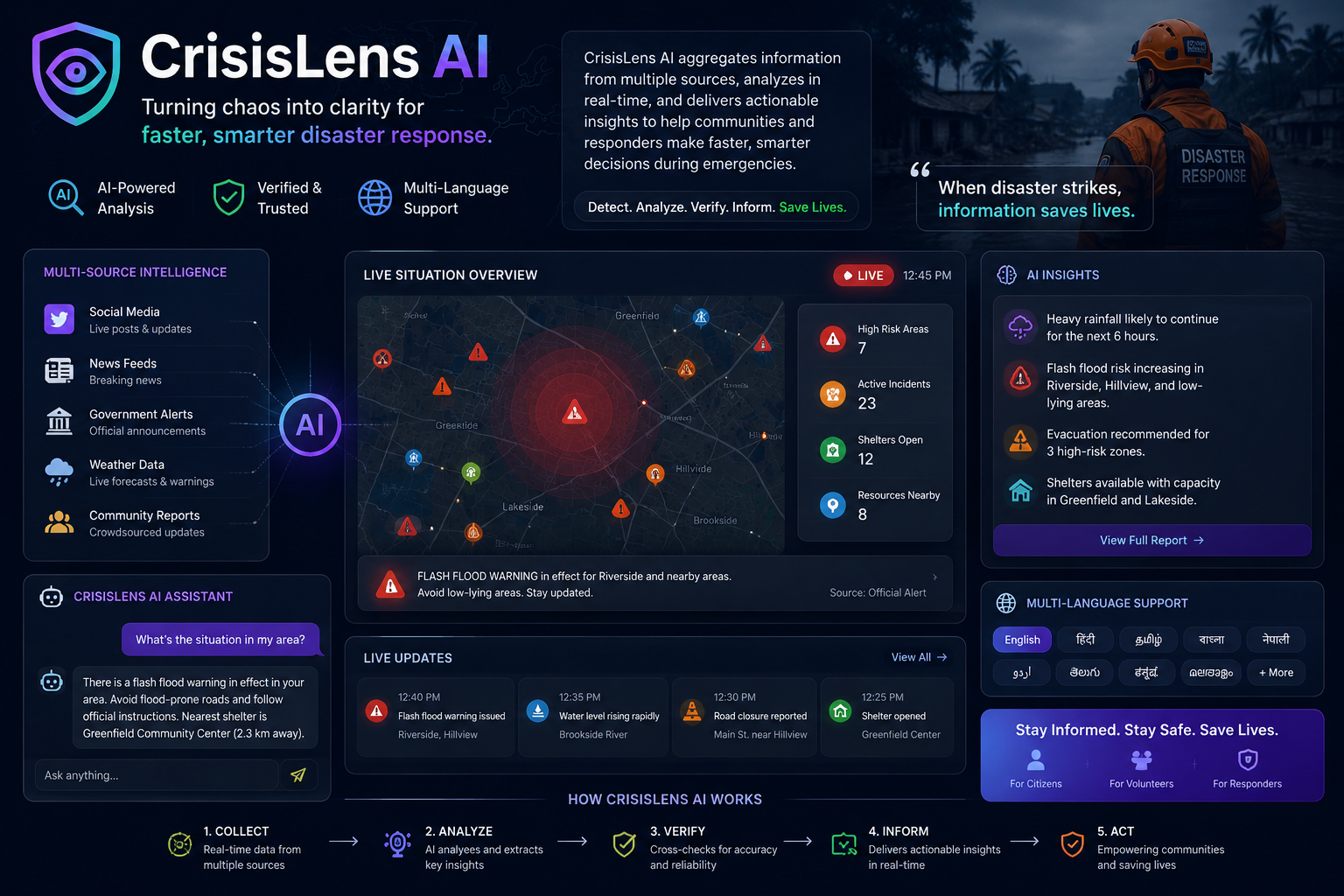
CrisisLens AI is an AI-powered disaster intelligence platform that aggregates fragmented information, identifies critical insights, and delivers trusted, actionable guidance to citizens and emergency responders in real time.
📖 Project Brief 🧠 The Problem
During natural disasters, emergencies, or civic crises, information becomes overwhelming and chaotic.
Data comes from:
Social media posts News channels Government alerts Community reports Messaging apps
But the real problem is not lack of information. It is information fragmentation and misinformation.
This leads to:
Delayed response from authorities Confusion among citizens Spread of fake or unverified news Inefficient resource allocation Loss of critical time during emergencies
In crisis situations, every minute matters, but people waste time verifying what is real and what is not.
💡 Our Solution: CrisisLens AI
CrisisLens AI is an AI-powered disaster intelligence system designed to convert scattered crisis data into clear, actionable intelligence.
Instead of forcing users to manually search multiple sources, CrisisLens AI:
Collects information from multiple channels Filters and organizes incoming data Detects important signals in real time Summarizes complex situations into simple insights Highlights verified and high-priority updates Provides actionable guidance for citizens and responders 🤖 How AI Powers CrisisLens
AI is the core engine of the system. It enables:
- Intelligent Data Understanding
Natural Language Processing (NLP) is used to:
Read social media posts, news, and alerts Extract relevant disaster-related information Remove noise and irrelevant content
- Information Prioritization
Machine learning models help:
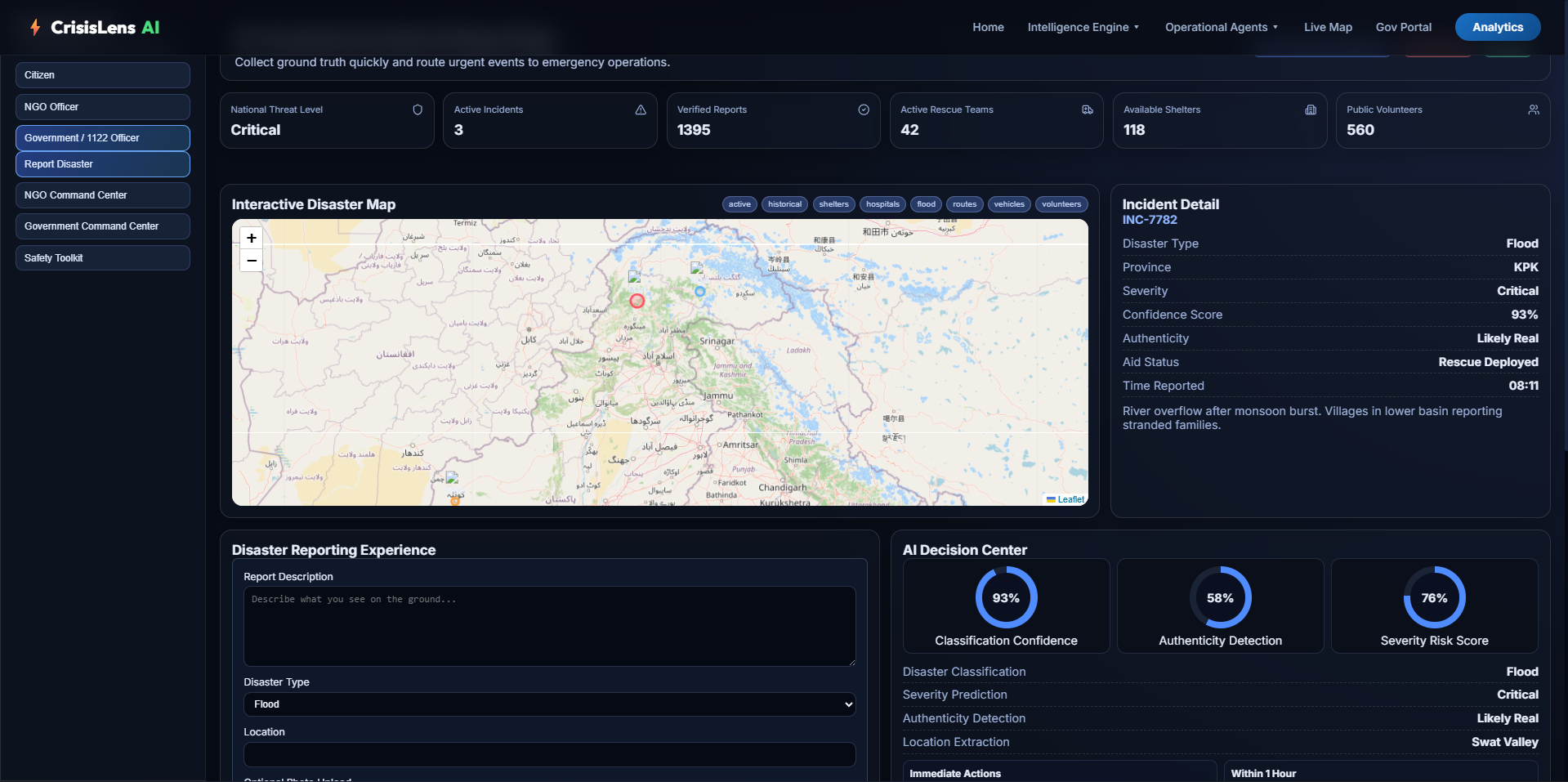
Rank urgency of events Detect severity (floods, earthquakes, fires, etc.) Highlight high-risk updates first
- Summarization Engine
Large Language Models (LLMs):
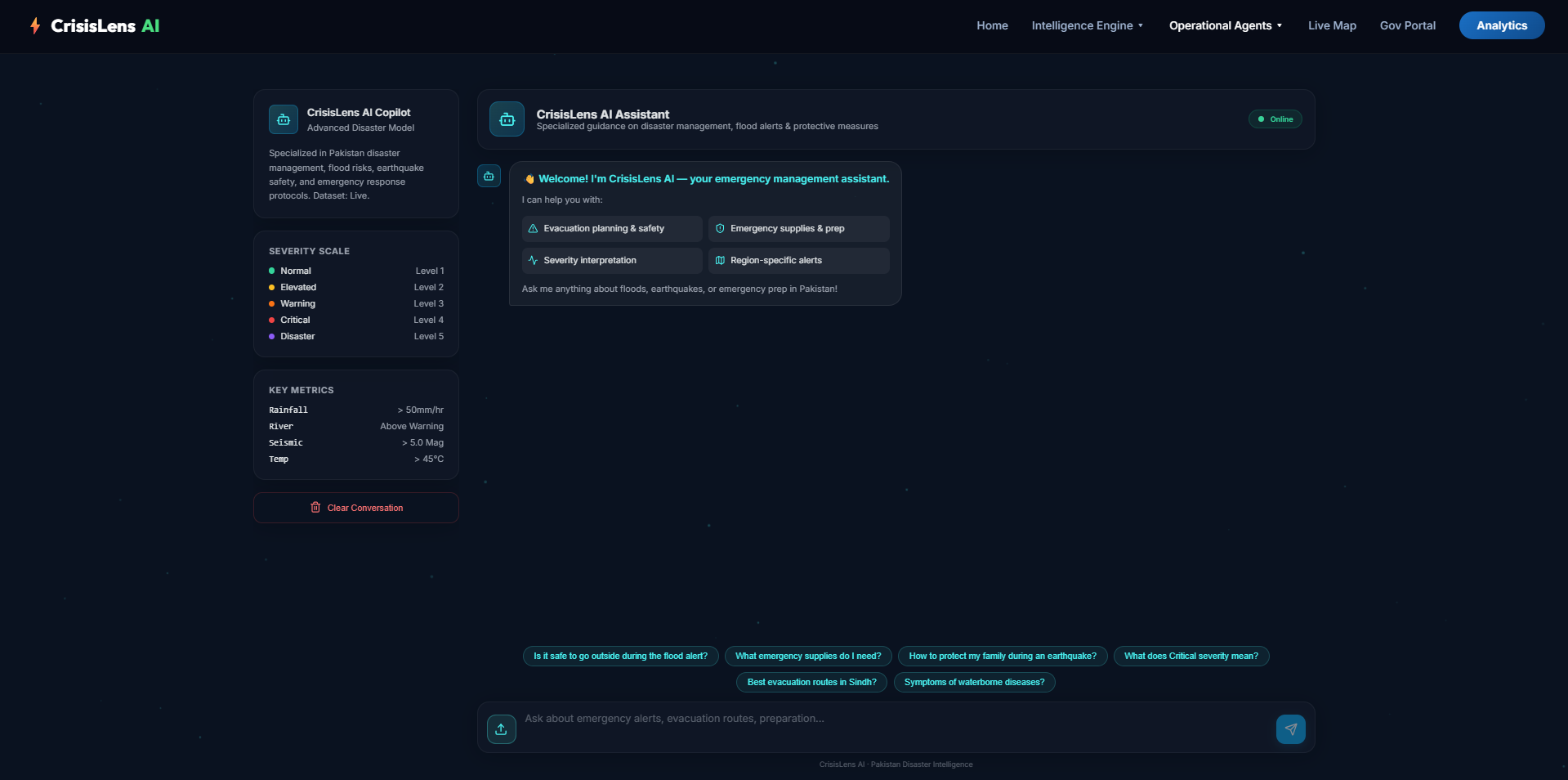
Convert long reports into short summaries Translate technical data into human-readable insights Provide quick situation awareness
- Misinformation Reduction
AI helps identify:
Duplicate reports Conflicting updates Low-confidence or unverified claims
- Multilingual Access
Natural language processing allows:
Local language support Broader accessibility during emergencies Clear communication for diverse communities 🏗️ How We Built It
We designed CrisisLens AI as a modular system:
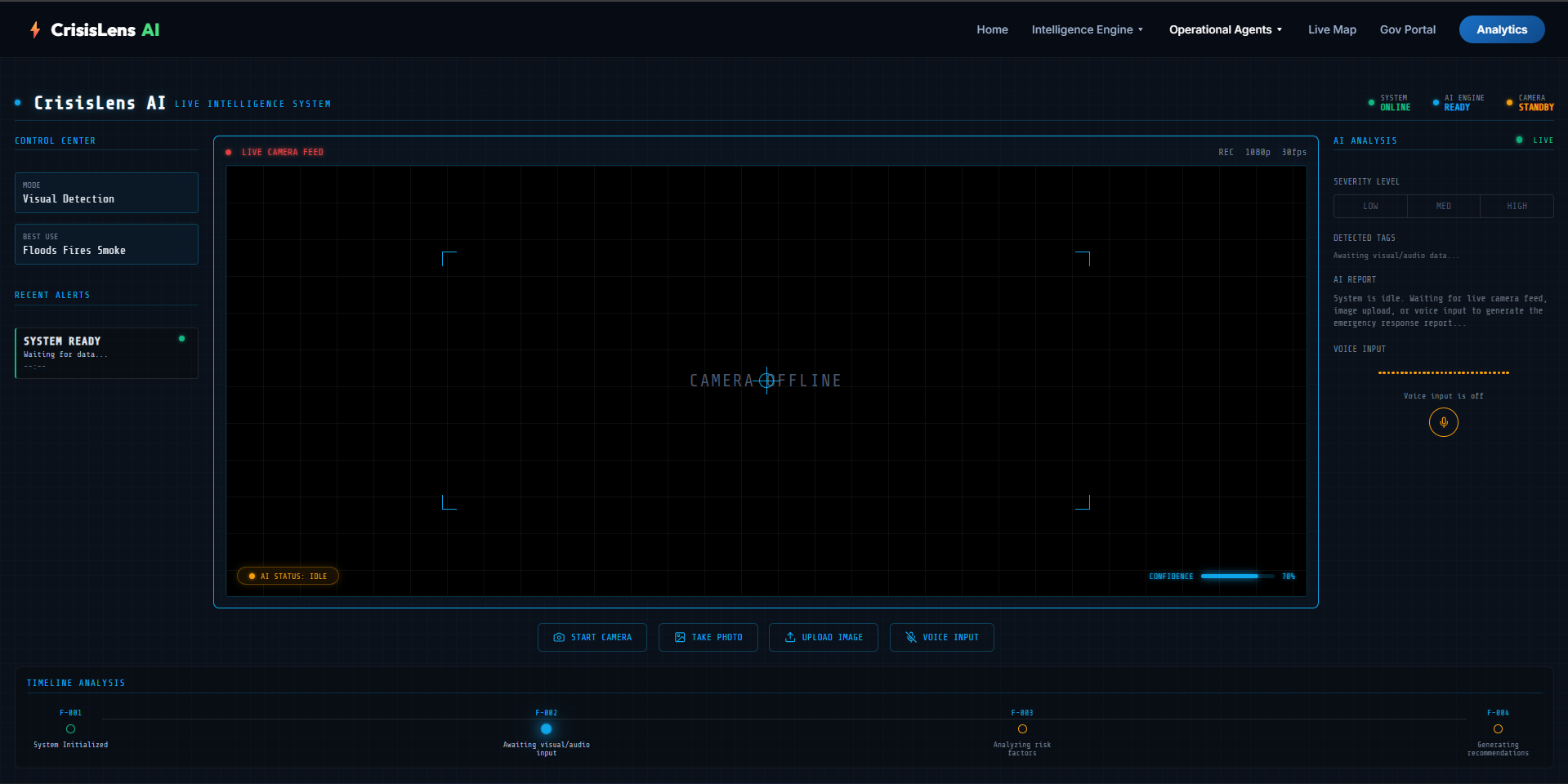
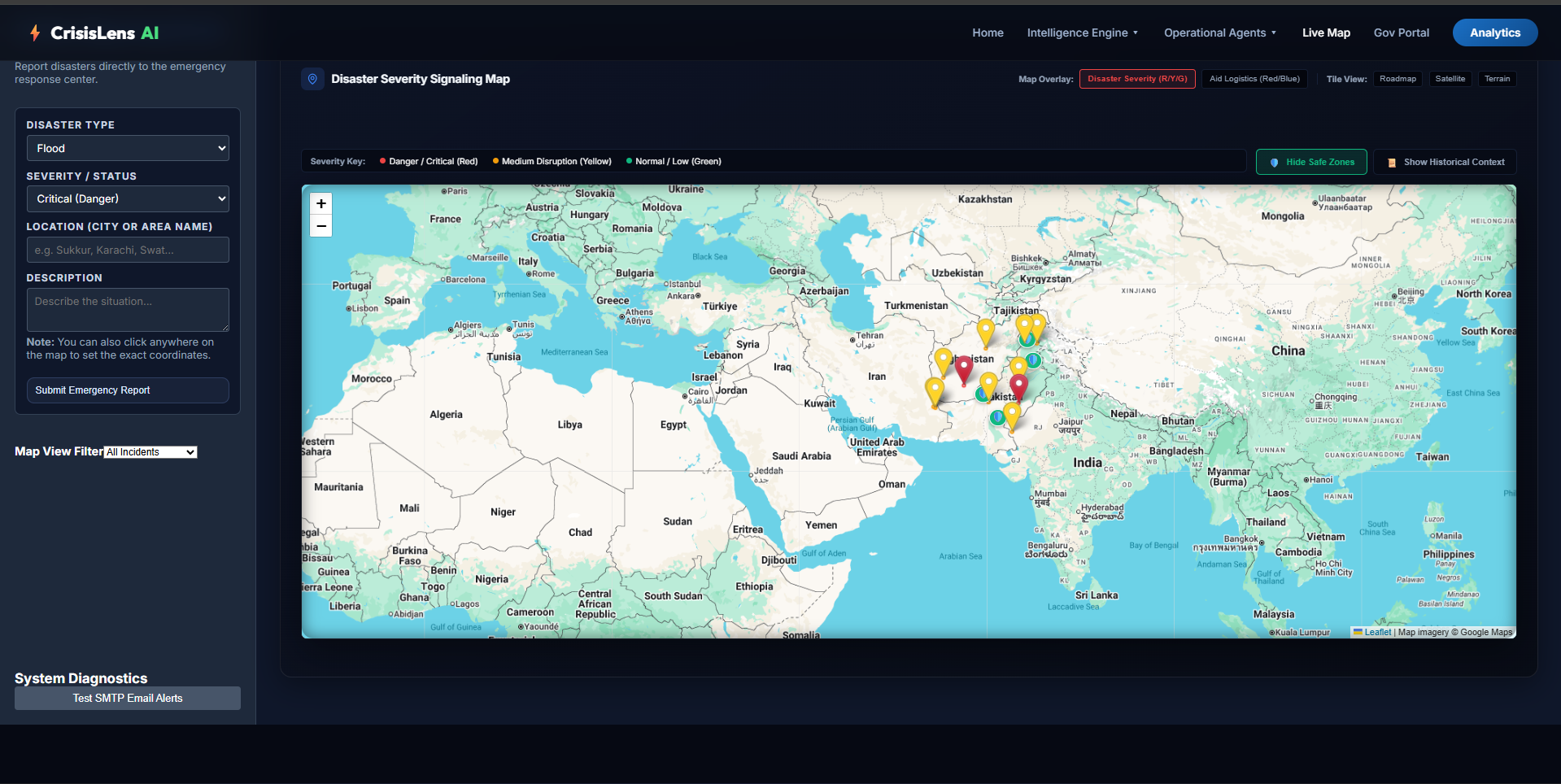
Frontend: Interactive dashboard for live crisis visualization Backend: API layer for handling data streams and processing AI Layer: LLM-based intelligence for analysis and summarization Data Pipeline: Aggregation from multiple sources Decision Layer: Prioritization and alert generation system
The architecture is built to be scalable, so it can handle real-world disaster-level data loads.
🌱 Civic Innovation Impact
CrisisLens AI is designed as a civic technology solution, not just a software project.
It supports:
👥 Citizens Real-time updates in simple language Clear safety instructions Location-based alerts 🚑 Emergency Responders Faster situational awareness Reduced time spent on information gathering Better resource planning 🏛️ Governments & NGOs Data-driven decision support Improved disaster coordination Better response efficiency 🌍 Real-World Impact
CrisisLens AI helps achieve:
Faster emergency response times Reduced misinformation spread Better coordination during disasters Improved public safety awareness More resilient communities 🚀 Conclusion
CrisisLens AI is not just an information tool.
It is a real-time intelligence layer for crisis situations, designed to ensure that when disaster strikes, people don’t just receive information — they receive clarity, trust, and actionability.


Log in or sign up for Devpost to join the conversation.