-
-
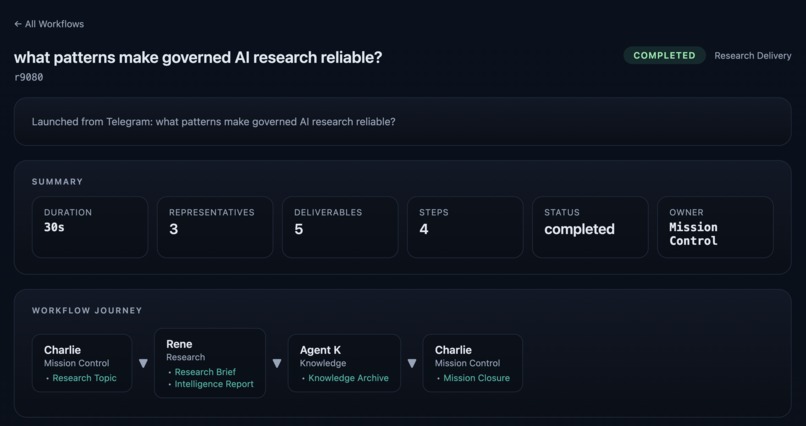
CrowOne - Journey
-
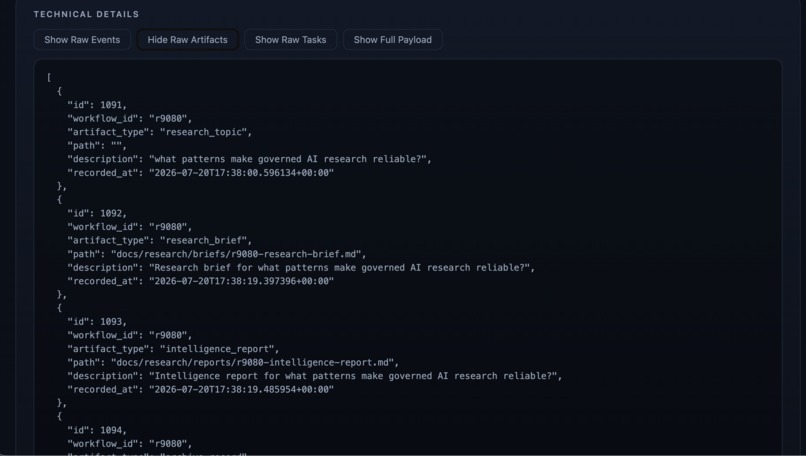
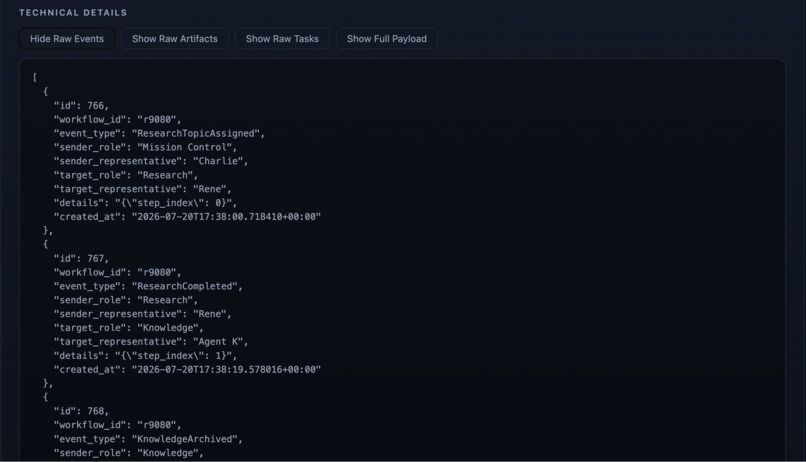
CrowOne - Technicial Details
-
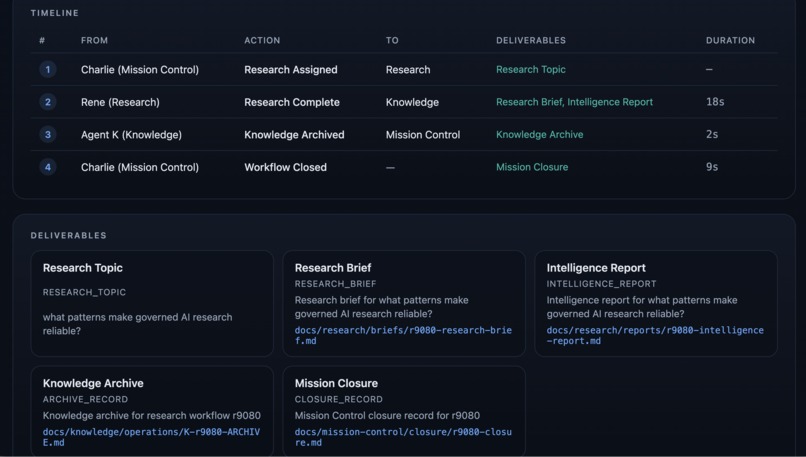
CrowOne - Timeline
-
CrowOne -Artifacts
-
CrowOne Logo
-
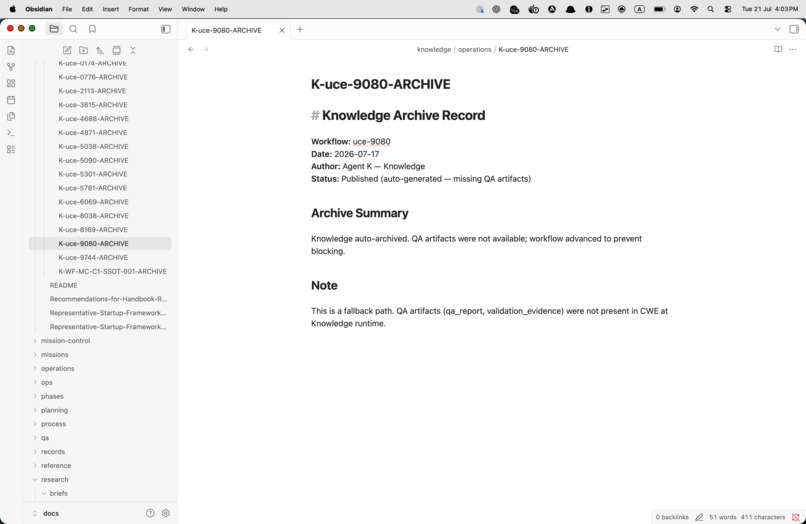
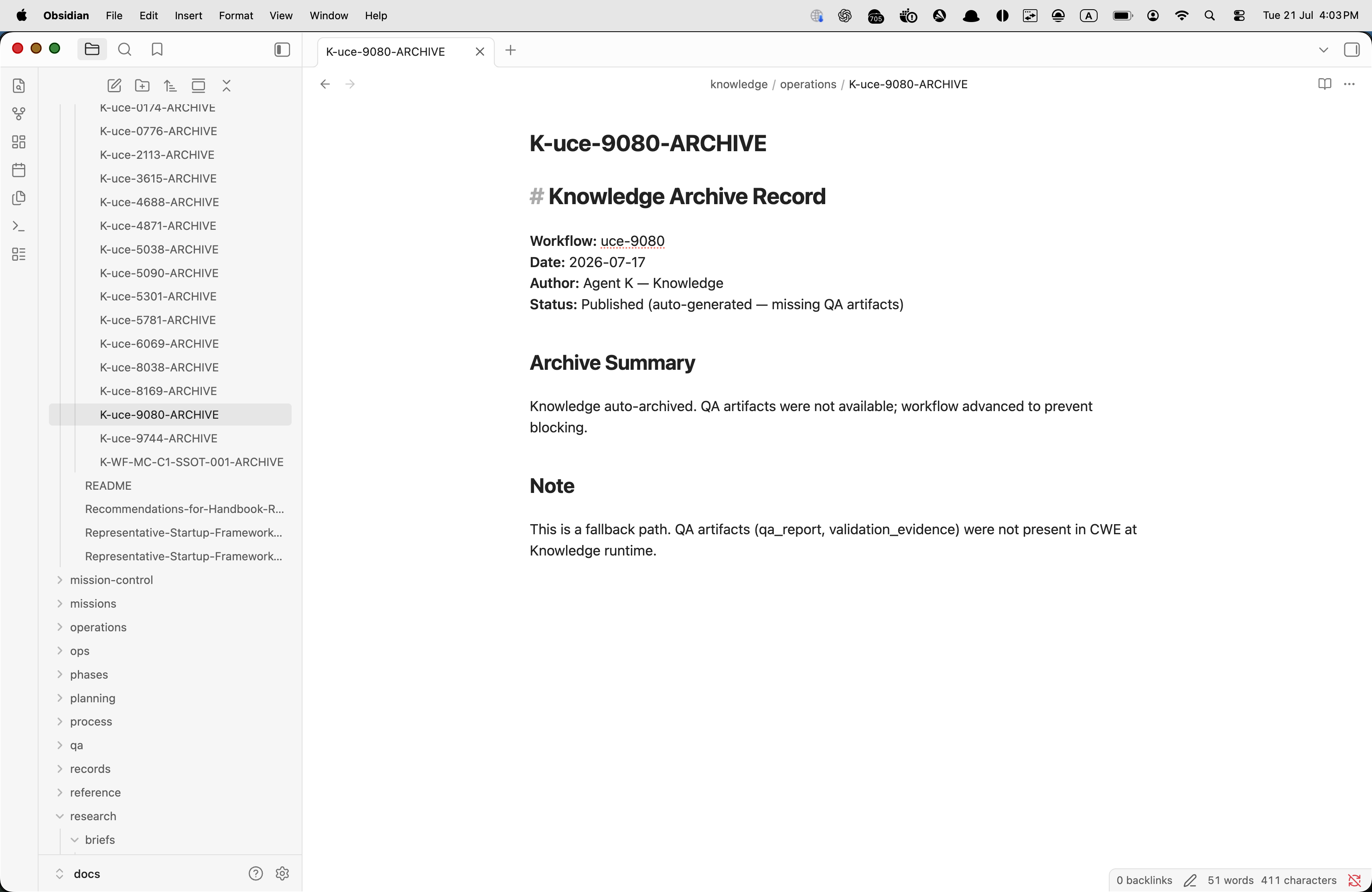
Obsidian Vault - Knowledge Archived
-
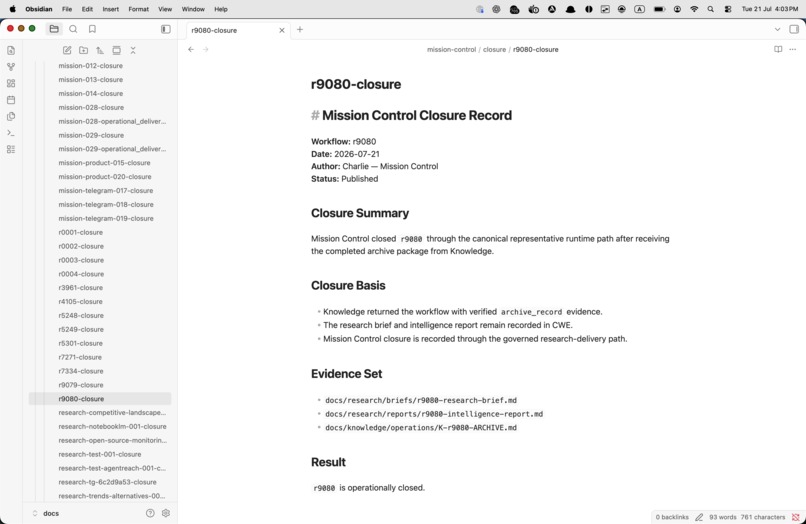
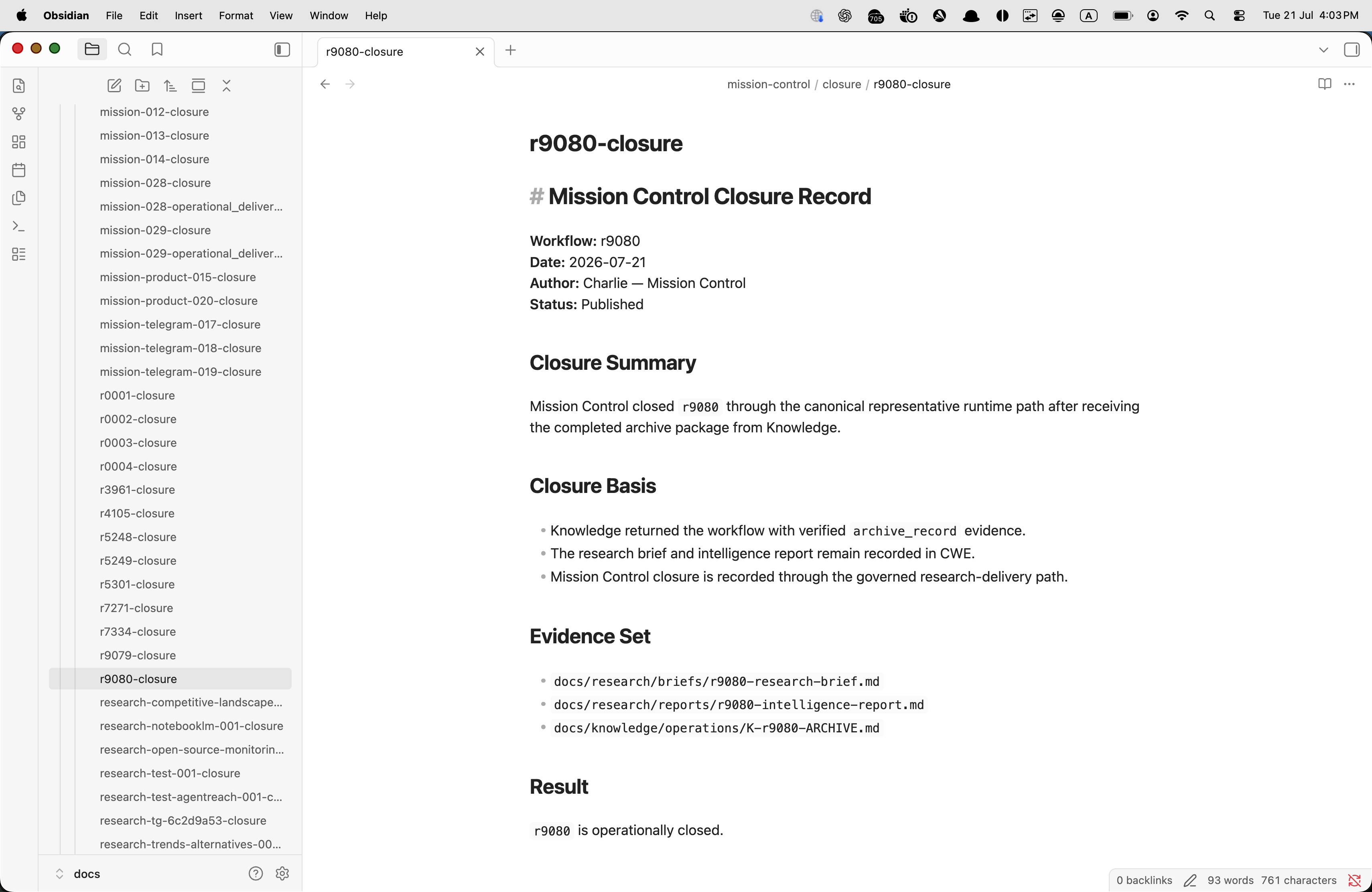
Obsidian Vault - Mission Control
-
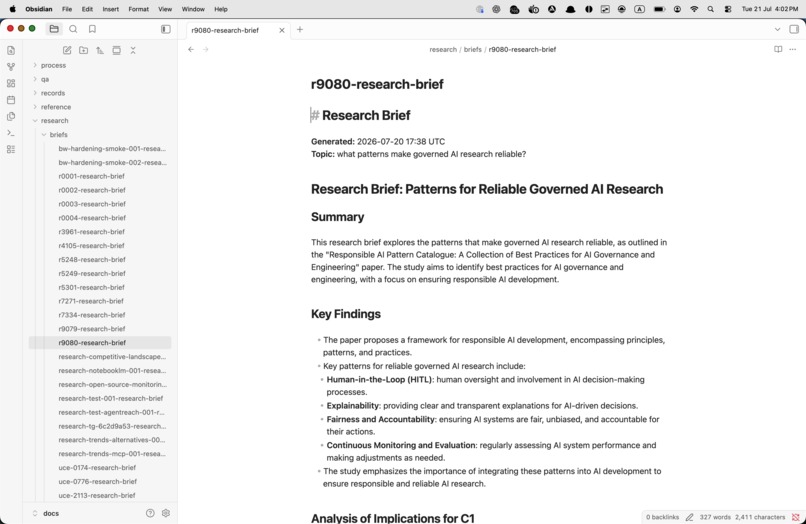
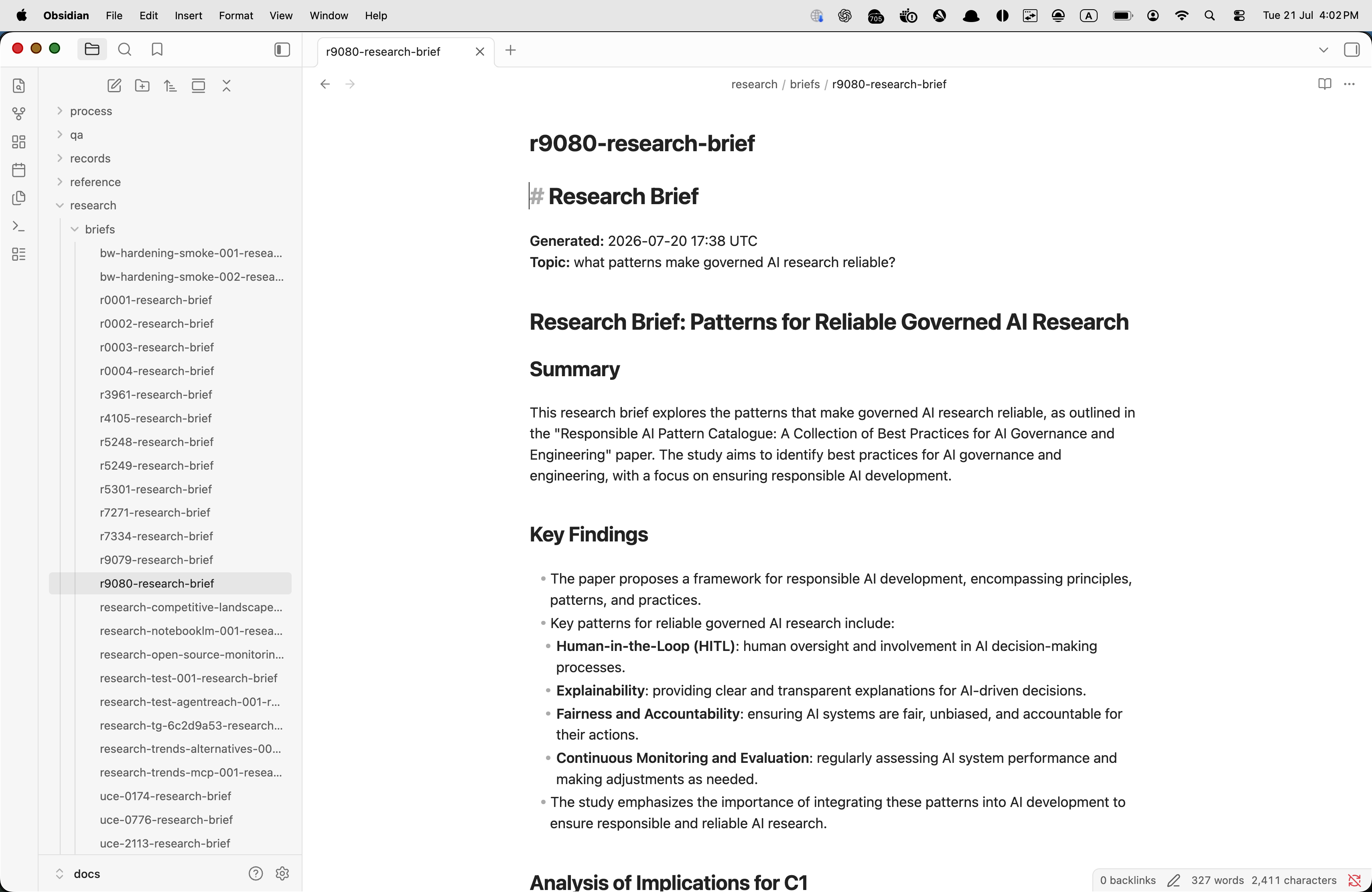
Obsidian Vault - Research Brief
-
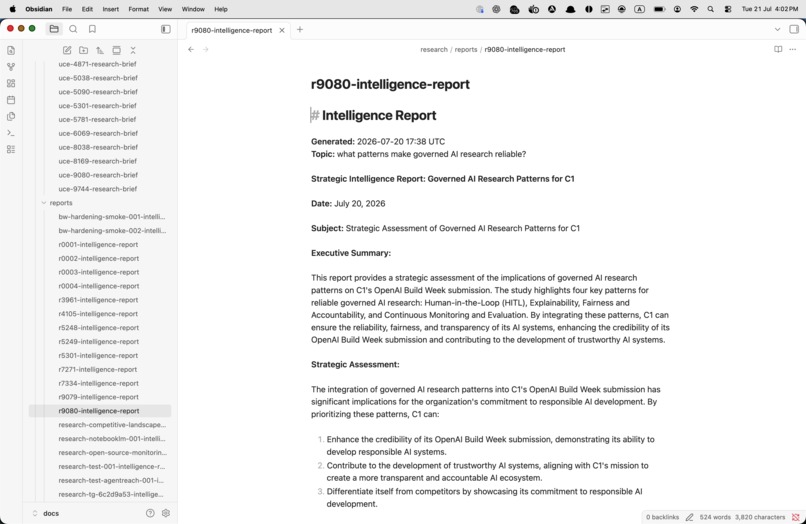
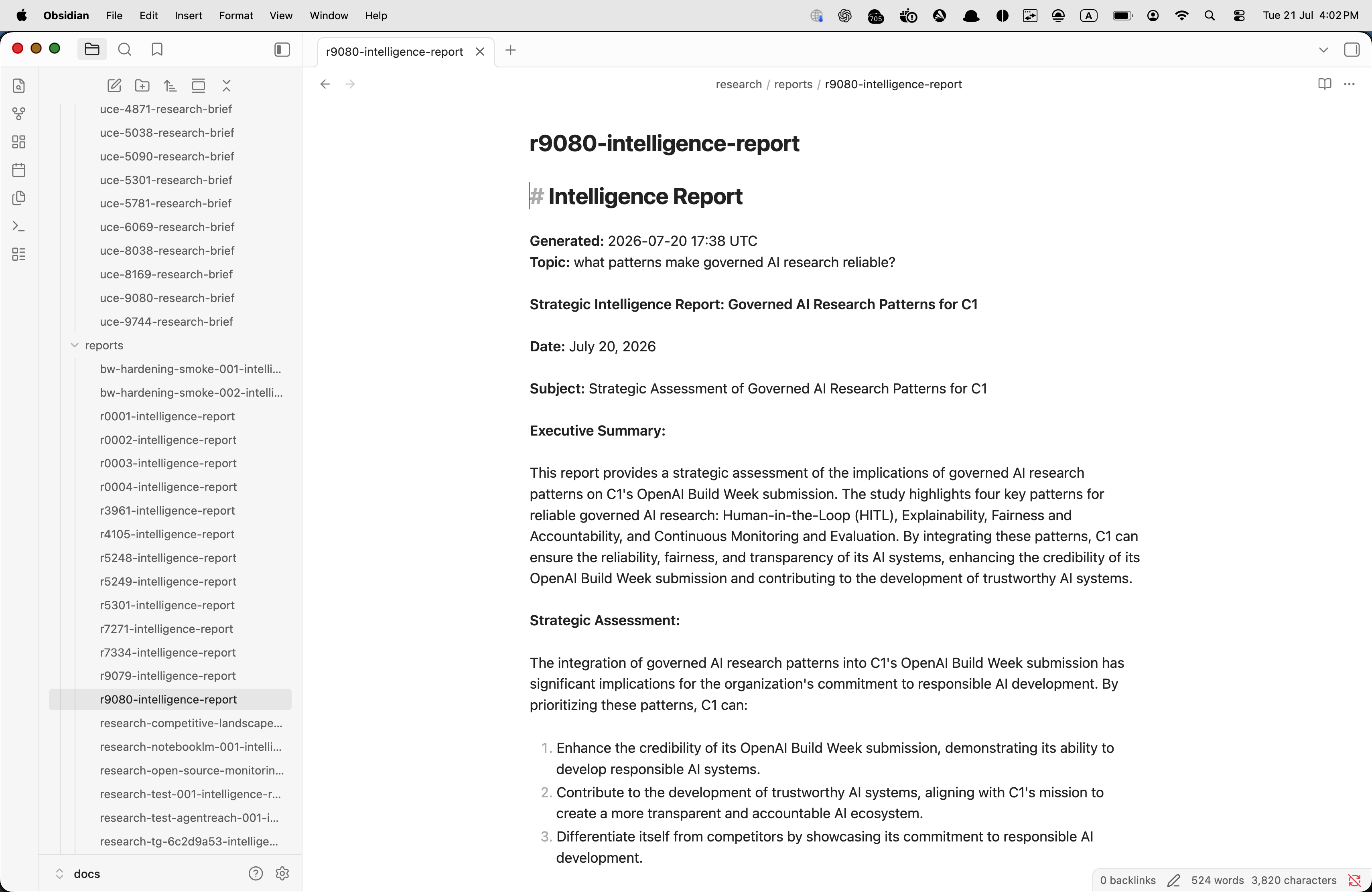
Obsidian Vault - Intelligent Report
-
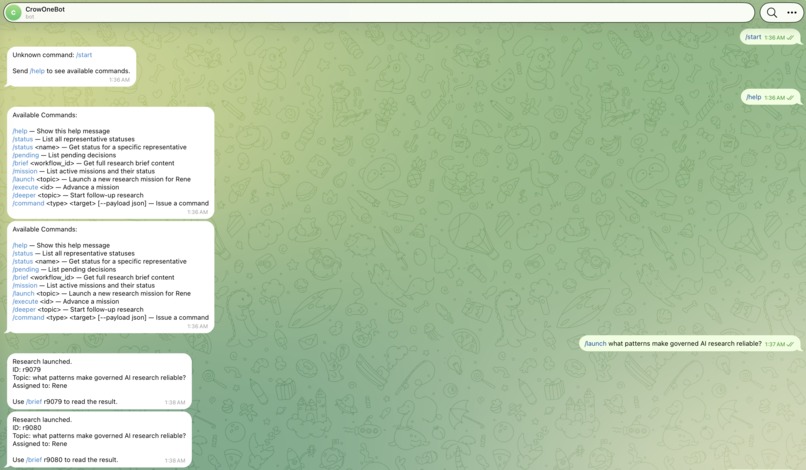
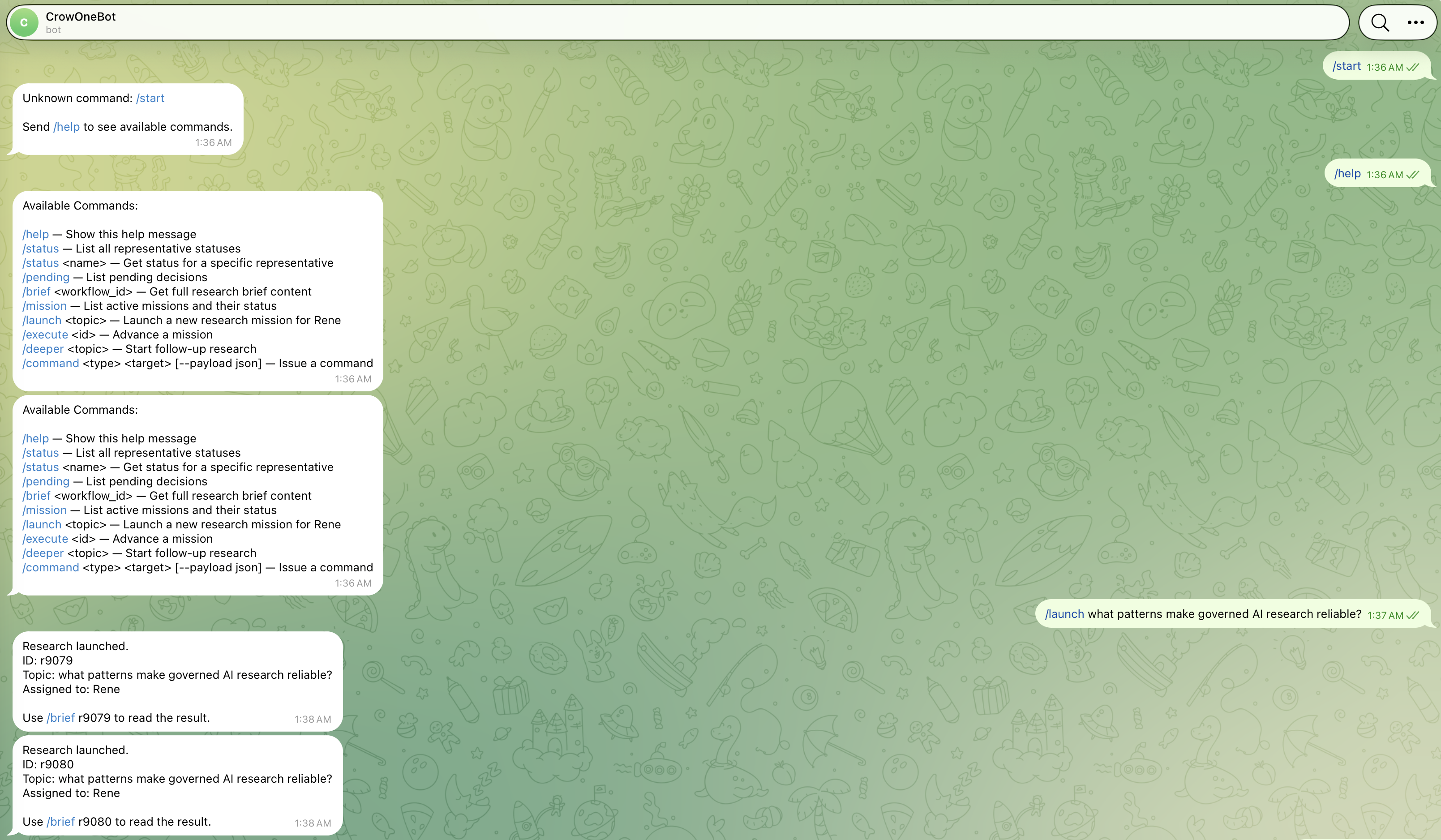
Telegram - Mission Launched
-
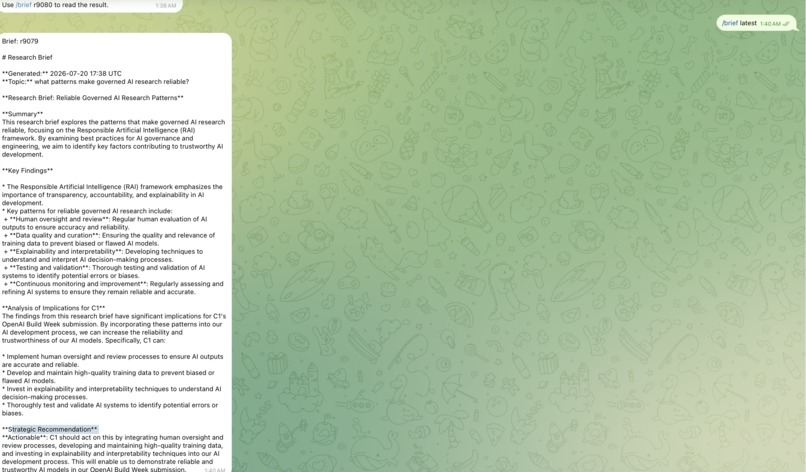
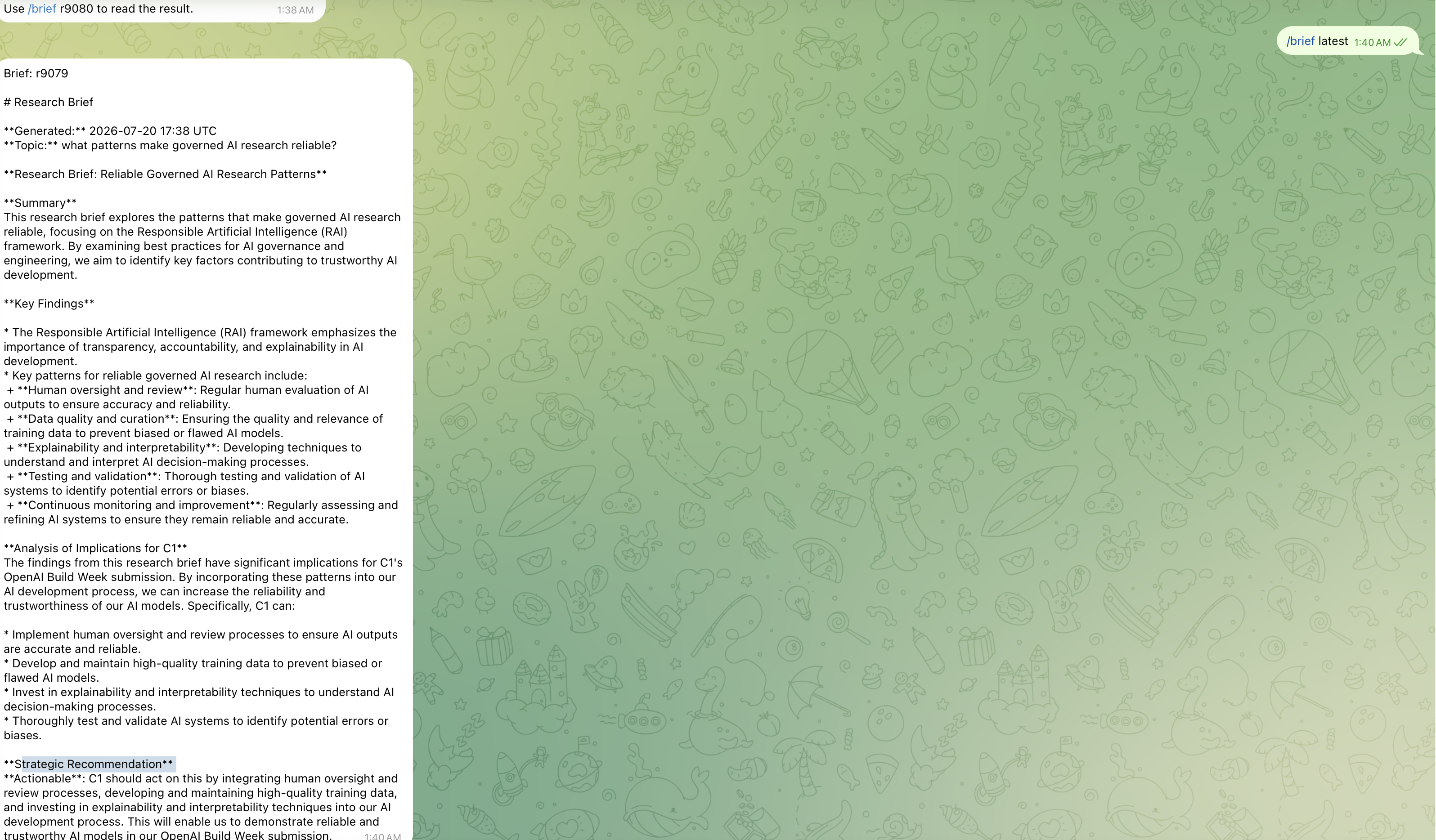
Telegram - Executive Brief
Inspiration
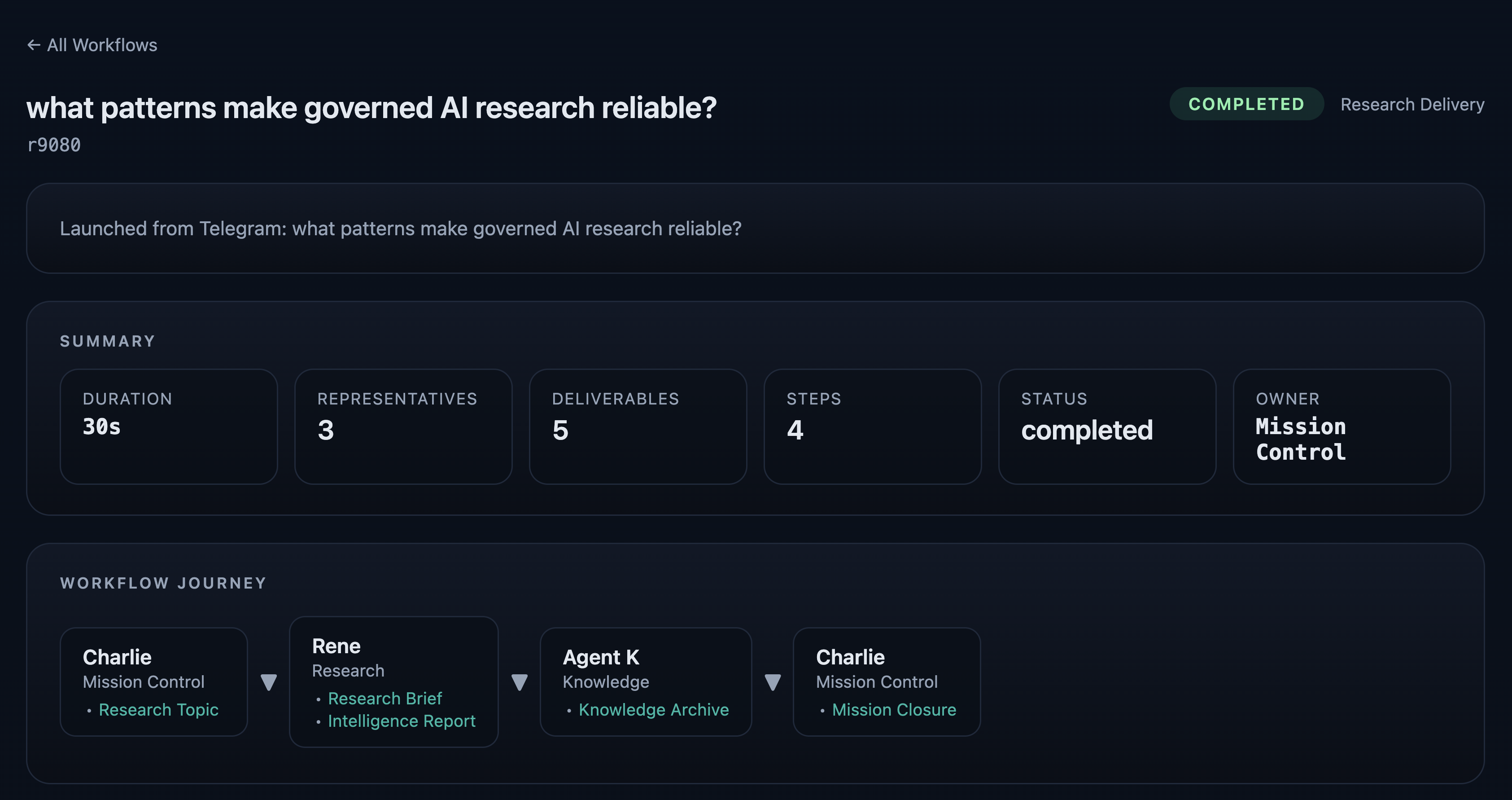
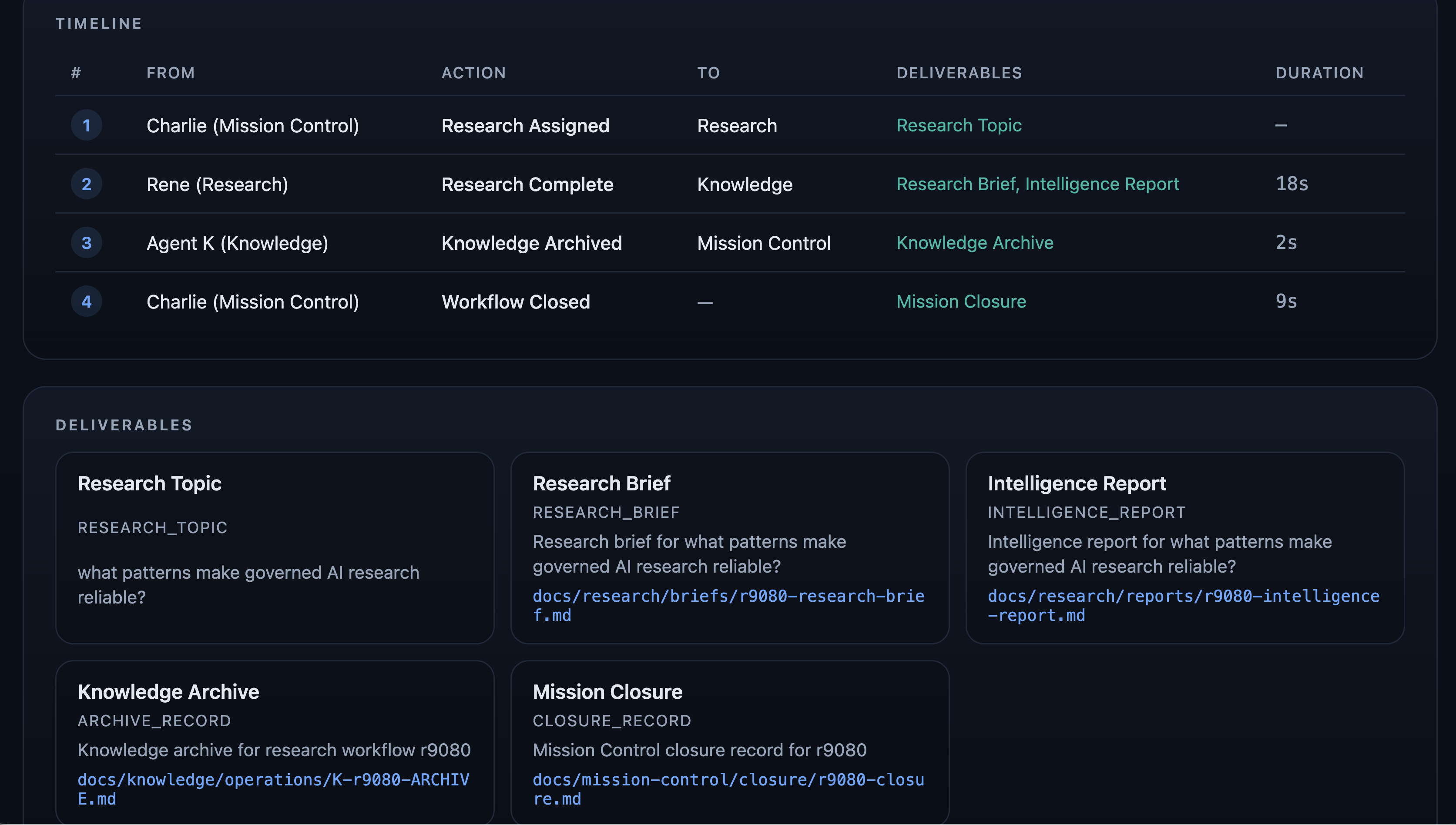
Most AI systems today are built around a single assistant: one prompt, one model, one answer. Real organizations don't work that way. Work moves through specialized roles. Research gathers information, Knowledge preserves it, and Mission Control coordinates the work and delivers the outcome. Every handoff has an owner, every decision leaves evidence, and the organization remembers what happened. CrowOne explores a different idea: what if AI worked as a governed organization instead of a single intelligent assistant? OpenAI Build Week gave me the opportunity to turn that idea into a working demonstration.
What it does
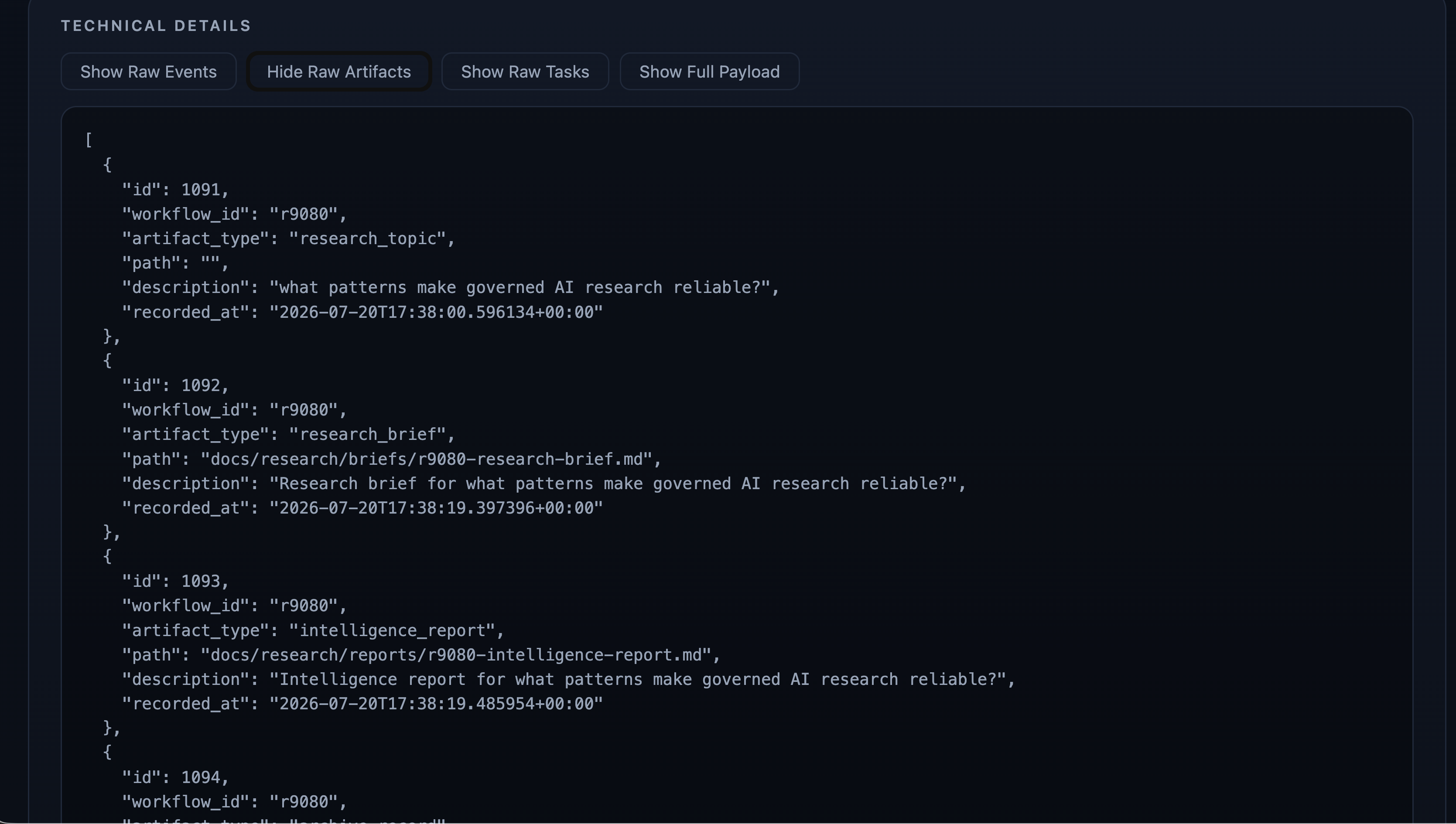
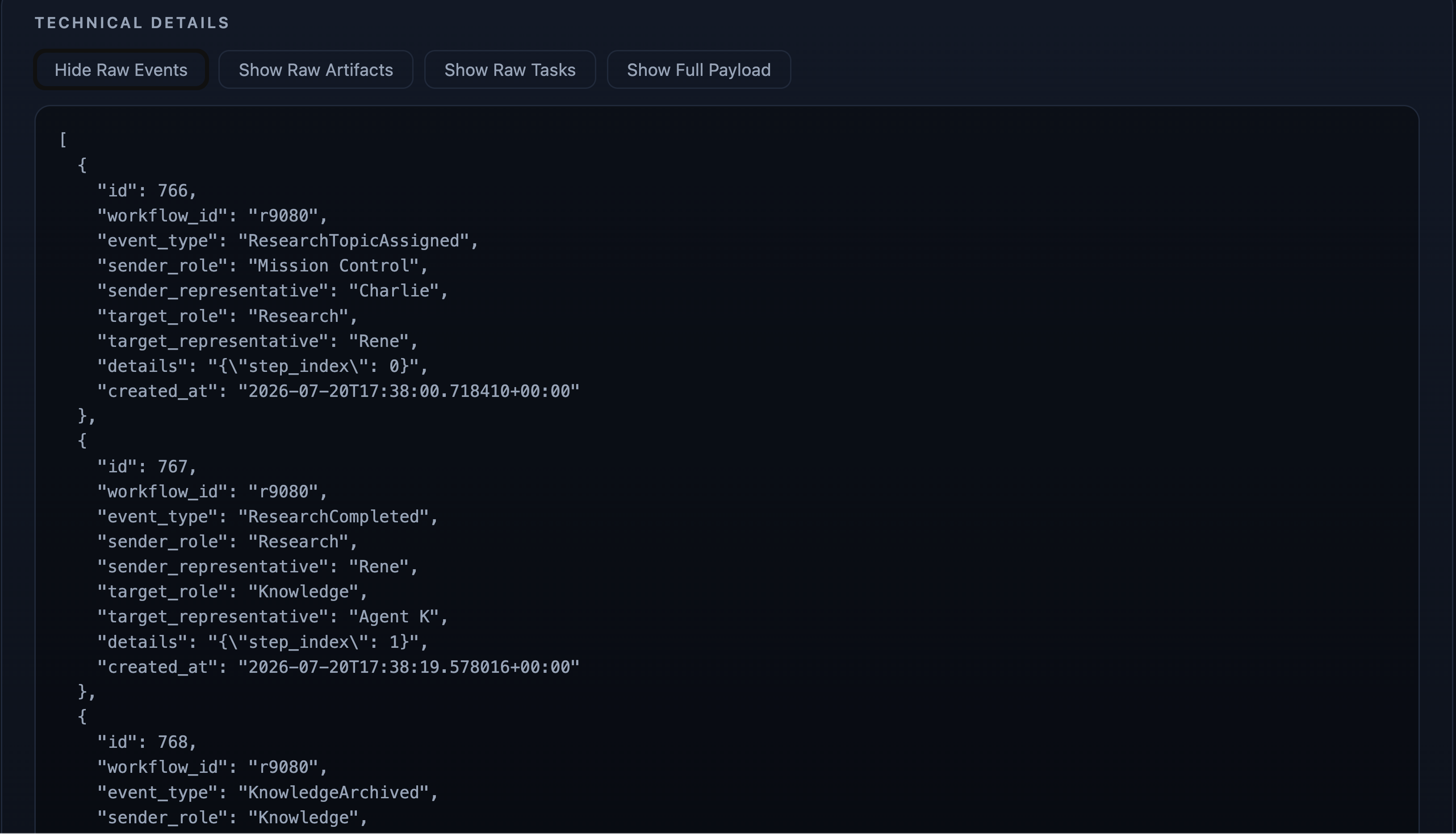
CrowOne is an operating system for AI organizations. A single Telegram command launches a governed workflow where specialized AI representatives collaborate to complete a task. Each representative has a defined responsibility, hands work to the next representative, and produces durable artifacts that can be reviewed long after the conversation ends. The demo showcases a complete research workflow involving Mission Control, Research, and Knowledge, producing an executive brief together with an auditable record of the entire mission.
How I've built it
CrowOne is built with Python, FastAPI, SQLite, Docker, and Telegram. During OpenAI Build Week, I used OpenAI Codex and ChatGPT extensively to implement features, review architecture, improve workflows, write documentation, and prepare the final submission. The platform separates orchestration, representatives, workflows, and organizational memory, allowing AI representatives to collaborate through governed workflows rather than acting as isolated assistants.
Challenges I ran into
The biggest challenge wasn't writing code—it was designing the organization. Defining ownership, valid handoffs, organizational memory, and auditable evidence required much more architectural thinking than simply generating AI responses. Another challenge was balancing rapid development with stability. As Build Week progressed, I introduced an engineering freeze to focus on workflow visualization, documentation, and presentation instead of continually adding new features.
Accomplishments that I'm proud of
Building a working prototype of an AI organization rather than a traditional chatbot. Demonstrating governed workflows with accountable ownership and auditable evidence. Creating durable organizational records instead of temporary chat conversations. Delivering a complete end-to-end research workflow initiated through a single Telegram command. Turning a long-term architectural vision into a polished Build Week demonstration.
What I've learned
This project changed how I think about AI systems. The biggest lesson wasn't about models—it was about organizations. Clear ownership, structured workflows, durable memory, and accountable execution are just as important as model capability. I also learned that software engineering principles used by successful human organizations can be applied to AI systems to make them more reliable and trustworthy.
What's next for CrowOne
The research workflow demonstrated here is only the beginning. CrowOne is designed to support additional organizational departments such as Planning, Engineering, Quality Assurance, Security, Operations, and Product Management using the same governed workflow model. The long-term vision is to evolve CrowOne into an operating system for AI organizations, where complex work is executed through specialized AI representatives collaborating with accountable ownership, clear handoffs, durable organizational memory, and auditable evidence.

Log in or sign up for Devpost to join the conversation.