-
-
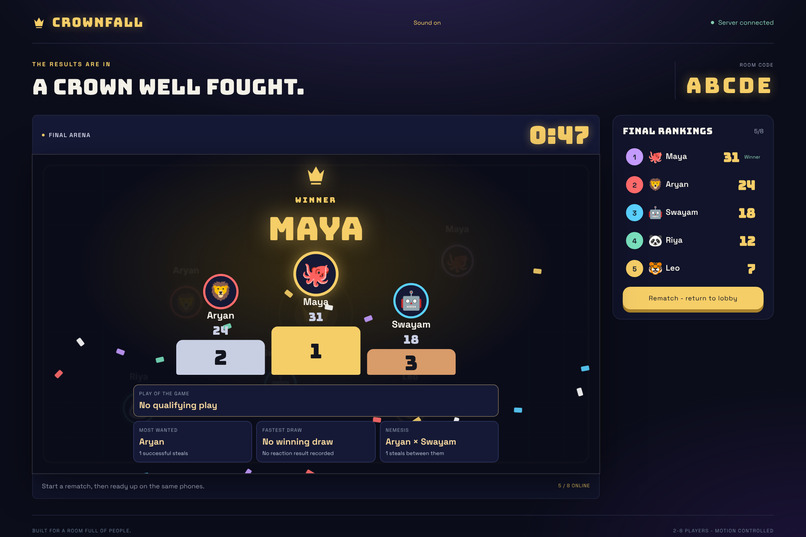
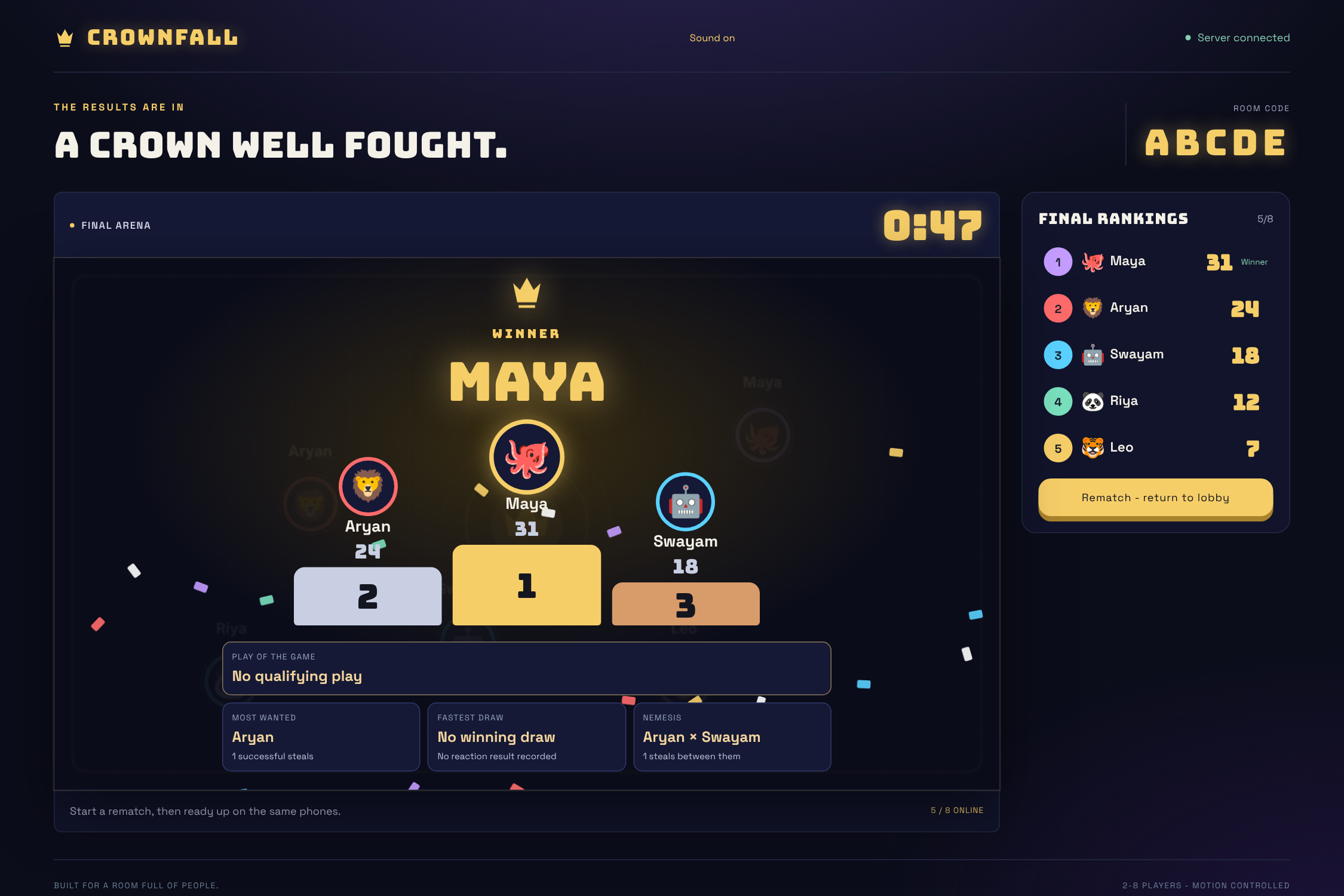
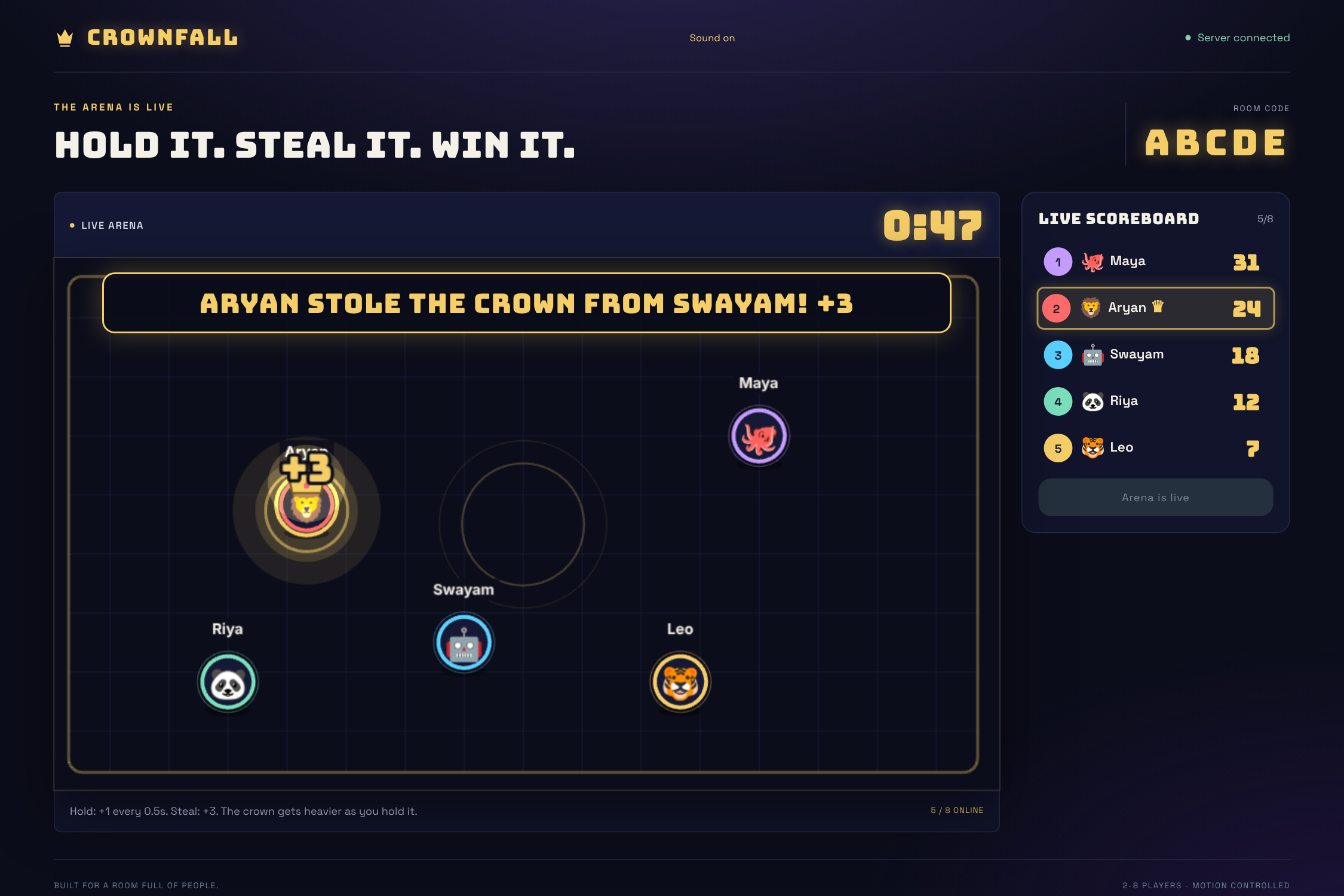
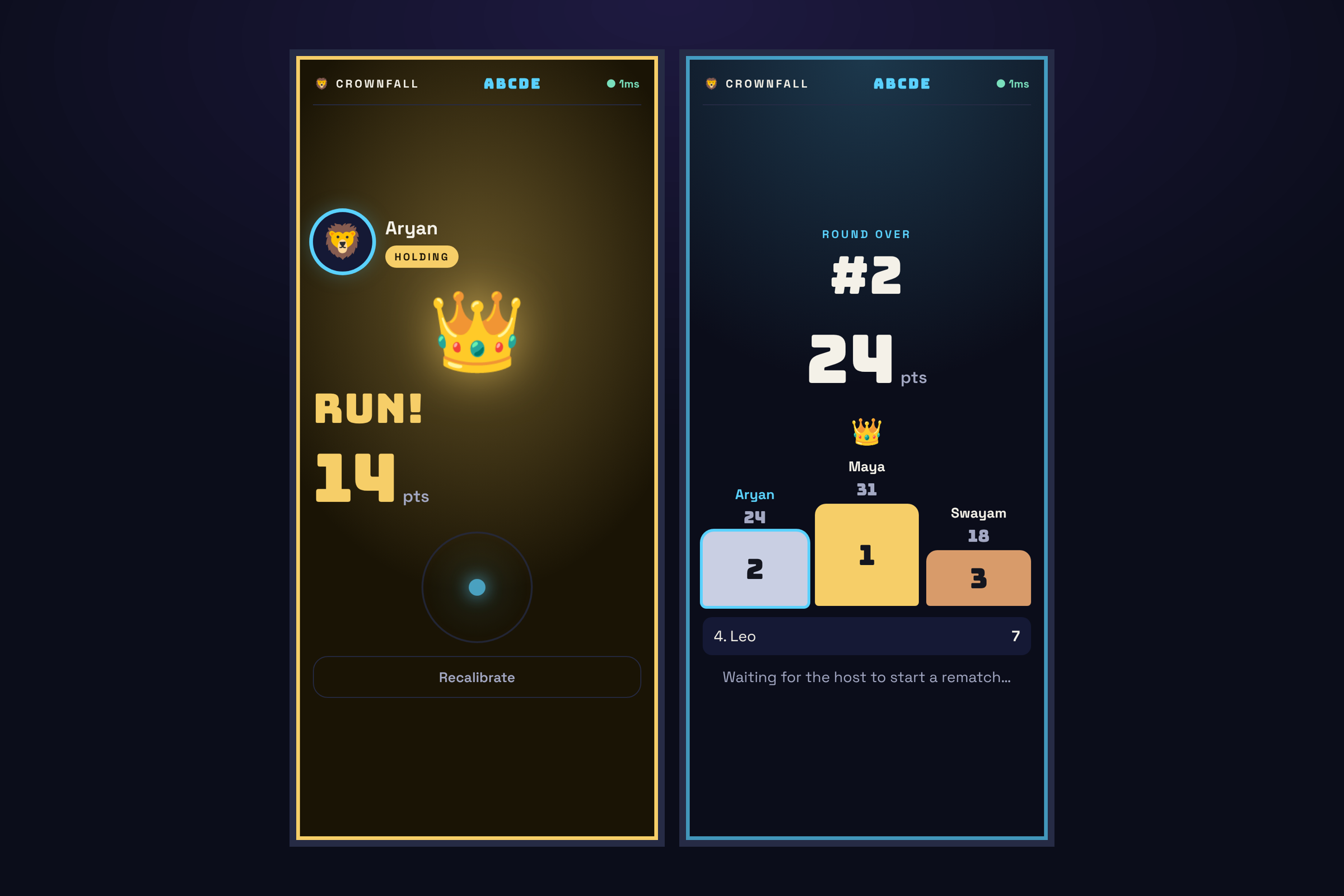
Results: podium, confetti, and round highlights like Play of the Game.
-
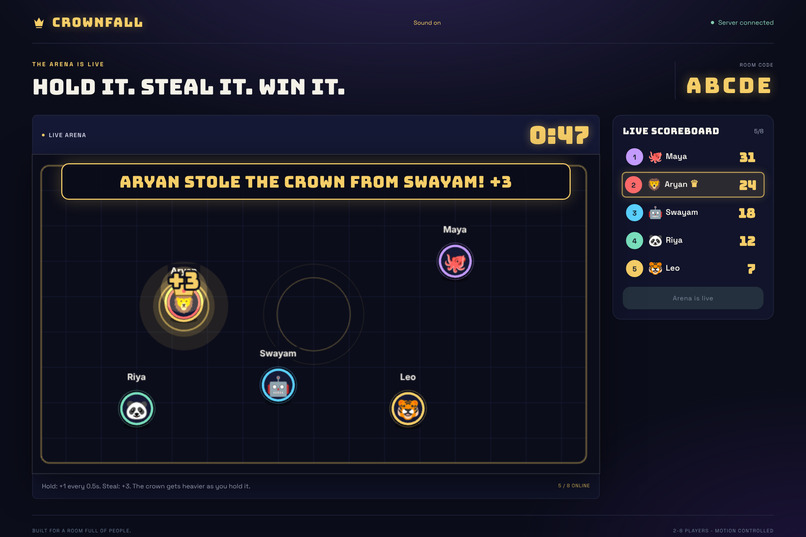
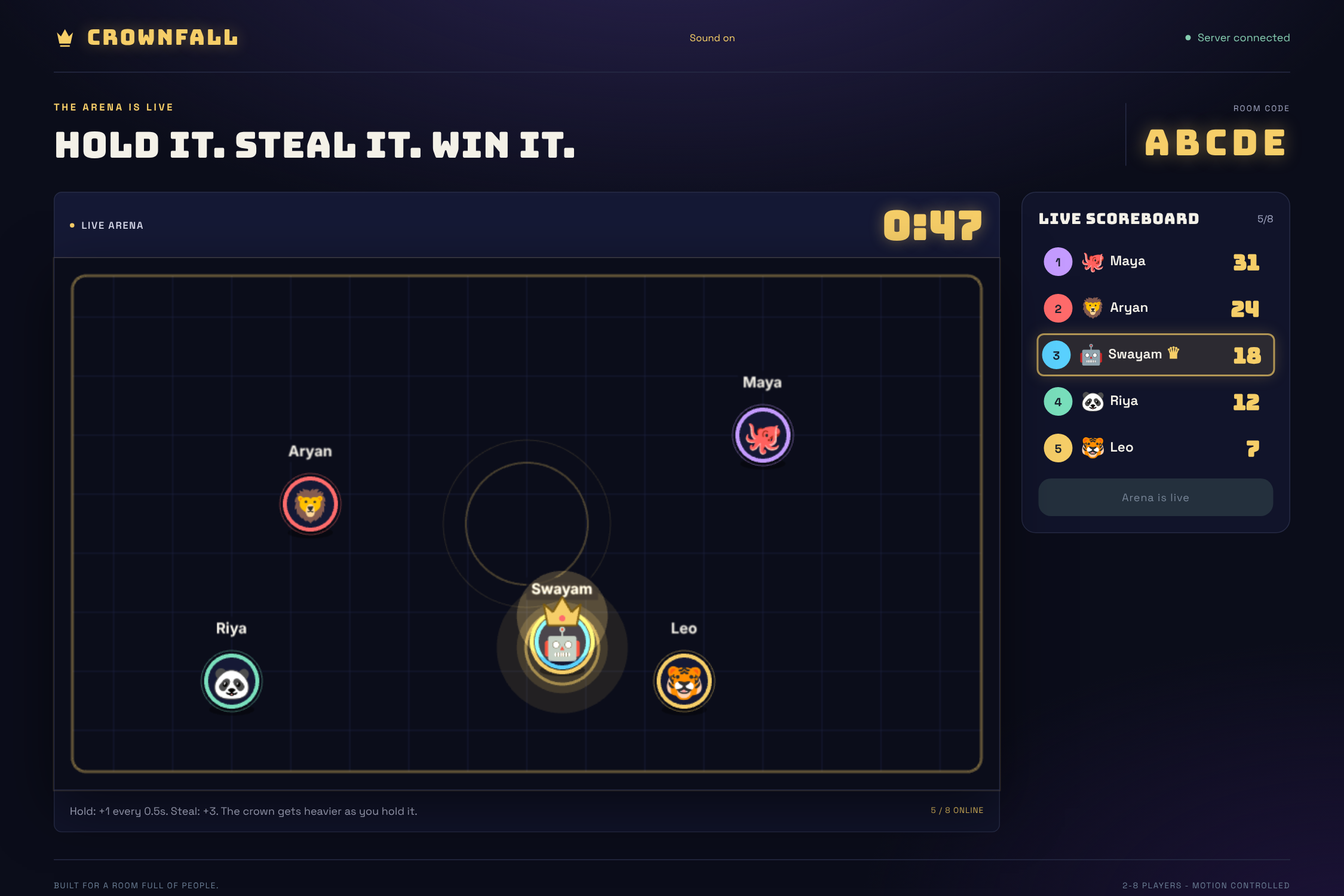
Steal! A phone yank takes the crown: sparks, screen shake, and +3 points.
-
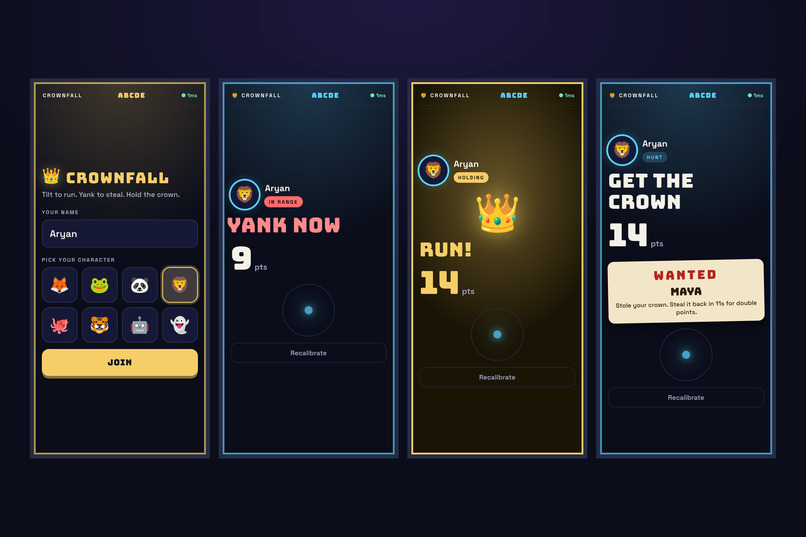
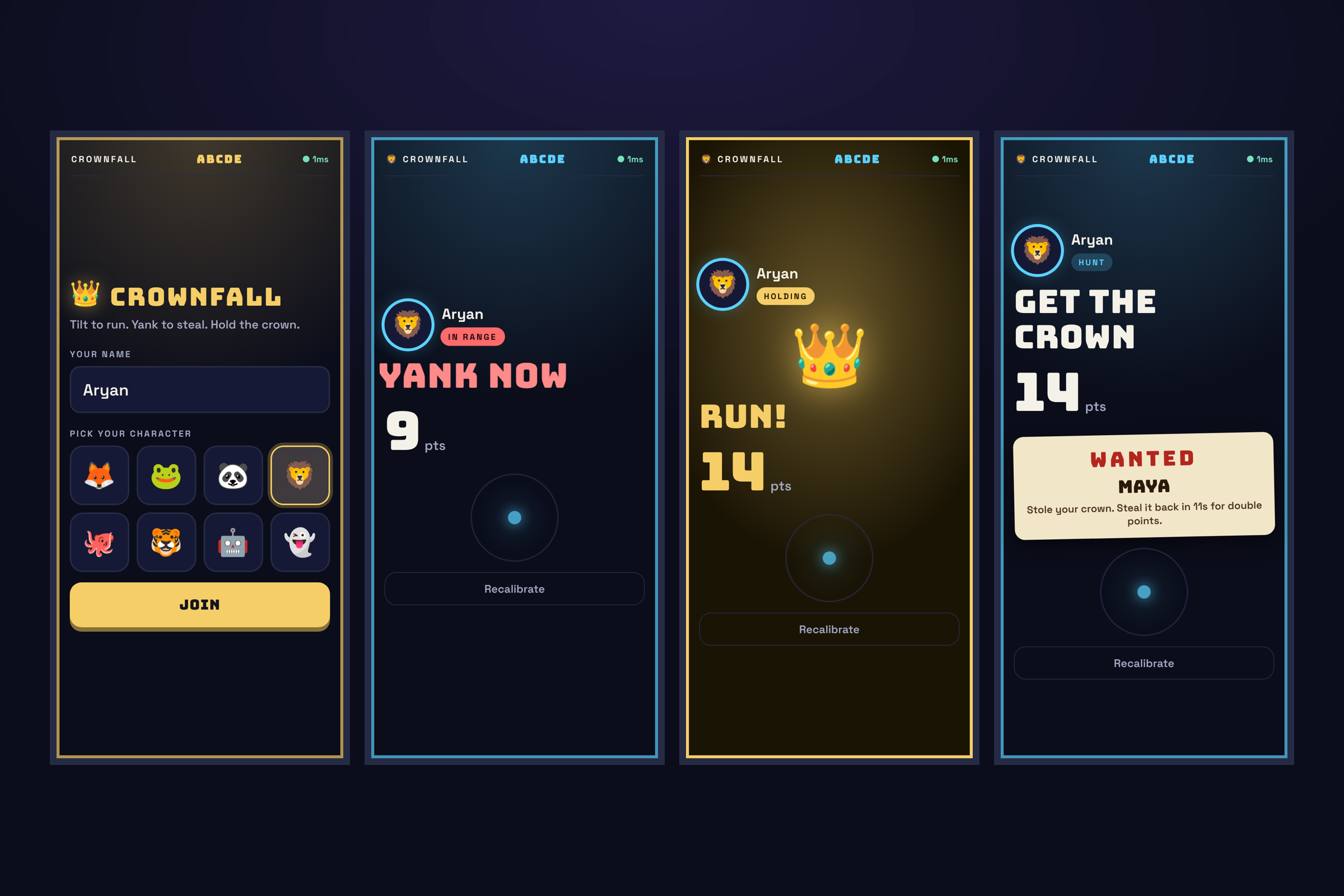
Phone controller: join, YANK NOW when in range, gold while holding, WANTED poster after you get robbed.
-
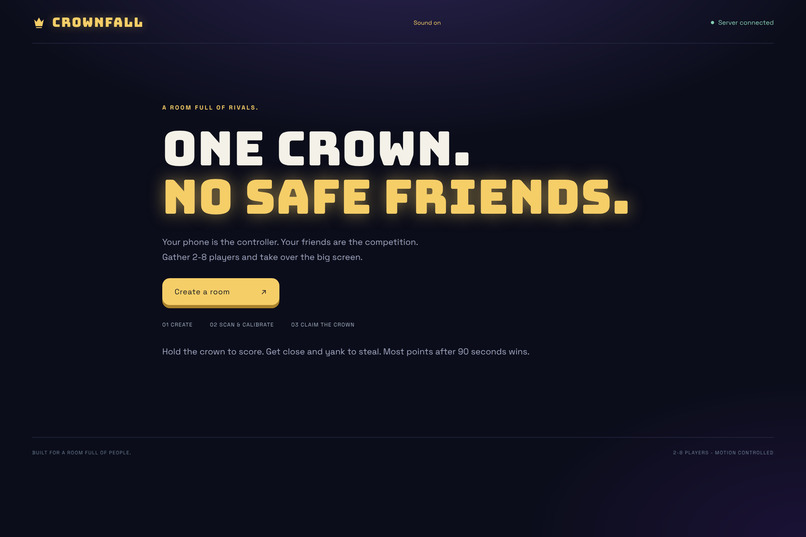
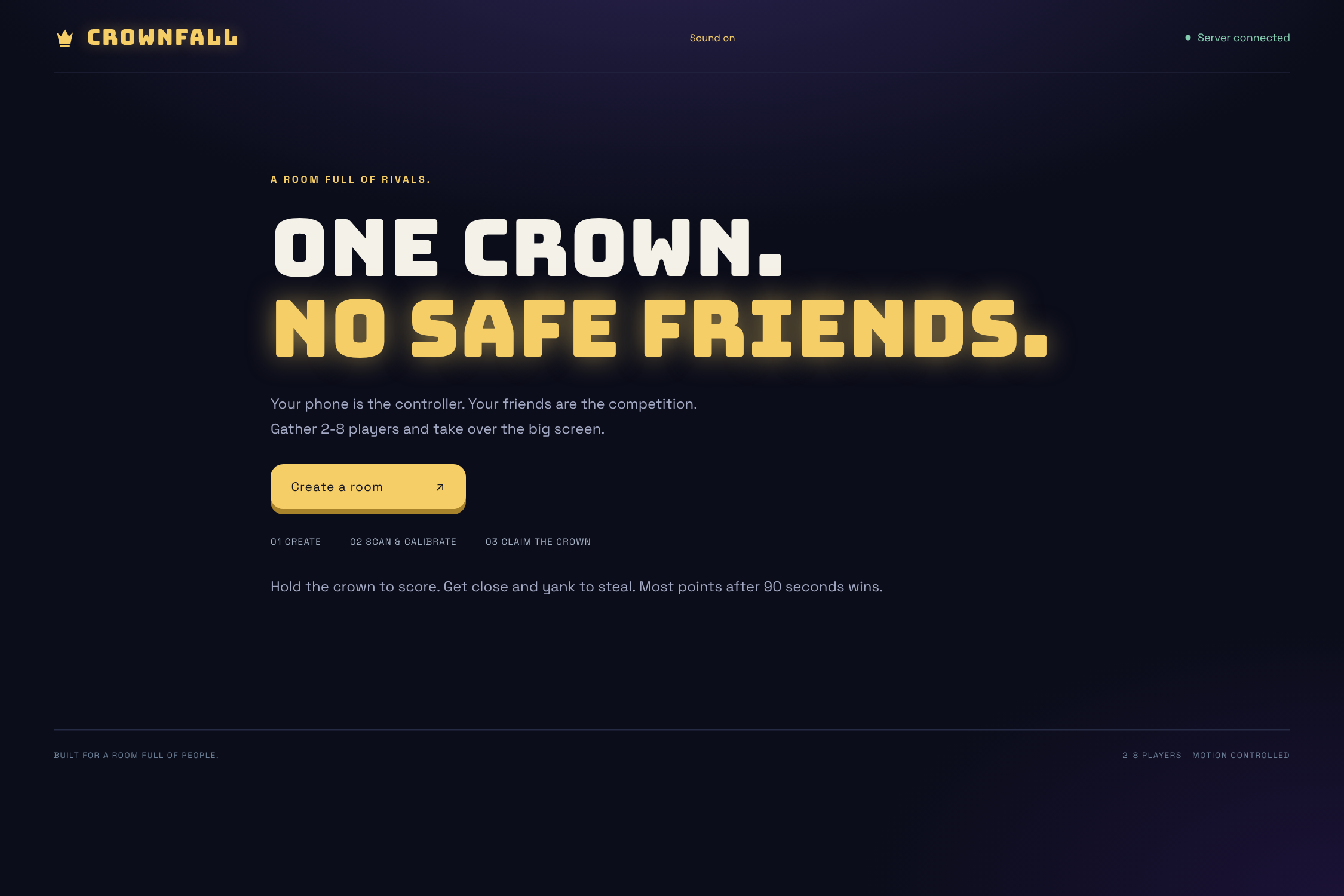
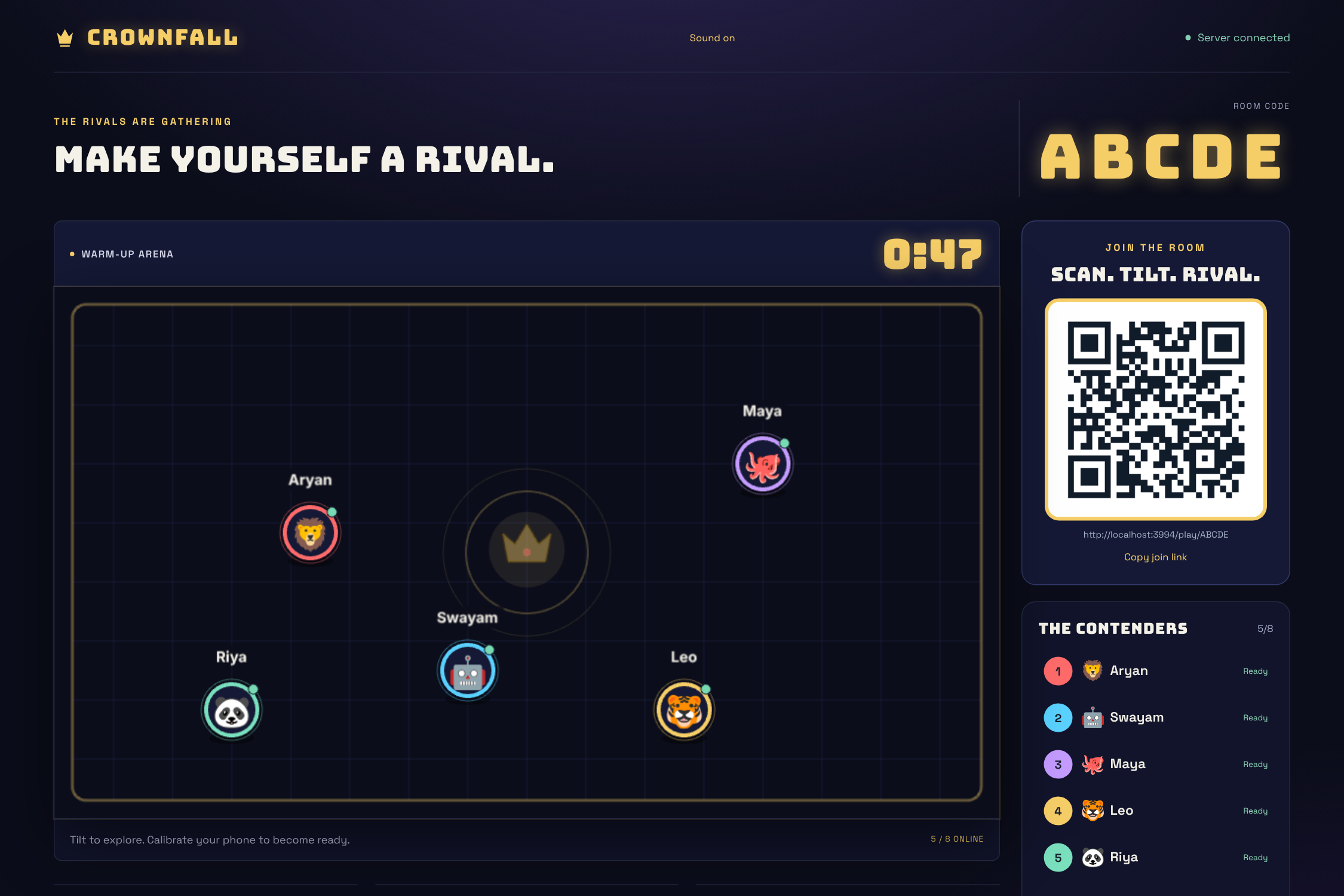
Host screen: create a room on any laptop or TV. No app needed.
-
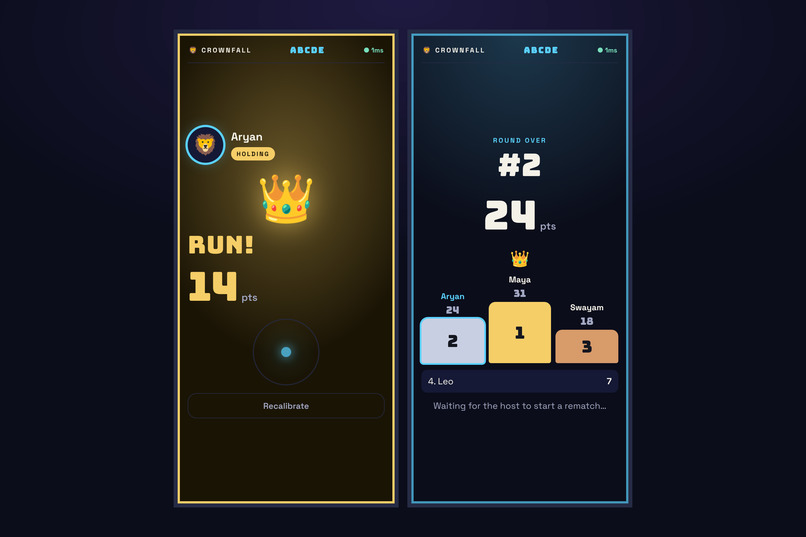
Every phone shows your own live score and final rank.
-
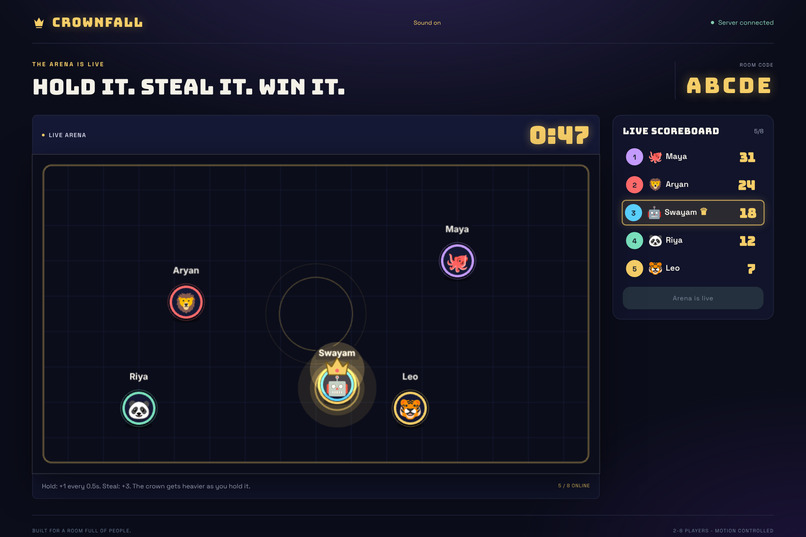
The crown holder glows gold and leaves a trail. Everyone else hunts them down.
-
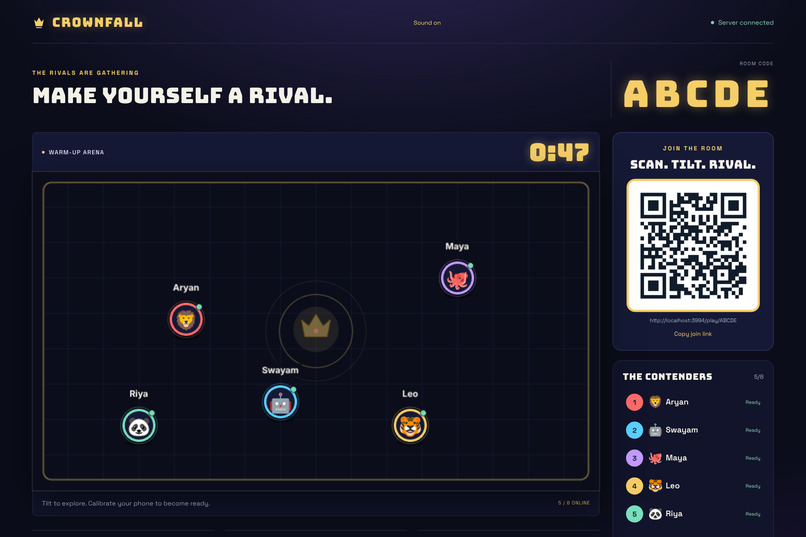
Lobby: players scan the QR code, pick a character, and pop into the arena.
Inspiration
We kept noticing the same thing at parties and club meetings: every group game needs something. Extra controllers, a console, an app everyone has to download first. Half the room gives up before it even starts.
But everyone's already holding a phone, and phones are packed with motion sensors. So we thought: what if your phone was the controller, and the game was just you vs. your friends fighting over one crown? No installs, no setup, just scan and play. Our Mystery Stack draw was phone motion + rivalry + 4 or more players, which honestly felt like it was made for this idea.
What it does
Crownfall is a party game for 2–8 people. One laptop or TV shows the arena, and everyone joins by scanning a QR code with their phone. You pick a character, calibrate, and you're in.
- You tilt your phone to run around the arena.
- Grab the crown and you start scoring, but it slows you down, so everyone can catch you.
- The first 15 seconds are a Rush where nobody can steal. After that it's open season.
- Get close to whoever has the crown and your phone screams YANK NOW. Yank your phone and you start a duel: both of you freeze on "HOLD STILL…", then "DRAW!", and whoever yanks first wins. Jump the gun and it's a foul. The big screen even shows both reaction times and a slow-mo replay.
- If someone steals your crown, you get a WANTED poster on your phone. Get it back within 12 seconds for double points (revenge is sweet).
- Gems pop up for bonus points, and in the last 15 seconds the arena shrinks and points double (Last Stand).
- At the end there's a podium, a "Play of the Game," fun stats like who your nemesis was, and one tap to rematch.
Your phone also reacts to everything: it glows gold when you have the crown, shakes and flashes red when you get robbed, and you can shake it to taunt people on the big screen.
How we built it
We wrote everything in TypeScript. The server is Node.js + Express + Socket.IO, and it runs the actual game: movement, who has the crown, scoring, duel timing, the clock. The phones and big screen just send inputs and show what the server tells them, so everyone sees the same game.
On the phone side we used the browser's motion sensors (DeviceOrientation and DeviceMotion) to turn tilts into movement and sharp yanks into steals. The phone UI is React, and the big screen arena is built in Phaser 3. We sync each phone's clock with the server so duel reaction times are fair even when phones have different lag. It's bundled with Vite and hosted on Render.
We split the work. One of us owned the server and big screen, the other owned the phone controller and sensors. We agreed on a shared event contract early so we could build in parallel without stepping on each other. We also wrote 85 automated tests plus browser scripts that simulate full games, which saved us more than once at 4am.
Challenges we ran into
- Making duels fair. Phones have different network delays, so "who yanked first" isn't as simple as it sounds. We ended up syncing clocks between each phone and the server and being strict about which yanks count.
- Yank vs. tilt. At first, normal tilting sometimes counted as a yank. Tuning the threshold and adding a cooldown fixed it, and shakes (taunts) needed their own detection so they didn't steal by accident.
- iPhones. iOS only gives motion access after a tap and a permission prompt, and it needs permission for both orientation and motion. That took a while to get right.
- Lag. Our first deploy was on a server far away and the game felt sluggish. We moved it closer and smoothed out movement on the big screen.
Accomplishments that we're proud of
Watching people who'd never seen the game scan a QR code and start screaming at each other within 30 seconds. The duel mechanic is our favorite part: turning a physical phone yank into a real reaction-time showdown just works, and the server decides every result, so arguments get settled fast. We're also proud it's actually solid: our automated duel test passed 10 out of 10 runs, and the whole suite stays green.
What we learned
We learned a ton about real-time multiplayer: why the server should be in charge, how to sync clocks across devices, and how to smooth movement so it looks good even with lag. We also learned how messy phone sensor data is and how much tuning it takes to turn it into gestures that feel reliable. And honestly, writing tests early let us keep adding features late at night without breaking the game.
What's next for Crownfall
More arenas and game modes, team battles, and getting it in front of bigger groups. We think it'd be great for club events and orientation icebreakers.
Built With
- deviceorientation
- express.js
- html5
- node.js
- phaser.js
- playwright
- qrcode
- react
- render
- socket.io
- socket.io-client
- typescript
- vite
- web-audio-api
