
Inspiration
Crown Chase is inspired by the traditional Indian village game "King, Minister, Soldier, Thief" a lively social activity rooted in strategy, deduction, and humor. The original game involves four players, each randomly assigned a role—King, Minister, Soldier, or Thief—using physical shuffled cards. The King and Minister reveal their identities, and the Minister’s task is to determine which of the remaining two players is the Thief. They do this through questioning, reading body language, and even playful banter, adding an entertaining dynamic. Points are awarded based on the Minister's success, and roles are reshuffled after each round. The game continues for multiple rounds, and the player with the highest score at the end is declared the winner. Crown Chase captures this essence and uniquely brings it to a global stage, making it accessible through a modern, interactive digital platform.
Game Features
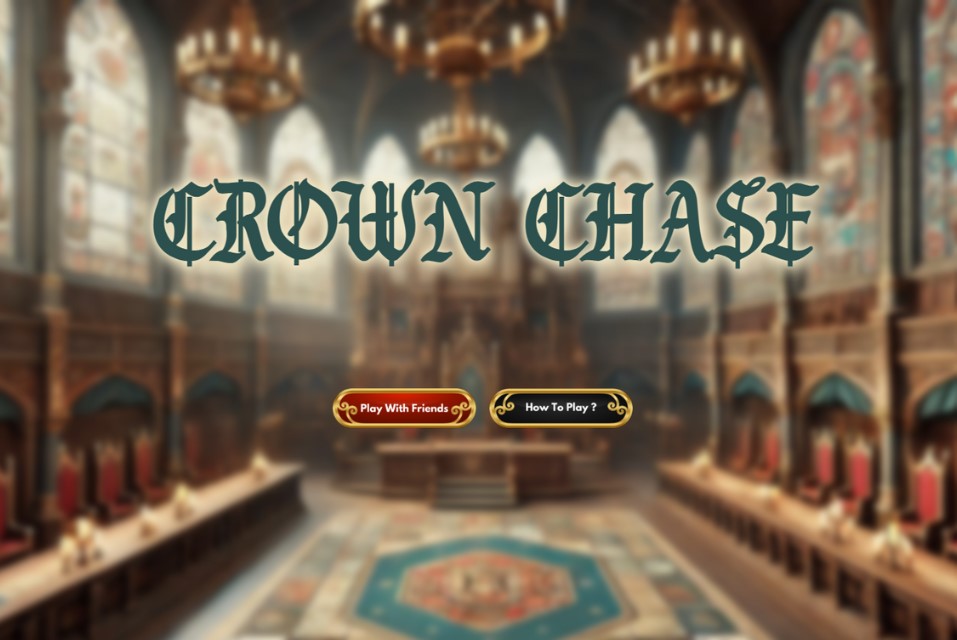
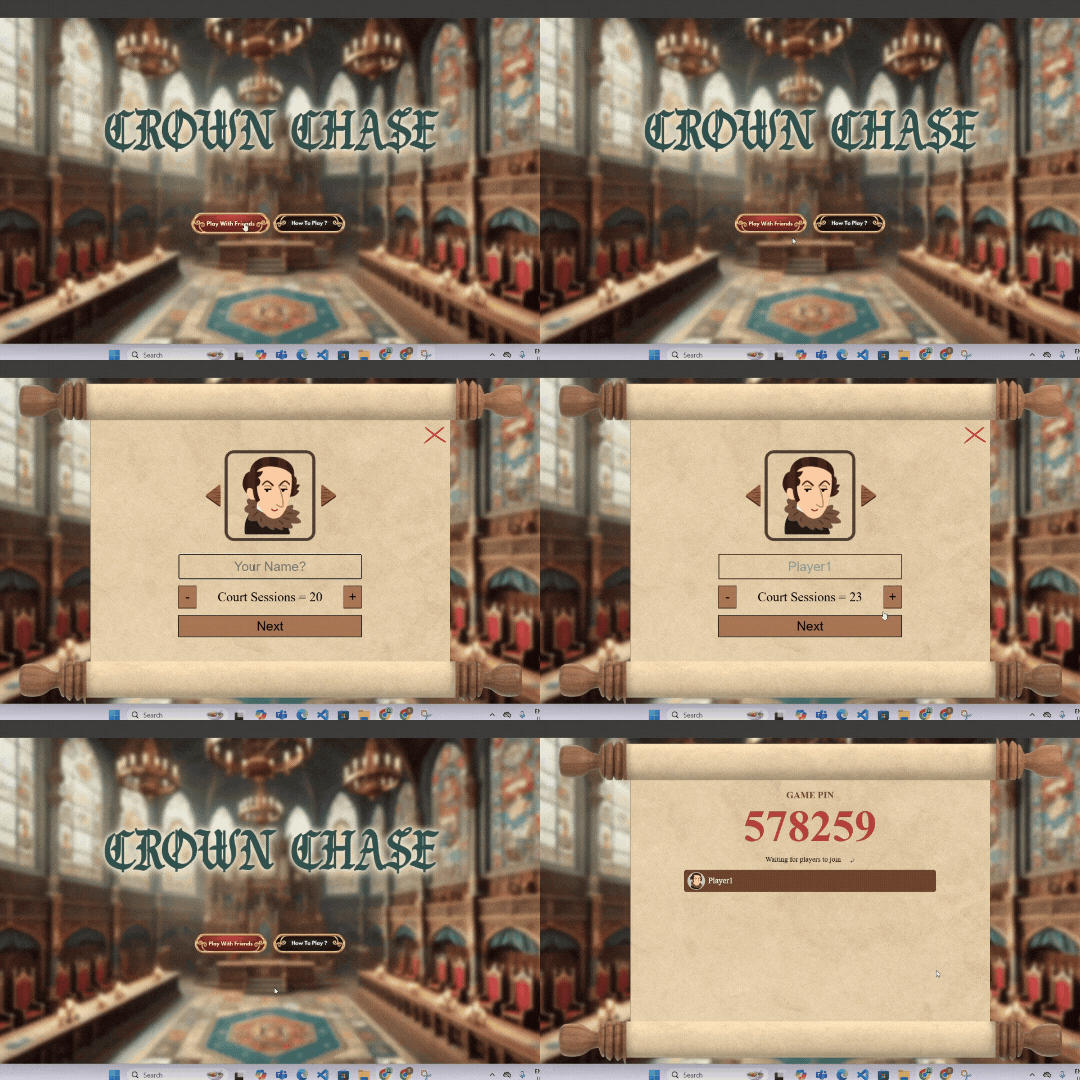
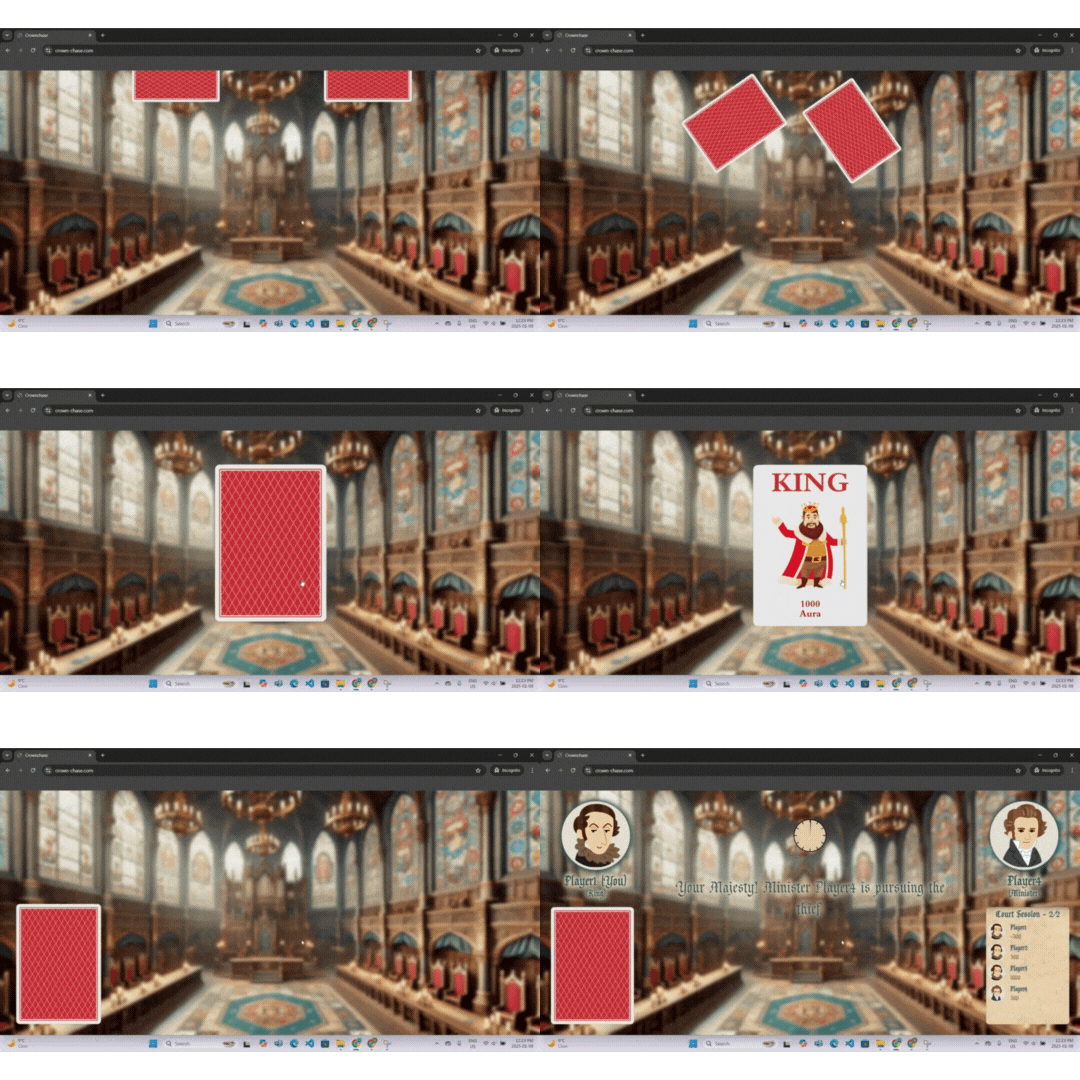
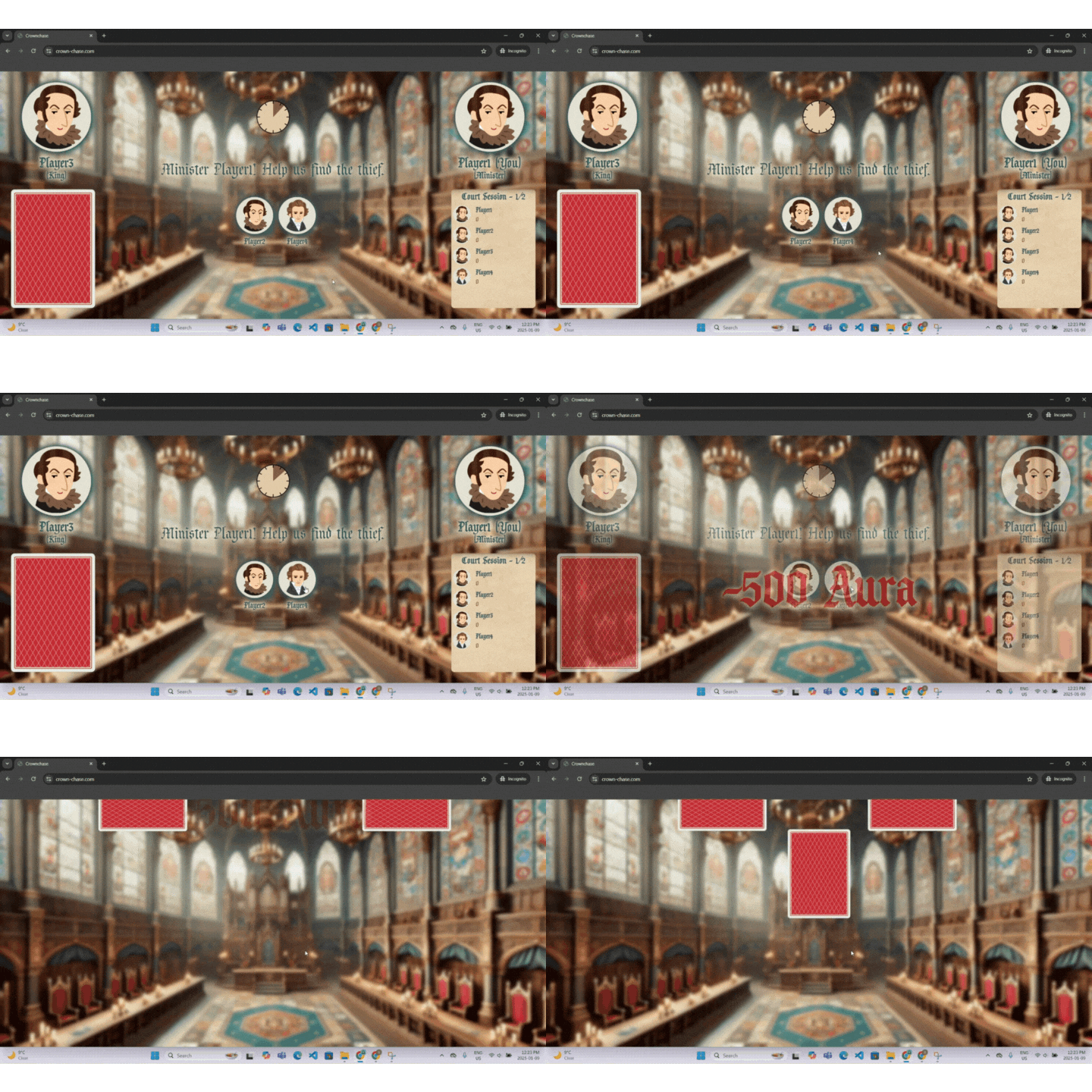
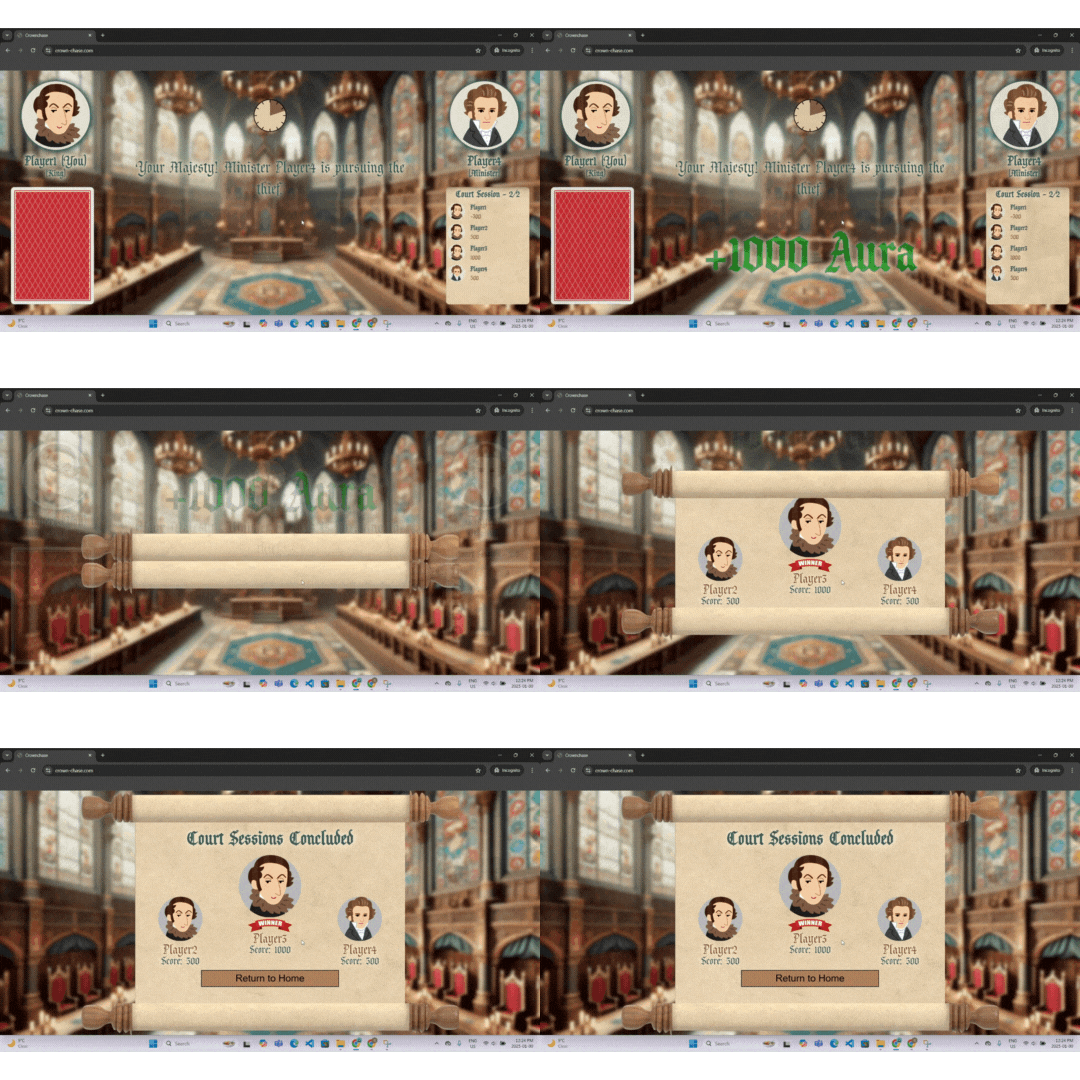
Crown Chase is packed with engaging features designed to deliver an immersive and seamless gameplay experience. The game is accessible worldwide at crown-chase.com, allowing players to join from any device with an internet connection. Players can quickly set up a session by generating a unique game PIN, without any need of login/signup, which others can use to join the game. The game features captivating animations, including role-reveal sequences and score updates, bringing the traditional game's royal theme to life. As a software solution, Crown Chase operates on a robust backend powered by AWS services, ensuring smooth real-time interactions, responsive design, and scalability. The gameplay is intuitive: players are assigned roles, take turns in deduction and strategy, time constraints are enforced and scores are automatically calculated and displayed, creating a fully automated and entertaining experience.
Development Process
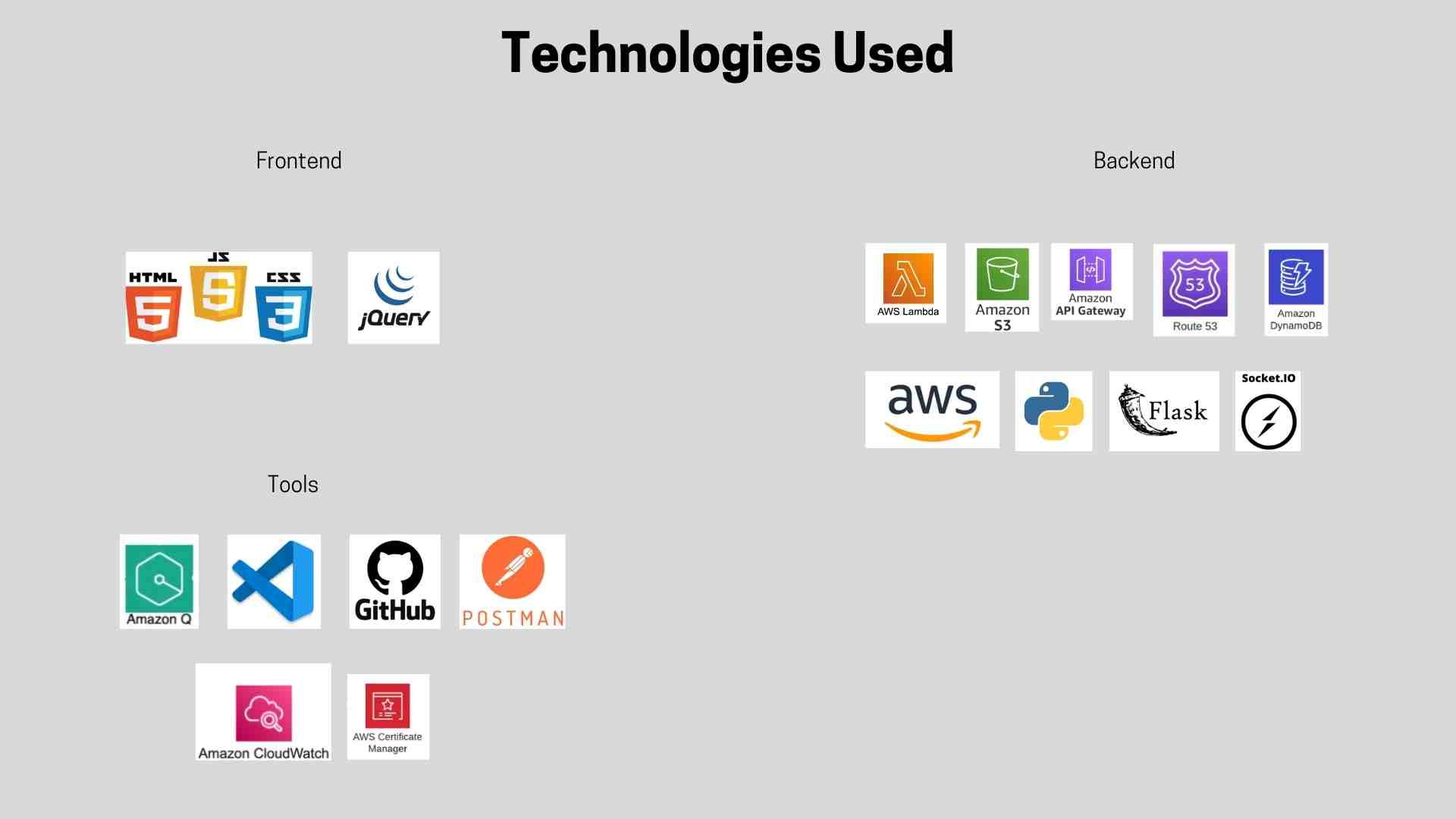
Crown Chase was developed as a modern adaptation of a traditional game, combining cultural heritage with cutting-edge technology. The development process began with designing the game logic and creating an intuitive user interface that balances simplicity and engagement. To enhance the immersive experience, CSS animations were integrated with JavaScript functions, dynamically invoked when specific events were detected through jQuery or Socket.IO. The backend architecture included DynamoDB for efficient data storage and Flask Lambda functions written in Python to handle stateless interactions, ensuring streamlined and efficient game logic execution. Since the game does not have login/signup for best User Experience, the players are uniquely identified on the backend through a token generated by backend which is stored both in fronted and backend. A responsive design was implemented to ensure the game operates seamlessly across all devices, from desktops to mobile phones. AWS services formed the backbone of the development, enabling efficient storage, computation, and real-time communication. Extensive testing was conducted to ensure cross-device compatibility, scalability, and responsiveness, making Crown Chase a truly global and accessible gaming experience.
Challenges Faced
Developing Crown Chase presented several technical and creative challenges. Implementing real-time communication between players was particularly complex, requiring careful coordination of WebSocket APIs and game state management. Creating engaging animations that worked seamlessly across different devices also demanded meticulous attention to detail. Debugging cloud-based services such as Lambda functions and DynamoDB streams required significant effort, particularly when synchronizing player actions and game logic. Additionally, designing a game interface that remained intuitive yet retained the traditional game's essence was a creative hurdle. These challenges were overcome through persistence, iterative testing, and leveraging the full suite of AWS tools.
AWS Services Used
Crown Chase integrates a total of 10 AWS services to deliver a secure, scalable, and engaging gaming experience:
Amazon DynamoDB: Stored and managed game data, including player roles, scores, and game states, with DynamoDB streams triggering AWS Lambda functions for real-time score updates and notifications. AWS Lambda: Powered backend logic, hosted RESTful APIs, and handled real-time interactions through Amazon API Gateway, ensuring smooth gameplay synchronization. Amazon API Gateway: Facilitated secure and reliable communication between the frontend and backend, enabling real-time functionality. Amazon S3: Hosted game assets such as animations, sound effects, and UI elements for seamless access. AWS CloudWatch: Monitored system performance and provided detailed logs, streamlining debugging and enhancing operational reliability. Amazon Route 53: Managed domain name services and routing, ensuring a smooth and responsive experience across devices. AWS Certificate Manager: Provided SSL/TLS certificates to secure data exchange and ensure encrypted connections. AWS Private Certificate Authority: Delivered enhanced security for private certificates used within the game’s infrastructure. AWS Identity and Access Management (IAM): Enforced strict access controls, ensuring secure resource management and governance. Amazon Q Developer: Streamlined coding, debugging, and configuration of AWS services, saving significant development time.
Leveraging Amazon Q
Amazon Q Developer played a pivotal role in the development of Crown Chase, enhancing every stage of the process. It accelerated coding workflows through context-aware suggestions, particularly for implementing front-end jQuery animation logic, WebSocket interactions, and back-end integration with AWS services. For instance, while configuring real-time interactions with the WebSocket API, Amazon Q provided optimized code snippets and configuration guidance, ensuring seamless client-server communication. One of the most impactful contributions was Amazon Q's suggestion for an optimized back-end architecture design. The game required a response from the "minister" within a strict two-minute time frame. Initially, I planned to use a server-side background process to monitor each pending minister response and implement front-end polling of DynamoDB for changes. However, Amazon Q proposed leveraging DynamoDB Streams instead, which provided a far more efficient method to detect relevant events and enforce time-constraint logic seamlessly. Debugging was significantly streamlined, with Amazon Q detecting errors in real time and offering actionable fixes directly within the VS Code environment. For example, during the implementation of animation logic, it identified inconsistencies in JavaScript functions and suggested precise solutions, saving valuable time. Resource management also benefited from Amazon Q’s recommendations for DynamoDB table structures and Lambda function configurations, optimizing performance. This was especially helpful for setting up critical components like score calculations and role assignment logic, where reliability and efficiency were paramount. Amazon Q’s deep integration with AWS services also resolved deployment challenges, such as configuring S3 bucket permissions and DynamoDB triggers, saving hours of troubleshooting and ensuring a smoother development process.
Content Usage Statement
All images and card designs used in Crown Chase were custom-created using design software and AI tools and pre-designed components that are free of copyright restrictions and fully compliant with usage policies for commercial and project purposes. The game’s music and sound effects were sourced from Pixabay, adhering to their free open-use license policy for both commercial and project applications. This project contains no copyrighted content and does not violate any usage or intellectual property policies.
Built With
- amazon-web-services
- amazonq
- aws-lambda
- css3
- flask
- html5
- javascript
- jquery
- python
- socket.io


Log in or sign up for Devpost to join the conversation.