-
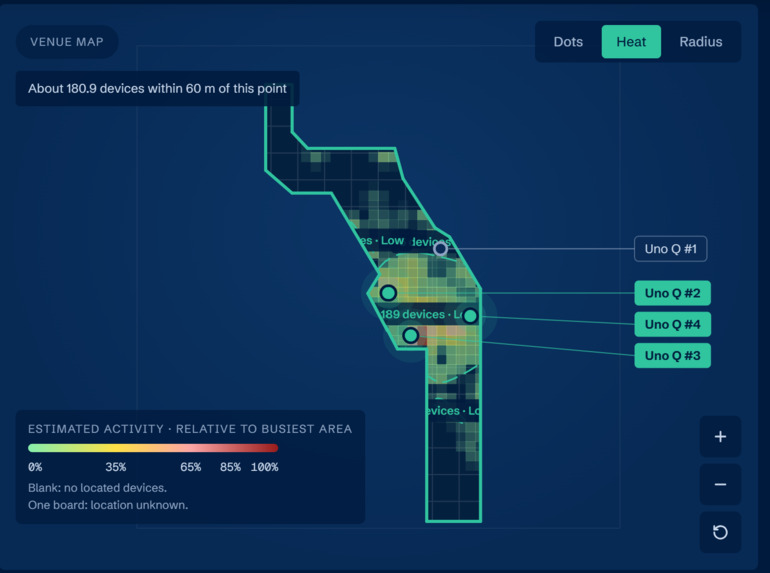
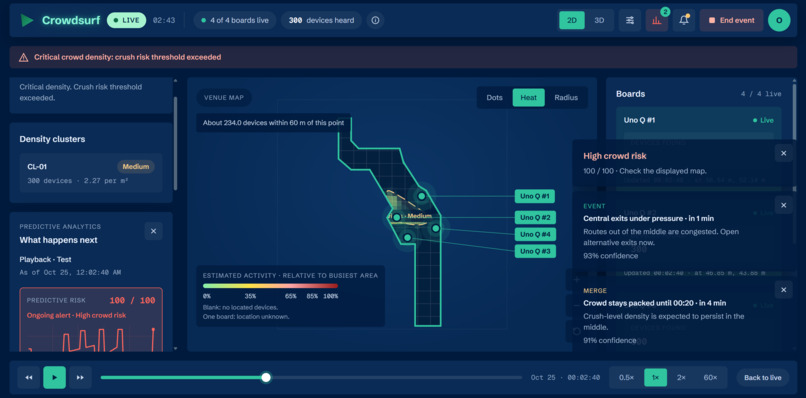
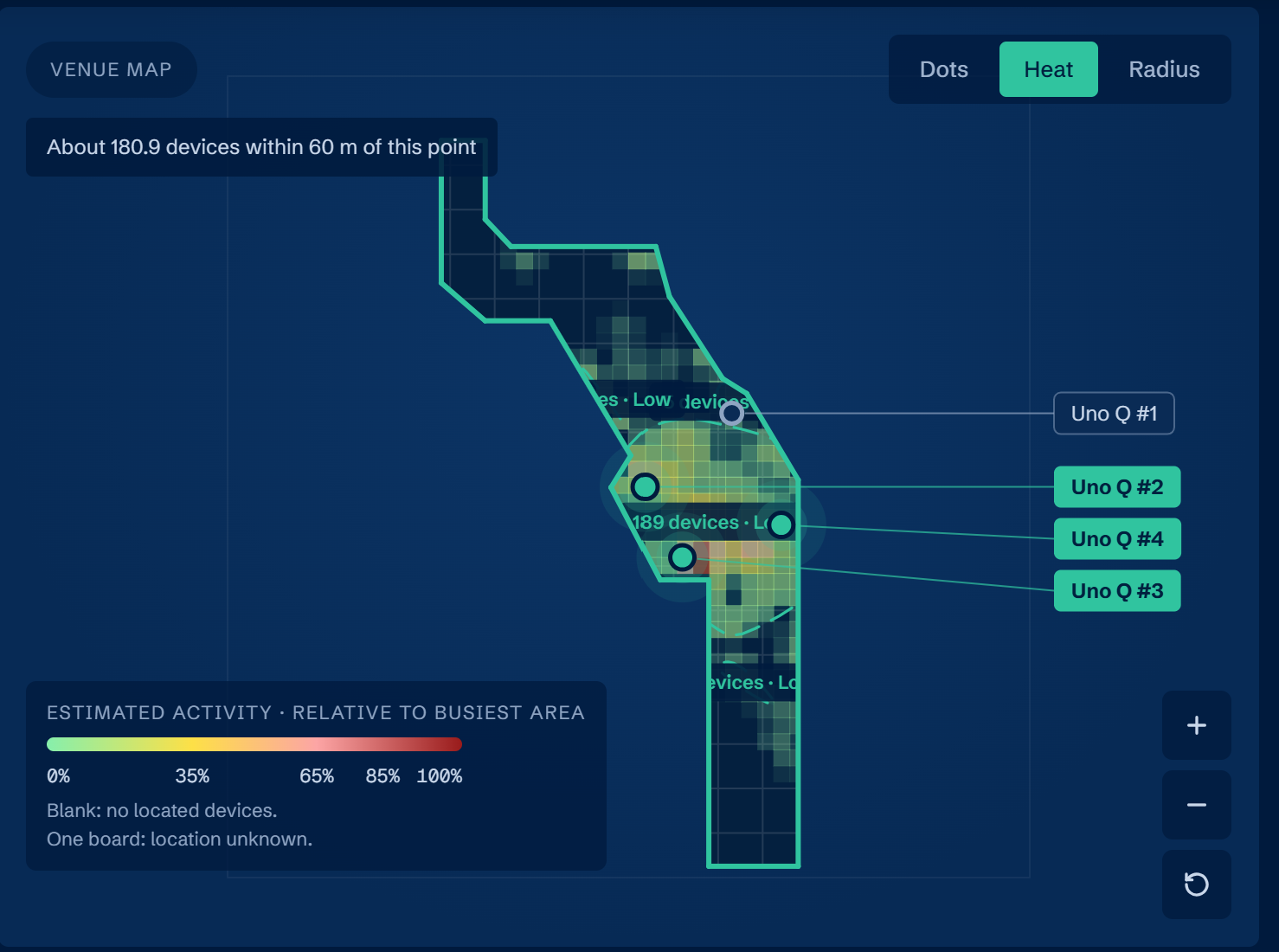
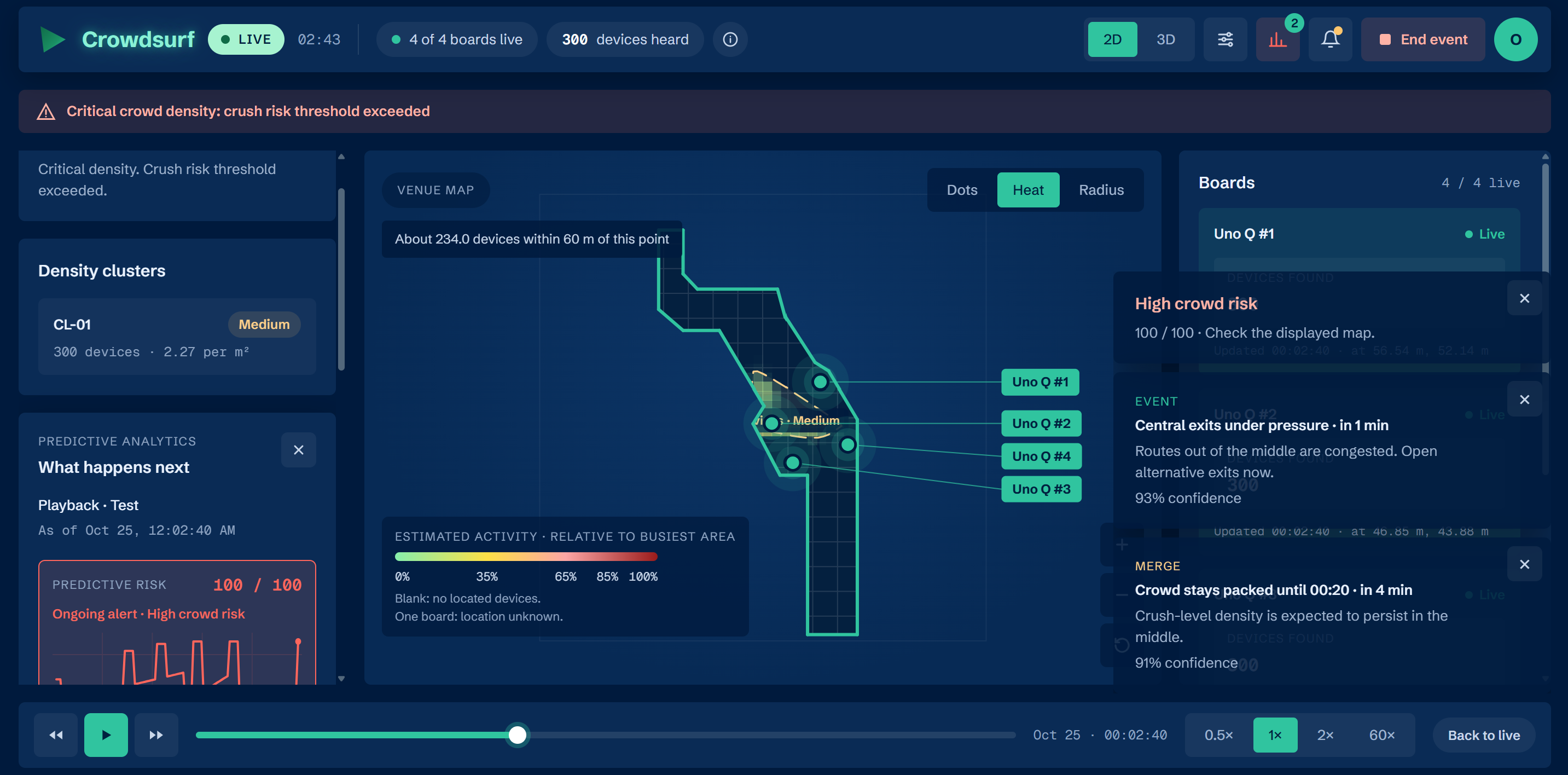
Heatmap, showing where most people are.
-
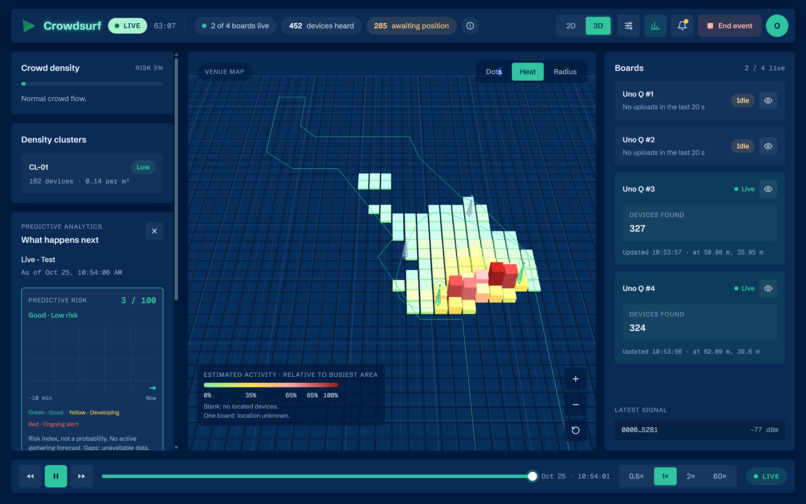
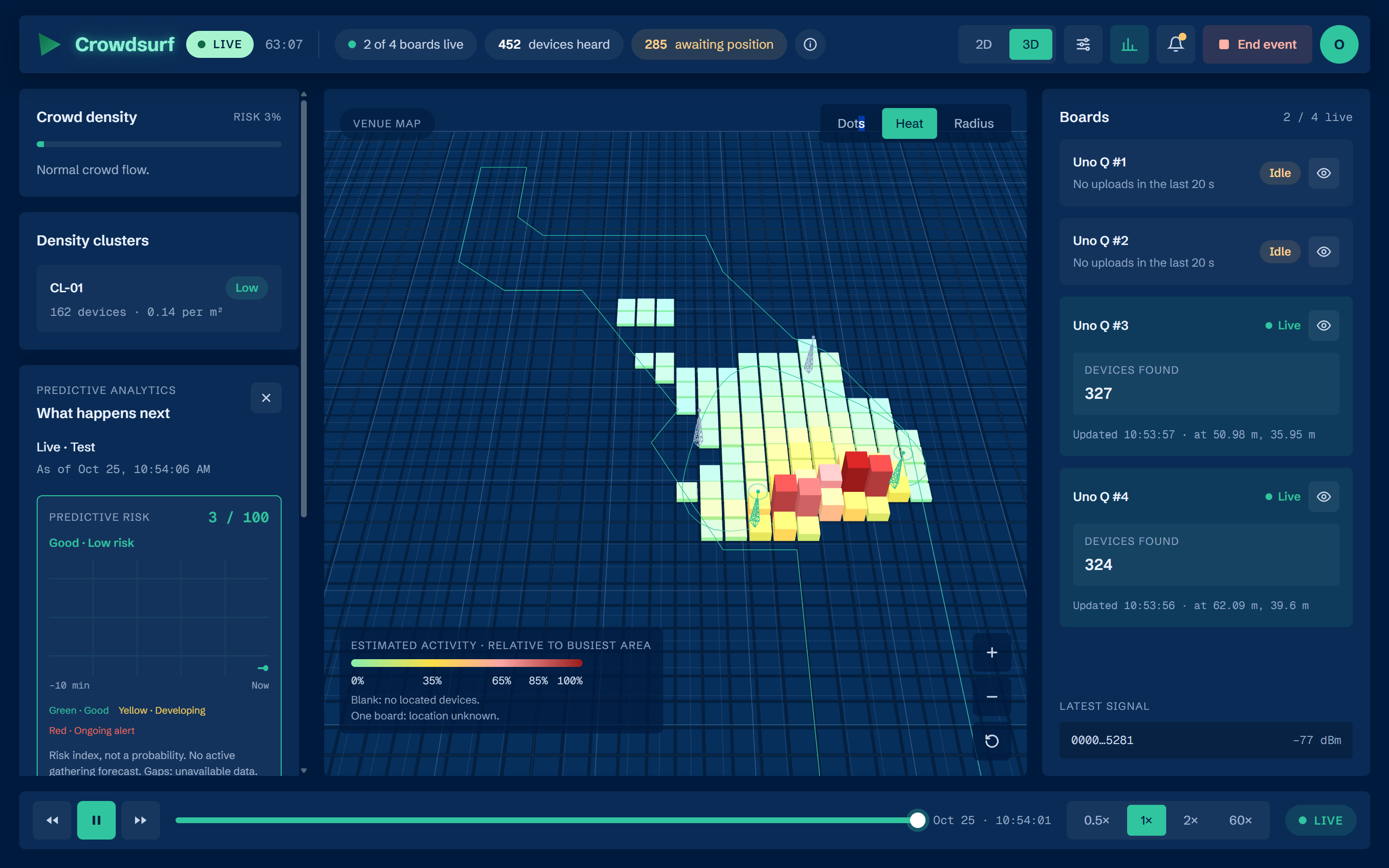
3D Heatmap of the devices in vicinity
-
-
-
-
-
-
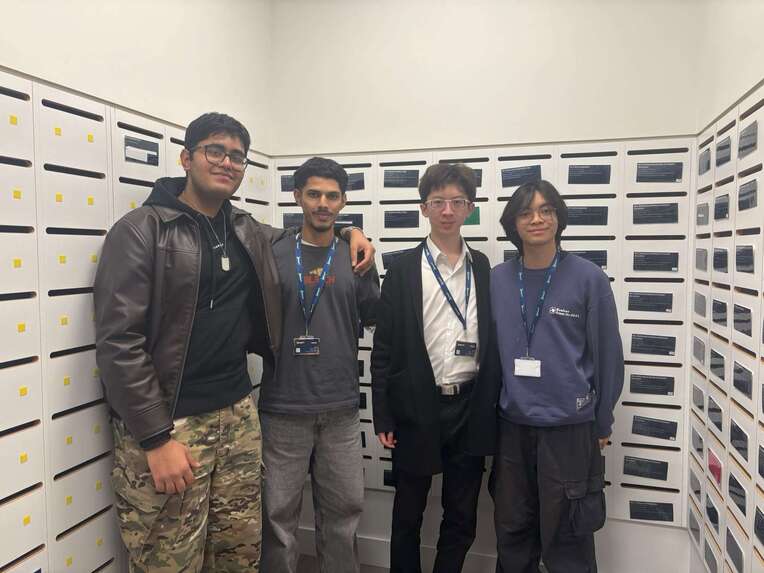
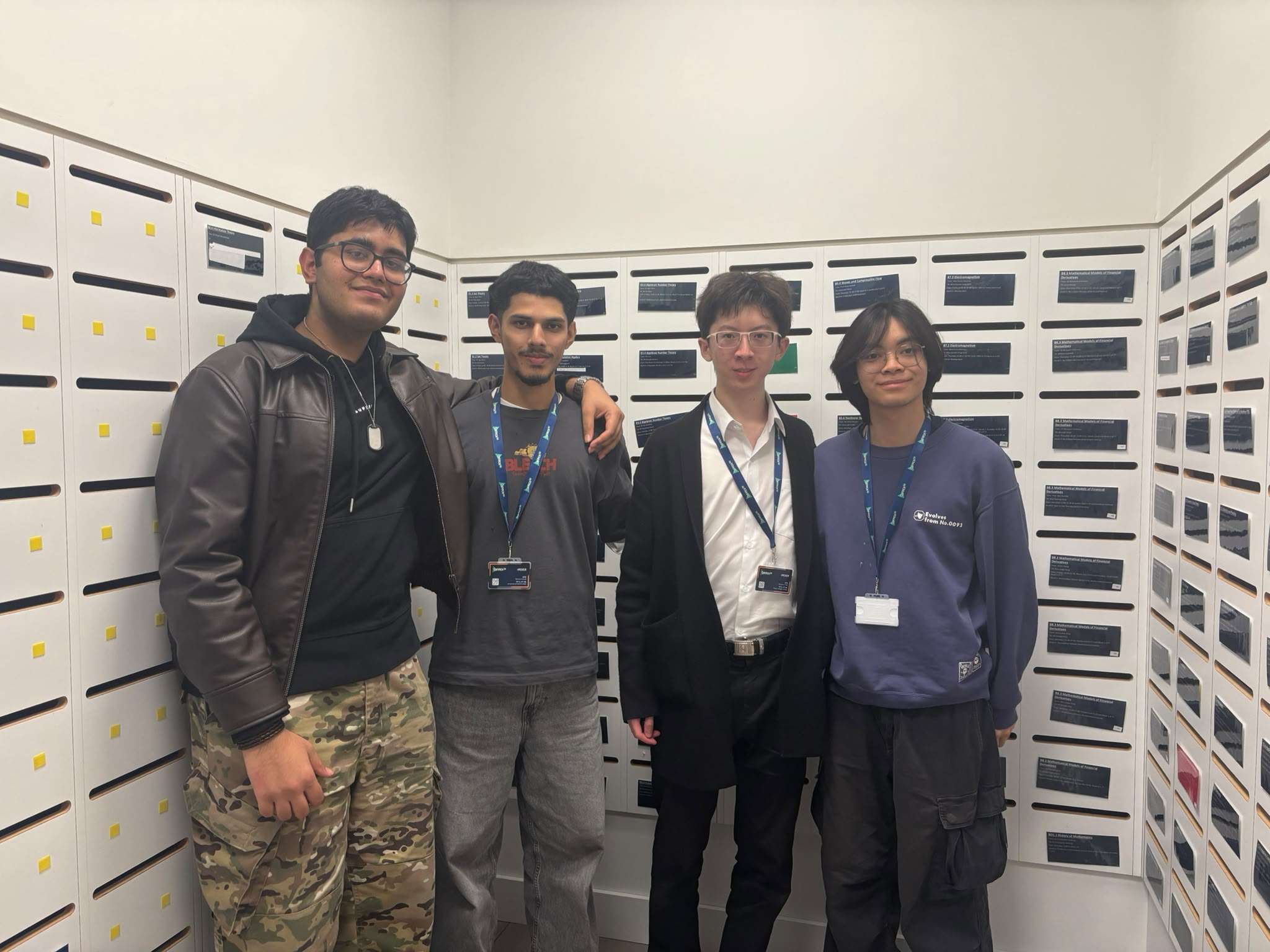
Group photo!
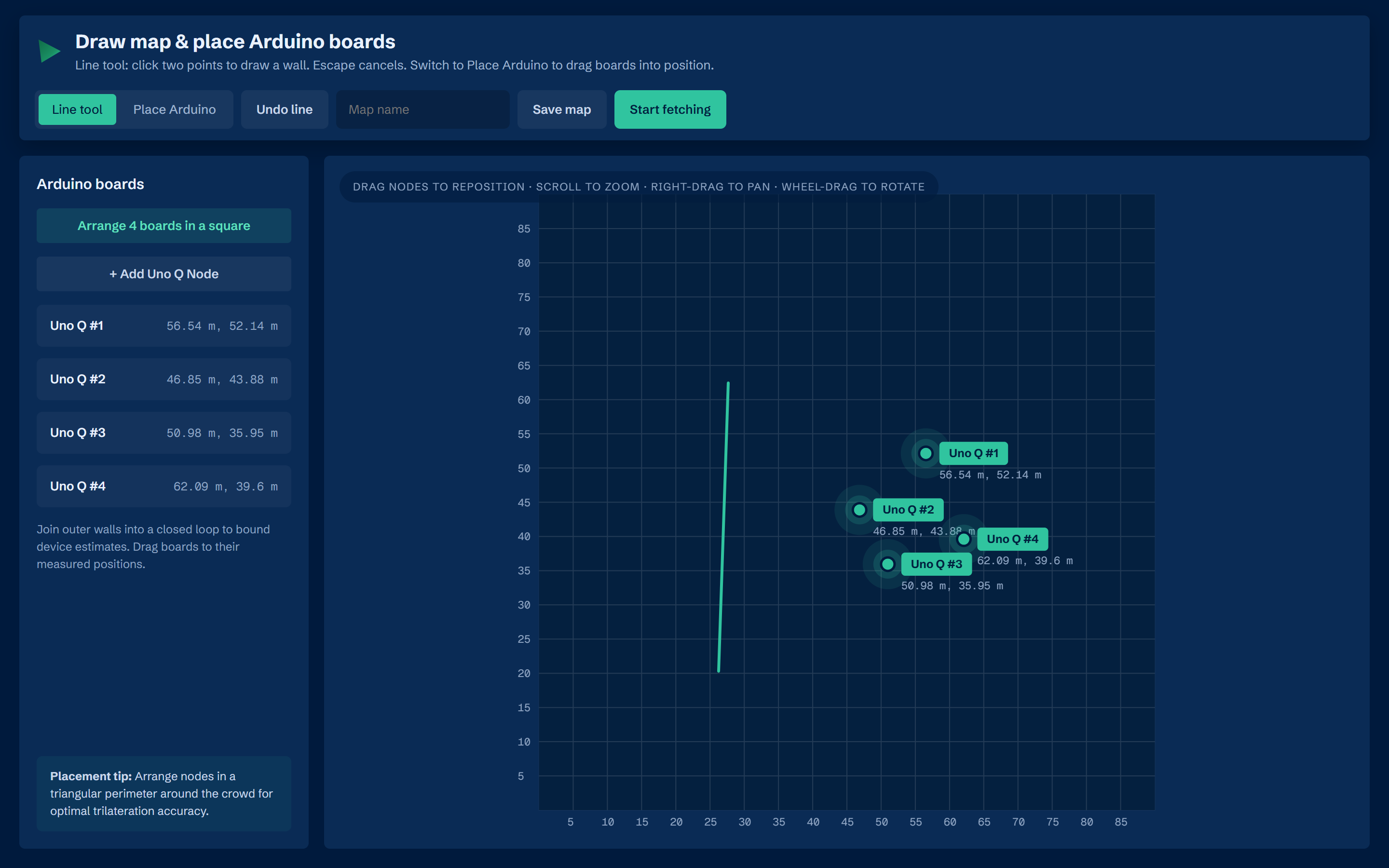
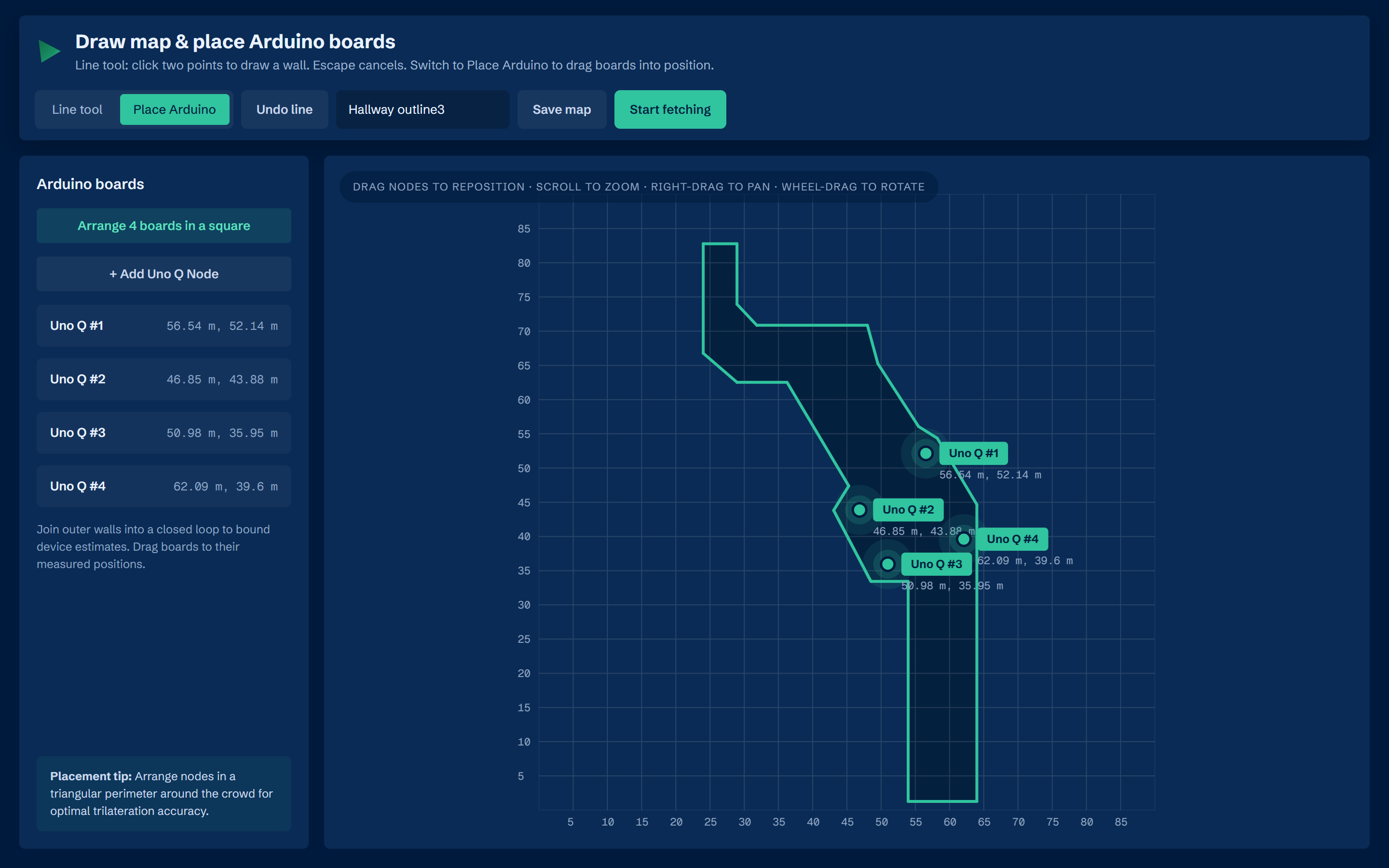
Inspiration
Overcrowding is a big issue, we noticed this immediately upon entering OxHack, our team banded together to solve this. We set out, and managed to measure the amount of people in an area, with that data we used it to analyse and predict events. This can help with safety and predict when areas are busy, which help save time.
We used machine learning algorithims and AI analysis, alongside hardware to help us measure signals.
What it does
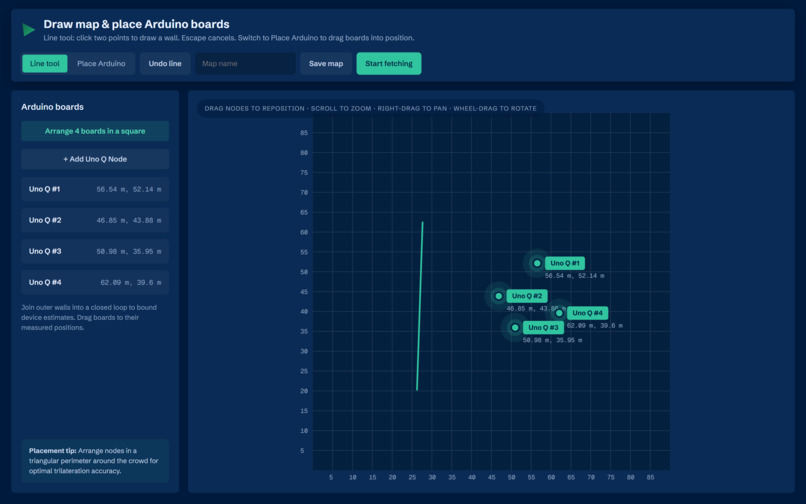
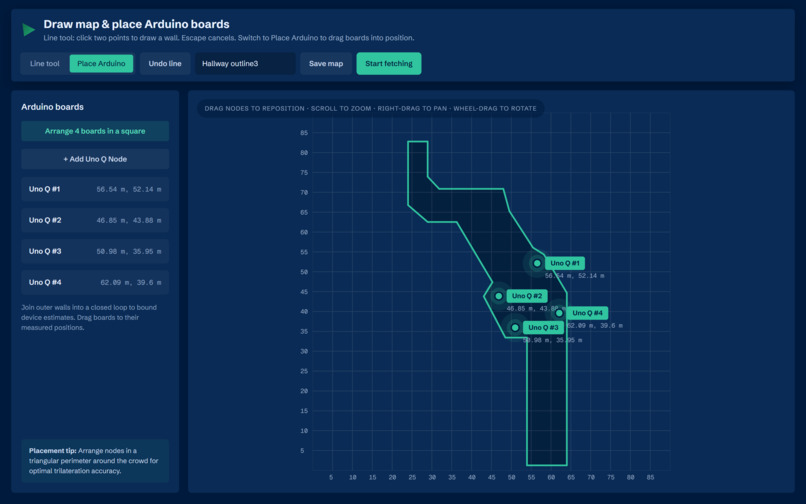
Scana for signals -> Sending captured anonymised data to Vultr cloud server -> Sending data to our database hosted on Tiger Data -> Passed to back-end to calculate locations of signals -> Displayed in our app.
How we built it
We started off with creating a script that can scan for signals, collecting the timestamp, the signal strength, the hashed MAC address and more. This was then uploaded to each UNO Q so that they can each individually capture signals.
Since the data has to be stored somewhere, we utilised Tiger Data for the database, feeding the data directly from the UNO Qs to the database.
With this data, we were able to analyse it and create prediction algorithms, as well as offer AI insights with the valuable data.
To avoid using hard coded credentials on the UNO Q boards and verify that database insertions came from a trusted source, we created a cloud server on Vultr to act as a middleman and a firewall between the UNO Qs and the database.
Challenges we ran into
The board did not stay connected to WiFi -> We set up a script on each board to automatically attempt reconnection each time it would disconnect.
Boards would collect too much data, hitting the rate limit for Vultr and our database -> Filter the data being sent from the board, for instance static Bluetooth MAC Addresses (representing IoT devices / mouse dongles / earbuds etc.), and addresses belonging to non-phone vendors, e.g. Microsoft and Garmin.
Accomplishments that we're proud of
Creating a working model that includes key security features such as hashing MAC Addresses for privacy, removing hard-coded credentials from physical devices and preventing data spoofing on the cloud server by using device identification.
The ability to collect real-time data, anonymise it and inform immediate action to disperse crowds, as well as providing post event analysis, identifying crowded hotspots and times.
What we learned
We learnt how to safely collect public data, hash and store it to adhere to GDPR and privacy laws, which was a fun experience. We also learnt how to actually apply previous hackathon experience to efficiently plan delegate roles and execute an end-to-end app seamlessly
What's next for Crowdsurf
For the future, we need to get better hardware, in order to capture more accurate information.


Log in or sign up for Devpost to join the conversation.