-
-
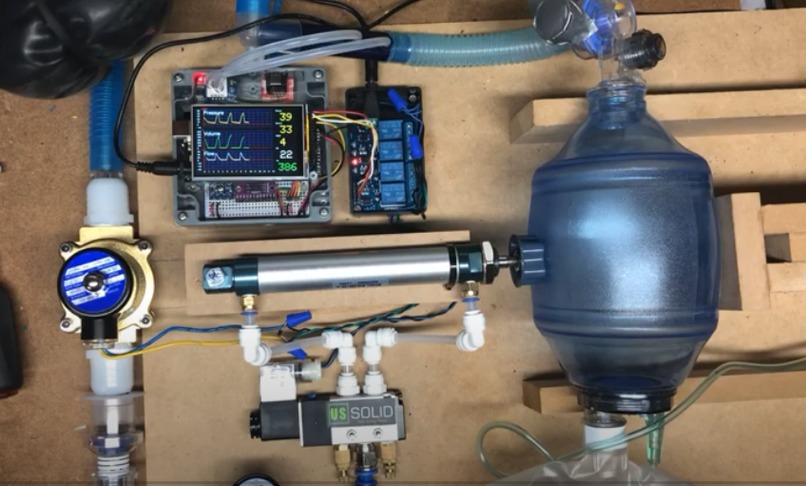
System overview
-
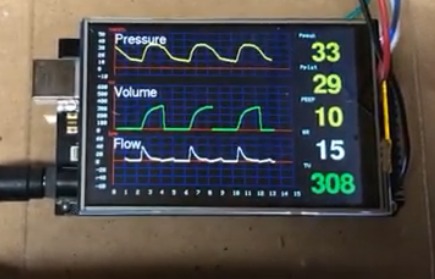
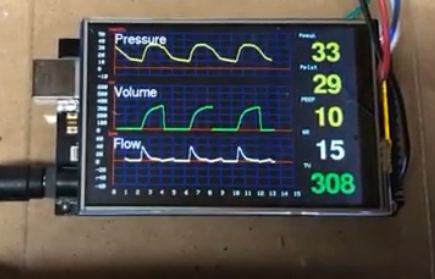
graphical UI
-
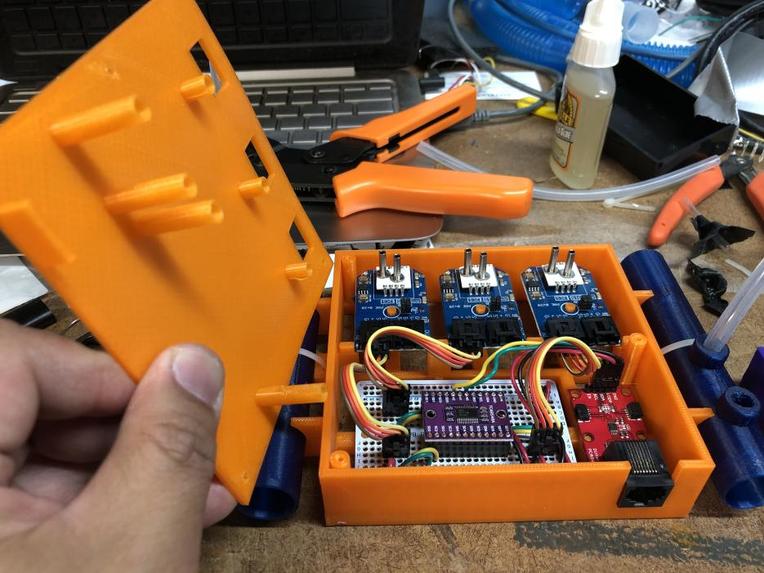
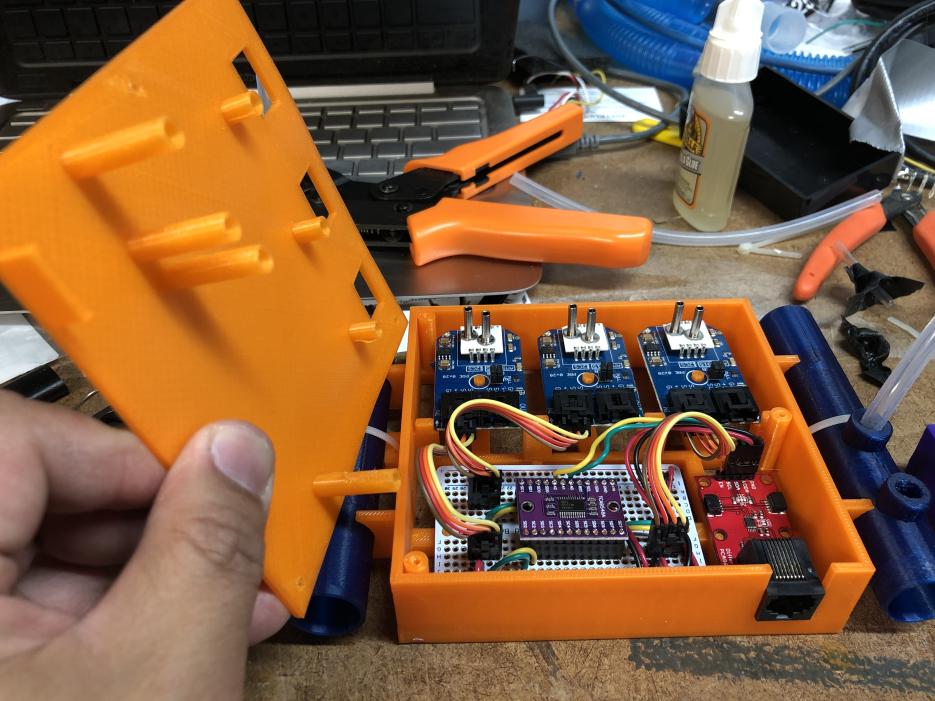
sensor box: pressure, inspiratory flow, expiratory flow
-
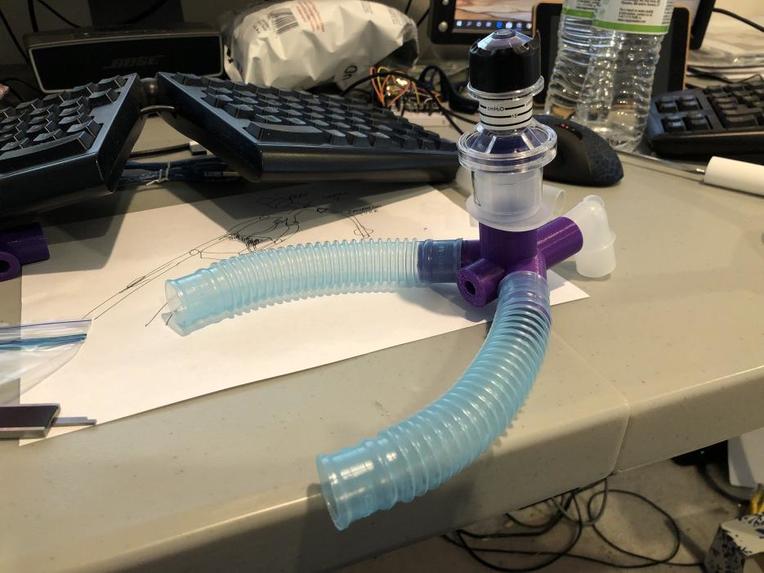
5-way ventilator Y with hacked PEEP valve PIP pop-off safety

Inspiration
Hospitals around the world are facing ventilator shortages, which is forcing hospitals to choose which patients live or die. We're trying to help solve that problem and help save lives. We felt we could provide a solution that uses off the shelf parts, and could be built by anyone.
What it does
There are many simple ambu-bag squeezers, but most of them lack functionality that is critical for ventilator designs. Our design supports:
- Pressure control Ventilation (PCV)
- Volume control Ventilation (VCV)
- Assisted Patient Respiratory Ventilation (APRV)
- Peak Inspiratory Pressure adjustment (PIP)
- Respiratory Rate adjustment (RR)
- Tidal Volume adjustment (TV)
- Post-End-Expiratory-Pressure adjustment (PEEP)
- Inspiratory/Expiratory Ratio (I/E)
- Post inspiratory pause (Tp)
- Fractional Inspiratory O2 adjustment (FIO2)
- Alarms for PIP, Pplat, PEEP,. disconnect and leakage
- Graphical display of Pressure, Flow and Volume
- costs less than $500
How I built it
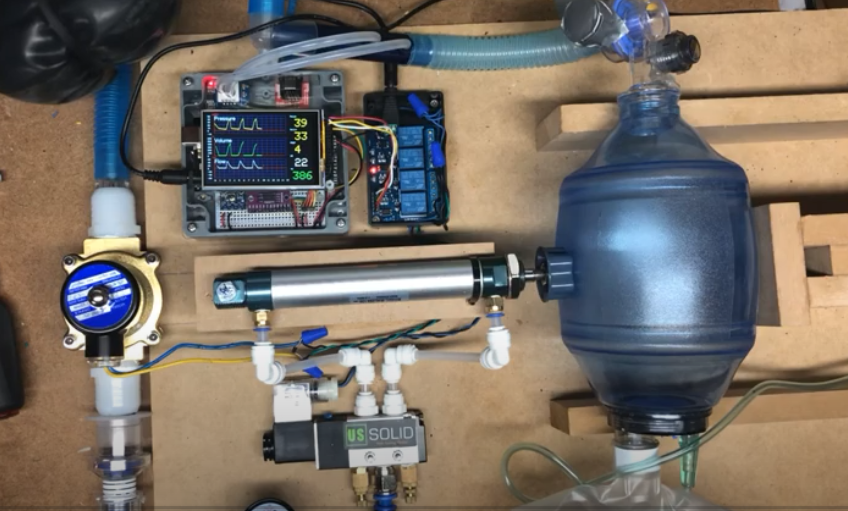
We chose an ambu-bag for our air delivery system, because it already contains many useful components, like 2 one-way valves, and an air reservoir for FIO2 premix. We chose a pneumatic cylinder for an actuator because it is reliable, cheap and simple to work with. We're using an Arduino Mega as our microcontroller because it has abundant IO and is simple to develop. We added a touch TFT screen to provide doctors with important diagnostic information, as well eliminate the need for buttons and knobs to control the settings.
For sensors, we built a sensor box, that contains 3 differential pressure sensors. One pressure sensor measures the patient pressure. The other 2 pressure sensors read venturi flow meters, to measure volumetric flow. The sensor box then communicates to the Arduino over differential pair I2C.
The arduino controls a 5-way 2-position pneumatic solenoid to compress or release the ambu-bag. We track pressure and integrate the flow to measure volume. We have a separate expiratory limb solenoid to control the I/E ratio, and an adjustable PEEP valve to control the PEEP. Pressure is controlled with an air regulator controlling the pressure actuating the cylinder. We detect a patient trigger event by looking for a decreasing derivative of pressure during the expiratory phase. FIO2 is controlled by setting the O2 flow rate, to match the RR and TV to achieve the desired (average) FIO2. Heat and humidity will be added using an Heat-Moisture-Exchange filter (HME) on the inspiratory limb. A second HME will be on the expiratory limb, to avoid aerosolizing the virus.
For safety, we have software PIP pressure detection, as well as we hacked a PEEP valve by increasing the spring constant to convert into an adjustable 20-50cmH2O pop-off safety valve.
Challenges I ran into
The most difficult part of this challenge, is that the list of required capabilities is very long and was constantly changing over the design process. We learned quickly that the vast majority of designs out there would simply not be useful, because most do not have closed loop pressure/flow/volume control, and almost none support APRV.
Accomplishments that I'm proud of
- We built a fully functional design using no tools more complicated than a table saw, bandsaw and 3d printer.
- We're one of the only DIY designs that includes graphical charts for pressure/flow/volume
- We kept the design under $500
- We built a universal sensor box, that provides full pressure/volume/flow detection and can be added to any ventilator design with an I2C port.
What I learned
- How ventilators work
- How to control pneumatic cylinders
- How to build venturi flow sensors
- How to route I2C over long distances
- How to code a touch TFT screen as a UI that can display graphs
What's next for crowdsourced-ventilator-covid-19
Reliability trials and testing in the hospital sim lab.
Built With
- ambu-bag
- arduino
- pneumatic-cylinder


Log in or sign up for Devpost to join the conversation.