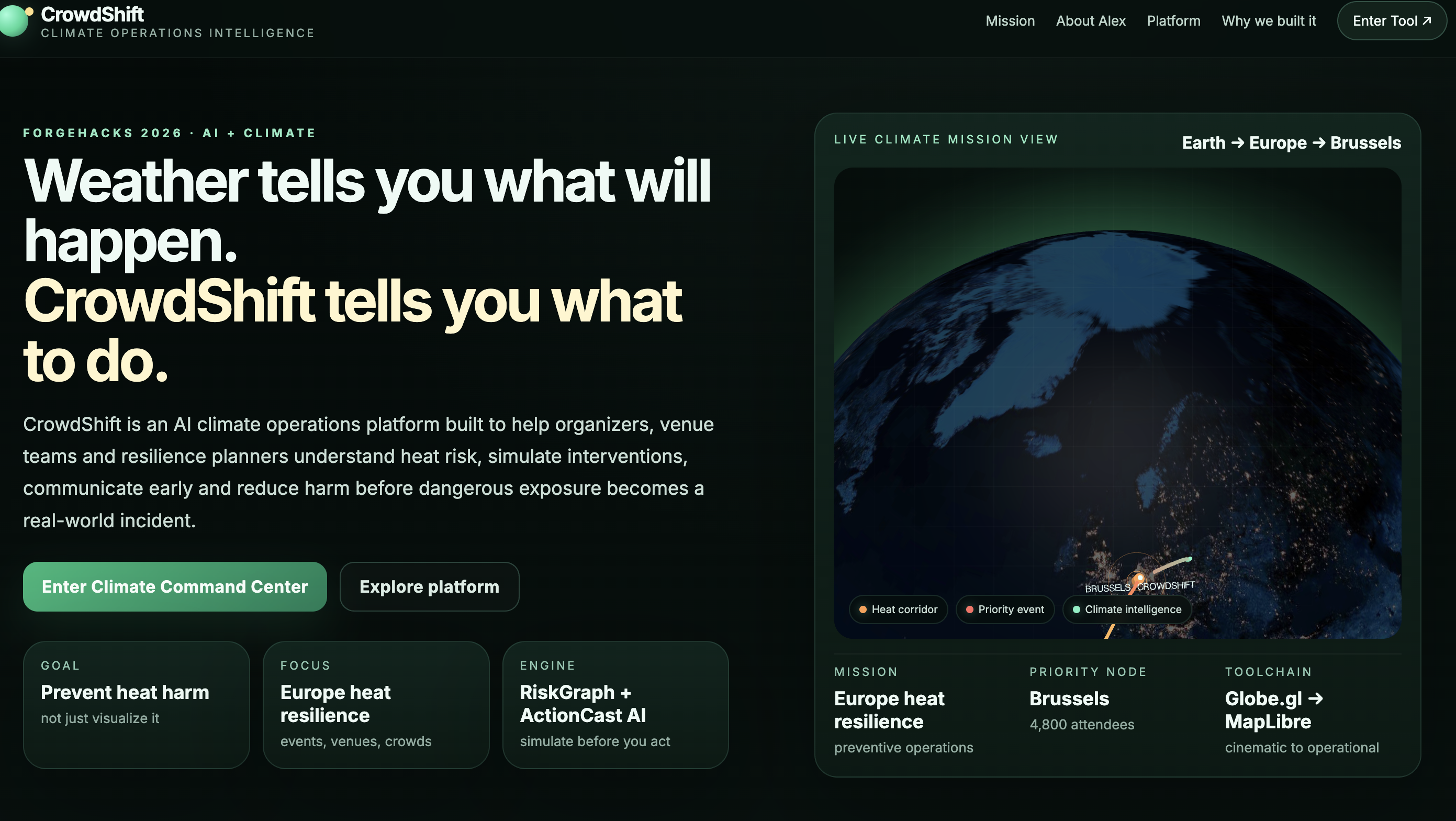
CrowdShift — AI Climate Intelligence & Resilience Platform
Turning climate warnings into decisions that protect lives.
Inspiration
We live in a world where humanity can observe hurricanes from space, model atmospheric conditions, and monitor environmental changes in extraordinary detail. Yet communities still struggle with a much simpler question:
"A dangerous event is approaching. What does it mean for us, and what should we do next?"
Climate and weather information is often fragmented across meteorological platforms, satellite imagery, government warnings, and scientific datasets. Understanding these sources requires expertise, and translating them into timely decisions can be even harder.
We created the concept of CrowdShift to help bridge the gap between environmental intelligence and real-world action.
Our guiding idea is simple: climate intelligence should not stop at prediction. It should support prevention.
What it does
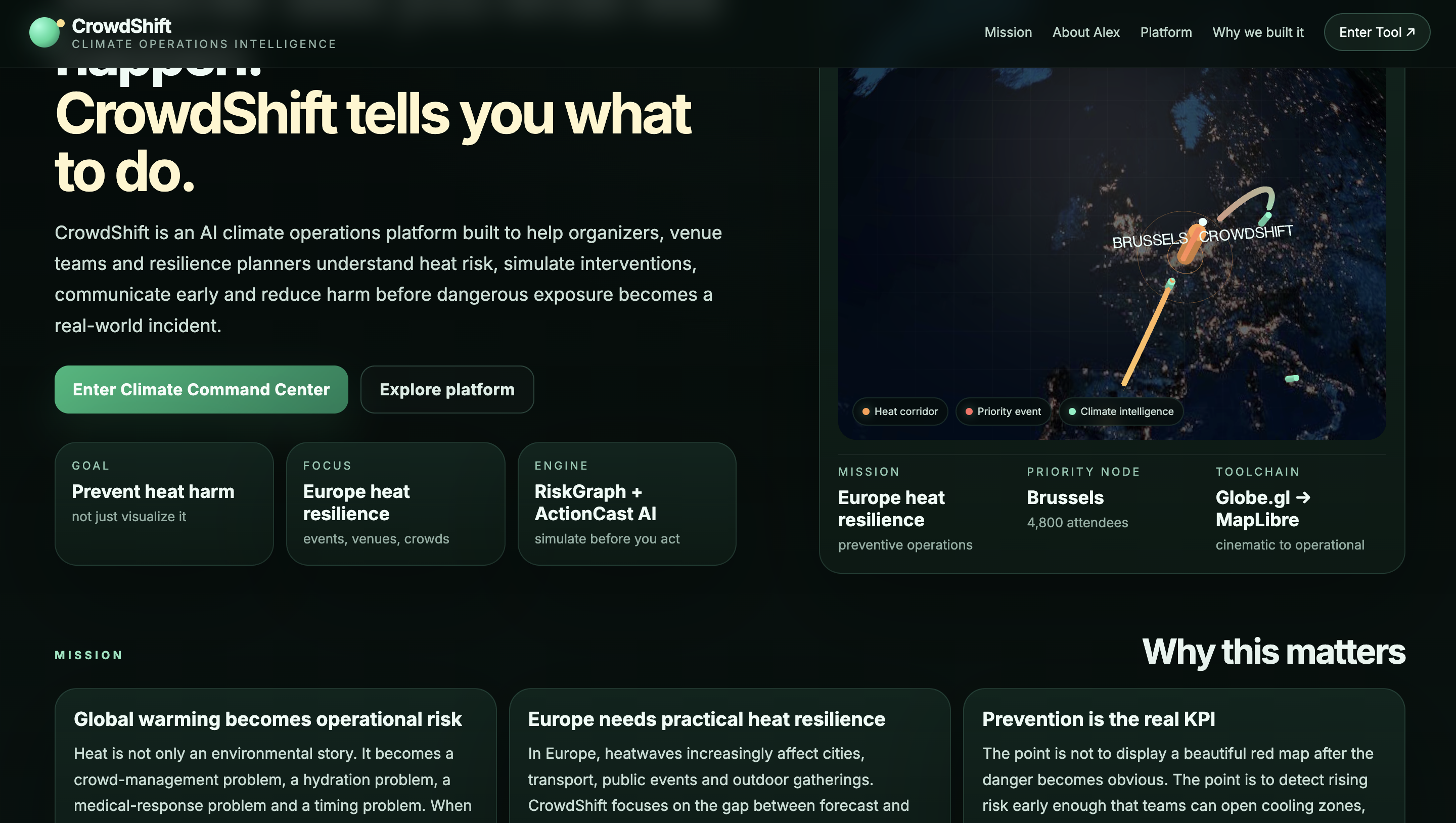
CrowdShift is an AI-powered climate intelligence and resilience platform designed to help individuals, communities, event organizers, and local decision-makers understand environmental threats and prepare for their potential consequences.
Instead of simply showing weather forecasts, CrowdShift aims to connect four essential elements:
Environmental Data → Risk Intelligence → AI Recommendations → Preventive Action
The proposed platform consists of several interconnected modules:
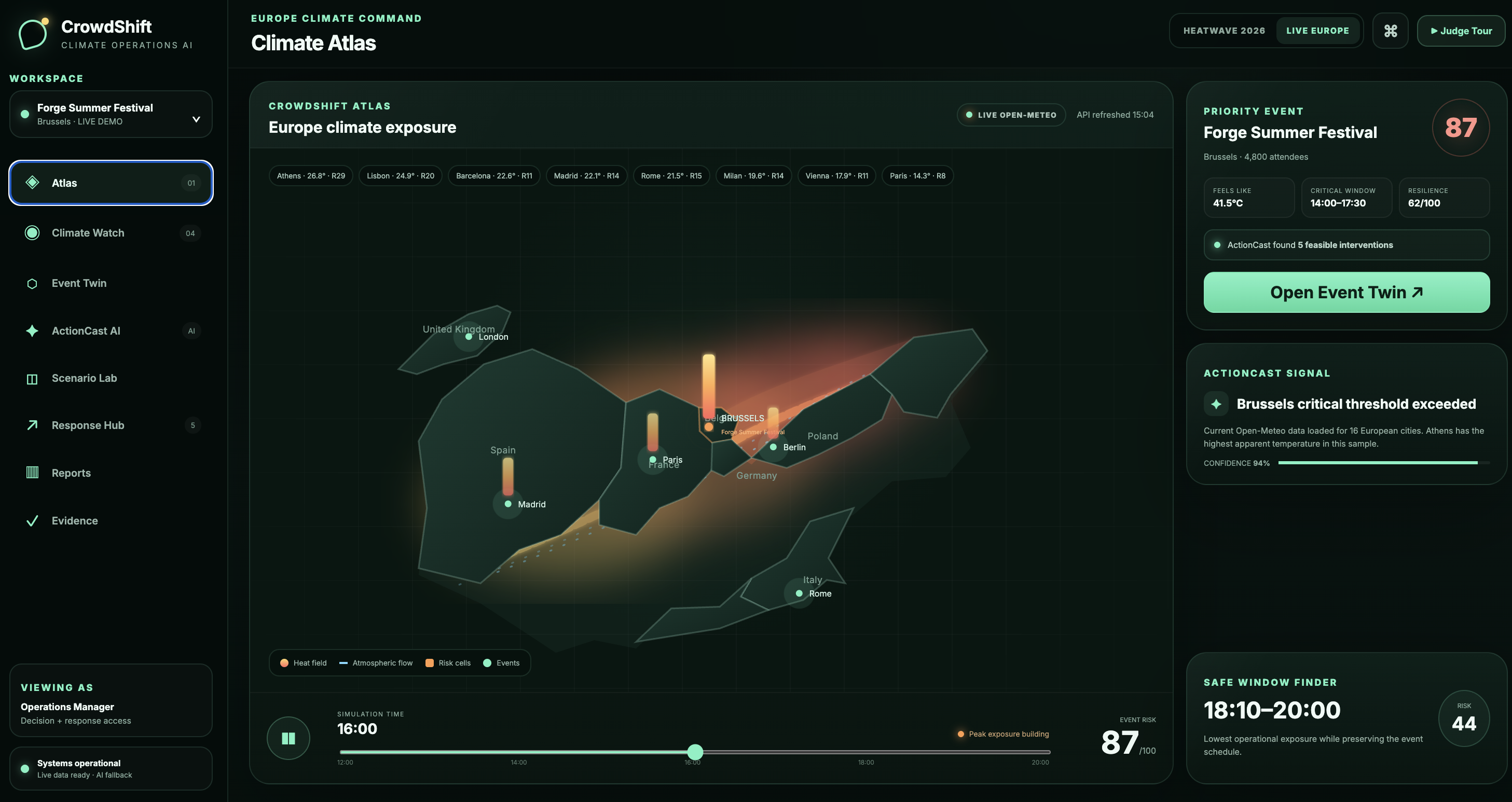
1. Atlas — Global Climate Intelligence
An interactive geographic interface for exploring environmental conditions, weather patterns, and potential climate-related hazards.
The planned experience combines a global overview with detailed regional maps, animated weather visualizations, and contextual geographic information.
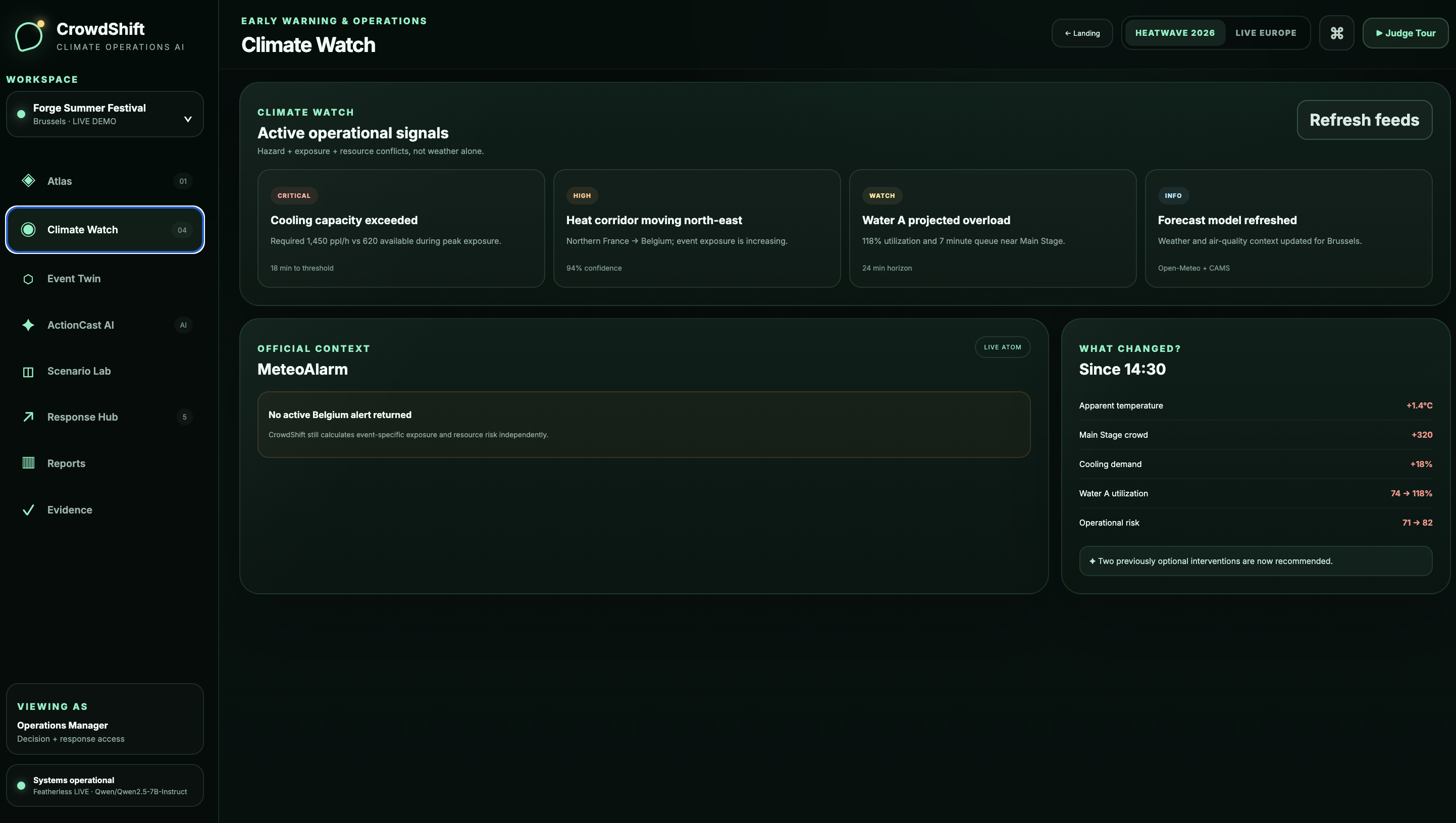
2. Climate Watch — Environmental Threat Monitoring
A monitoring system designed to combine weather forecasts, satellite observations, and environmental information to highlight potentially significant developments.
Target hazards include extreme heat, severe storms, heavy precipitation, flooding, and wildfire-related risks.
3. RiskGraph — Understanding Consequences
A risk-assessment framework designed to explore the relationship between environmental hazards and exposed locations, communities, events, and infrastructure.
Rather than presenting unexplained risk scores, CrowdShift aims to make assessments understandable and traceable to their supporting information.
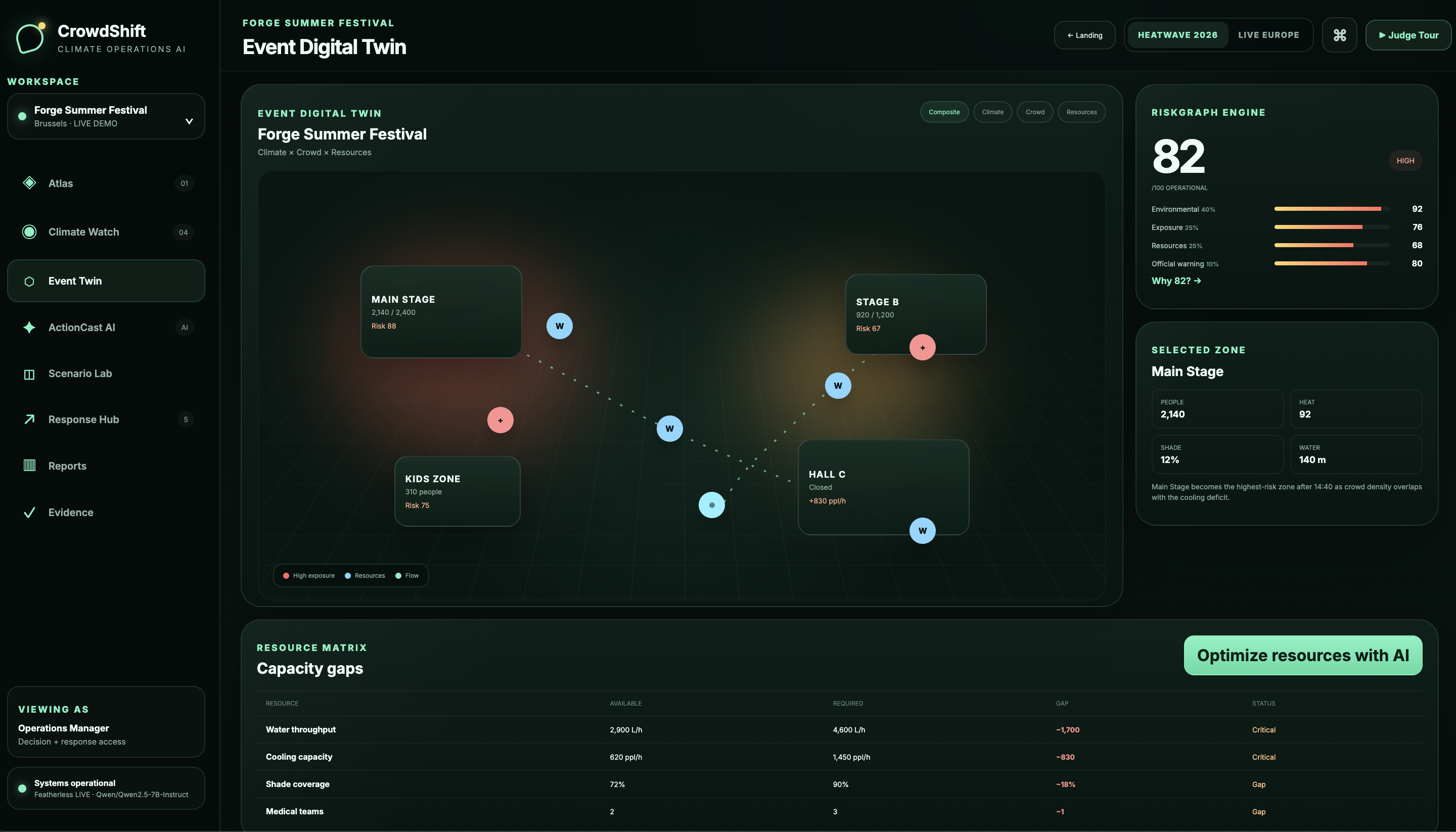
4. Event Twin — Climate-Aware Event Planning
A planning environment for exploring how developing weather conditions could affect an outdoor event or another location-specific activity.
The goal is to help organizers understand possible disruptions before they happen.
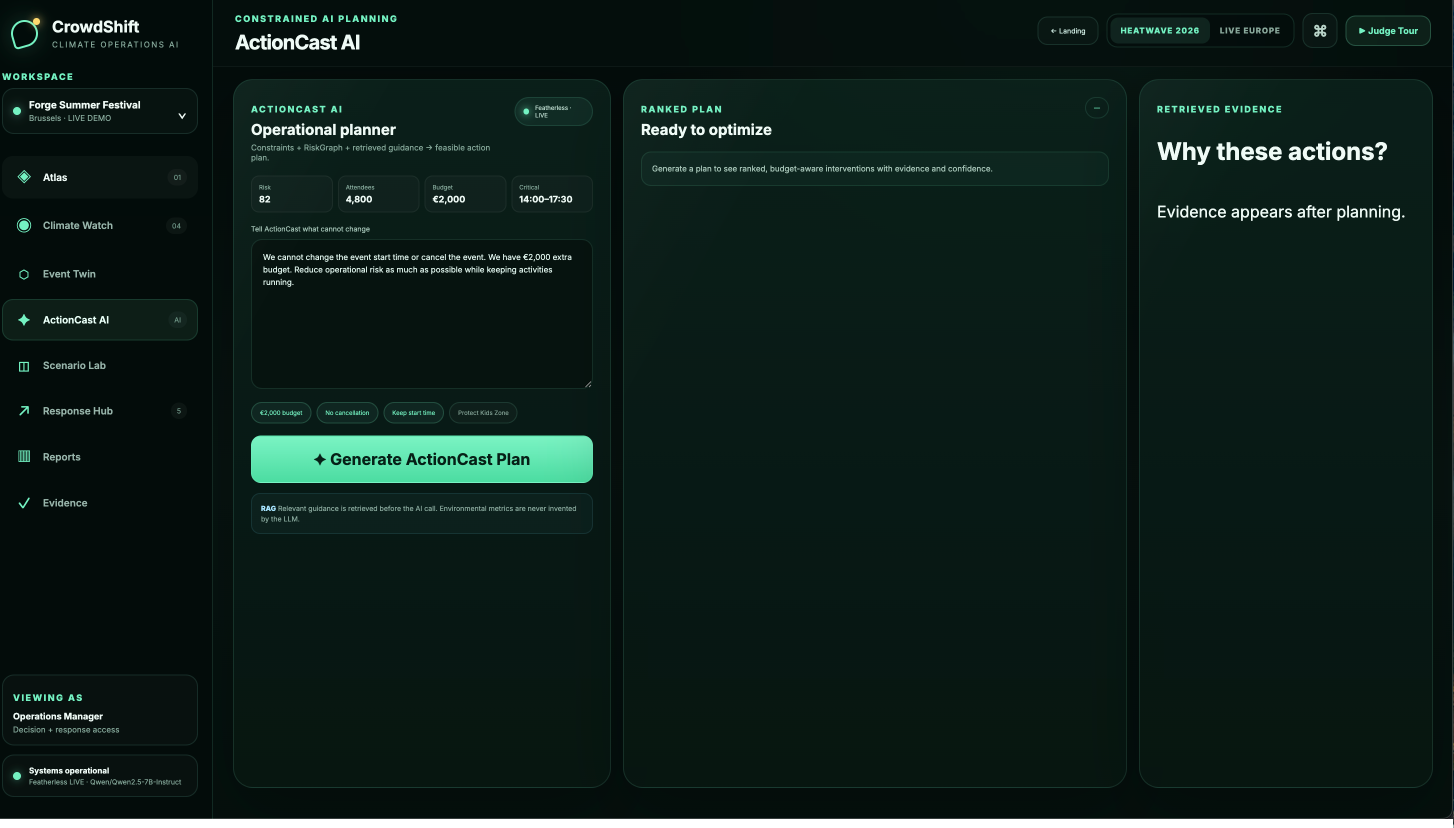
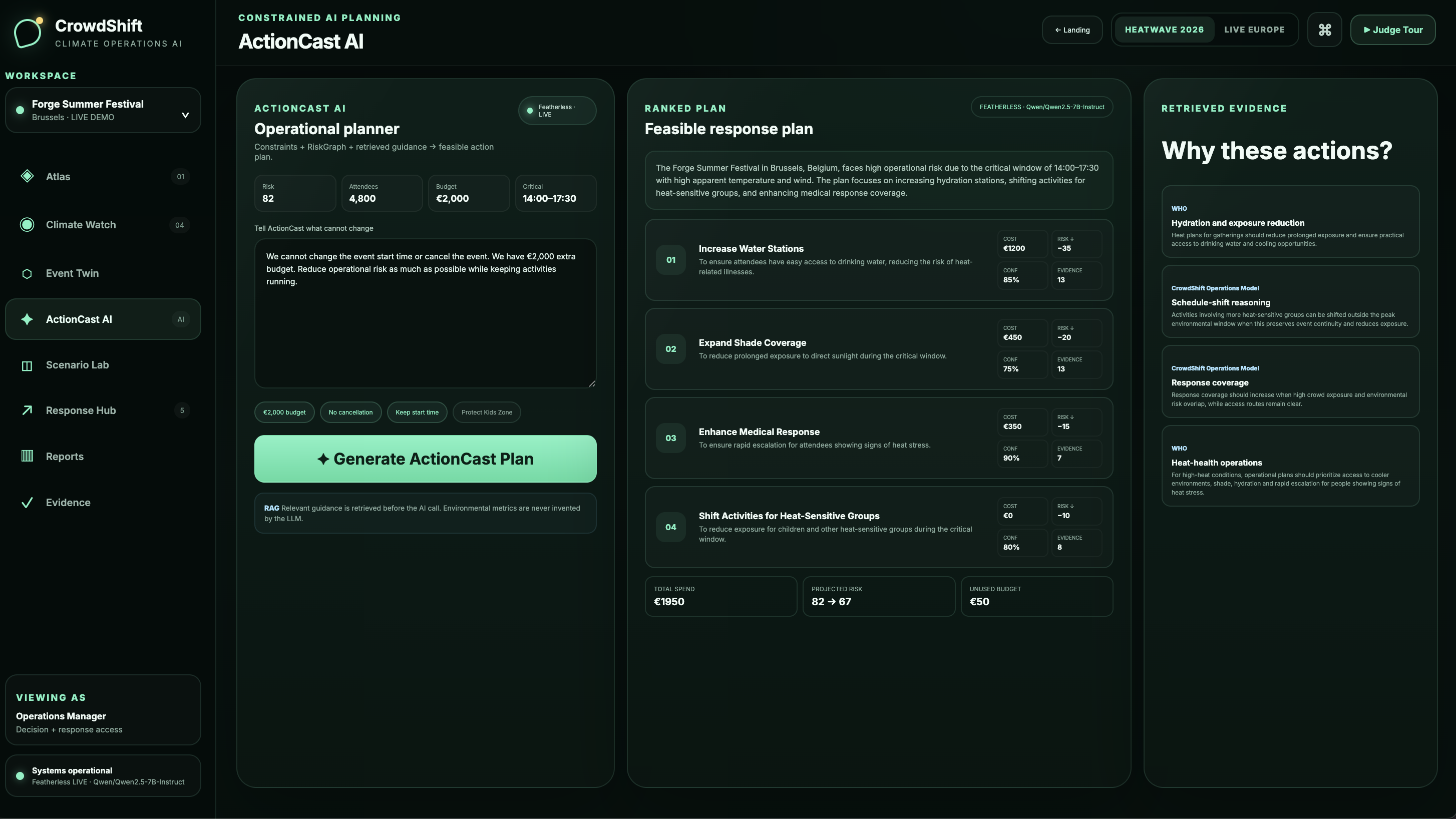
5. ActionCast AI — From Data to Decisions
An AI-supported decision assistant intended to translate structured environmental information into clear, context-aware recommendations.
For example, rather than only displaying a severe rainfall forecast, CrowdShift could explain potential disruptions, identify relevant uncertainties, and suggest preparedness measures based on verified information.
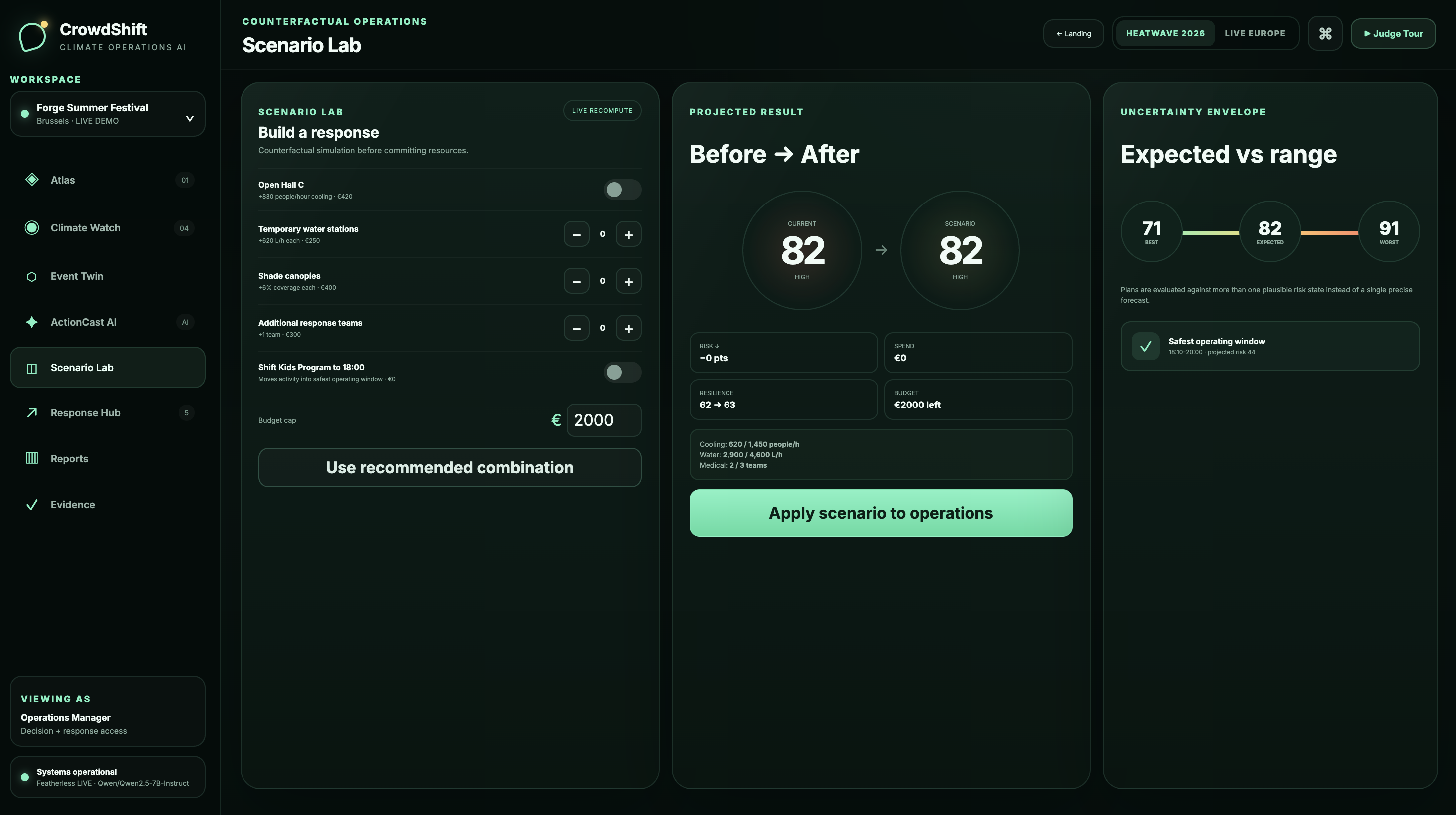
6. Scenario Lab — Exploring What Happens Next
A proposed what-if workspace where users can compare possible developments and understand how different assumptions could change the assessment.
7. Resource Matrix & Response Hub
Planned capabilities for organizing preparedness resources, tracking preventive tasks, and communicating important information.
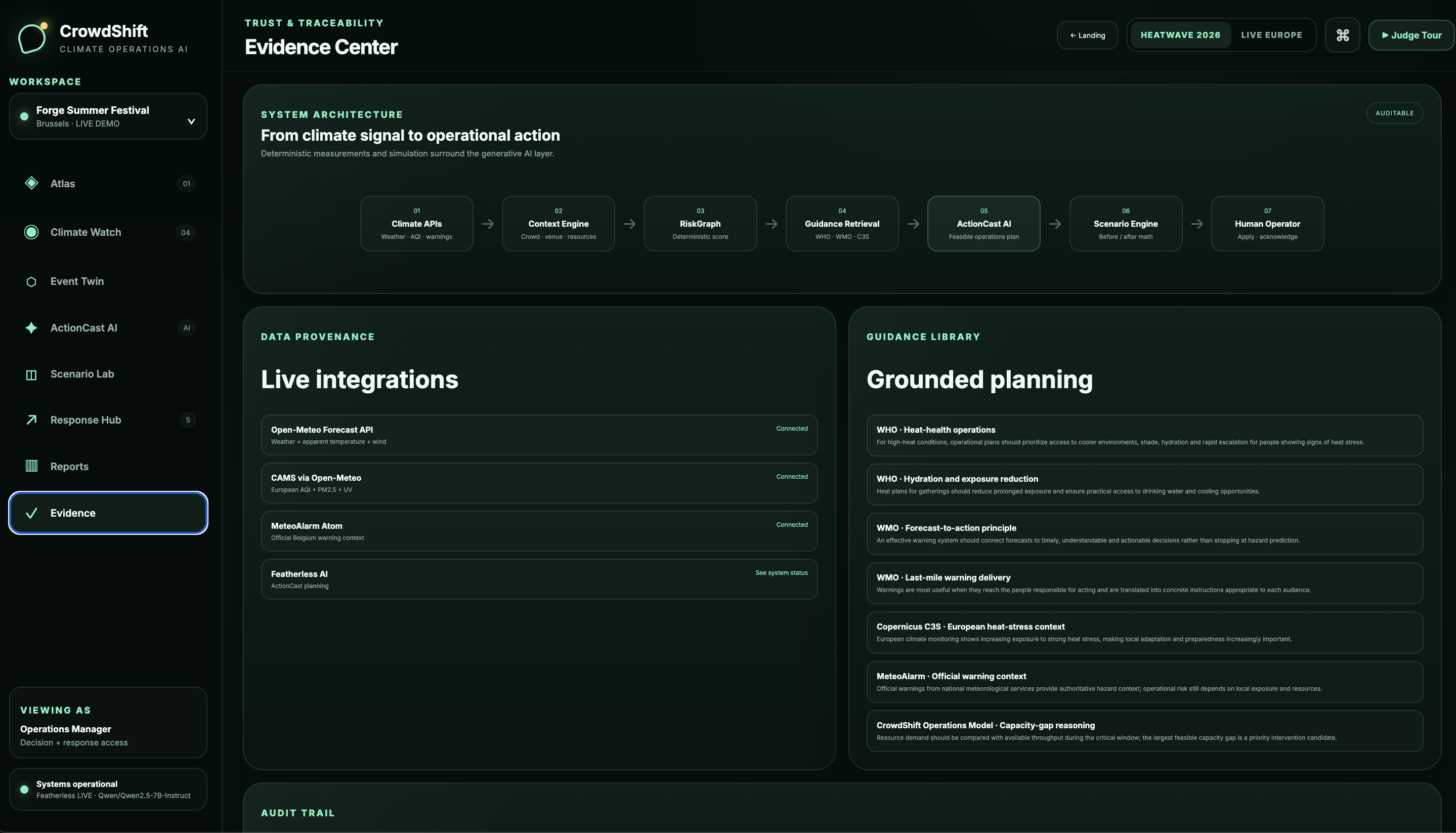
8. Evidence Center — Explainable Climate Intelligence
An evidence-oriented layer designed to connect assessments and recommendations with their data sources, timestamps, assumptions, and limitations.
How we're building it
CrowdShift is being developed around a modular architecture that separates environmental data, geospatial visualization, risk evaluation, and AI-assisted explanations.
Our proposed technology stack includes React, TypeScript, Node.js, MapLibre GL JS, deck.gl, and relevant weather and satellite data services.
The architecture is designed to support three connected layers:
Data Layer: Environmental observations, forecasts, geospatial datasets, and historical information.
Intelligence Layer: Risk indicators, geographic exposure analysis, scenario evaluation, and AI-assisted interpretation.
Experience Layer: Interactive maps, accessible explanations, visual analytics, and preparedness workflows.
A central design principle is that AI must not invent environmental measurements or present uncertain predictions as established facts.
Our goal is to combine structured calculations with AI-generated explanations while preserving data provenance and clear distinctions between observations, forecasts, and hypothetical scenarios.
Challenges we ran into
One of the most important design challenges has been deciding how to combine information from different environmental sources without creating misleading conclusions.
Weather models, satellite observations, and geographic datasets differ in resolution, update frequency, coverage, and reliability.
Another challenge is distinguishing between a meteorological hazard and its potential real-world consequences. Heavy rainfall, for example, does not automatically imply flooding at every location.
We have therefore focused our architecture on explainability, source transparency, and separating measured conditions from inferred risks.
We also explored how to create an engaging geographic interface without compromising readability or making decorative visual effects appear to be scientific measurements.
What we're proud of
CrowdShift's central innovation is its proposed shift from displaying environmental information toward supporting preventive decisions.
The concept brings together climate monitoring, geographic risk context, AI-assisted explanations, and practical preparedness workflows within one coordinated experience.
Our design also places special emphasis on traceability: users should be able to understand where information comes from and why a recommendation was made.
What we learned
Designing CrowdShift has reinforced an important lesson: making climate data useful requires much more than attractive visualizations.
Environmental intelligence becomes valuable when information is timely, understandable, relevant to a specific situation, and connected to decisions people can actually make.
We also learned the importance of keeping AI-assisted explanations separate from validated scientific data and established emergency guidance.
What's next
Our immediate priority is to deliver a working end-to-end prototype that demonstrates the core CrowdShift workflow: selecting a location, retrieving environmental information, visualizing relevant hazards, and producing an understandable, evidence-based assessment.
Future development will focus on:
- Expanding environmental data integrations.
- Improving geographic exposure and risk assessment.
- Adding scenario comparisons and event-specific planning.
- Developing configurable notifications and preparedness workflows.
- Evaluating AI recommendations against trusted sources.
- Testing the system with real users and domain experts.
Ultimately, we envision CrowdShift becoming an accessible climate intelligence platform that helps communities anticipate environmental threats and make better-informed preparedness decisions.
CrowdShift — Observe. Understand. Anticipate. Act.
Short version according to rules https://youtu.be/WrODf5gyfII Long version youtube 8 min - https://youtu.be/yfi0ww4J4eA
Built With
- ai
- deck.gl
- llm
- maplibre-gl-js
- nasa-gibs
- node.js
- open-meteo
- react
- three.js
- typescript
- vite

Log in or sign up for Devpost to join the conversation.