-
-
Loading Screen
-
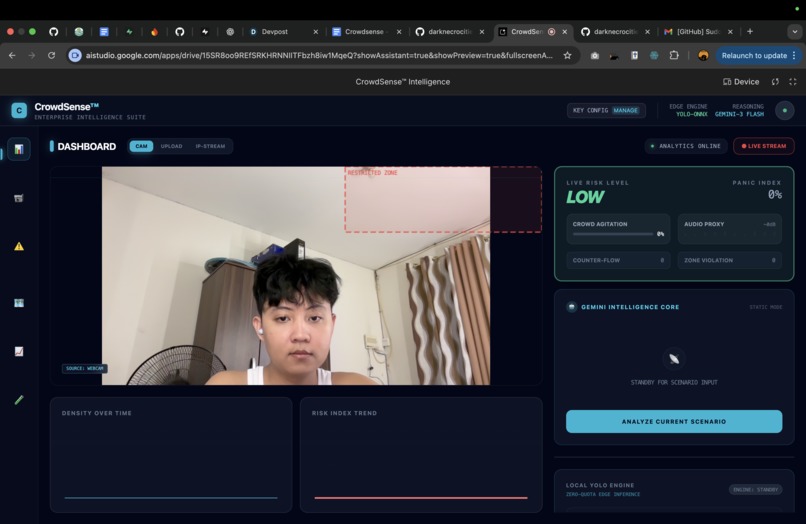
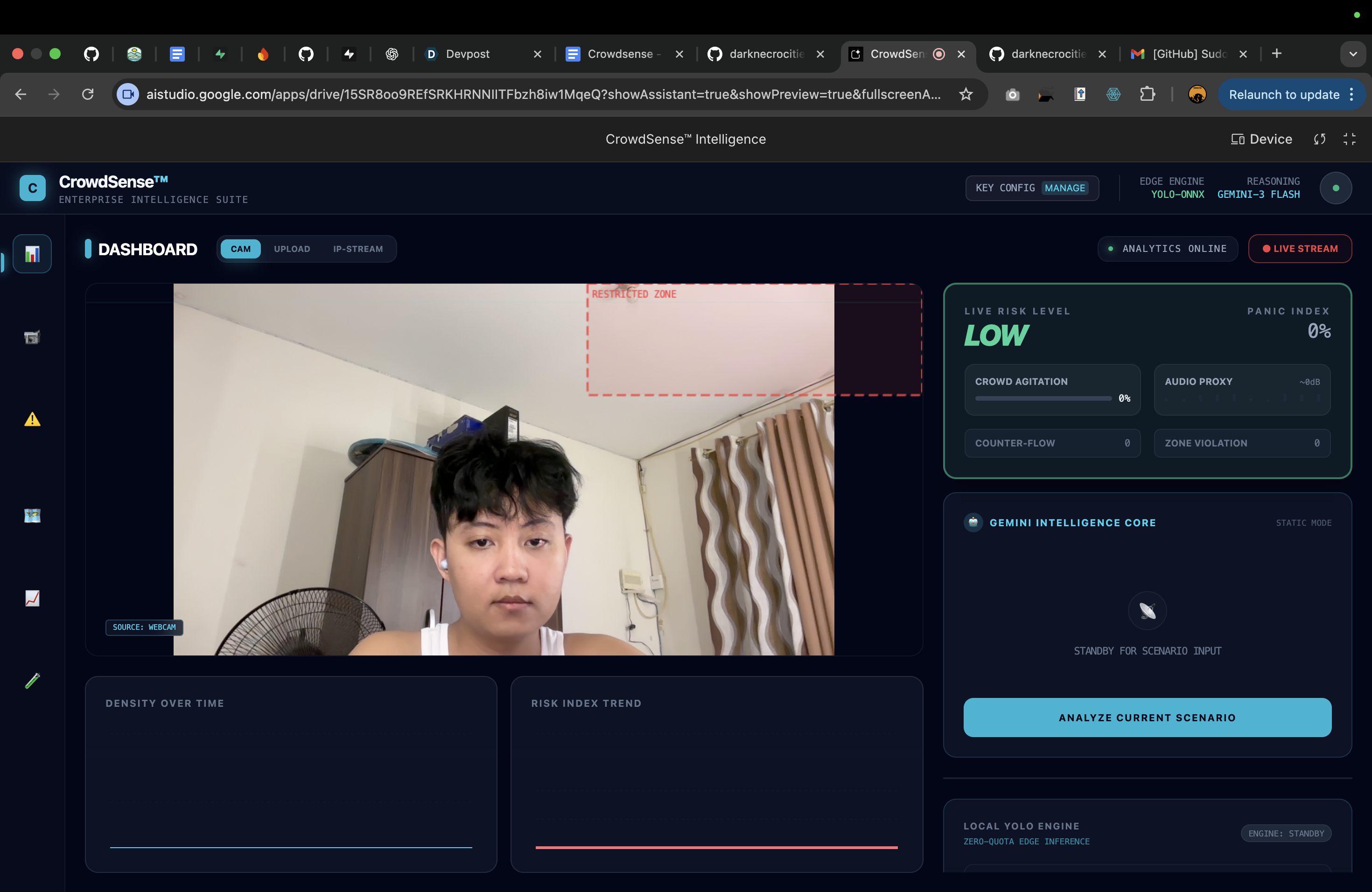
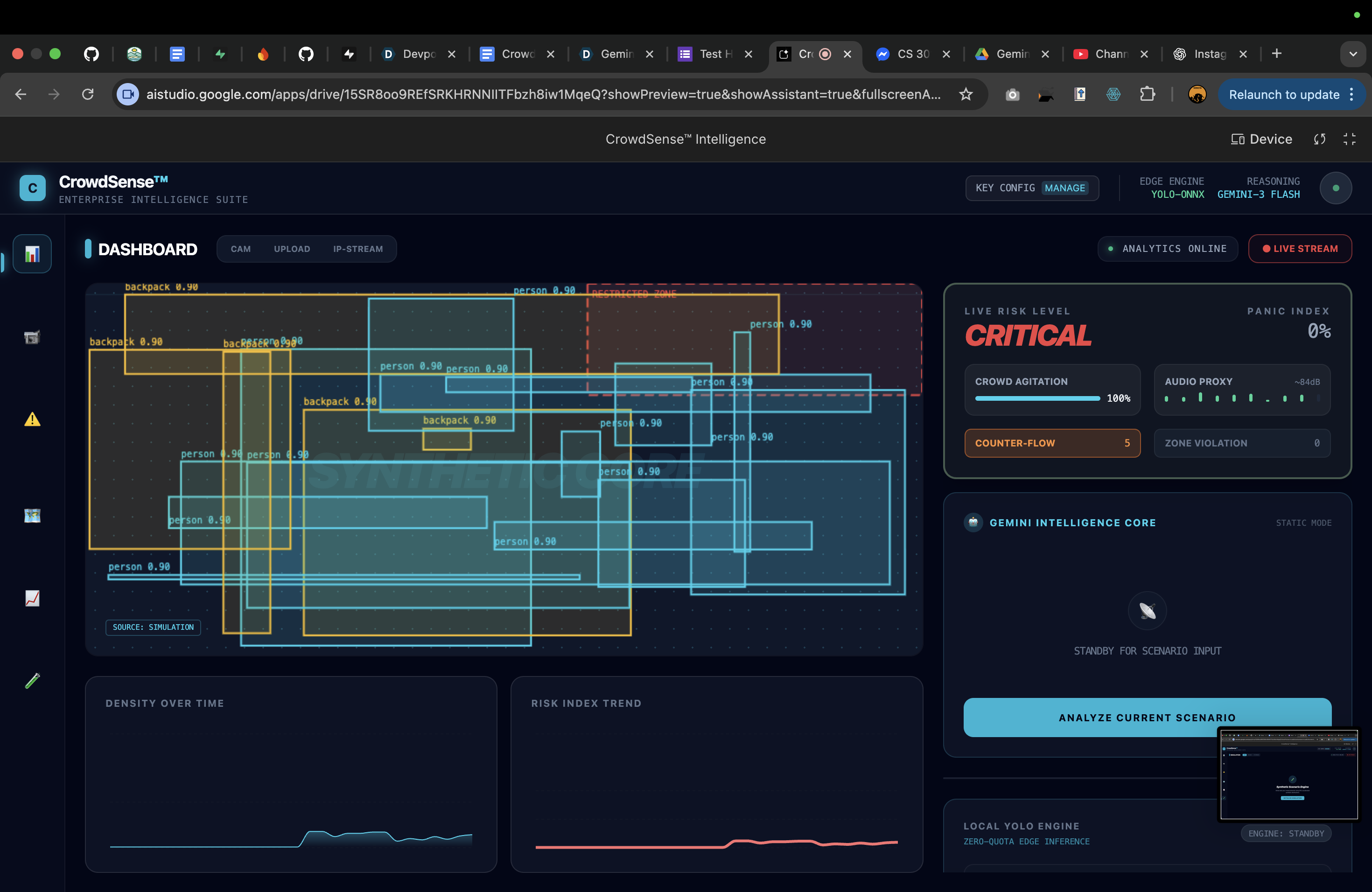
Main Dashboard
-
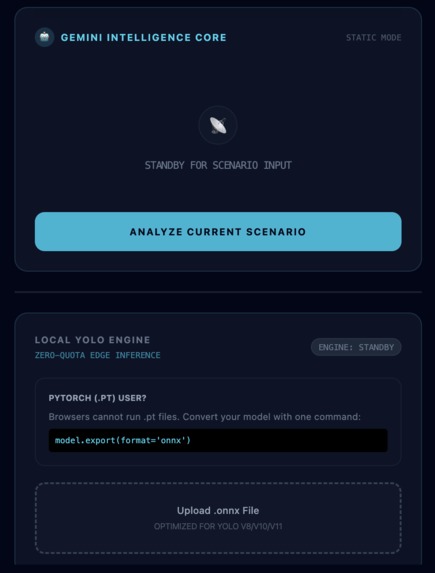
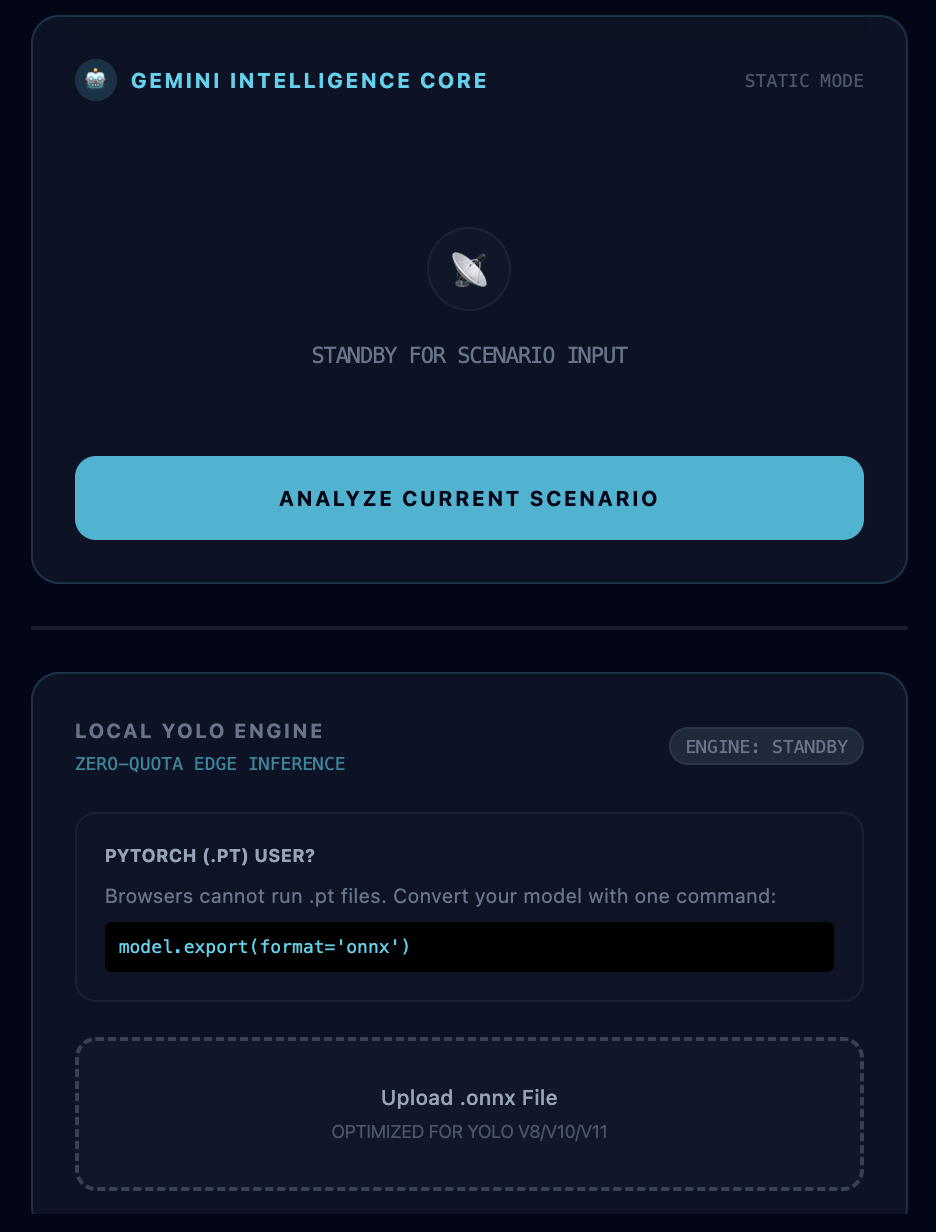
Gemini Intelligence Code
-
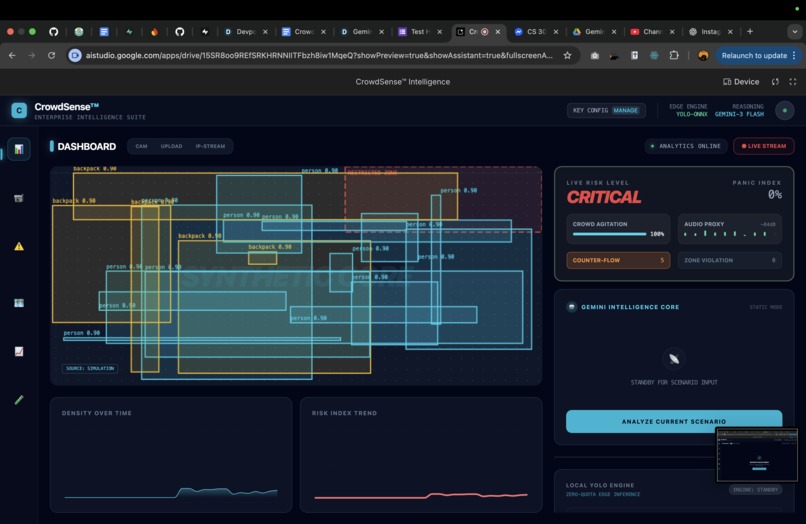
Synthetic Stress Engine Scenario
-
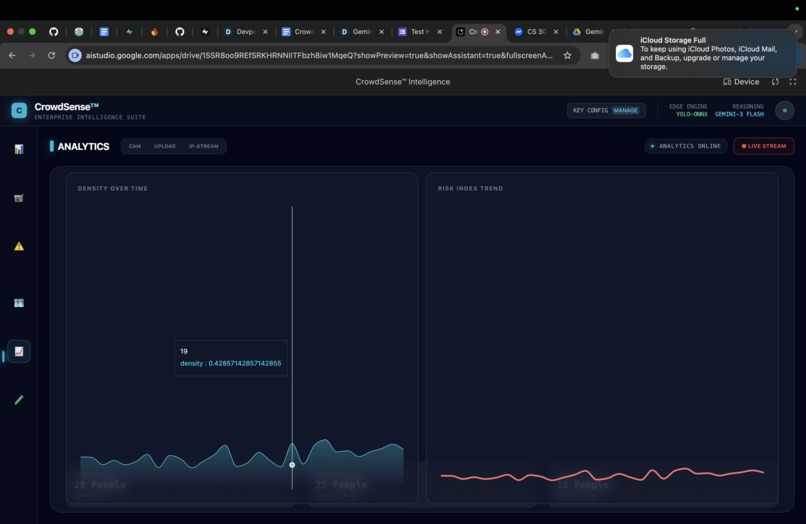
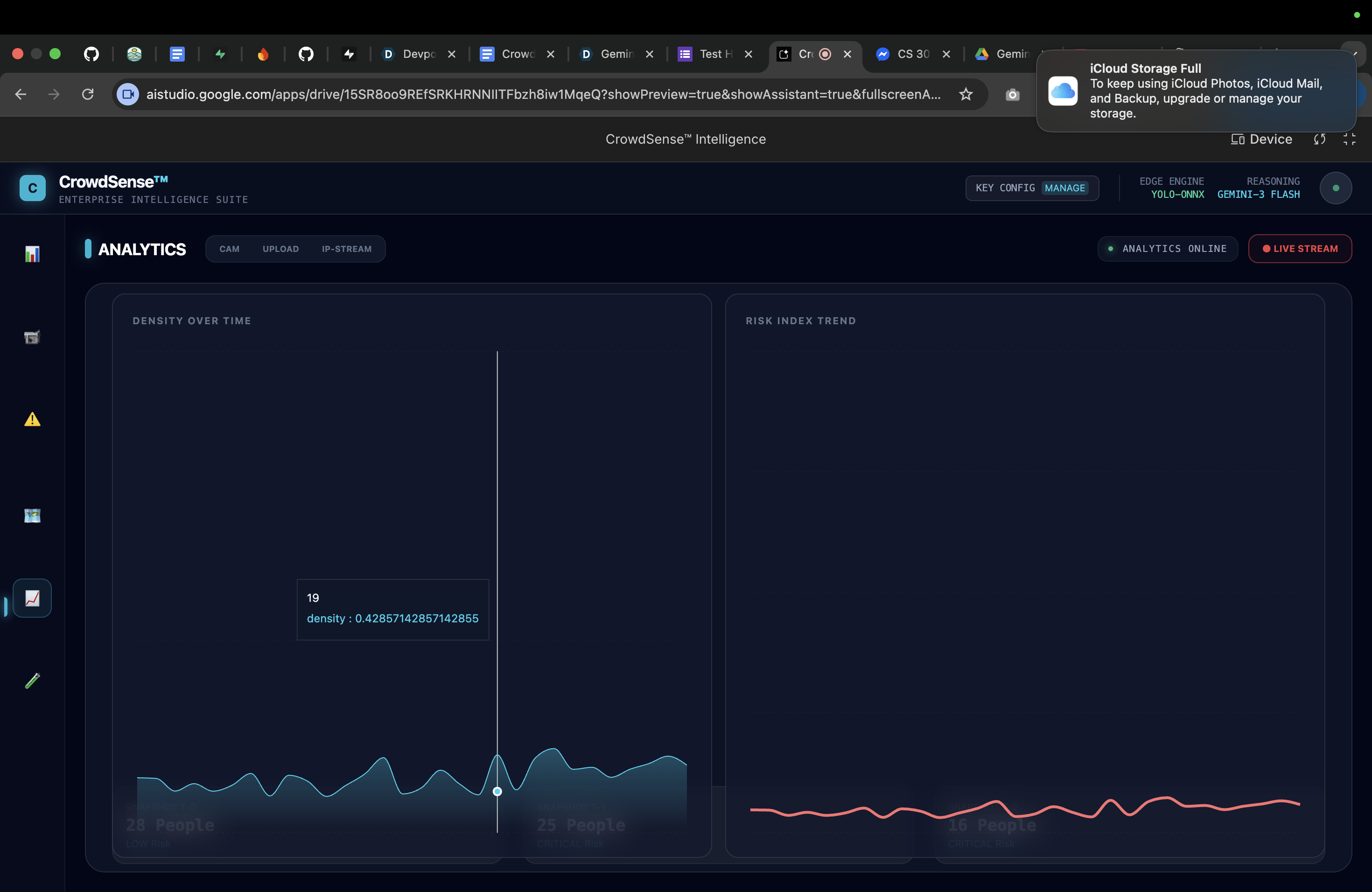
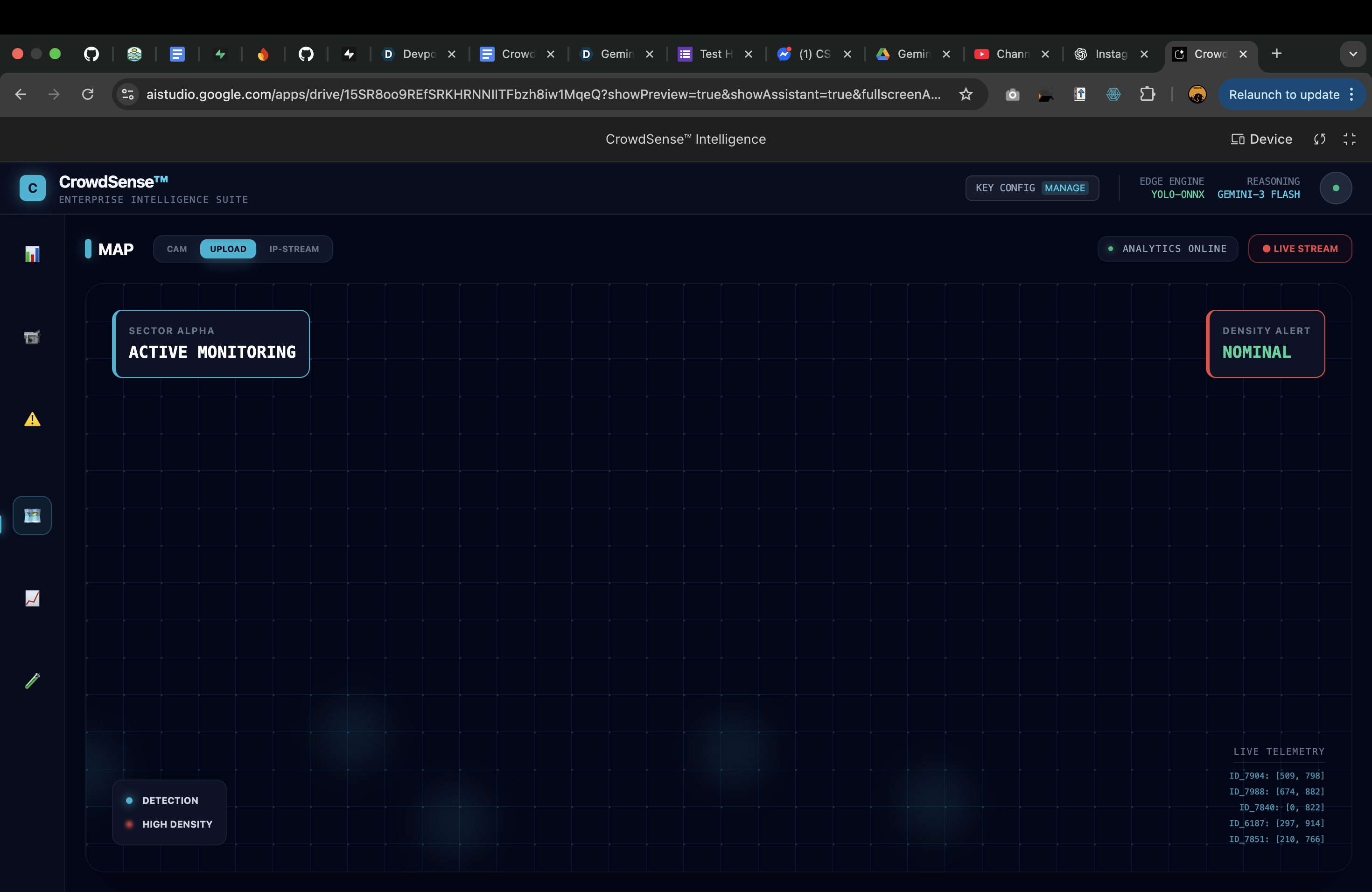
Risk and Mapping Analytics
-
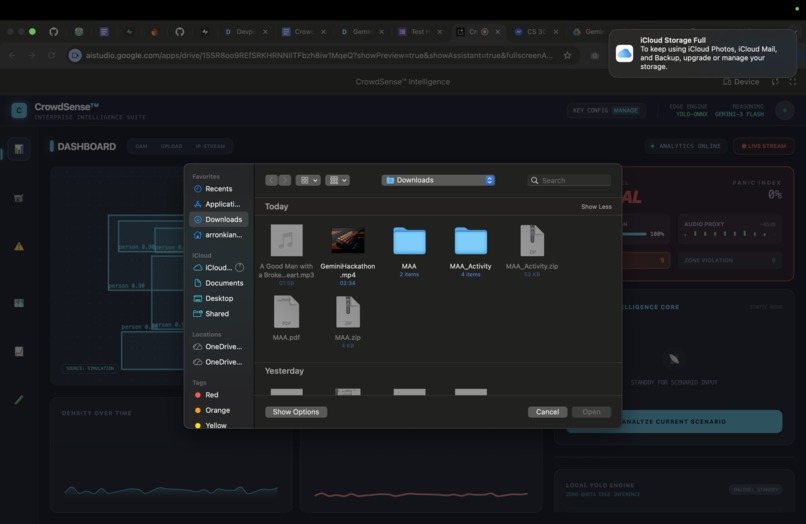
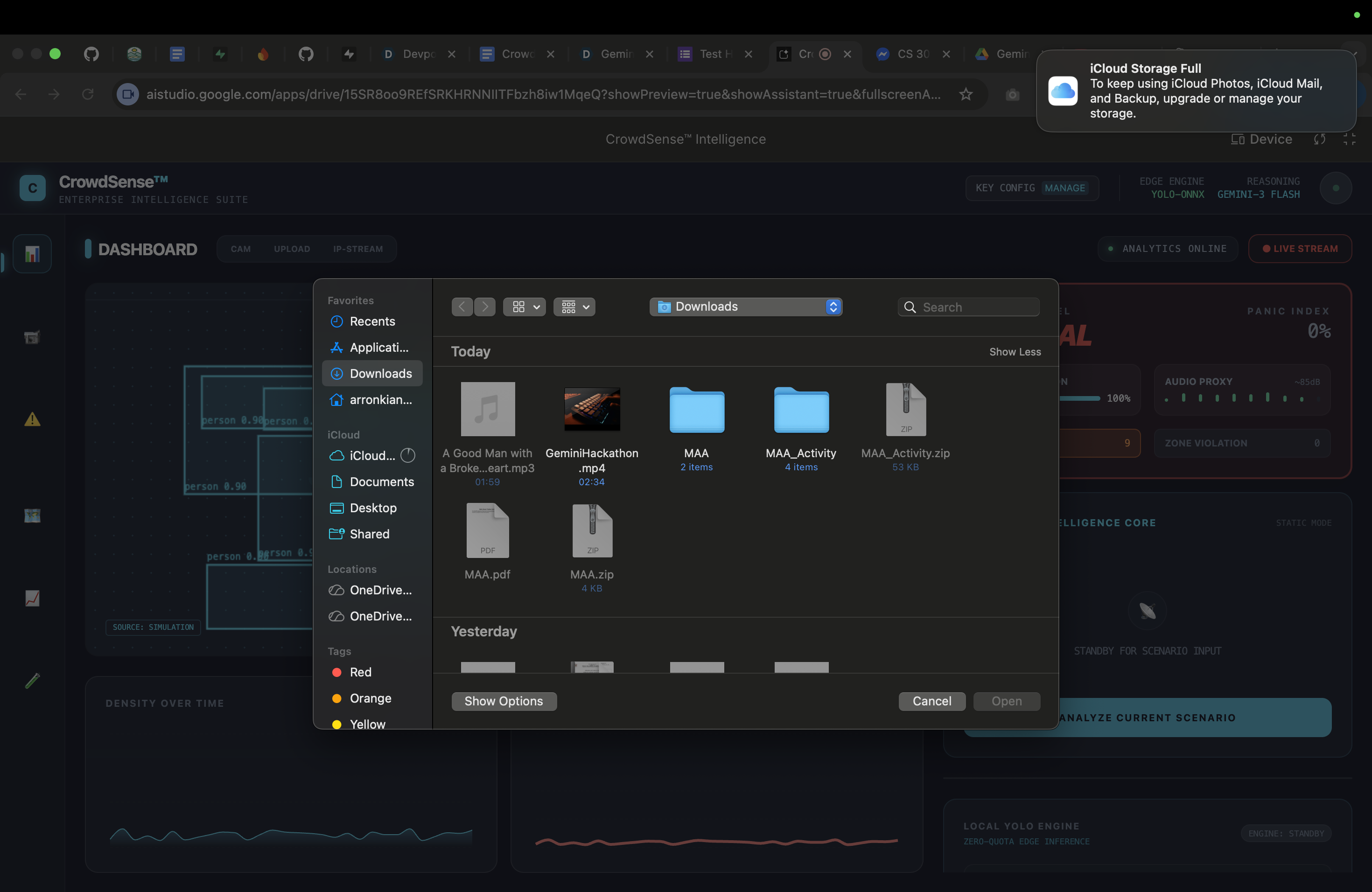
Uploading Provide Model
-
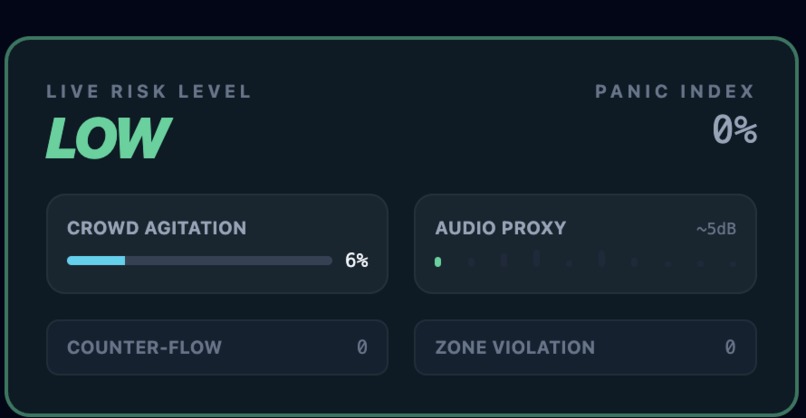
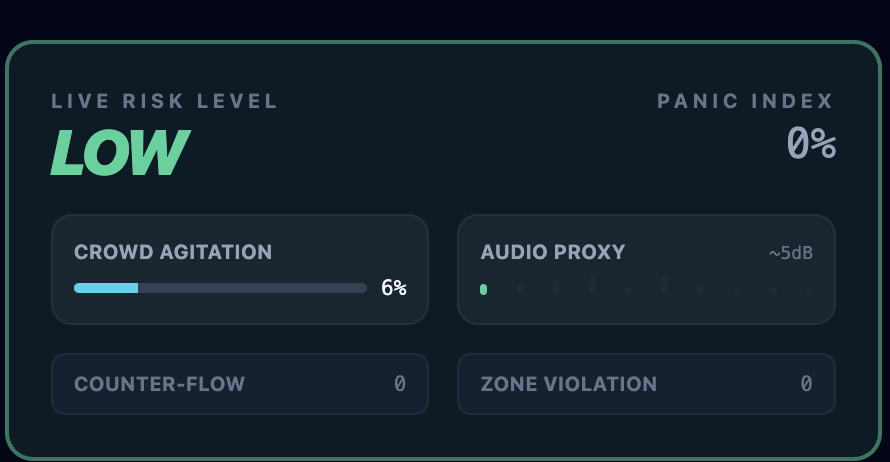
Live Risk Level
-
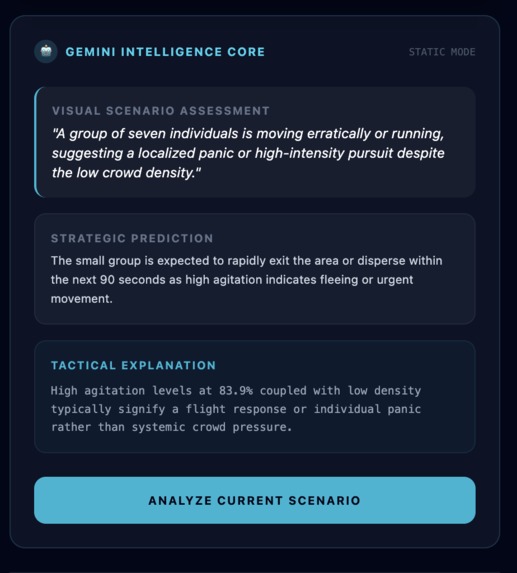
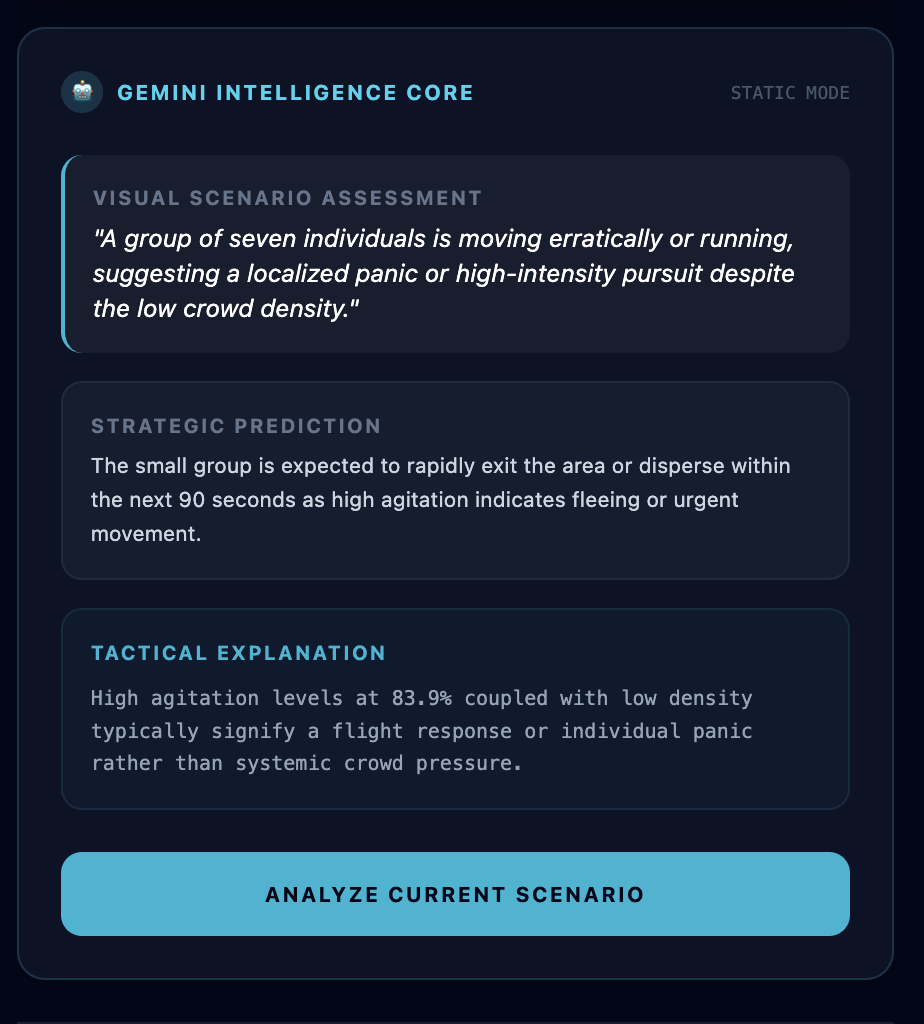
Multi Gemini Intelligence Strategic Core
-
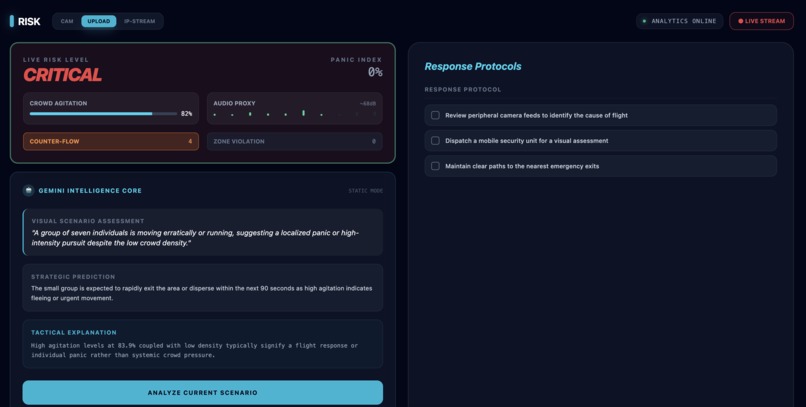
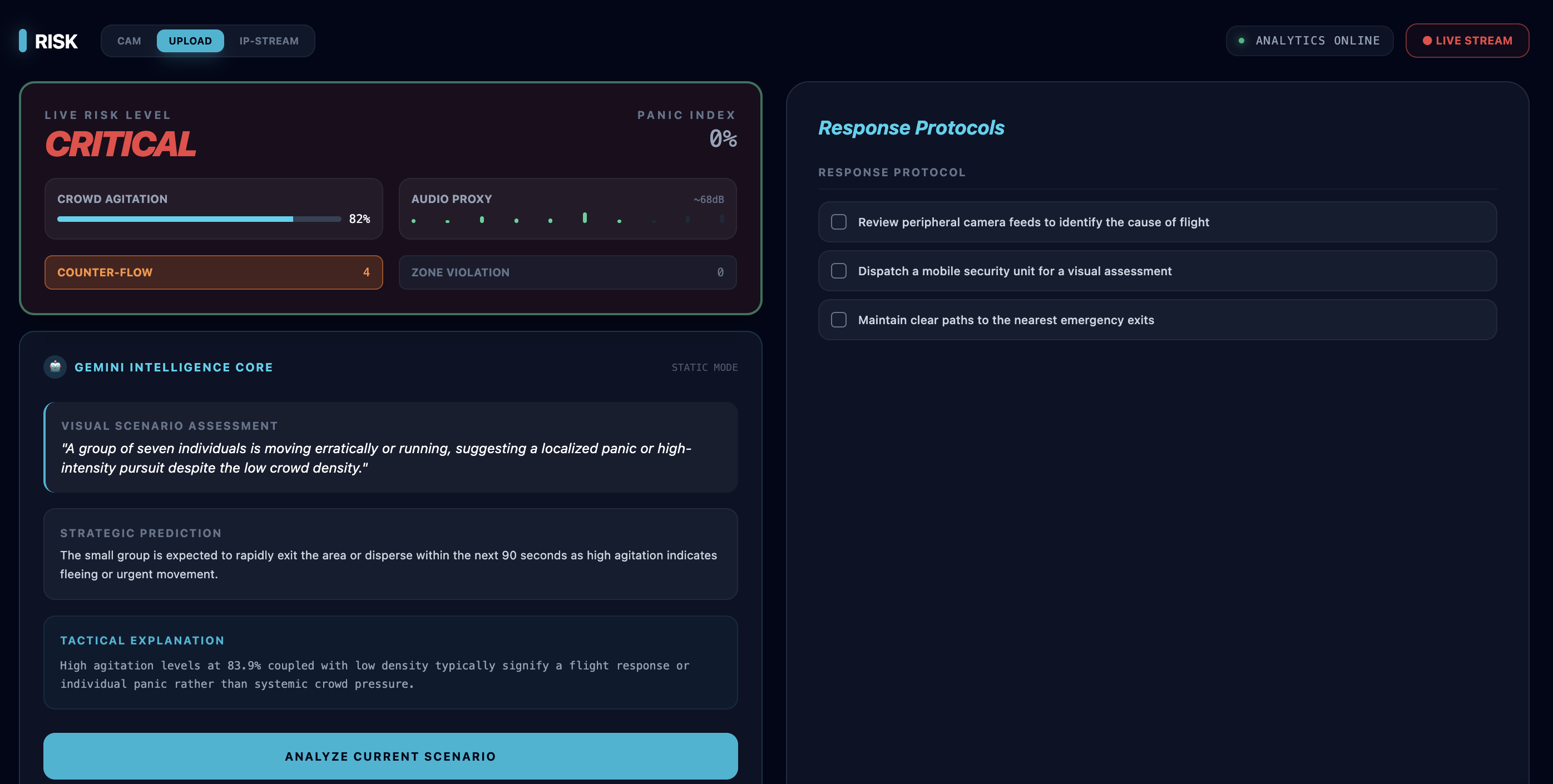
Live Risk Recommendation and Response Protocols
-
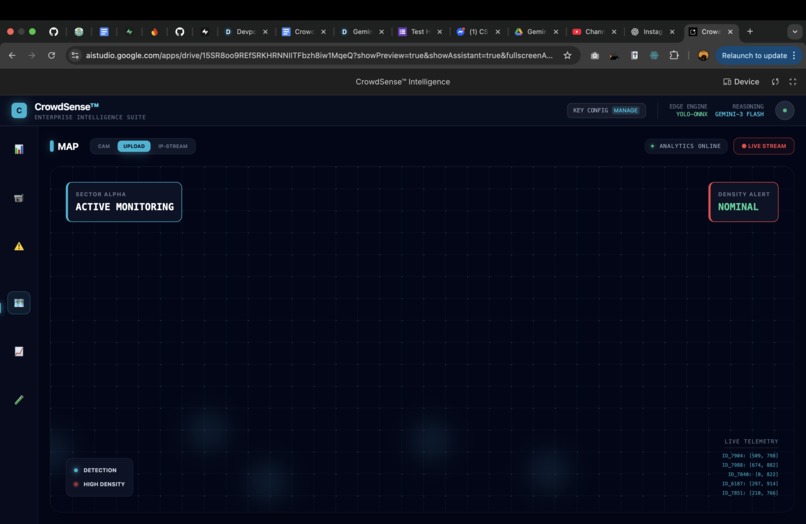
Heat mapping video feed
Inspiration
Crowd-related disasters rarely happen without warning — the signals are there, but they are buried in noise. Operators monitoring dozens of video feeds are forced to rely on instinct rather than insight. CrowdSense RT was inspired by real-world stampede incidents, transport hub failures, and the realization that modern surveillance systems collect massive data but provide almost no intelligence. We wanted to turn passive cameras into proactive safety agents.
What it does
CrowdSense RT is a real-time crowd risk intelligence platform designed to prevent congestion, panic, and stampede events before they happen. It detects people using edge-based computer vision, tracks movement and density in real time, and analyzes behavioral patterns such as counter-flow and agitation. These anonymized metrics are interpreted by an AI reasoning layer that predicts risk escalation and generates clear, actionable response protocols for operators.
How we built it
I built CrowdSense RT using a hybrid intelligence architecture. A YOLO model exported to ONNX runs locally to perform person detection, bounding box tracking, and density calculations without sending video to the cloud. The frontend is built with React, TypeScript, and Tailwind for a clean, real-time dashboard. Aggregated metrics are periodically sent to Google Gemini 3.0 Flash, which reasons over the data using safety heuristics and historical patterns to return risk scores, explanations, and recommended countermeasures.
Challenges we ran into
Achieving low-latency performance while running AI directly in the browser was a major challenge. We also had to design a system that preserved privacy while still providing meaningful intelligence. Another challenge was translating complex AI outputs into simple, operationally useful instructions that security teams could act on instantly.
Accomplishments that we're proud of
I successfully built a working end-to-end system that runs person detection locally, predicts crowd risks in advance, and dynamically generates response checklists. CrowdSense RT supports legacy camera feeds, adapts risk sensitivity based on context, and demonstrates how AI can augment — not replace — human decision-making in safety-critical environments.
What we learned
We learned that effective AI for public safety must be explainable, fast, and trustworthy. Edge computing dramatically improves privacy and responsiveness, while large language models excel at reasoning and communication. Combining both creates systems that feel less like dashboards and more like intelligent assistants.
What's next for CrowdSense RT
Next, we plan to expand CrowdSense RT with multi-camera spatial fusion, audio-based panic detection, and automated integration with gates, signage, and alert systems. Our goal is to evolve CrowdSense RT into a fully autonomous crowd safety co-pilot for large-scale public venues.


Log in or sign up for Devpost to join the conversation.