Inspiration
Malls can become crowded and queues can grow rapidly, but most existing systems only show the current situation. We wanted to explore a better question: can real-time sensing be used to predict crowd and queue buildup before congestion becomes severe?
This led us to CrowdSense — a predictive crowd intelligence system that combines multiple sensing sources instead of depending on a single technology.
What it does
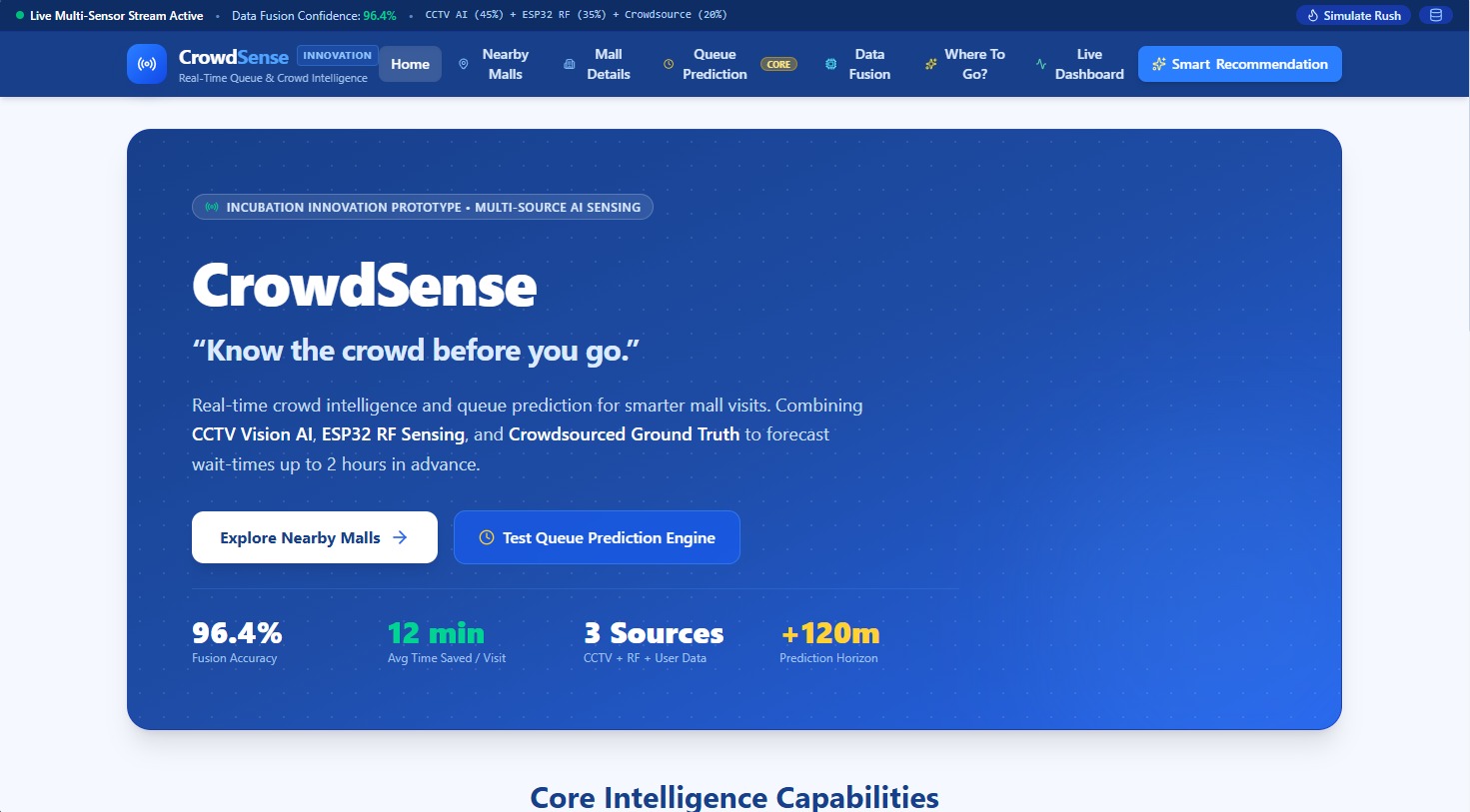
CrowdSense combines CCTV-based computer vision with ESP32/RF/IoT sensing to estimate real-time crowd and queue conditions.
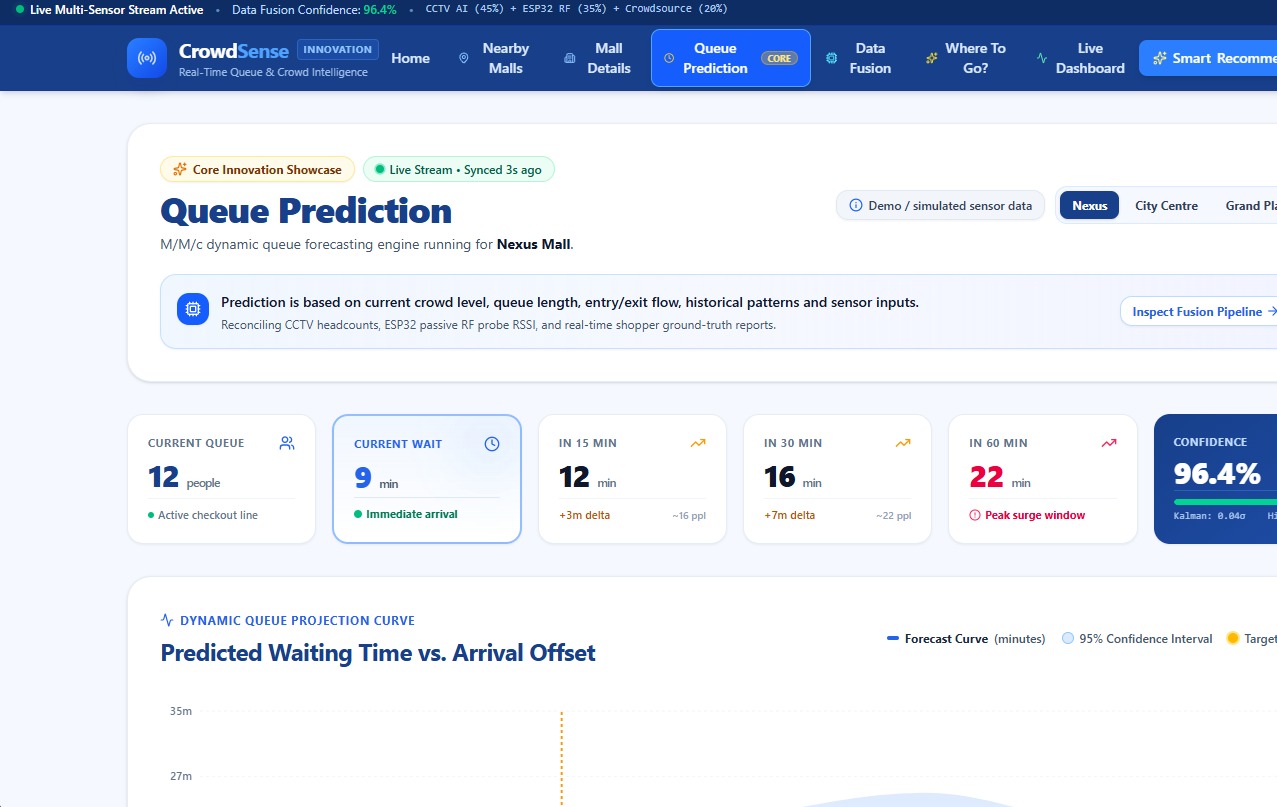
The system processes these signals through a data-fusion layer and uses a prediction engine to forecast near-term crowd and queue buildup. The goal is to provide actionable information before congestion peaks.
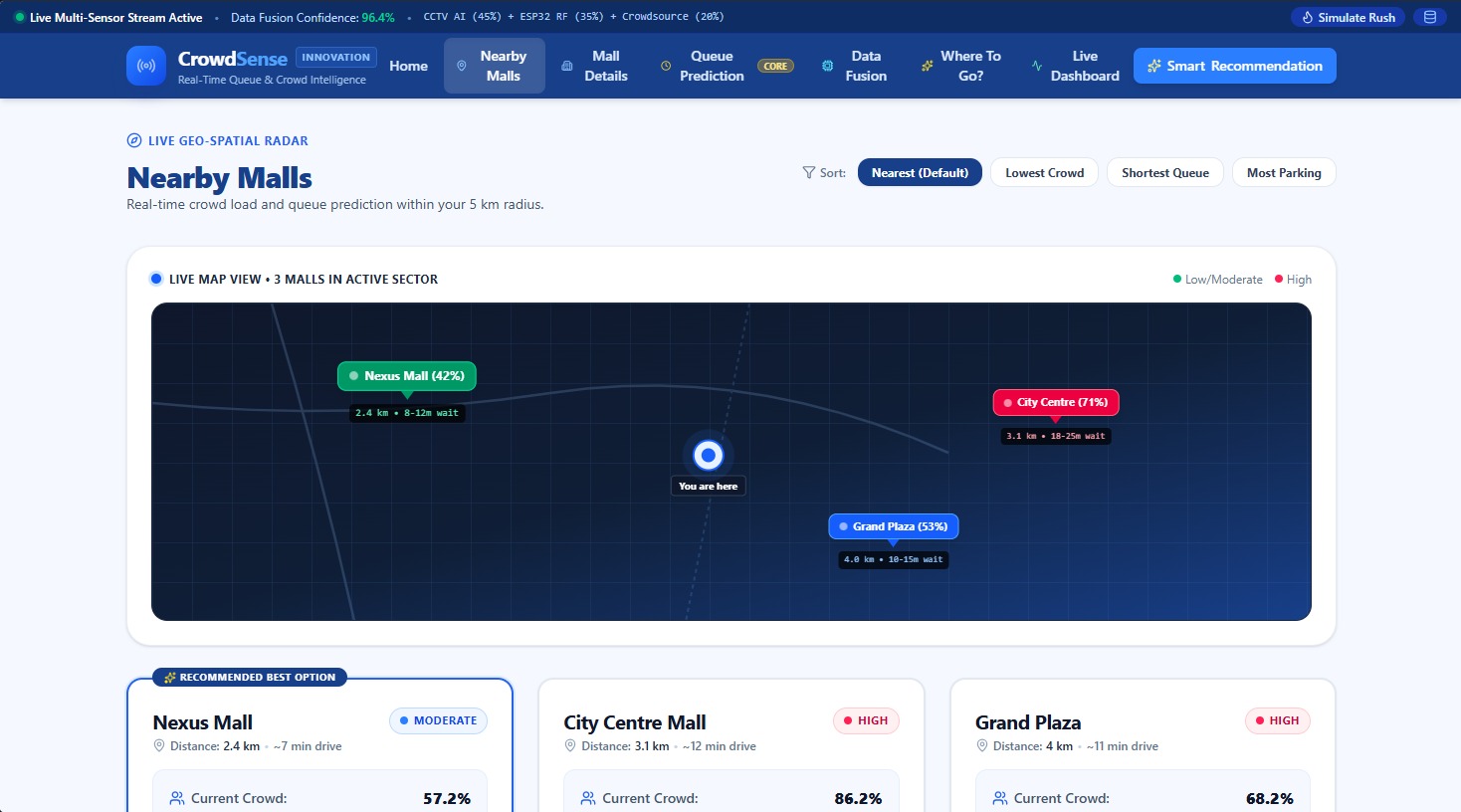
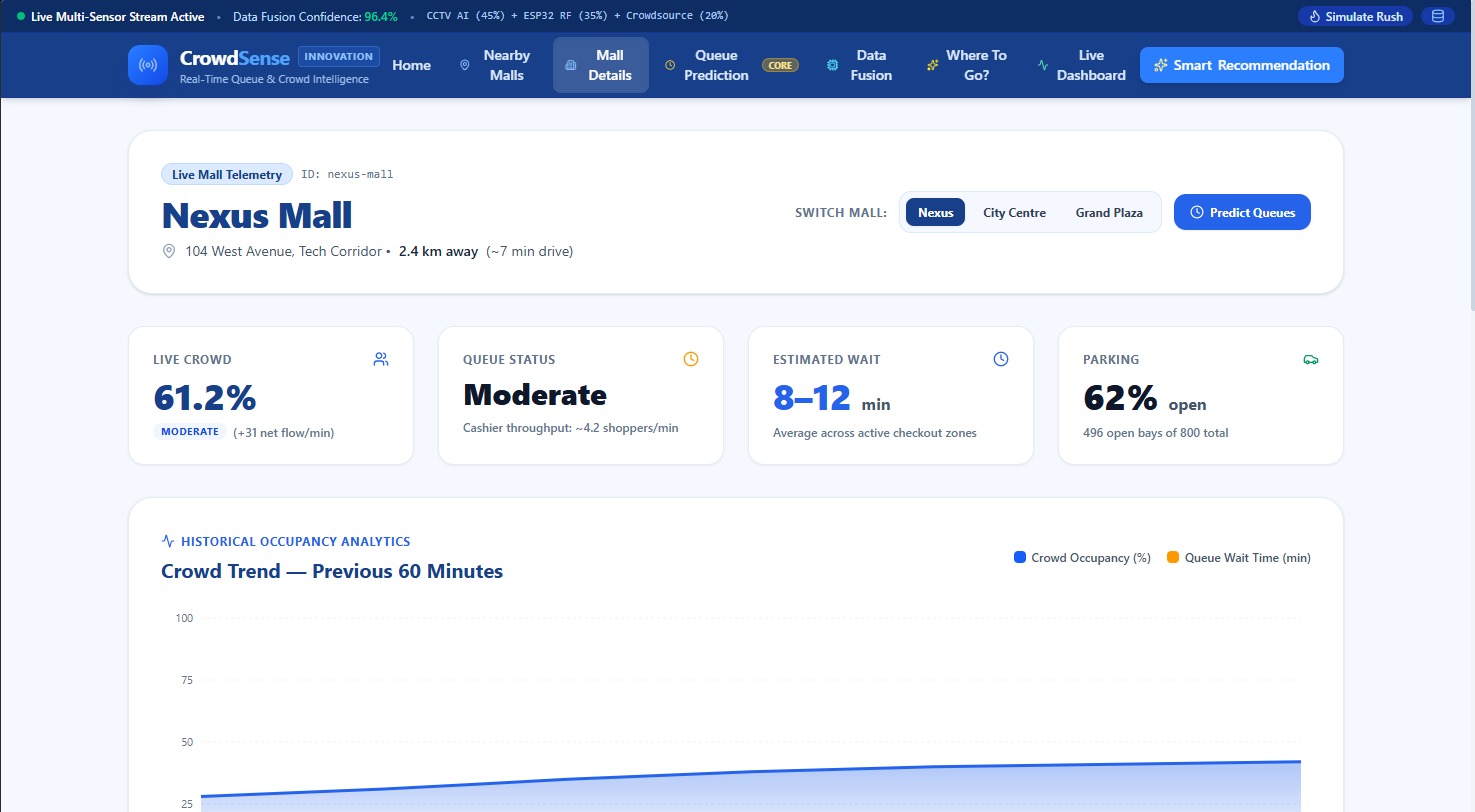
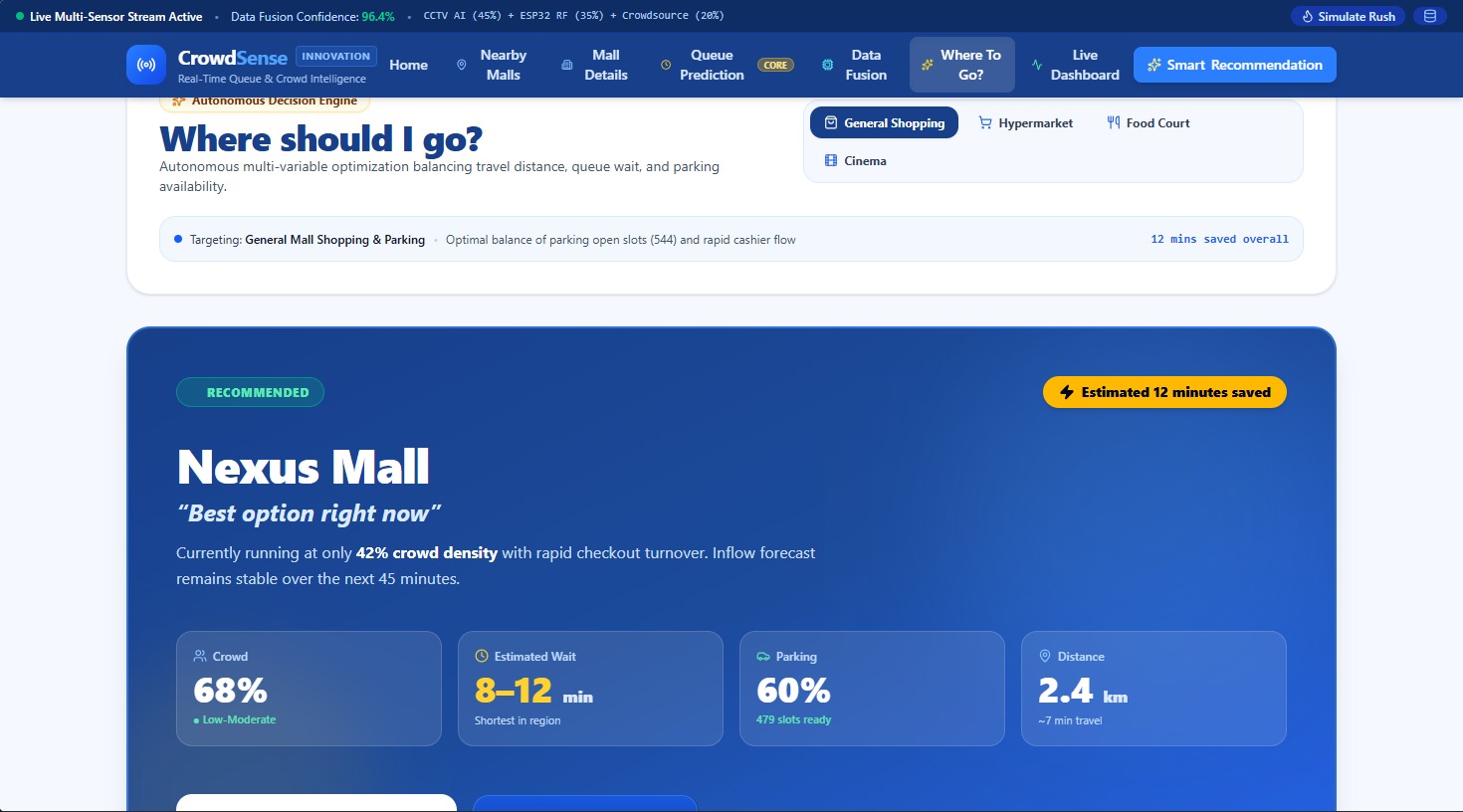
A web interface can present current crowd conditions, estimated waiting time, and recommendations to help users make better decisions.
How we built it
We designed the system as a multi-source sensing pipeline. CCTV provides visual information such as people and queue detection, while ESP32/RF/IoT sensing provides additional occupancy signals.
The data is combined through a data-fusion layer and stored using Firebase. A prediction layer processes the real-time data to estimate future crowd and queue conditions. The frontend is developed using React to visualize the results.
Challenges we ran into
The biggest challenge was deciding how to combine different sensing sources without making the system unnecessarily complex. CCTV and IoT/RF signals provide different types of information, so creating a meaningful common representation was an important challenge.
Another challenge was focusing the project on prediction rather than simply displaying current crowd levels.
Accomplishments that we're proud of
We are proud of turning the initial concept into a working prototype that demonstrates the complete system flow from sensing and data fusion to prediction and user-facing visualization.
We also refined the idea to focus on a measurable problem: predicting near-term crowd and queue buildup rather than attempting to solve every possible mall-management problem.
What we learned
We learned that building an effective AI/IoT solution is not only about collecting more data or adding more features. The most important part is identifying the right problem and converting raw sensor data into useful decisions.
We also learned about the challenges of combining computer vision with IoT/RF sensing and designing a system that can eventually operate with real-time data.
What's next for CrowdSense
Our next step is to validate the prediction model using real-world mall data and compare predicted queue/crowd conditions with actual observations.
We plan to improve multi-source data fusion, test the system across different mall environments, and improve short-term prediction accuracy before moving toward real-world deployment.
Built With
- ai
- computer-vision
- esp32
- firebase
- html
- iot
- javascript
- machine-learning
- python
- react
- rf-sensing

Log in or sign up for Devpost to join the conversation.