Inspiration
Large stadium events create fast-changing risks across gates, transit hubs, concourses, medical zones, and exits. During events like the FIFA World Cup, operations teams need to make fast decisions using crowd, weather, transit, security, and medical signals at the same time.
I built CrowdMind to explore how AI agents can help stadium operators understand crowd pressure before it becomes a crisis.
What it does
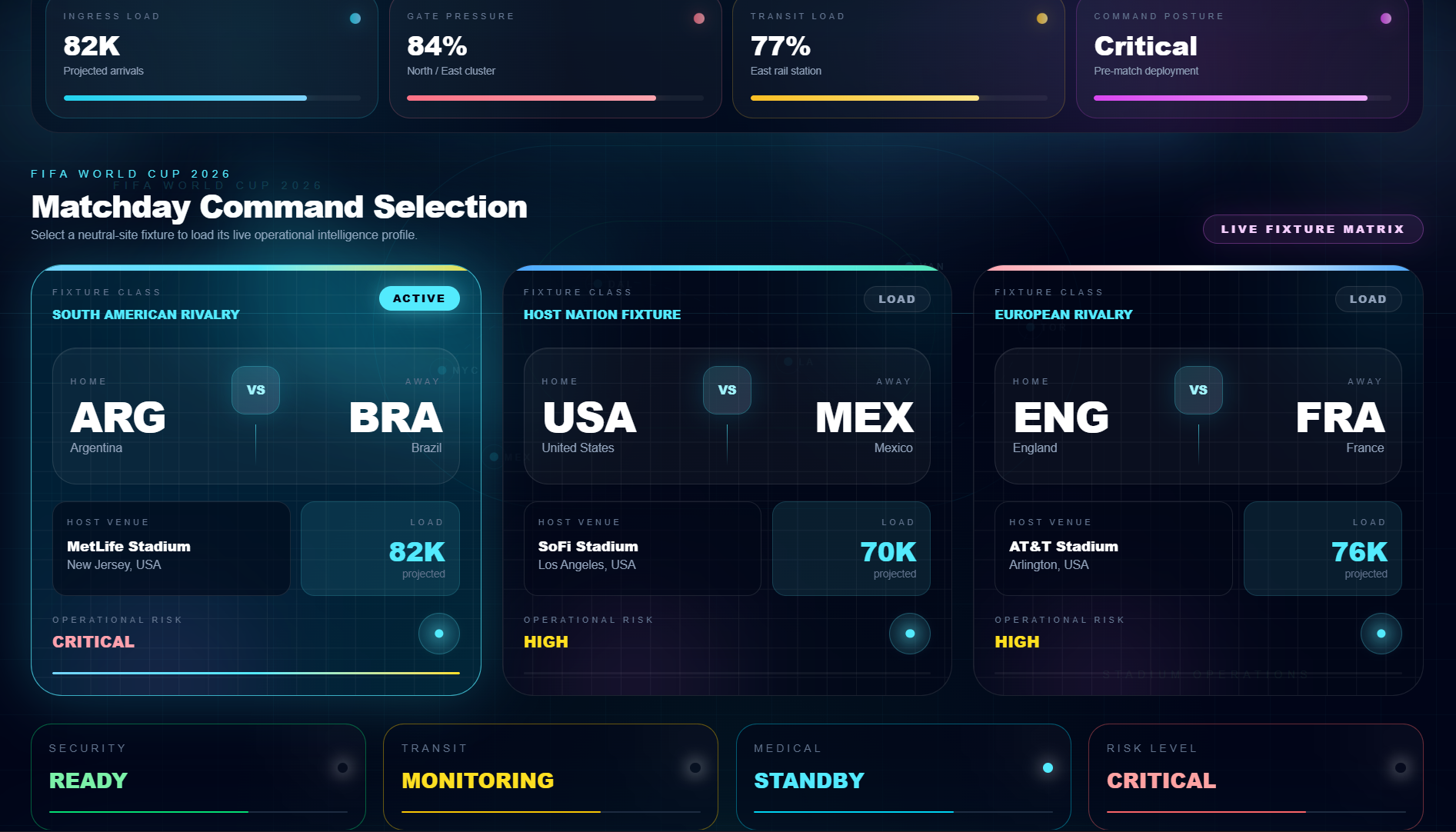
CrowdMind is an AI-powered stadium operations command center for FIFA World Cup 2026 venues.
It helps operators:
- Analyze matchday crowd risk
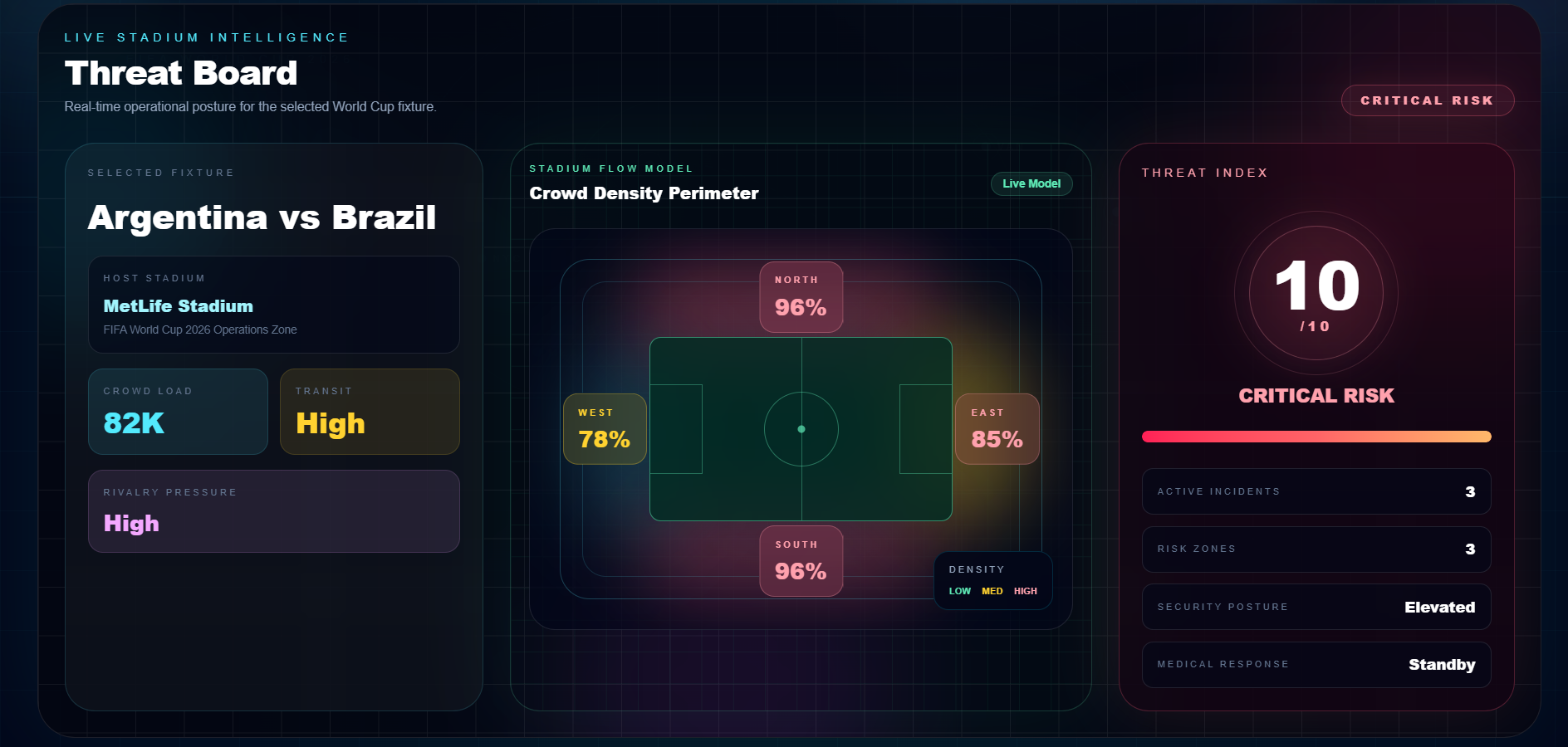
- Identify operational hotspots
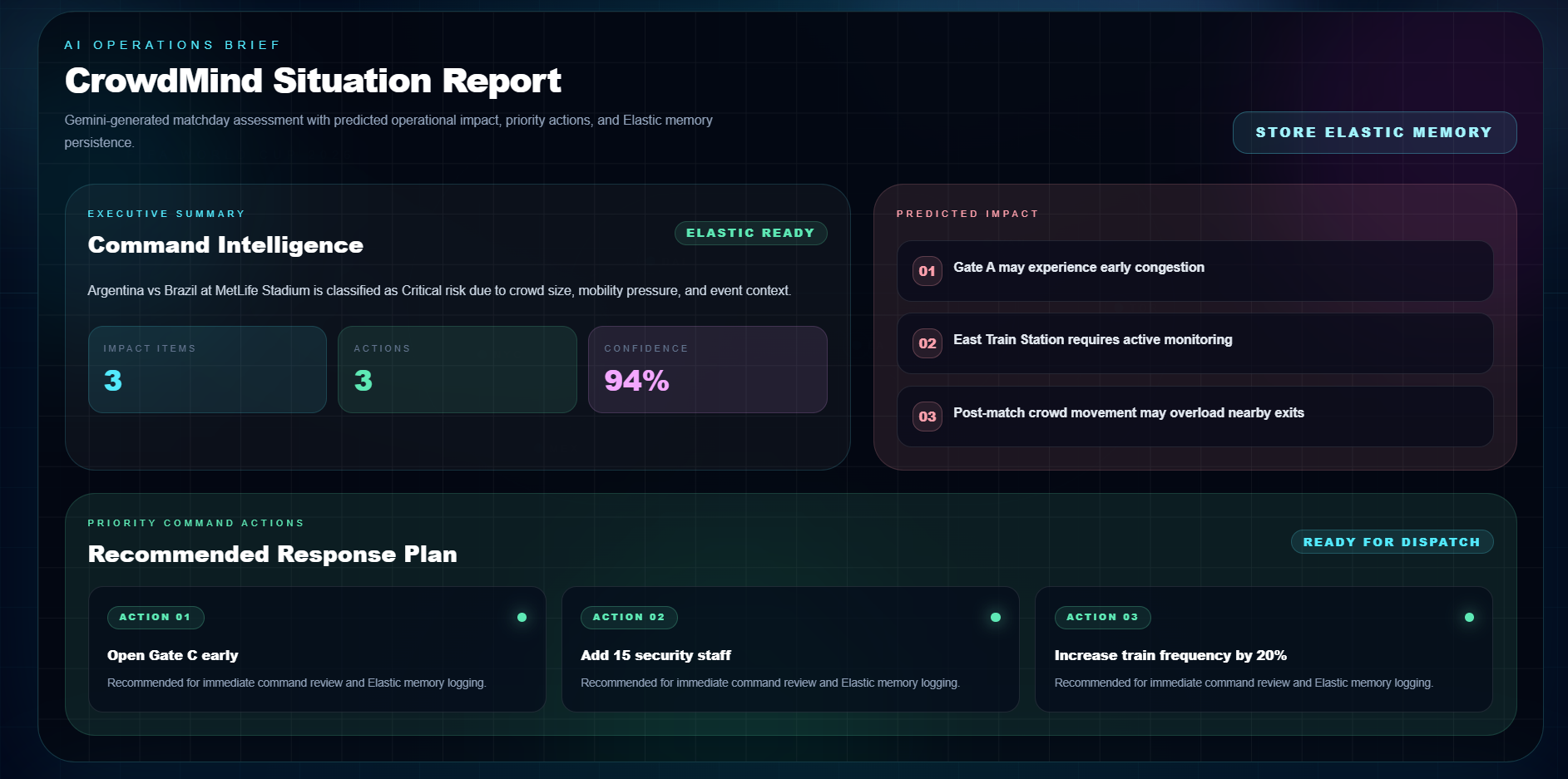
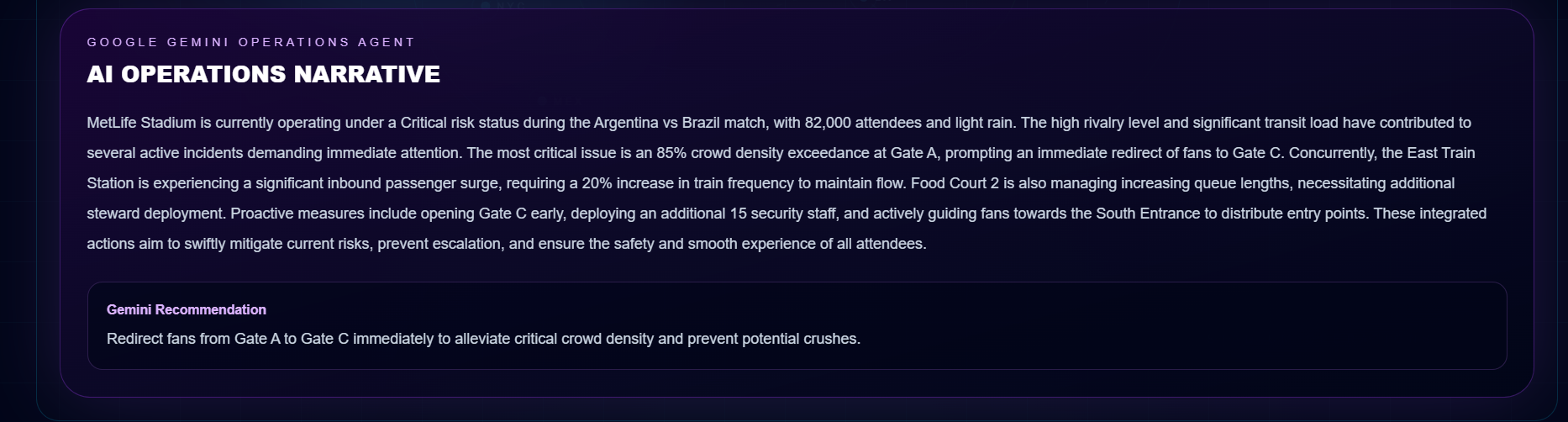
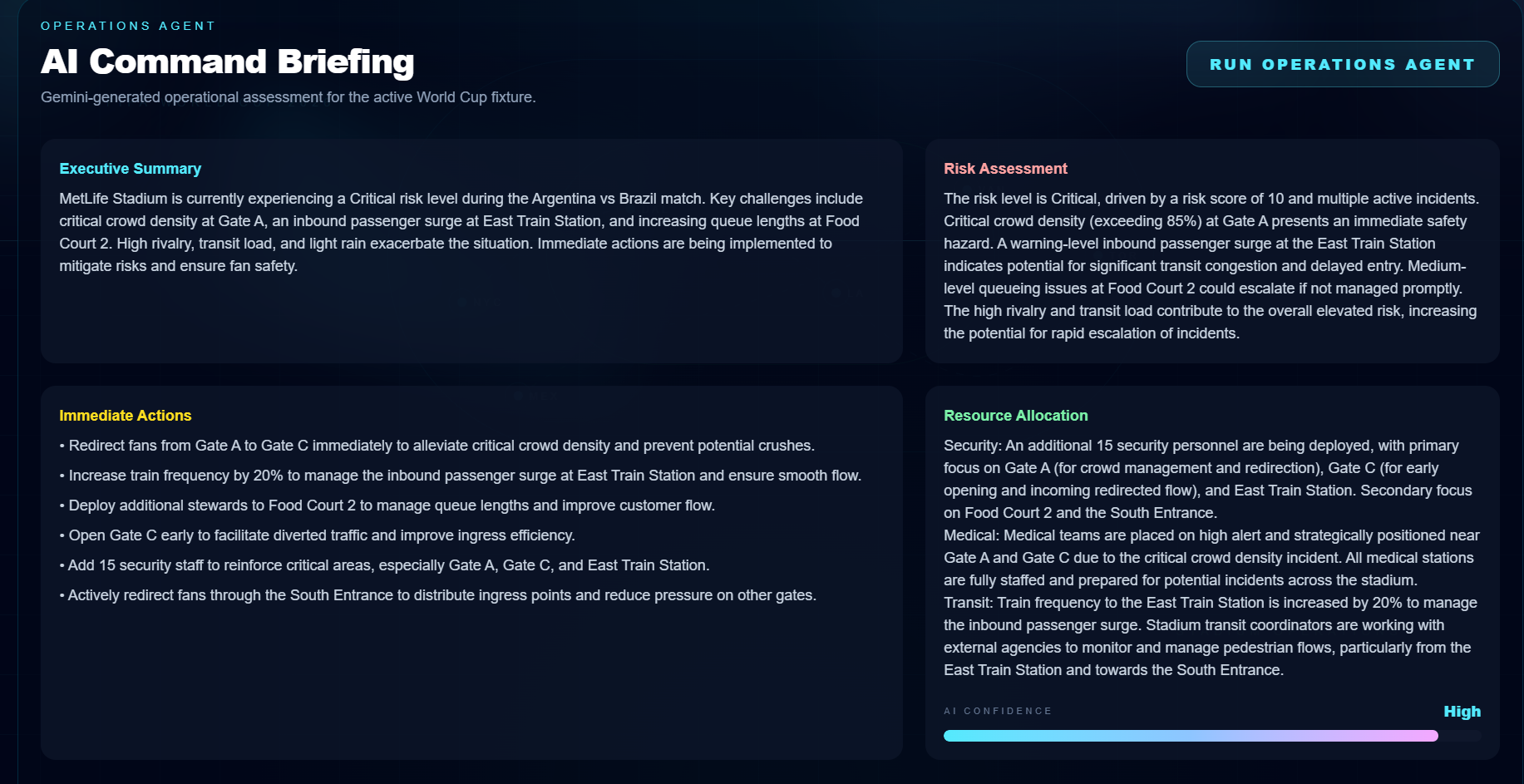
- Generate AI-powered situation reports
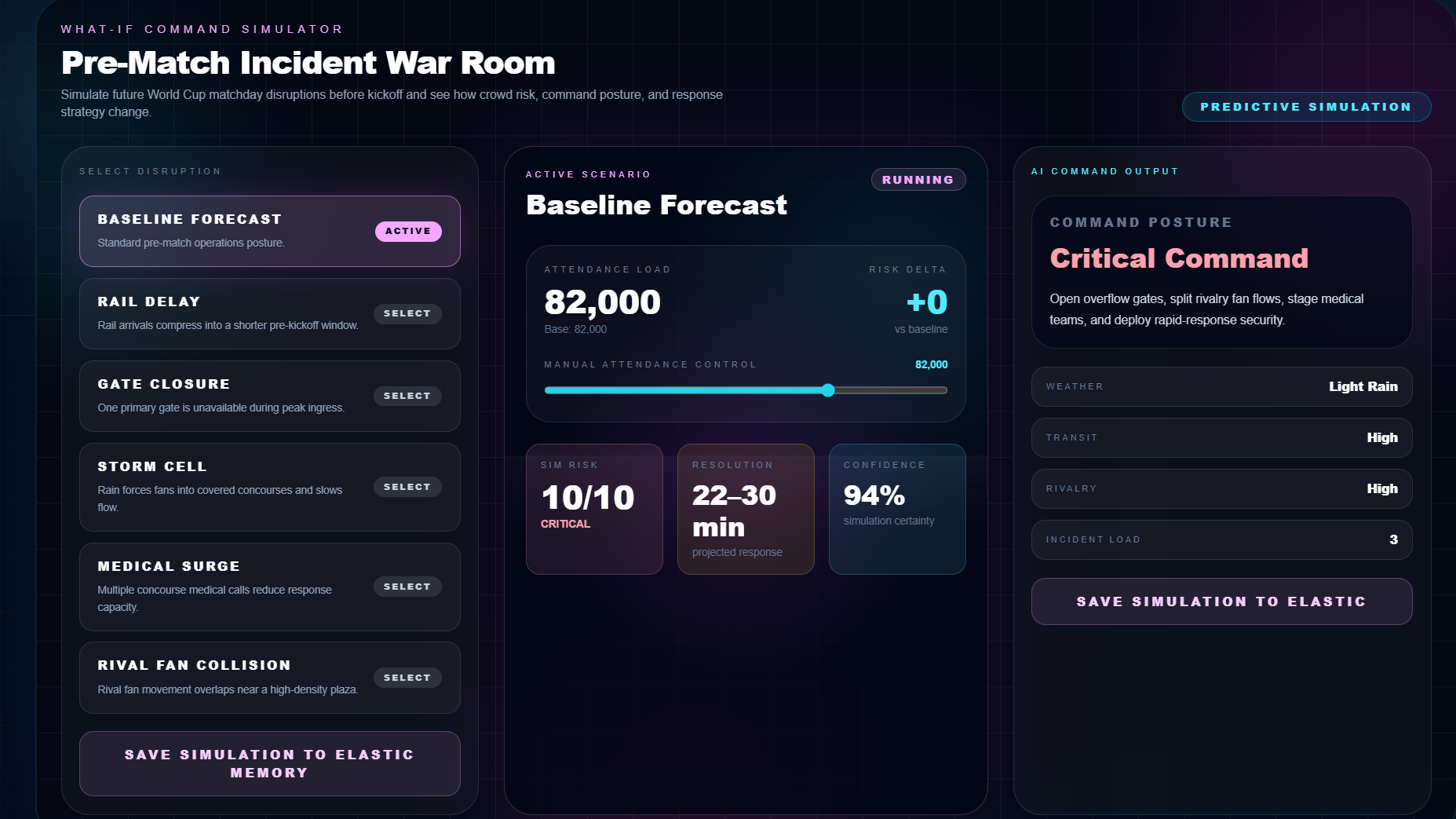
- Simulate disruptions before kickoff
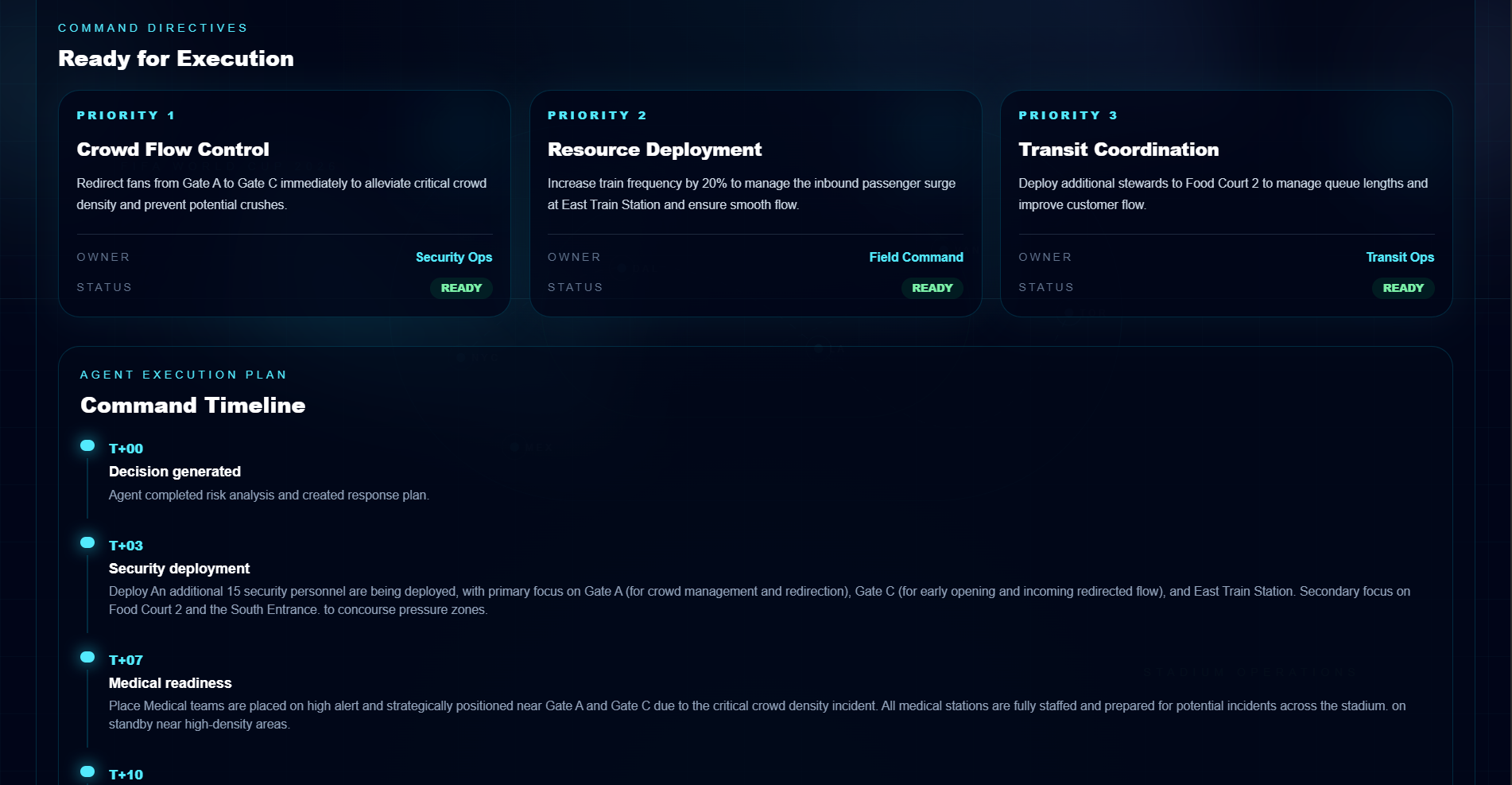
- Coordinate security, transit, medical, and command responses
- Save reports and simulations into Elastic Memory
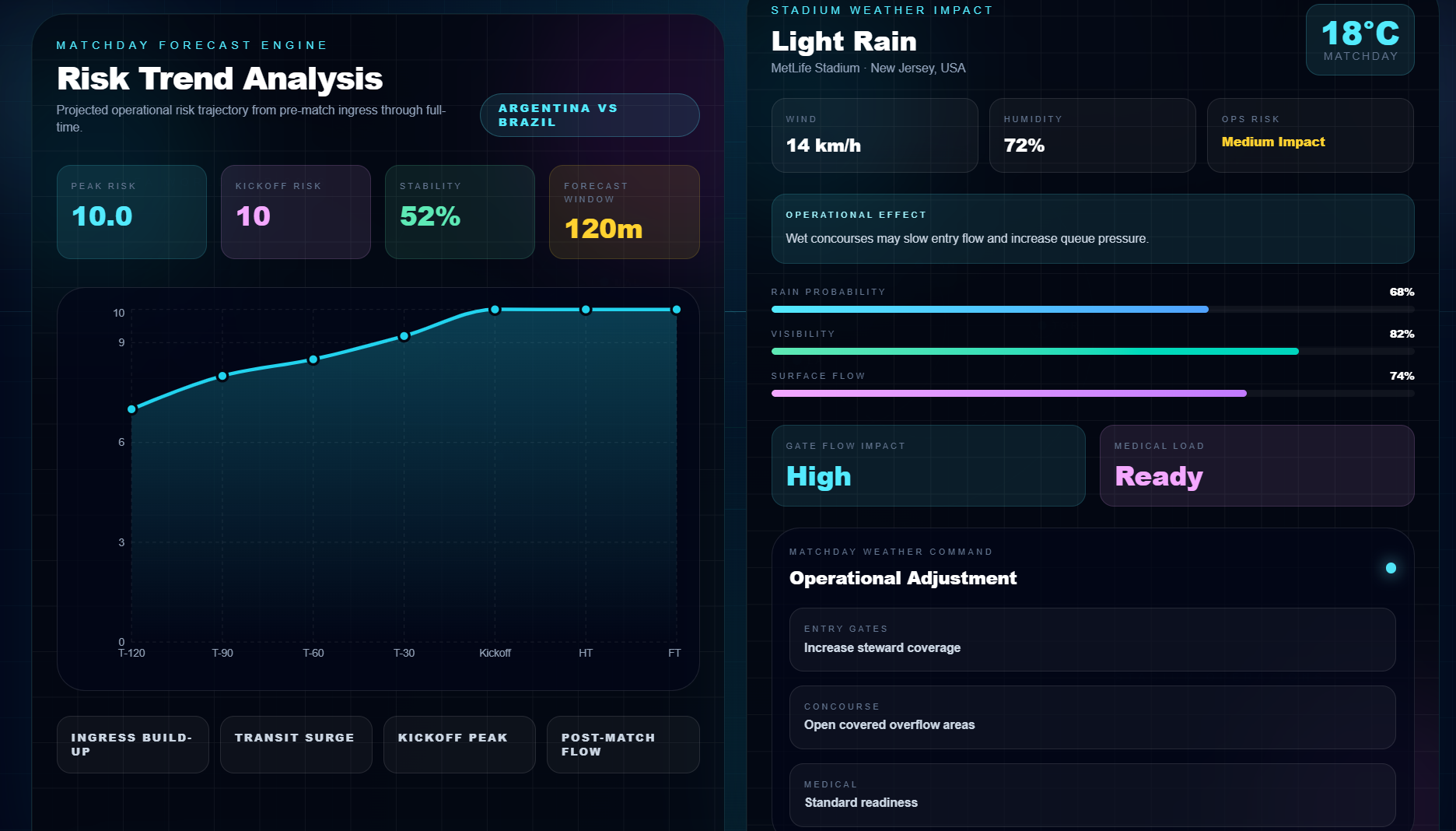
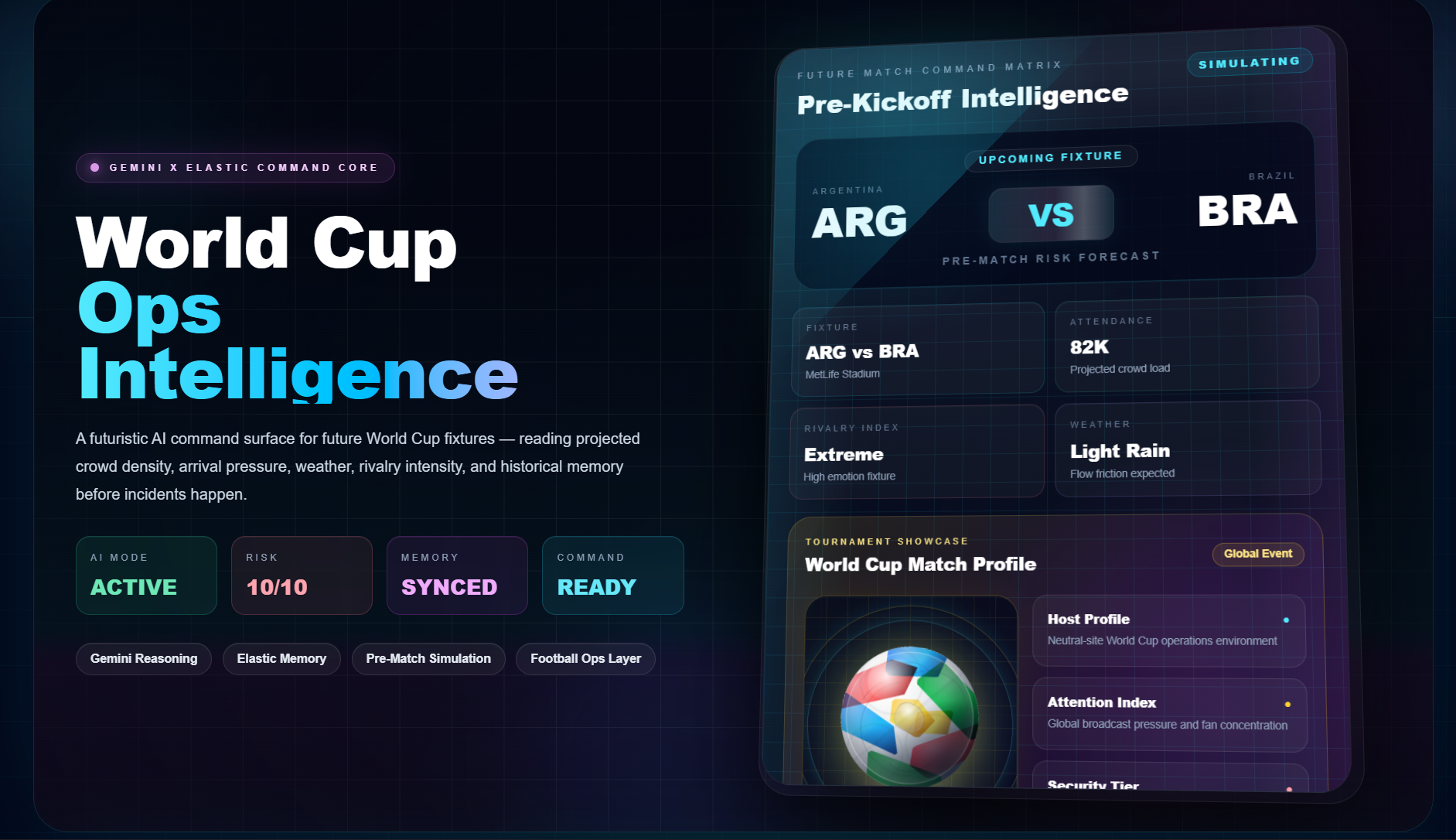
The dashboard uses match context such as attendance, rivalry intensity, weather, transit load, and historical incidents to calculate a risk score and recommend command actions.
How I built it
I built CrowdMind using:
- Next.js, React, TypeScript, and Tailwind CSS for the dashboard
- Google Gemini for AI-powered operational reasoning
- Google ADK / Agent Builder for the agent workflow structure
- Elastic Cloud as the operational memory layer
- Elastic MCP server configuration for agent-accessible memory
- Weather API as an environmental risk signal
- Vercel for deployment
The /api/reports route stores situation reports and scenario simulations in Elastic. This allows CrowdMind to preserve operational intelligence instead of acting like a static frontend demo.
Key features
AI Operations Command Center
CrowdMind gives operators a centralized view of stadium risk, pressure points, AI summaries, and recommended actions.
Risk Intelligence Engine
The risk engine combines attendance, weather, rivalry level, transit load, and incident history to generate a command-level risk posture.
Gemini-powered reasoning
Gemini generates operational summaries and response recommendations, helping teams understand why a match is high-risk and what actions should be taken.
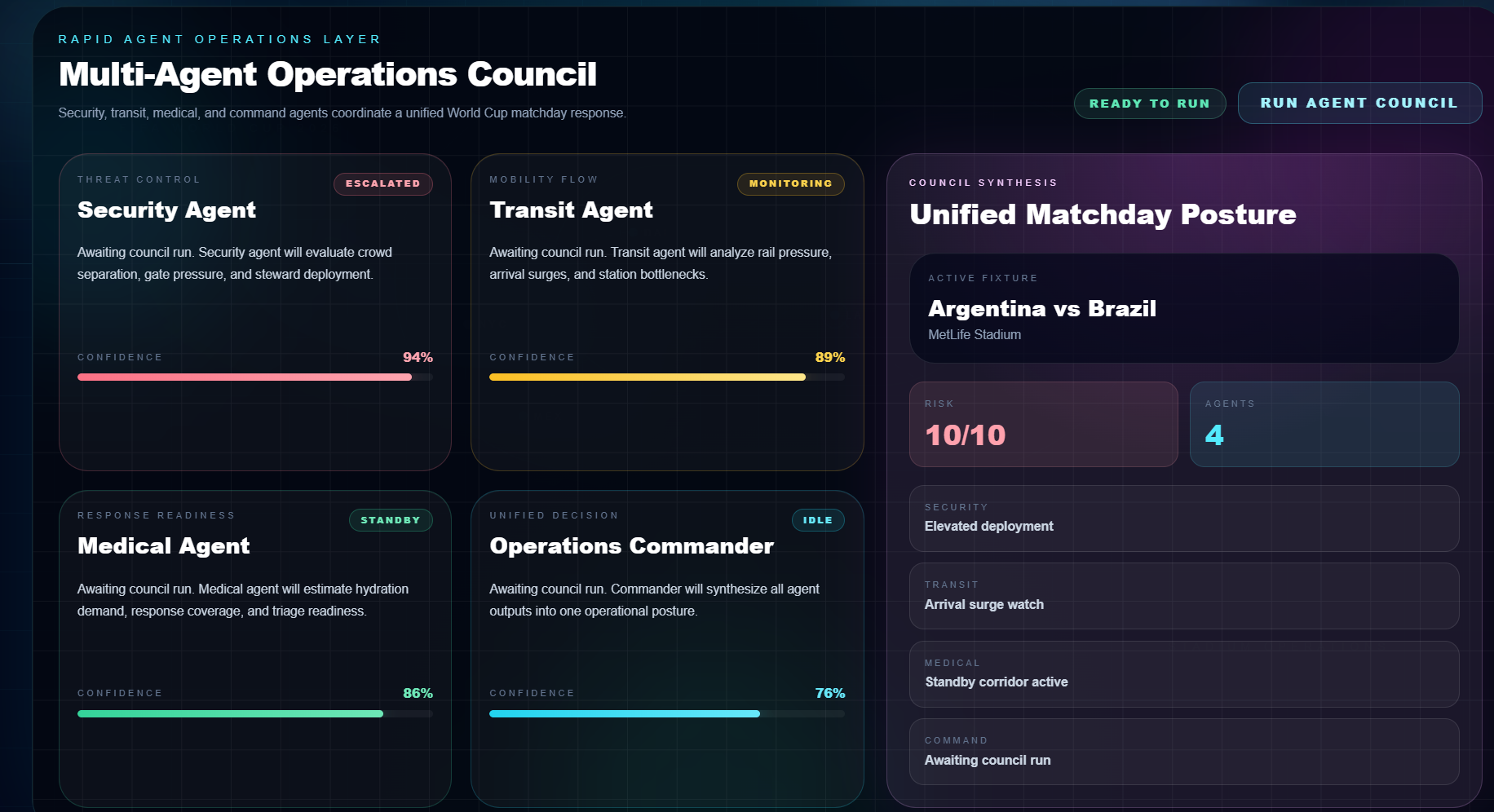
Multi-Agent Operations Council
CrowdMind includes specialized operational agents for:
- Security
- Transit
- Medical readiness
- Command coordination
These agents work together to produce coordinated response plans.
Scenario Simulator
Operators can test disruptions such as transit delays, gate closures, storms, medical surges, or fan collisions. CrowdMind recalculates risk, response time, confidence, and command posture.
Elastic Operational Memory
Reports and simulations are saved into Elastic as searchable operational memory. A saved record includes:
- Match and stadium
- Risk level
- Situation summary
- Predicted impact
- Priority actions
- Report type
- Timestamp
- Elastic storage metadata
Elastic MCP
CrowdMind includes an Elastic MCP server configuration so MCP-compatible agents can access the same operational memory layer.
Challenges I faced
The biggest challenge was making the project production-ready under hackathon pressure. I had to debug backend persistence, migrate the memory layer to Elastic, fix production build issues, clean up old unused code, configure environment variables, and make sure the deployed Vercel app worked end-to-end.
Another challenge was balancing a polished World Cup-style interface with real backend functionality. I wanted CrowdMind to look impressive, but also prove that it could save and retrieve real operational records.
Accomplishments
I am proud that CrowdMind is not just a UI mockup. It has:
- A deployed Next.js dashboard
- Gemini-powered reasoning
- A working scenario simulator
- Elastic-backed operational memory
- An Elastic MCP server configuration
- Weather-aware risk scoring
- A public
/api/reportsproof endpoint - A polished World Cup command-center interface
What I learned
I learned how important it is to connect AI reasoning with persistent memory. A dashboard becomes much more useful when reports, simulations, and decisions can be stored and retrieved later.
I also learned how to debug production deployment issues, manage environment variables, integrate Elastic, and structure an AI-agent project for a real hackathon submission.
What's next
CrowdMind could evolve into a full-scale event intelligence platform for:
- FIFA World Cup venues
- Olympic stadiums
- Concerts and festivals
- Airports
- Public safety operations
Future improvements could include live sensor data, camera-based crowd density detection, transit API integration, emergency dispatch workflows, and deeper Elastic search over historical incidents.
Built with
Gemini + Elastic + Elastic MCP + Next.js + Weather Intelligence
CrowdMind is designed to help event teams make faster, safer, and more coordinated decisions during high-pressure stadium operations.
Built With
- and-a-weather-api.-the-frontend-is-a-command-center-style-dashboard
- concourses
- elastic
- elastic-cloud
- elastic-mcp
- elasticsearch
- elasticsearch-javascript-client
- gemini
- google-adk
- medical-zones
- next.js
- react
- report-storage
- simulation-saving
- tailwind
- tailwind-css
- transit-hubs
- typescript
- while-next.js-api-routes-handle-ai-reasoning

Log in or sign up for Devpost to join the conversation.