Inspiration
It all started with a simple frustration.
A few months ago, I planned to watch a movie with my friends. We reached the theatre only to find an overwhelming crowd. The ticket counters were packed, the food court had long queues, and even finding a place to stand felt impossible. We ended up wasting a lot of time waiting instead of enjoying the evening.
Later, I realized this wasn't an isolated experience.
Whether it was a metro station during rush hour, a shopping mall on weekends, a popular café, a bus stand, or even a public park during holidays, I often found myself thinking the same thing:
"I wish I had known how crowded this place would be before coming here."
That simple thought became the idea behind CrowdLiner.
Instead of reacting to crowds after reaching a destination, why can't we predict them beforehand and help people plan smarter?
What it does
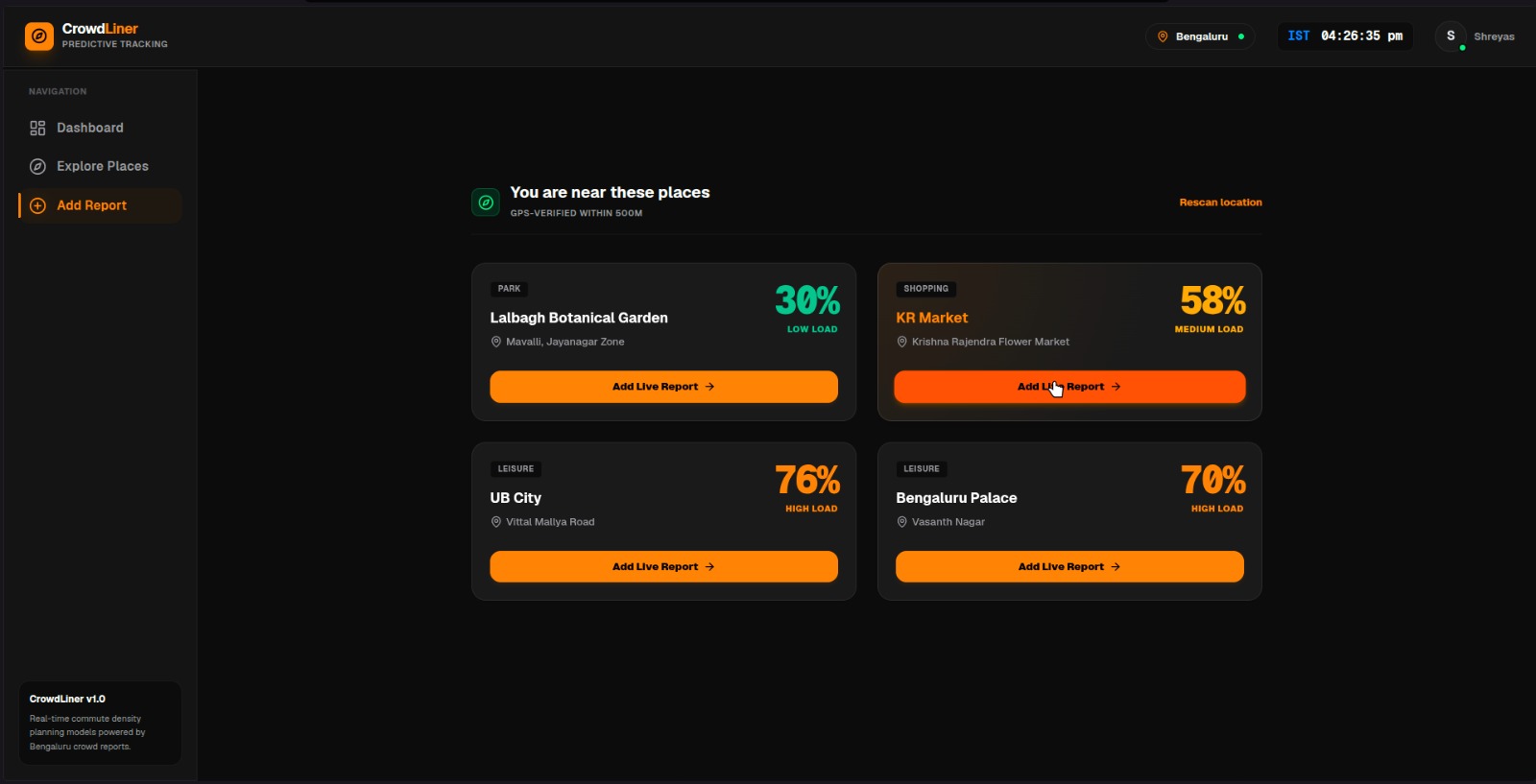
CrowdLiner is a smart crowd prediction and reporting platform designed to help people understand how busy a location is before visiting.
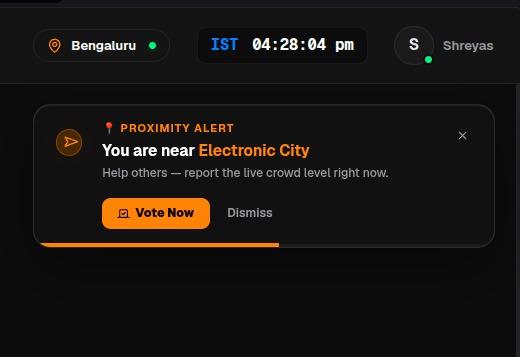
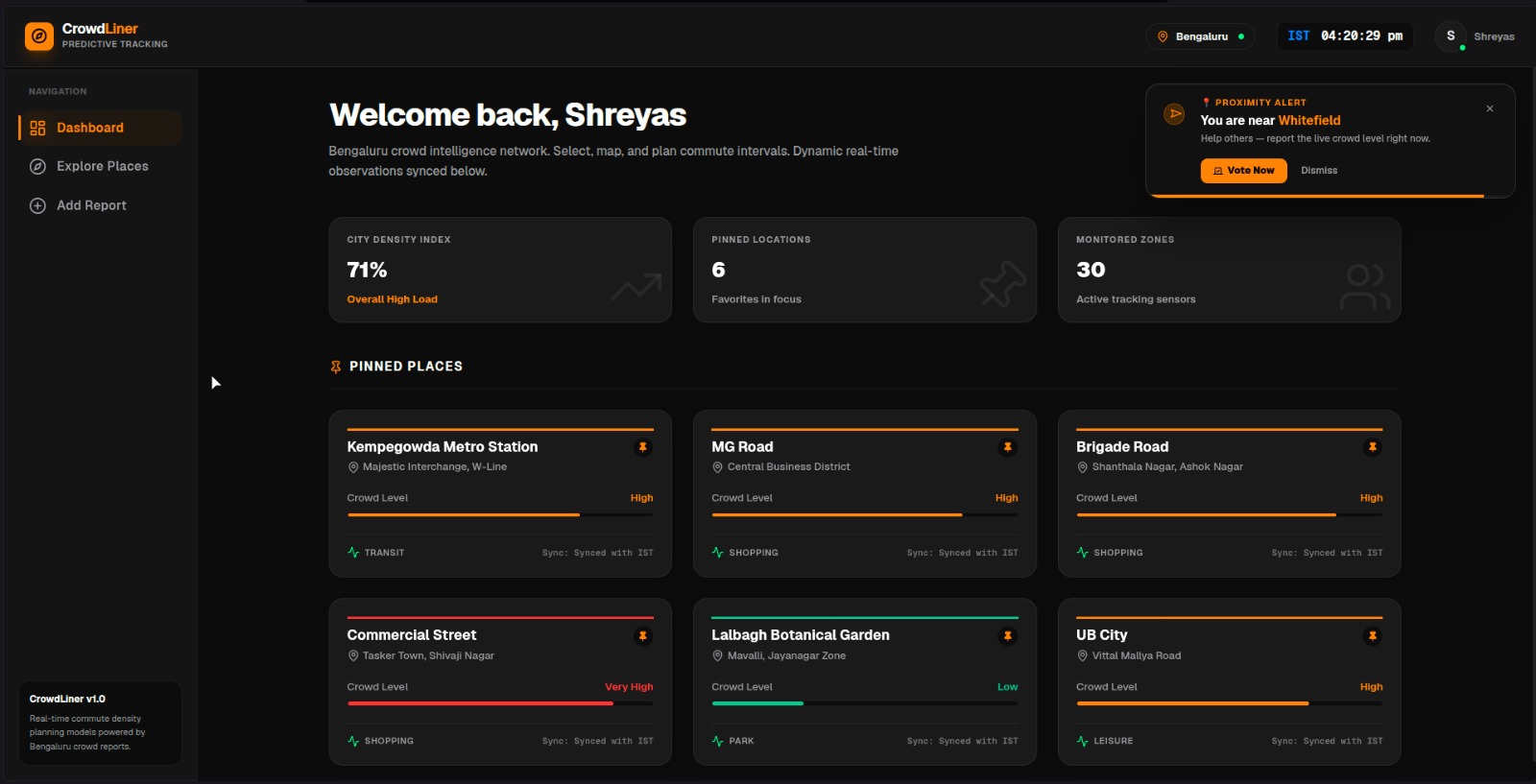
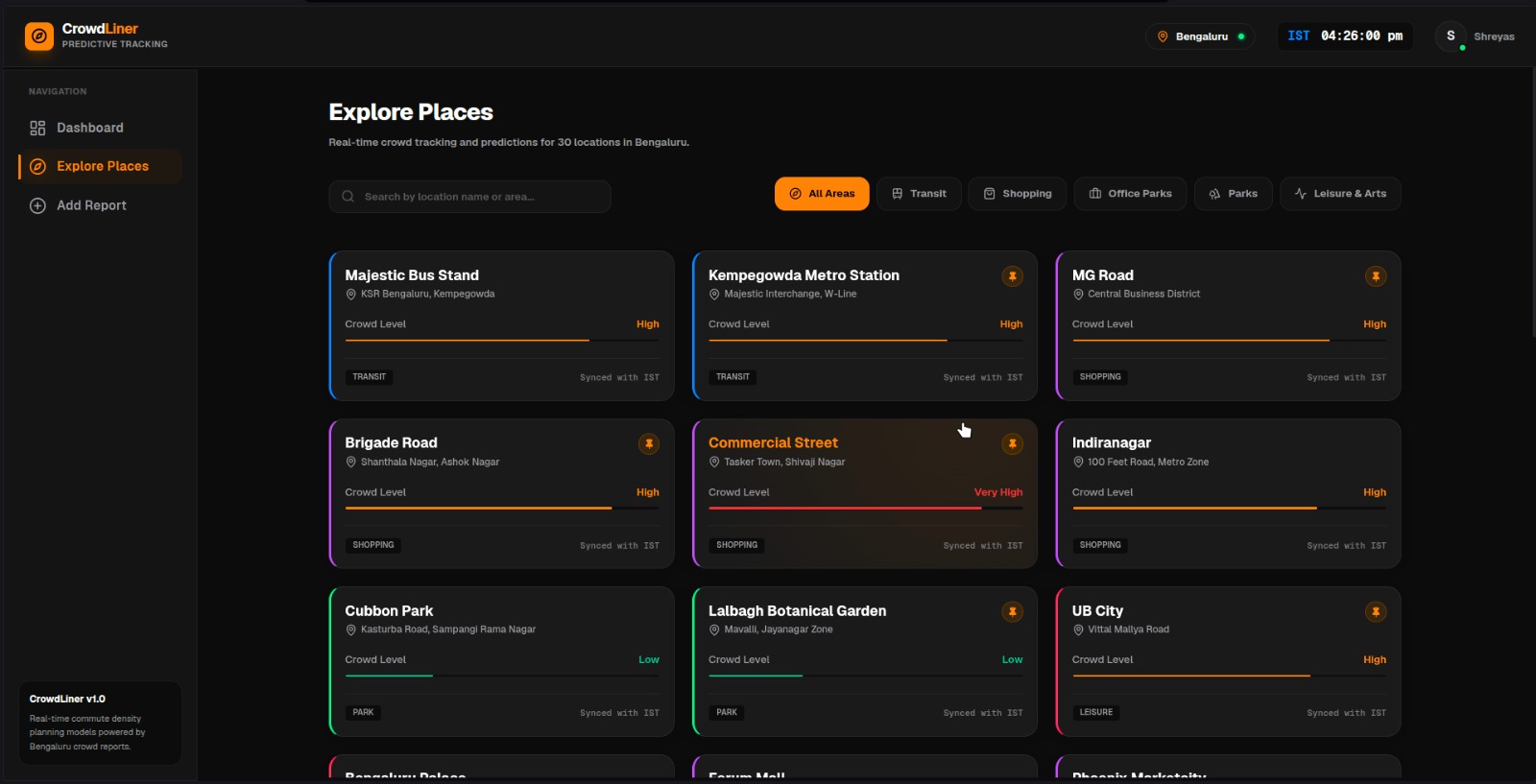
The application allows users to explore popular places across Bengaluru and instantly check current crowd levels through a clean visual interface.
Users can:
- Browse popular locations
- Pin frequently visited places to their personal dashboard
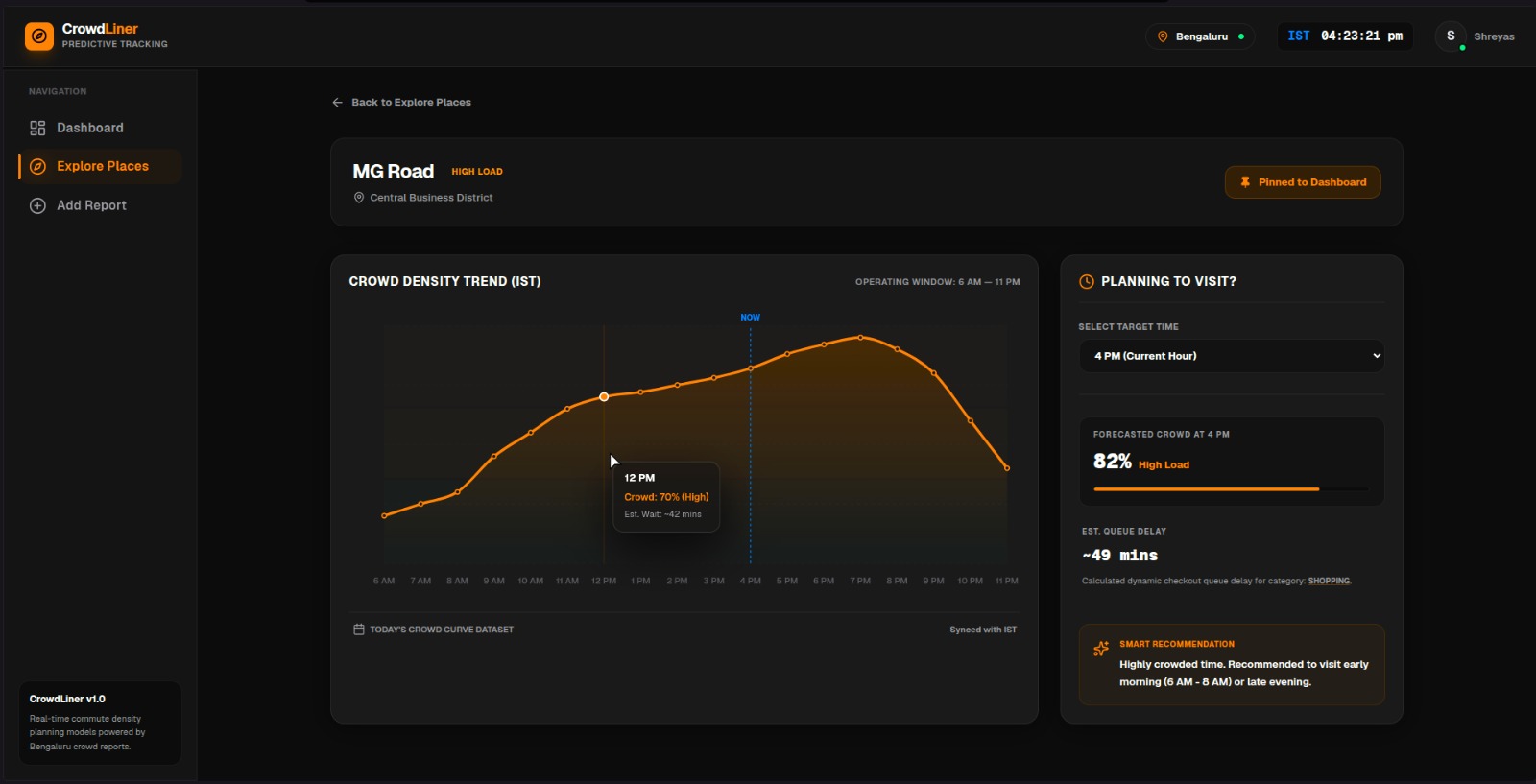
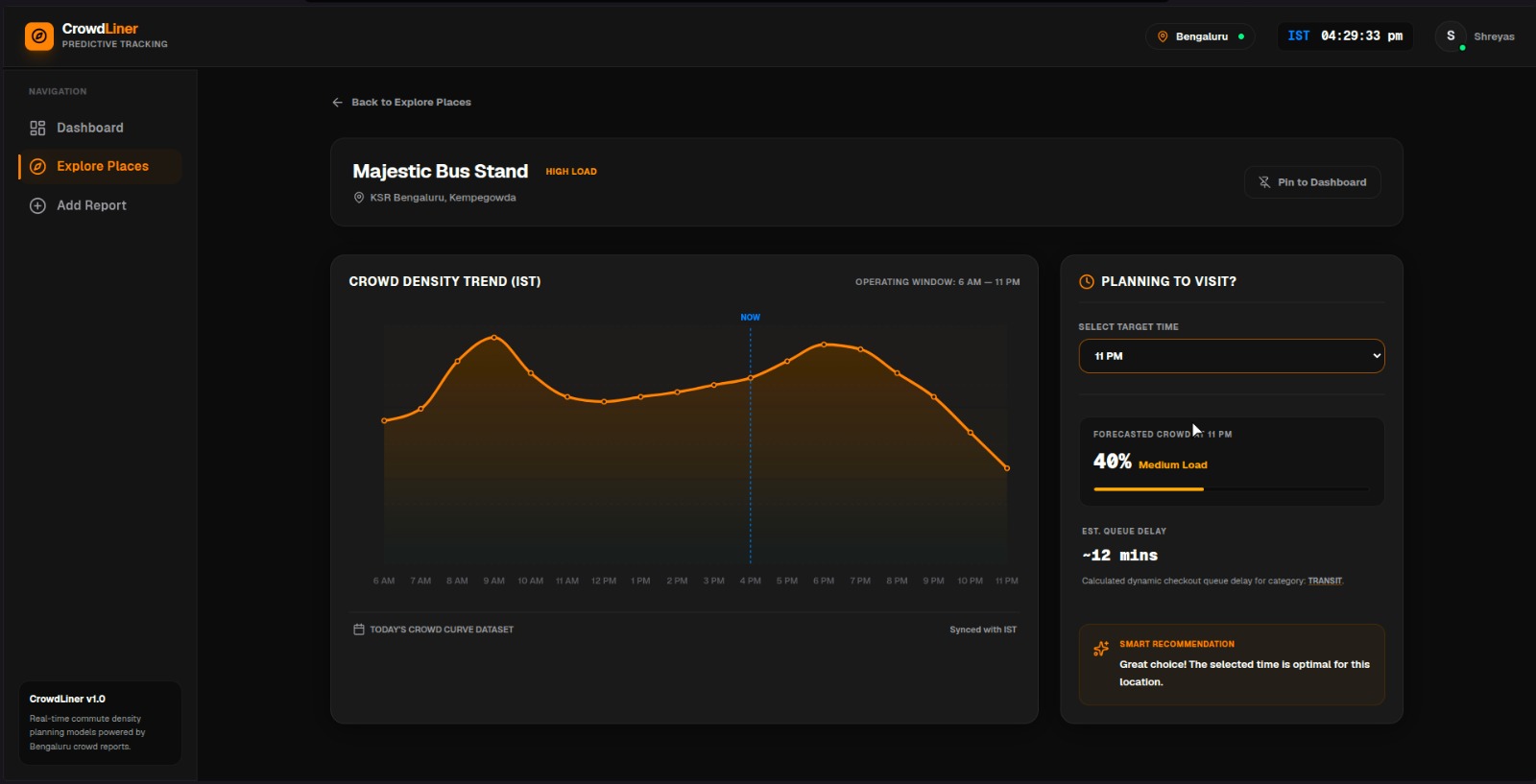
- View crowd trends throughout the day using interactive graphs
- Check predicted crowd levels for a specific time before planning a visit
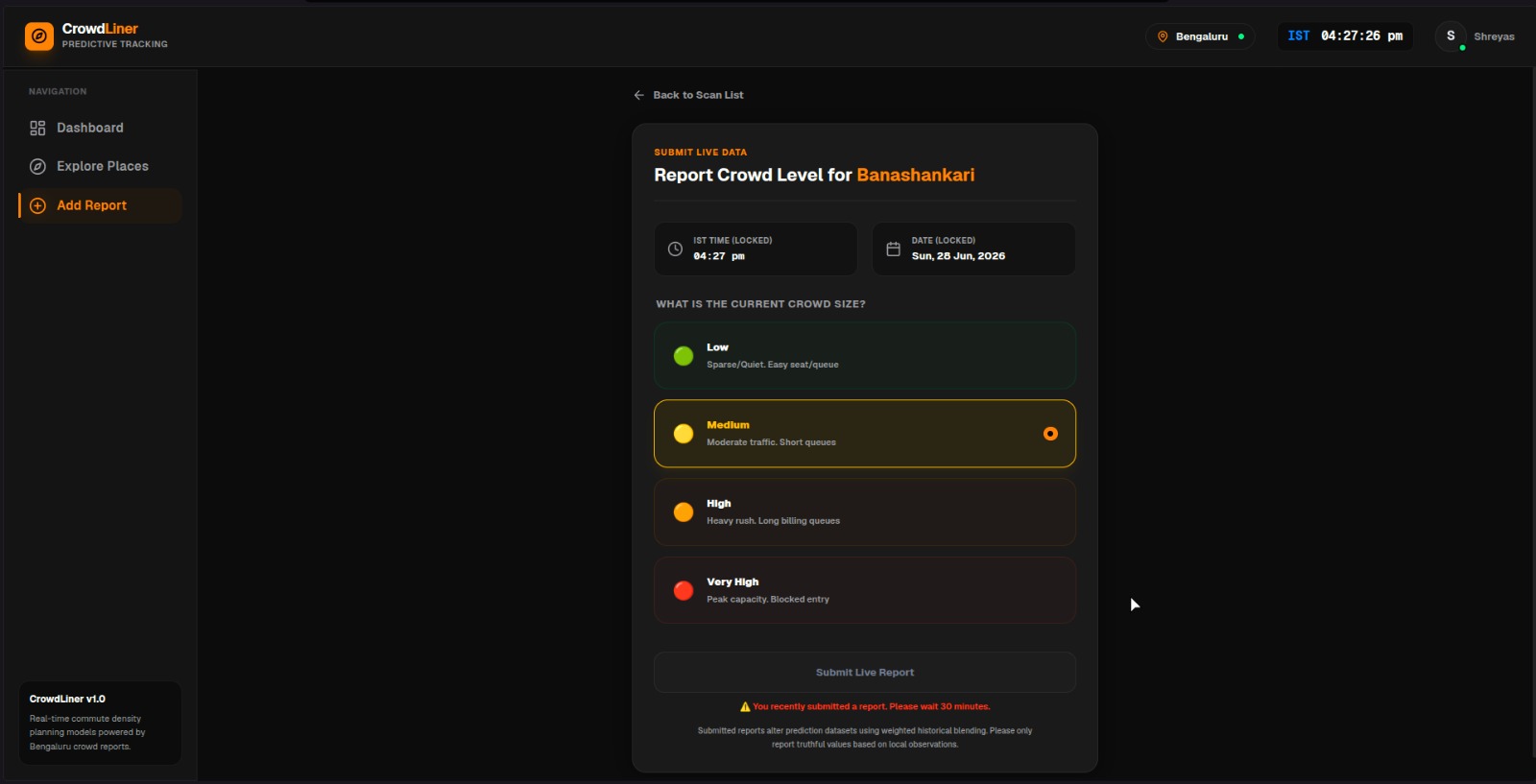
- Submit live crowd reports to improve the accuracy of crowd estimates
- Receive a truth score showing how closely their report matches historical crowd patterns
Instead of displaying complicated statistics, CrowdLiner presents information using simple visual indicators, making it easy for anyone to understand crowd conditions within seconds.
How we built it
The project was built as a modern web application with a strong focus on user experience.
The interface follows a premium dark theme with orange highlights, smooth animations, responsive layouts, interactive charts, and real-time updates without requiring page refreshes.
Historical crowd patterns are generated for every location, allowing the system to provide realistic crowd predictions throughout the day. When a user submits a report, the application compares it with the expected crowd level, calculates a confidence score, and immediately updates the displayed crowd information across the application.
The entire experience was designed to feel fast, intuitive, and visually polished.
Challenges we ran into
One of the biggest challenges wasn't building the interface—it was designing a system that people could actually trust.
We had to think about questions like:
- What motivates users to submit crowd reports?
- How can fake or misleading reports be reduced?
- How should historical predictions and live community reports be combined?
- How can the application provide meaningful predictions even with limited data?
Balancing simplicity for a hackathon while still creating a realistic user experience required careful planning.
What we learned
This project taught us that solving real-world problems isn't only about writing code.
A successful product also requires thoughtful UX, intuitive design, reliable data visualization, and an understanding of how users interact with information.
We also learned how real-time interfaces, state management, prediction logic, and community-driven data can work together to create an experience that feels practical and useful.
What's next for CrowdLiner
This hackathon version is only the beginning.
Our vision is to make CrowdLiner a real-time city companion that helps people make smarter travel decisions.
Future improvements include:
- Live GPS-based crowd detection
- AI-powered prediction models using historical and real-time data
- Integration with public transport and event schedules
- Heatmap visualization across the city
- Business dashboards for malls, restaurants, and public venues
- Smart notifications suggesting the best time to visit a location
Ultimately, our goal is simple:
Help people spend less time waiting in crowds and more time enjoying where they want to be.


Log in or sign up for Devpost to join the conversation.