-
-
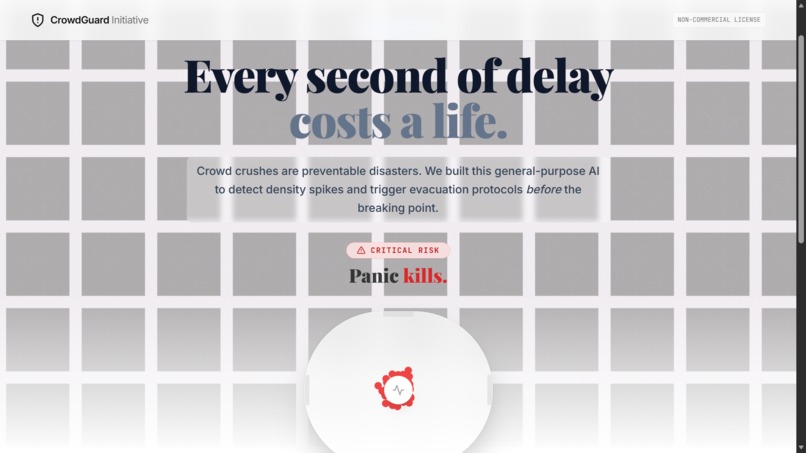
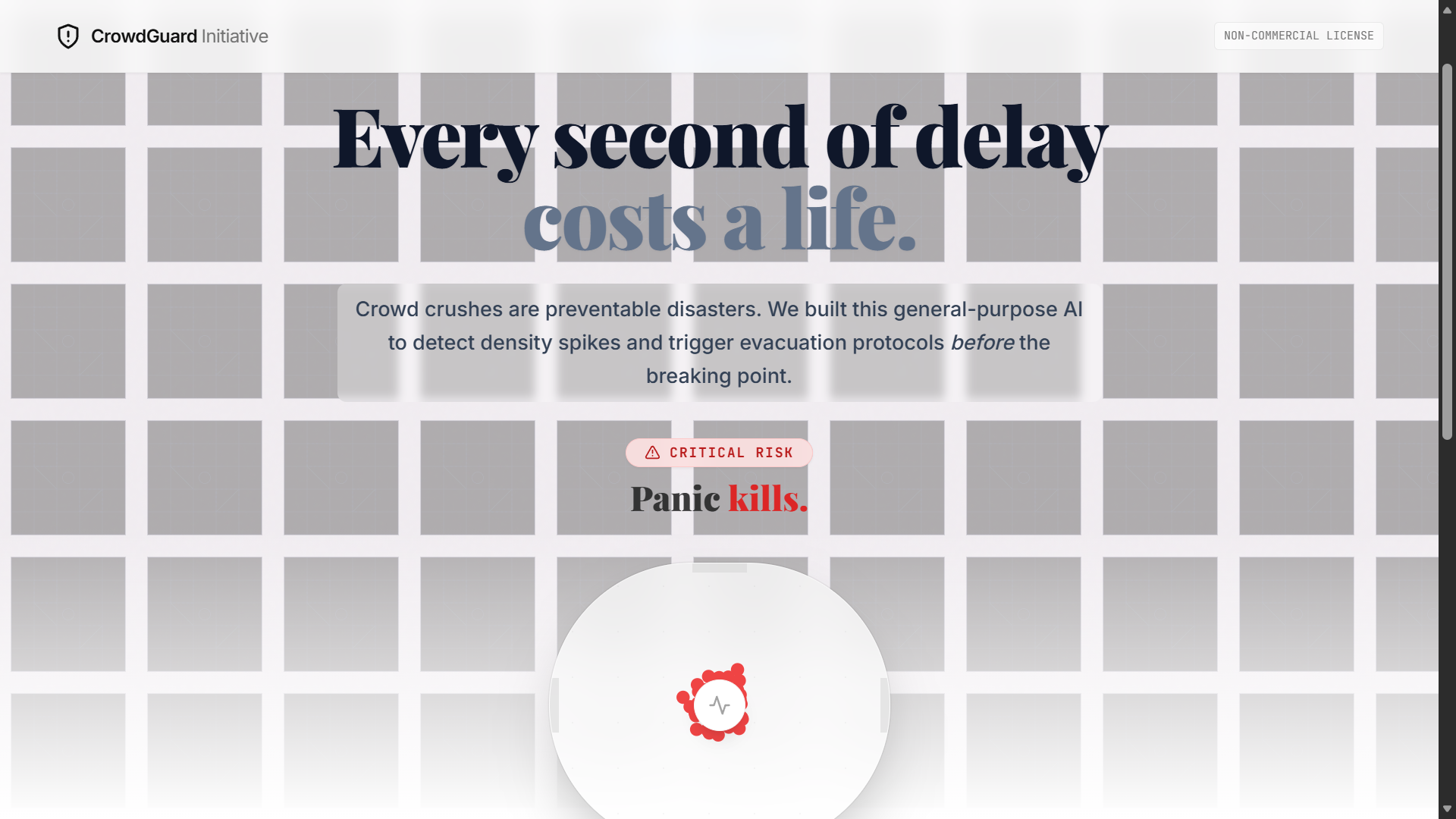
Landing Page
-
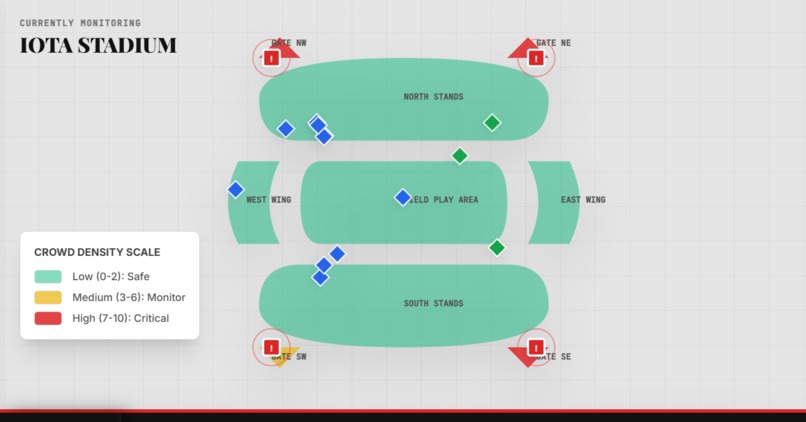
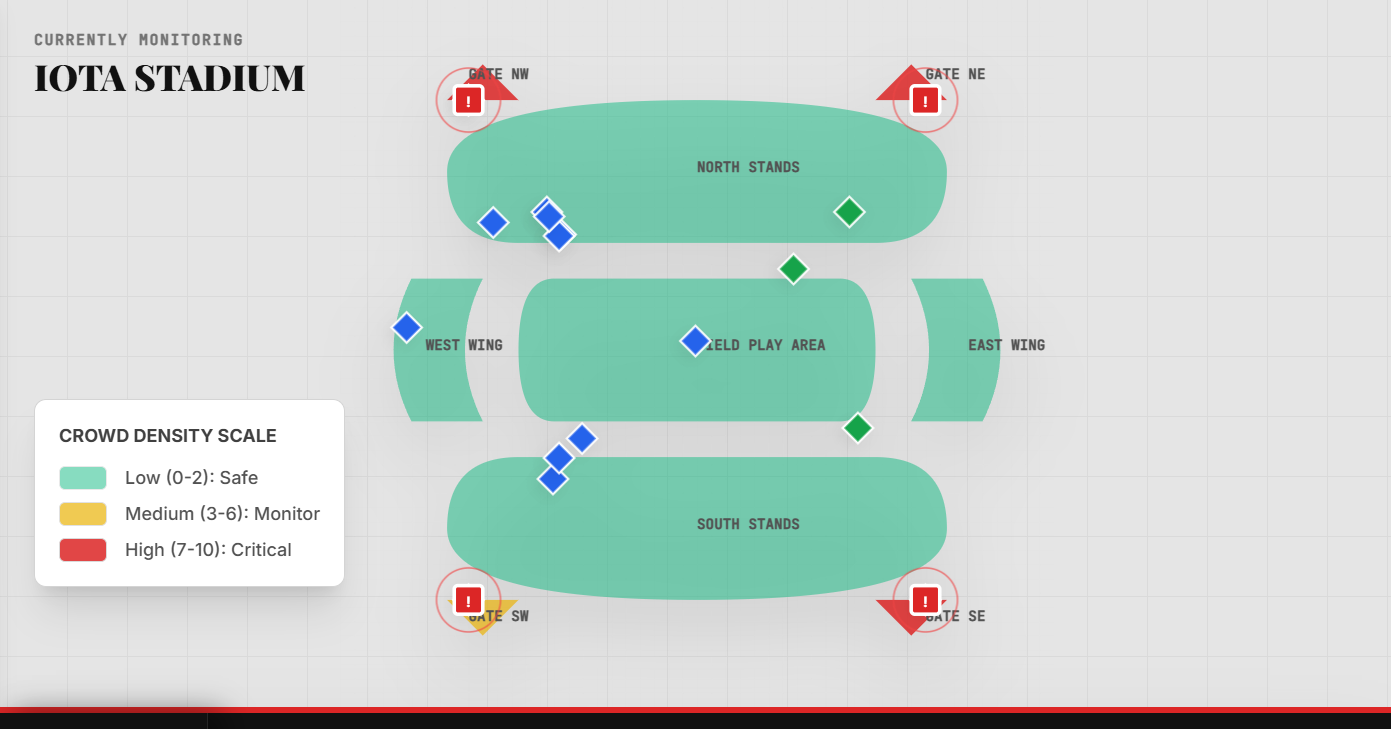
Heatmap
-

Overall Report (AI automatically generates)
-
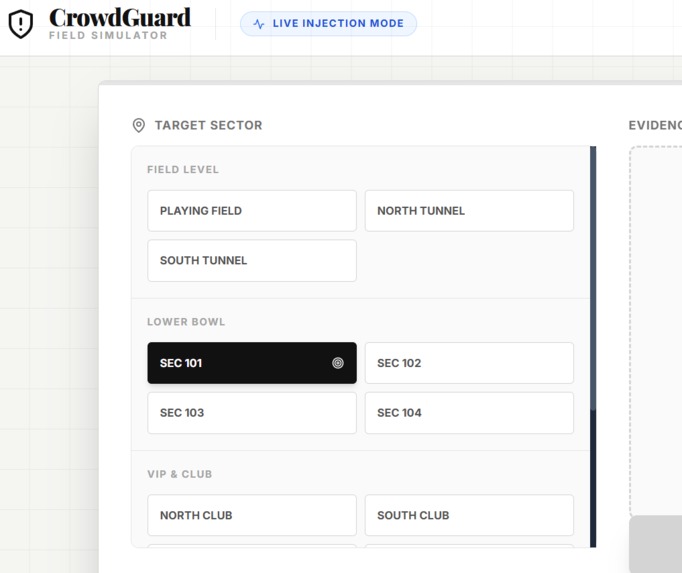
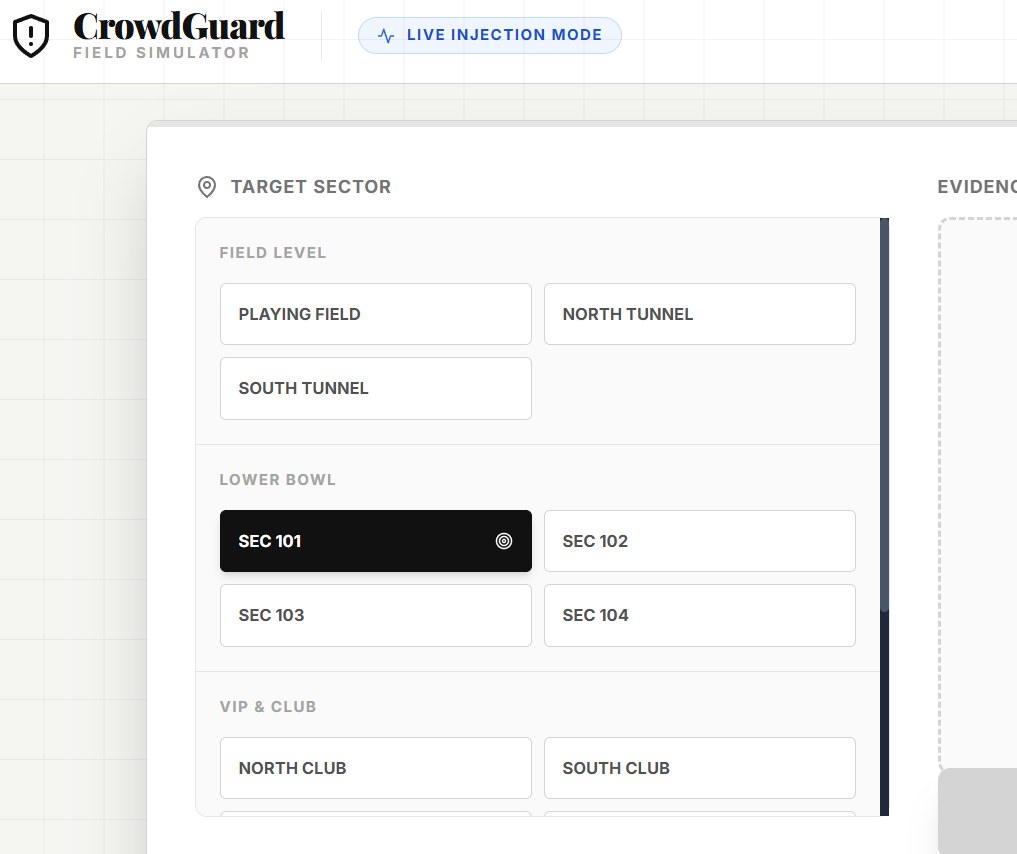
Data Ingestion
-
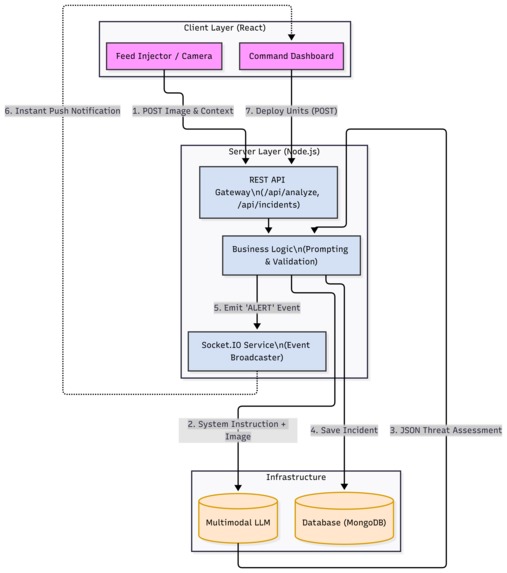
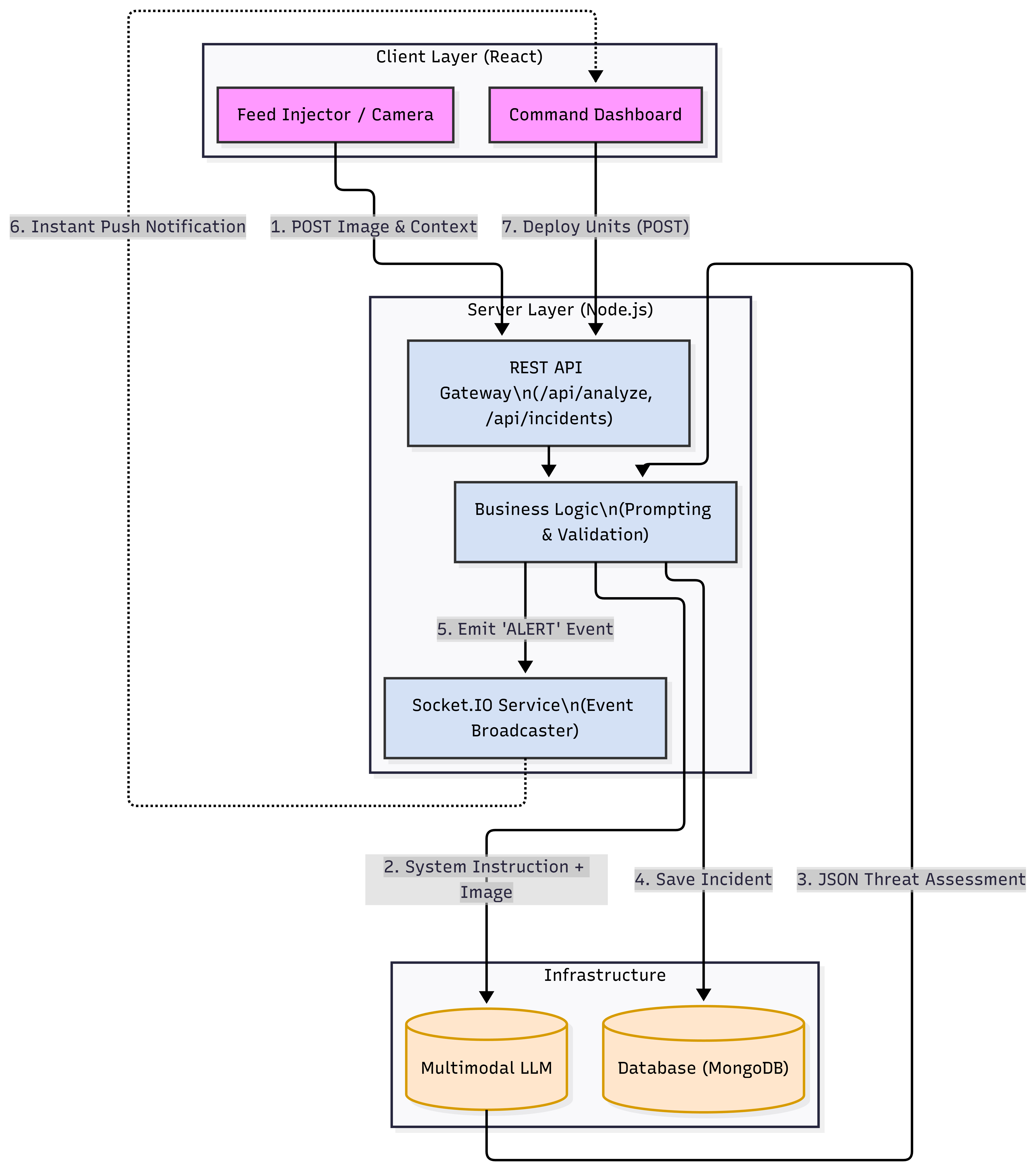
Architecture

CrowdGuard — AI-powered Stampede Prevention Platform
🔗 Try it out: https://crowd-guard.vercel.app/ 💻 GitHub: https://github.com/krrishrastogi05/CrowdGuard
The Human Cost of Unchecked Crowds
In crowded events, the difference between celebration and catastrophe is measured in heartbeats, not hours. When human density exceeds safe thresholds (around 6–10 people per square meter), individuals lose autonomy of motion and become unwilling participants in a human fluid, where compressive asphyxia and crush injuries escalate rapidly. This isn’t theoretical — it’s a pattern repeated across continents and cultures.
Recent tragedies show how joyous occasions or routine gatherings can devolve into scenes of mass trauma because of delayed awareness and response:
| Year | Location & Event | Approx. Fatalities | Context |
|---|---|---|---|
| 2025 | Maha Kumbh Mela (Prayagraj, India) | 30–80+ | Crowd crush during riverbank pilgrimage access. |
| 2025 | New Delhi Railway Station (India) | 18 | Overcrowding after train delays led to fatal crush. |
| 2024 | Ibadan Christmas Funfair (Nigeria) | 35 | Children died in crowd crush at holiday event. |
| 2022 | Seoul Halloween (South Korea) | ~150 | Narrow streets + dense crowds led to mass casualties. |
| Historical | Love Parade (Germany) | ~21+ | Tunnel congestion at techno music festival. |
| Historical | Accra Soccer Stadium (Ghana) | ~126+ | Stampede triggered by police tear gas. |
| Repeated | Hajj Pilgrimage (Saudi Arabia) | Hundreds–thousands | Ritual sites repeatedly see deadly crushes. |
These events — spanning religious gatherings, holidays, sports celebrations, and everyday transit hubs — demonstrate a global pattern of fatal crowd dynamics, where delay in detection and intervention costs lives.
What CrowdGuard Does
CrowdGuard turns passive surveillance into a proactive safety system — an AI-powered command and control platform that ingests unstructured real-time data and transforms it into actionable intelligence:
- Sees & Listens: Processes live video and ambient audio signals (panic noise, shouting, sudden silence).
- Analyzes: Computes dynamic risk scores and identifies emerging threats (density buildups, chokepoint surges).
- Acts: Visualizes incidents on a live map, prioritizes responders, and issues early advisories before conditions cross fatal thresholds.
How CrowdGuard Was Built
CrowdGuard is engineered as a high-velocity, secure Backend-for-Frontend (BFF) system to guarantee responsiveness without compromising reliability:
- Multimodal Analysis Engine: Synthesizes visual + audio context within milliseconds for instant situational awareness.
- Event-Driven Infrastructure: Built with Node.js + Socket.io to push
NEW_INCIDENTalerts in real time. - Geospatial Visualization: A custom React + Leaflet/SVG layer maps camera pixels to physical zones, overlaying heatmaps and incident markers on venue layouts.
Key Challenges & Solutions
| Barrier | Challenge | Our Approach |
|---|---|---|
| Ambiguous Signals | Milling vs panic looked similar in early models. | Added audio spectral cues to infer movement intent. |
| Spatial Mapping | Converting 2D camera views to real-world coordinates. | Built a custom coordinate scaler for zone-level precision. |
| Latency | High-resolution frames risked processing delays. | Optimized payloads & prompts for sub-second analysis. |
What We’re Proud Of
- Real-time multimodal risk scoring
- Living dashboard with zero-refresh updates
- Event-agnostic scalability across venues & cities
Lessons Learned
- Crowds behave like physics systems — once density crosses thresholds, outcomes deteriorate fast.
- Warm data saves lives — insights matter more than raw footage.
What’s Next
- Temporal AI with vector memory to recognize recurring risk patterns
- Live flow tracking via continuous motion vectors
- IoT sensor fusion (turnstiles, pressure mats, environmental signals)

Log in or sign up for Devpost to join the conversation.