-
Hero
-
MidScreen
Inspiration
Finding good clips inside a long video is painfully slow. Editors often scrub through hours of footage, while most automated clipping tools produce mysterious “virality scores” without explaining why a moment was selected.
I noticed that viewers already leave useful editing signals in the comments. They pause at a specific moment, type its timestamp, and explain what made them laugh, react, or pay attention. That inspired CROWDCUT: instead of guessing what an audience might enjoy, use the moments they have already identified—and keep the evidence behind every recommendation.
What it does
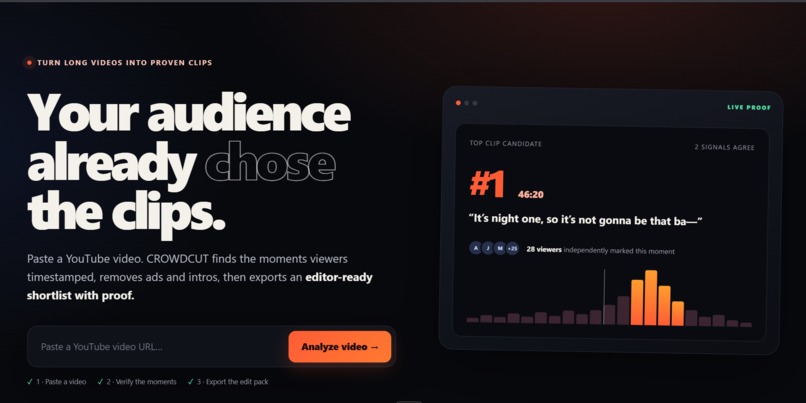
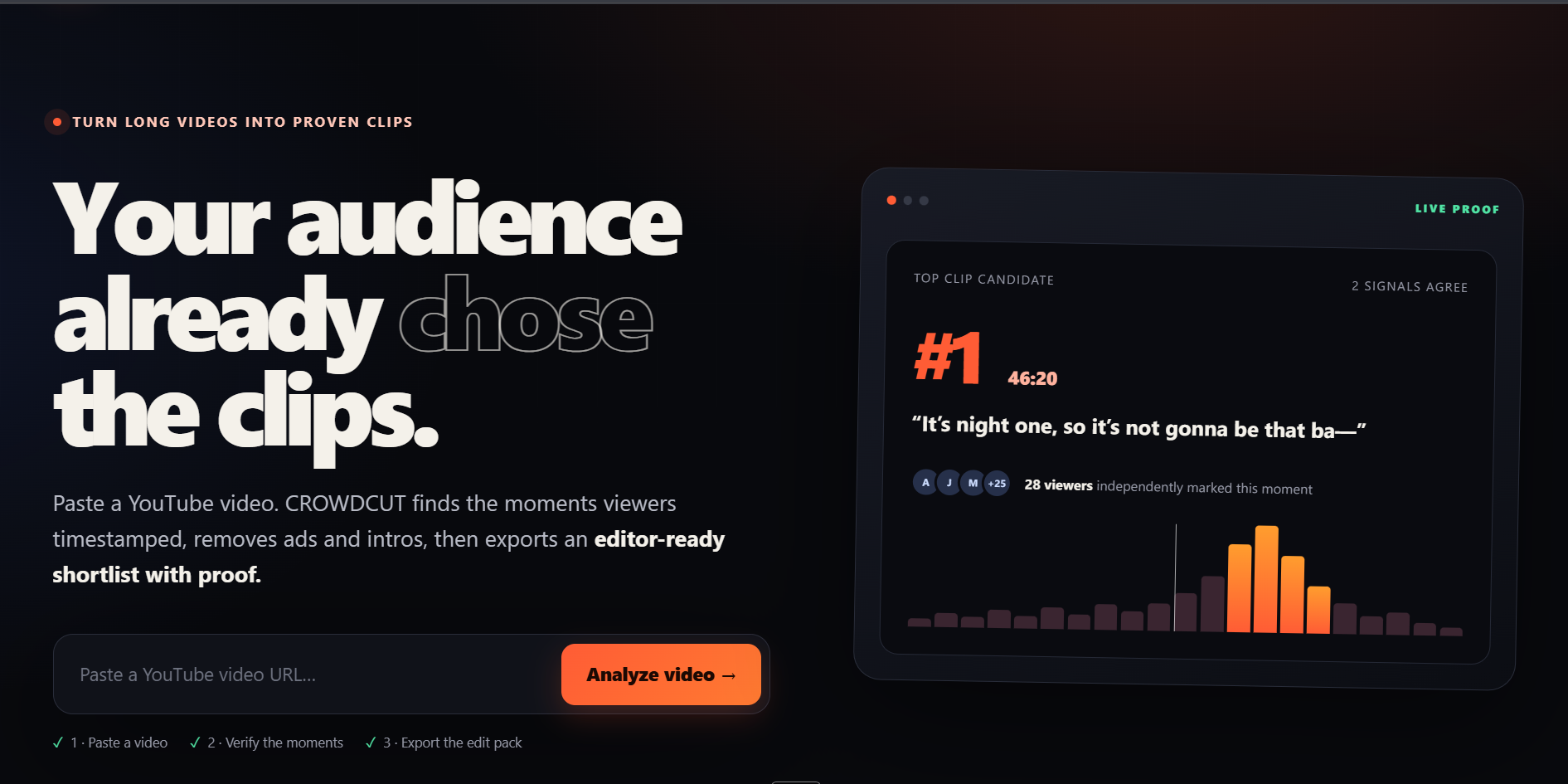
CROWDCUT turns long YouTube videos into audience-proven clip candidates.
Paste a YouTube URL and it:
- Finds timestamps mentioned by viewers.
- Groups independent reactions around the same moments.
- Corrects for the delay between an event and the time a viewer typed their reaction.
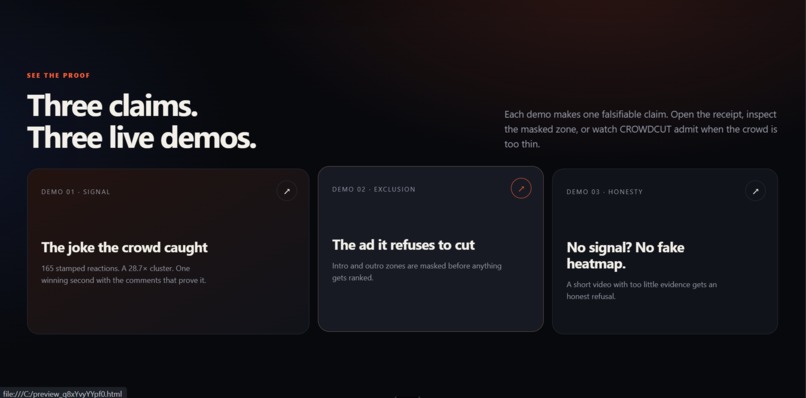
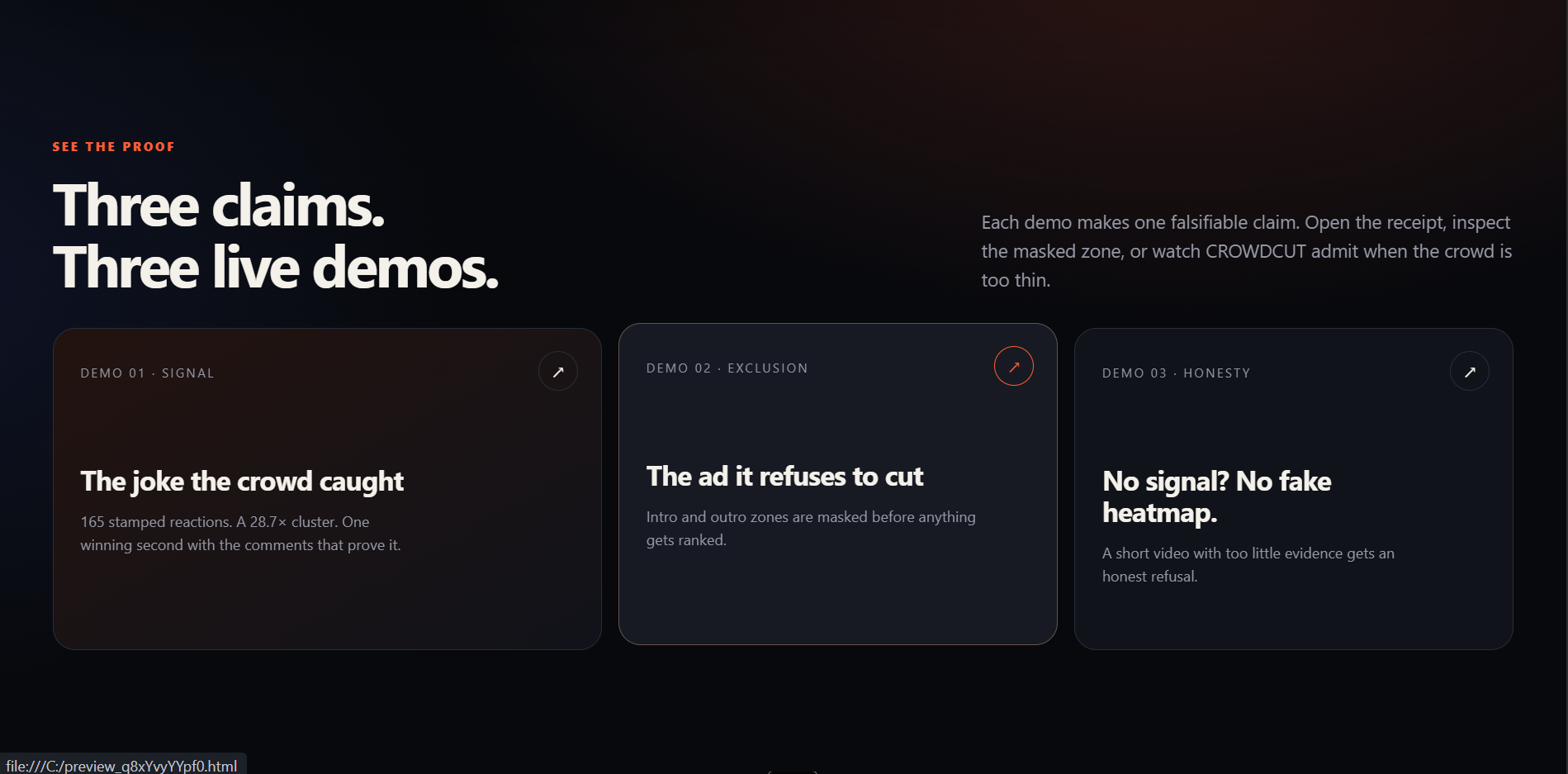
- Removes sponsor, intro, outro, filler, and self-promotion sections before ranking.
- Shows the comments and source links behind every recommendation.
- Creates a vertical Crowd Trailer from the best moments.
- Exports an editor-ready pack containing clip boundaries, hooks, chapters, captions, and receipts.
When a video does not contain enough reliable audience activity, CROWDCUT says so instead of inventing a heatmap.
How we built it
The analysis engine is written in Python. It collects video metadata and comments through the official YouTube Data API, extracts valid timestamps, removes chapter-style comments, and deduplicates repeated reactions from the same author.
A deterministic density model identifies moments where several independent viewers reacted within a small time window. SponsorBlock data is applied before ranking so reactions inside advertisements or promotional sections cannot become recommended clips. SponsorBlock highlights and DeArrow thumbnail timestamps can then corroborate a candidate when they agree around the same moment.
The browser experience is built with HTML, CSS, and JavaScript. One structured analysis document powers the reaction timeline, ranked-moment cards, comment receipts, shortlist, Crowd Trailer, and downloadable edit pack.
The three featured demonstrations are cached locally, so the core judging experience continues to work even if API quota or internet connectivity becomes unreliable.
Challenges we ran into
The biggest challenge was separating real audience consensus from noisy comments. A single viewer can mention the same timestamp repeatedly, and chapter comments may contain dozens of timestamps without representing reactions. We added author deduplication, index-comment detection, minimum crowd requirements, and clustering thresholds to prevent those cases from creating false peaks.
Viewer reactions also arrive slightly after the event that caused them. Instead of using a fixed offset, CROWDCUT measures that reaction lag from each video's data.
Another challenge was preventing highly discussed advertisements from being mistaken for great clips. That led to one of the product's most important decisions: exclusion zones are applied before ranking, not afterward.
Finally, we designed the product to fail honestly. Short videos, small audiences, and scattered timestamps return “not enough signal” rather than a convincing-looking but unsupported result.
Accomplishments that we're proud of
I am especially proud that every recommendation is explainable. An editor can see how many independent viewers marked a moment, how tightly their reactions clustered, the clip boundaries, and the original comments that support the decision.
CROWDCUT is a working end-to-end product rather than a mockup. It includes a polished decision studio, interactive reaction timeline, sponsor protection, vertical trailer mode, shortlisting, and a downloadable editing pack.
The acceptance suite currently contains 32 tests covering ranking, deduplication, sponsor masking, reaction-lag measurement, insufficient-signal refusal, clip safety, corroboration, exports, and server security. All 32 pass.
What we learned
The most important lesson was that automation becomes much more useful when people can inspect its reasoning. Editors do not only need a ranked list—they need enough context to trust it and enough evidence to override it.
We also learned that exclusions can be as valuable as recommendations. Knowing what not to clip prevents bad outputs before they reach the editor.
Finally, audience comments are noisy individually but surprisingly useful collectively. With careful filtering and honest confidence thresholds, they become a practical editorial signal.
What's next for CROWDCUT
The next step is connecting CROWDCUT to creator-authorized analytics so it can combine comment reactions with retention and replay behavior from content the creator owns.
I also want to add integrations with editing tools, support larger comment histories, and provide one-click rendering from creator-owned source footage. The long-term goal is a post-publish intelligence layer that helps creators turn audience response into their next wave of content.

Log in or sign up for Devpost to join the conversation.