Crowd Chaos
Inspiration
Watching a stream is more memorable when the audience can change what happens next. Crowd Chaos turns chat into an active opponent in a short arcade escape: the streamer tries to reach the finish while viewers coordinate the chaos.
What it does
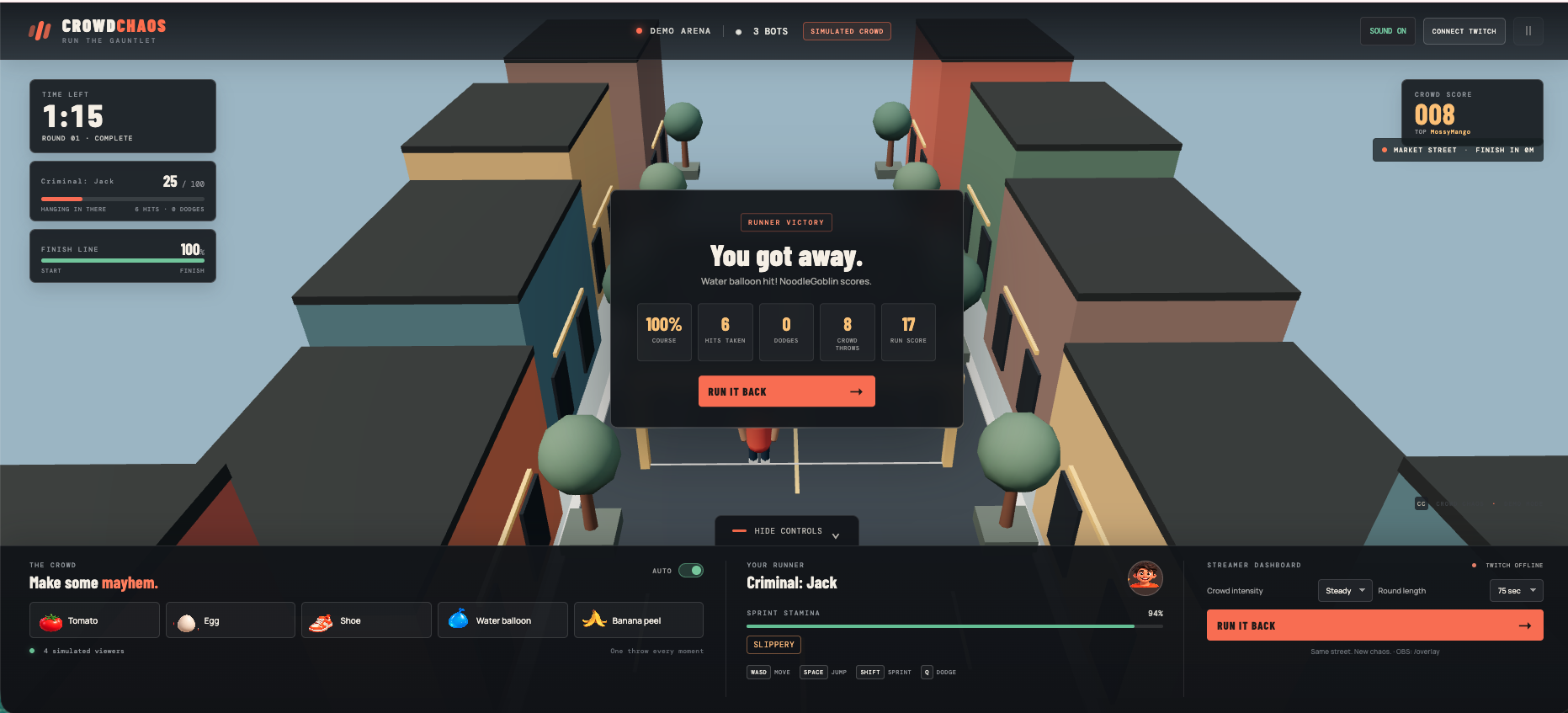
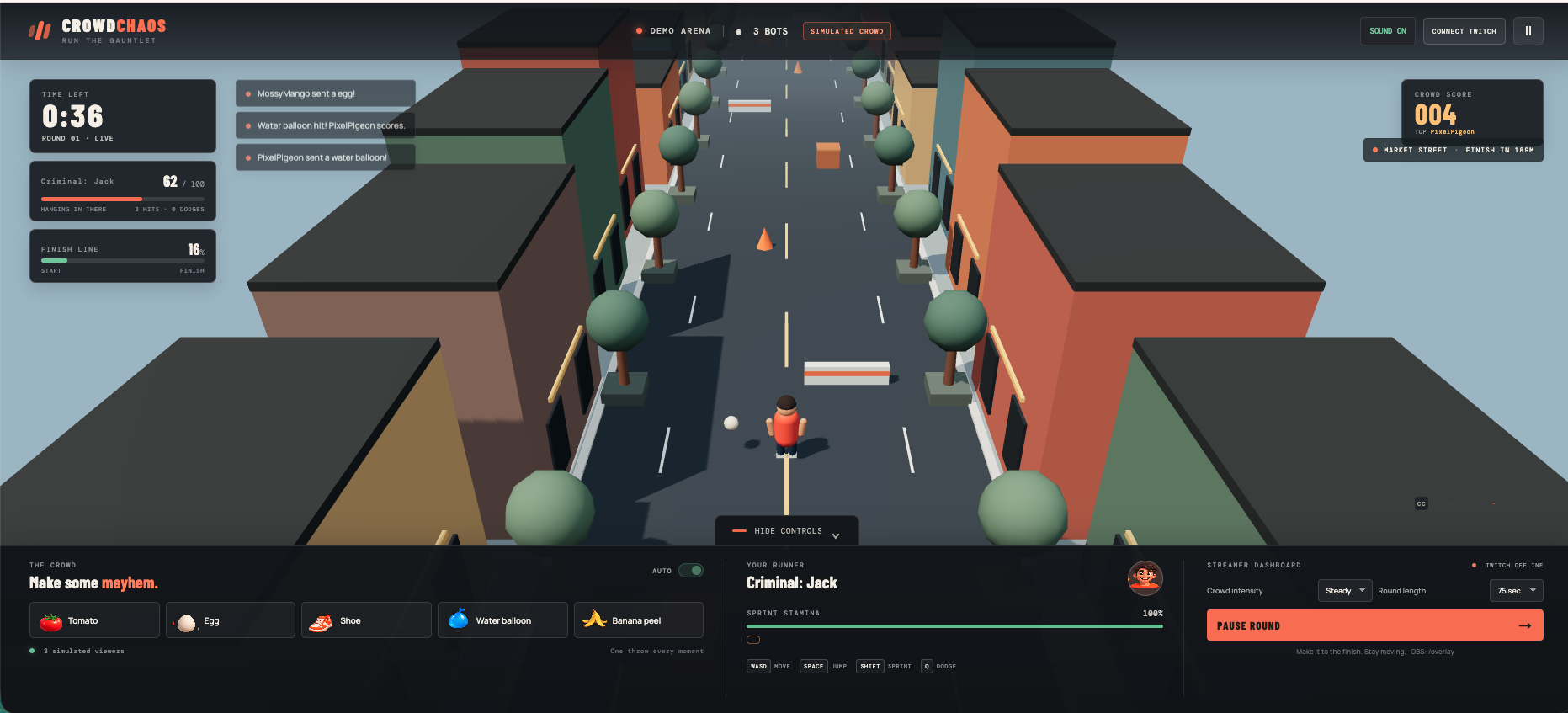
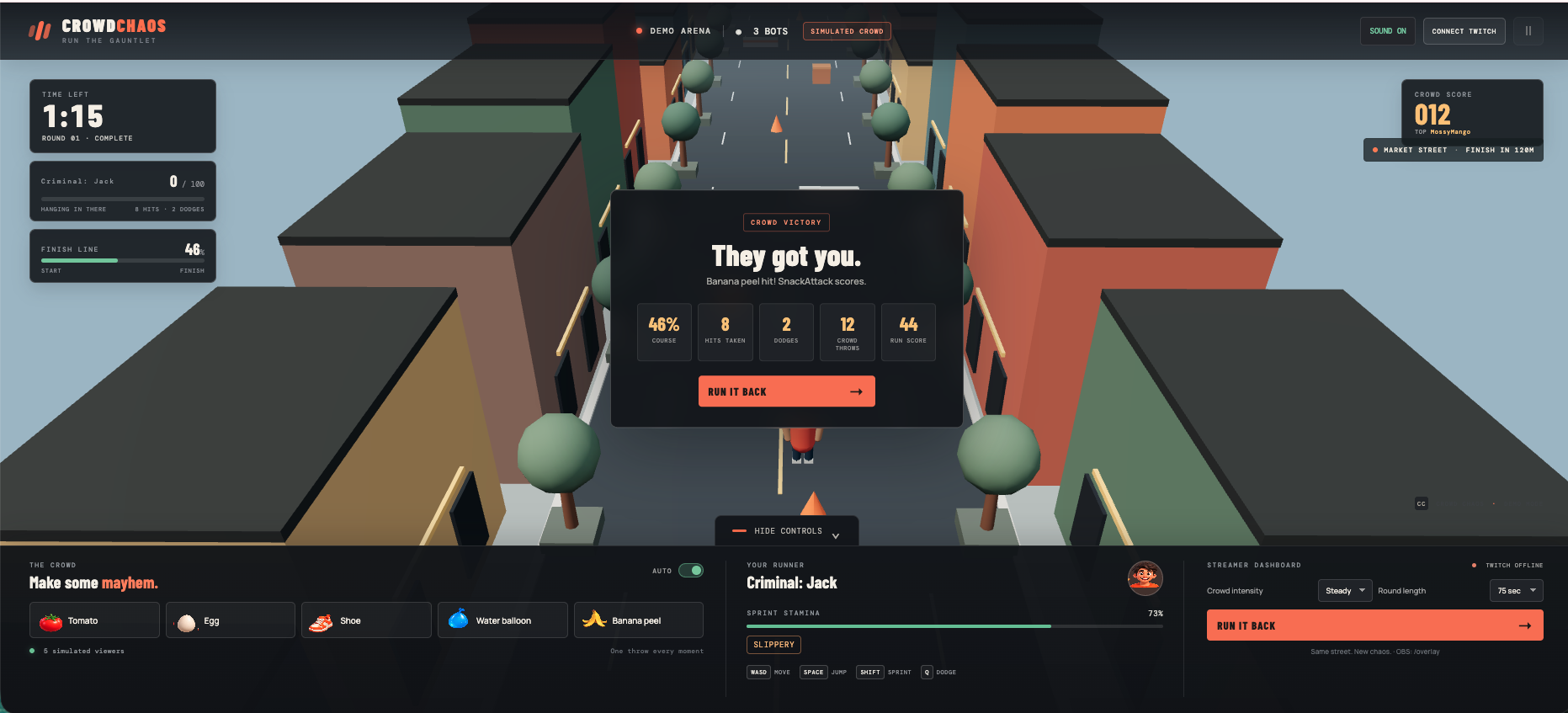
The streamer steers, jumps, sprints, and dodges through a browser-based 3D street. Twitch viewers throw tomatoes, eggs, shoes, and water balloons, or vote for banana hazards. Cooldowns and hit immunity keep the action readable. Short rounds end with a runner or crowd victory and a crowd leaderboard. A synchronized OBS view brings the action onto the stream. A clearly labeled simulated crowd lets visitors try the game without connecting Twitch.
How we built it
TypeScript and Three.js render the game. Express and Socket.IO connect the browser to a server-owned simulation that determines movement, collisions, damage, and results. Twitch OAuth and EventSub deliver real chat commands. SQLite records round outcomes. Original bundled illustrations and synthesized audio supply the arcade presentation.
Challenges we ran into
Keeping the controller, Twitch actions, and OBS view consistent required a shared authoritative simulation. Separating visitors' local demos from streamer state and waiting for Twitch subscription success helped make the connection status and controls reliable.
Accomplishments that we're proud of
- Procedural 3D street scene and runner built with Three.js without external 3D assets
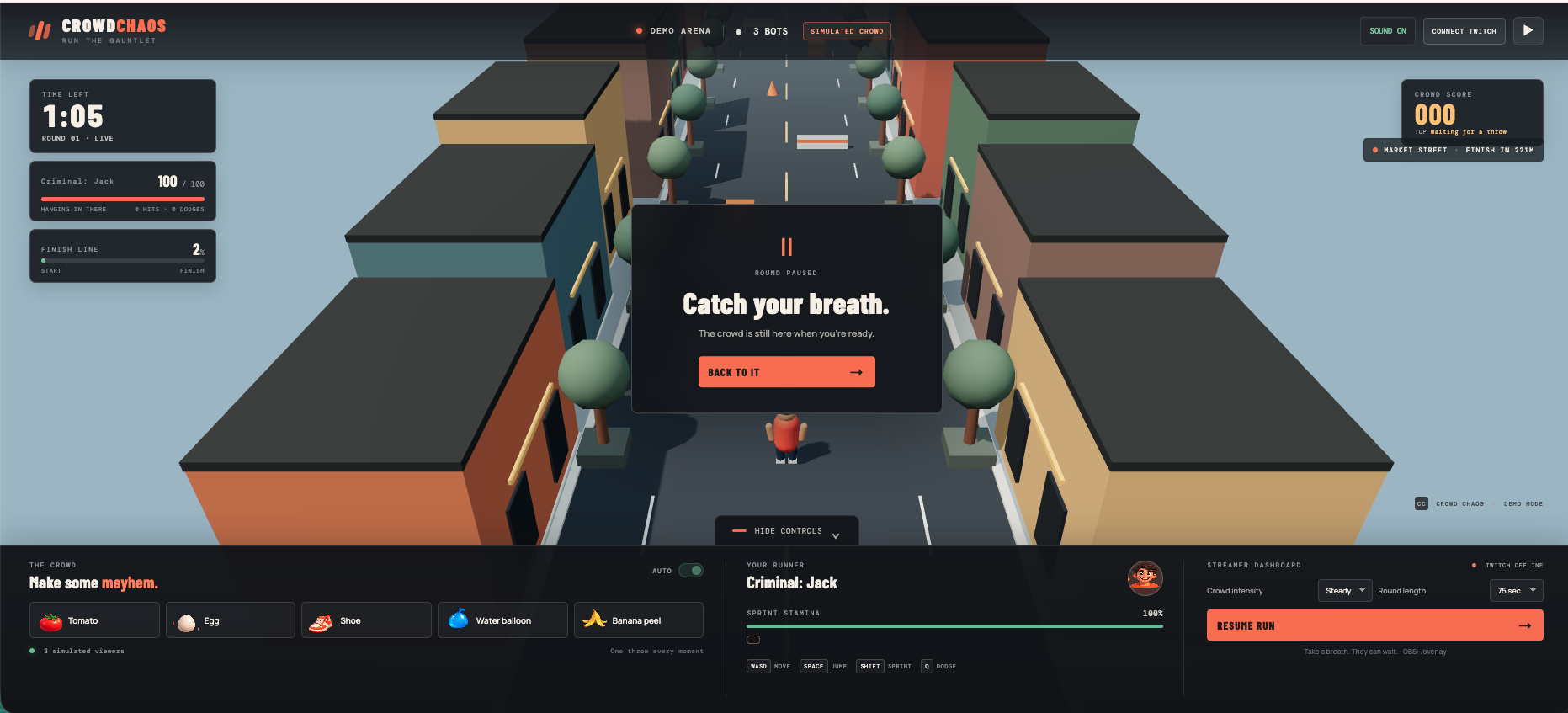
- Countdown, lobby/run/pause/results flow, health, stamina, progress, finish, and restart
- Distinct projectile/hazard behavior, hit immunity, cooldowns, rate limits, and active projectile caps
- TypeScript game rules shared by the local demo and server
- Express and Socket.IO server with validated chat commands, server-controlled round state, and streamer-only administrative events
- Twitch OAuth Authorization Code flow and EventSub WebSocket chat
- Optional SQLite round history and aggregate crowd leaderboard
- OBS view at
/overlay, synchronized from the streamer page over Socket.IO - Responsive HUD, accessible labels, browser focus handling, and safe text rendering for Twitch names/messages
What we learned
- Shared authoritative simulation is critical for consistency across controller, Twitch actions, and OBS view
- Separating visitors' local demos from streamer state improves reliability
- Waiting for Twitch subscription success is essential for consistent controls
- TypeScript sharing between local demo and server helps maintain game rule consistency
What's next for Crowd Chaos
- More courses and maps
- Richer round customization
- Durable encrypted Twitch reconnect support
- Additional projectile types and hazard varieties
- Multi-map support with different environments
- Enhanced crowd voting options and strategic depth

