-
-
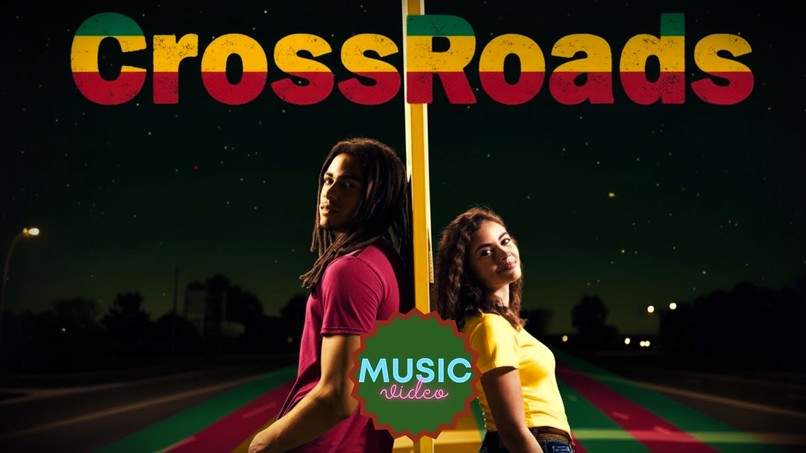
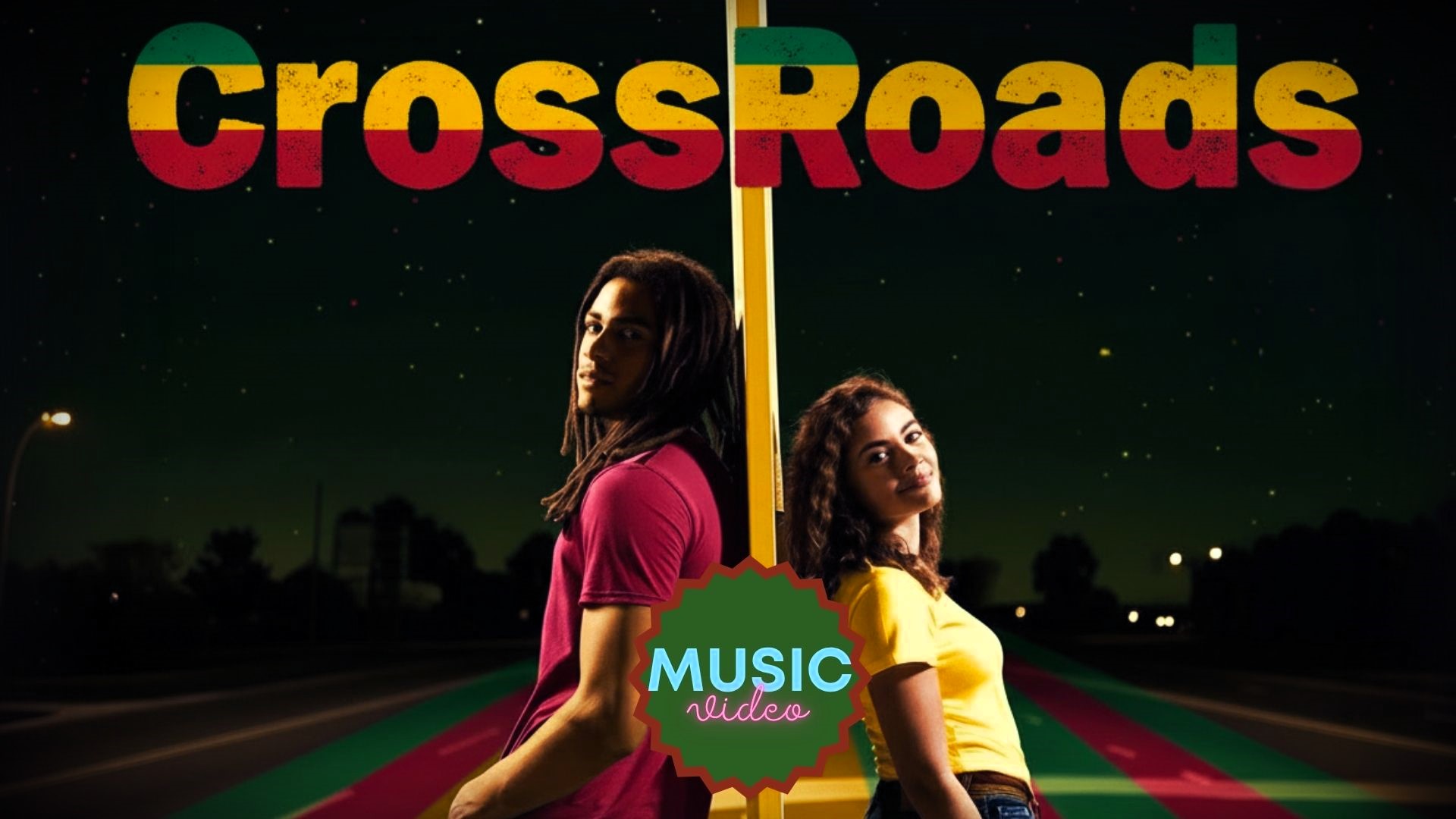
Two teens fighting invisible battles alone... until their paths cross at exactly the right moment.
Inspiration
I grew up on a tiny Caribbean island where I battled poverty while watching friends and family struggle with depression and mental health challenges. In Caribbean culture, there's a heavy stigma around mental health—you're expected to smile through the day, stay strong, keep your struggles private. "CrossRoads" was born from wanting to break that silence: two teenagers from my world, carrying invisible burdens, whose paths collide at a literal and metaphorical crossroads. I wanted to capture the raw, universal vulnerability of youth mental health struggles while celebrating the power of faith and community. This isn't just a music video—it's a love letter to the person who feels alone in their fight.
What it does
"CrossRoads" follows two seventeen-year-olds battling mental health struggles, whose lives collide at a literal crossroads—and leads to them finding new focus through interaction, not isolation. The 3-minute narrative music video is set to our original song "CrossRoads." A boy wrestles with insomnia and poverty while lip-syncing through rain-soaked neighborhoods. A girl battles online harassment and drives distracted by pain. When his bus clips her car in a hit-and-run, he runs back to help. The music stops. Her car is playing "Fiel en la Tormenta"—the Spanish reggaeton version of the same song. Divine synchronicity: two languages, one prayer. Shaken but okay, she remembers she has youth group practice. When he tries to leave, she stops him in Bajan patois: "Where you tink you going mr. Hero-man? You see my hand still shaking?" He drives her there. She performs. He stays—dancing, playing games, finding community. When hunger pulls him away, she catches him with a plate of food. Practical love meets real, felt needs. The story explores how God's intervention arrives through human connection, and how healing begins in community. It’s the spirit of Ubuntu: ‘I am because we are’.
How we built it
Music Production: I wrote some of the original English lyrics exploring spiritual warfare and mental health. My husband Jonathan Miller also used Suno AI to generate English lyrics and created the core English track. I worked with Claude (Anthropic's AI) to adapt the song into Spanish—Claude wrote all the Spanish lyrics, ensuring the reggaeton song heard playing from the car had verses that were punchy and club-ready while maintaining emotional depth. Visual Production: Higgsfield for image generation of characters and scenes [Mostly Google's Nano Banana inside of Higgsfield] Grok for video generation of the narrative sequences Adobe Premiere Pro for editing, syncing visual narrative beats with musical emotional peaks, and creating the story flow Audio Production: Suno AI generated the main song [the English track] ElevenLabs produced the Spanish reggaeton version ("Fiel en la Tormenta") that plays from the girl's car, and ElevenLabs was also used for sound design/SFX for the scene audio (accident sounds, ambient noise, rain, traffic, chirping frogs and crickets, classroom chatter etc.) Cultural Authenticity: As a Caribbean creator, I ensured every detail was genuine—from the chattel houses to the disparate economic realities and varied accents. I showed both wealthy and poor neighborhoods, different modes of transport (bus vs. car)—we are not a monolith.
Challenges we ran into
Lyrical Flow vs. Translation: Adapting English lyrics into Spanish for reggaeton without losing emotional nuance. Reggaeton demands short, punchy lines (4-6 syllables) but my original verses were too wordy. I had to completely restructure verses while preserving the spiritual warfare theme—balancing authenticity and musicality…or dare I say ‘danceability’.
Visual Continuity: Creating a coherent narrative across AI-generated scenes was technically demanding. Maintaining consistent character appearances, lighting during the storm sequence, and realistic accident physics required dozens of iterations and careful prompt engineering.
Cultural Representation Without Stereotypes: Every AI-generated scene had to authentically represent Caribbean diversity. I showed both affluent and struggling communities, modern cars and public bus transport, various architectural styles—I wanted to show a true spectrum of Caribbean life, not tourist postcards or poverty/trauma p*rn.
Lip-Sync Precision: Timing the English lip-sync moments, especially during the emotional storm scenes, required frame-by-frame editing in Premiere Pro to ensure the lyrics matched the character's mouth movements and emotional delivery.
Audio Transitions: The moment when the main English track cuts and we hear the Spanish version playing from her car required precise sound design. Choosing when to fade in and out, balancing the diegetic audio (scene sounds, her car stereo) with the non-diegetic score without jarring the audience was technically delicate.
Accomplishments that we're proud of
Breaking Mental Health Stigma: Created a narrative that addresses teen mental health struggles with dignity—showing real symptoms (insomnia, distraction, isolation) while offering hope through faith and human connection, challenging the cultural silence around these issues. Authentic Caribbean Representation: This isn't a foreign perspective—it's created by someone who lived it. I intentionally showed economic diversity (wealthy and poor neighborhoods), different transport methods (bus and car), varied architecture—because we are not a monolith. Every detail, from the patois/dialect dialogue to the youth group setting, is genuine. "Song Within a Song" Meta-Narrative: The creative choice to have the main video set to the English version while her car plays the Spanish reggaeton version creates beautiful synchronicity—two people, two languages, one prayer. This symbolizes how we're all fighting similar battles in different dialects. The reggaeton sample isn't just a translation—it's a culturally authentic reggaeton track with street language and proper flow. Youth Group as Resolution: Rather than ending on romance, the story resolves in community—he finds belonging in the youth group, she offers hospitality with food. This reflects the actual role faith communities play in Caribbean youth mental health support. It’s not about the individual ‘savior’, it’s about community.
What we learned
Cultural Specificity Creates Universal Connection: By making this deeply, specifically Caribbean (language, architecture, struggles), the story became more universally relatable because the characters seemed to really exist. Authenticity transcends geography. Constraint Breeds Creativity: The technical limitations of AI tools forced me to be more inventive with storytelling—using weather as emotional metaphor, letting silence and visuals carry narrative weight, making every shot purposeful. Music Video as Narrative Medium: I learned that music videos can carry the emotional depth of short films when every element (lyrics, cinematography, pacing, symbolism) works in concert toward a unified story.
What's next for CrossRoads
As a screenwriting finalist with accolades that include Austin Film Festival, a Writers League of Texas Fellow, and NIFCA bronze medalist, I'm building "CrossRoads" into a larger transmedia universe. Expanded Universe: This music video is the first puzzle piece in the "Reggae Demon Hunters" series—a PG-13 TV pilot about Caribbean teens at a spiritual warrior training school. I'm developing the complete pilot with an original soundtrack spanning reggae, dancehall, and reggaeton. Impact & Education: Create behind-the-scenes and instructional content showing other creators how to use AI tools to tell authentic stories. Festival & Distribution: Submit to festivals focused on Caribbean cinema, faith-based storytelling, and youth mental health advocacy, while building the complete "Reggae Demon Hunters" soundtrack album and additional music videos that establish this world before the TV pilot premiere.
Built With
- adobe
- claude
- elevenlabs
- grok
- higgsfield
- nanobanana
- suno


Log in or sign up for Devpost to join the conversation.