-
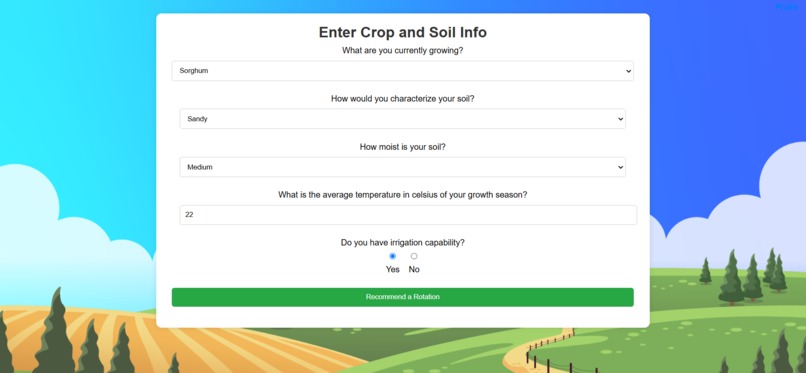
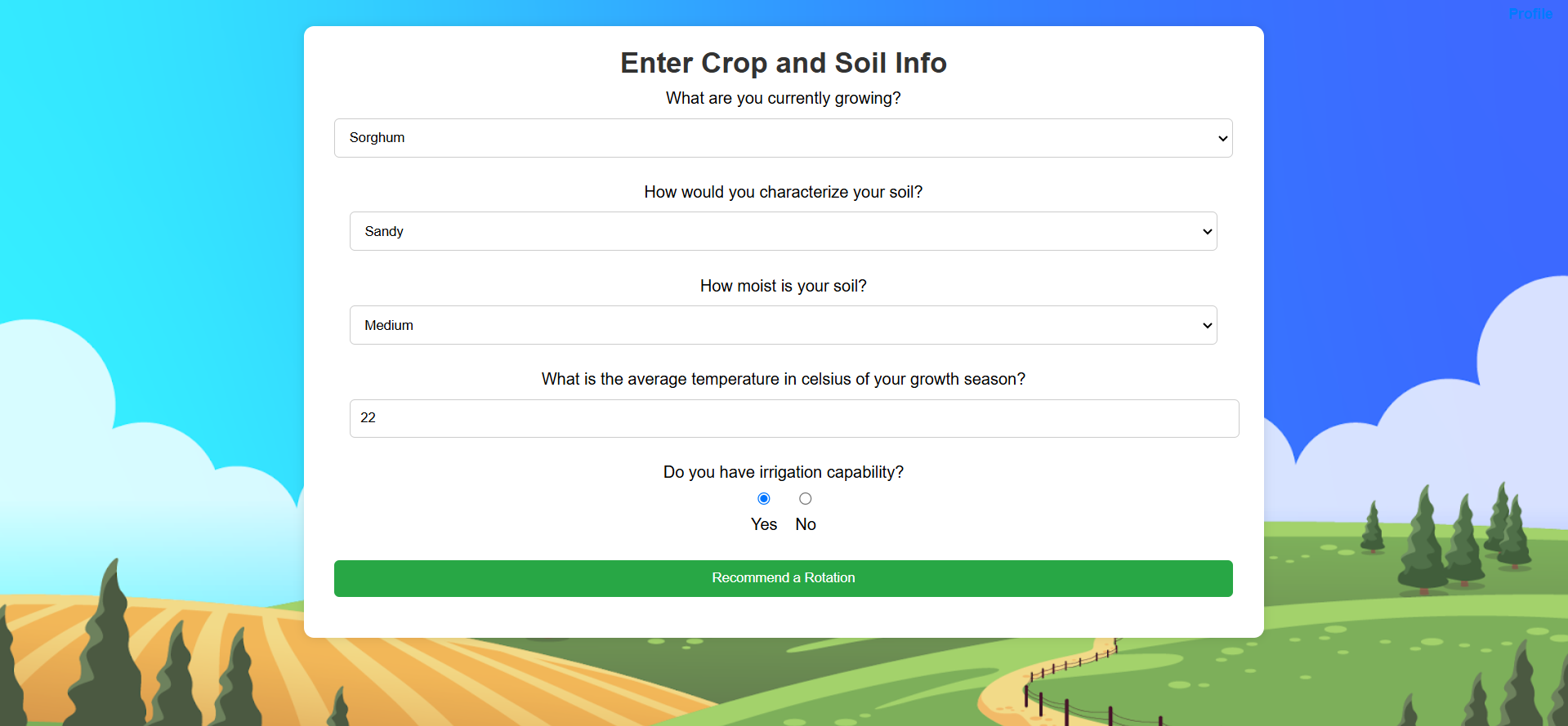
The screen where users can enter in information about their farm acreage and current rotation.
-
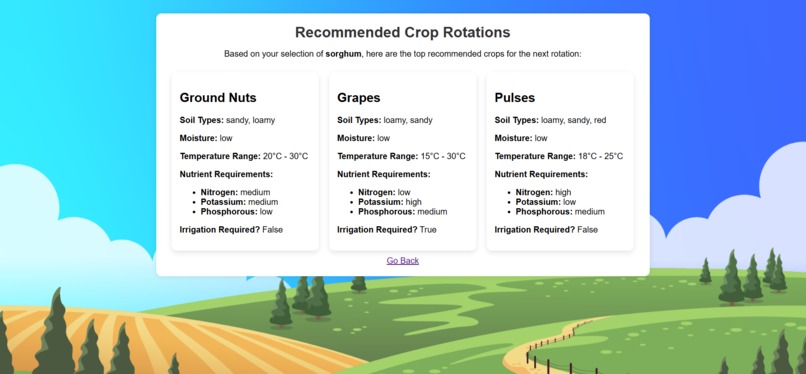
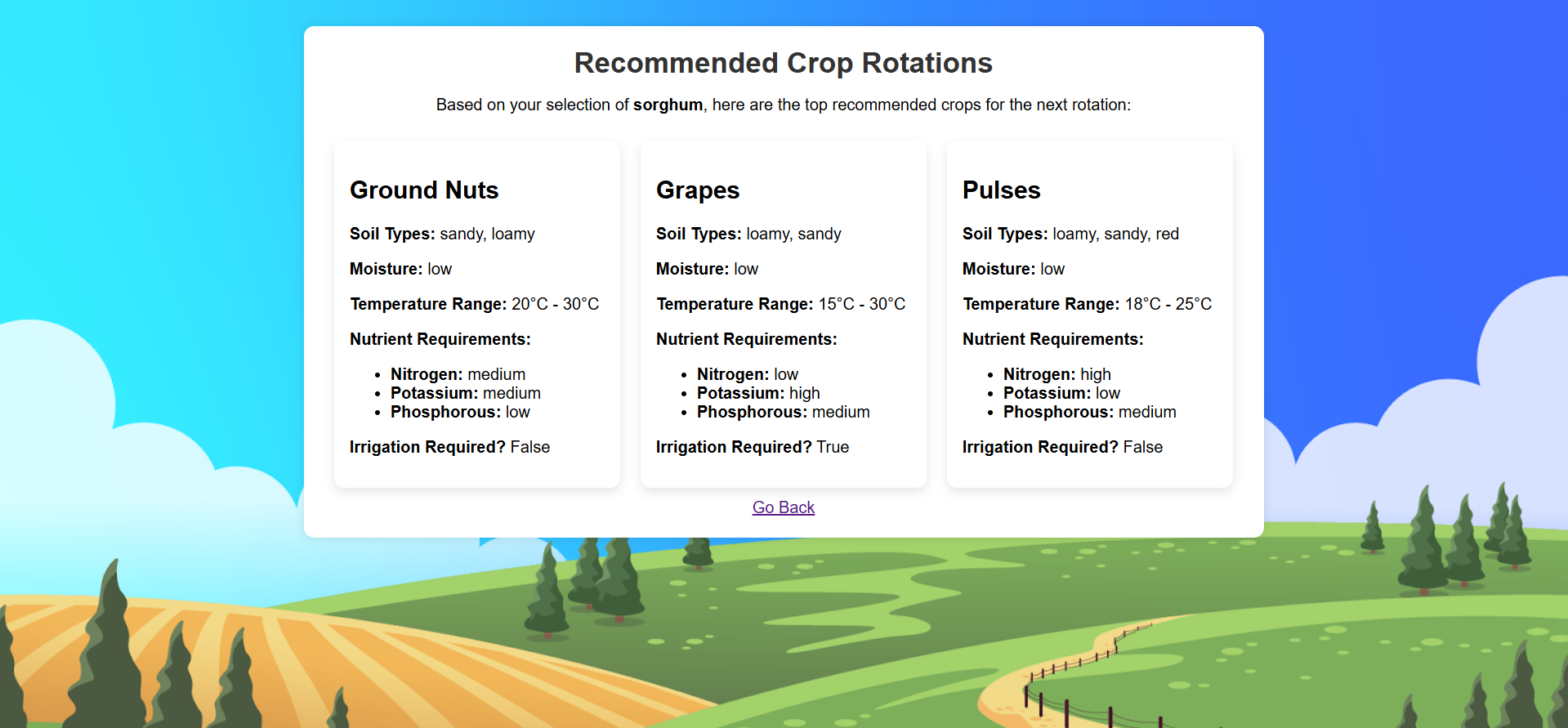
Recommended crops for a future rotation based on soil and crop characteristics.
-
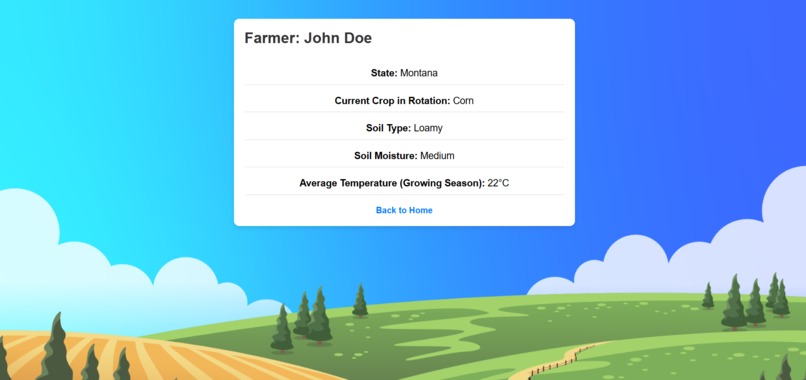
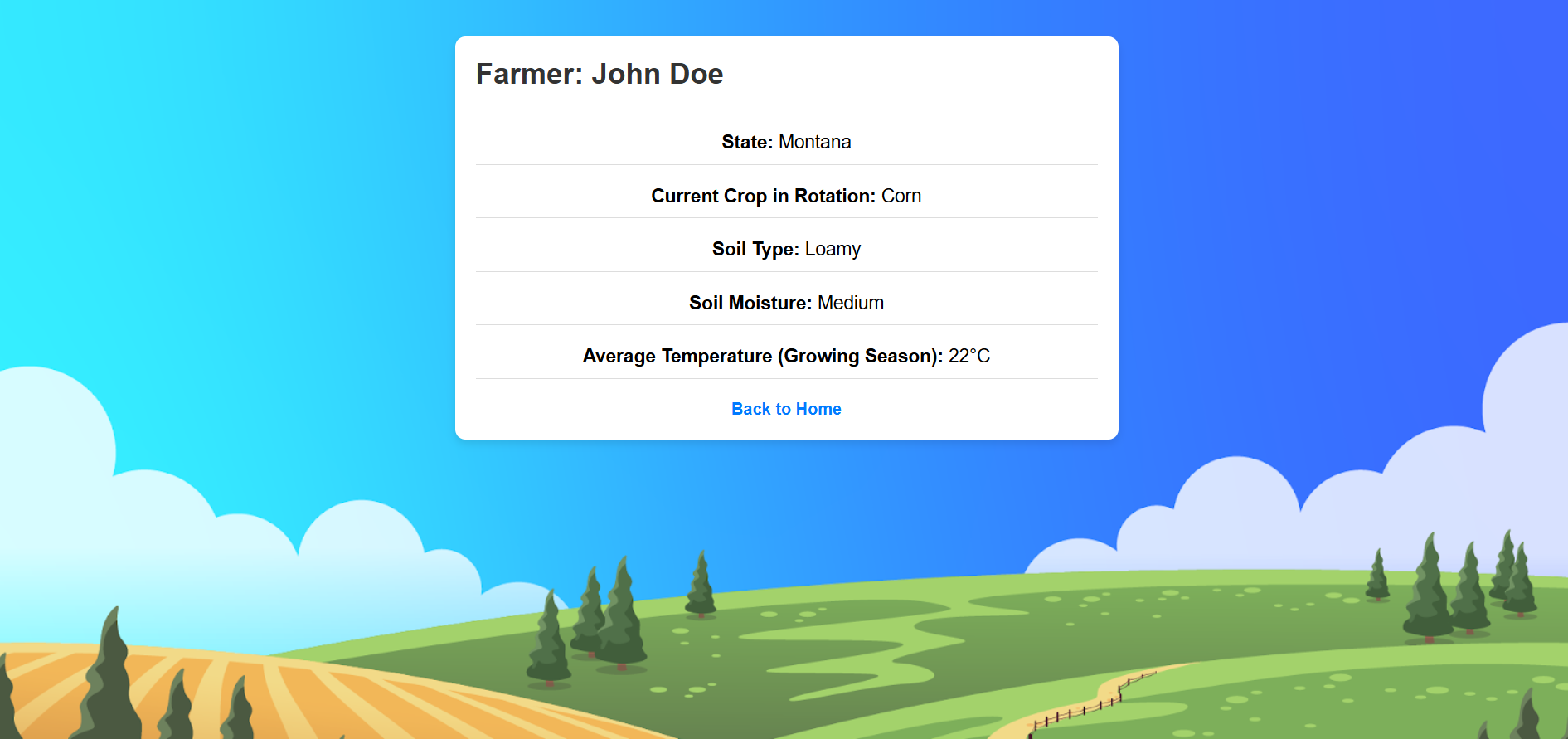
An example of a profile page to allow other farmers to view fellow members of their community.
Inspiration
Monoculture is the practice of cultivating the same crop over and over again on the same plots of land. This practice is driven by efficiency, yield maximization, and profit margins, but can lead to serious soil degradation, nutrient loss, and reduced biodiversity. A counter to monoculture is crop rotation, or polyculture, where different complementary crops are planted in sequence in order to allow the soil's nutrients to be replenished and preventing land overuse.
What it does
CropSwap is a tech proposal for an app that would provide a centralized forum for farmers and agricultural professionals to get potential crop rotations for an existing cultivation based on soil, climate, and farm equipment compatibility, and share information among their community to enable the spread of healthy polyculture practices.
How we built it
The tech demo was built using a Flask backend, with vanilla HTML/CSS for the frontend, and the data layer service provided by MongoDB. The proposal itself was created in Google Slides, with extensive research and data cleaning done in Google CoLab and Python notebooks.
Challenges we ran into
The most difficult obstacle to overcome was finding a unified, actionable dataset that had the features we needed to check for crop compatibility. There are a near infinite amount of variables that can influence how crops interact with each other when they are planted in succession, and it was impossible to attempt to establish a fully comprehensive matching model in the timeframe that we had.
Accomplishments that we're proud of
We were able to come up with a fleshed out proposal for a solution, with potential for funding sources, target audience evaluations, and a tech demo of a core functionality.
What we learned
There are many facets to the integration of agriculture and technology, and creating a solution to a problem that has been around for a long time, for a myriad of reasons, is no easy task.
What's next for CropSwap
A more fleshed-out tech demo, with more principal functionalities and a better matching model that accounts for real-time factors such as supply and demand of certain crops, allowing farmers to retain maximum yield and profit margins while maintaining a healthy balance of land use.


Log in or sign up for Devpost to join the conversation.