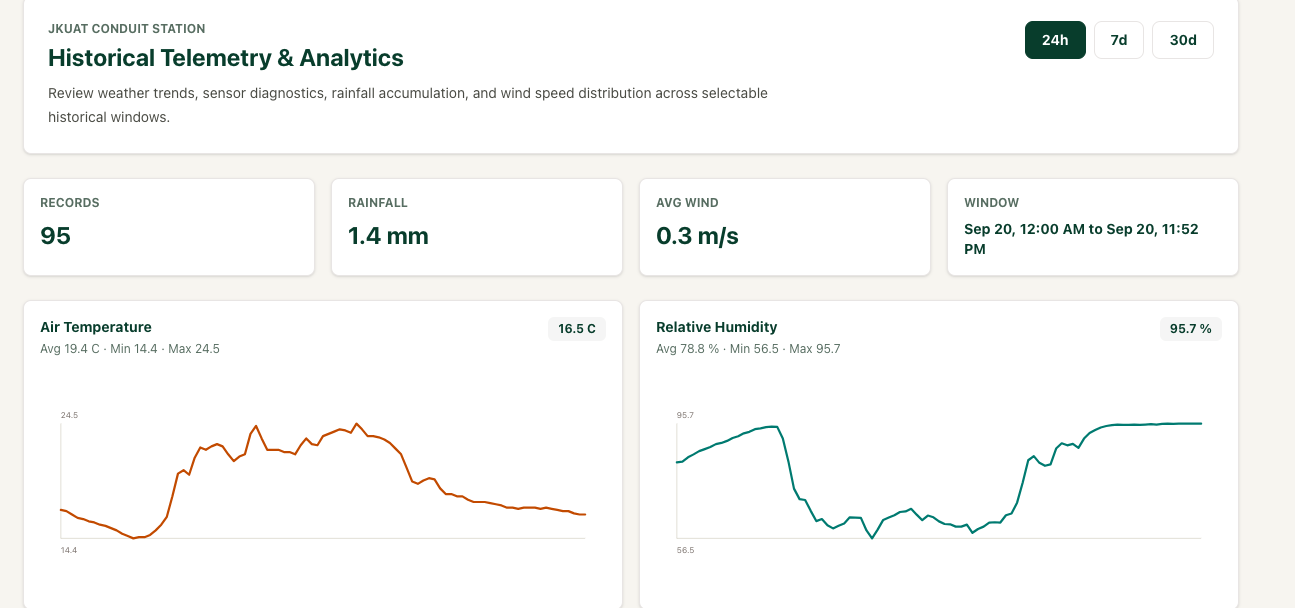
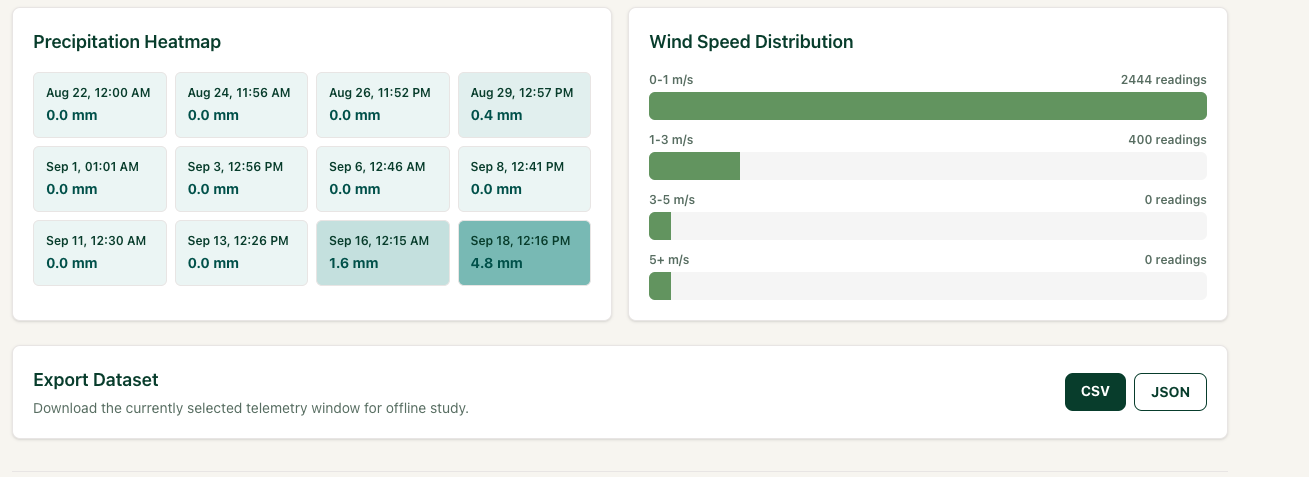
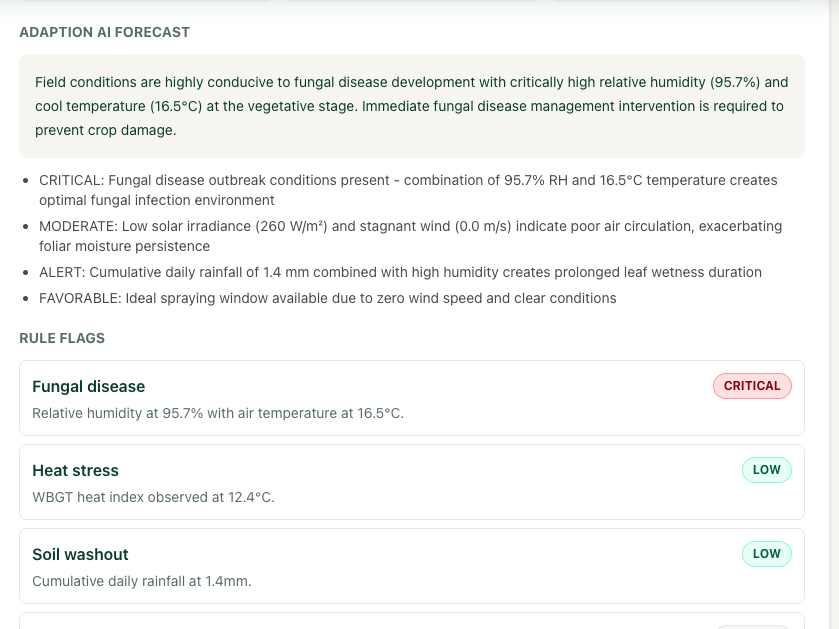
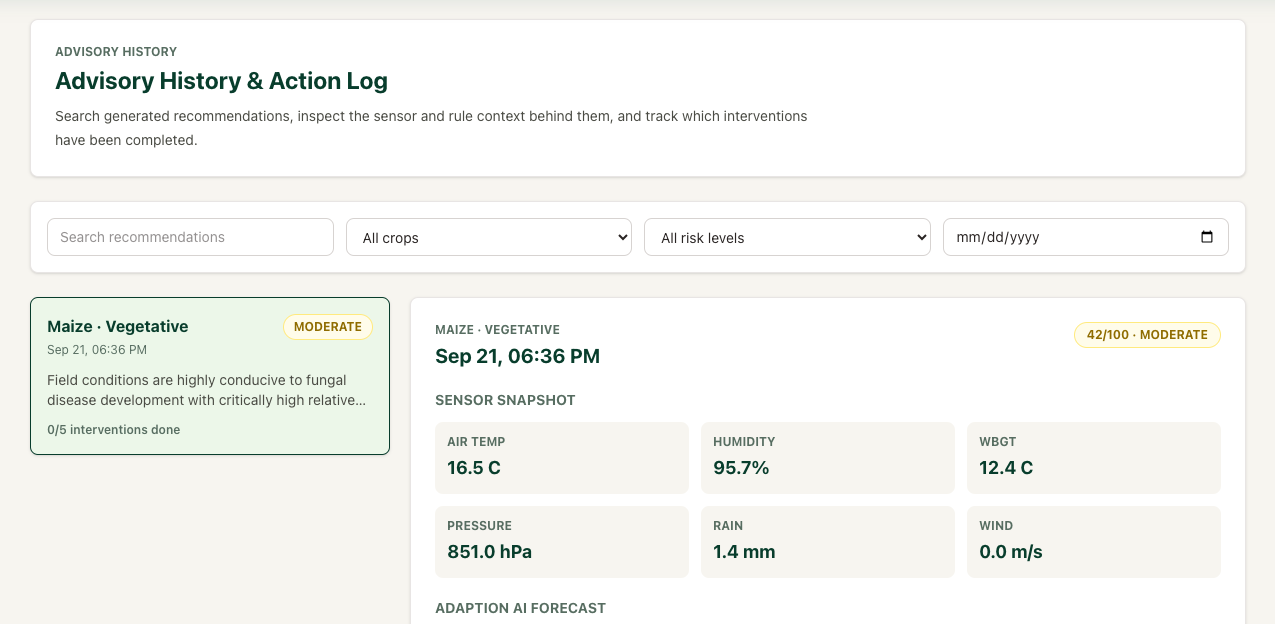
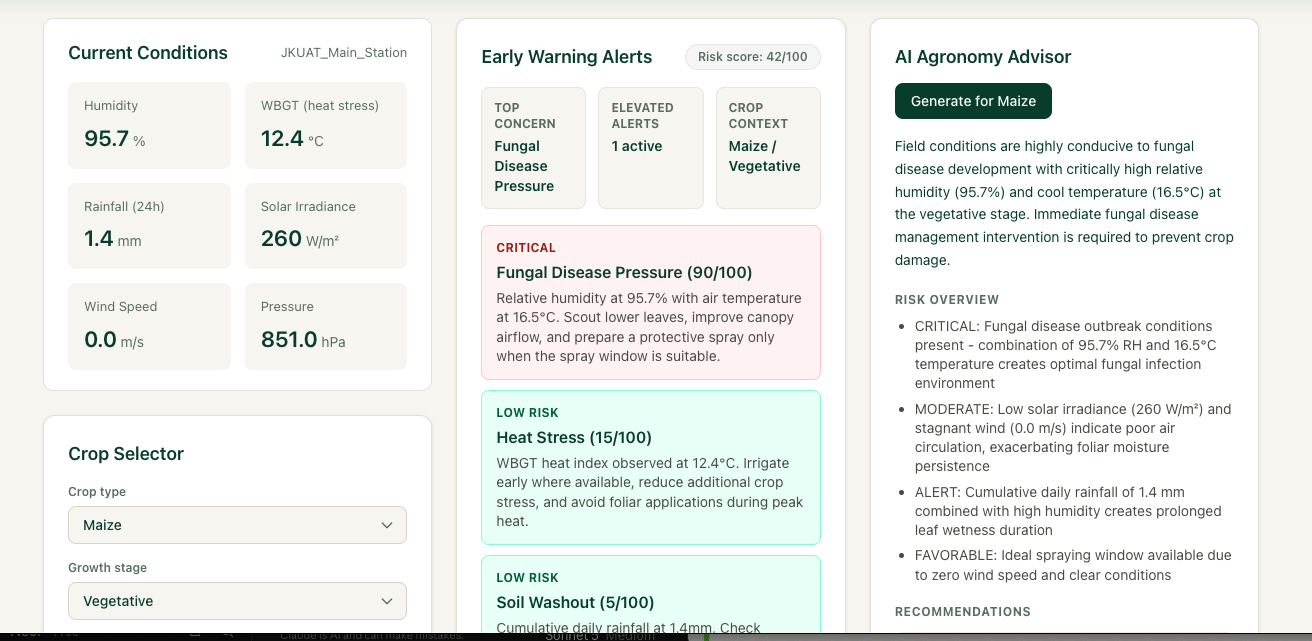
CropGuardian was inspired by the challenges farmers face when weather conditions change quickly and affect crop health. Many farming decisions, such as when to spray, irrigate, or inspect for disease, depend on microclimate conditions like humidity, rainfall, wind, and heat stress. However, raw weather data is not always easy to interpret. CropGuardian was built to turn that data into simple, timely, and practical recommendations.
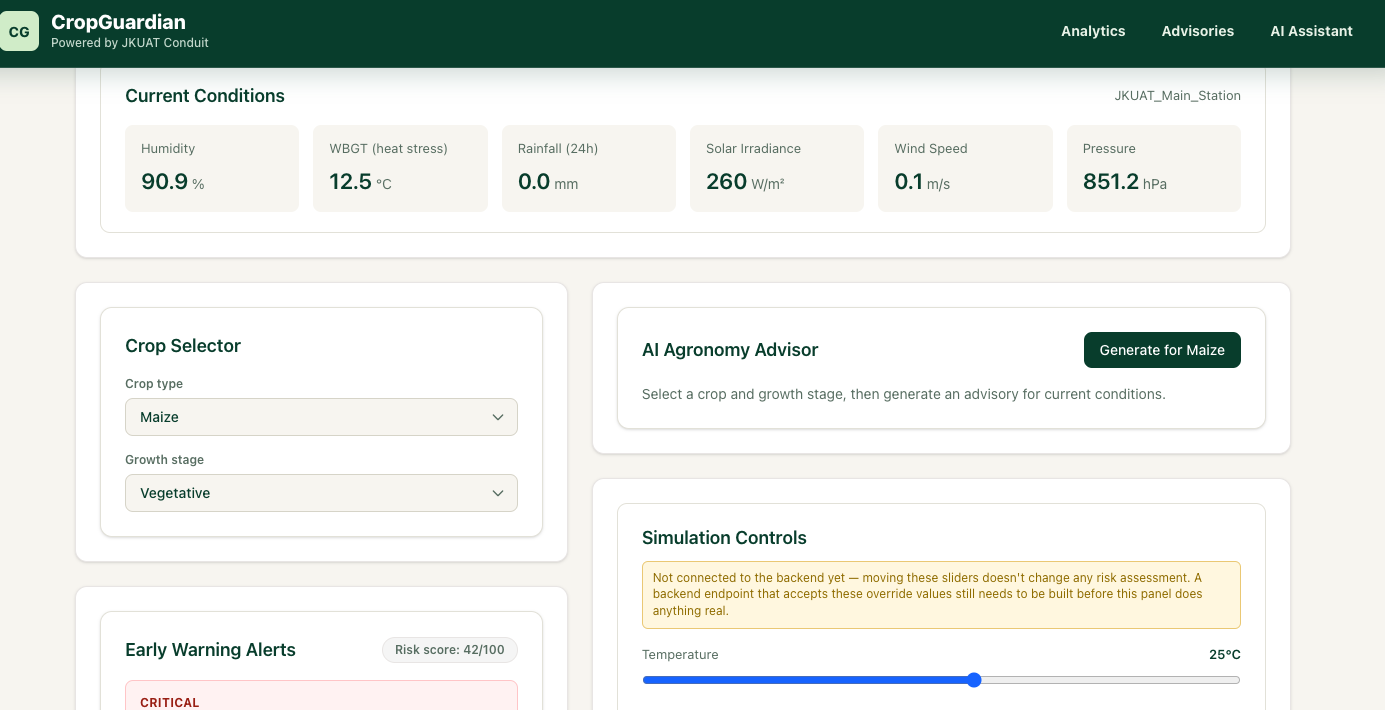
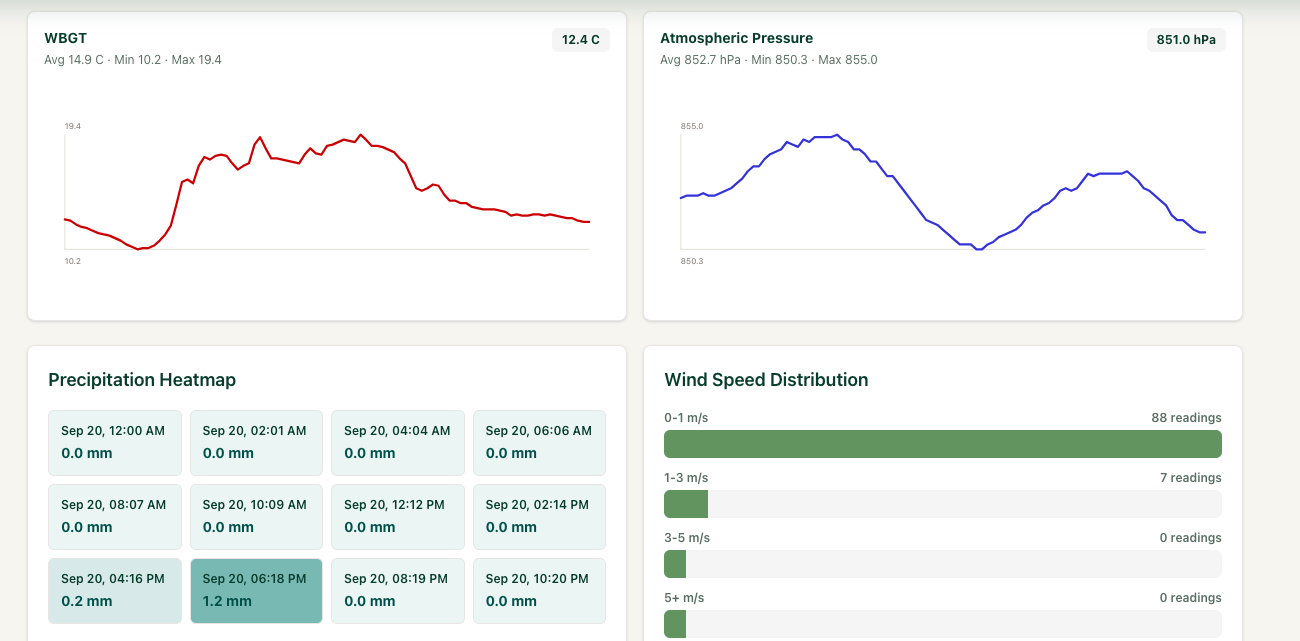
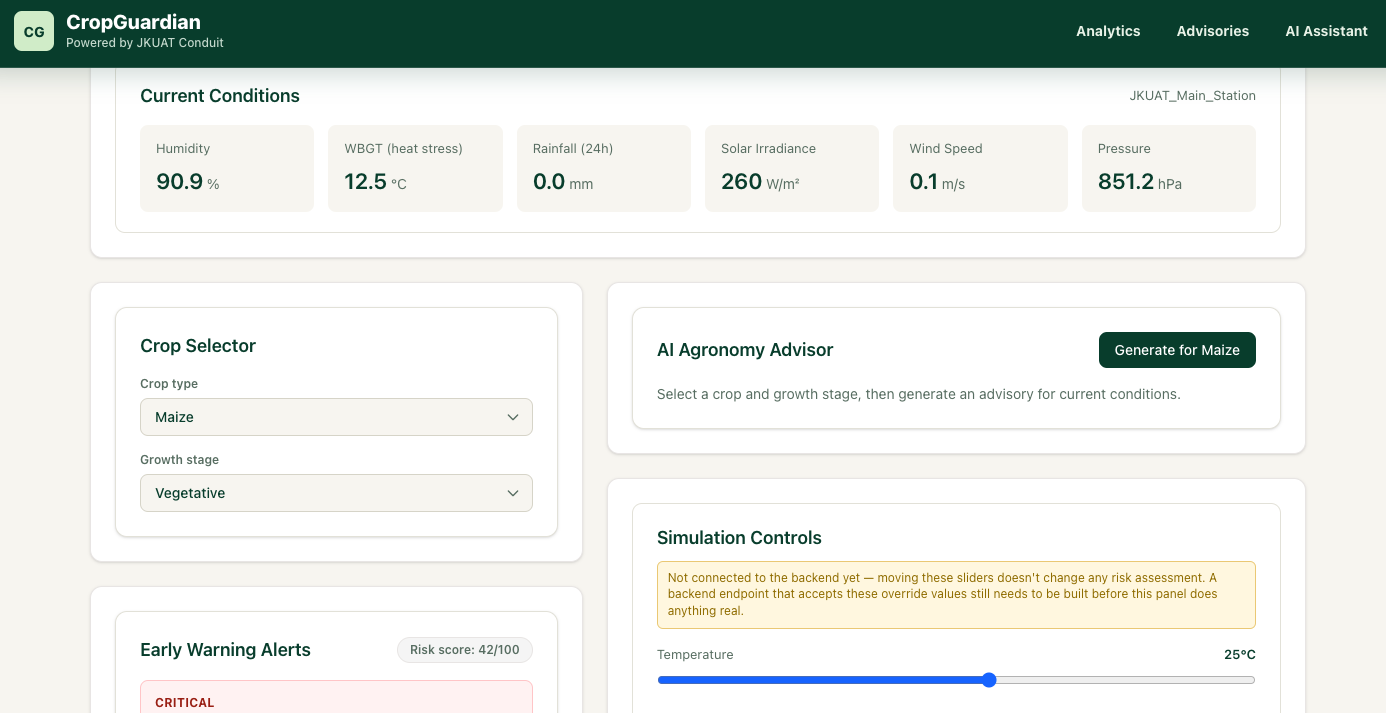
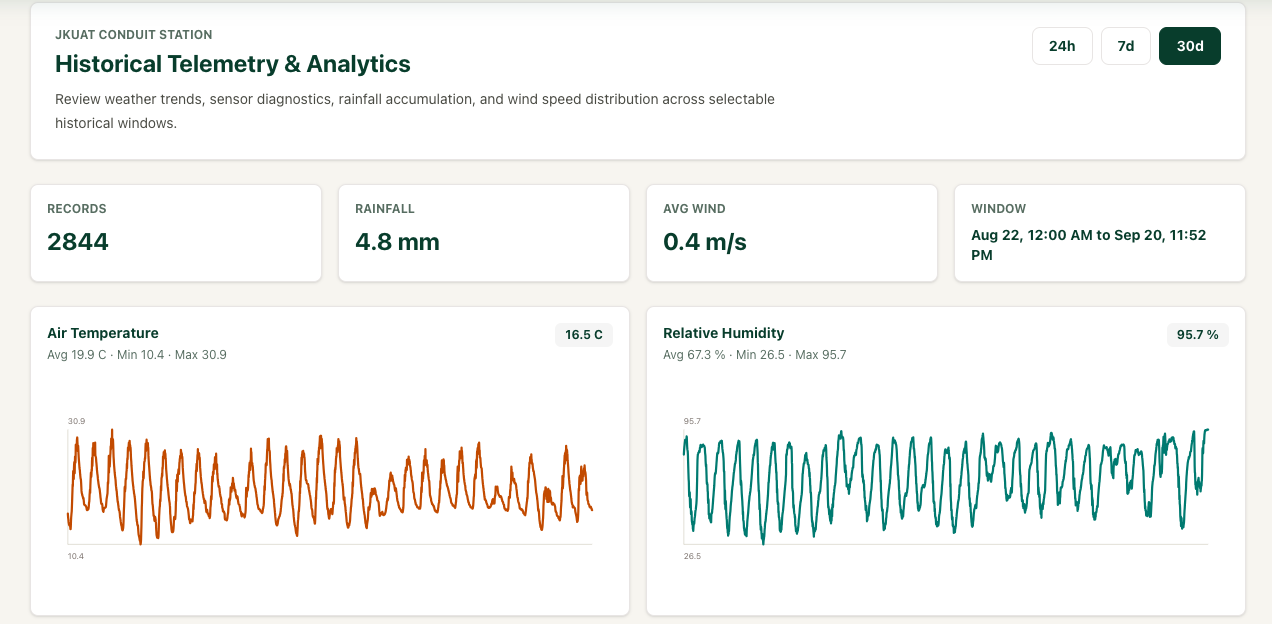
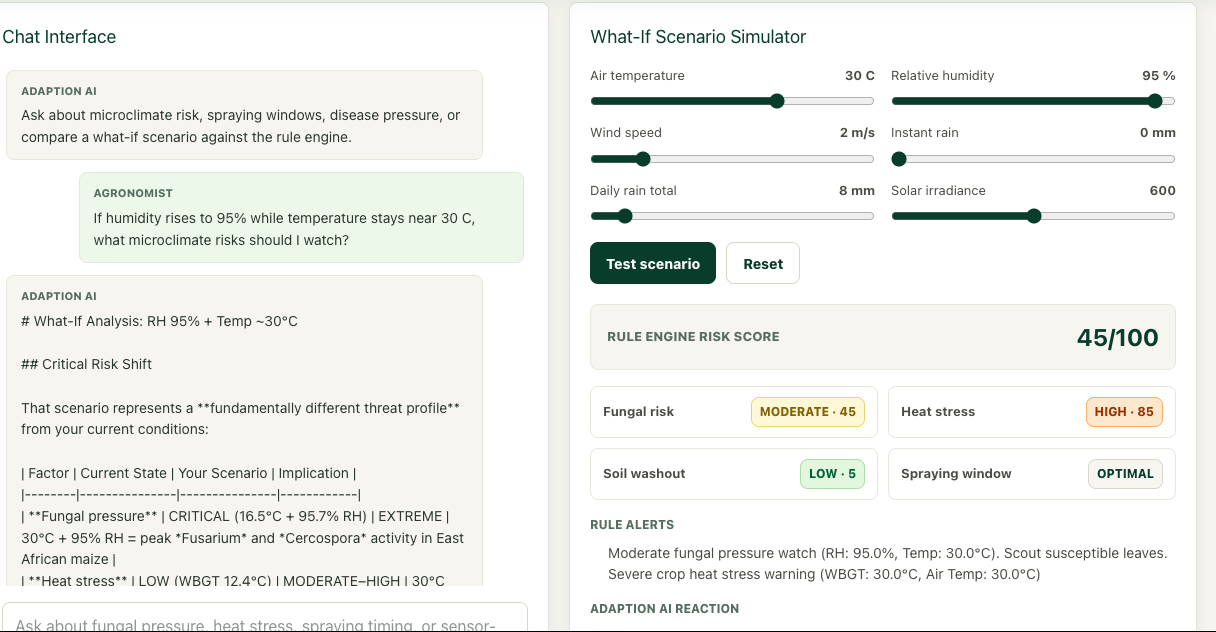
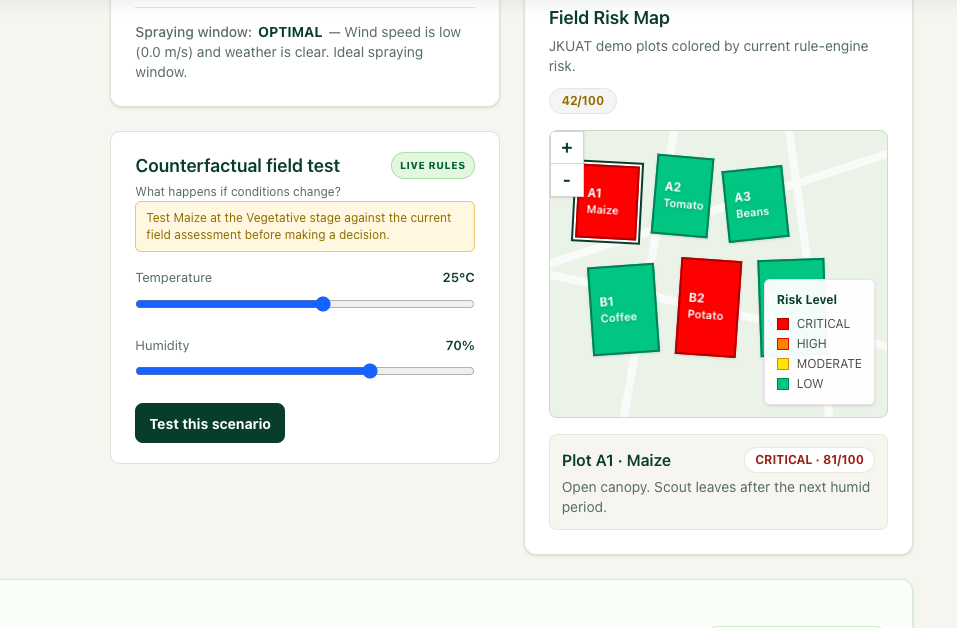
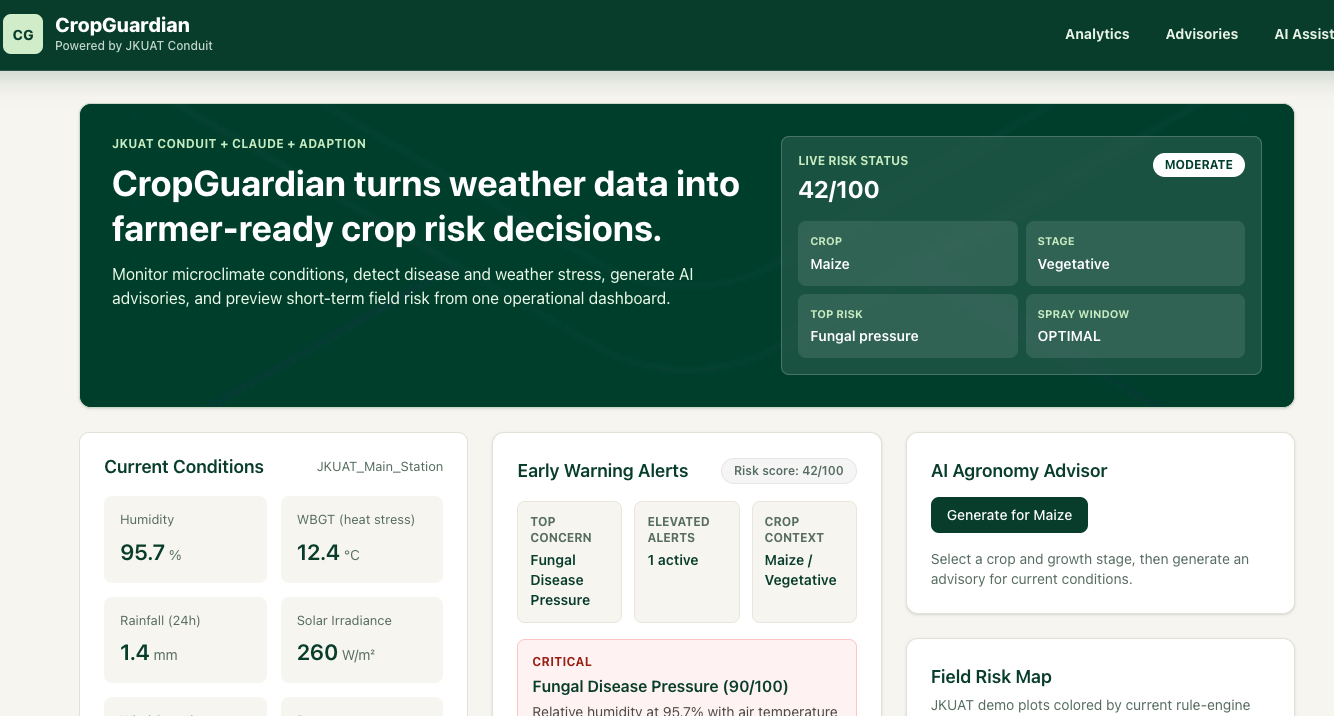
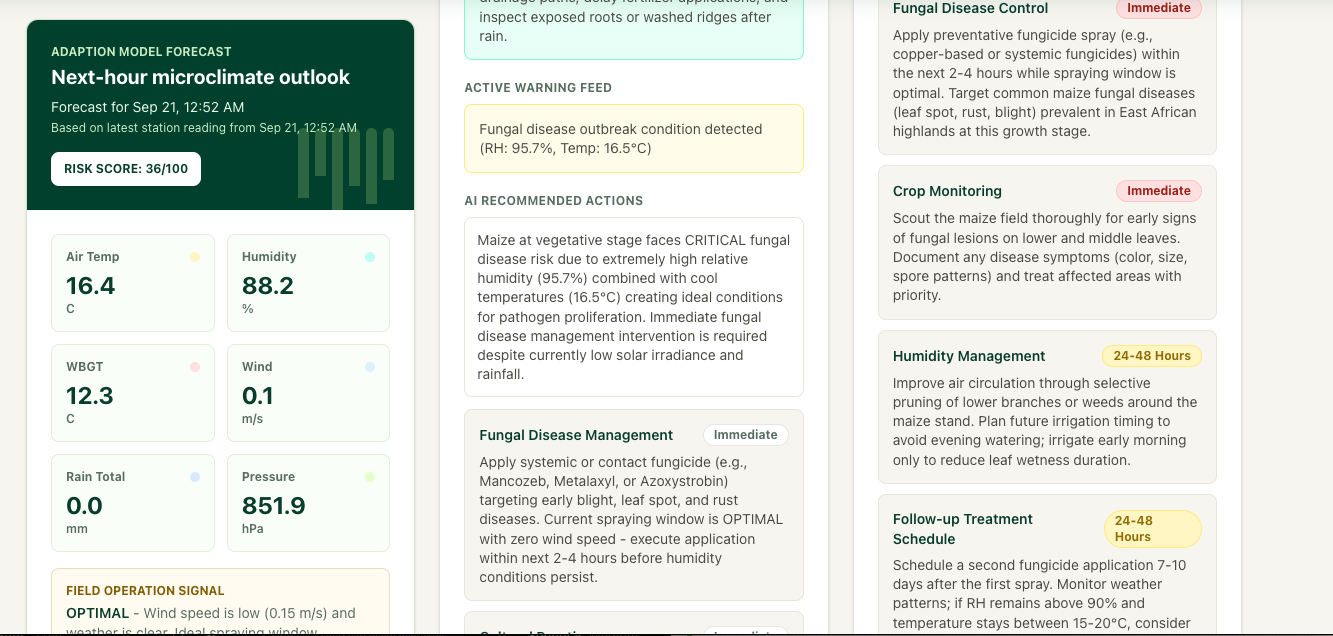
The project is an AI-supported crop monitoring dashboard that uses JKUAT Conduit weather telemetry to track current field conditions. It analyzes temperature, humidity, rainfall, wind speed, solar irradiance, pressure, and WBGT heat stress. A rule-based agronomic engine then evaluates risks such as fungal disease pressure, heat stress, soil washout, moisture stress, wind risk, and spraying suitability. The system also includes an AI advisor that generates crop-specific recommendations based on the selected crop and growth stage.
While building CropGuardian, I learned how to connect backend APIs with a frontend dashboard, process weather telemetry, design rule-based agricultural risk logic, and integrate AI-generated advisories into a practical decision-support tool. I also learned the importance of fallback systems, because the project can still provide rule-based recommendations even when live AI or forecasting services are unavailable.
The project was built using a React and Vite frontend, with a FastAPI backend in Python. The backend handles telemetry processing, crop data, agronomic rules, advisory generation, forecast logic, and API endpoints. The frontend presents the information through interactive panels for current conditions, alerts, crop selection, forecasts, simulations, AI assistance, and field risk visualization.
One of the main challenges was converting raw weather readings into meaningful agricultural advice. Another challenge was making the system useful even when external services, such as live telemetry or AI APIs, are unavailable. To solve this, CropGuardian includes local data fallbacks and deterministic rule-based recommendations. Designing the dashboard so that complex climate and crop-risk information remains easy to understand was also an important part of the project.
In the future, CropGuardian can be improved with more sensor types, better forecasting models, mobile notifications, support for more crops, local language support, and pest or disease image detection
Built With
- ai
- analysis
- anthropic
- claude
- css
- csv
- data
- fastapi
- forecasting
- javascript
- learning
- machine
- pydantic
- python
- react
- telemetry
- uvicorn
- visualization
- vite
- weather

Log in or sign up for Devpost to join the conversation.