-
-
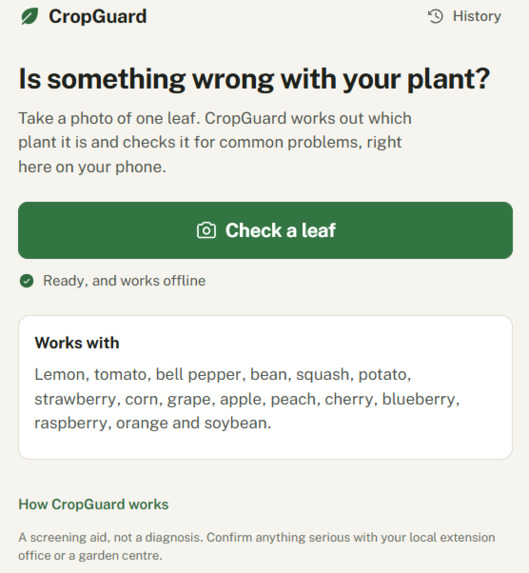
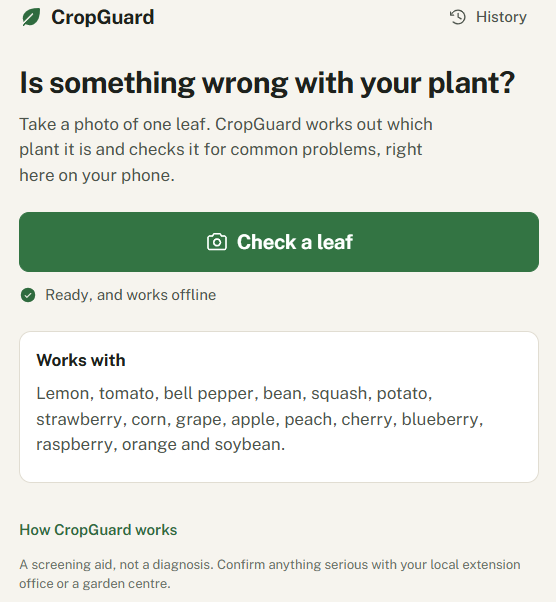
UI of Crop Guard
Inspiration
We were inspired by hardships that normal people like us face when trying to grow our own garden. We were never taught how to take care of a plant other than watering it and we were also never taught how much to water the plant. Similarly, we believed others would also face difficulty in reading the signs that plants give for different issues and needs. To assist others with this difficult task, we built CropGuard.
What it does
CropGuard uses AI to identify plant diseases from photos and gives everyday gardeners personalized guidance to diagnose problems and keep their plants healthy. People simply need to open their phone and snap a picture of their plant, which an AI model then analyzes and classifies, providing a result containing the next steps to take and a diagnosis of the plant’s condition.
How we built it
We built CropGuard as a web based AI plant health assistant. We trained and integrated a computer vision model using a plant disease dataset so the system can analyze an uploaded image and identify potential diseases. We then connected the AI model to our web app, where users can upload a photo of their plant and receive a diagnosis along with actionable care recommendations. We designed the interface to make the technology simple enough for anyone to use, even without prior gardening or plant-care knowledge.
Challenges we ran into
One major issue we faced was the fact that our Plant Village dataset did not contain much data on lemons and beans, which are some of the most common garden plants. We addressed this by carefully researching and downloading separate datasets on each of these plants. Then we trained our model on all of these datasets in one go, increasing its scope significantly.
Accomplishments that we're proud of
Hallucinations in AI models are very common and that's why we are proud of our model’s high accuracy scores. Our model averages 83% accuracy over all the different plant diseases and species in our database. With such a small database and a very small AI model, 83% accuracy is a big accomplishment.
What we learned
We learned that building an AI solution is more than just creating a model but rather, it’s about understanding the user’s actual problem and making the technology useful and accessible. We learned how to integrate computer vision and AI into a real world application, work with imperfect data, and turn a technical idea into a product that everyday gardeners can actually use.
Built With
- css
- html
- javascript
- python
- react
- tensorflow
- typescript
- vercel
- vite

Log in or sign up for Devpost to join the conversation.