-
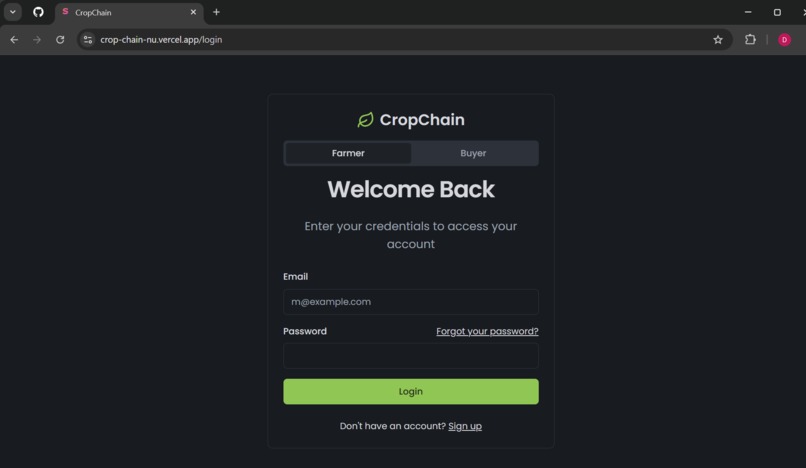
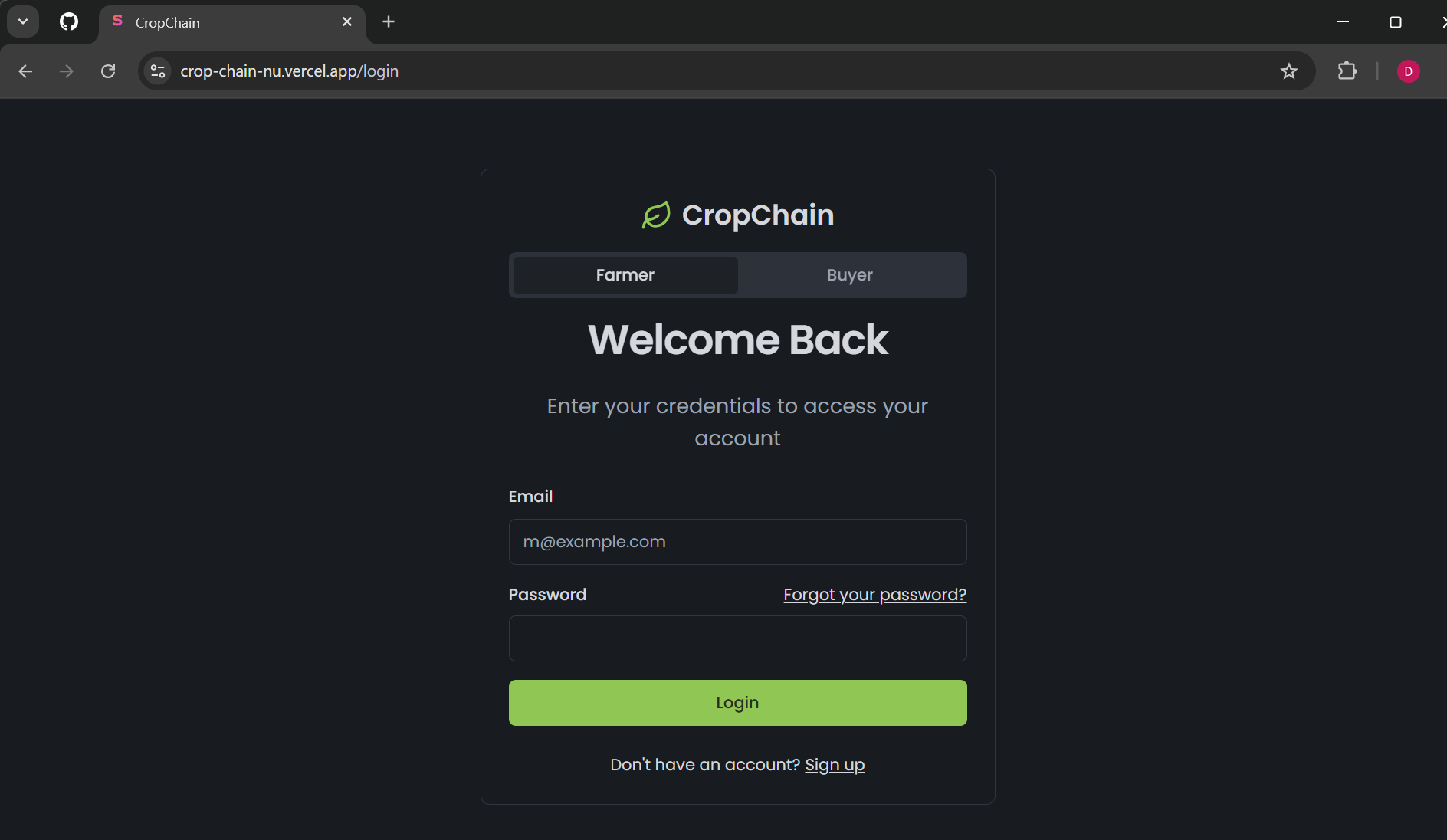
Login Page
-
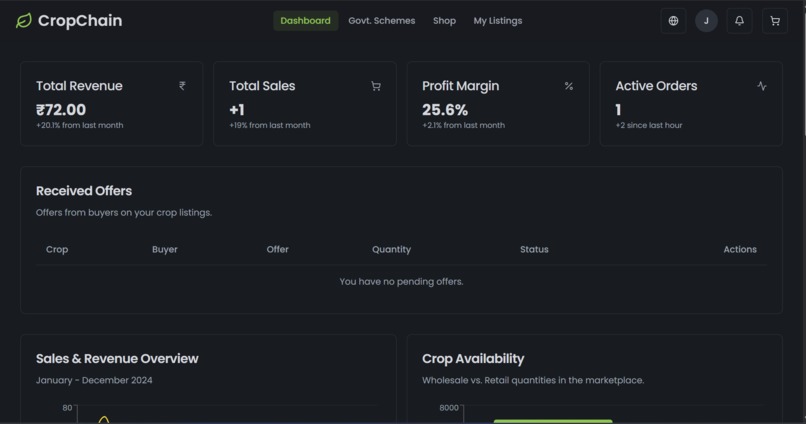
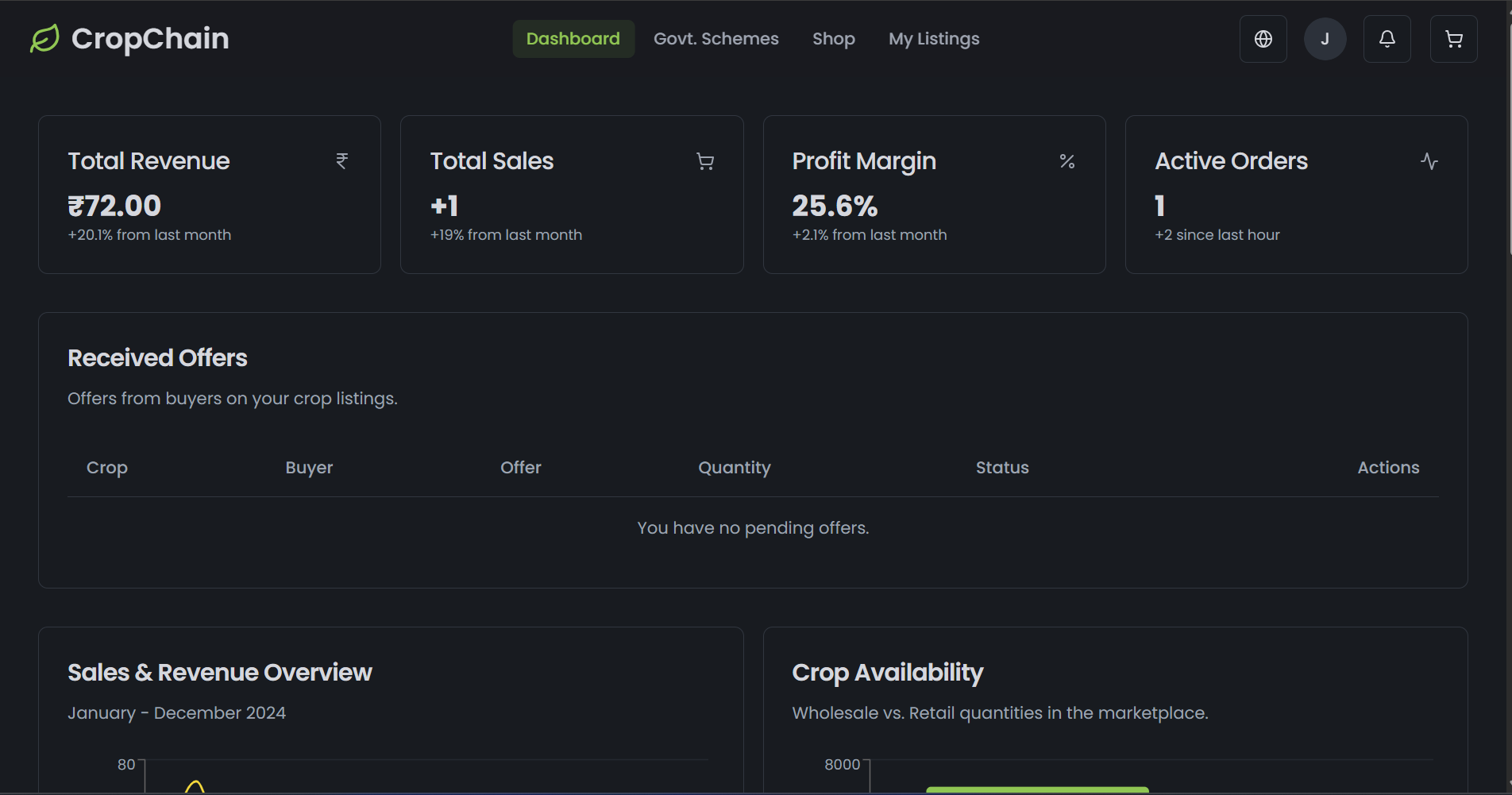
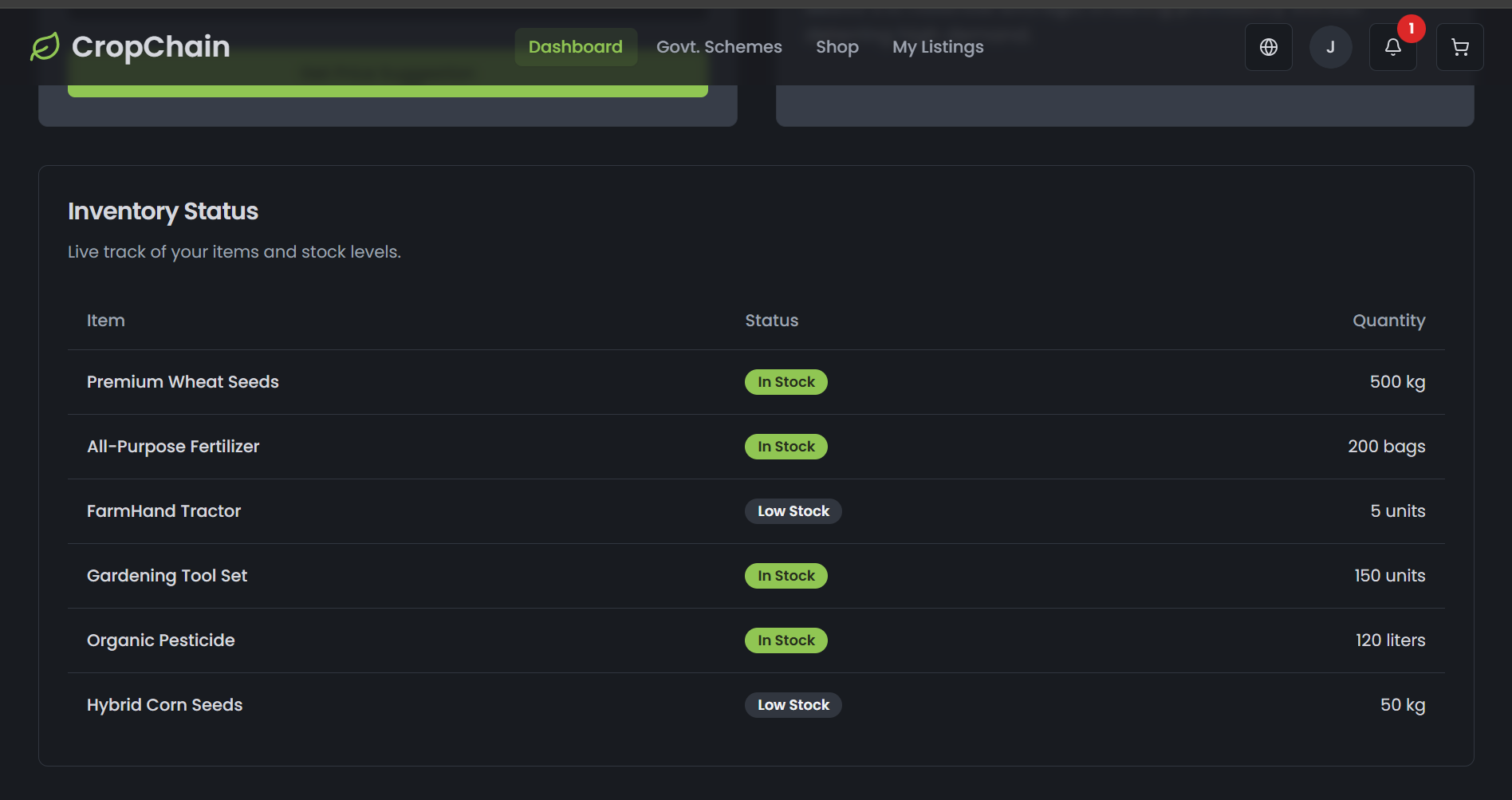
Dashboard of farmer page
-
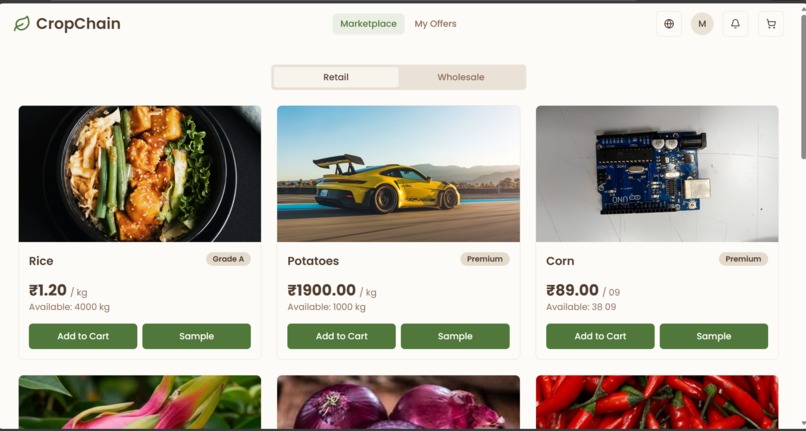
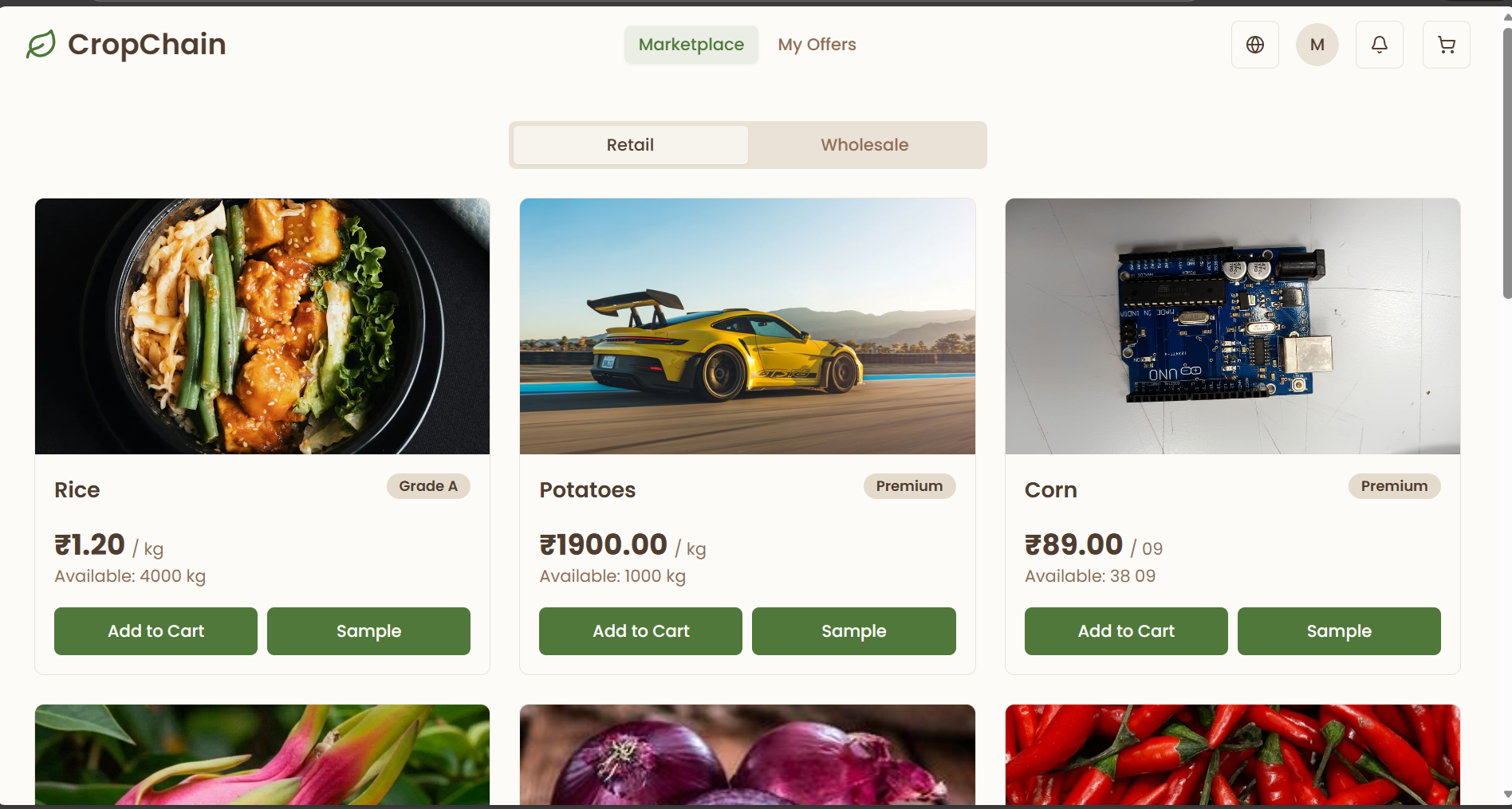
Buyer side application (Retail Section)
-
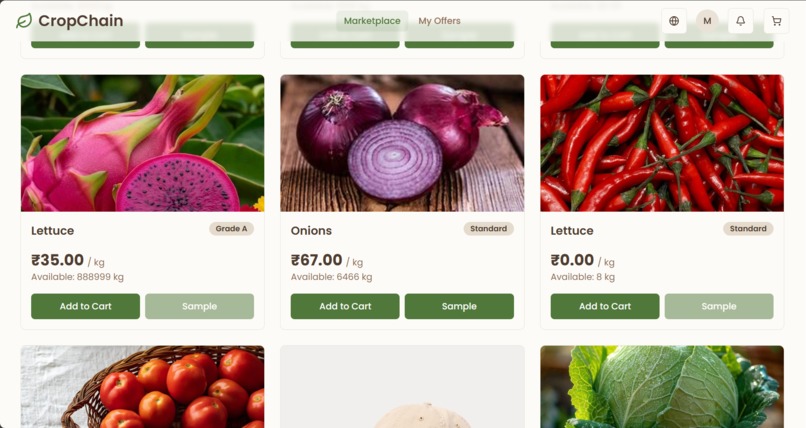
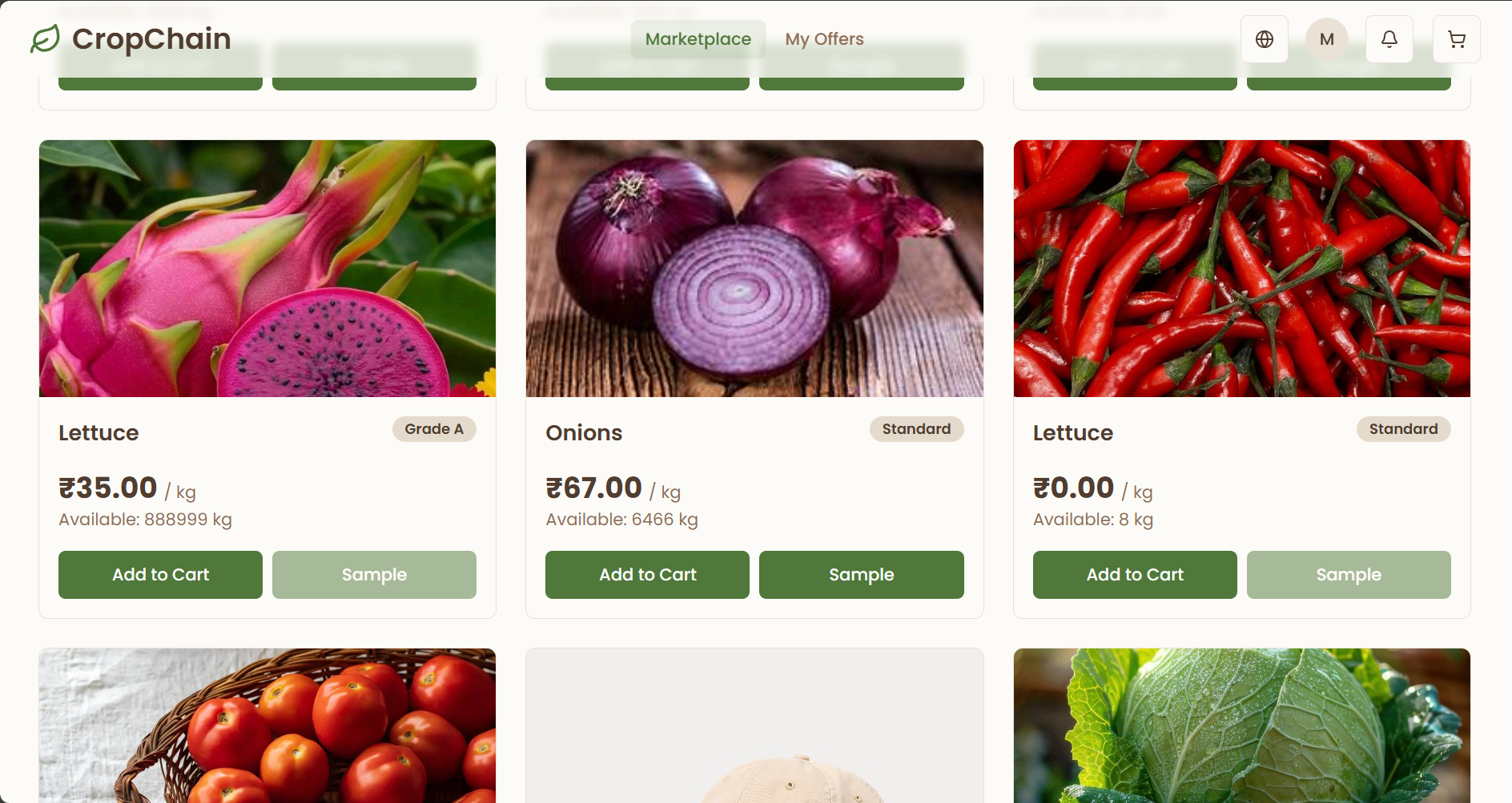
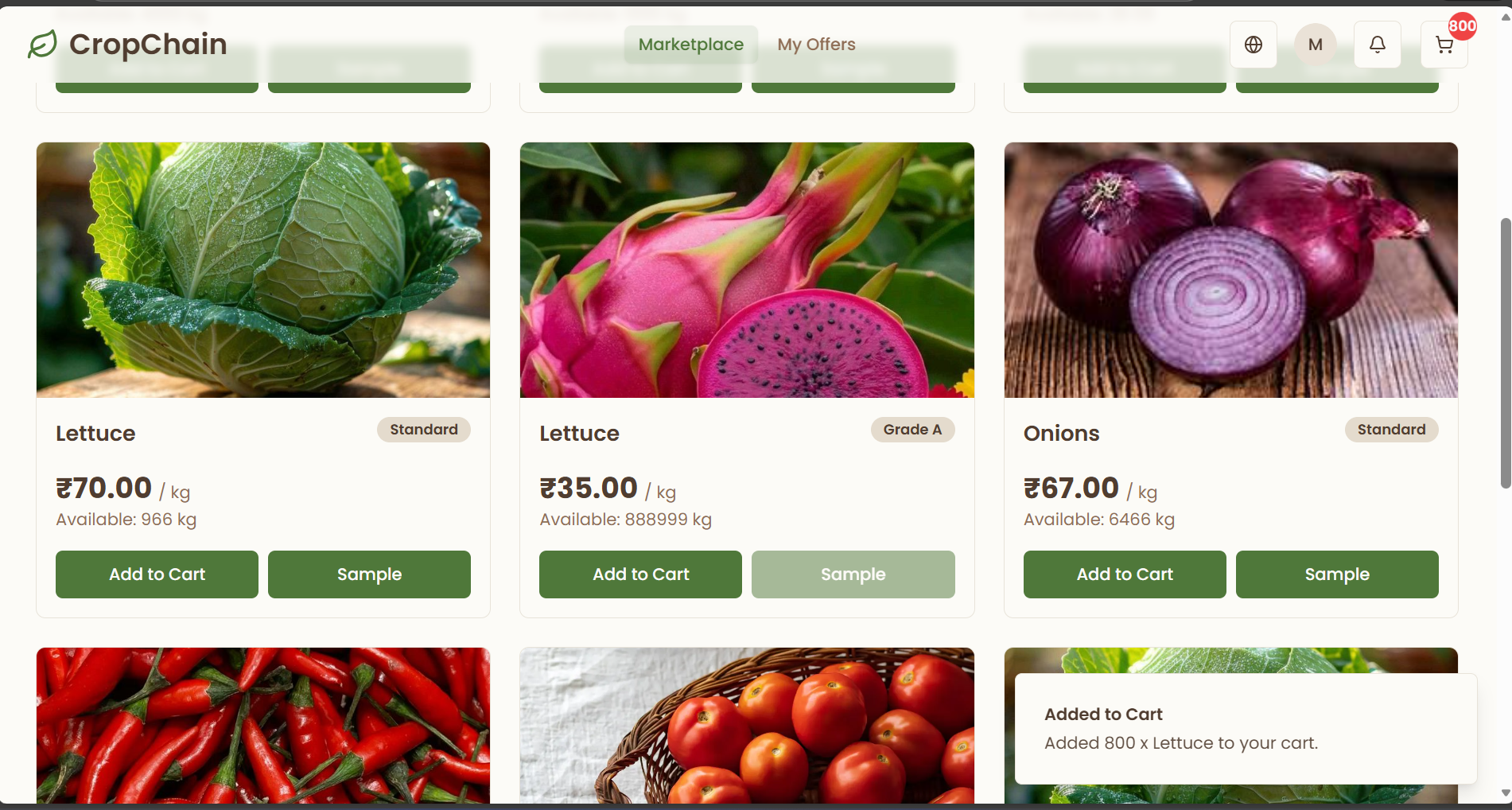
The blur sample button indicates farmer is not providing sample
-
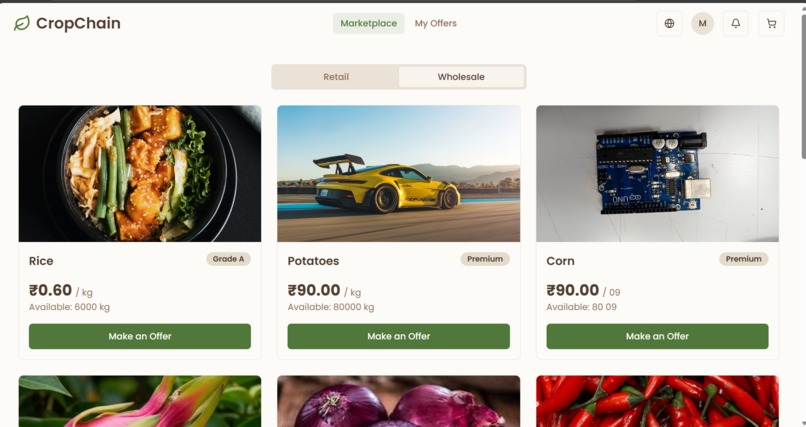
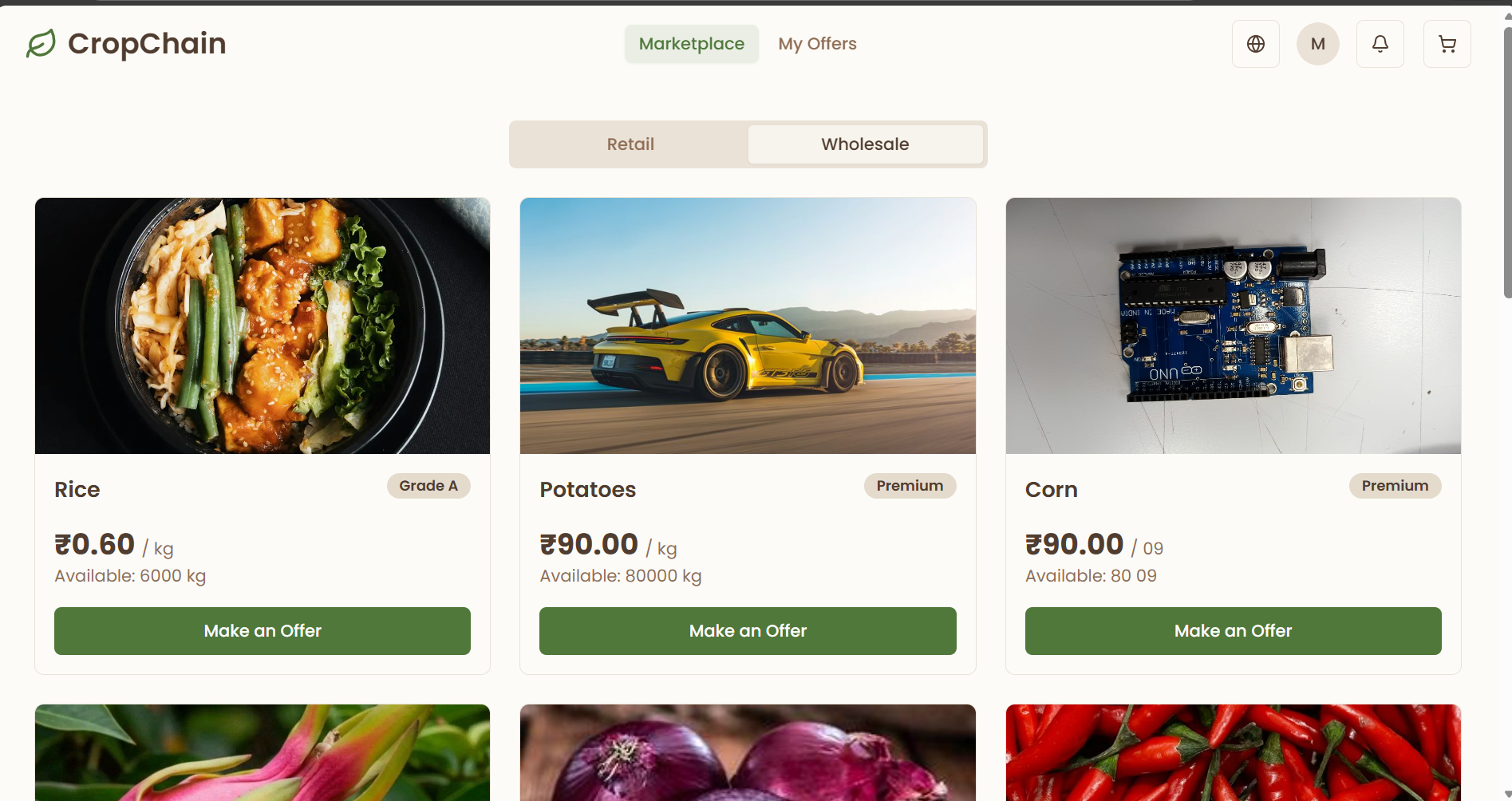
Wholesale Section
-
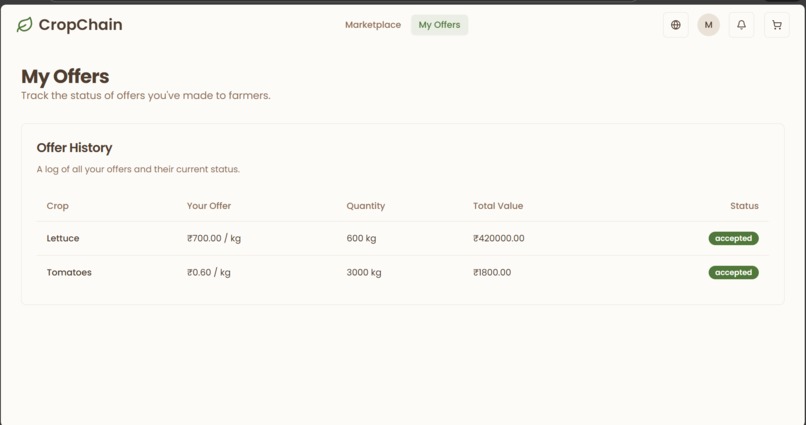
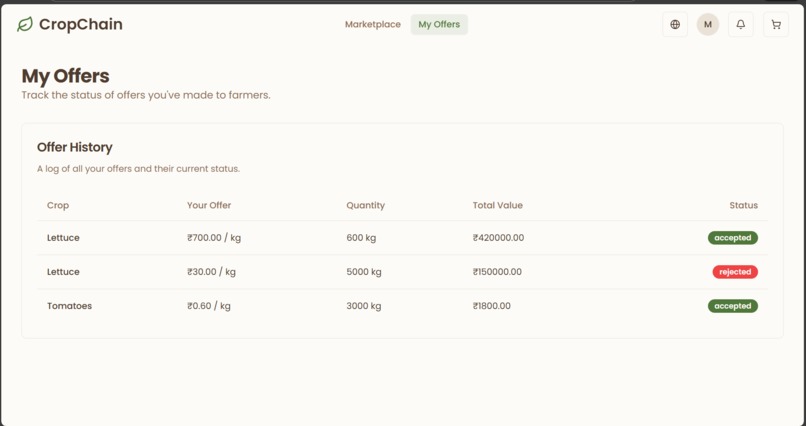
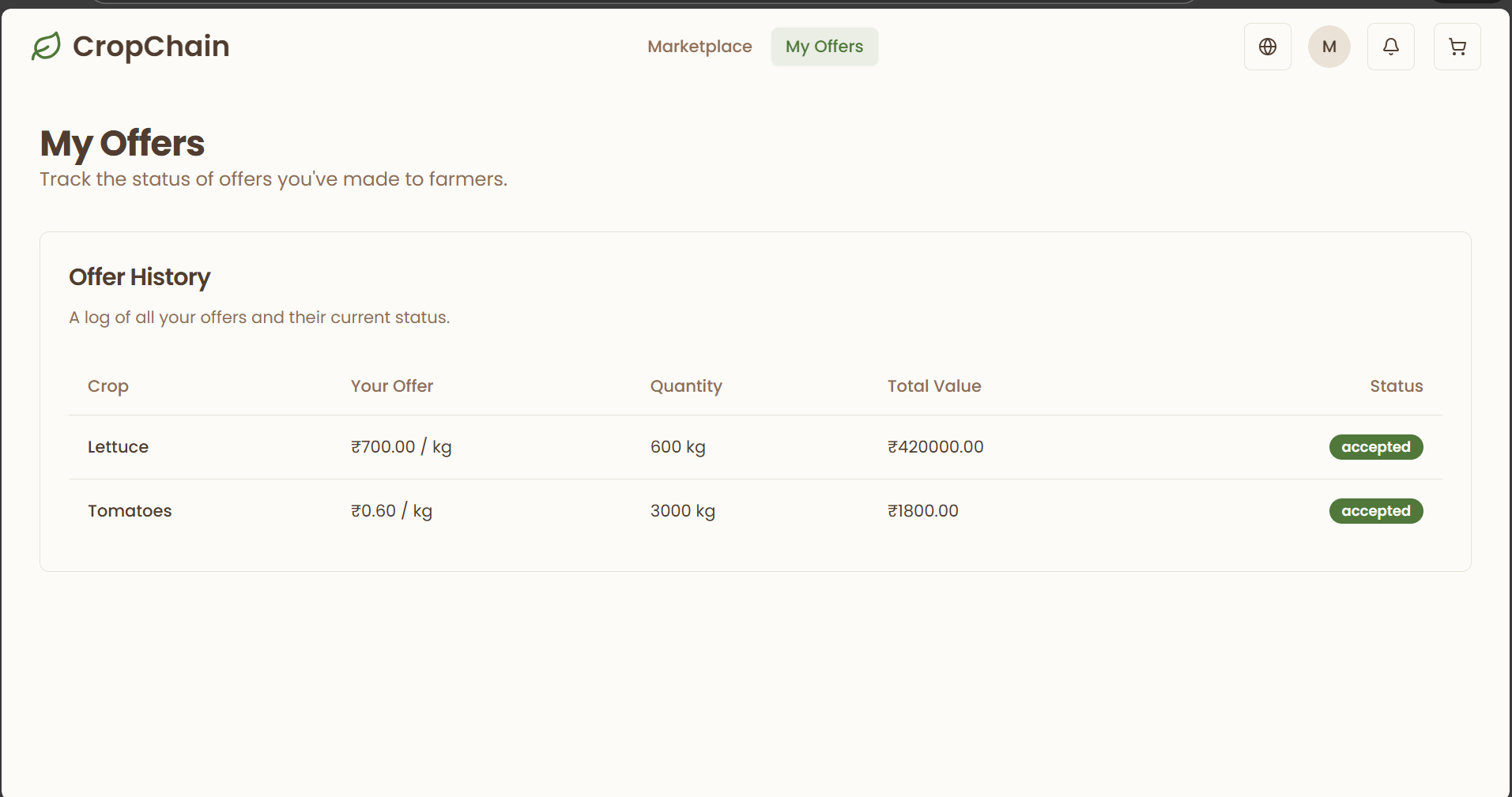
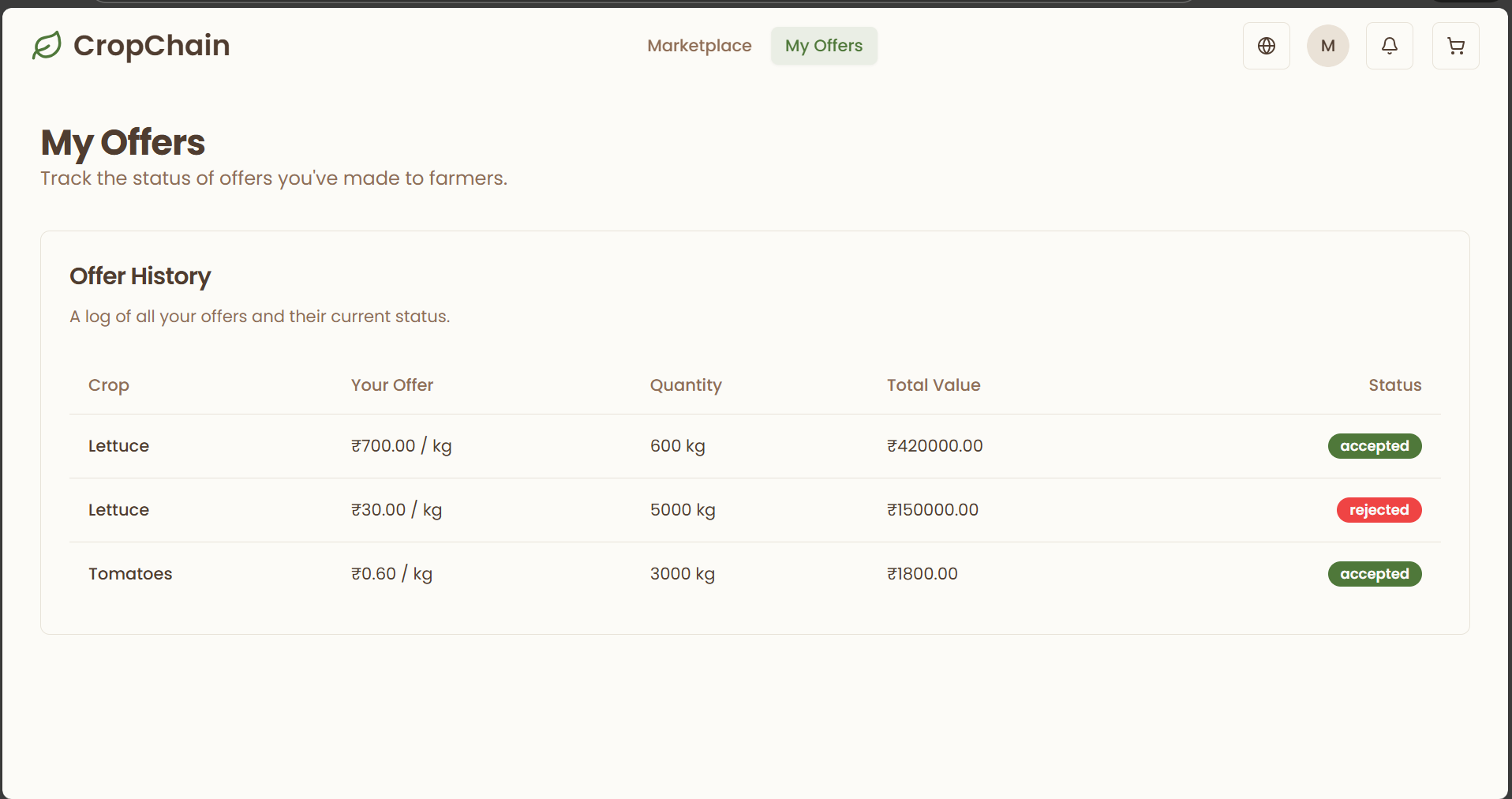
Offers i have made to farmer from wholesale section
-
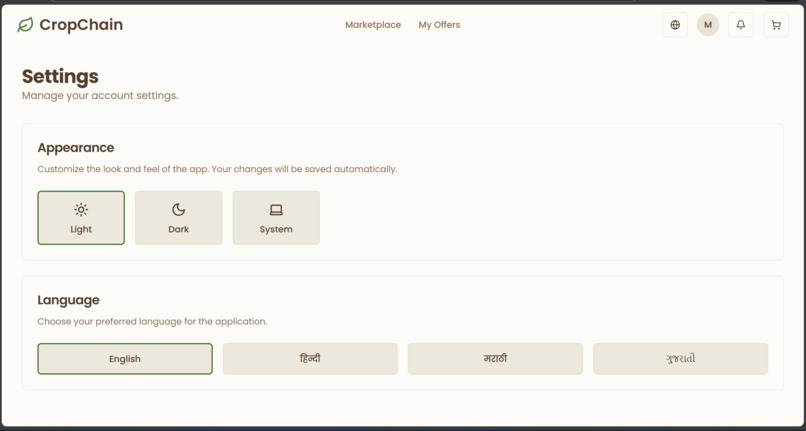
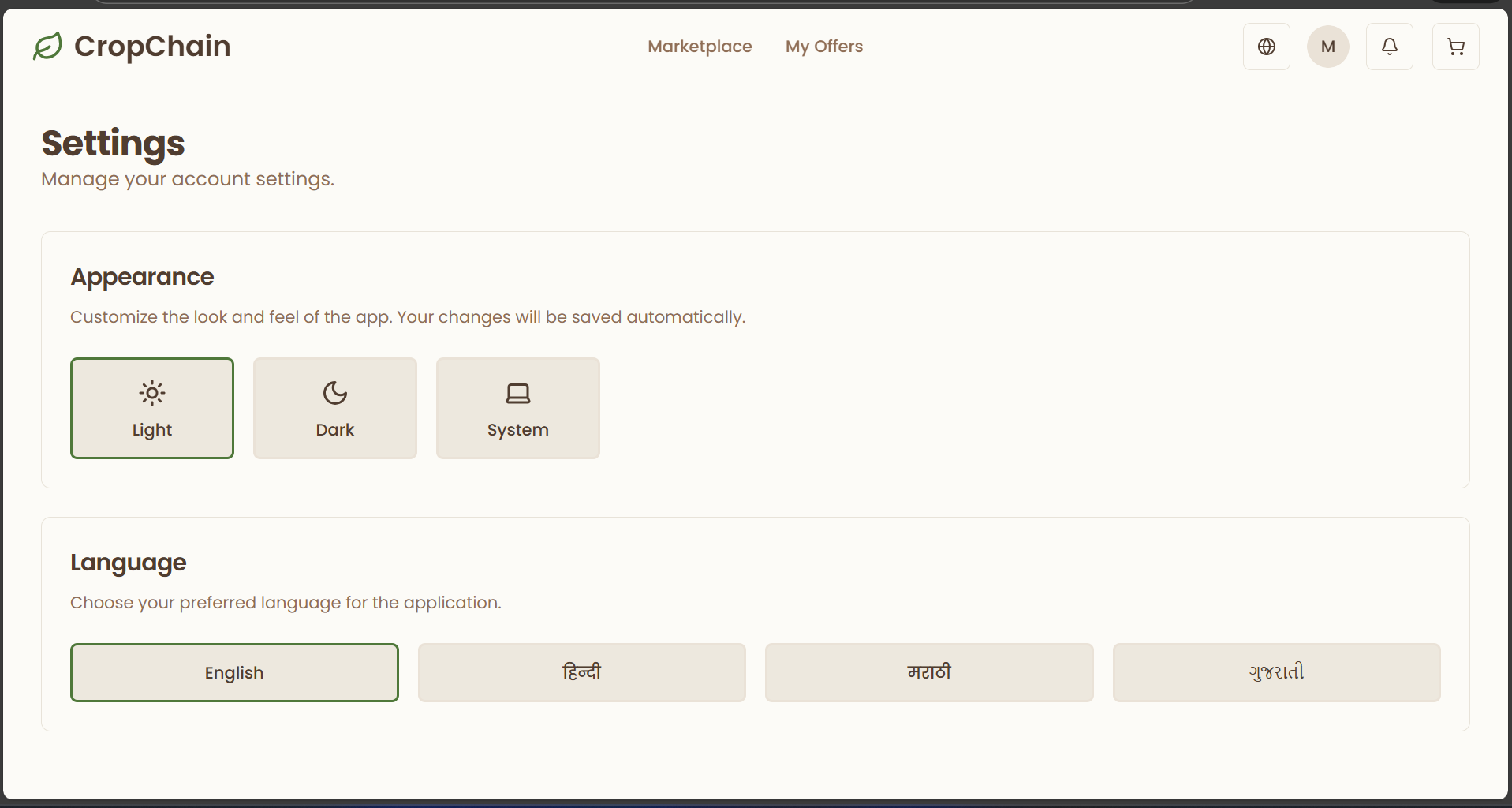
Can change languages and appearence
-
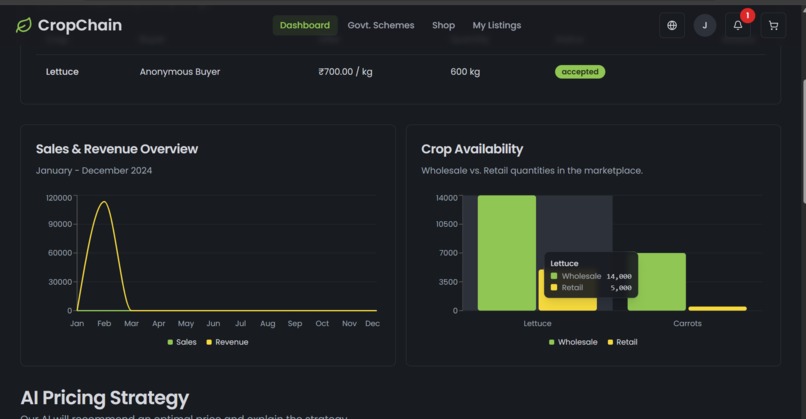
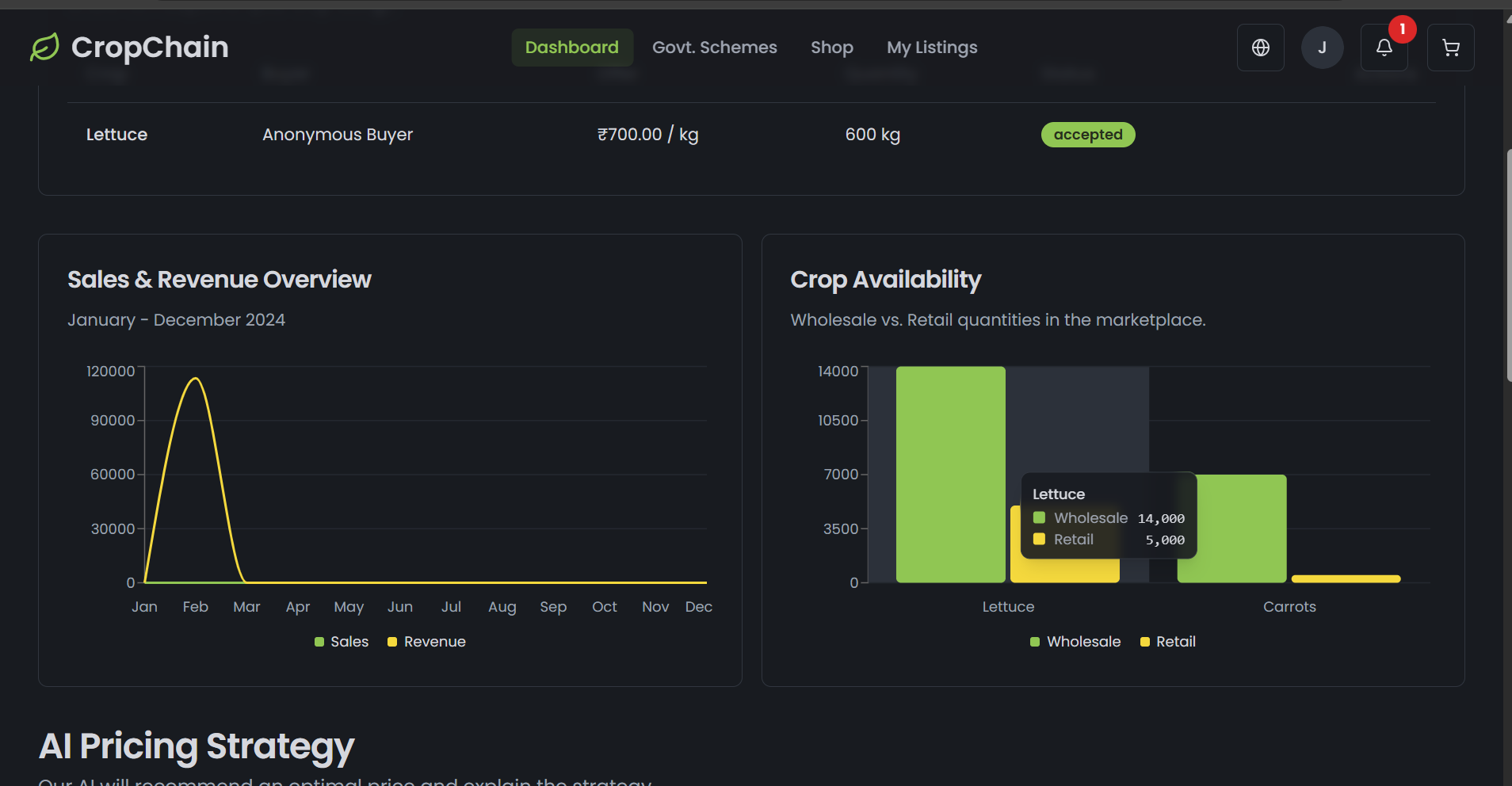
Analysis graph for farmer
-
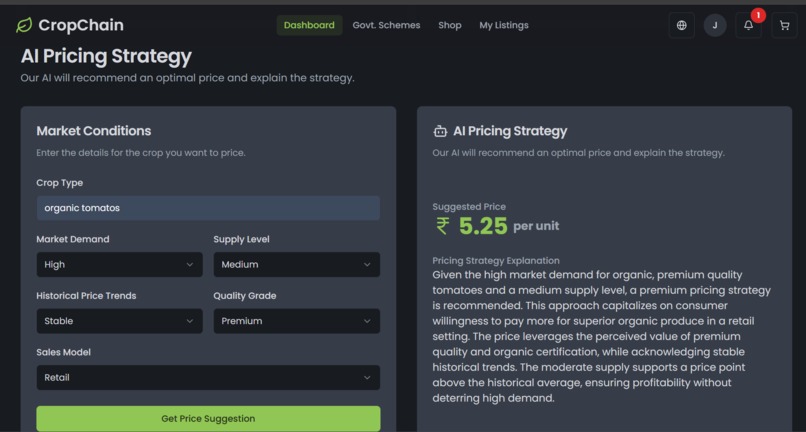
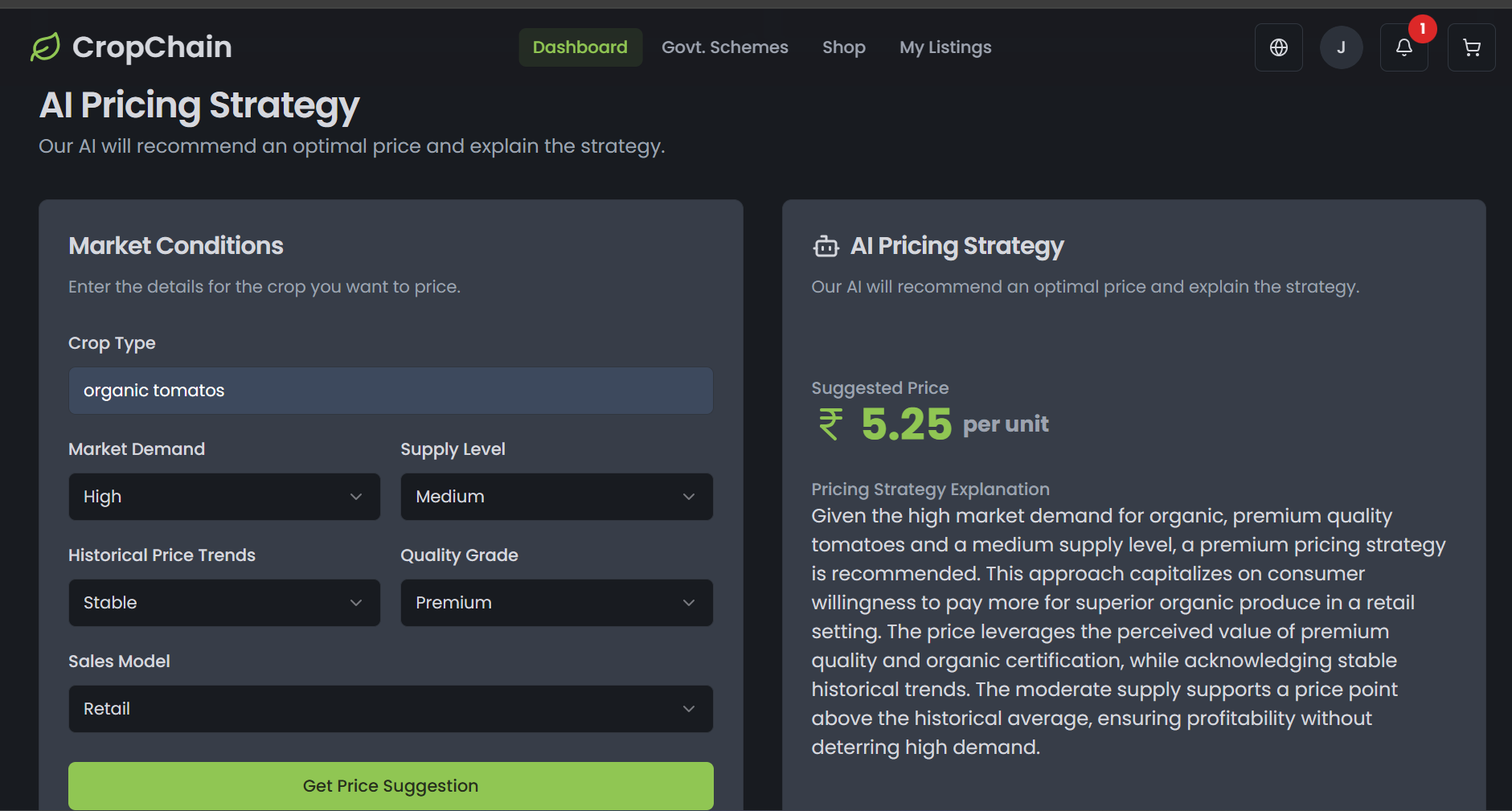
AI price generator as per the market situation and details provided
-
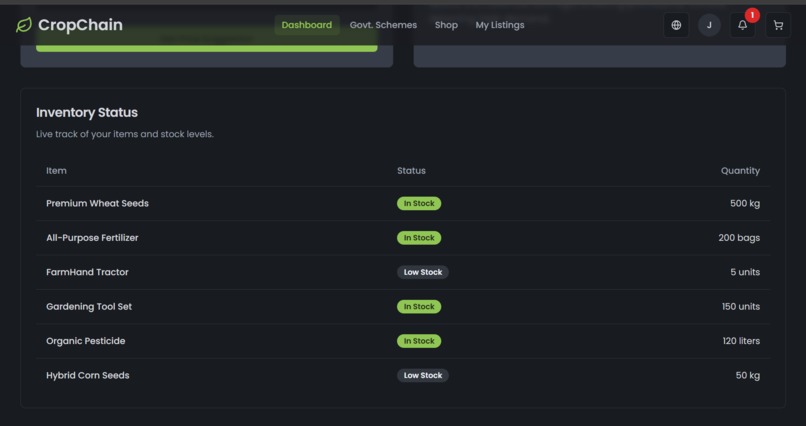
Farmer sales data
-
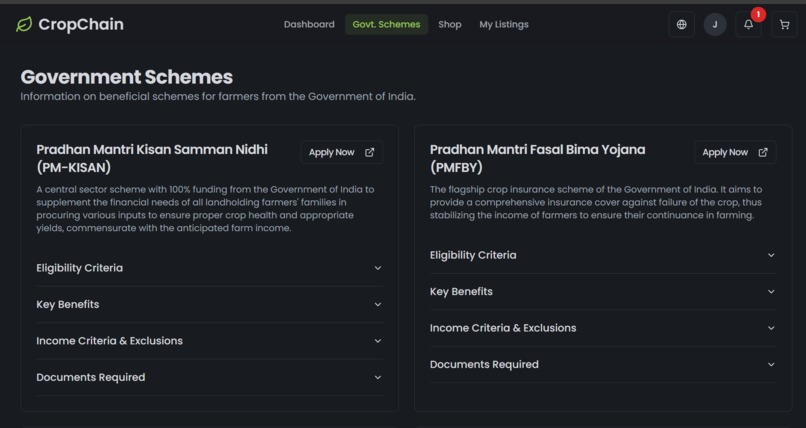
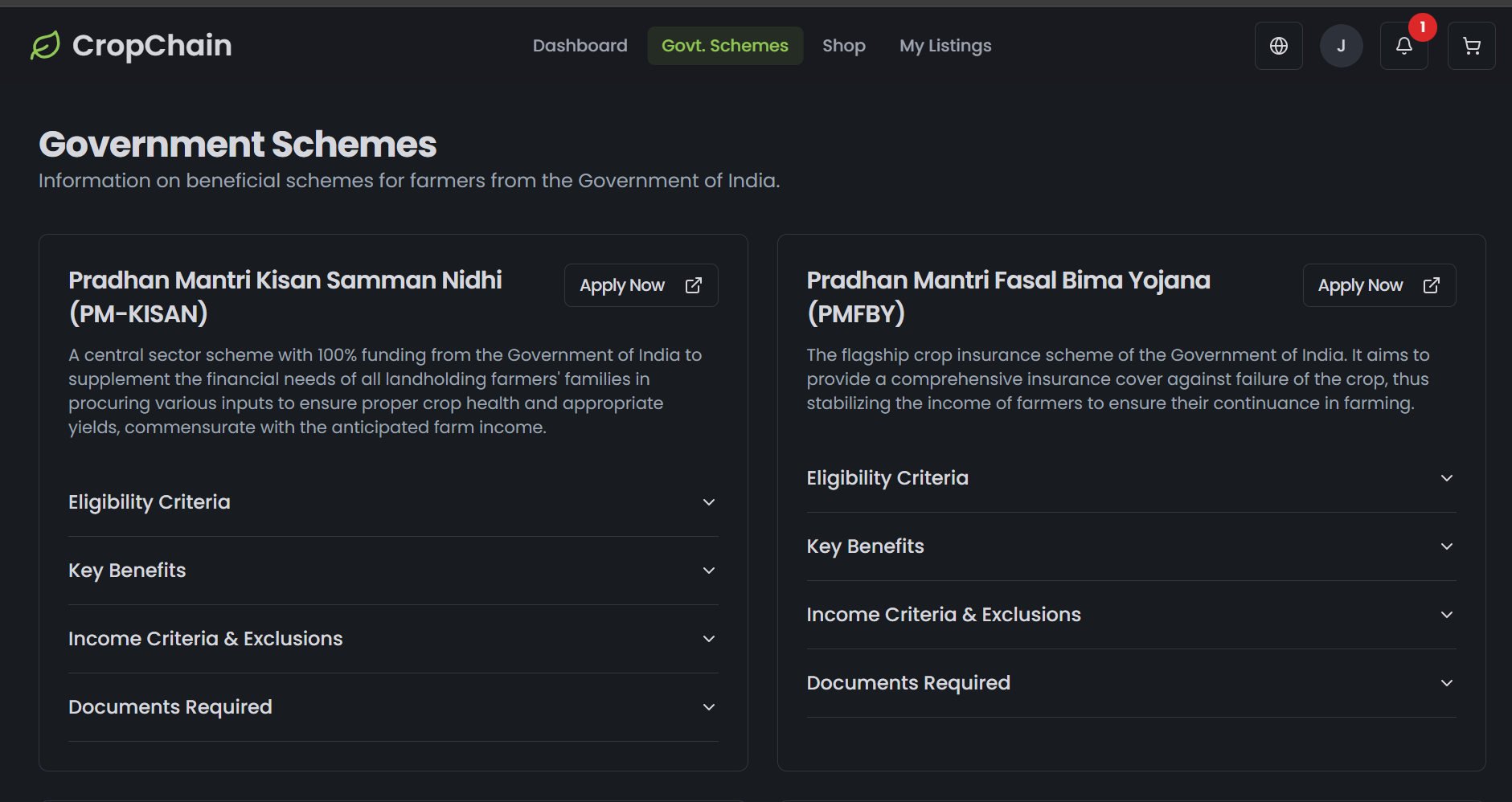
Farmers can check eligibility and all details related to schemes for them also they can redirect to official Gov Website with apply now link
-
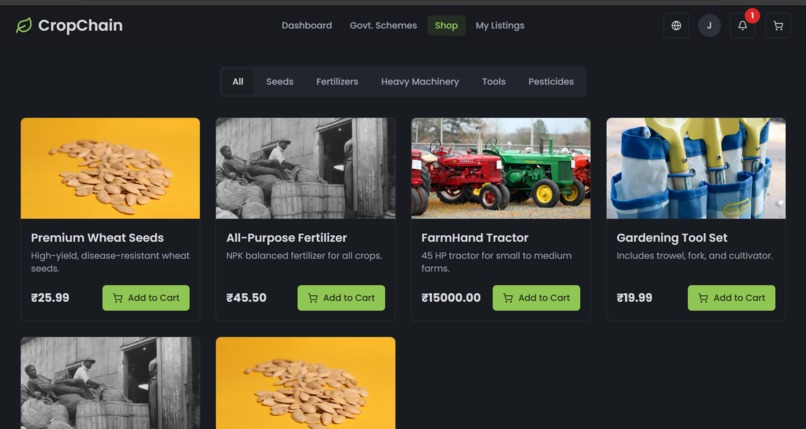
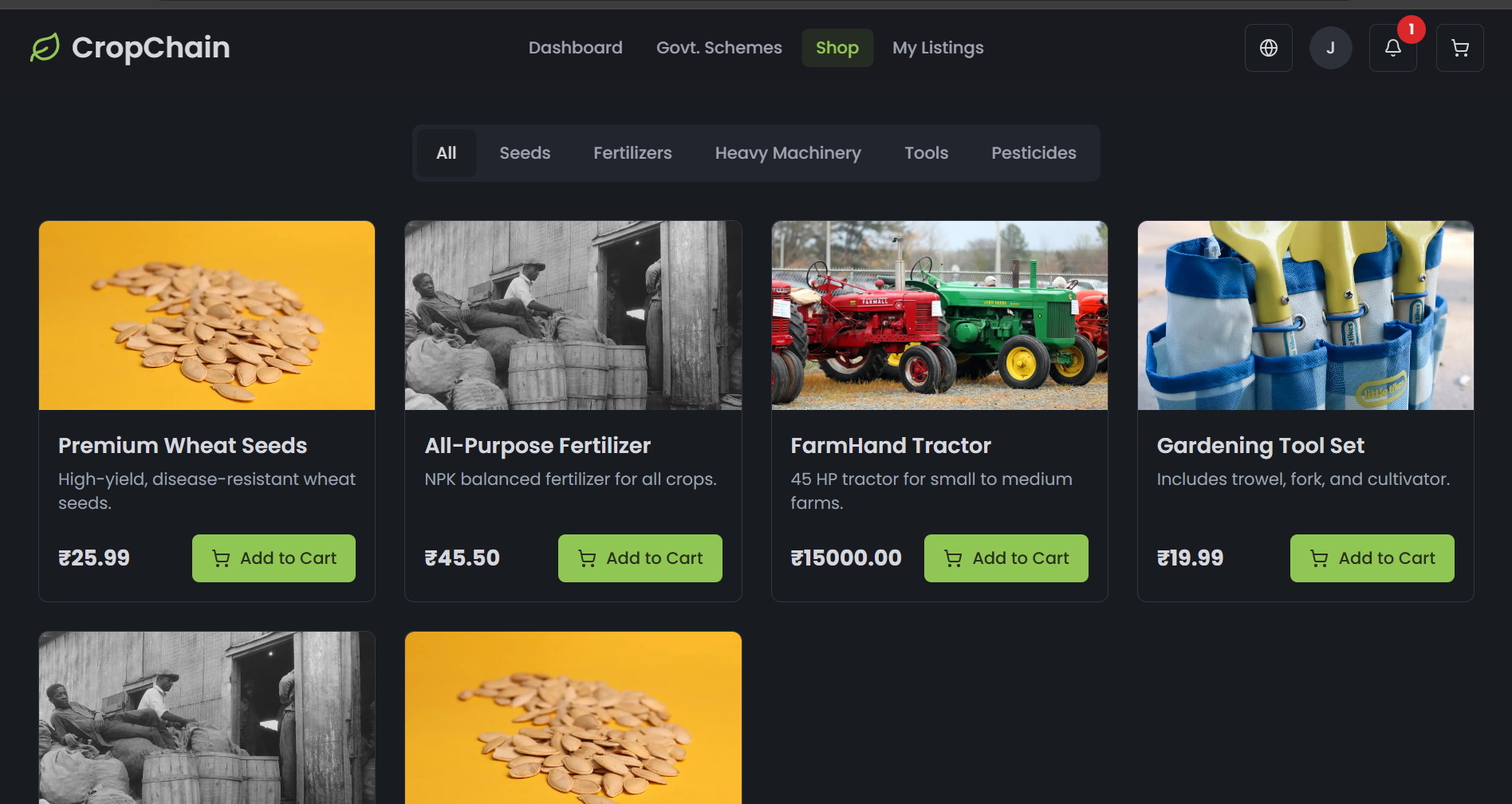
Farmers can buy these things
-
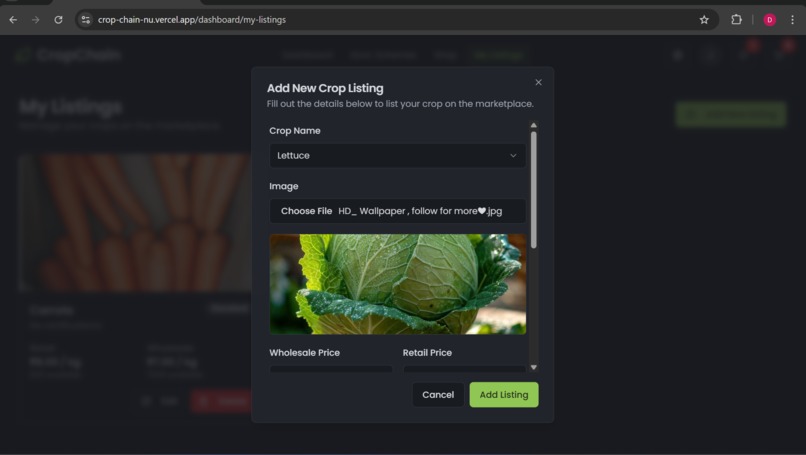
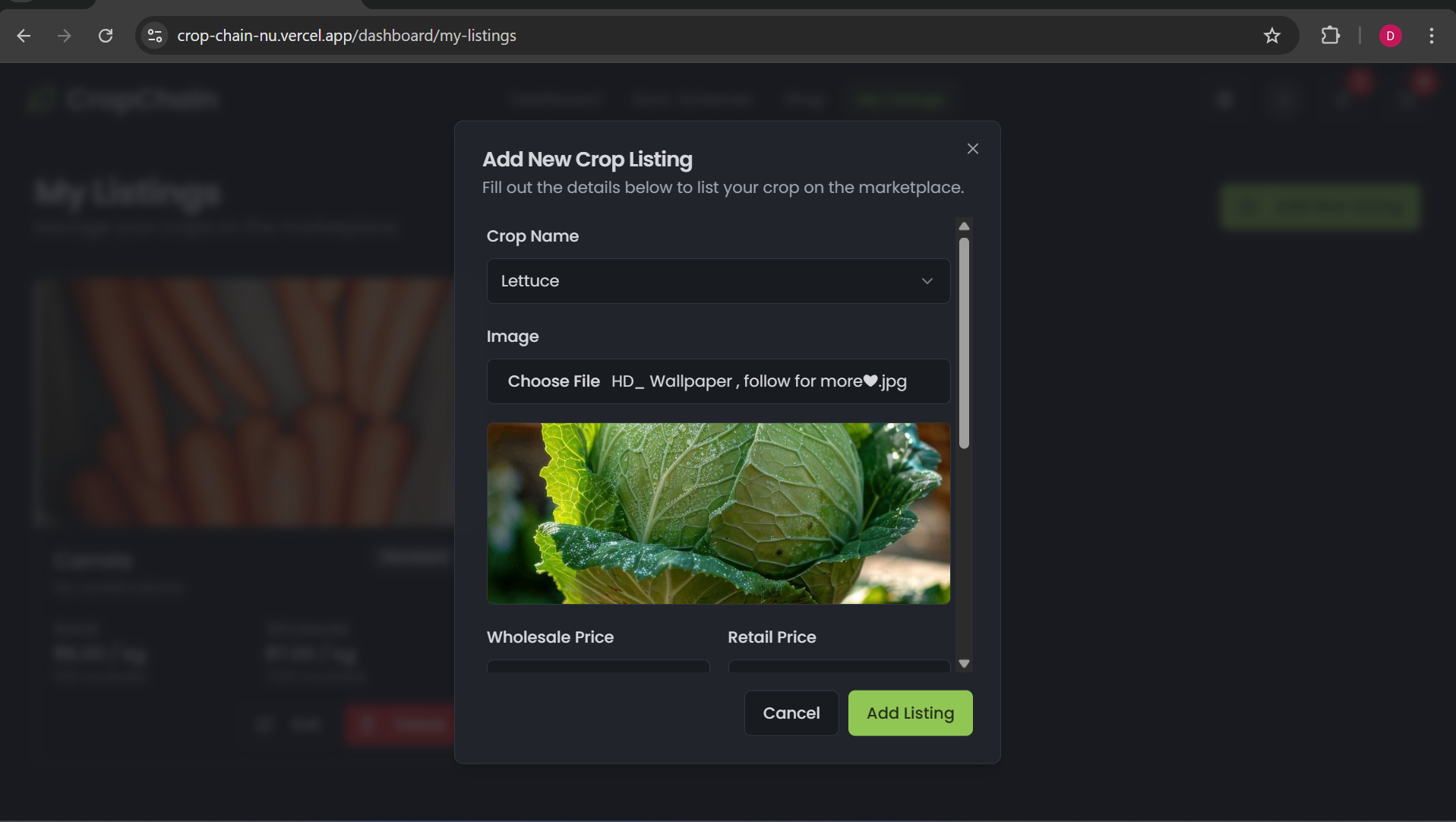
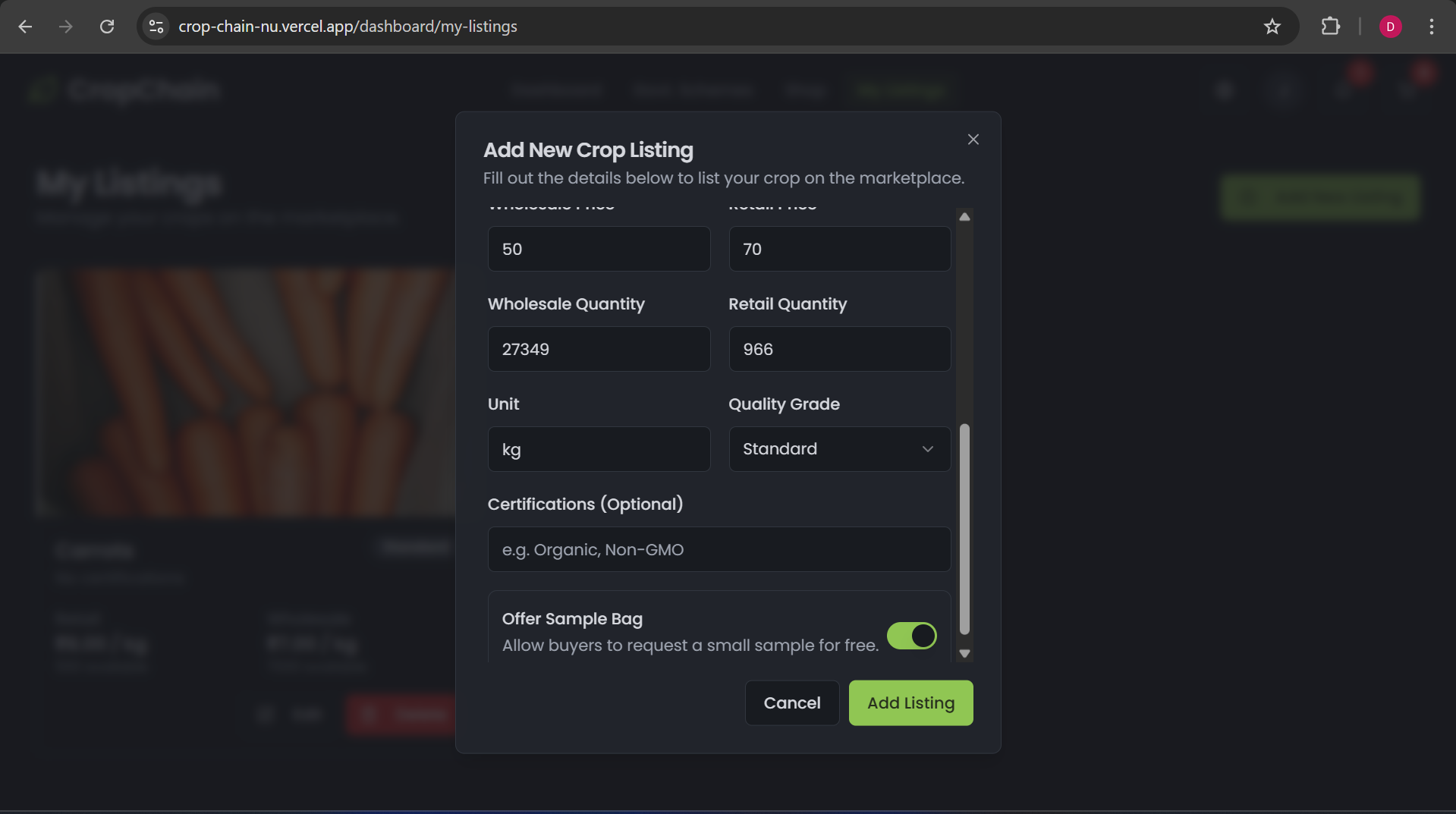
Listing by farmer
-
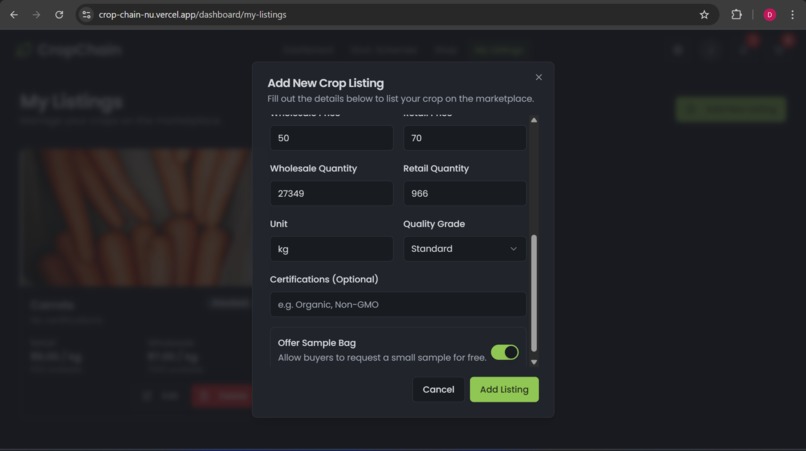
Toggle button for providing sample or not for this crop
-
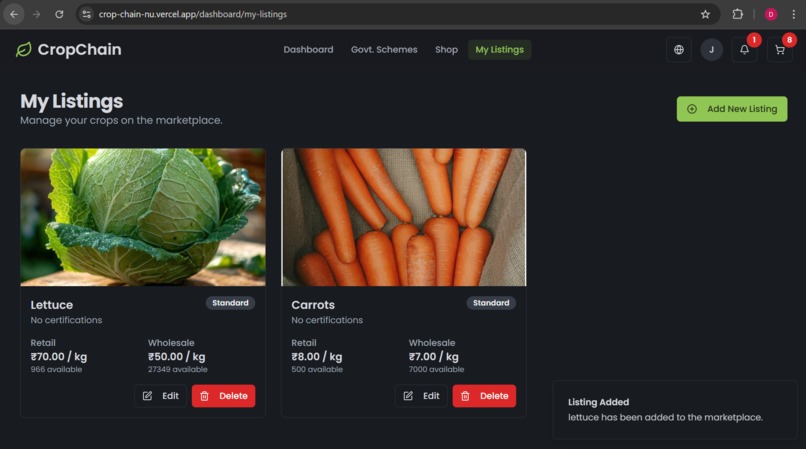
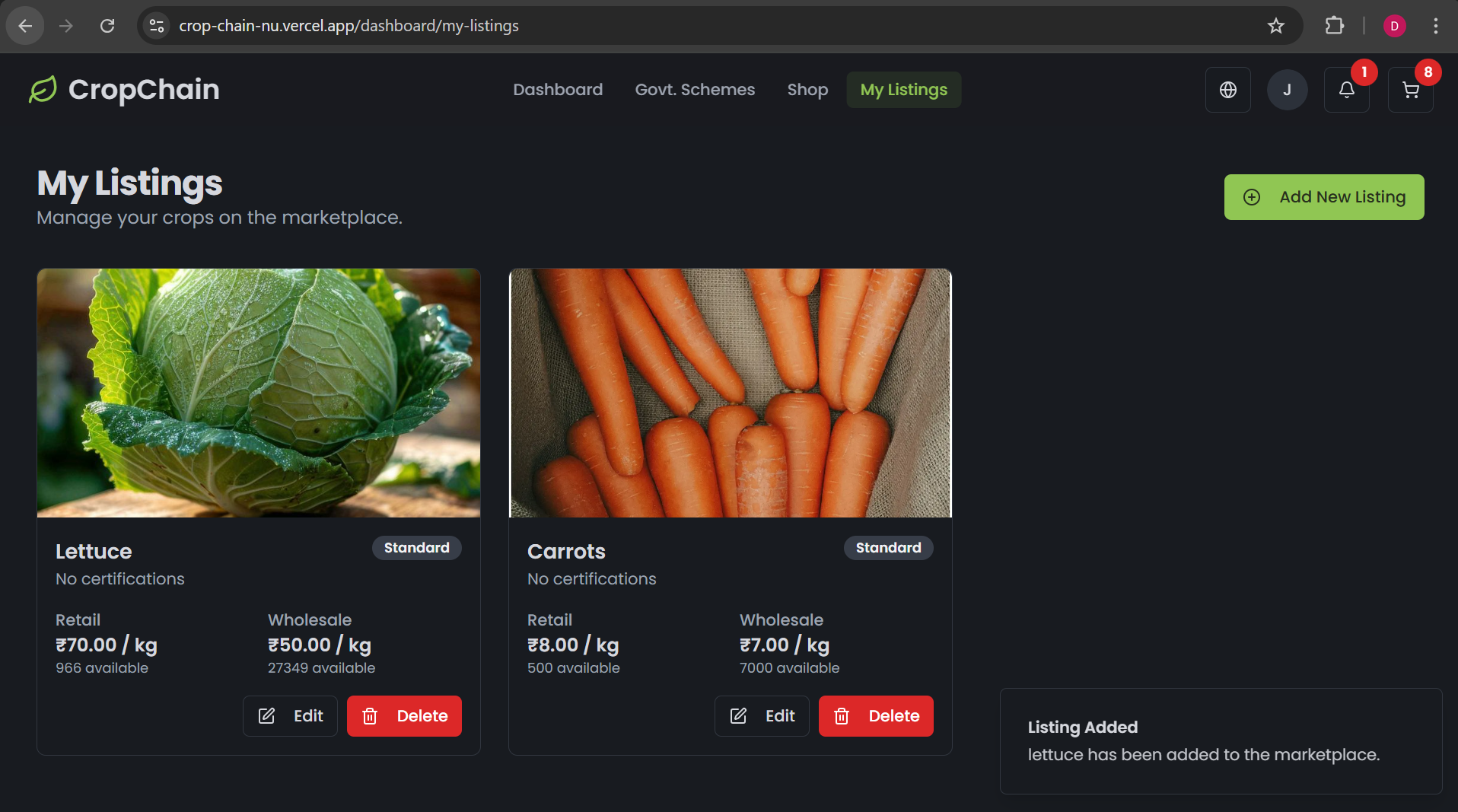
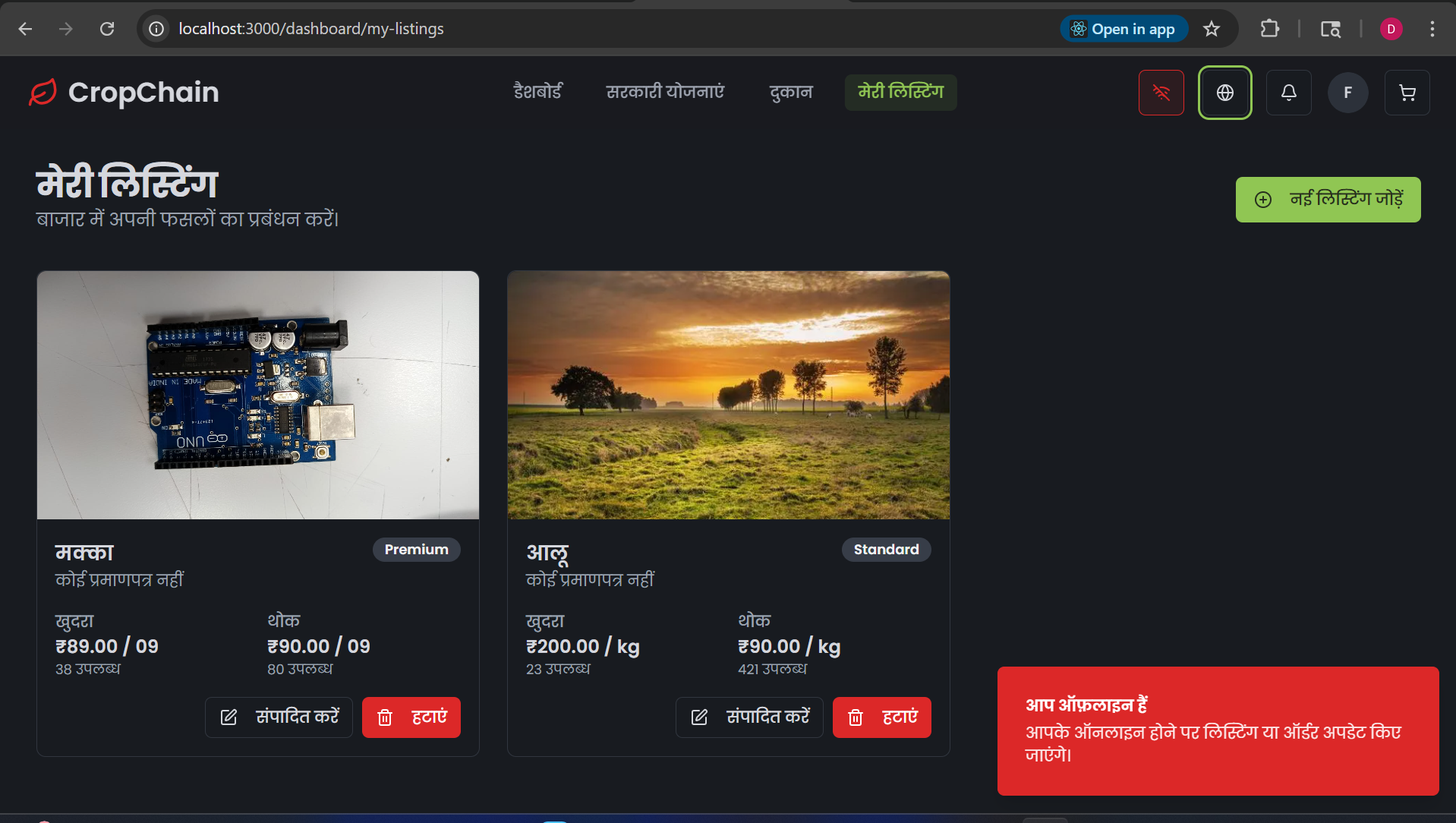
All the listing of farmer
-
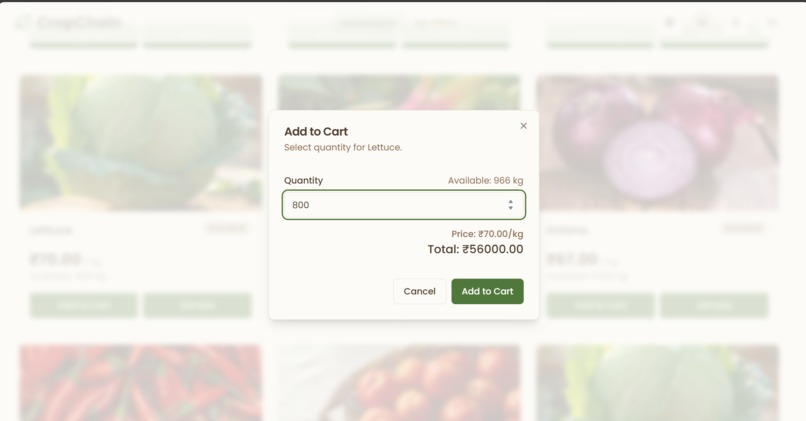
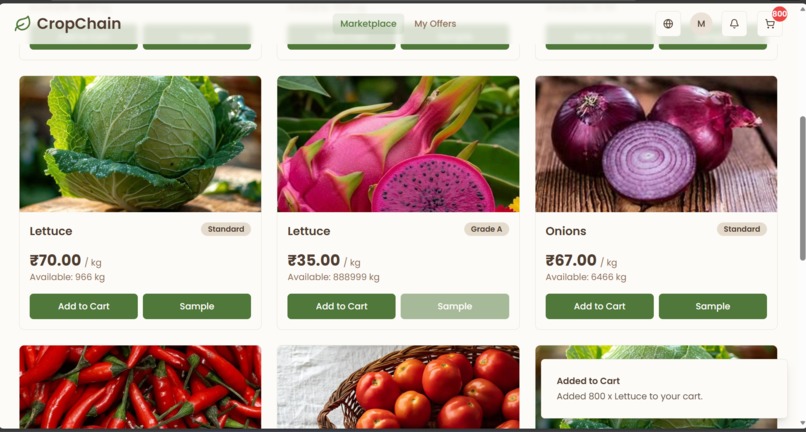
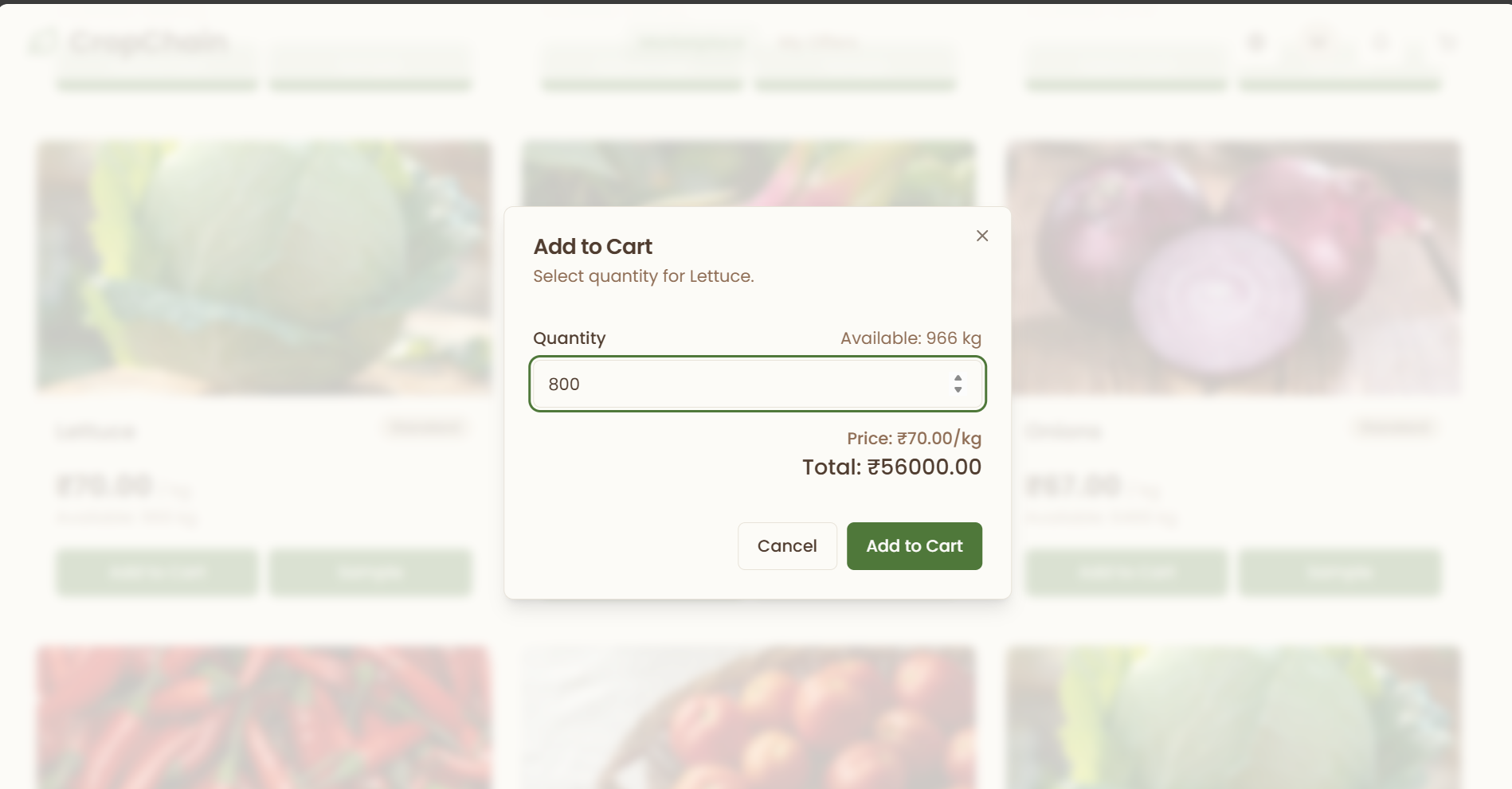
Buying the crop (Buyer side)
-
-
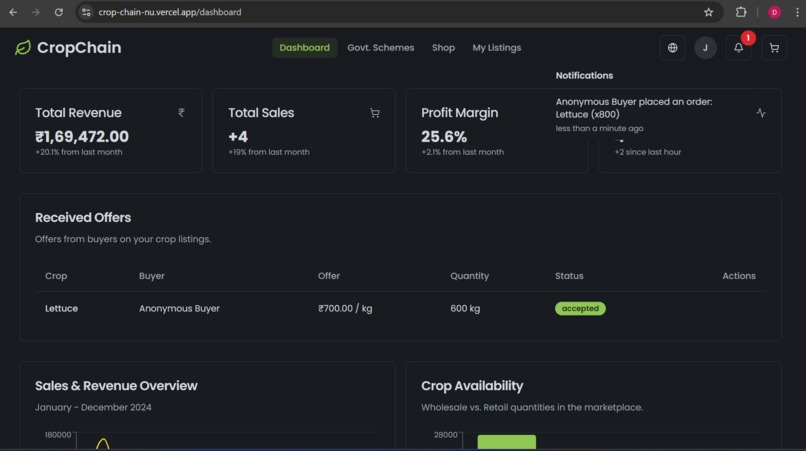
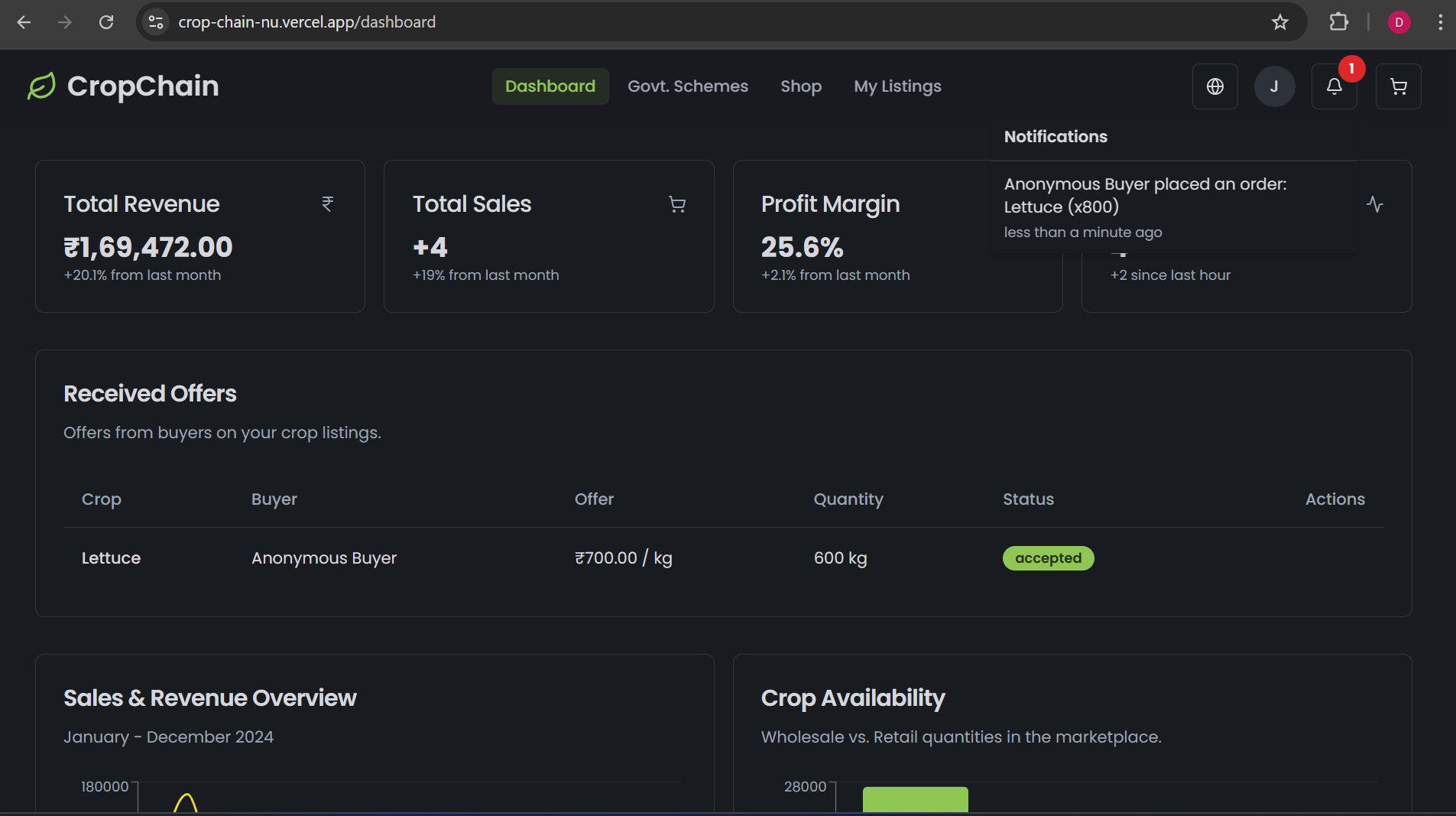
Farmer notified of the order he received
-
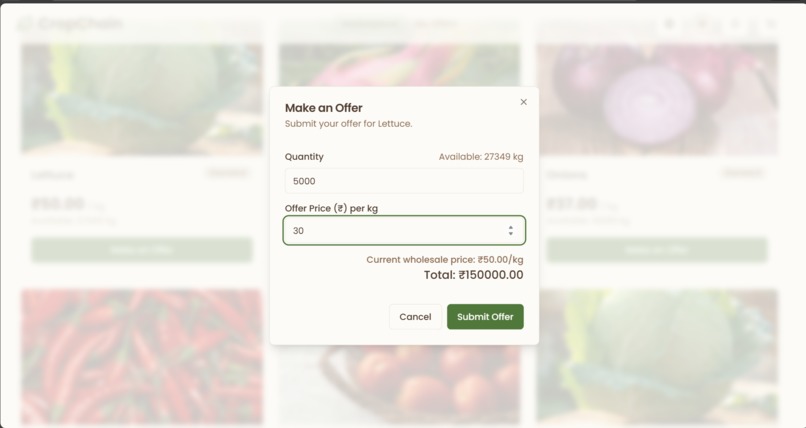
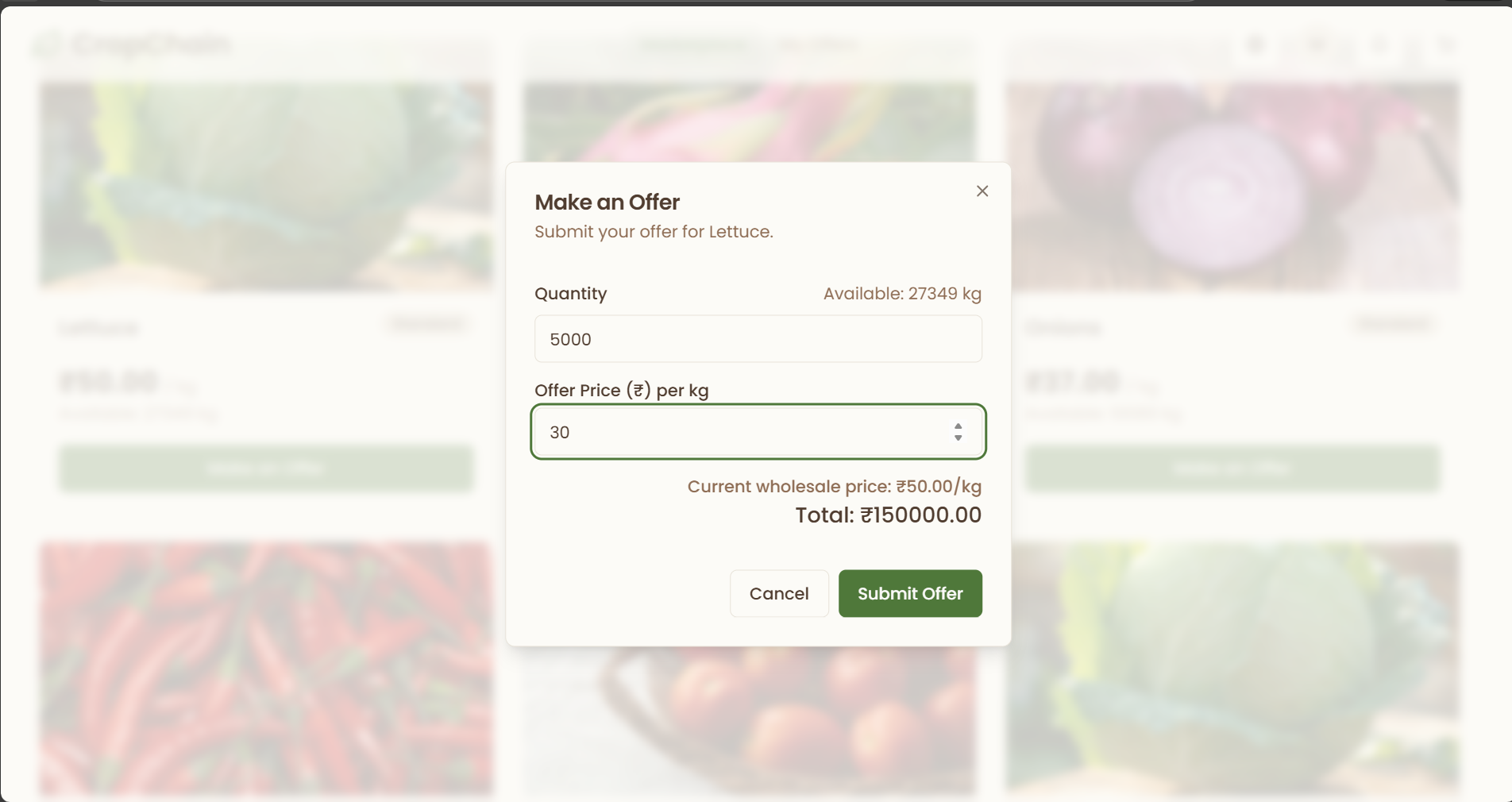
Making offer to farmer to negotiate the price
-
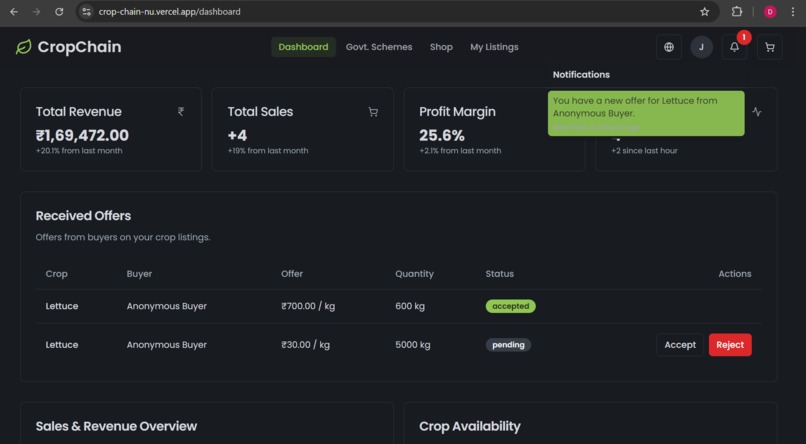
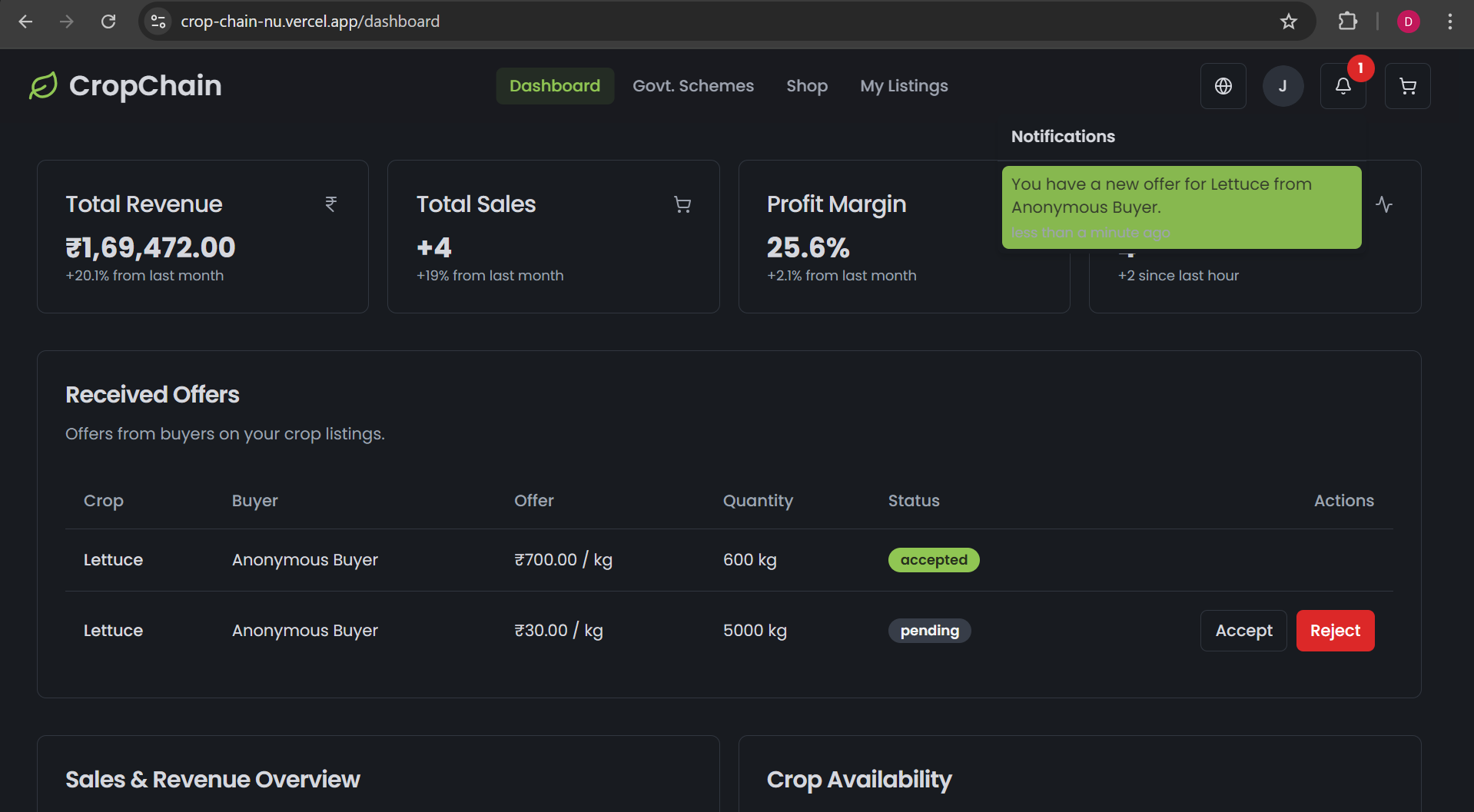
The farmer is notified of the offer, which also appears in the offer section. The farmer can now accept or reject the offer
-
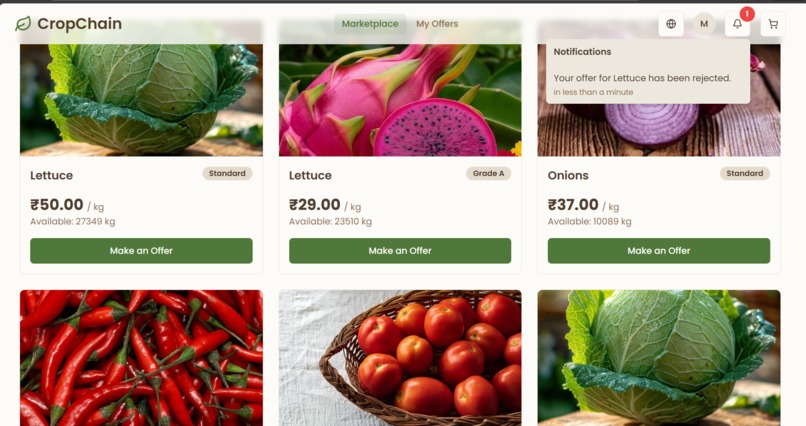
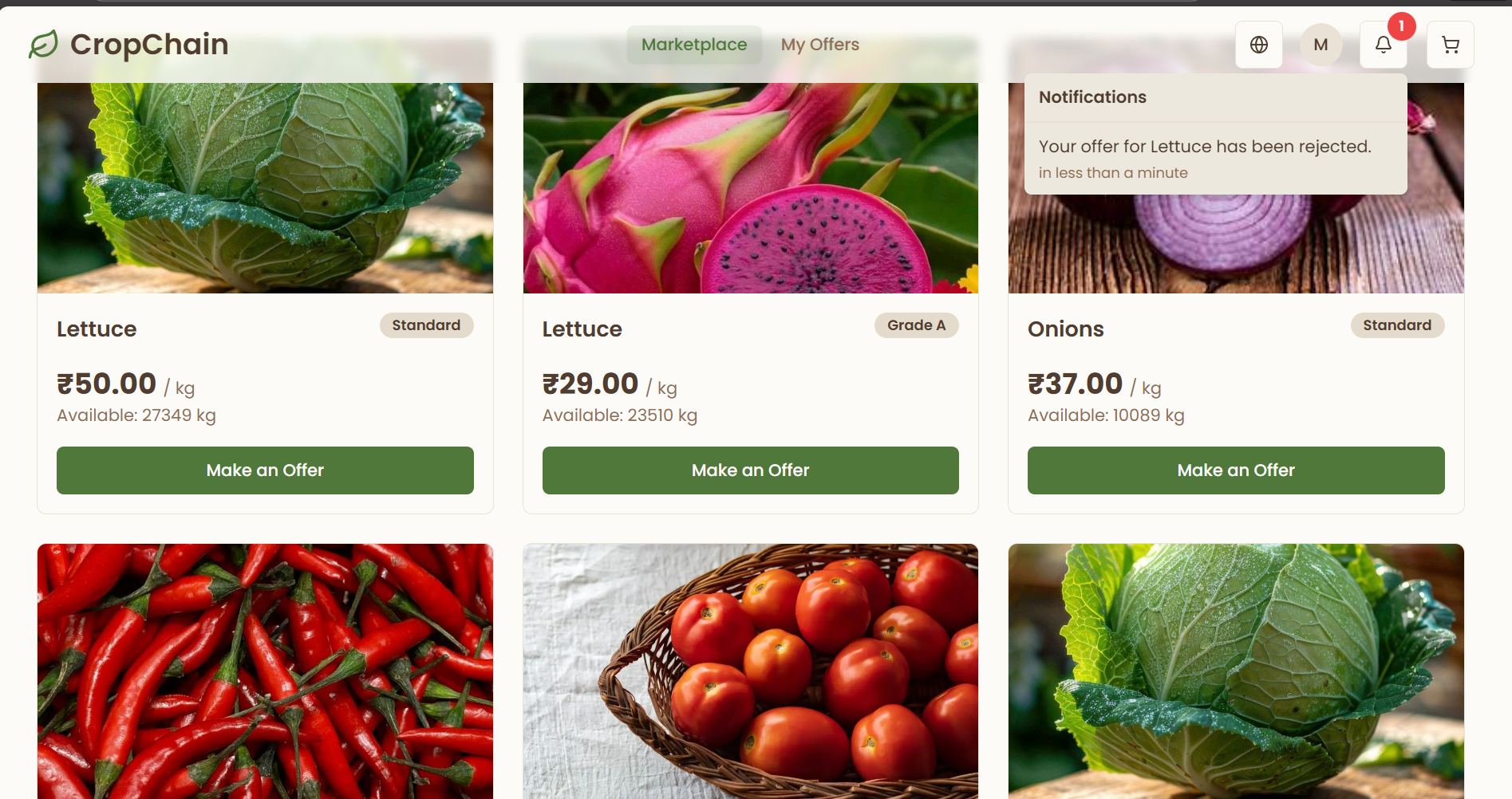
Since farmer rejected the offer the buyer was notified
-
-
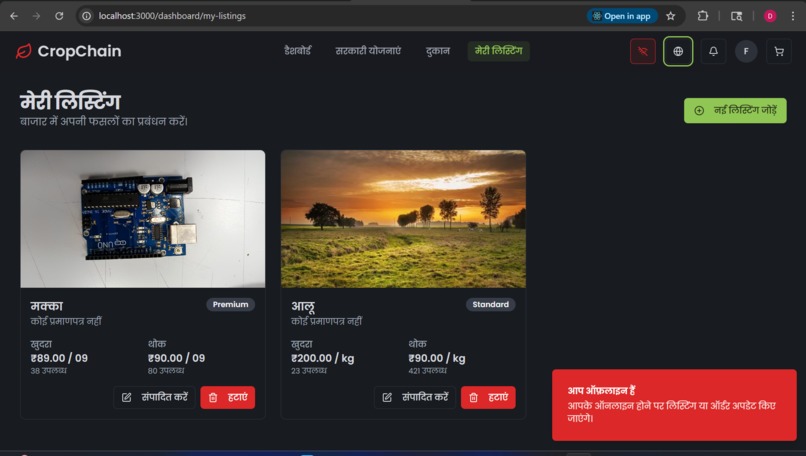
app working in offline mode and listings can be made offline and updated as the app is online again
Inspiration
Farmers often struggle with middlemen, unpredictable pricing, and limited access to real-time market insights. At the same time, buyers face challenges in finding reliable suppliers and negotiating fair deals. We were inspired to build CropChain to create a transparent, technology-driven ecosystem that directly connects farmers and buyers while empowering farmers with data and digital tools.
What it does
CropChain is a multilingual, offline-first digital agriculture platform that connects farmers and buyers through a real-time marketplace. Farmers can list crops, manage offers, track revenue, and use an AI Price Optimizer for smart pricing recommendations. Buyers can browse retail and wholesale listings, negotiate deals, request samples, and receive real-time updates.The platform supports Progressive Web App (PWA) functionality, enabling users to access core features even in low or no connectivity environments. Additionally, CropChain includes a secure escrow-based payment system (mock) that ensures safe and transparent transactions between buyers and farmers.
How we built it
We built CropChain using Next.js 15 with the App Router and TypeScript for a scalable frontend. Firebase Authentication handles secure login, while Firestore powers real-time data synchronization. Google Genkit with Gemini models is used to implement the AI Price Optimizer. To enable offline-first capabilities, we implemented PWA features using a service worker and caching strategies such as Network First for dynamic data like crop listings, dashboards, and user profiles. The app supports offline access with automatic data sync once connectivity is restored. We also designed a mock escrow payment system with a structured payment lifecycle (Pending → Held → Released), ensuring clarity and trust in transactions. Tailwind CSS and ShadCN UI provide a responsive and clean interface, while Recharts powers analytics dashboards. React Context API is used for global state management, including authentication, cart, and language preferences. The app is deployed using Firebase App Hosting.
Challenges we ran into
Implementing real-time offer negotiation while maintaining a smooth UI was a major challenge. Adding offline-first support required careful handling of caching, synchronization, and fallback UI to prevent data inconsistency. Designing a realistic escrow payment flow without a real payment gateway also required thoughtful UI/UX design and state management. Managing multilingual support across dynamic content and ensuring secure role-based access between farmers and buyers added further complexity.
Accomplishments that we're proud of
We successfully built a fully responsive, production-ready platform with real-time features, offline-first support, and secure transaction simulation. The PWA capability ensures accessibility even in low-network rural areas. The escrow payment system builds trust between buyers and farmers. The AI Price Optimizer provides meaningful decision support rather than being just a demo feature. We are proud of creating a complete end-to-end agriculture ecosystem instead of just a marketplace.
What we learned
We learned how to build scalable full-stack applications using Next.js and Firebase, and how to integrate generative AI into real-world workflows. We gained hands-on experience implementing offline-first architectures using service workers and caching strategies. We also understood the importance of designing secure and transparent transaction systems. Most importantly, we learned how to build inclusive, accessible technology that solves real-world agricultural problems.
What's next for CropChain
Next, we plan to integrate real payment gateways, logistics tracking, and quality verification systems. We aim to enhance the AI engine with real-time market datasets and predictive analytics. We also plan to introduce farmer credit scoring, crop demand forecasting, and expand to a dedicated mobile application to further improve accessibility and scalability.
Built With
- firebase
- genkit
- next.js
- react
- recharts
- shadcn-ui
- tailwind
- typescript
- vercel


Log in or sign up for Devpost to join the conversation.