-
-

Frontend Homepage
-
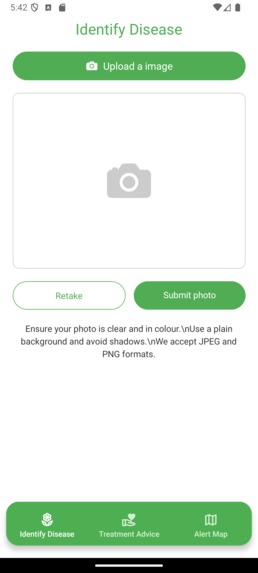
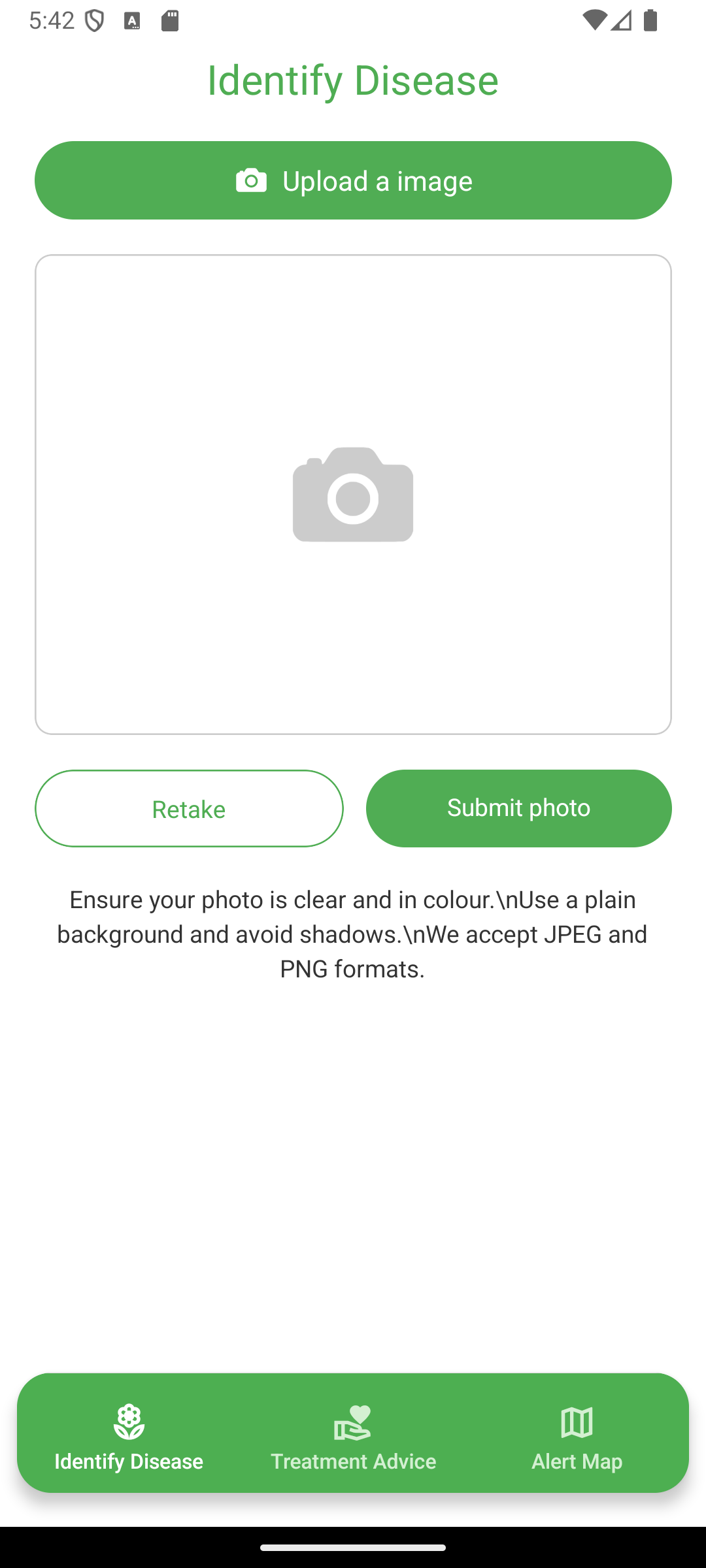
Identify Disease Page
-
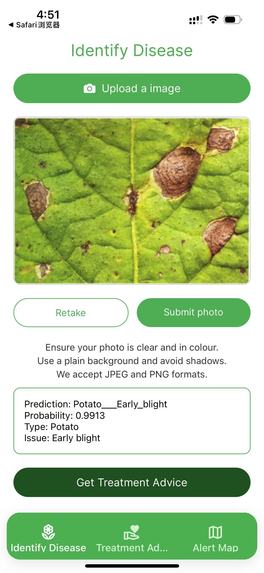
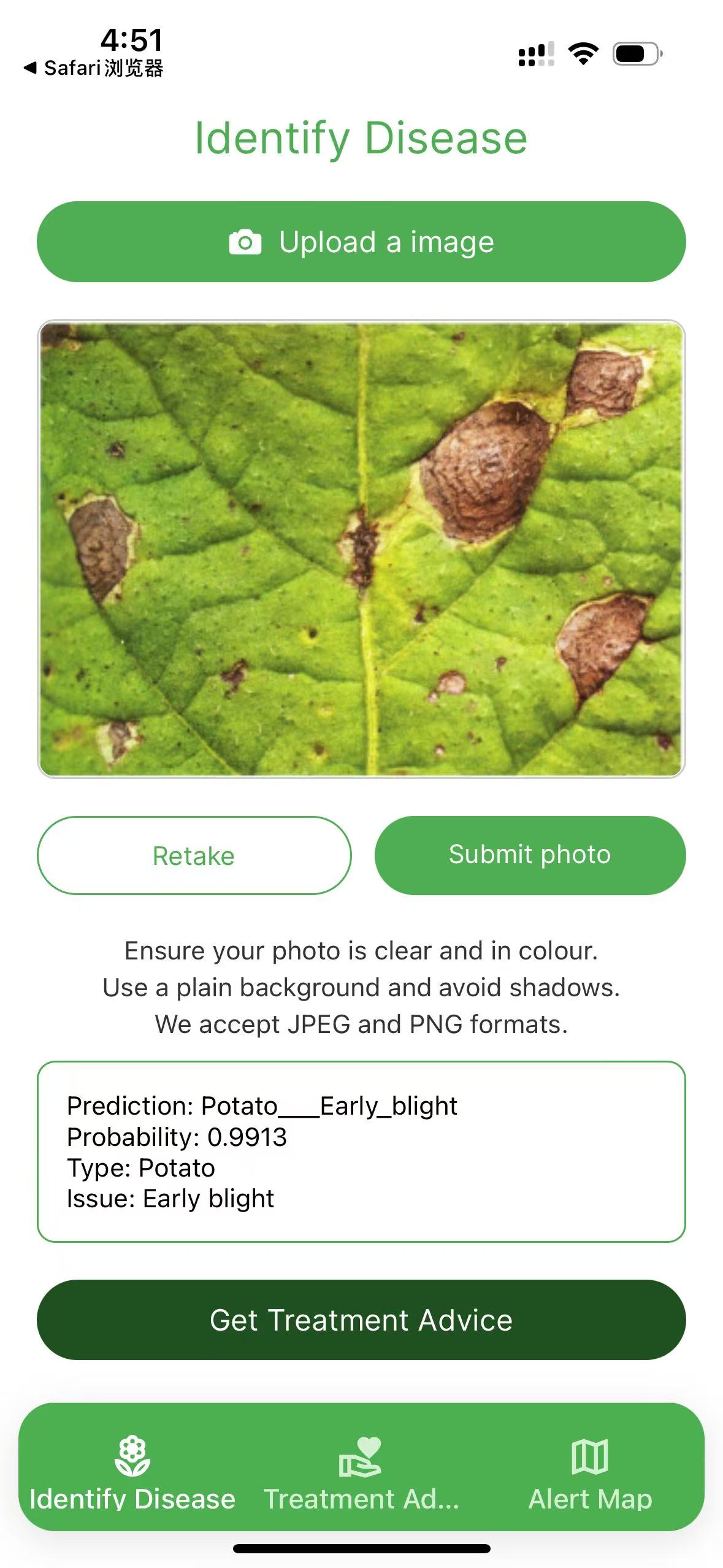
Identify Disease Page (With return)
-
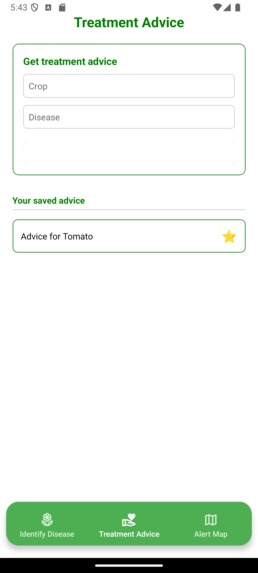
Get AI Advice
-
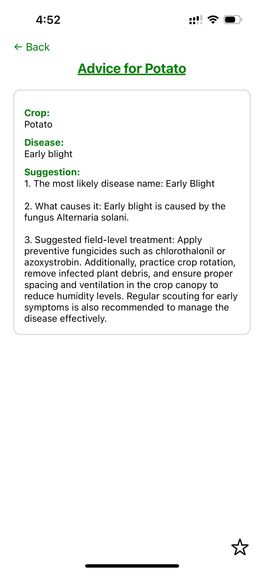
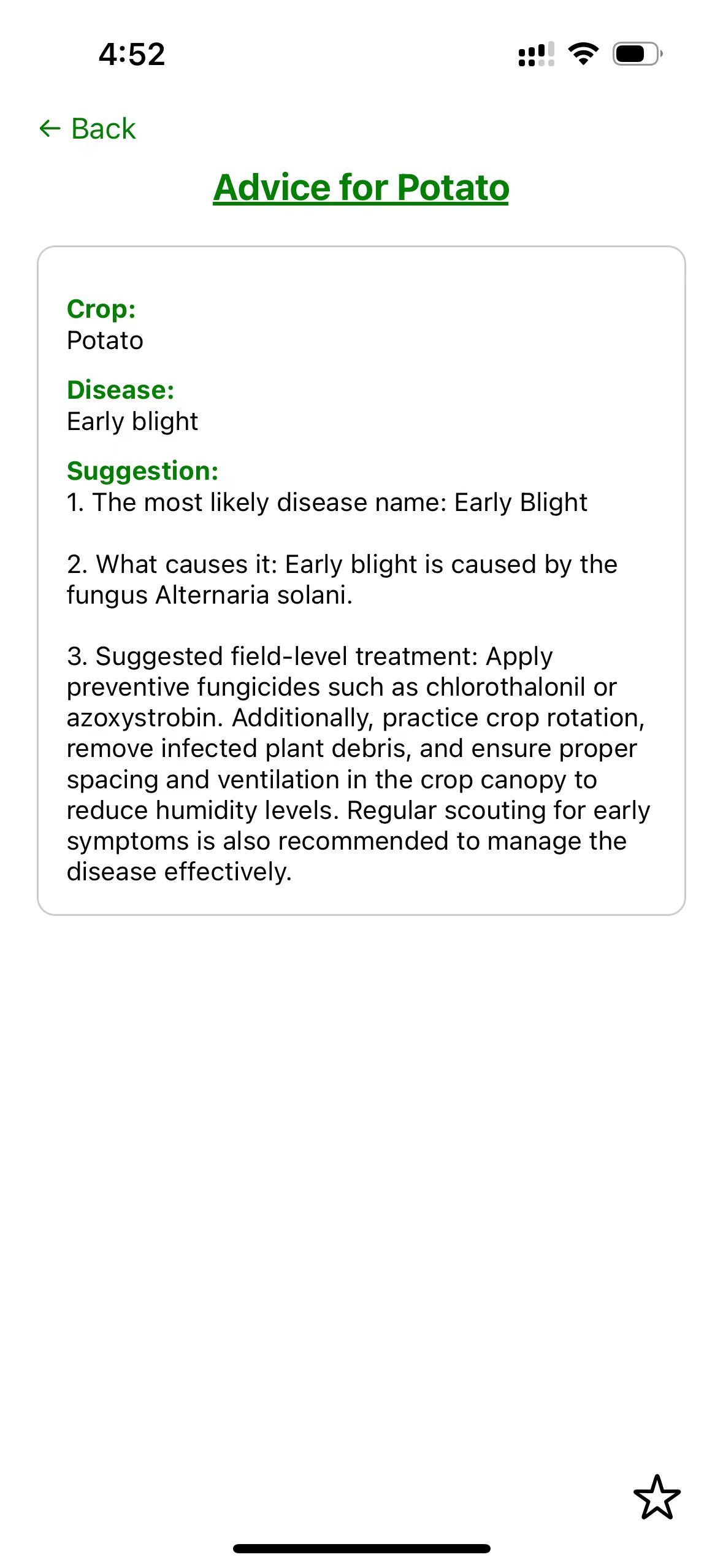
Get AI Advice Page (With returned advice)
-
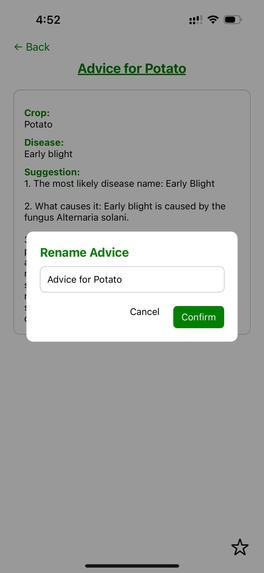
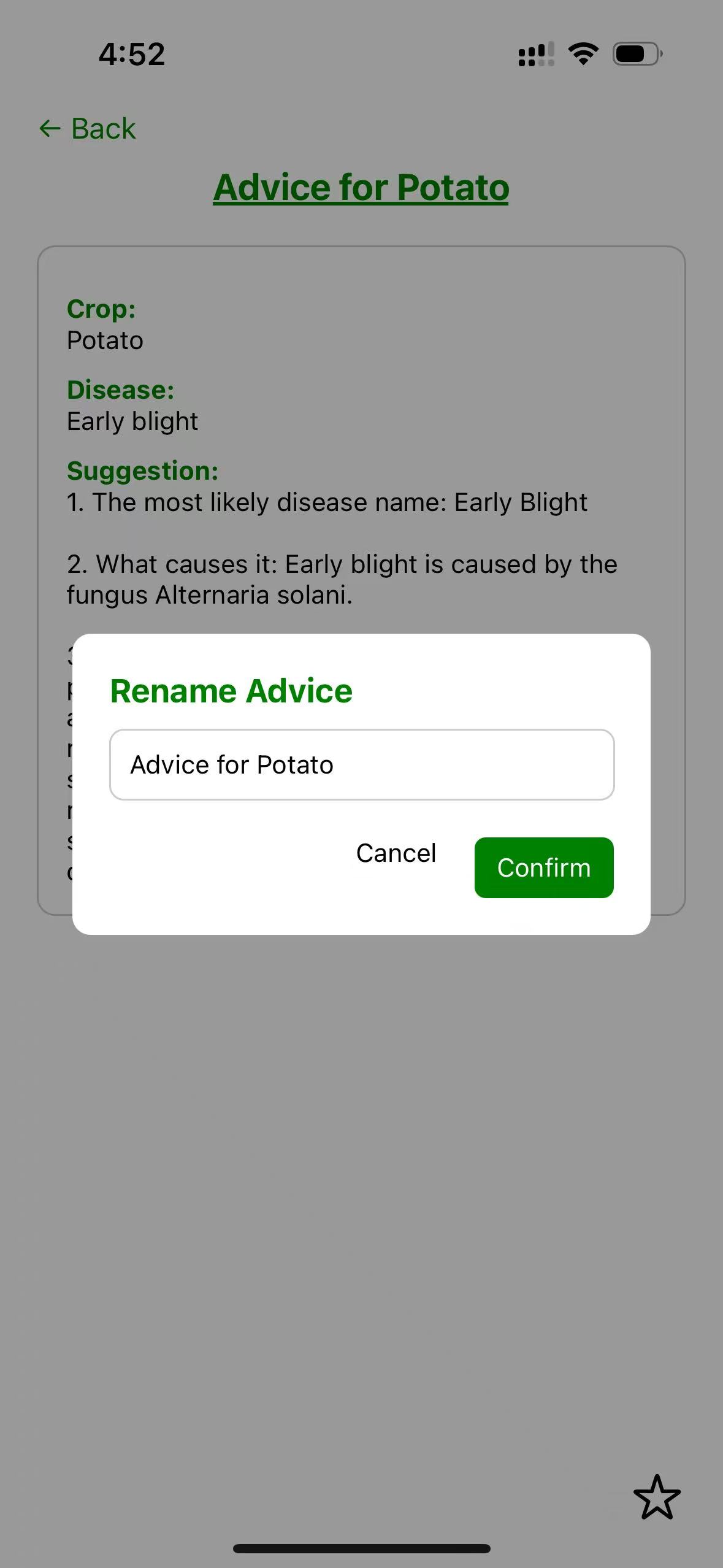
Get AI Advice Page (Renaming advice)
-
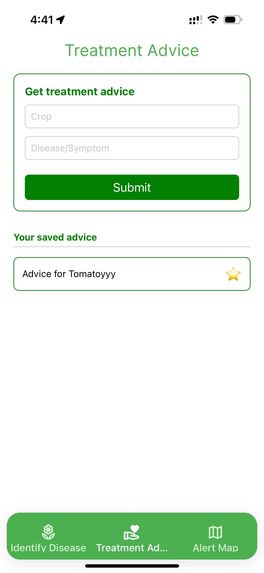
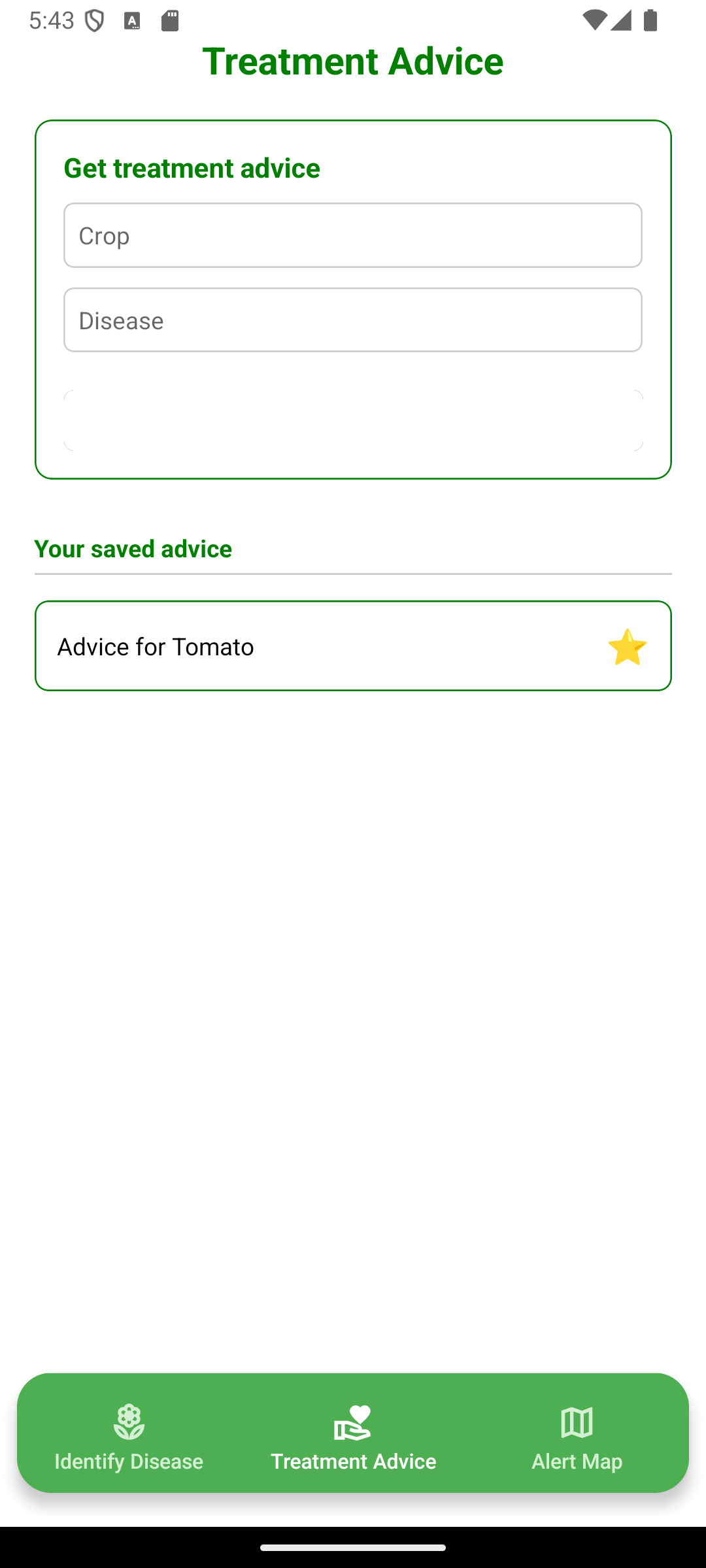
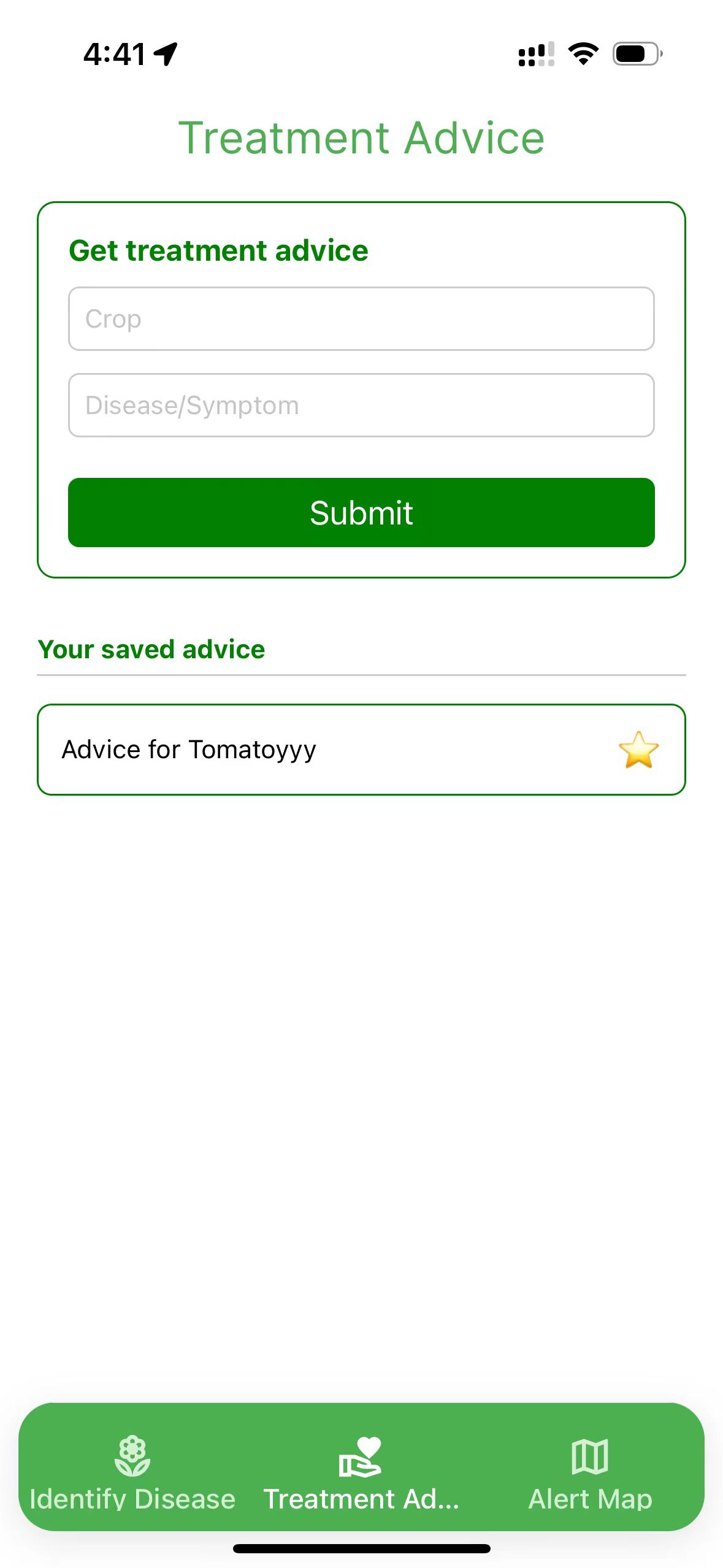
Get AI Advice Page (With saved advice)
-
-
-
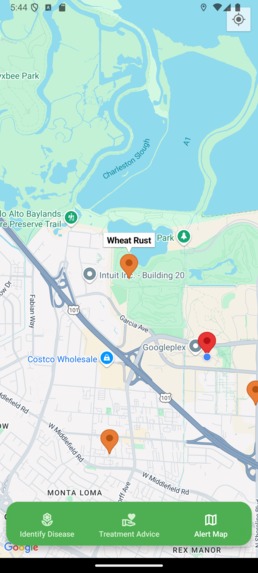
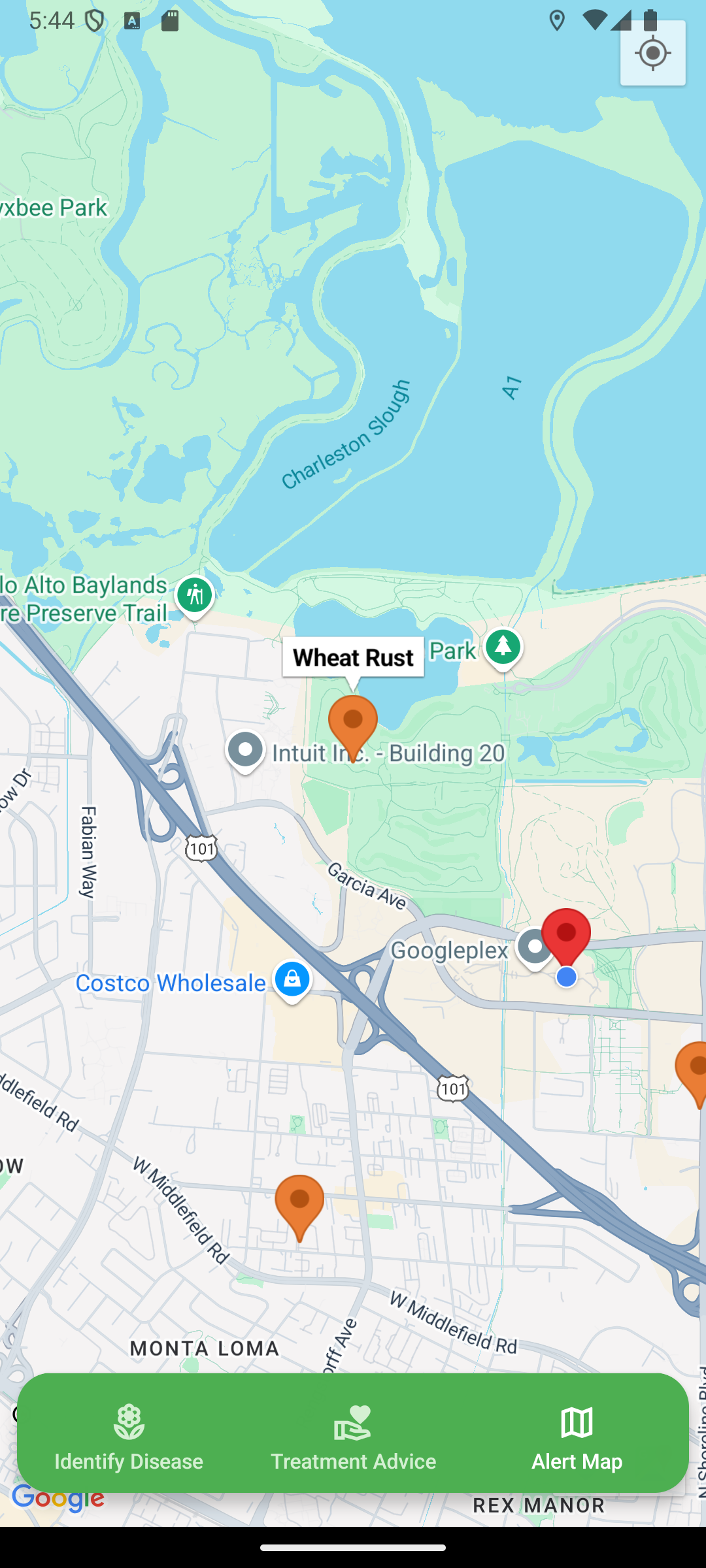
Alert Map (Frontend Mock)

About CropCare - TuringToast
Inspiration
Crop diseases can cause devastating losses for farmers, especially when early symptoms go unnoticed. We were inspired to create CropCare to empower farmers with accessible, AI-driven tools that help them detect diseases early and take informed actions — minimizing crop damage and safeguarding livelihoods.
What it does
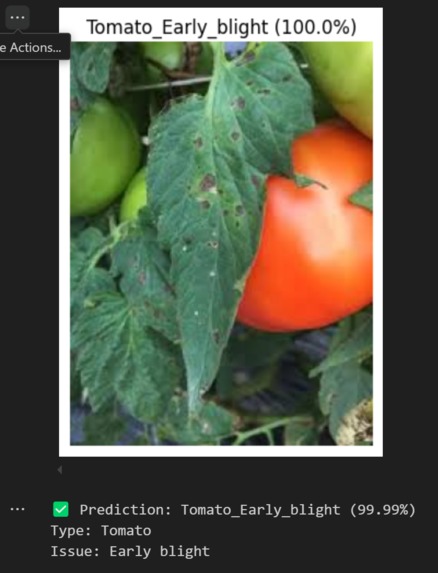
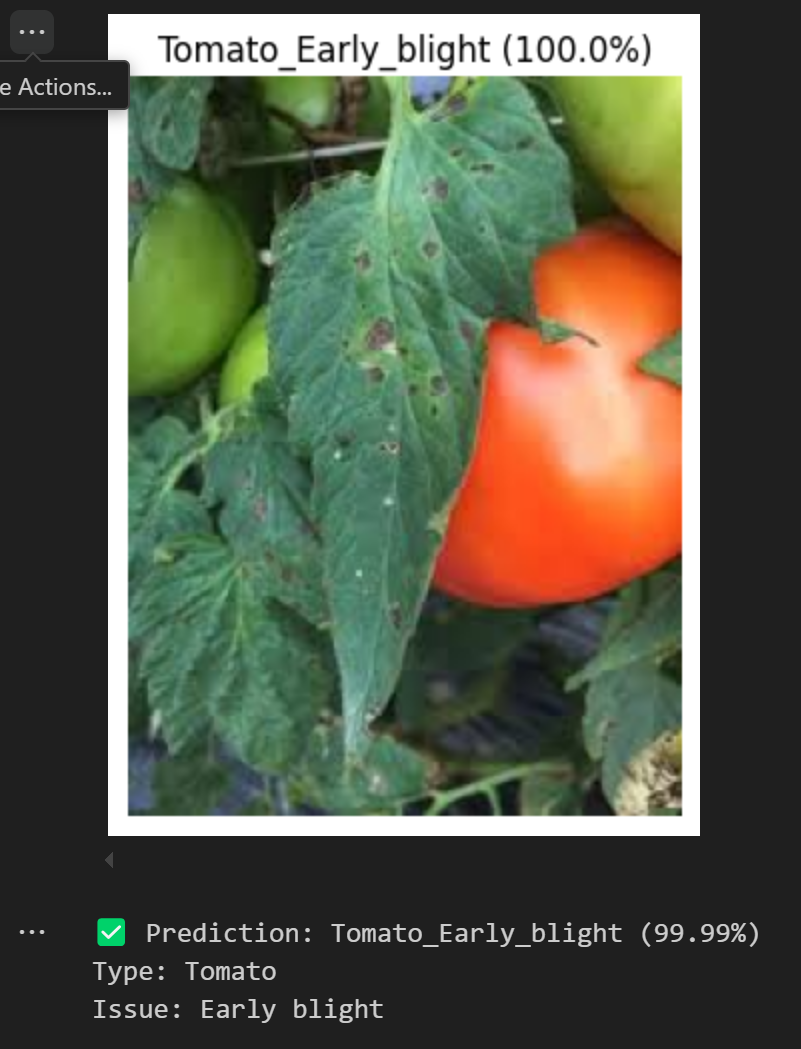
CropCare helps farmers identify crop diseases through a simple mobile app.
Users can upload a photo of an affected plant leaf, and the system:
- Uses a computer vision classifier to predict the likely disease.
- Retrieves targeted information from an AI-powered knowledge base using RAG.
- Provides actionable insights and management tips to help farmers respond quickly.
How we built it
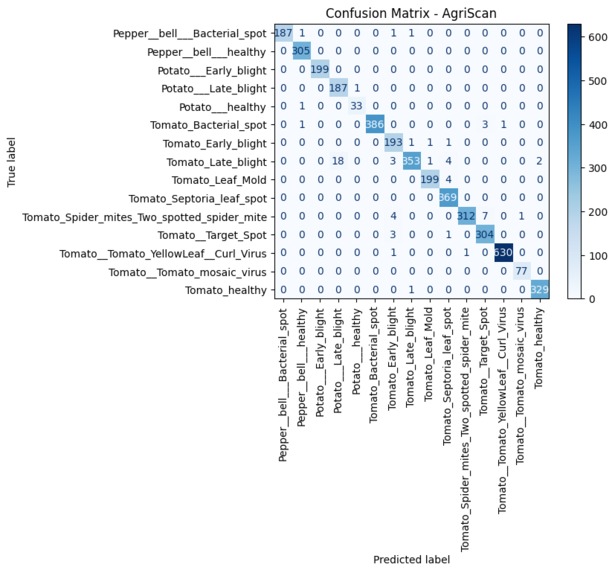
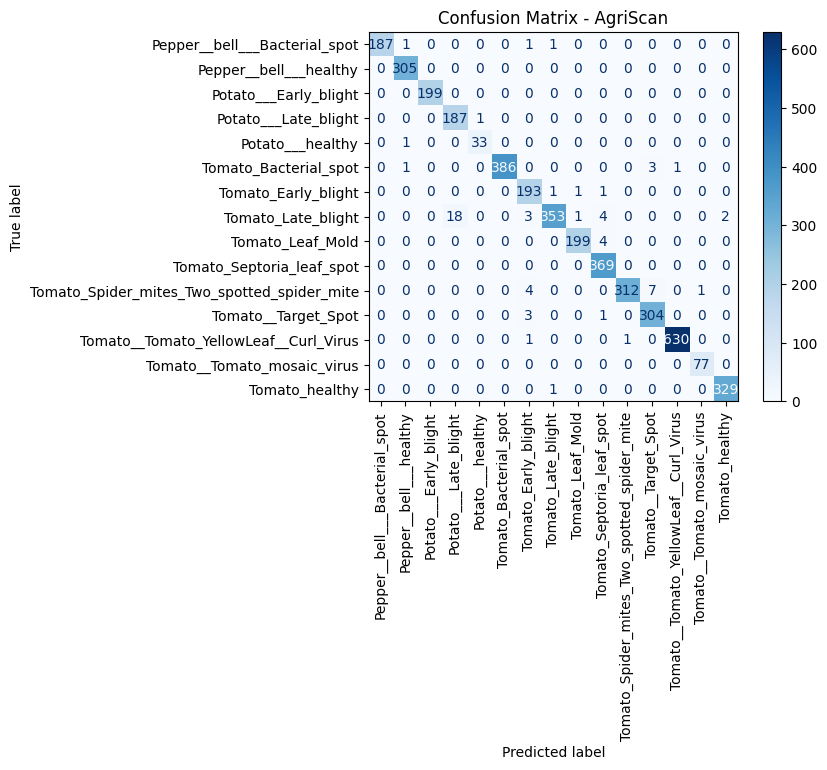
- Computer Vision Classifier: An end-to-end deep learning pipeline for crop health detection based on MobileNet_v2, from data preprocessing and model training to real-world inference via a deployable API interface.
- RAG System: A retrieval-augmented generation system fetches detailed disease information and generates user-friendly advice.
- Mobile Frontend: A mobile-optimized web application allows farmers to easily upload images and view results.
- Cloud Deployment:
- The FAISS vector database and knowledge documents are hosted on Azure Blob Storage for scalable and efficient access.
- Azure OpenAI powers the language generation component of the RAG system.
- Both the computer vision and RAG APIs are deployed on a cloud-based virtual machine to ensure flexibility, control, and performance.
Challenges we ran into
- Data Quality: It was challenging to source high-quality, diverse images for training the CV model.
- RAG Fine-tuning: Ensuring retrieved information was accurate, relevant, and concise required several iterations.
- System Integration: Connecting the classifier, RAG system, and mobile frontend seamlessly demanded careful API and pipeline design.
- Mobile UX: Optimizing user experience across different devices and network conditions was more complex than expected.
Accomplishments that we're proud of
- Successfully integrated computer vision and knowledge retrieval into a smooth user flow.
- Built a working mobile-first web app prototype within a tight timeline.
- Created a scalable architecture that can be extended to support more crops and diseases in the future.
What we learned
- How to apply computer vision and RAG technologies to solve real-world agricultural problems.
- Best practices for building mobile-first web apps that interact with AI services.
- The importance of iteration, especially when balancing model performance, retrieval quality, and frontend usability.
What's next for CropCare
- Expanding the crop and disease database to cover a wider range of plants.
- Improving the computer vision model with more training data and advanced architectures.
- Continuously expanding and curating the knowledge base to ensure accurate, reliable, and professional responses for farmers.
- Adding location-based disease alerts to help farmers anticipate regional outbreaks.
- Exploring partnerships with agricultural organisations to bring CropCare to real-world users.
How to Access the App (Valid Until 28 April 2025)
Step 1
Download the Expo Go app.
It’s available for both Android and iOS devices.
Step 2
Open your browser and visit the following URL:
exp://20.211.40.243:8081
Built With
- azure
- azure-storage-blob
- faiss
- fastapi
- mobilenet
- openai
- python
- pytorch
- react-native
- sentence-transformers
- uvicorn


Log in or sign up for Devpost to join the conversation.