
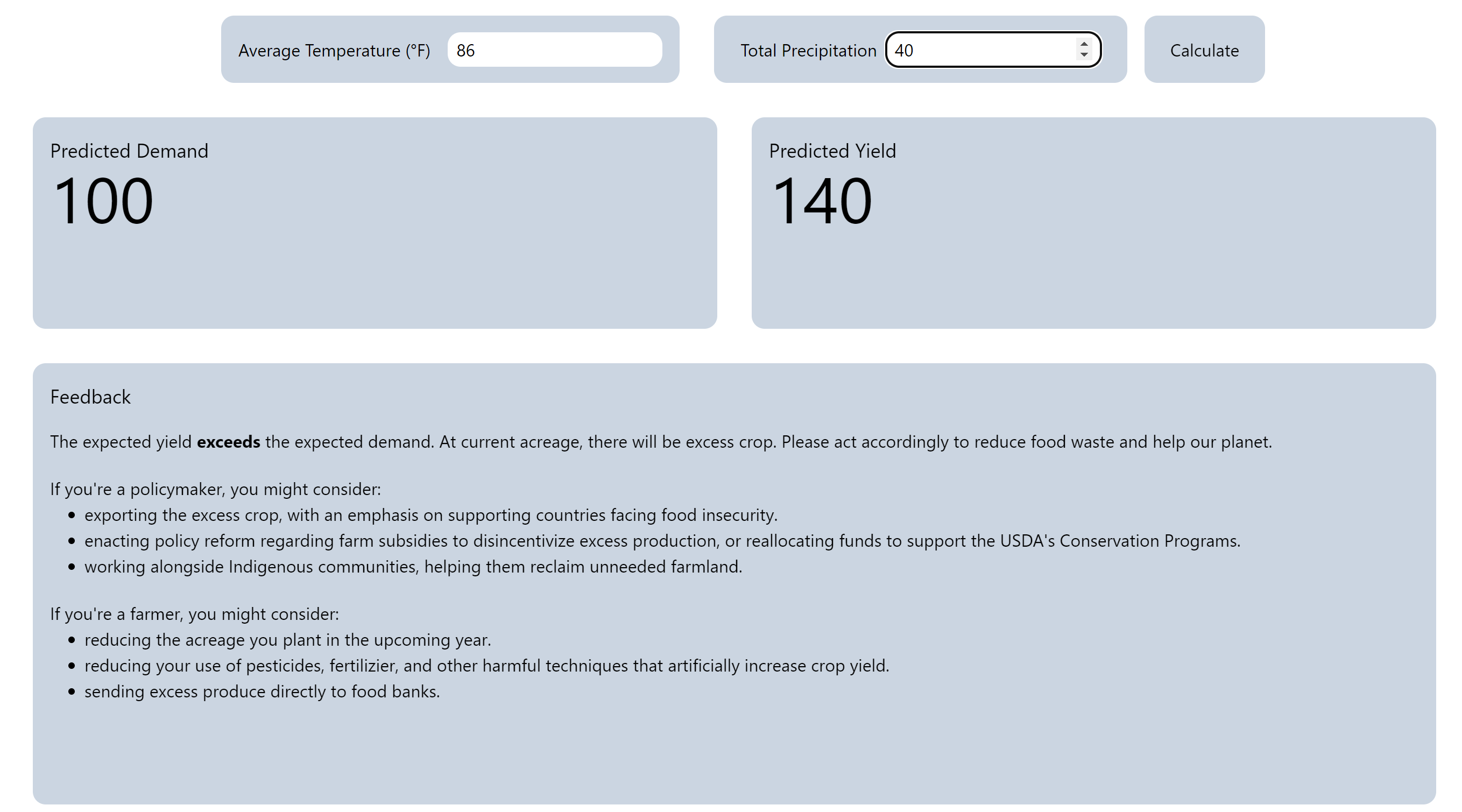
In the United States, food waste is estimated at 30-40 percent of the food supply, an unfortunate statistic that exacerbates the climate change crisis. This issue is brought forth due to many significant problems such as inaccurate estimates of crop yield production and demand. Our project focus to tackle the difficult issue of food waste through the advent of artificial intelligence to help farmers accurately estimate crop yield. Using a lightweight and efficient AI model, Elastic Net Regression, we developed an accessible and relatively more accurate way of estimating crop yield based on the weather and expected rainfall of the specific location. This product is a notable step forward in helping create a better way for harvesting crops at a more efficient rate to ensure that valuable resources aren't wasted and the climate impact is significantly reduced. Through this project, we ran into various dead ends collecting and refining the data needed to build a reliable AI model. We spent hours just searching for data that could help predict crop yield from countless sources. We also learned how to combine the various datasets we pulled from several sources to create a worthy training set for our data. In addition, it was also difficult to choose the data labels that could impact the crop yield to create a more accurate model. After completing our comprehensive AI model, we also worked to create a web app to deploy our project and make it accessible to everyone so that our project can make a real-world impact in reducing the food waste problem in America. Through this process, we learned valuable web dev skills building our backend in python Flask, the front end with ReactJS, and connecting our lightweight AI model to a web-facing application. Overall this was an exciting and fun project that we built during our time at DubHacks and has helped create memories of a lifetime.
Crop Yield
Leveraging machine learning to help create a sustainable agriculture industry by helping farmers reach optimal crop yields.
Updates

Leave feedback in the comments!
Log in or sign up for Devpost to join the conversation.