Inspiration
Imagine farmers trying to grow crops. They work hard, but sometimes the weather is weird, or they put too much or too little fertilizer. It's tough to know exactly what will happen. We wanted to help them out.
Feeding the World: More people need food, and we need to grow it efficiently.
Helping Farmers: Farmers often rely on old ways, but what if we could give them a smart helper to make better choices?
Using Tech for Good: As students, we love using cool computer stuff (like data science) to solve real problems, and farming is a huge one!
Being Green: If farmers know exactly what their crops need, they waste less water and fertilizer, which is better for our planet.
What it does
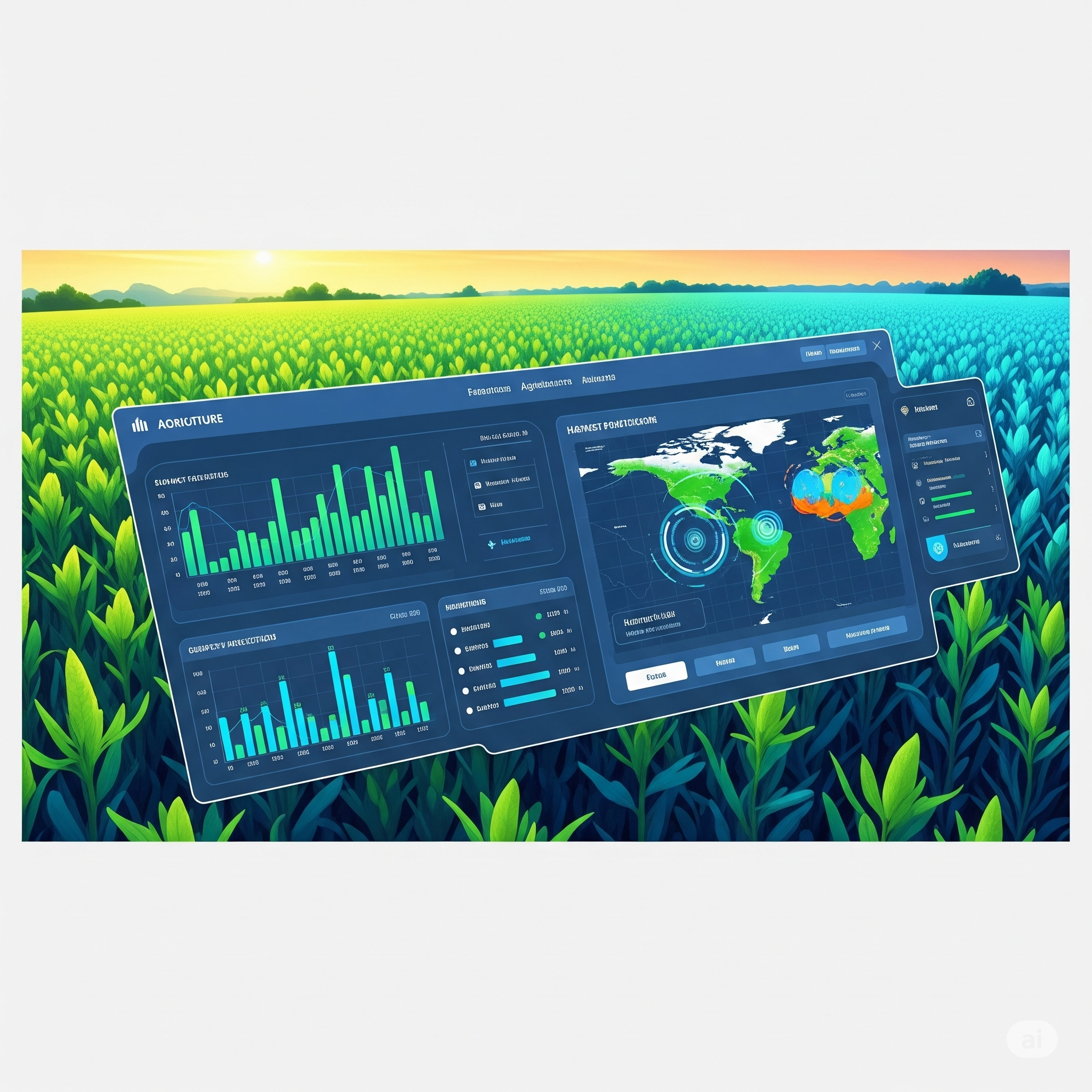
This project creates a "smart guesser" for crop yields. It takes information about a farm, like:
The Dirt: What kind of soil it is, how healthy it is (its "pH" and nutrients).
The Weather: How much rain, how hot or cold it is, and how humid.
What Farmers Do: How much fertilizer they use, and when they plant their seeds.
Then, using all this information, the computer predicts how much crop (like corn or wheat) the farmer will likely get. This helps farmers:
Plan Ahead: They can decide what to plant, how much water to use, and when to add fertilizer.
Save Money: By knowing what's coming, they can avoid wasting resources.
Be Prepared: If the prediction looks low, they can try to fix things or prepare for a smaller harvest.
How we built it
Think of it like baking a cake, but with data instead of ingredients:
Gathering Ingredients (Data): We collected lots of information from different places: records of past harvests, weather reports, and soil tests. It was like finding pieces of a big puzzle.
Cleaning the Ingredients (Data Prep): The data was often messy – some parts were missing, or had mistakes. We had to clean it up, fill in the blanks, and make sure everything was in the right format.
Looking at the Ingredients (Exploring Data): We looked closely at the cleaned data to see patterns. For example, "Does more rain usually mean more crop?" We used charts and graphs to understand these relationships.
Making New Ingredients (Feature Engineering): Sometimes, we combined existing information to make new, smarter clues. For example, instead of just daily rain, we calculated "total rain during the growing season."
Baking the Cake (Training the Model): This is where the magic happens! We used special computer programs (machine learning models) to learn from all the past data. We showed them, "When the soil was like this, and the weather was like that, the yield was this much."
Tasting the Cake (Evaluating the Model): After the computer learned, we tested it on new data it had never seen before to see how good its guesses were. We tweaked things until it made really good predictions.
Dreaming of the Bakery (Future App Idea): We imagined a simple app where farmers could type in their farm's details and instantly get a yield prediction.
Challenges we ran into
It wasn't always easy! Here were some of the hurdles:
Finding Good Data: It was hard to find perfect, complete farm data. We often had to combine bits and pieces from many different sources, and some data was just missing.
Making Smart Clues: Figuring out the best ways to combine weather and soil data to make good predictions was tricky. The weather's effect on crops isn't always simple!
Choosing the Right "Brain": There are many different types of computer "brains" (models) that can make predictions. Choosing the best one and fine-tuning it to be really accurate was a lot of trial and error.
Understanding the "Why": Sometimes, the most accurate computer "brains" are like black boxes – they give a good answer, but it's hard to understand why they gave that answer. Farmers need to understand the "why" to trust it.
Big Computers: For really big datasets, our normal computers sometimes struggled to do all the calculations quickly.
Accomplishments that we're proud of
We're really happy about:
Making it Work: We actually built a computer program that can predict crop yields! That's a big deal.
Becoming Data Detectives: We got really good at taking messy data and turning it into something useful.
Learning New Tricks: We learned how to use powerful machine learning tools and apply them to a real-world problem.
Understanding Farming: We gained a much better appreciation for what goes into growing food.
Building a Strong Start: We've created a solid foundation that can be built upon to make even more amazing farming tools.
What we learned
This project taught us a lot:
Data is Gold (but needs cleaning): Good predictions start with good data, and getting good data often means a lot of cleaning and organizing.
It's a Process: Building smart computer systems isn't a one-shot deal; it's a constant cycle of trying, testing, and improving.
Simple is Sometimes Better: Sometimes, a simpler computer "brain" that you can understand is more useful than a super-complex one that's hard to explain.
Real-World Problems are Messy: Unlike textbook examples, real data is never perfect, which makes you a better problem-solver.
Tech Can Change Farming: We truly saw how powerful computers can be in helping farmers and making our food system better.
What's next for Crop Yield Prediction using Agricultural Data
This is just the beginning! Here's what we dream of doing next: Smart Maps: Use satellite images and detailed land maps to make predictions even more precise for every tiny part of a field.
Money Talk: Add features to help farmers figure out the best time to sell their crops for the most money.
Spotting Problems Early: Teach the computer to also predict if diseases or pests might attack the crops, so farmers can act fast.
Big Scale: Make the system work for many farms, many different crops, and across large areas.
Built With
- bolt
- css
- html
- javascript
- netlify
- node.js
- python
- react
- sql
- typescript
- vite


Log in or sign up for Devpost to join the conversation.