Inspiration
Food security is one of the major challenges in the modern world. Farmers often struggle with unpredictable weather, limited resources, and fluctuating yields. By leveraging machine learning and data-driven insights, we wanted to create a tool that empowers farmers to make informed decisions about crop planning, resource allocation, and yield expectations.
What it does
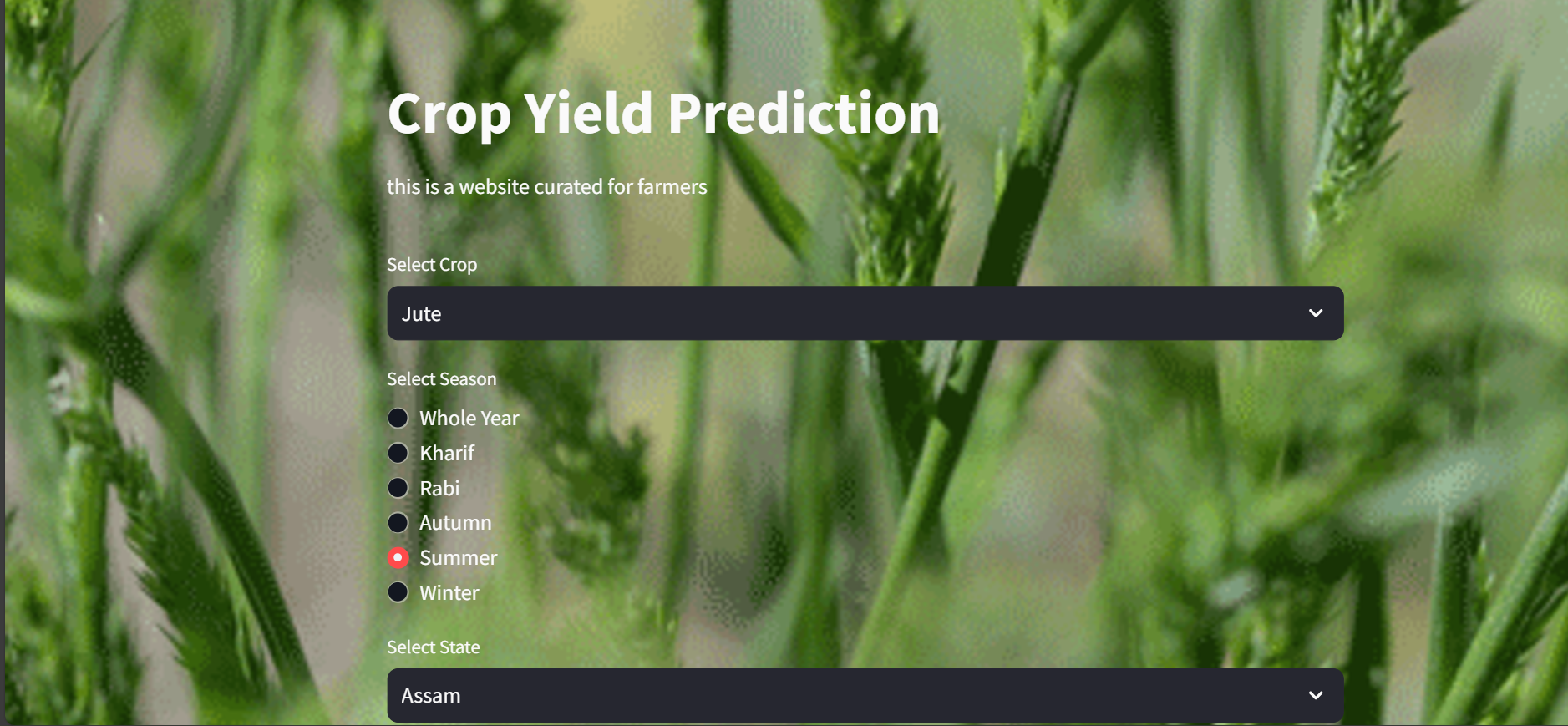
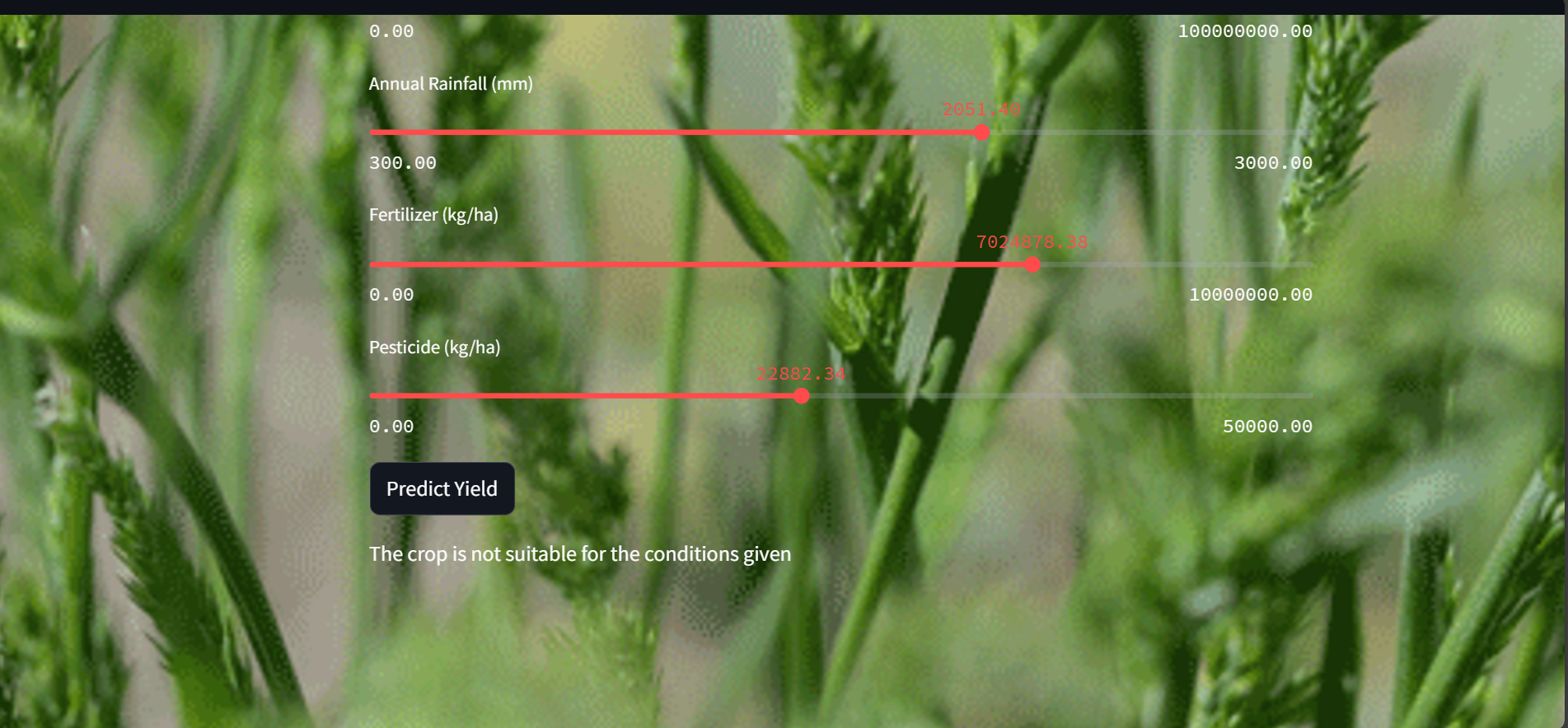
Our solution predicts crop yields based on factors such as crop year, area cultivated, production trends, annual rainfall, fertilizer usage, and pesticide application. It provides an intuitive interface for users to input data and receive accurate yield predictions, helping them maximize efficiency and reduce waste.
How we built it
Data Collection: Compiled datasets from agricultural reports, meteorological data, and government resources. Model Development: Trained a machine learning model using features like Crop_Year, Area, Production, Annual_Rainfall, Fertilizer, Pesticide, and Yield. Tech Stack: Python: For preprocessing and model development. Libraries: Pandas, NumPy, Scikit-learn, and Matplotlib for data processing, visualization, and model training. Streamlit: For building an interactive web application. Deployment: Packaged the solution into a user-friendly Streamlit app for easy accessibility.
Challenges we ran into
Data Quality: Handling missing, inconsistent, or biased data entries required extensive cleaning and preprocessing. Feature Engineering: Determining which variables most significantly affected crop yields was time-intensive. Model Optimization: Striking a balance between model accuracy and computational efficiency. User Interface: Creating an interface that is both functional and accessible for non-technical users.
Accomplishments that we're proud of
Successfully built a model that provides accurate yield predictions. Created a seamless, user-friendly interface that bridges the gap between technology and agriculture. Made a meaningful contribution towards improving agricultural practices and food security.
What we learned
The importance of domain knowledge in interpreting agricultural datasets. Advanced data preprocessing techniques and hyperparameter optimization for machine learning models. Building and deploying scalable, interactive web applications with Streamlit.
What's next for Crop Yield Prediction
Enhanced Models: Incorporate satellite imagery, soil quality data, and real-time weather updates to improve accuracy. Localization: Customize the app for specific regions and crops by integrating local datasets. Mobile Accessibility: Develop a mobile app to reach a wider audience. Integration: Collaborate with government and non-government organizations to scale the impact of this tool.
Built With
- machine-learning
- python
- streamlit

Log in or sign up for Devpost to join the conversation.