-
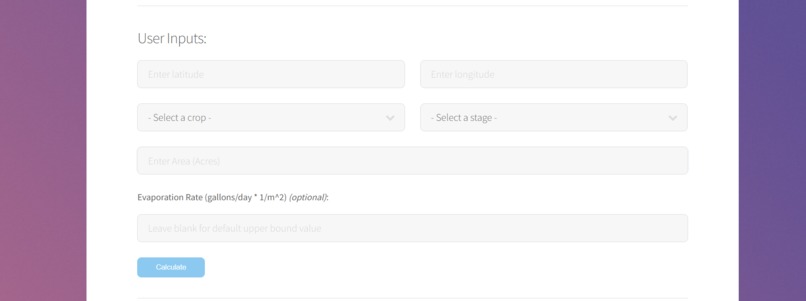
Calculator
-
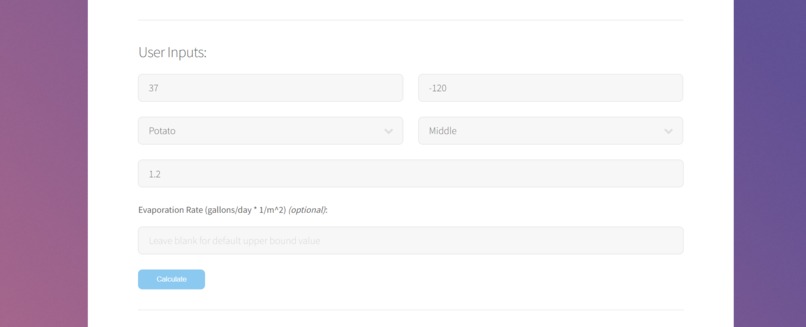
Sample Input
-
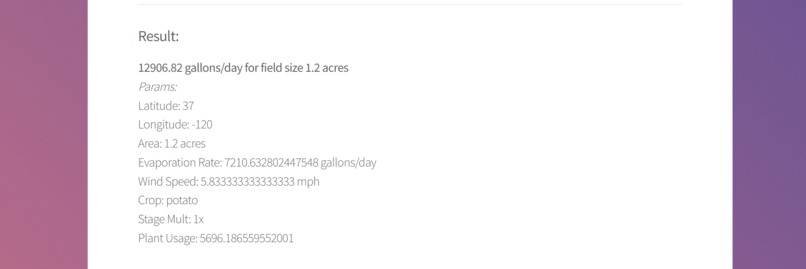
Sample Output
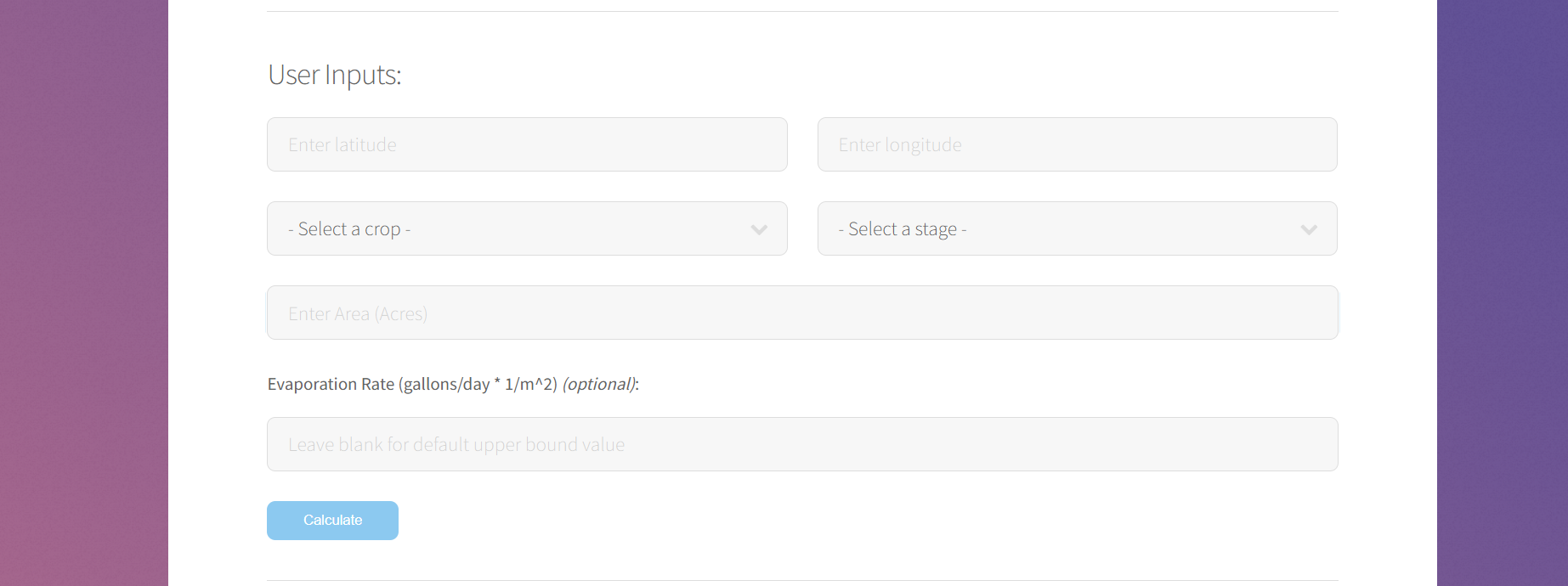
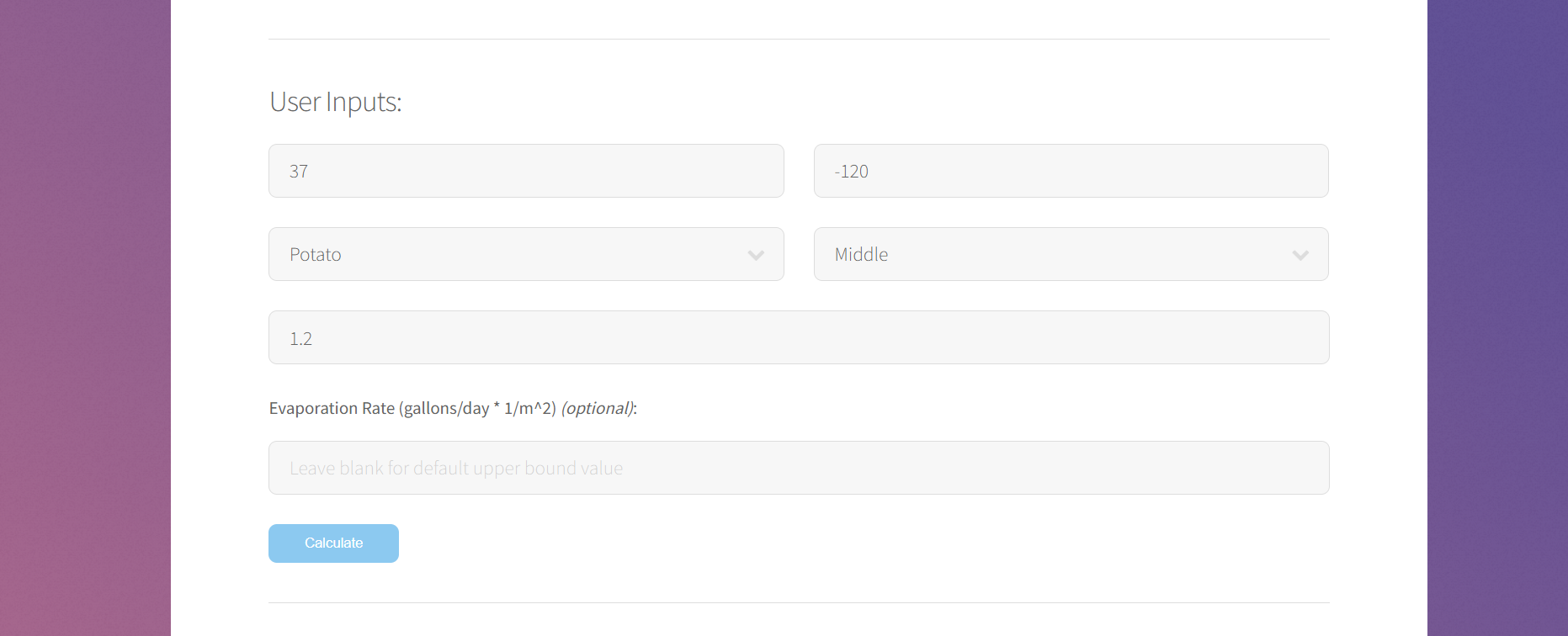
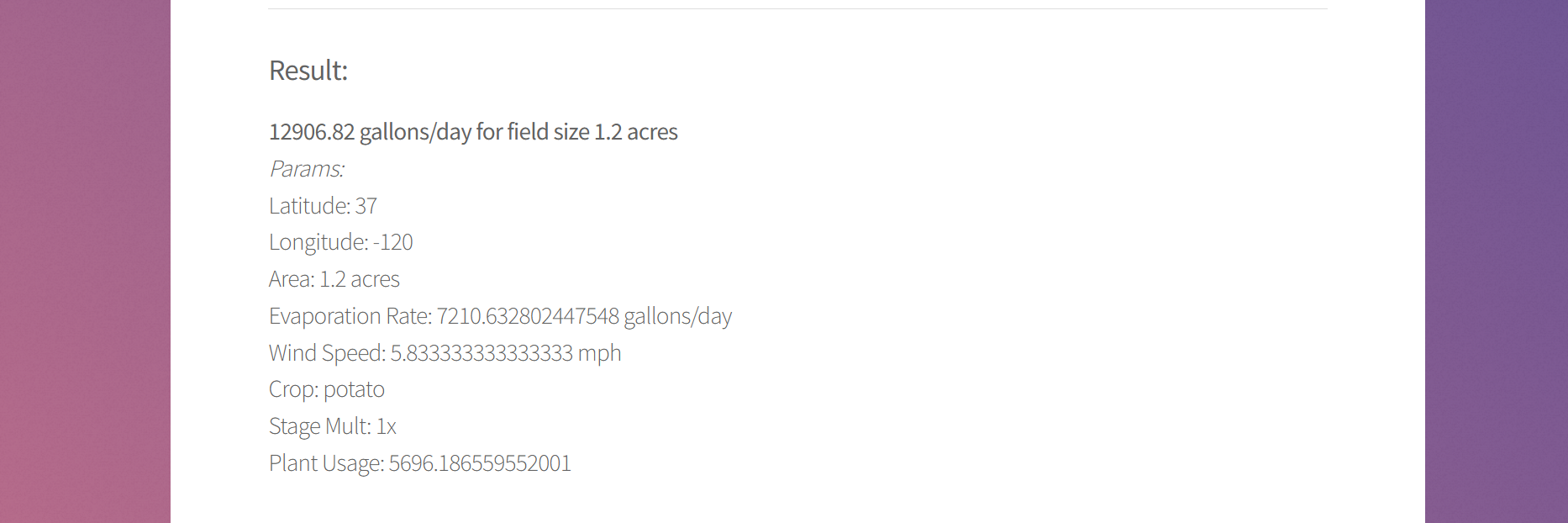
Inspiration
Droughts have been a big topic in California, and water is something that always needs to be conserved. We decided to try and optimize water usage in irrigation, as farming uses a sizable chunk of our freshwater. More information is on the webpage!
What it does
Our project estimates the minimum amount of water needed daily to grow a specified crop type, given coordinates, an area, and the stage of growth the crop is at.
How we built it
Our project consists of a React frontend and a flask backend. The frontend queries data into the flask server, which does API calls for temperature data and then performs all the calculations, returning the final value to be displayed on the frontend. To run it, clone the git repository, install the dependencies, then run the flask server and then the react app.
npm install
pip install requests
pip install flask
cd /flask-server
flask run
cd/my-app
npm start
Challenges we ran into
It was difficult to find usable formulas to estimate necessary variables with the given user input. We also decided to tackle a problem was outside our comfort zone in a restricted time period, which really pushed us to our limits. None of us knew very much about any of the three tracks and it took a lot of discussion and research to land on our topic.
Accomplishments that we're proud of
Well, it works (hopefully!). None of us have ever built something this large in this short period of a time, so it really was a new experience.
What we learned
We learned how to collaborate and cooperate with several people. We learned how to manage several branches and people working at once on GitHub. We learned about the way frontend and backends interact with each other.
What's next for Crop Irrigation Water Calculator
We would start off by hosting the website somewhere (along with the flask server). We also could set up an SQL database to house crop information, and then expand the amount of available crops. We could add more variables that we left out due to time into the equations and pulling more data for further accuracy. We could flesh out the website even more and make it more visually appealing, as well as cite statistics for water usage.

Log in or sign up for Devpost to join the conversation.