-
-
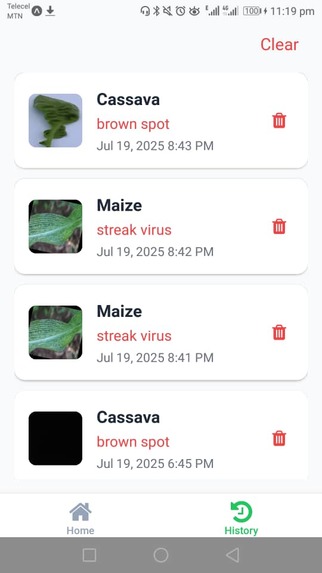
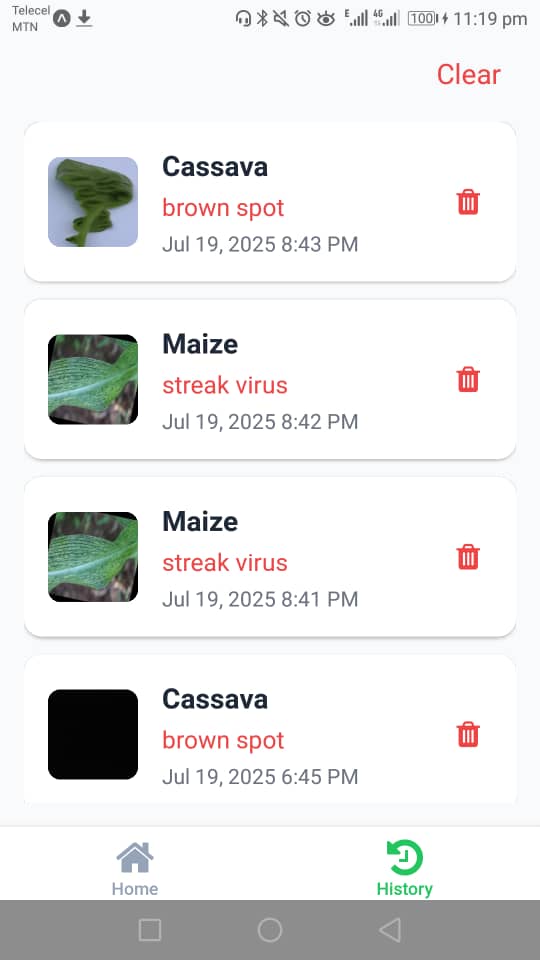
history screen
-
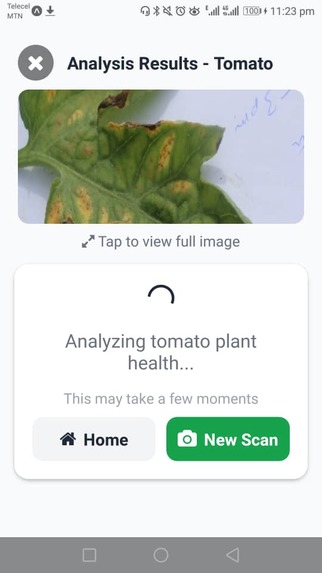
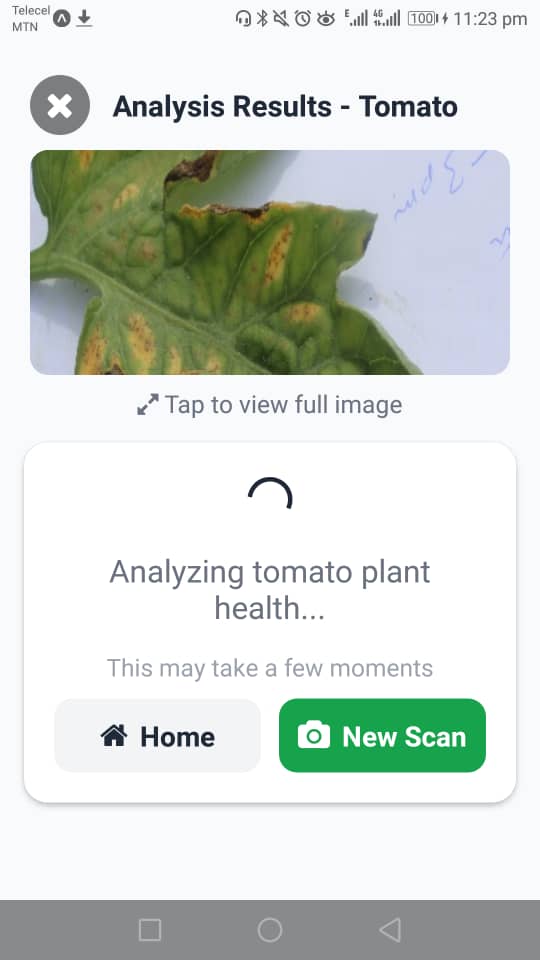
await diagnosis
-
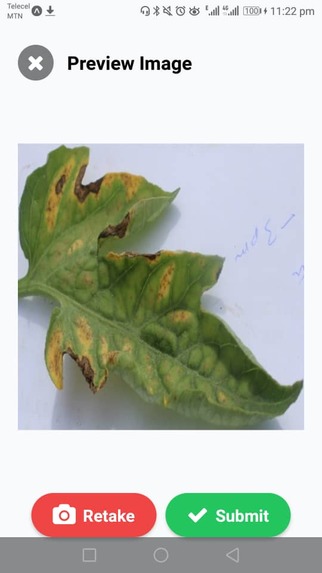
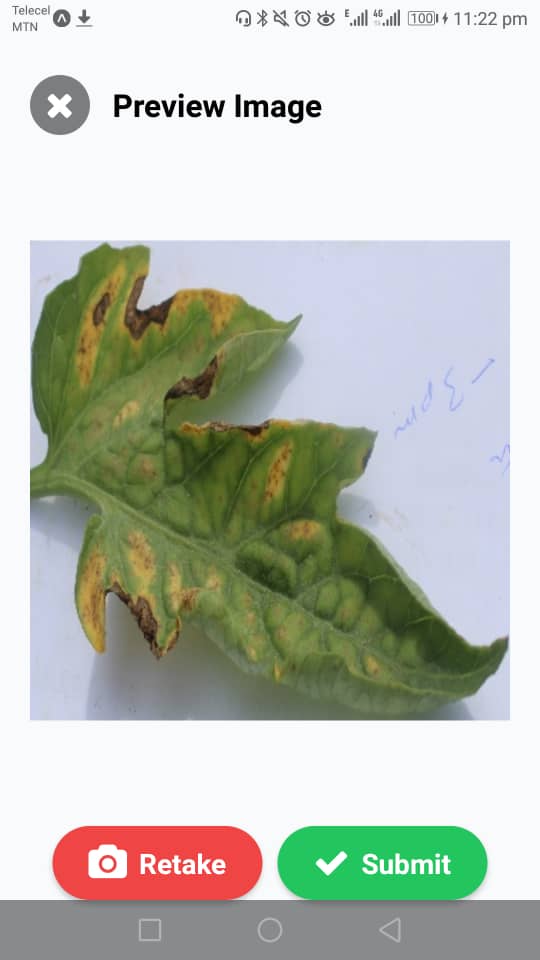
submit for diagnosis or retake image
-
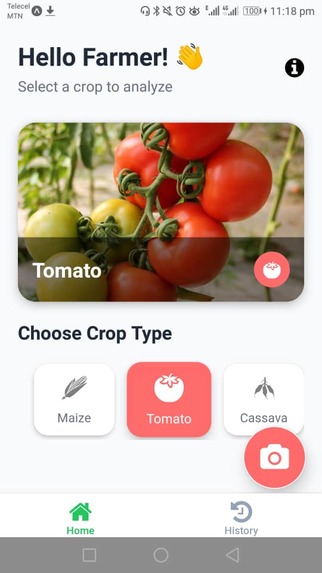
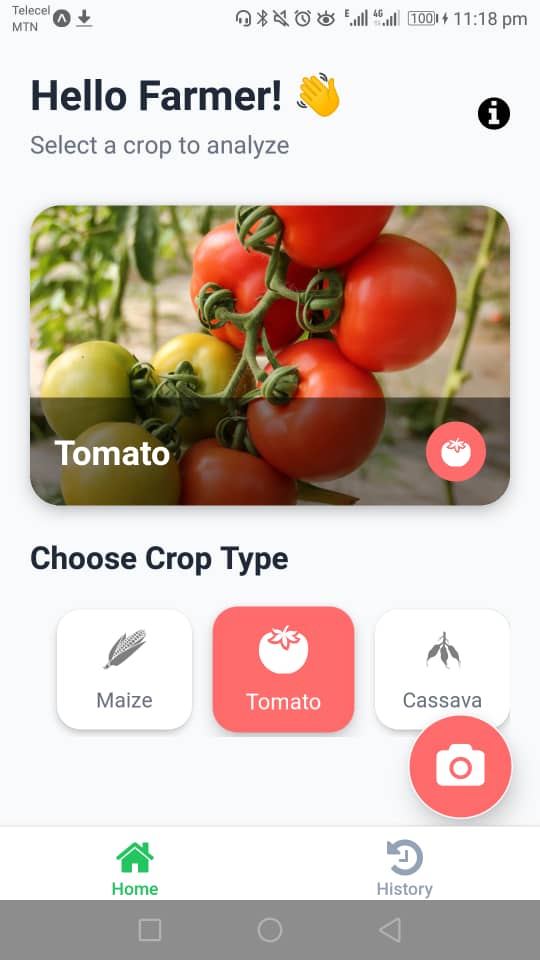
home page
-
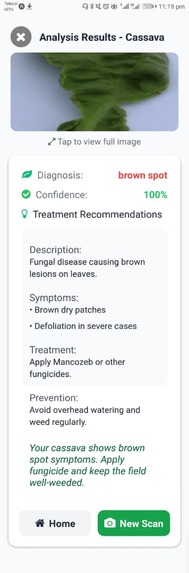
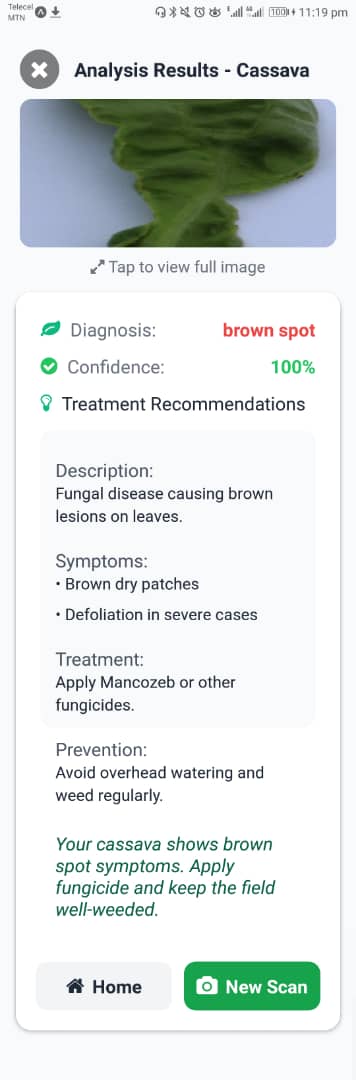
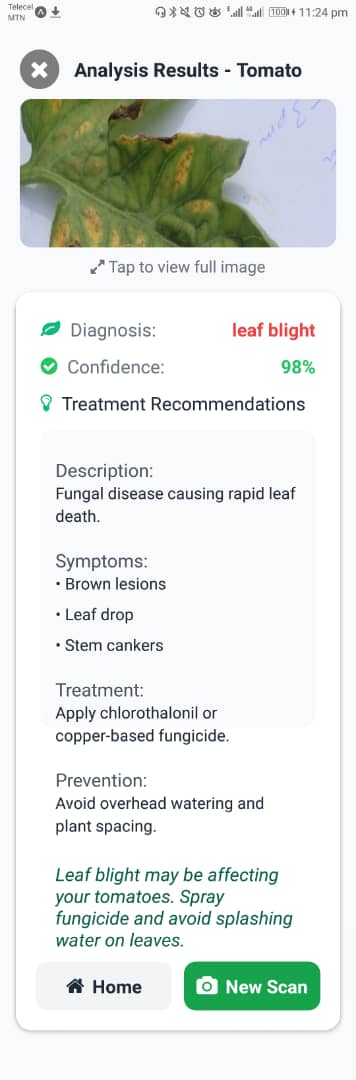
diagnosis screen
-
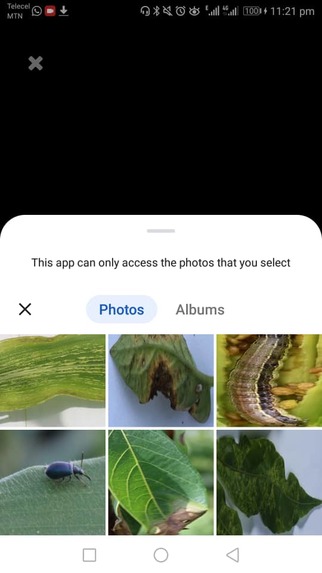
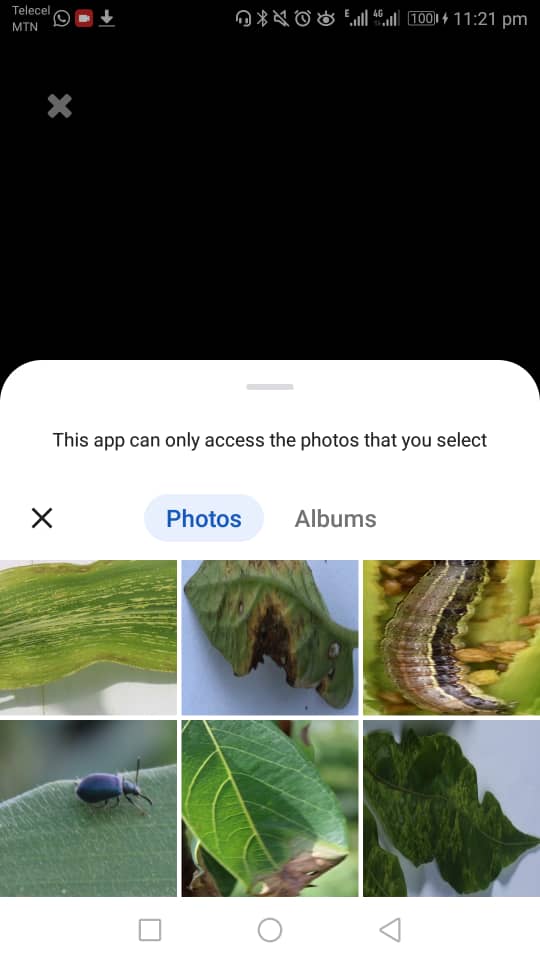
gallery access
-
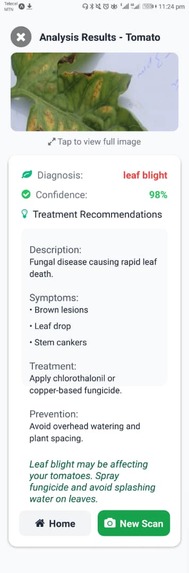
diagnosis screen
-

camera access

Inspiration
Two of saw this opportunity and decided to give it a try. Along the way we saw how demanding the project would be and the toll it will take for us to balance the demands of the project with academic work on campus. This was when we decided to invite a third member on board. We jumped on this hackathon because we had a lot of class knowledge and never knew what we could build them. This hackathon also came right about when we had completed the introduction to machine learning course on campus. This was our opportunity to see what we could build, earn some cash prizes and go on to take some udemy courses to increase the depth of our knowledge as well as impact the Ghanaian community in this our youthful ages. This was in essence our collective motivation for getting ourselves involved in this hackathon
What it does
We build a mobile app to classify diseases in for crops common in the Ghanaian farming community. We saw that determining which crop it is is not a problem for any farmer and the real hurdle will be to determine what disease affects the crop. we know for sure that the farmer will have 100% accuracy in determining the type of crop, we did not border to burden our model with that task. Having removed the burden of the crop classification reduces our prediction error that would have otherwise arisen if model had to detect the crop on its own. So consequently we have four models, one for each crop, to identify the disease affecting a particular crop
How we built it
The build process was split across machine learning and mobile development. On the ML side, the approach was simple but intentional: instead of training a single model to handle all crops and diseases, the team trained four separate models — one for each crop (cassava, tomato, maize, and cashew). This choice came from a practical assumption — farmers already know their crops, so the real challenge is identifying the disease, not the crop. Offloading that task from the model reduced prediction complexity and error.
Training was done directly on Kaggle, which offered the best balance of performance and accessibility. But even there, a 30-hour per week GPU cap meant the training process had to be spread out carefully, with strategic adjustments to batch sizes, data augmentation, and learning rates to get the most out of every hour. The models were built by one team member who focused entirely on architecture tuning, evaluation, and experimentation to hit the accuracy benchmarks needed for real-world use.
On the app side, the frontend was built with React Native using Expo — chosen for its speed and ease of cross-platform deployment. The backend was developed using FastAPI and serves as the central bridge between the mobile client and the model endpoints. Once a user selects their crop and uploads a photo, the app sends that image to the corresponding model, and the system returns a predicted disease class with a treatment recommendation.
Despite the heavy lift, the team prioritized modularity — keeping both the codebase and the API logic clean and extensible for later upgrades like offline predictions, audio support in local languages, and eventually expanding to cover more crops and regions.
Challenges we ran into
the key problem with the learning aspect of the project has to do with GPU access to train the model. i initially started training on my machine underestimating the compute required for the project until my machine broke down. We went over to google collab, however the usage cap could not allow us train for even 2 epochs. This was when we decided to make use of Kaggle notebooks, which was what did the job for use in the end Due to the large size of the models, we accessing free service to deploy the backend has been a hurdle. we plan to quantise the models but even that will not spare us the raft of having to pay for deployment
Accomplishments that we're proud of
we are proud to say the models are working very effectively and ready to deployed into the real world for usage by farmers. We are proud to say we have developed a solution that will impact the Ghanaian farming society as a whole
What we learned
W have learnt a lot that we cannot even express. Key takeaway for us is that there is a huge difference between theory and practise, and people need to get out of learning theory and put their theoretical knowledge to the test. You will never know what you actually know until you hit the road running, touch grass and get your hands dirty
What's next for Crop Guard
we plan to work towards deploying the project to the Ghanaian farming community. we also, before deployment plan to employ best practises from MLops to make the project more robust. We again plain the add audio response for the treatment recommendation in the various local dialects, say Twi, Ga, Dagbani, Dagaati and many more. we see the writings on the wall that this project is going to be a game changer in the Ghanaian community given that it comes at zero cost to the farmers
Built With
- fastapi
- javascript
- keras
- numpy
- python
- react-native
- tensorflow
- typescript


Log in or sign up for Devpost to join the conversation.