Inspiration
Design education runs on critique, but critique does not scale. A studio session can generate the most valuable feedback a student receives all week, then lose it minutes later: verbal comments fade, sticky notes disappear, and students leave without a synthesis of what to do next. Educators face the other side of the same problem. One tutor cannot give deep, frequent, structured feedback to every student in a 25-30 person studio, and peer review often swings between vague praise and unhelpful harshness.
Critsly was built for that missing layer: critique infrastructure for design education.
What it does
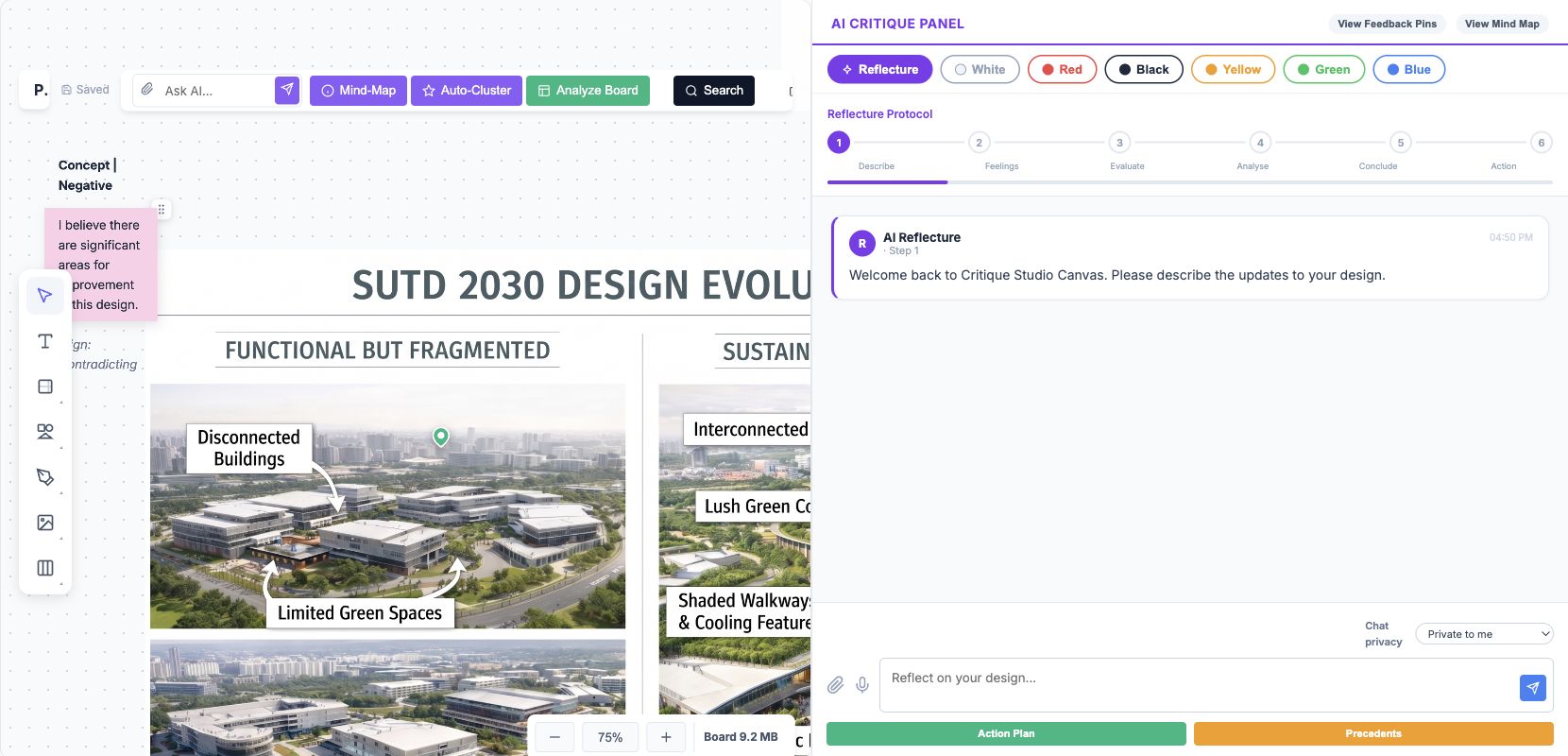
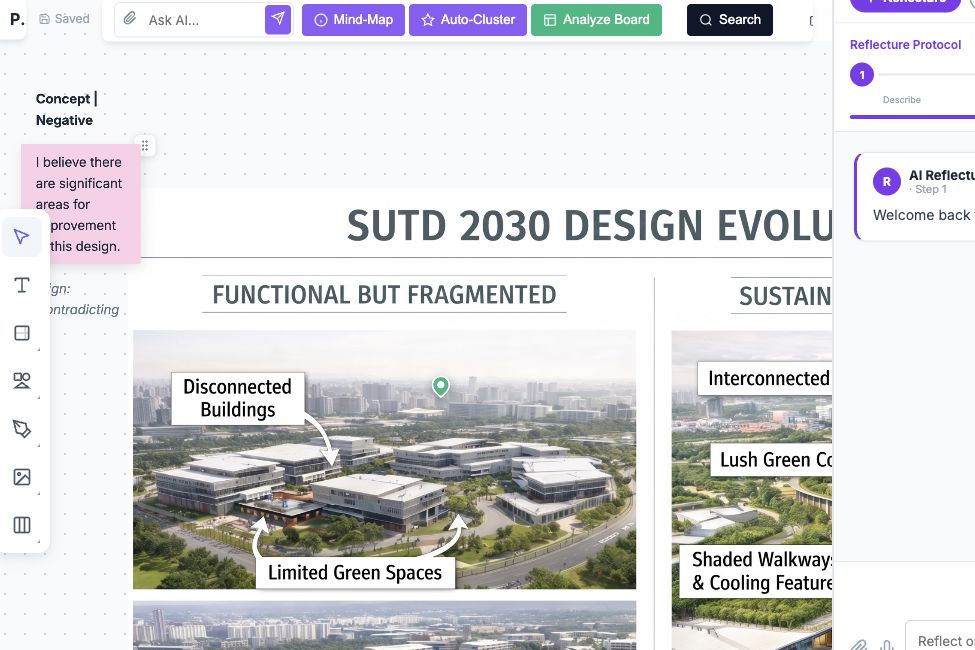
Critsly is an AI-powered critique studio canvas. Students stay on the board where their work already lives - sketches, plans, images, references, notes, peer comments, and rubrics - while Critsly turns messy critique into structured learning.
The product combines an infinite visual canvas, Gemini-powered multimodal critique, Reflecture reflection prompts, Six Thinking Hats critique lenses, anonymous peer review, jury-style review flows, and educator analytics. Students get clearer next steps before the next studio session. Educators get evidence on participation, reflection quality, critique quality, board progress, and where intervention is needed.
The simple promise is: messy critique in, actionable learning out.
How AI runs the workflow
Critsly is not a chatbot pasted beside a whiteboard. AI is the operating layer of the critique workflow.
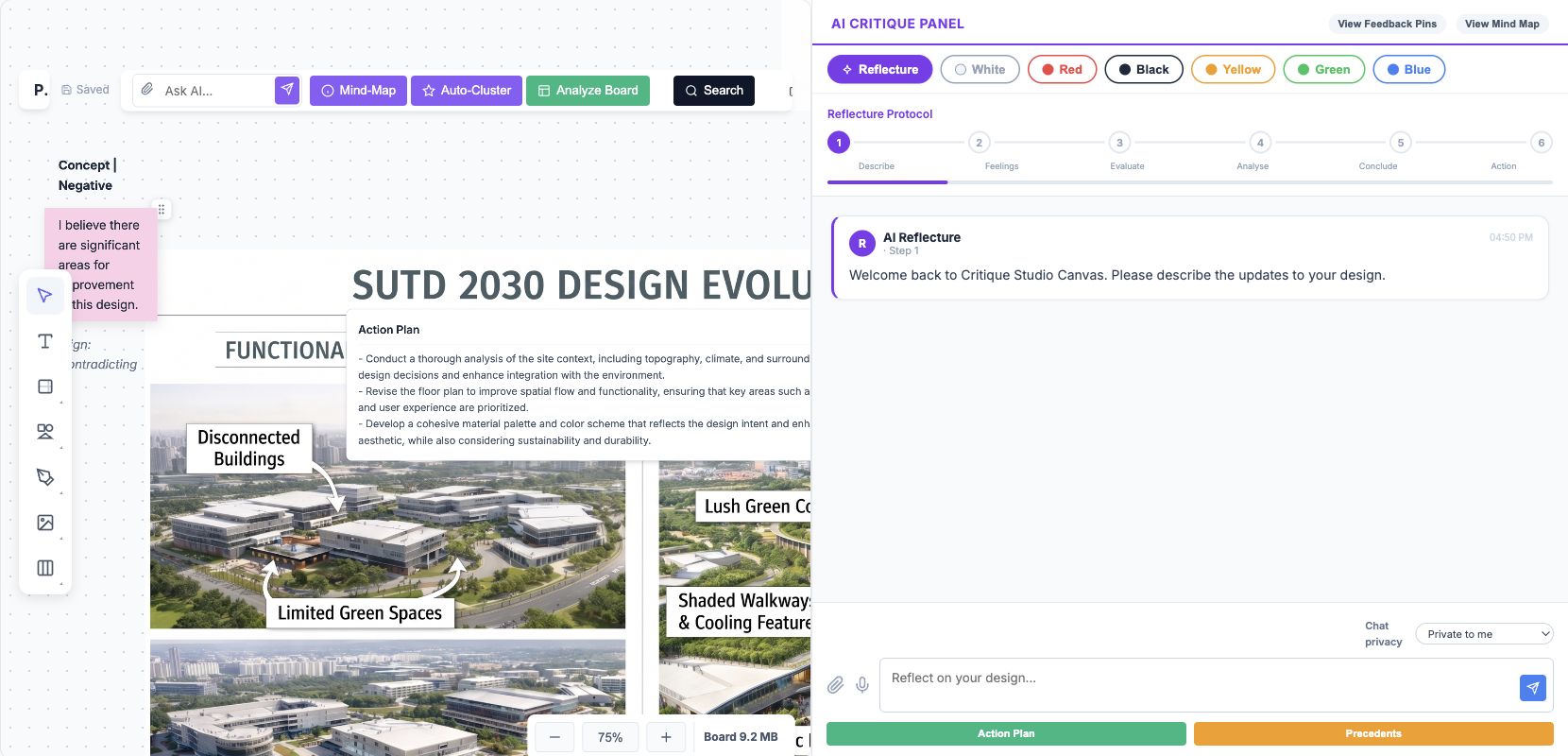
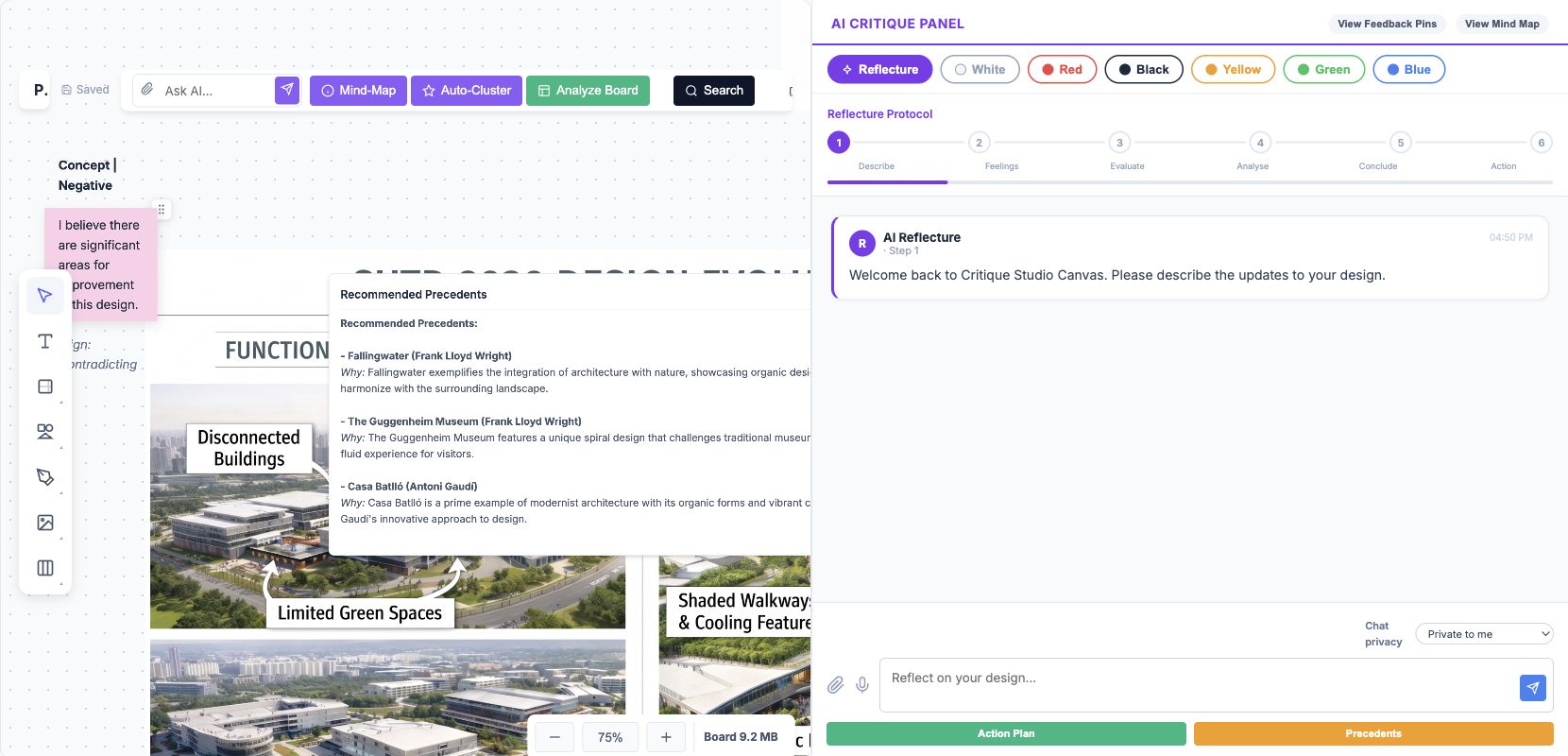
Gemini reads visual and written board context together, identifies critique themes, detects missing evidence, routes feedback through pedagogical lenses, and generates prioritized action plans. AI also helps transform vague or unsafe peer comments into more useful critique, while keeping educator traceability and override controls. For educators, AI turns board activity into signals: who is receiving feedback, what critique lenses are being used, where reflection is shallow, and which boards need human support.
Humans still do the work that matters most: students create the artifacts, peers and educators give feedback, and instructors make assessment decisions. AI handles the repetitive synthesis, routing, and monitoring work that makes critique frequent enough to change learning outcomes.
How we built it
The XPRIZE build began on May 19, 2026. Critsly builds on LearnAdapt's existing Critique Studio Canvas foundation, then focuses it into a live business for critique-driven education with a public product site, Gemini critique workflows, pilot packaging, and submission evidence produced during the hackathon period.
The application uses a React/Next.js front end, a Python/Node.js back end, PostgreSQL-backed data, real-time board interactions, and Google Cloud infrastructure. The deployed product uses Google Cloud runtime services, and the AI layer uses Gemini for at least one LLM call in the critique workflow, especially where multimodal reasoning over visual artifacts and written feedback is needed.
Business viability
Critsly sells to institutions, not students. The wedge is deliberately narrow: one educator, one studio of about 25 students, one weekly desk crit, one rubric. We land with an 8-12 week pilot, then expand course-by-course into recurring subscriptions or an annual institution license.
Current packaging:
- Pilot program: S$1.5K-S$3K per cohort.
- Per-student rollout: S$8-S$15 per active student per month.
- Institution license: S$8K-S$25K annually.
This model gives programs a low-friction way to test governed AI critique, measure outcomes, and justify renewal with evidence rather than hype.
Validation
Critsly is live at critsly.com. In recent v1.2 testing and pilot conversations, we have seen strong pull from both students and educators:
- 5x more feedback delivered per studio cycle.
- Up to 12 hours saved per educator per week.
- 94% student satisfaction signal across v1.2 cohorts.
- 4.6/5 critique quality score from 52 participants.
- 35+ educators and researchers engaged through workshops.
- 8 institutions with formal interest and 120 waitlist signups.
- Three named pilot opportunities for Sep-Dec 2026 studio use.
Educators have described the need clearly: structured, actionable feedback that supports design effort without replacing studio judgment.
Challenges we ran into
The hard part is not generating text. The hard part is respecting critique as pedagogy. Design feedback depends on visual evidence, intent, context, tone, timing, and trust. We had to design AI workflows that are board-aware, rubric-aligned, and useful without becoming a grading black box. We also had to make anonymity safer: peers can give more direct feedback, while educators retain accountability and intervention controls.
What we learned
AI is most useful in education when it strengthens the human loop instead of pretending to replace it. Critsly works because it gives students more chances to revise, gives peers better guardrails, and gives educators better evidence for where their attention is needed.
What's next
Next we will close the pilot agreements, run three studio cohorts, publish case studies, and convert successful pilots into paid institutional rollouts. The long-term opportunity is larger than design school: project-based learning in engineering, entrepreneurship, HCI, professional upskilling, and any field where people learn by making, receiving critique, and revising.
Built With
- ai-agents
- cloud-run
- design-education
- education
- gemini
- gemini-api
- google-cloud
- learning-analytics
- multimodal-ai
- next.js
- node.js
- postgresql
- python
- react
- vertex-ai
- websockets


Log in or sign up for Devpost to join the conversation.