-
-
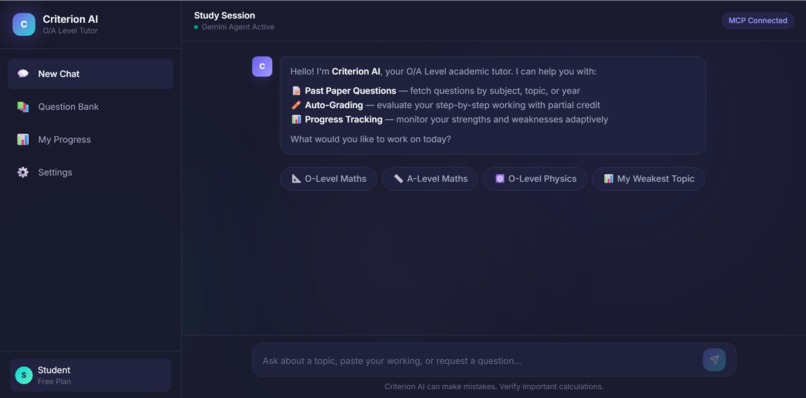
Landing Page
-
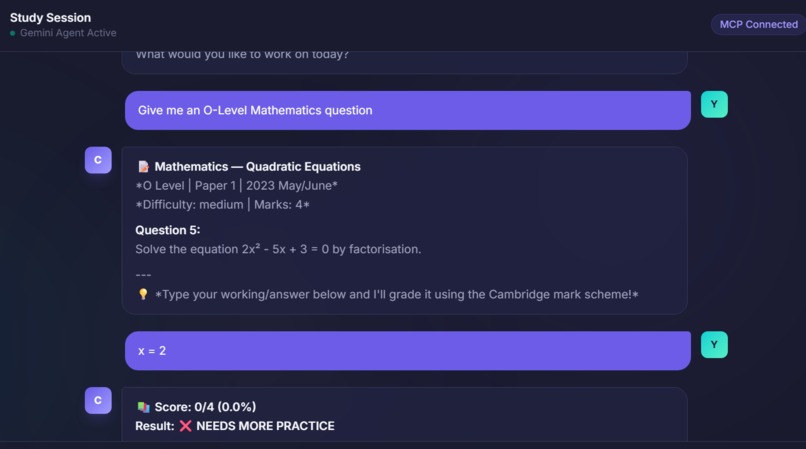
Demo1
-
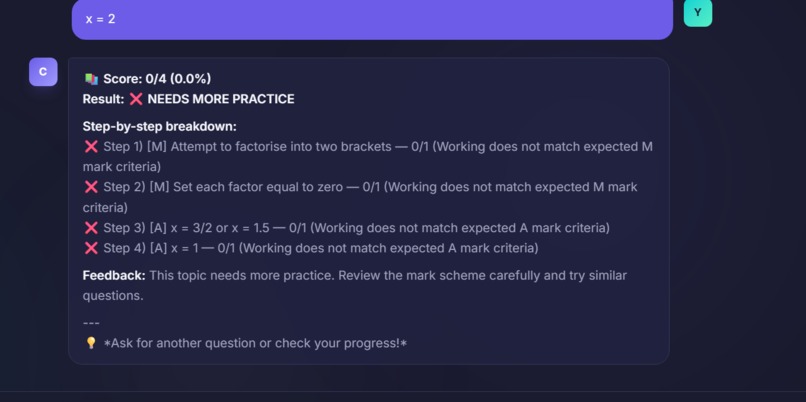
Demo2
-
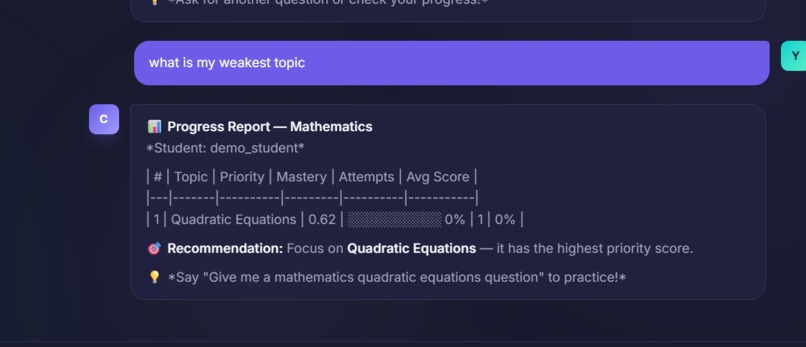
Demo3
Inspiration
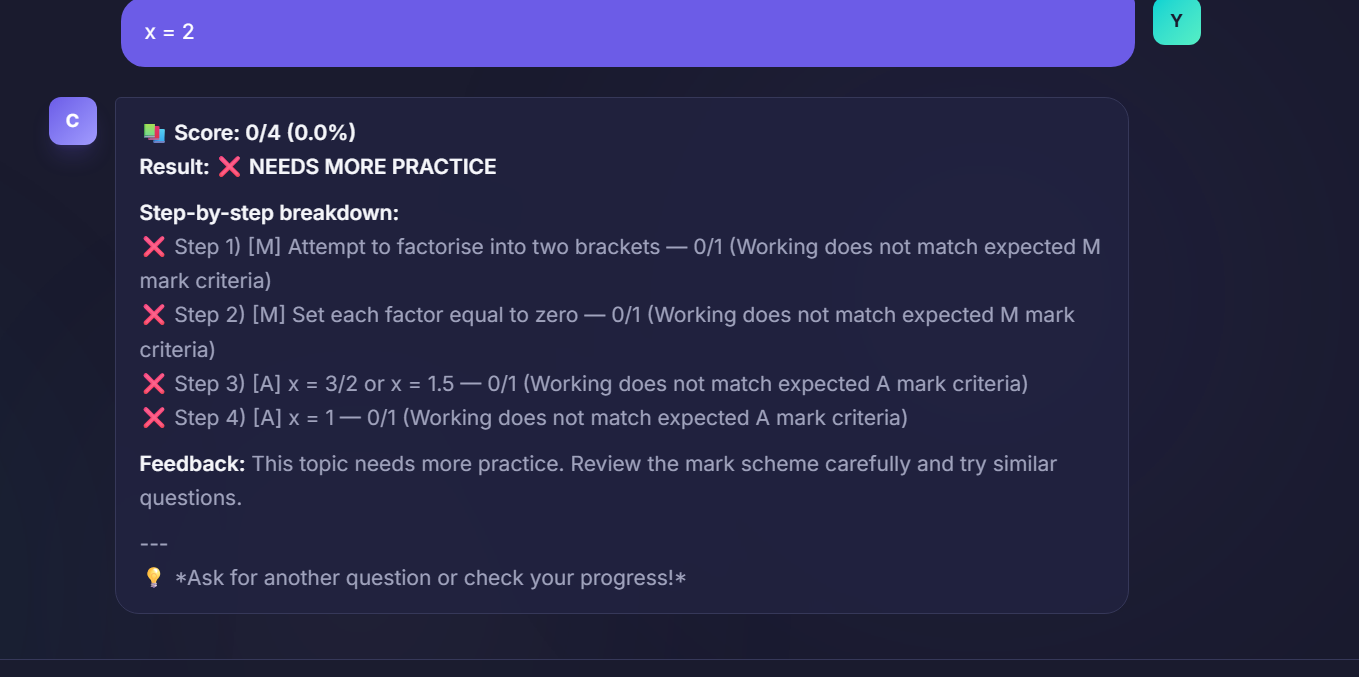
Standard AI grading tools are terrible at evaluating open-ended math and science questions. They either look purely at the final answer and mark it wrong, or they completely rewrite the answer for the student. Real examiners don't grade like that. Exams like the Cambridge assessments award partial credit—Method marks (M1) and Accuracy marks (A1)—based on the logical steps a student takes. We wanted to build an AI that grades like a real human examiner, rewarding logical thinking rather than just final outputs.
What it does
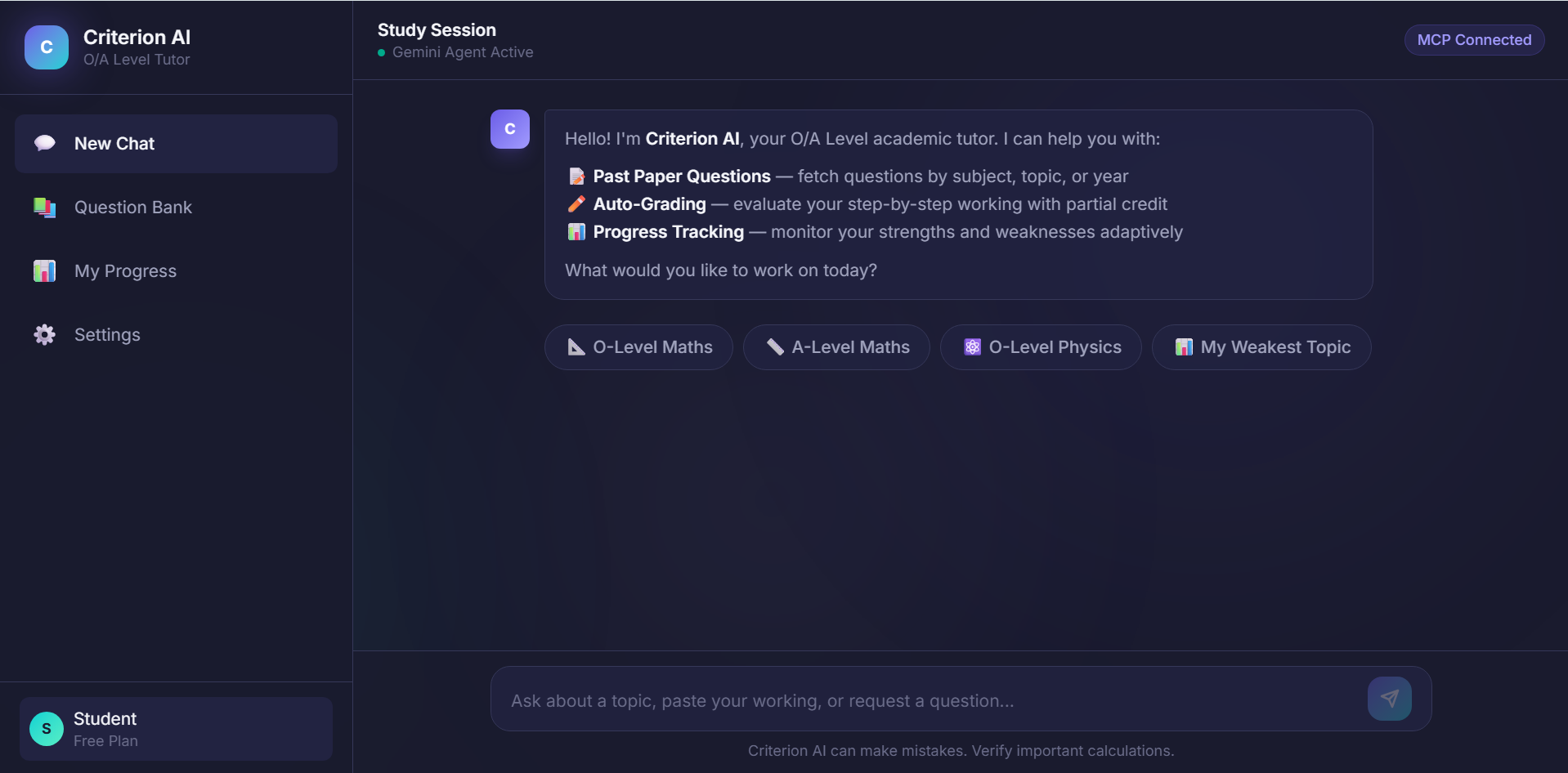
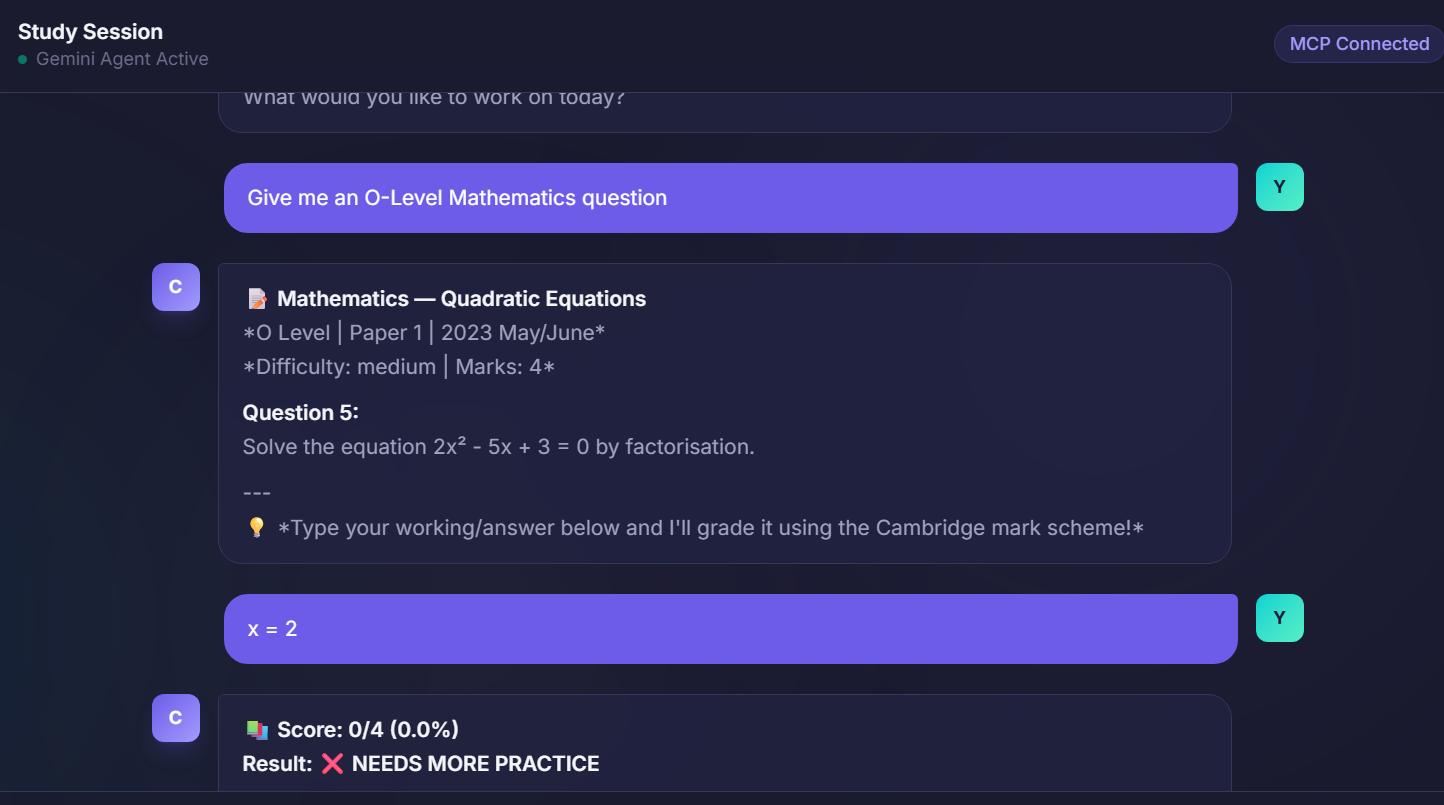
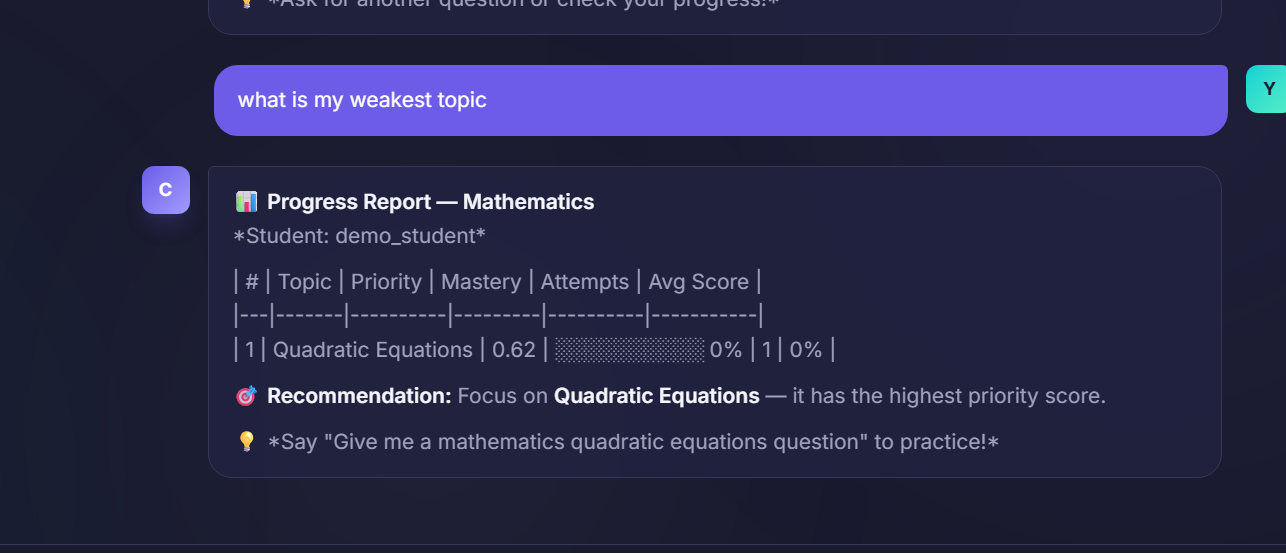
Criterion AI is an intelligent grading assistant designed for rigorous academic curricula. You input an official mark scheme and a student's open-ended answer. The application uses AI to step through the student's logic line-by-line, awarding partial credit exactly where it's due. Instead of just a pass/fail, it outputs a detailed breakdown of where the logic broke down and generates specific "Topics Failed" tags so students know exactly what weak points to study next.
How we built it
We built the application using a lean, fast-shipping tech stack. The frontend and routing are handled entirely by Streamlit, allowing for a clean, academic UI without the overhead of a heavy frontend framework. The core grading engine is powered by Google's Gemini 1.5 Pro via the google-generativeai SDK. Gemini was chosen specifically for its massive context window and advanced reasoning capabilities, which are required to parse complex, multi-step mark schemes and compare them against unpredictable student logic.
Challenges we ran into
Time management and architecture pivots. Initially, we planned a highly complex backend, but as the deadline approached, we had to ruthlessly prioritize the core feature: the grading logic. The extreme time crunch meant we had to drop the heavy backend and pivot to a Streamlit MVP. Additionally, prompt engineering the Gemini model to strictly act as a rigid examiner—forcing it to award discrete M1/A1 marks instead of just offering helpful conversational feedback—took significant iteration.
Accomplishments that we're proud of
We are incredibly proud of shipping a fully functional MVP under such an extreme time limit. More importantly, the core logic actually works: the Golden Demo proves that the AI can successfully identify a mathematical misstep, dock the specific accuracy mark, but still understand the student's overall method.
What we learned
We learned the absolute importance of scoping an MVP. As developers used to writing highly optimized, complex algorithms, it was a massive learning curve to step back and realize that integrating a powerful LLM with a lightweight framework like Streamlit can solve a complex problem in a fraction of the time.
What's next for Criterion AI
The next step is expanding the input methods. We want to integrate an OCR pipeline so students can take pictures of their handwritten math homework and have it instantly graded against a database of past-paper mark schemes. We also plan to build a dashboard that tracks the "Topics Failed" tags over time, generating a personalized study roadmap for the student.
Built With
- ai
- fastapi
- gemini
- model-context-protocol-(mcp)
- mongodb
- python
- react
- tailwind-css
- typescript
- vertex
- vite

Log in or sign up for Devpost to join the conversation.