Inspiration
Generative AI has changed what it means to produce a good answer. A student can now submit a clear, well-written response in seconds, but the teacher may have no way to know how that answer was developed or whether the student actually understood it.
CriterIA was born from a simple question: if AI can produce the answer, how can education still see the thinking behind it?
The goal is not to ban AI or fight against it. The goal is to make AI part of the learning process instead of making it a shortcut around that process.
What it does
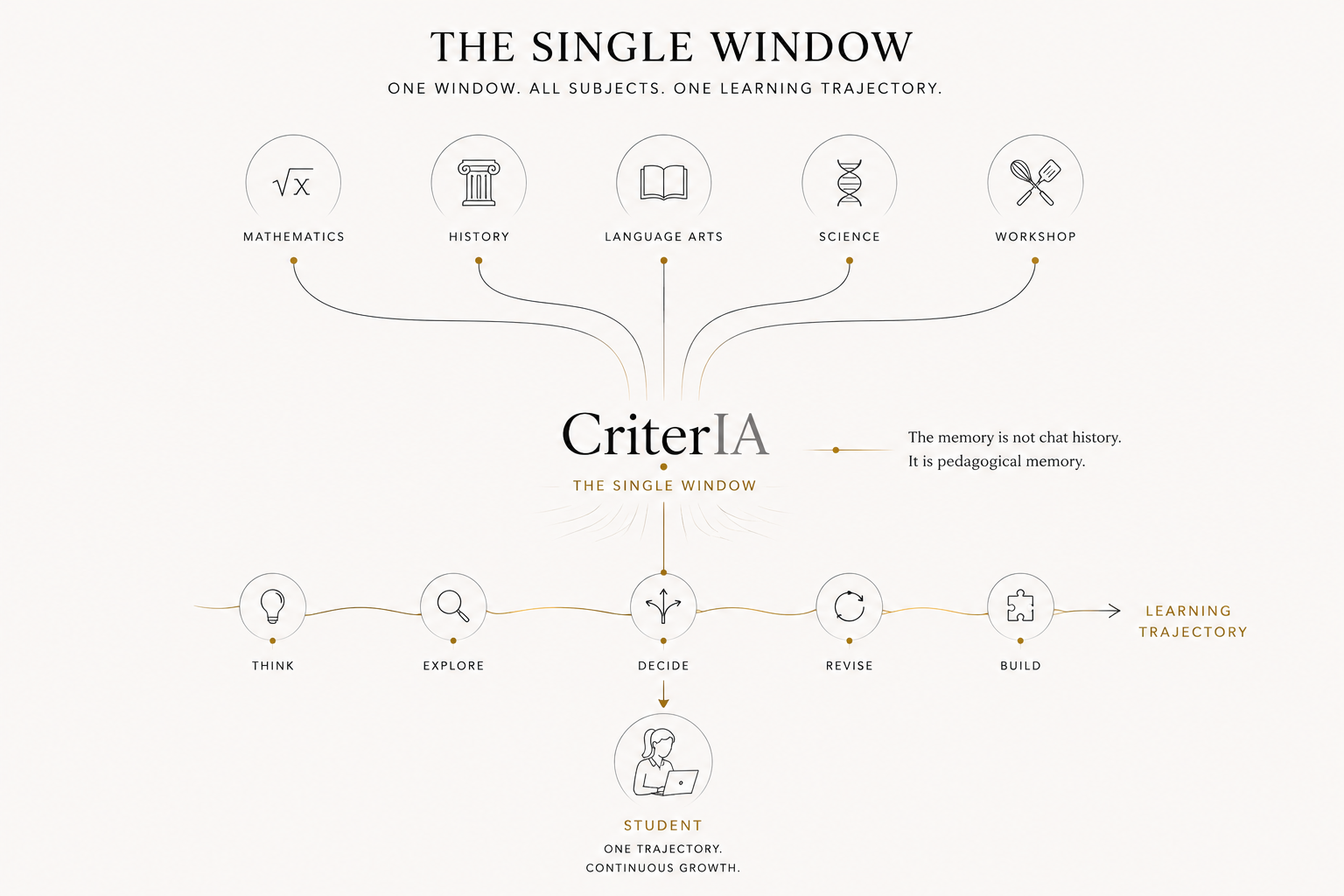
CriterIA is a single learning window for all subjects. It connects students, teachers, knowledge, and AI in one place.
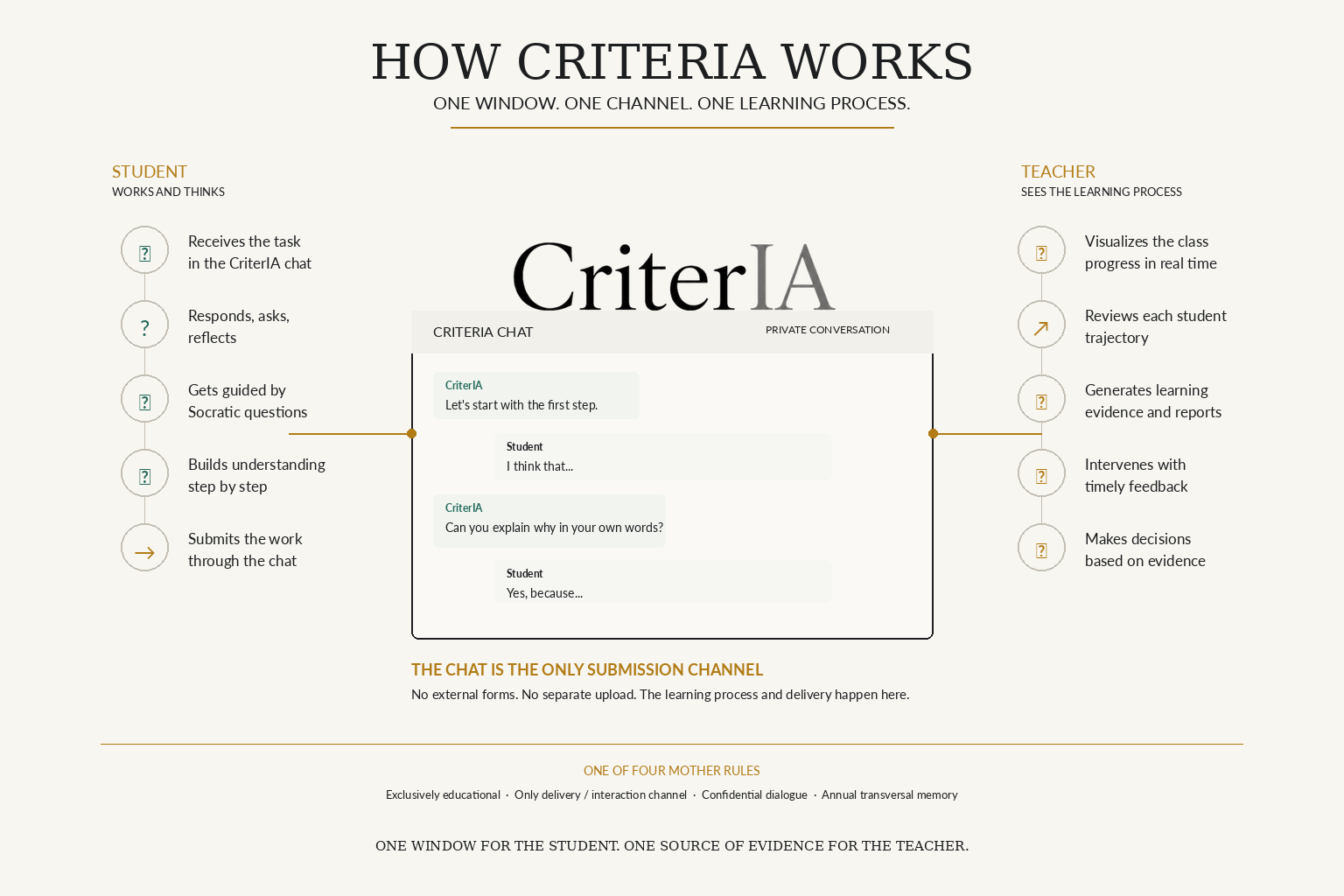
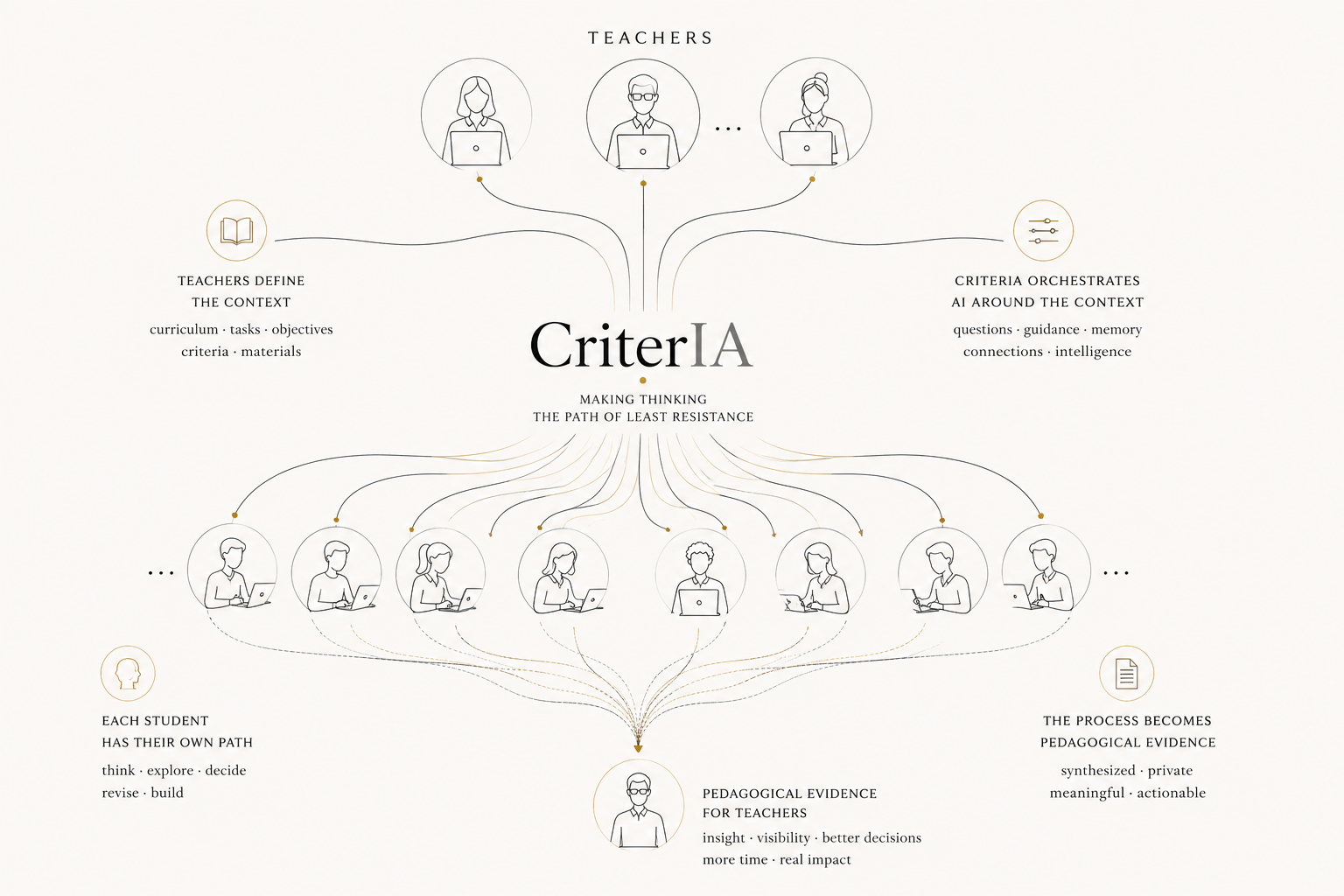
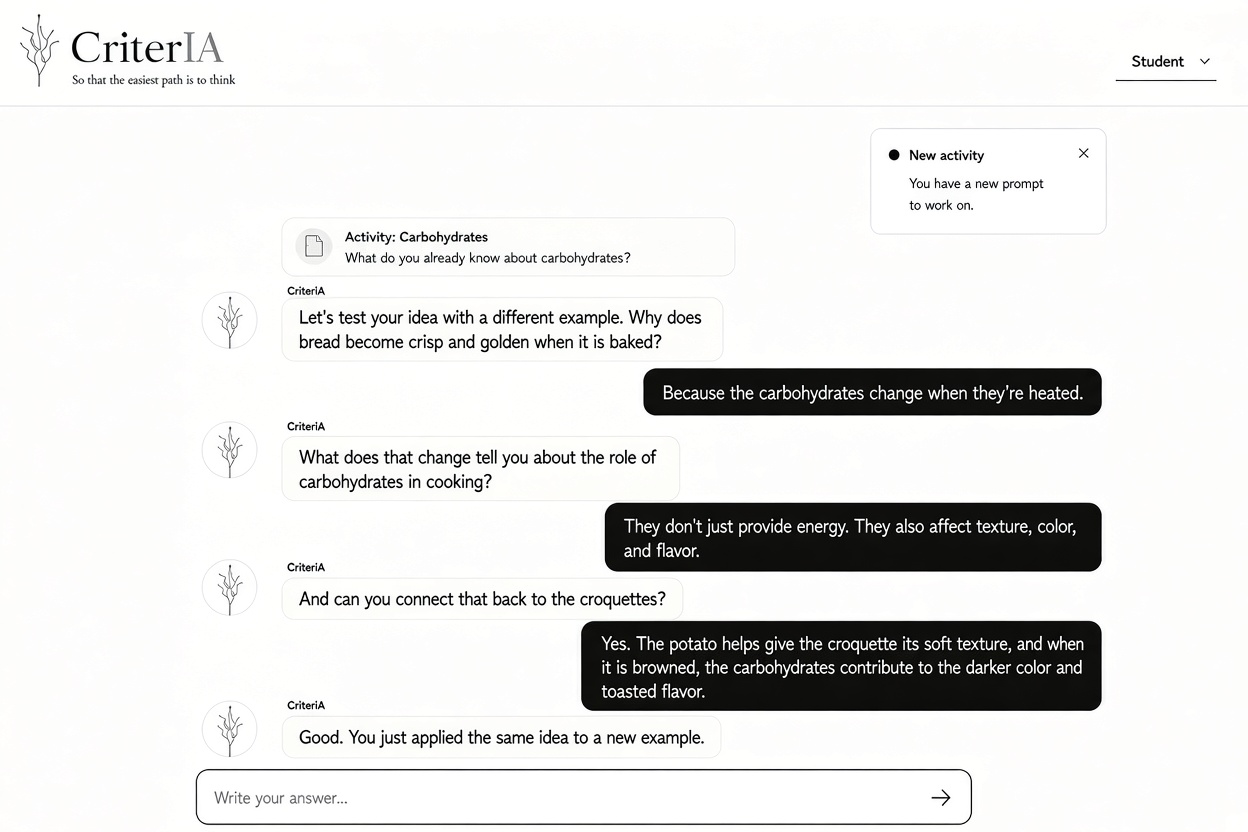
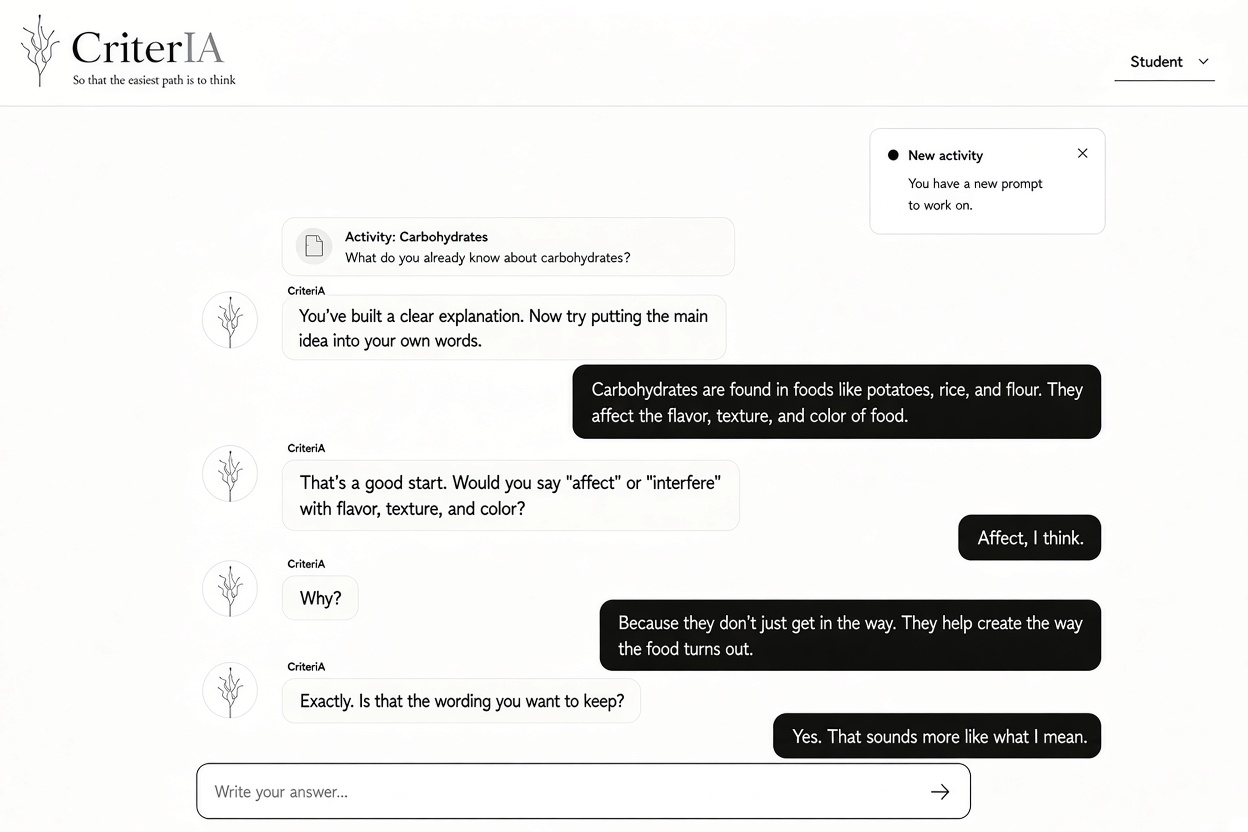
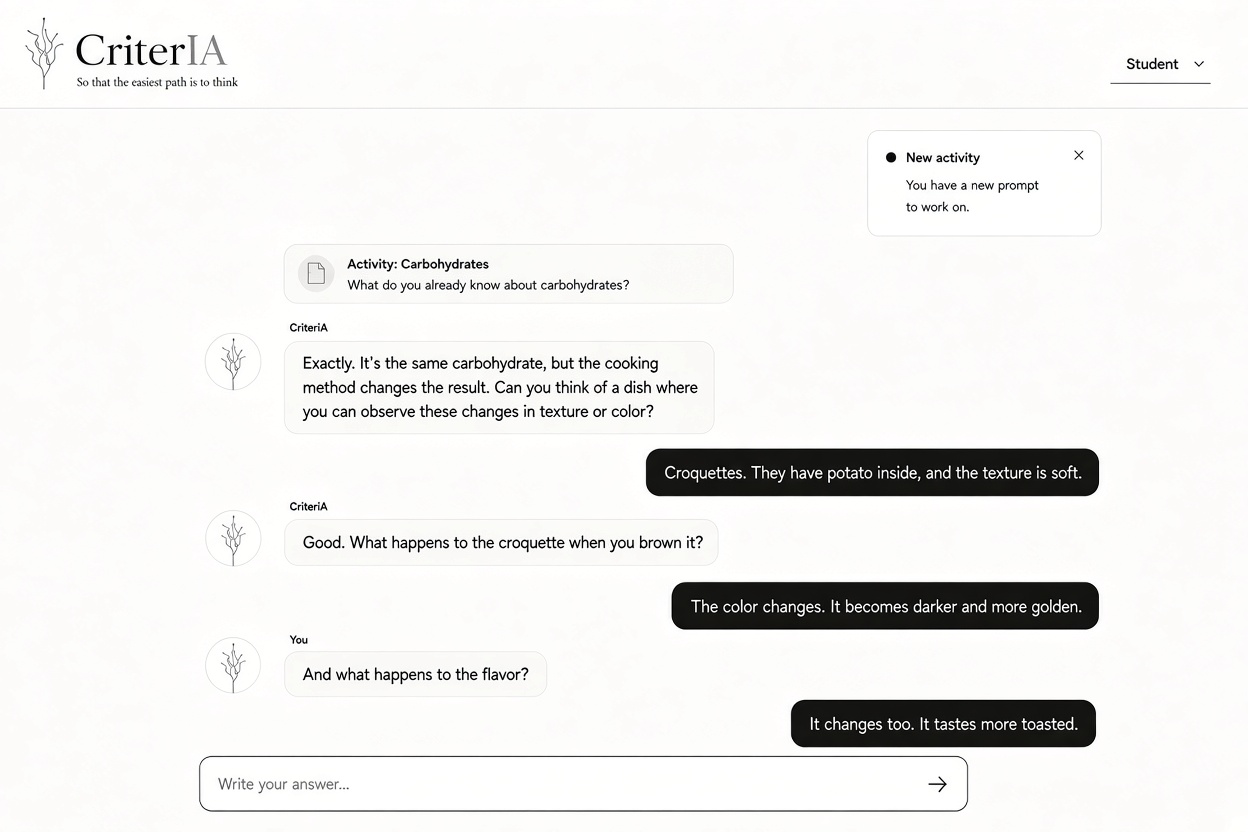
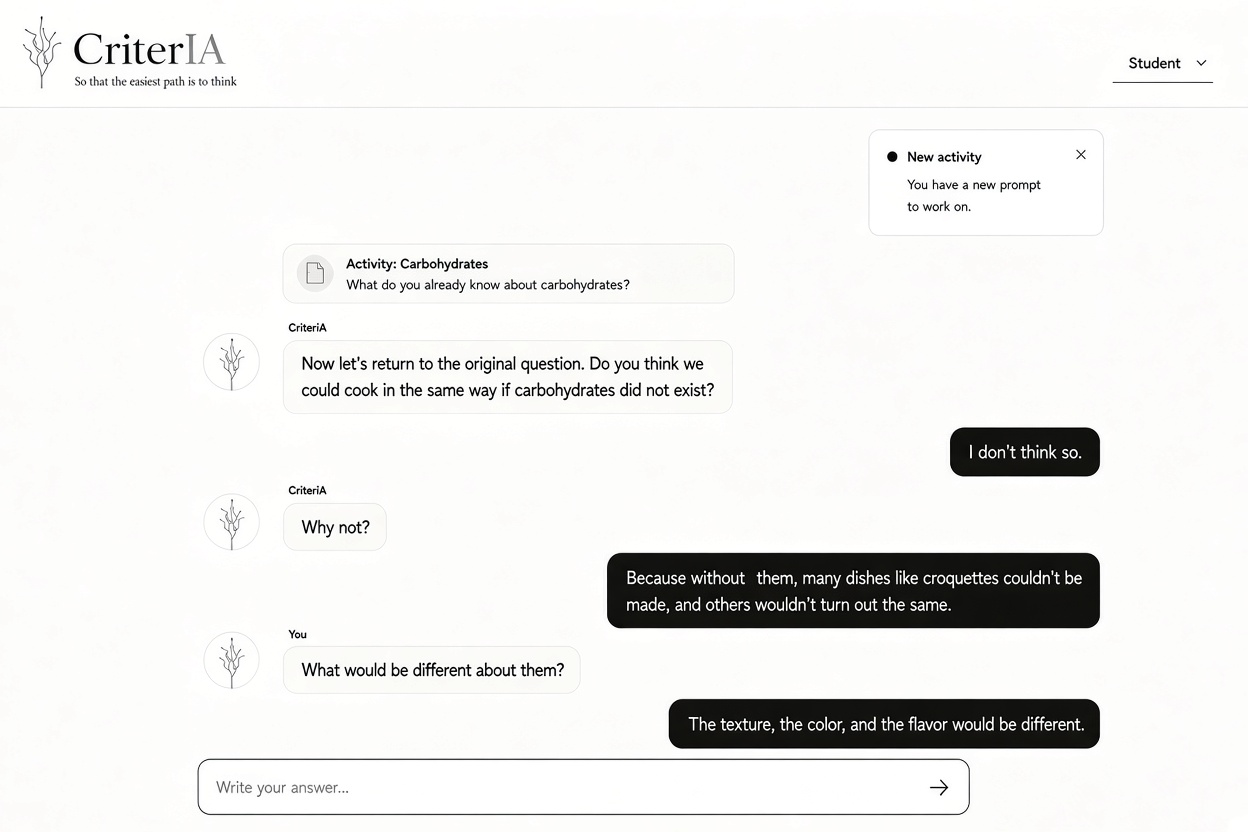
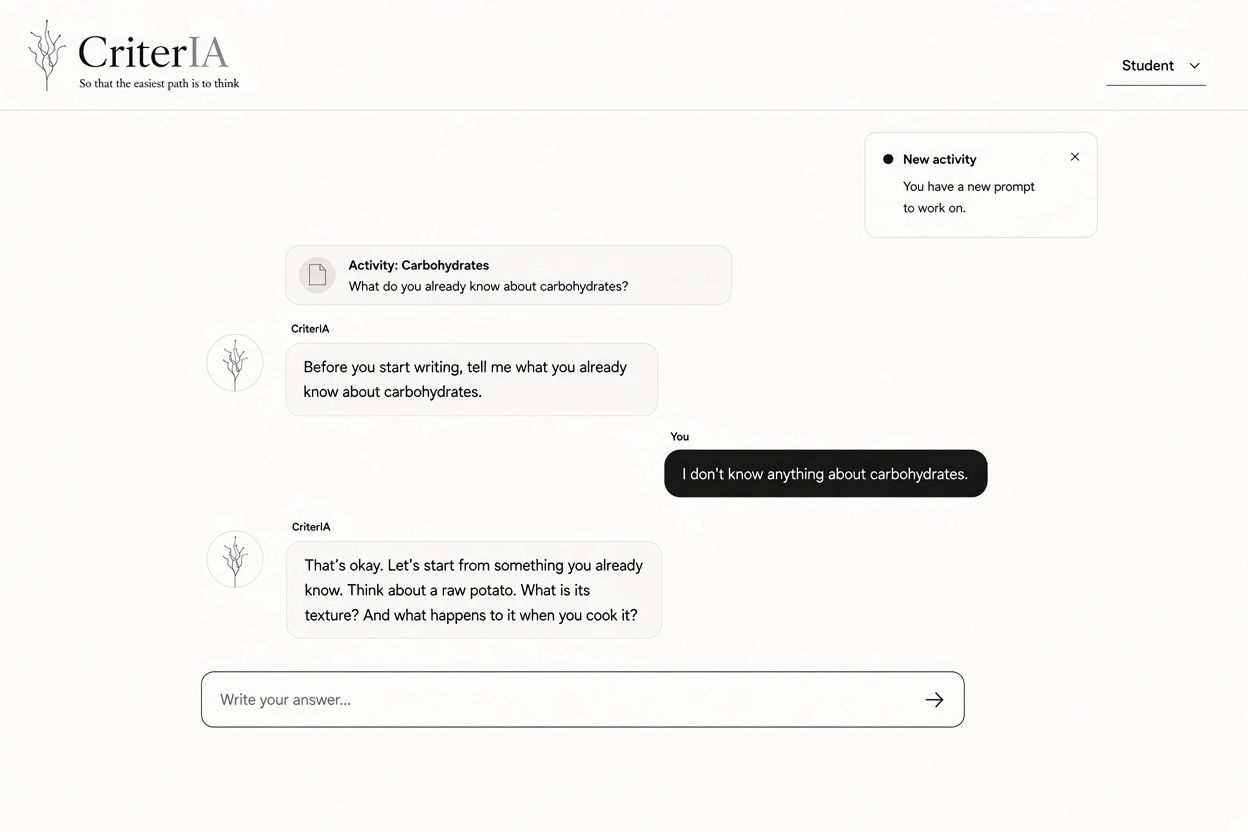
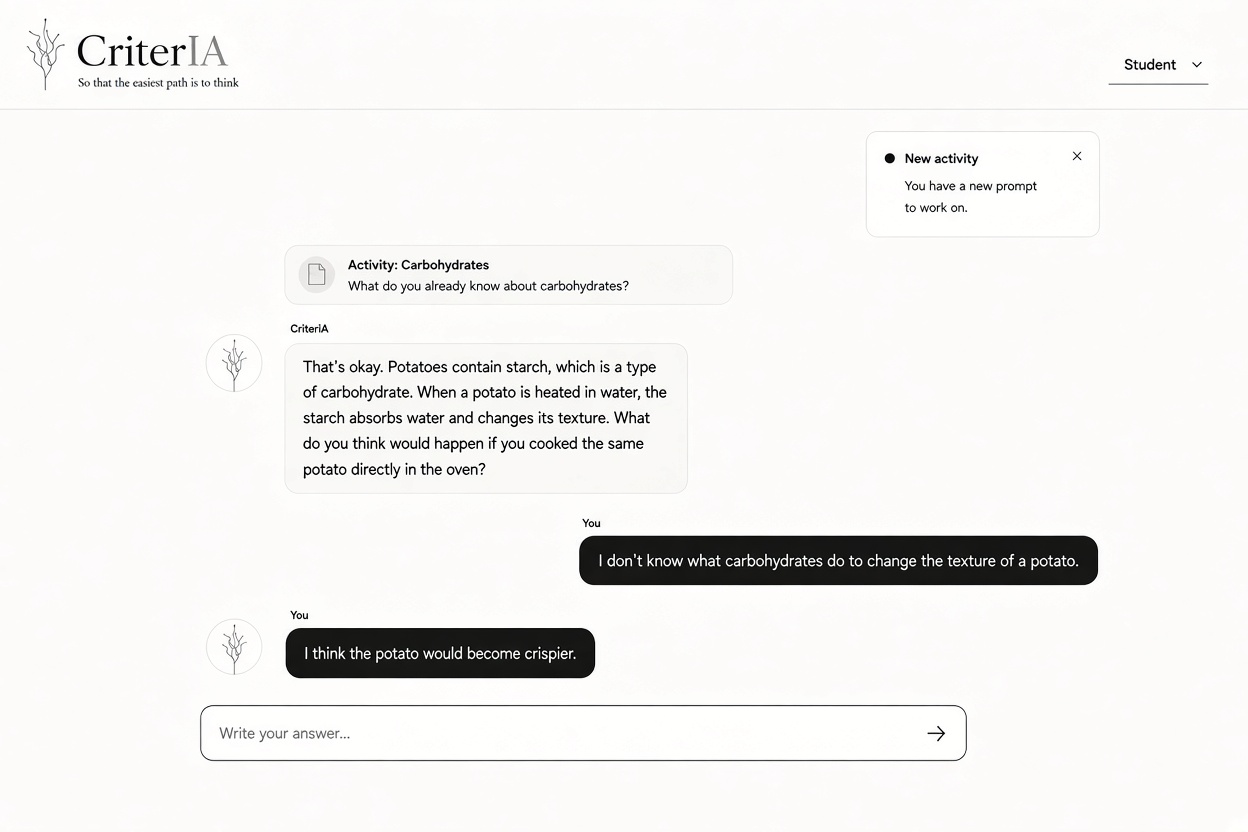
The teacher defines the context of the learning activity: the assignment, materials, sources, and criteria. The student then works inside CriterIA with an AI that guides the process rather than simply providing an answer.
The AI asks questions, requests explanations, connects concepts, challenges contradictions, and encourages the student to revise and develop their own ideas.
CriterIA also has memory, allowing learning context to remain connected over time and across different subjects instead of treating every activity as an isolated conversation.
The entire process happens in the same environment: understand → think → discuss → revise → build → submit.
Submission is also part of the system. CriterIA is the only submission path, so the student does not complete the process somewhere else and simply paste a final answer into the platform.
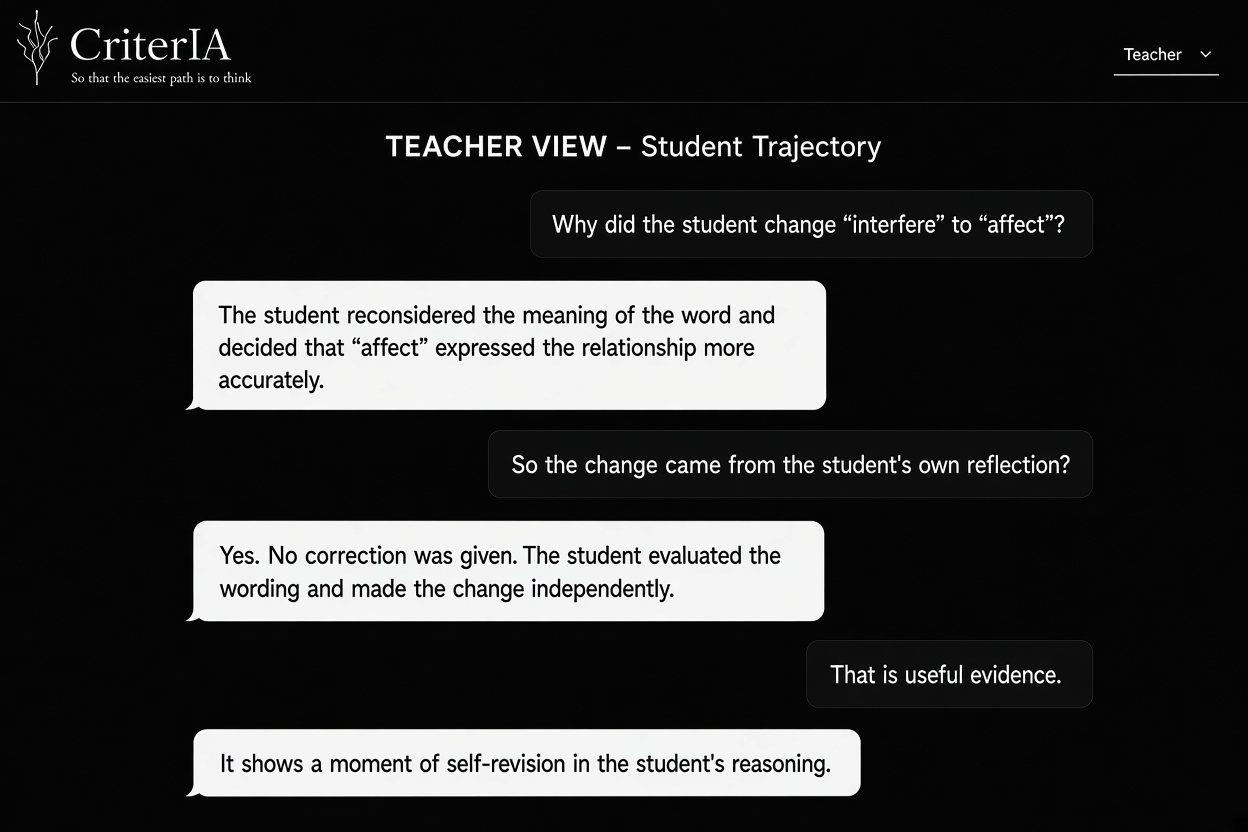
Teachers receive the student's final work together with pedagogical evidence of the process, not the raw conversation. Assessment and interpretation remain human.
How we built it
CriterIA was built as a functional prototype around a simple principle: the AI should be organized around the teacher's pedagogical context, not the other way around.
The prototype combines a student-facing AI interaction, teacher-defined activities and knowledge, persistent learning context, submission, and a teacher-facing synthesis of the learning process.
The first version was developed from a real educational problem in Culinary Arts and then designed to extend across subjects.
We focused on making the core loop work before adding unnecessary complexity: teacher defines → student thinks with AI → CriterIA remembers → student builds → CriterIA generates process evidence → student submits → teacher evaluates.
Challenges we ran into
The biggest challenge was finding the balance between being helpful and not simply giving students the answer.
A conventional chatbot is rewarded for producing a useful response. CriterIA needs a different behavior: sometimes the most useful response is a question, a challenge, or a request for the student to explain their reasoning.
Another challenge was deciding what evidence a teacher should see. We deliberately chose not to expose raw conversations. CriterIA instead produces a pedagogical synthesis, while leaving interpretation and grading to the teacher.
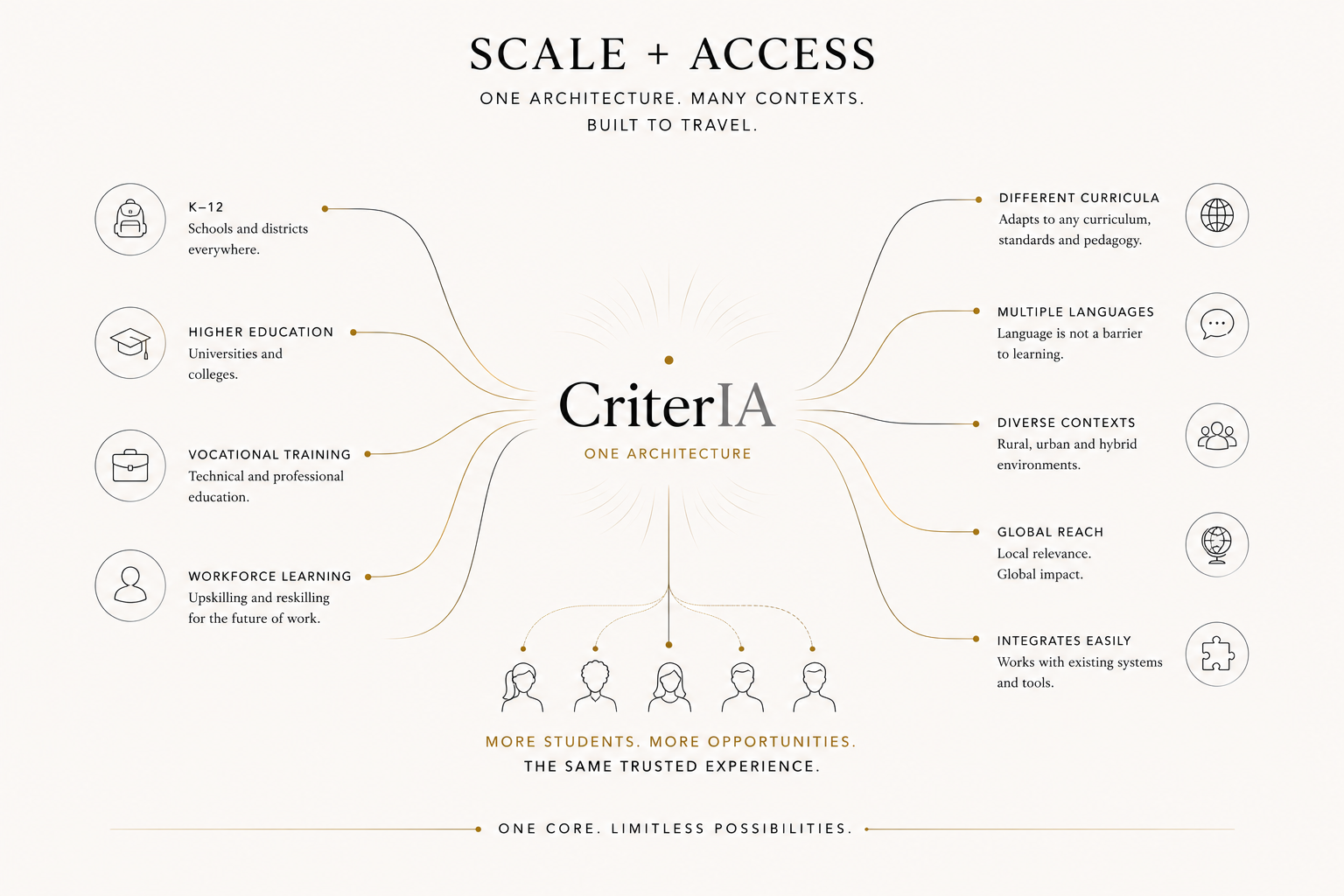
We also had to design the system so that the same learning environment could work across different subjects rather than becoming a tool only for one discipline.
Accomplishments that we're proud of
We built a working prototype around a real classroom problem and tested the core interaction with students across multiple subjects.
What makes us most proud is that the concept goes beyond an AI tutor. CriterIA is designed as a shared learning environment, where the assignment, knowledge, AI interaction, learning context, process evidence, and submission are connected.
The prototype demonstrates that AI can be used not only to generate content, but to make the process of learning more visible.
What we learned
We learned that using AI in education is not only a question of what the model can generate. It is a question of how the interaction is designed.
A powerful model can give a student the answer immediately. A pedagogically designed AI can instead help the student arrive at, question, explain, and improve their own answer.
We also learned that the teacher does not need more raw information. They need the right evidence to understand what happened during learning.
Most importantly, we learned that AI does not necessarily have to reduce human agency in education. If the process is designed correctly, it can actually help make that agency more visible.
What's next for CriterIA
The next step is to expand validation with more students, teachers, subjects, and learning contexts.
We want to improve CriterIA's pedagogical memory so that learning can become a continuous trajectory across activities and subjects, while giving teachers better tools to define context and interpret the evidence generated by the system.
Longer term, we want CriterIA to become a pedagogical layer for generative AI in education: the underlying AI models can change, but the learning context, teacher relationship, student trajectory, and evidence of the learning process remain connected.
The vision is simple:
AI can produce the answer. CriterIA makes the thinking visible.
Built With
- ai
- development
- education
- schoology

Log in or sign up for Devpost to join the conversation.