Inspiration
Every year, couples plan families without knowing that both of them may carry the same hidden genetic condition. Carrier screening exists, but for most people it is fragmented, costly, and delivered as a report full of variant names that only a specialist can read. Genetic counsellors are scarce, so the people who need clarity most often wait longest for it.
CTRL-V asks how technology can remove barriers to access. For this project, the barrier is understanding. CRISPR-X was built so that a couple and their counsellor can sit down, see the risk clearly, and ask better questions, before conception rather than after.
What it does
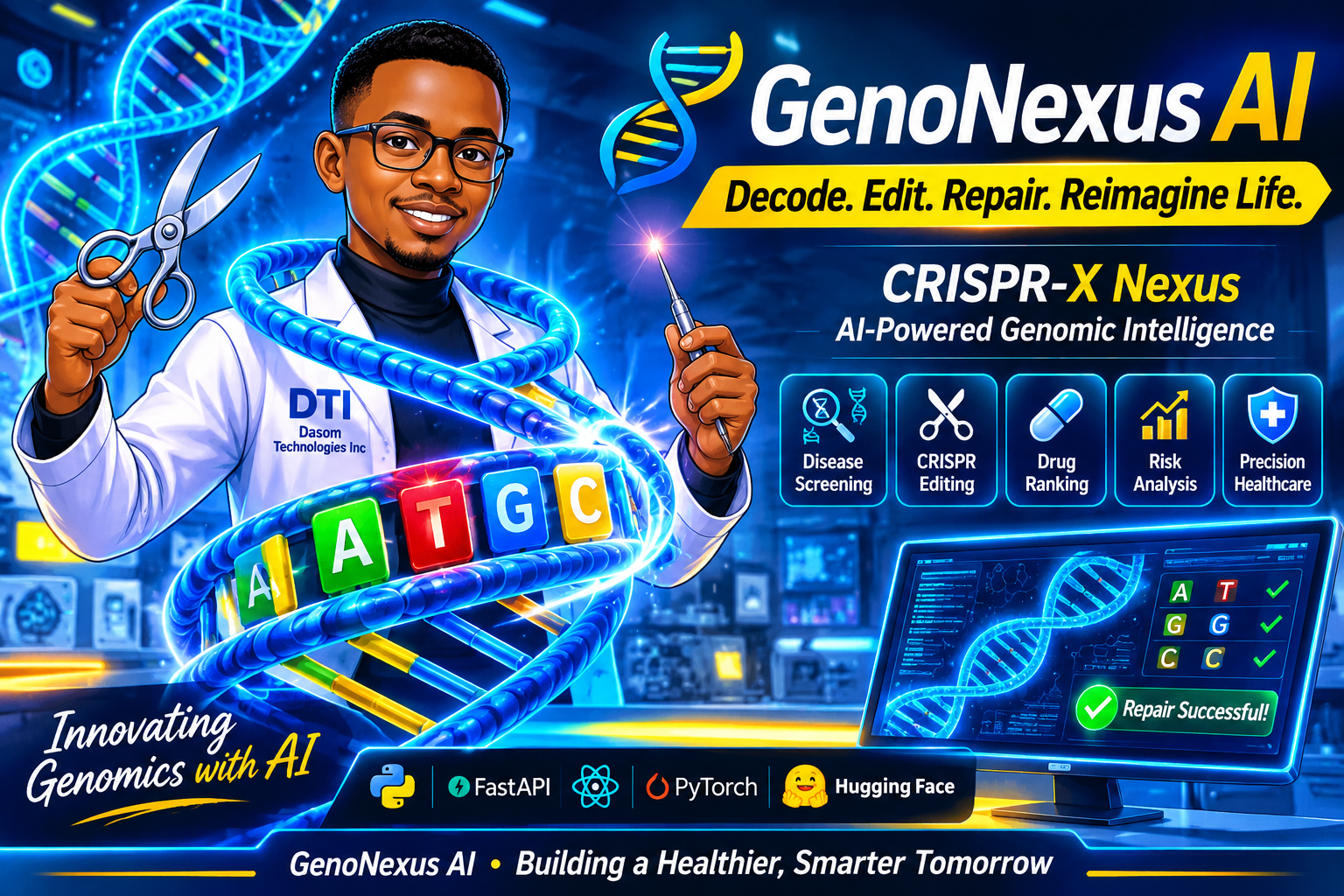
CRISPR-X is an AI-powered genomic intelligence and risk-analysis platform that turns complex genetic information into clear, counselling-ready insight.
- Couple carrier-risk assessment: checks compatibility between two partners and explains the inherited-disease risk they share.
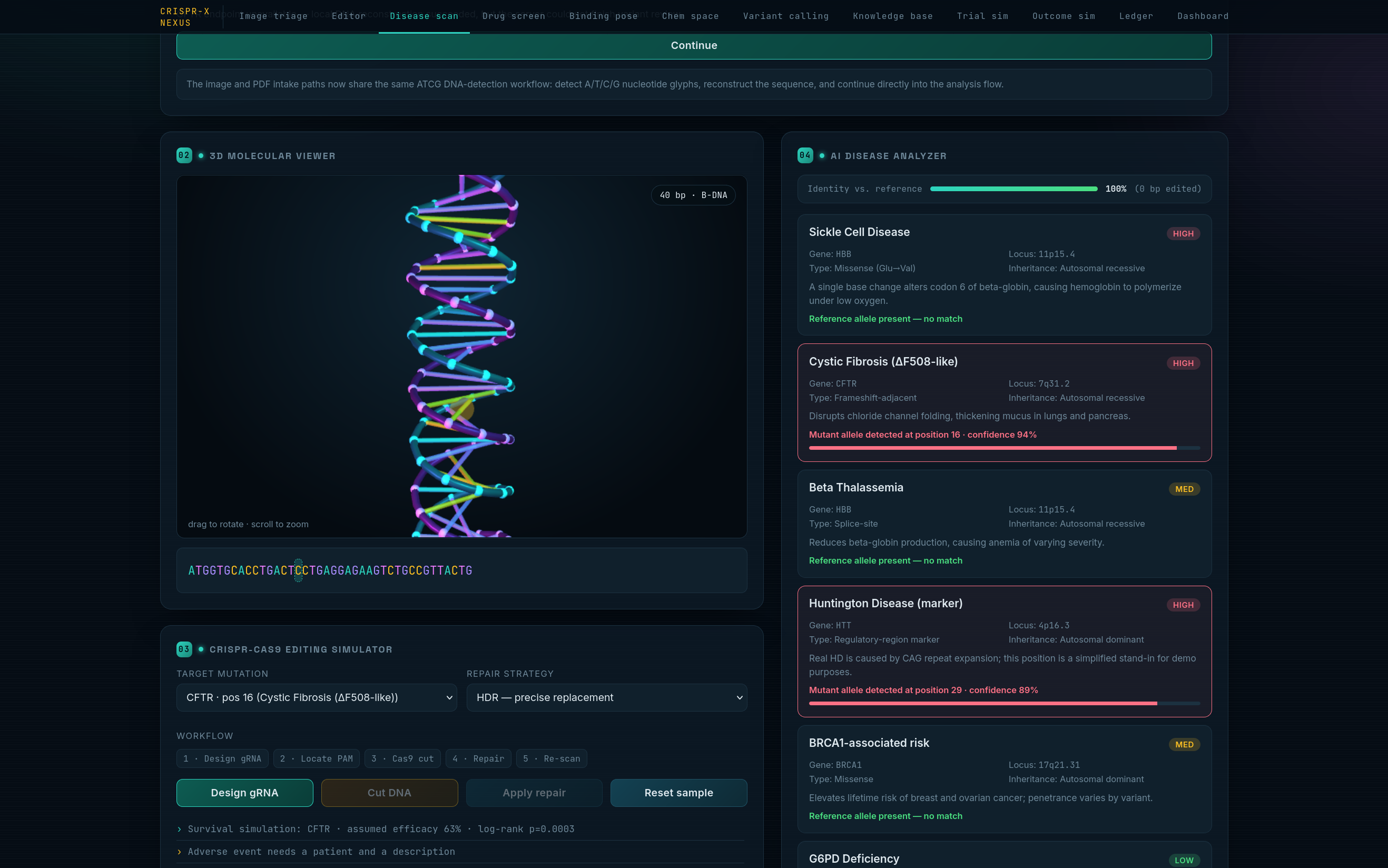
- Variant interpretation: an explainable, rule-based classification of variants, with a curated CFTR catalogue and analysis endpoints.
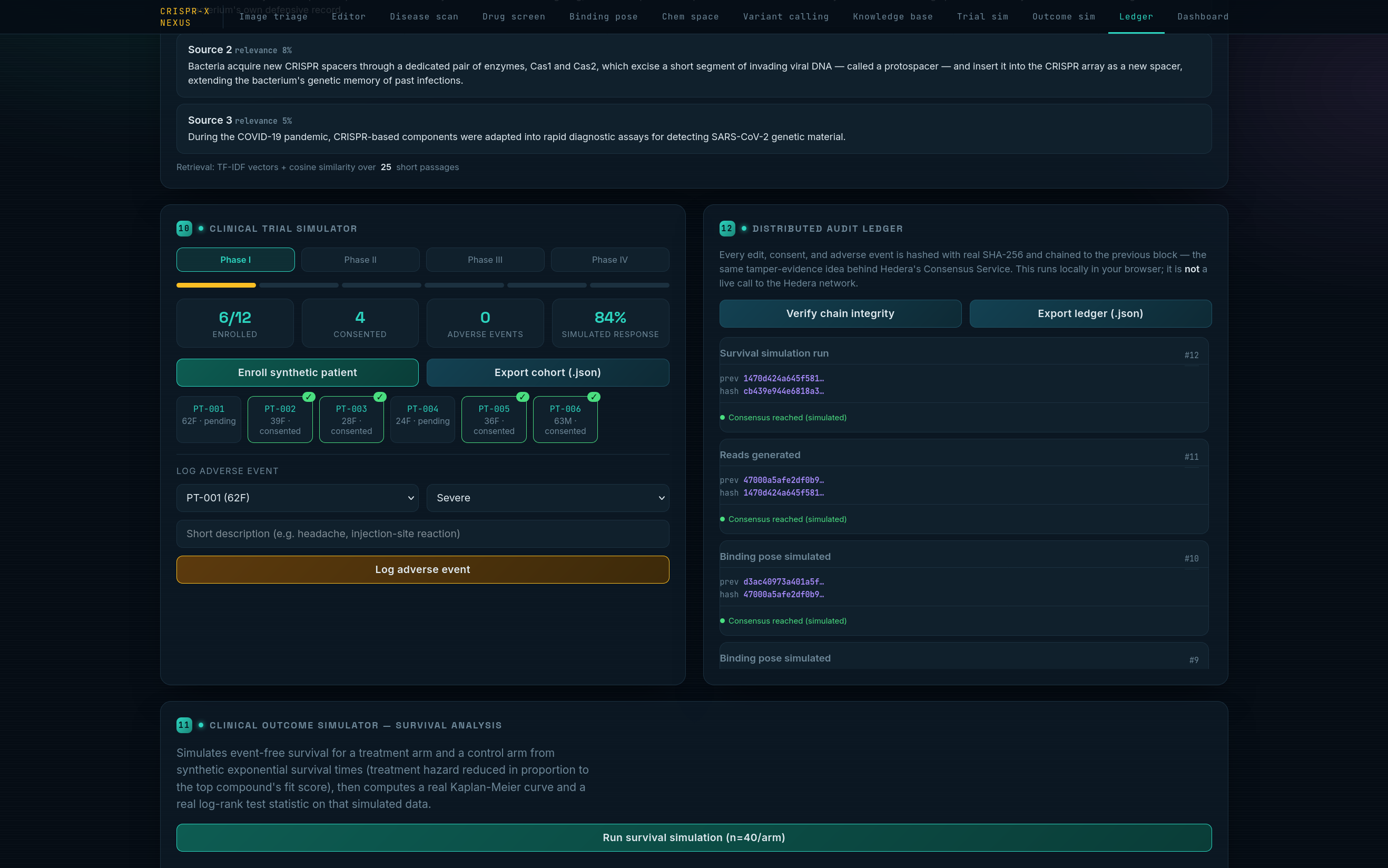
- Consent, privacy, and counselling workflow: consent is captured before analysis, and the platform generates reports a counsellor can discuss with the couple.
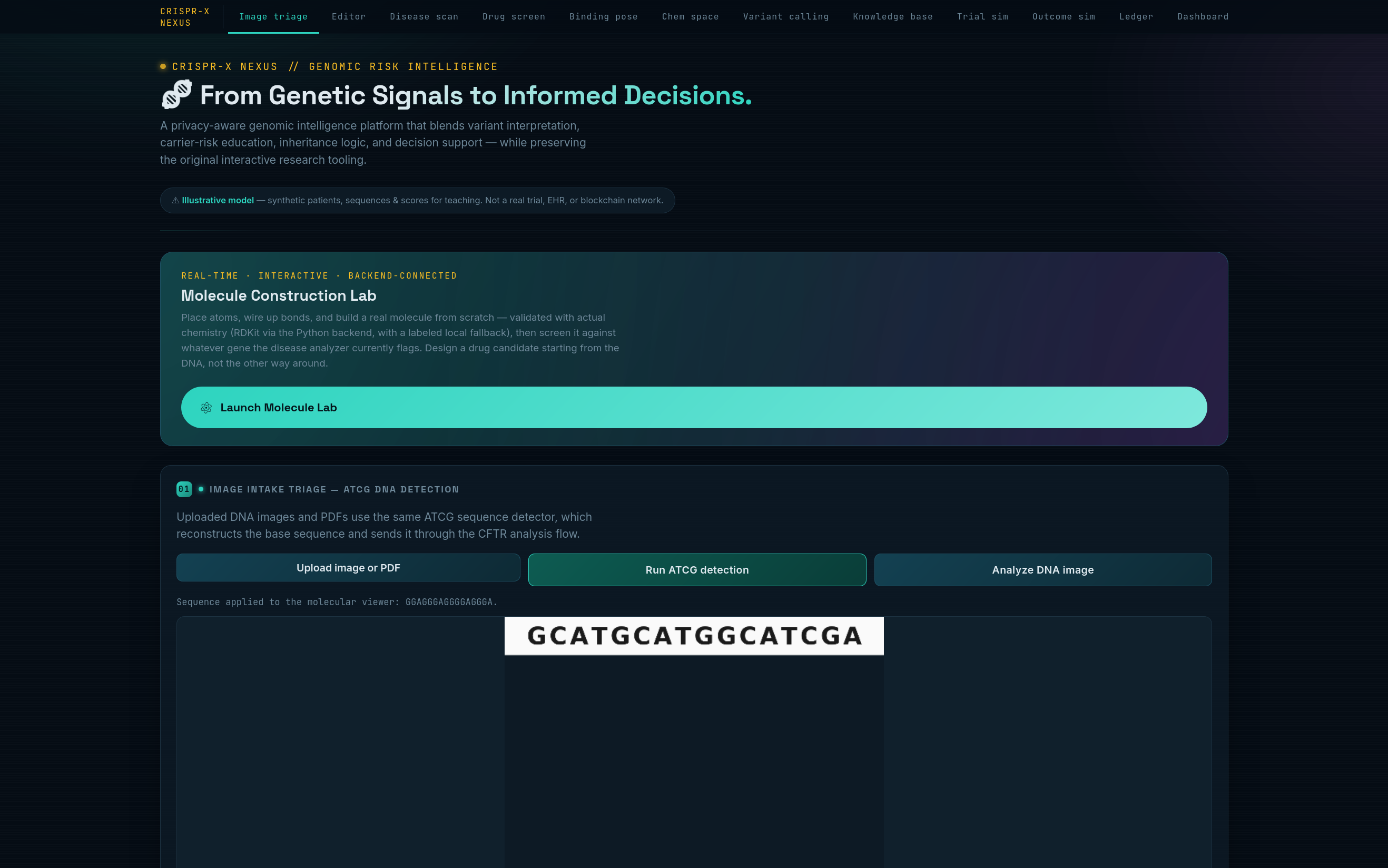
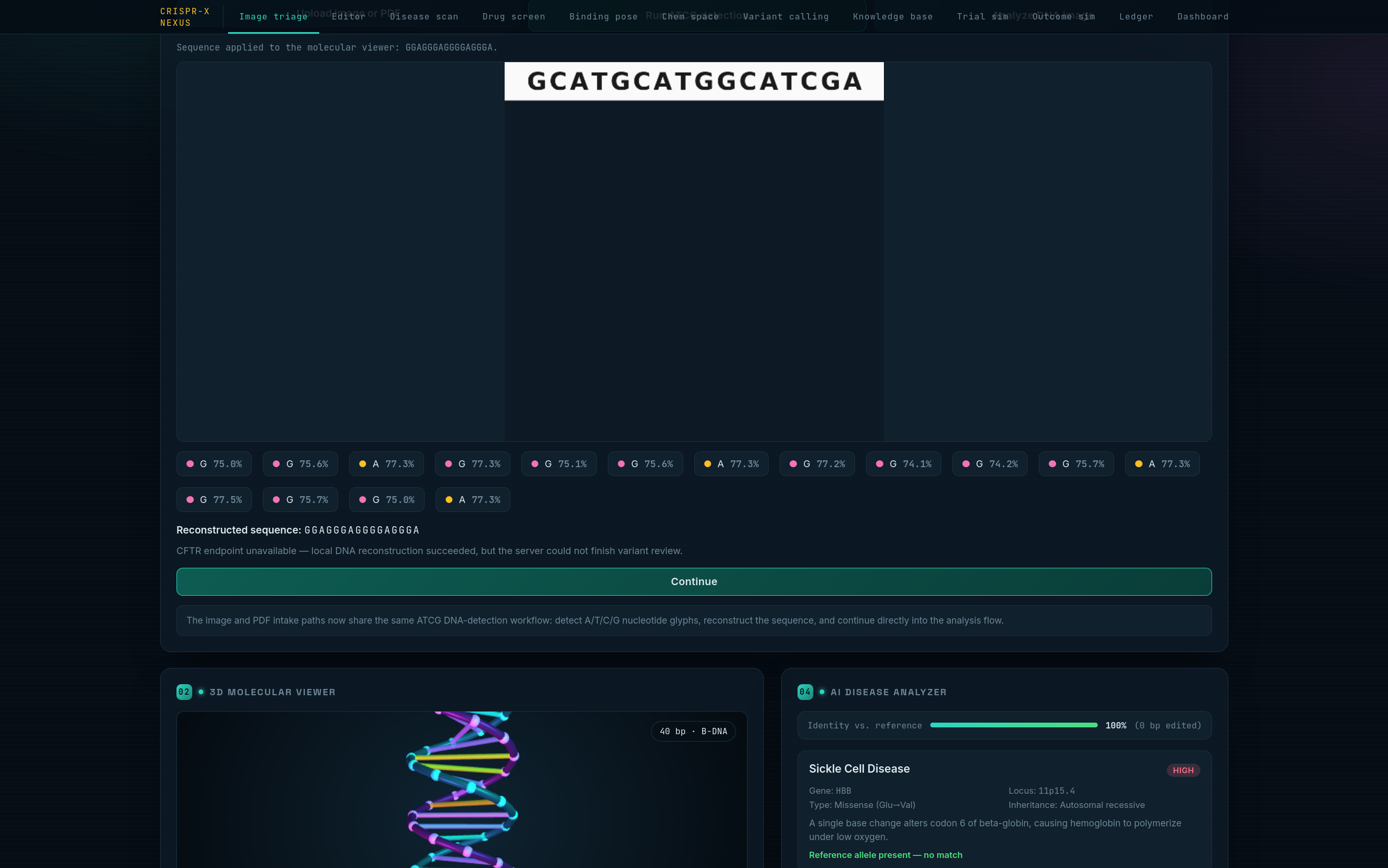
- AI vision for sequences: a YOLO model detects A, T, C, and G letters in images and PDFs, so a printed or scanned sequence can be read without retyping.
- Plain-language AI summaries: OpenAI or Anthropic models explain results in everyday words. If no key is configured, a deterministic template fallback keeps the platform fully usable.
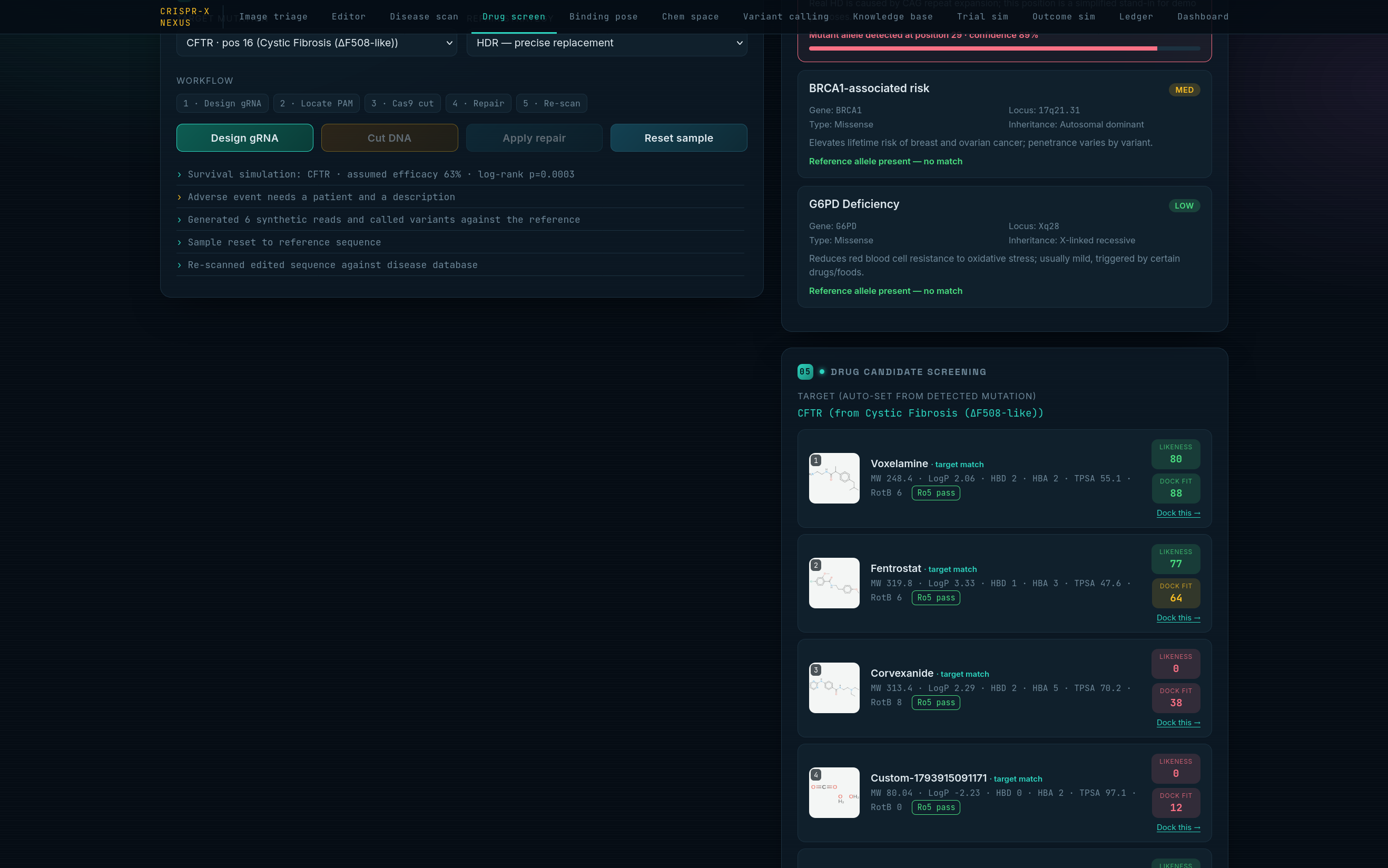
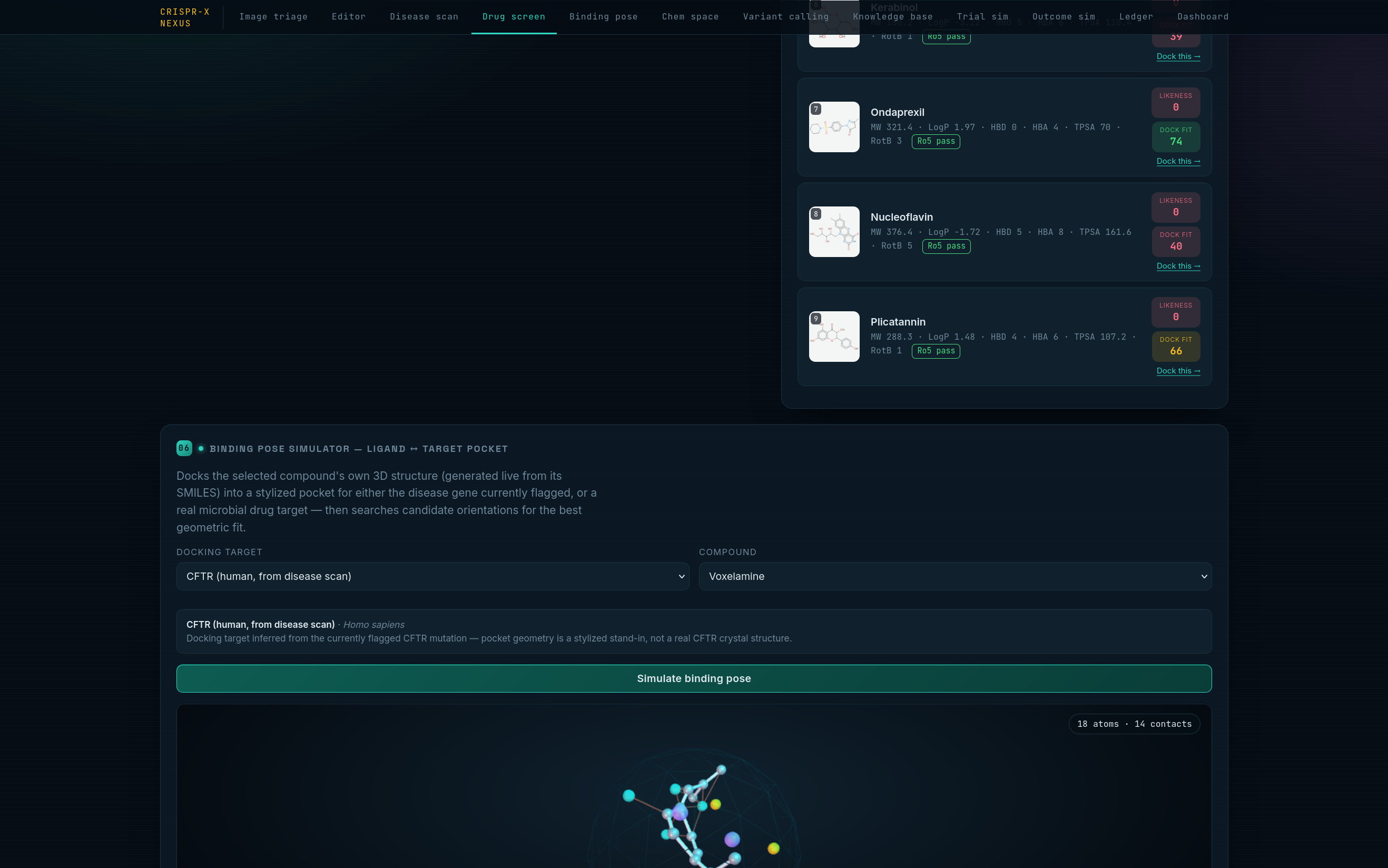
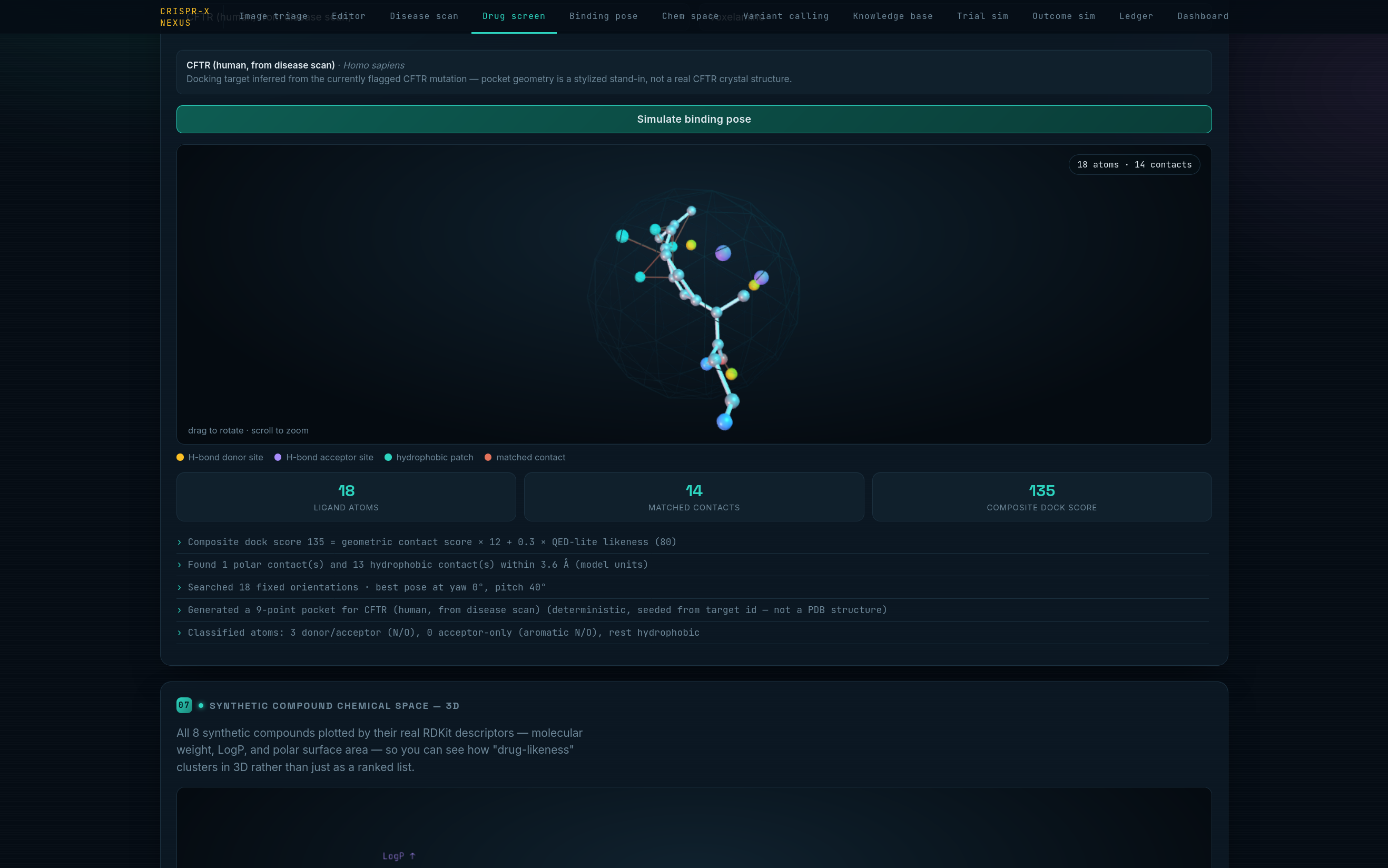
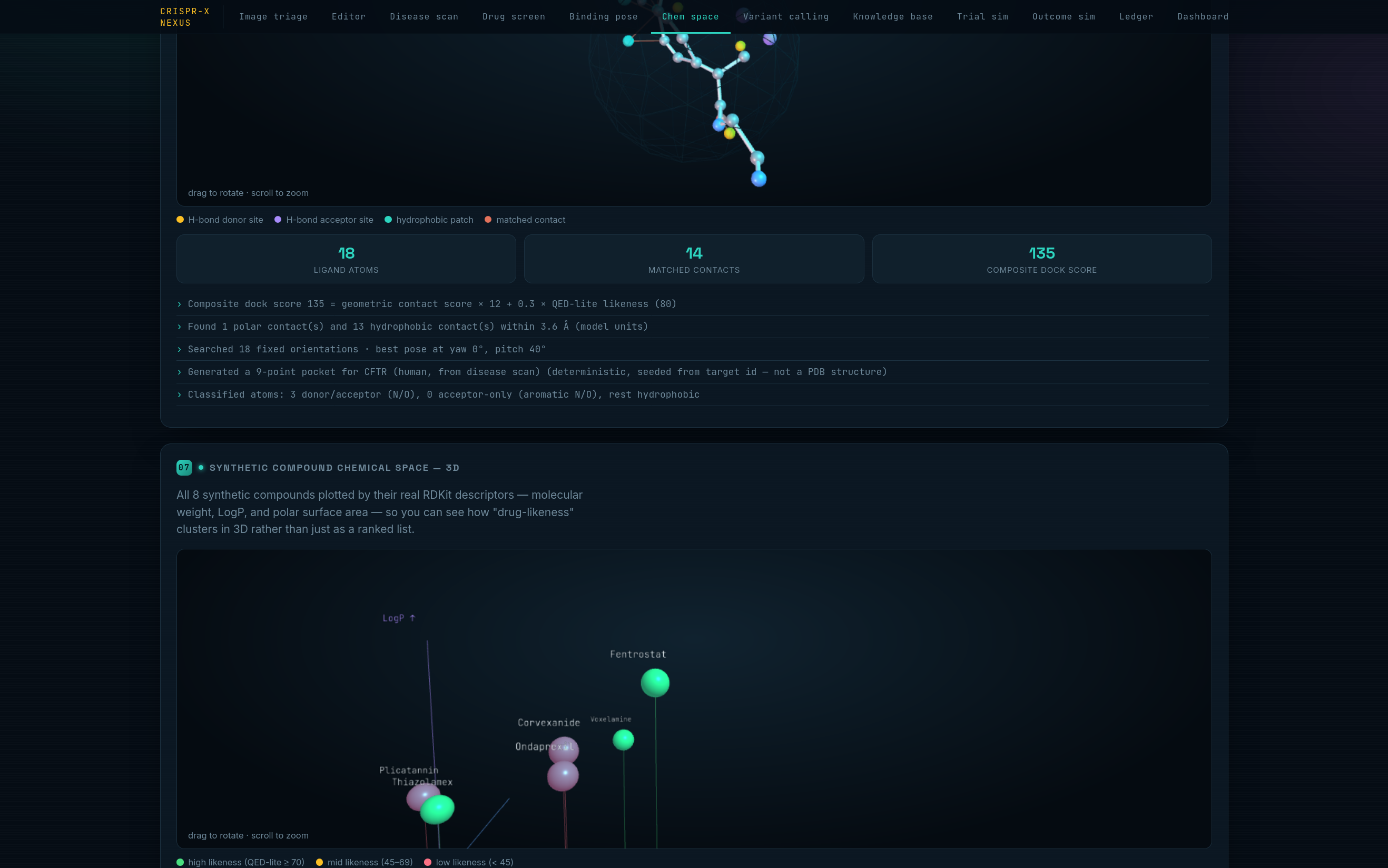
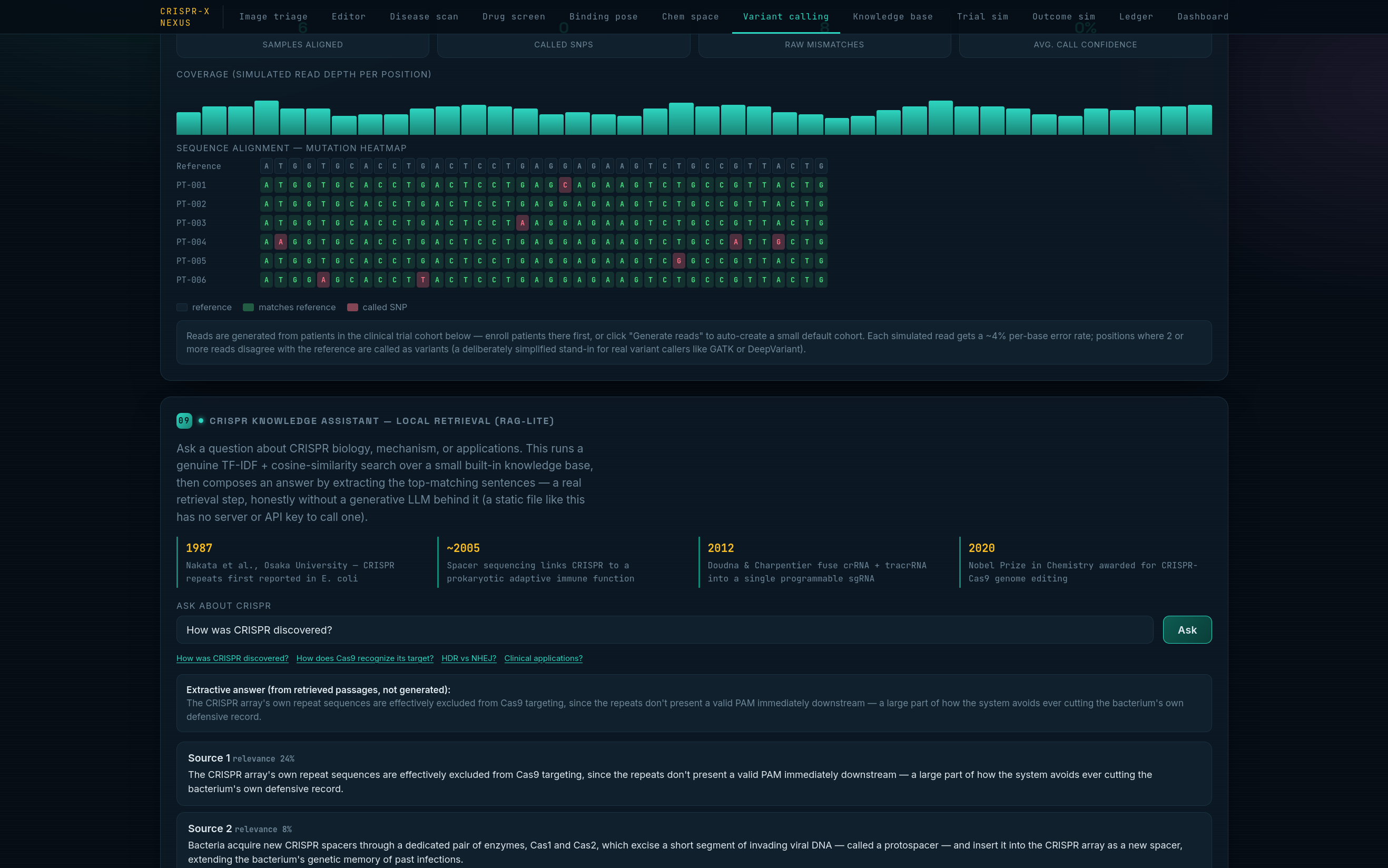
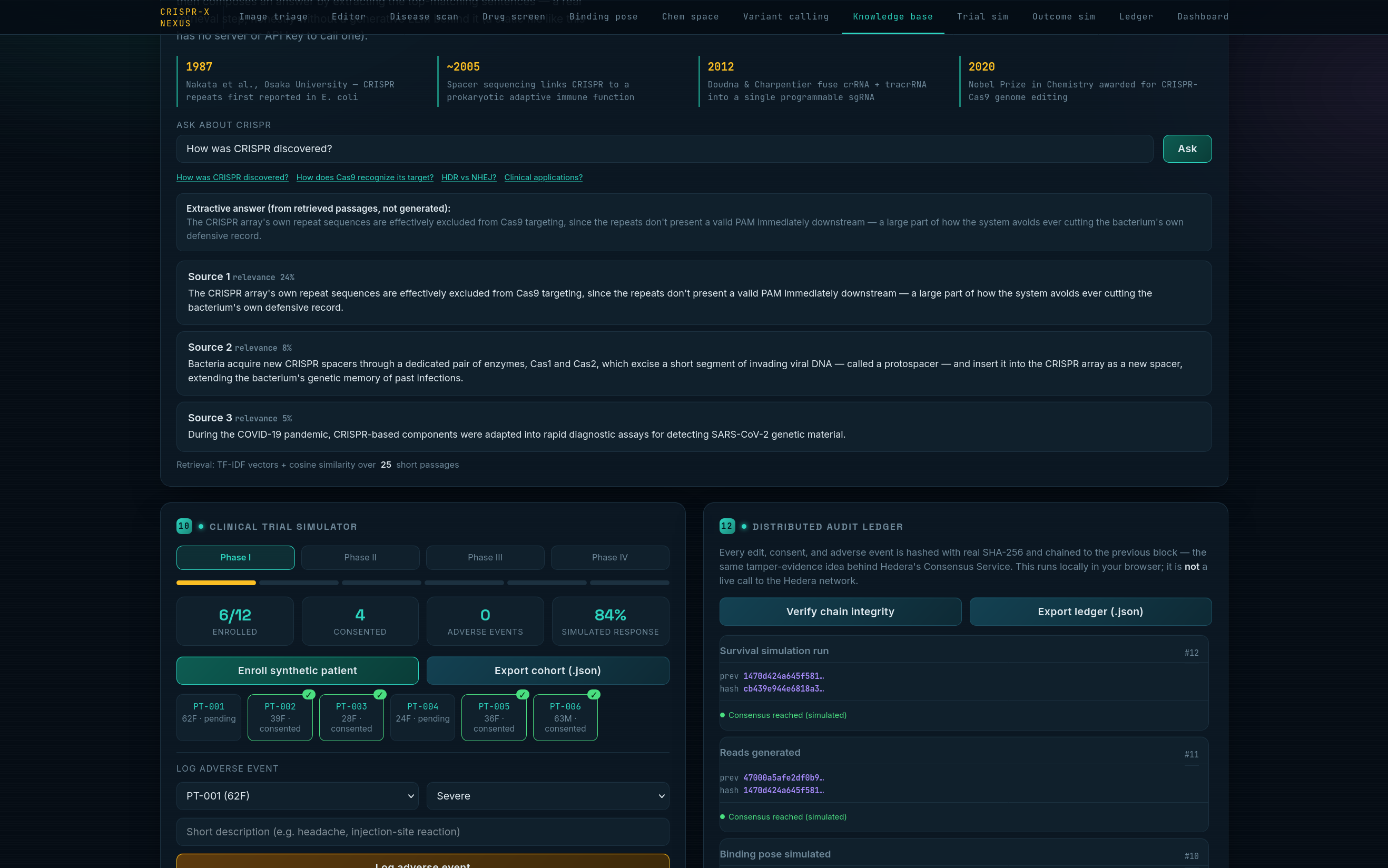
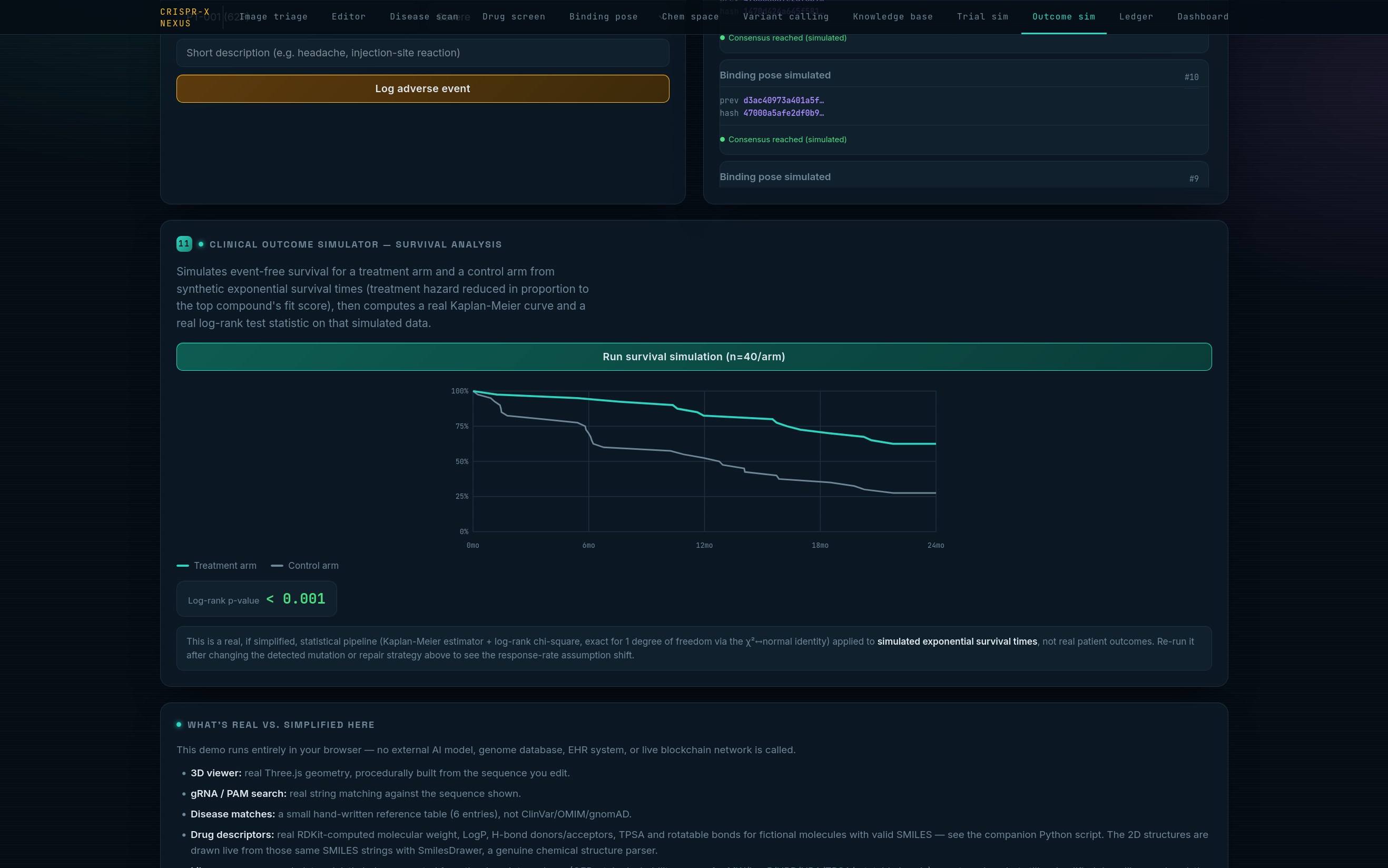
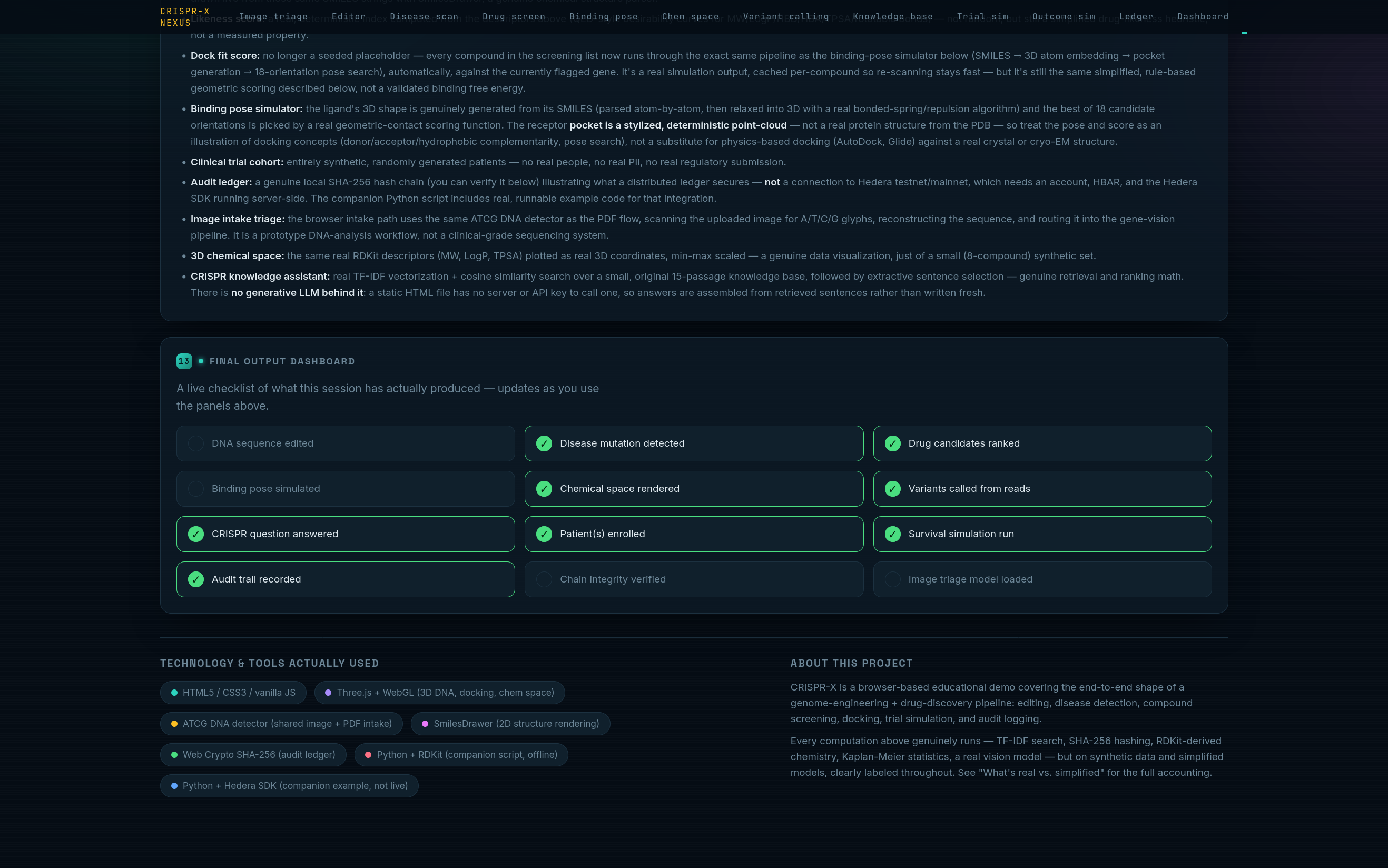
- Research sandbox: CRISPR repair simulation, drug ranking, molecule building, survival modelling, and synthetic cohorts for educators and researchers.
Every output is labelled as decision-support, never diagnosis.
How we built it
I built it solo, end to end.
- Backend: FastAPI with documented endpoints (
/api,/api/v1,/docs) covering scanning, repair logic, variant interpretation, couple risk, consent, counselling, reports, and an audit ledger with integrity validation. - Frontend: a lightweight browser UI that needs no login, so anyone can try every feature immediately.
- Computer vision: a synthetic ATCG dataset generated in code, with a YOLO detector trained on it. It accepts PNG, JPG, and PDF input.
- AI layer: optional LLM summaries through OpenAI or Anthropic, with a deterministic fallback so the app never depends on a paid key.
- Quality and deployment: 24 automated tests pass, and Docker, Render, and Procfile configurations are included. An MCP server exposes the tools to other AI agents.
- Responsible design: no real patient data is used. Data is synthetic by design, API keys stay in environment variables, and results are framed as human-reviewed decision-support.
Challenges we ran into
- Making genetics understandable without overclaiming. Genomic output can easily sound like a diagnosis. I had to design the language, labelling, and counselling workflow so the tool informs a conversation without replacing a clinician.
- Training without patient data. Real genomic and image data carries serious privacy obligations. I generated a synthetic ATCG dataset and synthetic cohorts, which keeps the prototype safe but means the vision model is not yet validated on real-world scans.
- Keeping AI optional. I wanted real LLM explanations without making access depend on an API key, so I built the template fallback and tested both paths.
- Scope and time as a solo builder. Balancing breadth with a coherent story meant deciding what the hero experience was: helping couples understand shared carrier risk.
Accomplishments that we're proud of
- A working end-to-end platform, not a mockup: backend, UI, vision pipeline, and AI summaries run together.
- 24 of 24 automated tests passing across the main workflow families.
- A privacy-first, consent-first design with synthetic data only.
- An AI layer that degrades gracefully, so the tool stays usable without any paid service.
- Honest, visible limits: it is a research prototype, not a fertility test and not a clinical system, and the interface says so.
- Doing all of it alone, from architecture and machine learning to safeguards.
What we learned
- Access is about comprehension as much as availability. A result nobody can interpret is still a barrier.
- Responsible AI in health is a product feature: consent, labelling, and human oversight shaped the architecture as much as the models did.
- Synthetic data is a fast, privacy-safe way to build a prototype, but real-world validation is a separate and necessary step.
- Optional, fallback-friendly AI makes tools more resilient and more inclusive.
What's next for CRISPR-X: AI-Powered Genomic Intelligence & Risk Analysis
- Harden: add authentication and roles, confirm data provenance and licences, and expand the test suite.
- Pilot: run an ethics-approved pilot with a counselling clinic or university genomics lab, measuring whether counsellors find the reports clear and whether report preparation gets faster.
- Broaden access: add multilingual counselling summaries, so couples can read their results in the language they think in, and extend beyond CFTR to more condition panels, including conditions that matter most in underserved regions.
- Reduce bias: report catalogue coverage by ancestry and flag where variant evidence is limited.
- Integrate: support lab-report and records interoperability (such as FHIR), then pursue the regulatory pathway before any clinical use.

