Inspiration
CRISPR Apples was inspired by the vision of the Farm of the Future: orchards that are more efficient, resilient, and easier to manage through AI, robotics, and genome engineering. We were particularly intrigued by the idea of modifying apple tree architecture and fruiting behavior to optimize harvesting, improve fruit quality, and integrate seamlessly with modern agri-tech systems.
What it does
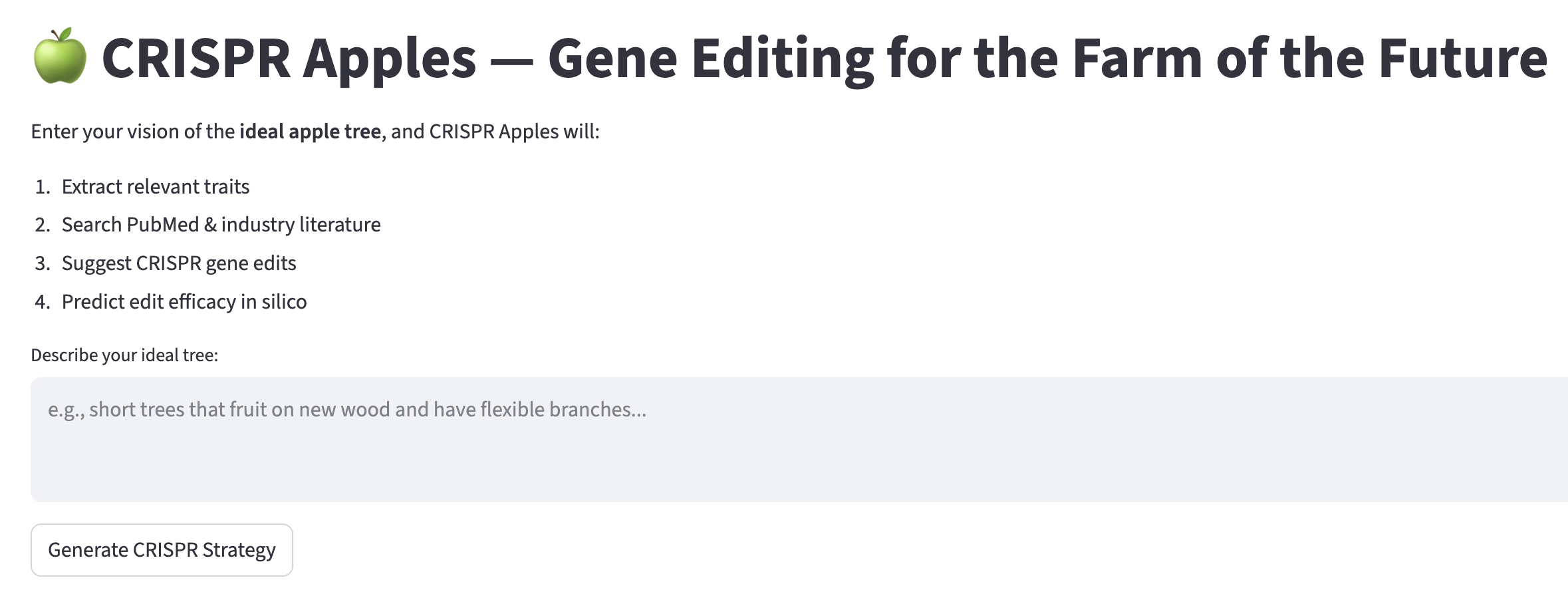
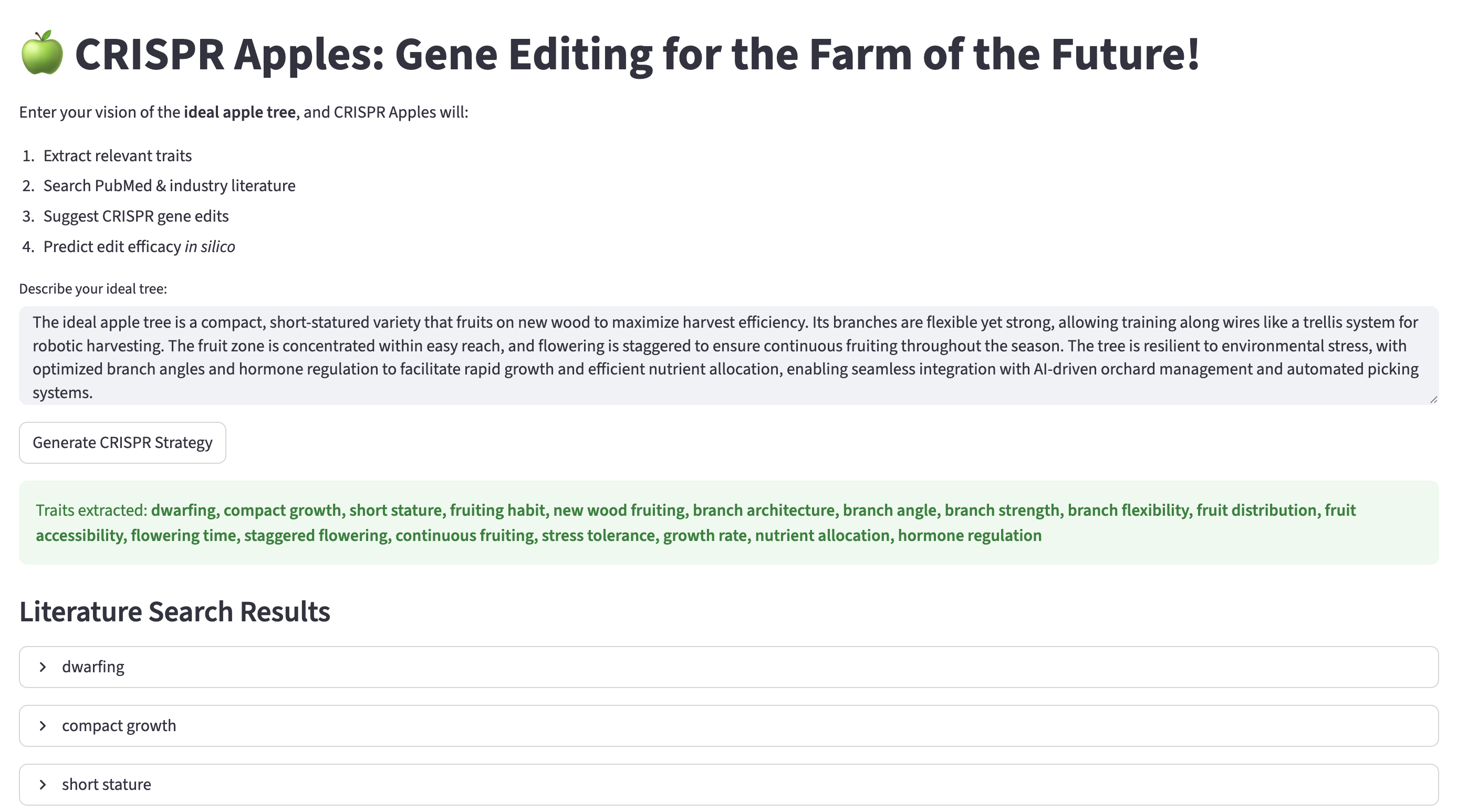
CRISPR Apples lets users describe desired apple tree traits in plain language, for example, “short trees that fruit on new wood” or “flexible, willowy branches.” The app then:
- Extracts relevant traits using AI (Gemini API).
- Suggests candidate genes responsible for those traits.
- Provides CRISPR-based editing strategies (upregulation or knockout) to achieve the desired phenotype.
- Outputs sequences ready for CRISPR design tools like CHOPCHOP. This enables a proof-of-concept for AI-assisted genome editing, helping envision the Farm of the Future.
How we built it
AI Trait Extraction: Used the Gemini API to interpret user input and map it to plant traits.
Gene Mapping: Created a curated dictionary linking legacy gene symbols (e.g., MdBPM2) to official genome IDs and CDS sequences.
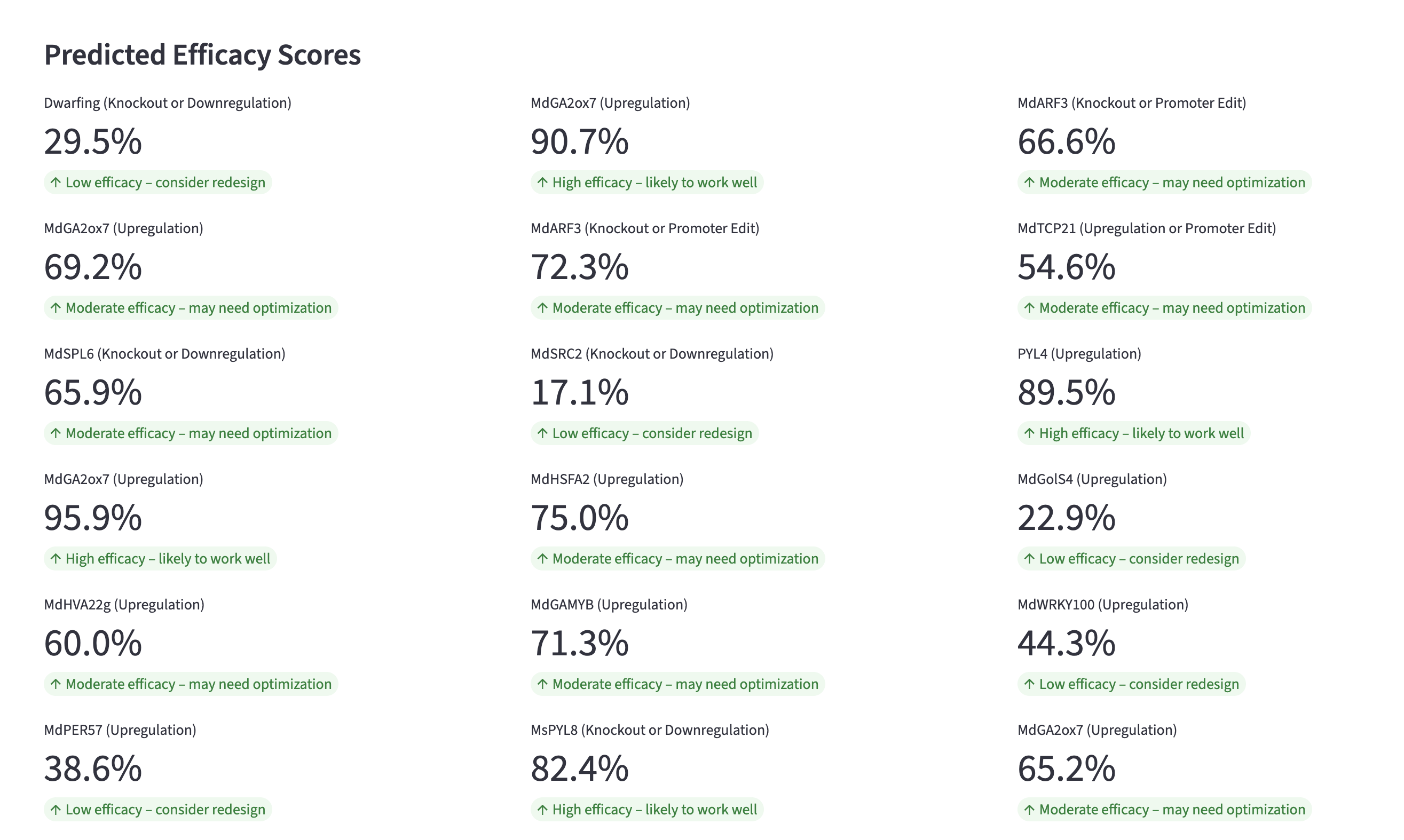
CRISPR Suggestion Pipeline: Generated editing strategies for each gene based on known function and trait effects.
Streamlit UI: Developed an interactive interface where users can input traits, view genes, and see CRISPR-ready outputs.
Challenges we ran into
Gene Symbol Inconsistencies: Legacy symbols from literature often don’t match official genome IDs.
Limited Trait-Gene Data: Not all desired traits had published genetic data, requiring careful selection of demo traits.
Integrating AI and Genomics Tools: Translating AI outputs into actionable CRISPR edits required both curation and mapping.
Accomplishments that we're proud of
Created a working prototype where users can input traits and get candidate genes with CRISPR suggestions.
Built a fully interactive demo in Streamlit with AI-driven trait interpretation.
Developed a reliable mapping system to make legacy gene symbols usable in real CRISPR design workflows.
What we learned
AI can accelerate the translation of natural language traits into genetic targets, but accurate gene databases are critical.
CRISPR strategies must consider gene function, redundancy, and possible side effects on plant development.
Combining literature mining, AI, and genome editing tools is a powerful approach for conceptualizing future crops.
What's next for CRISPR Apples
Expand the gene mapping database to include more apple genes and traits.
Integrate real-time CHOPCHOP API calls to directly design gRNAs for the selected genes.
Add phenotype simulation to show users potential outcomes of different CRISPR edits.
Explore other crops beyond apples to make the tool more broadly useful in agriculture.


Log in or sign up for Devpost to join the conversation.