-
-
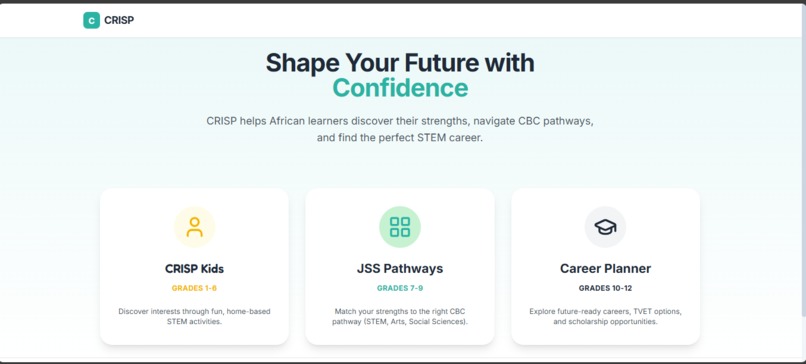
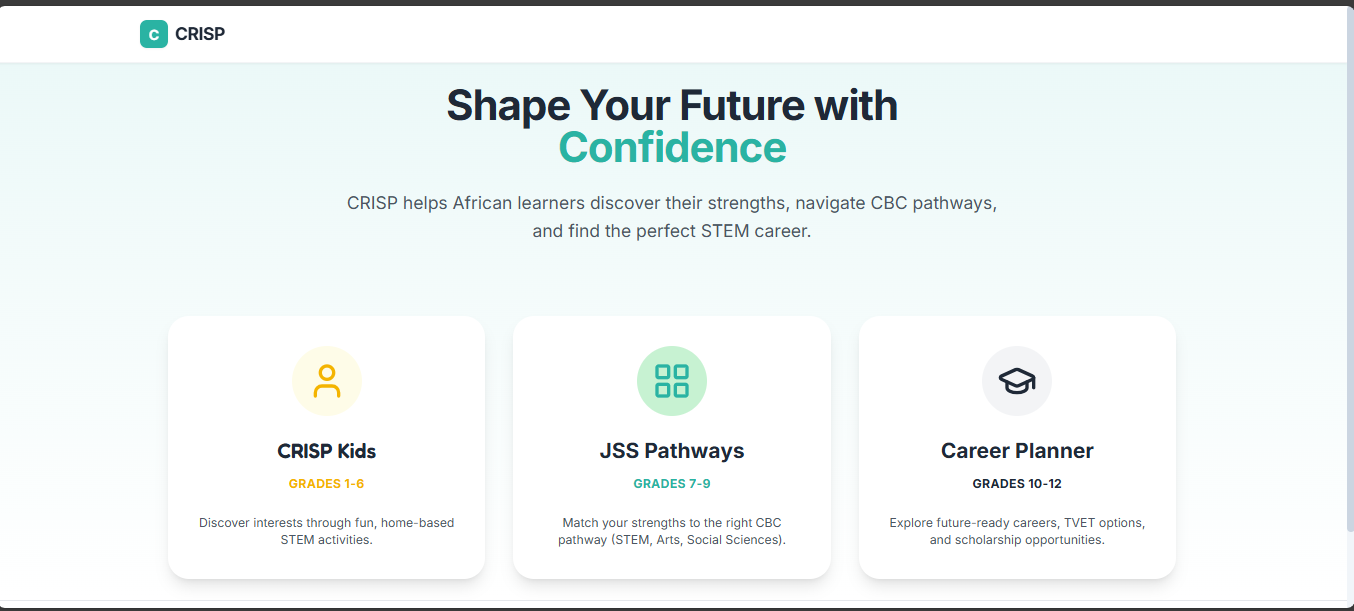
Crisp-Career Navigation Menu
-
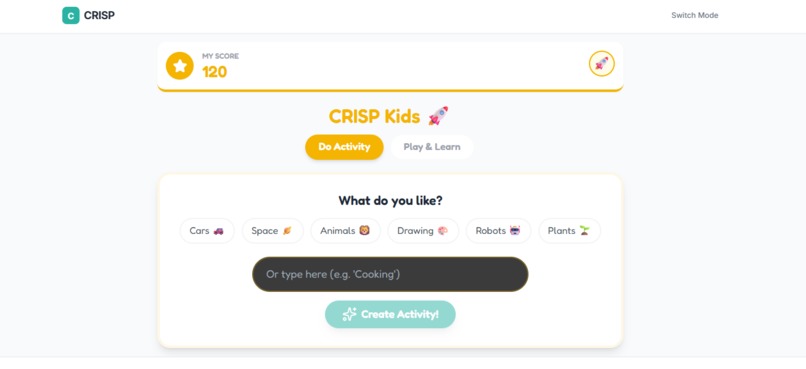
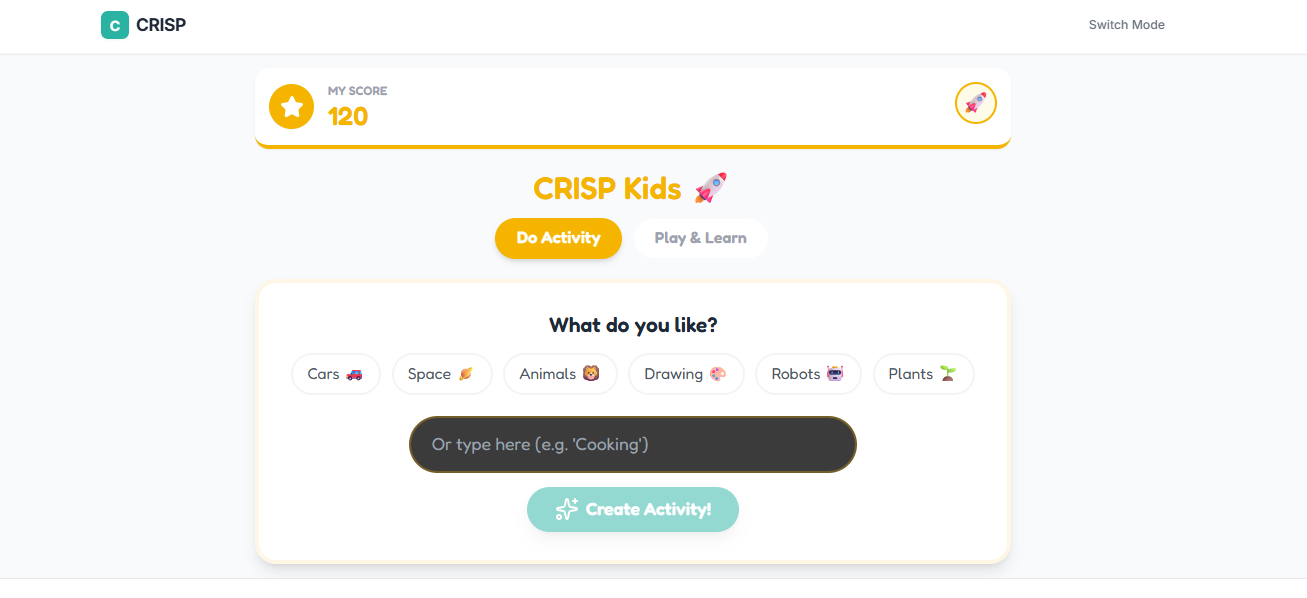
Crisp Kids
-
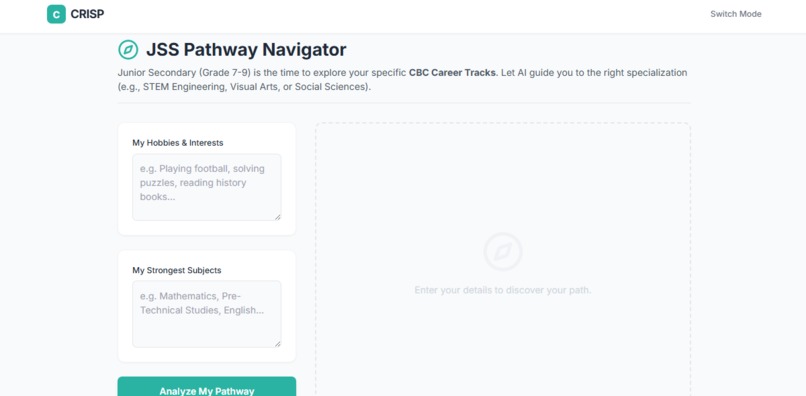
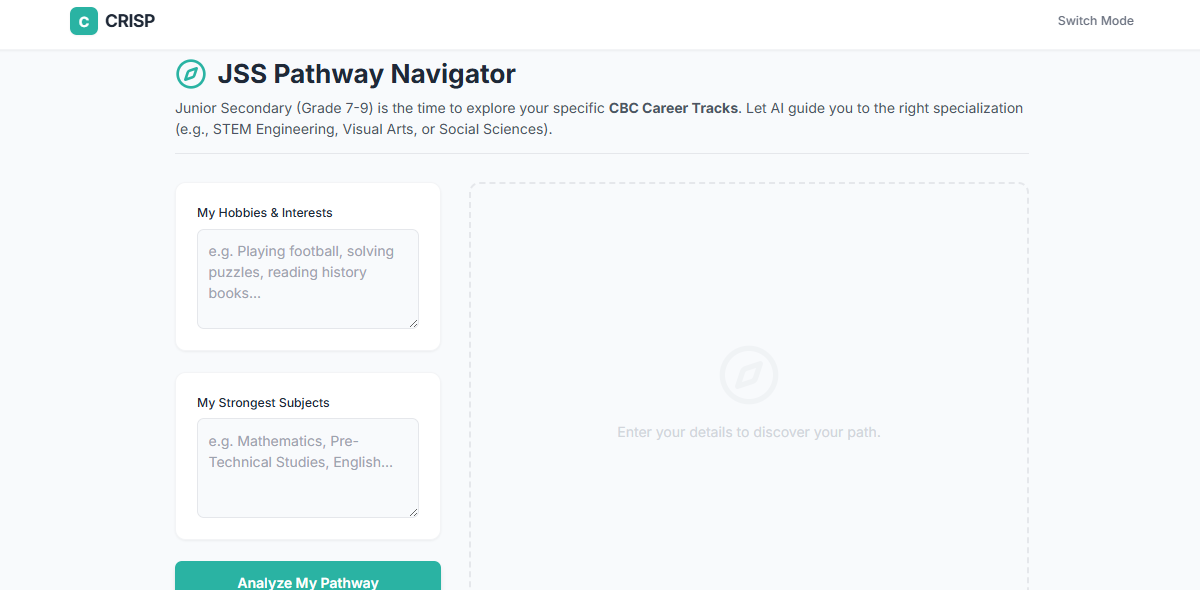
Jss Pathway
-
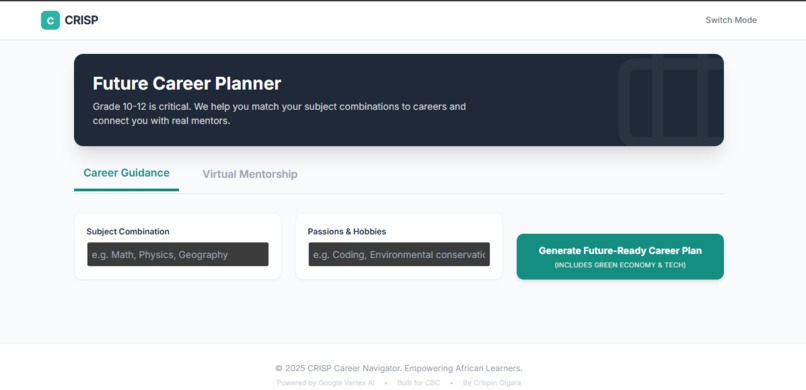
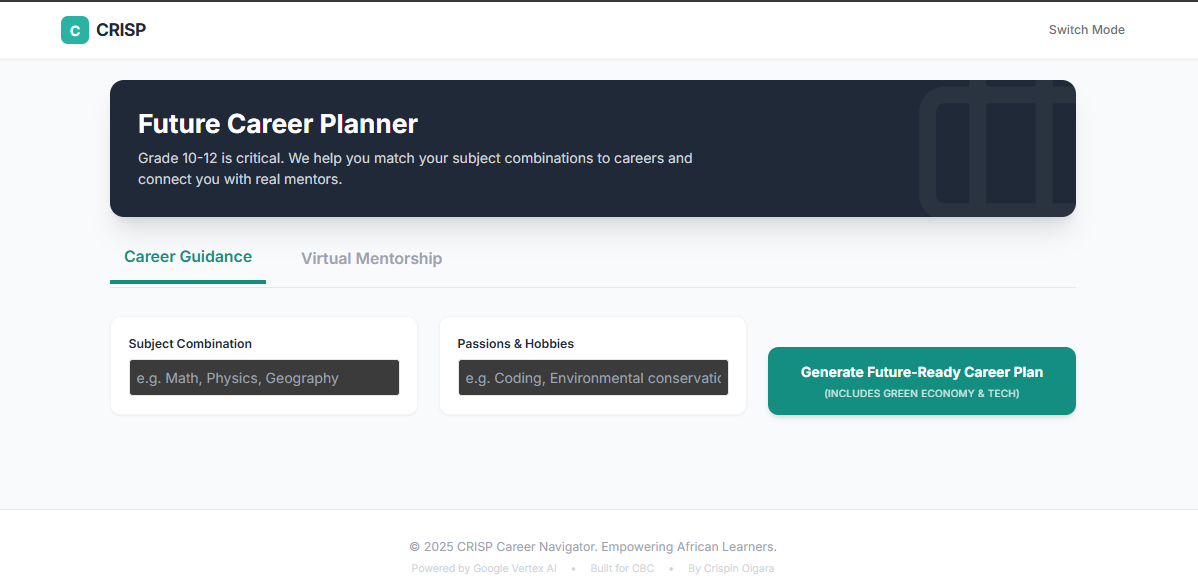
Career Planner
# About the Project — Crisp Career Navigator

## Inspiration

Crisp Career Navigator was inspired by a recurring problem I observed among students and early-career professionals: despite having access to countless courses, online resources, and career advice, many still feel lost about *what* to learn, *why* they should learn it, and *where* it leads.

Career guidance is often generic, static, or disconnected from real skill requirements. I wanted to build a system that turns uncertainty into clarity—one that helps users understand their current position and map a realistic path forward.

---

## What I Learned

Through this project, I learned:

- How to design **AI systems as decision-support tools**, not just conversational interfaces
- The importance of structuring user inputs (skills, interests, goals) to improve reasoning quality
- How to orchestrate multi-step reasoning workflows using AI agents
- That clarity and explainability matter as much as accuracy in career-related recommendations

A key takeaway was that users trust AI more when it explains *why* a recommendation was made, not just *what* the recommendation is.

---

## How I Built the Project

Crisp Career Navigator was built as an AI-powered workflow that follows a clear reasoning pipeline:

1. **User Profiling**
   Collects structured inputs such as skills, interests, education level, and career goals.

2. **Career Matching & Reasoning**
   AI models analyze the profile to identify suitable career paths and progression options.

3. **Skill Gap Analysis**
   The system compares current skills against target roles to determine missing competencies.

4. **Roadmap Generation**
   Generates a step-by-step learning and career roadmap, including suggested next actions.

The core logic is orchestrated using modern AI tooling (LLMs and agent-based workflows), with a focus on modular design so components can be improved or extended independently.

Conceptually, the recommendation process can be expressed as:

\[
\text{Career Match Score} = f(\text{Skills}, \text{Interests}, \text{Education}, \text{Goals})
\]

Where \( f \) represents an AI-driven reasoning function that balances user preferences with role requirements.

---

## Challenges Faced

One of the main challenges was **avoiding generic advice**. Early versions of the system produced recommendations that were accurate but too broad. This required refining prompts, improving input structure, and adding reasoning steps that force the AI to justify its outputs.

Another challenge was balancing **simplicity and depth**. Career paths are complex, but overwhelming users with too much information reduces usefulness. The solution was to focus on *actionable next steps* rather than exhaustive lists.

Finally, ensuring that the system remains **ethical and responsible** was critical. Career guidance can influence real-life decisions, so the project emphasizes transparency, avoids deterministic claims, and encourages users to treat recommendations as guidance rather than absolute outcomes.

---

## Closing Thoughts

Crisp Career Navigator is an early step toward making high-quality, personalized career guidance accessible at scale. The project reinforced my belief that AI is most powerful when it augments human decision-making with clarity, structure, and context—especially in areas as personal and impactful as career development.
Built With
- agent-development-kit-(adk)
- firebase
- genkit
- google-cloud
- javascript/typescript
- python
- react/next.js
- vertex-ai

Log in or sign up for Devpost to join the conversation.