-
-
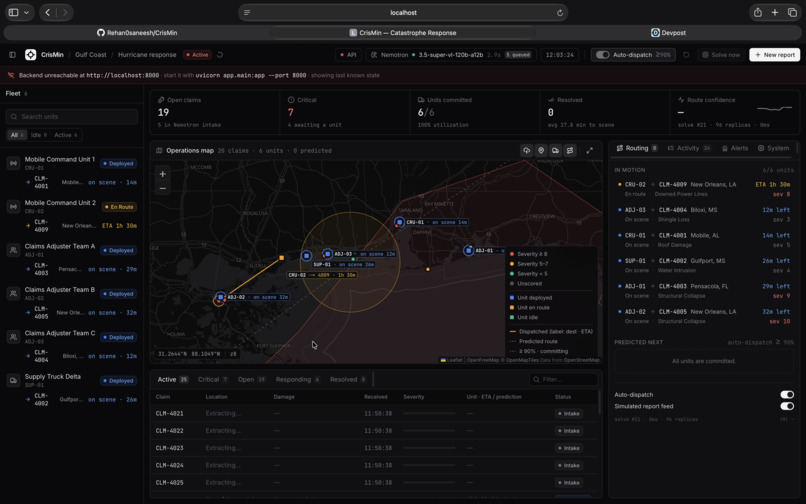
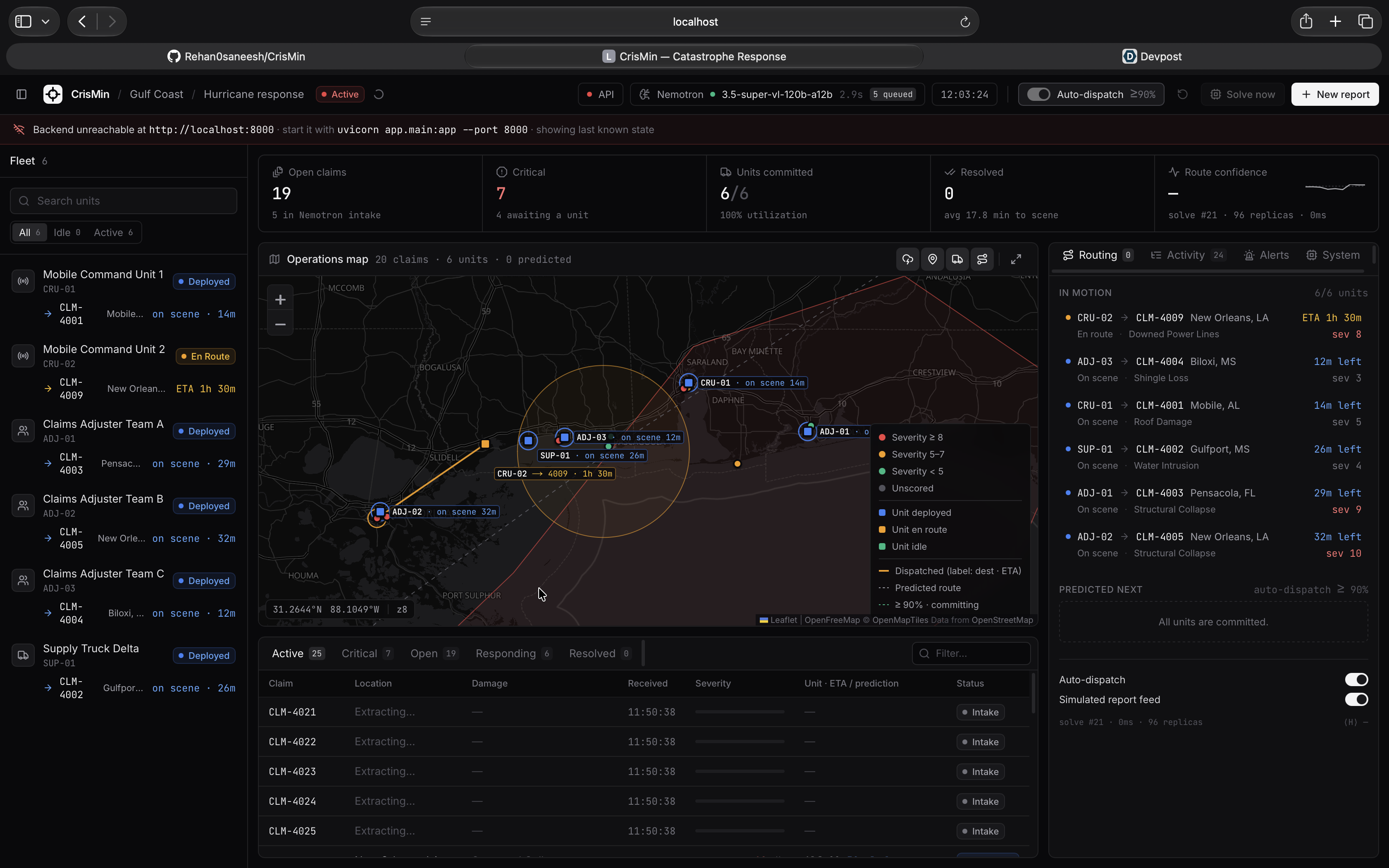
main dashboard
Inspiration
I was previously ideating with the idea of making a hybrid program that uses both quantum and classical computing methods, and I saw how it can be used to optimize processes that would otherwise waste time and potentially lives.
What it does
CrisMin takes in data from numerous sources about people in the area, and constructs a risk/casualty map, this map is then used to correctly allocate resources and relief aid to the places that need them the most.
How we built it
CrisMin has 3 main parts:
- The data aggregator, powered by Nemotron 3.5, collects data into PostgreSQL, and converts it into a more ingestible form.
- Using QUBO, we used optimization solver to compute deployment in parallel.
- Using Next.js, we built a frontend that an agent can use to see all relevant information, and what is needed most.
Challenges we ran into
The primary challenge we ran into was on how to format the data; as we needed to make sure that it would eventually be readable by the user, while still being able to be processed.
Accomplishments that we're proud of
The QUBO worked better than we expected, with the only bottleneck being our hardware.
What we learned
We learned that some tools do not work well together, while others , though unexpected, work really well together.
What's next for CrisMin
What's next is to finalize frontend development, backtest to ensure viability, and then polish the edges everywhere in the app.
Built With
- fastapi
- leaflet.js
- mapbox
- nemotron
- next.js
- postgis
- postgresql
- pydantic
- python
- qubo
- tailwind
- typescript

