Inspiration
Every day, crisis hotline responders are the last line of defense for people in emotional freefall. But even the most experienced professionals can miss subtle cues in a fast-paced, high-stress call. We were driven by one goal:
What if we could give every hotline operator an AI-powered co-pilot — one that listens, analyzes, and supports in real time?
CrisisVoice was born from this mission: not to replace human empathy, but to enhance it with insight.
What It Does
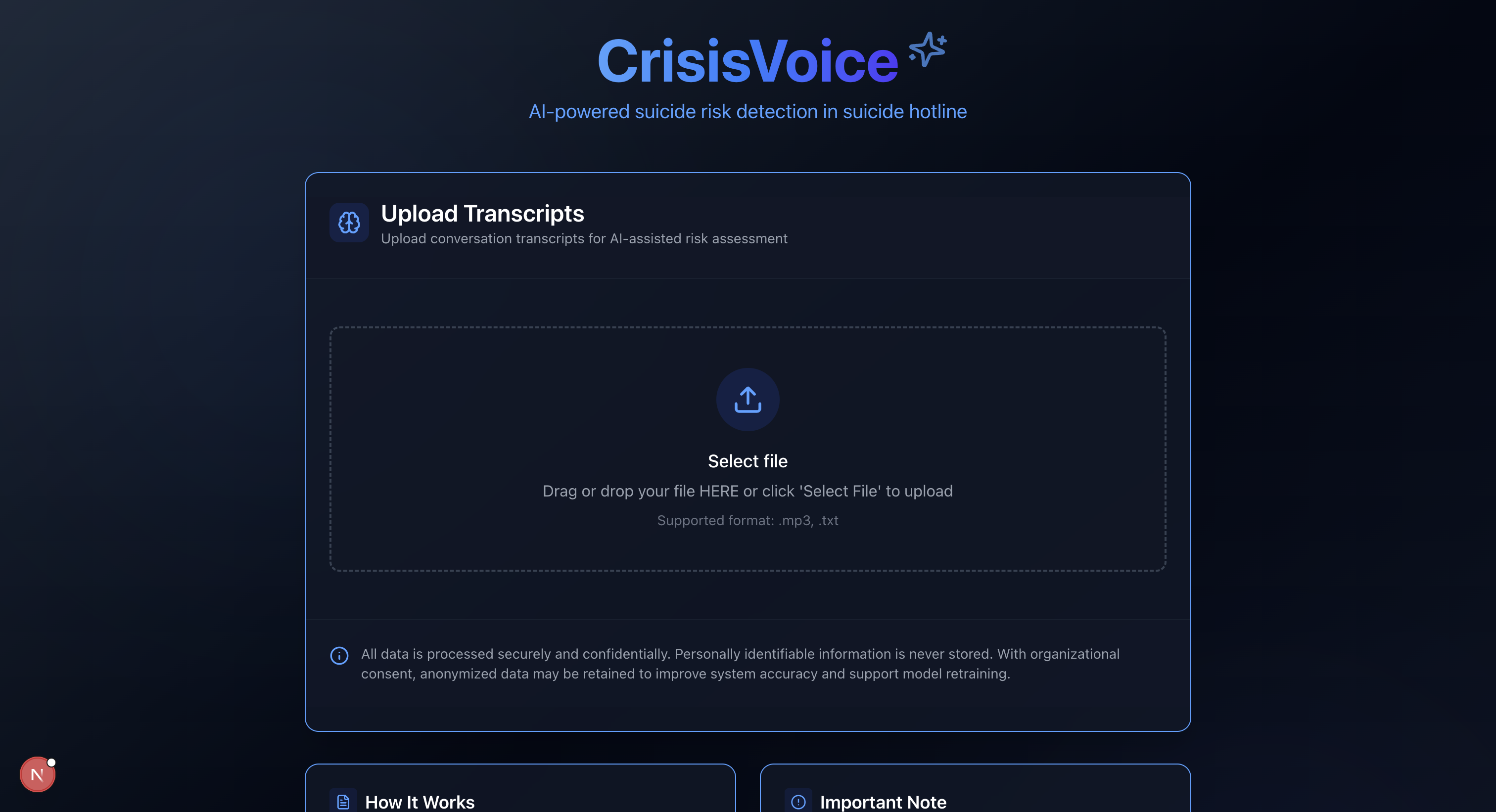
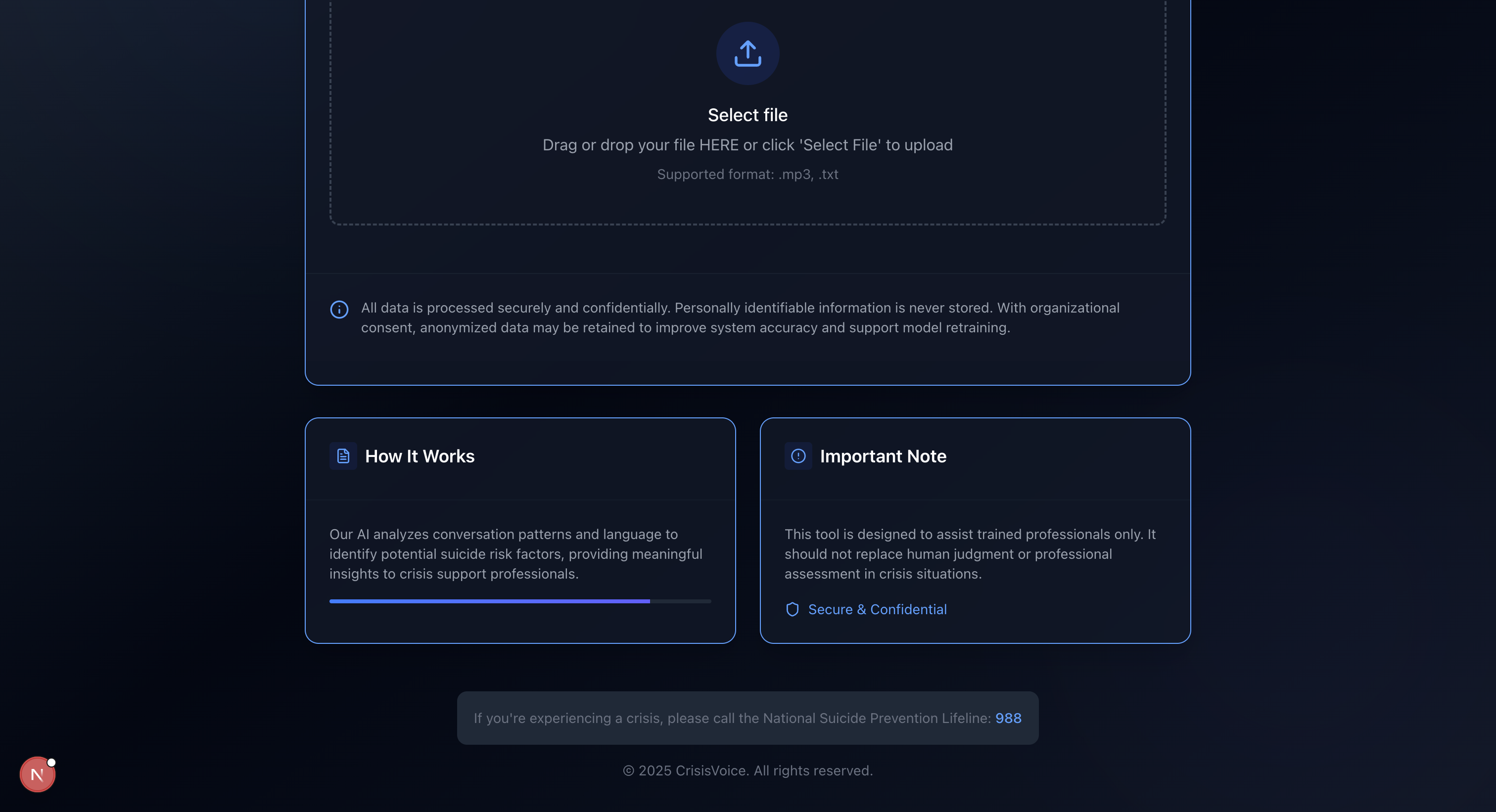
CrisisVoice transforms crisis hotline conversations — whether text transcripts or audio recordings — into actionable mental health insights.
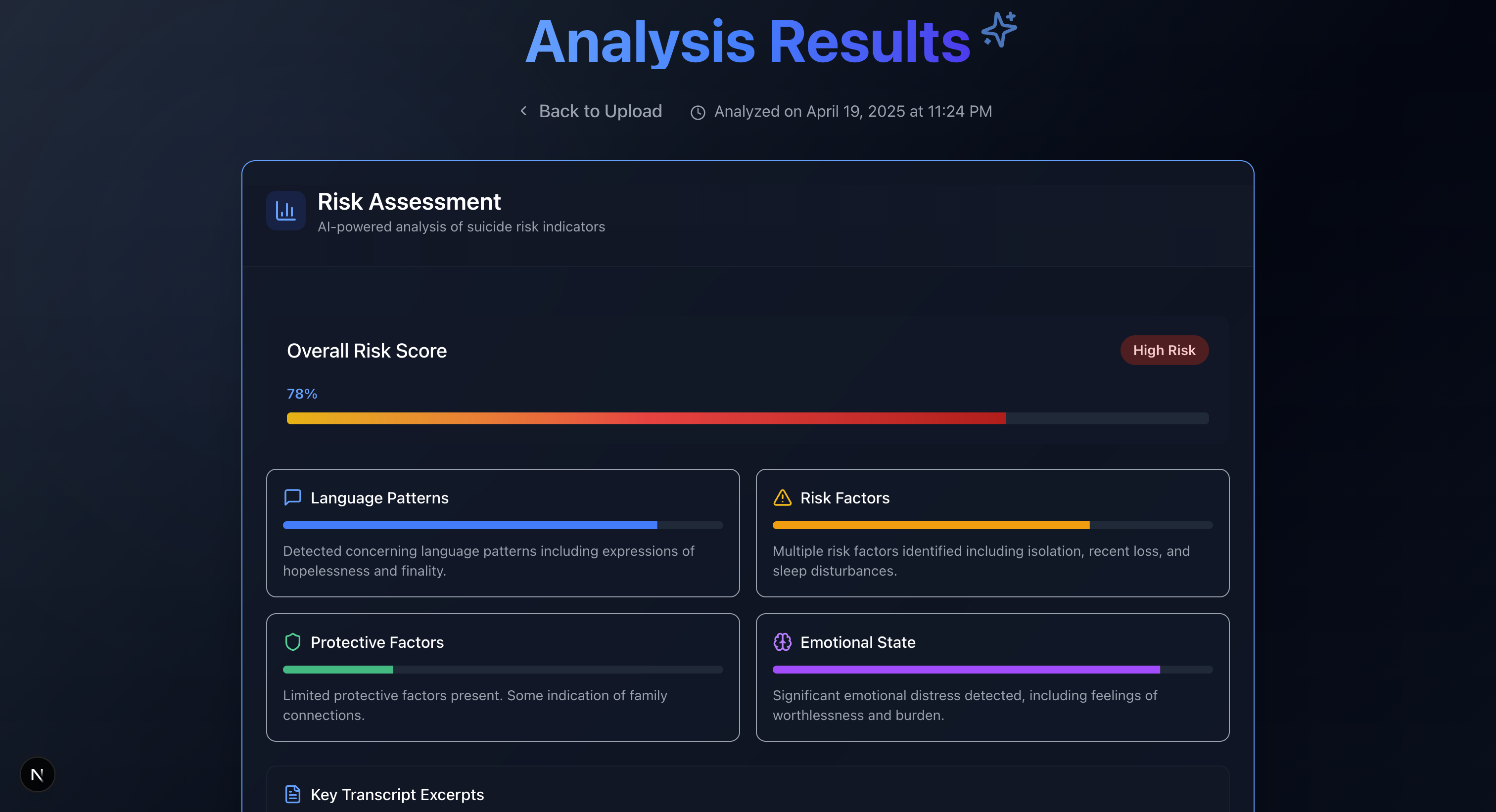
Using a custom-trained NLP classifier model, the system detects:
- Risk factors (e.g., hopelessness, social withdrawal)
- Protective factors (e.g., mention of family, reasons for living)
- Emotional tone and urgency
- Assigns an overall suicide risk score
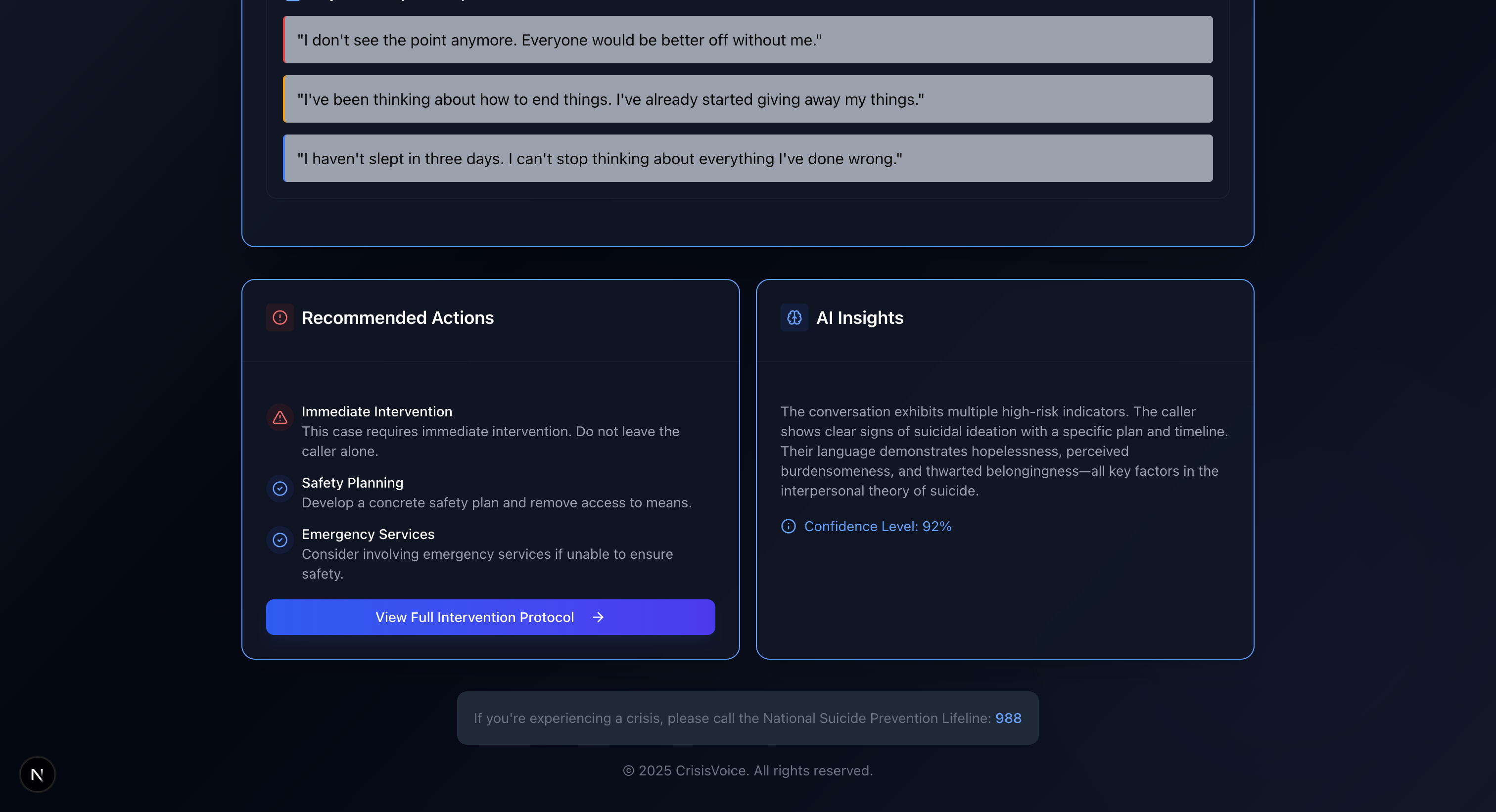
- Generates explainable insights and recommended next steps
It’s like having an AI-powered observer that highlights what matters, so responders can act faster, with more confidence.
How We Built It
- Frontend: Built in React and Tailwind CSS for a clean, accessible, and responsive UI
- Backend: FastAPI server powering secure endpoints for model inference and file processing
- Model: Trained NLP classifier to detect mental health risk indicators, informed by psychology research such as the Interpersonal Theory of Suicide
- Speech-to-Text: Integrated Whisper to convert
.mp3crisis call recordings into analyzable transcripts - LLM Integration: Used Gemini to translate raw model outputs into understandable, human-friendly summaries for hotline operators
All data is handled with strict privacy — no personal info is stored, and files are processed in secure memory.
Challenges We Ran Into
- Designing a sensitive, non-triggering interface that respects the emotional weight of crisis data
- Getting multi-GPU training synchronization working for faster NLP model iteration
- Translating raw probabilities into meaningful mental health insights
- Handling low-resource emotional tone detection within our 24-hour window
Accomplishments We're Proud Of
- Built a fully functional and demo-ready platform in under 24 hours
- Seamlessly integrated speech-to-text, NLP, LLMs, and real-time scoring
- Created a tool that could make a real difference in life-and-death conversations
- Followed ethical AI practices, especially around sensitive data handling and explainability
What We Learned
- How to turn a bold idea into a working MVP under extreme time constraints
- The importance of human-centered AI in mental health
- How to align psychological theory with model architecture for real-world applicability
- Mastered key tech skills in end-to-end ML pipeline design, UI/UX for crisis response, and LLM-driven interpretation
What's Next for CrisisVoice
We believe CrisisVoice can be a real tool for social good — and we're just getting started.
Future directions:
- Real-time streaming call analysis (e.g., Twilio integration)
- Multilingual support for global crisis services
- Fine-tuned models on verified, clinical-grade datasets
- Integration with EHR systems and responder dashboards
- Partnerships with nonprofits, campus mental health centers, and national suicide prevention hotlines
CrisisVoice is designed to be quiet, respectful, and powerful — a trusted digital partner for the people who save lives.
Built With
- gemini-api
- groq
- machine-learning
- natural-language-processing
- next.js
- python
- pytorch
- react
- snowflake
- tailwindcss
- typescript


Log in or sign up for Devpost to join the conversation.