-
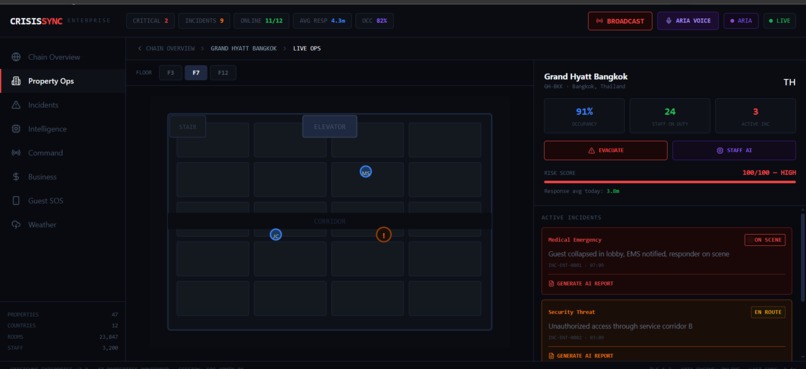
Property OPs
-
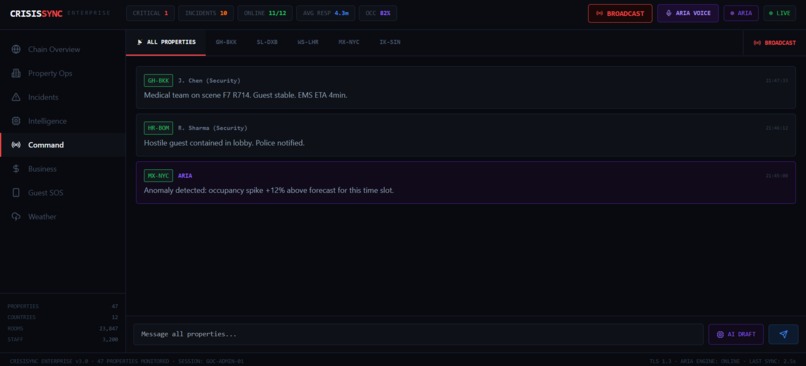
Commands
-
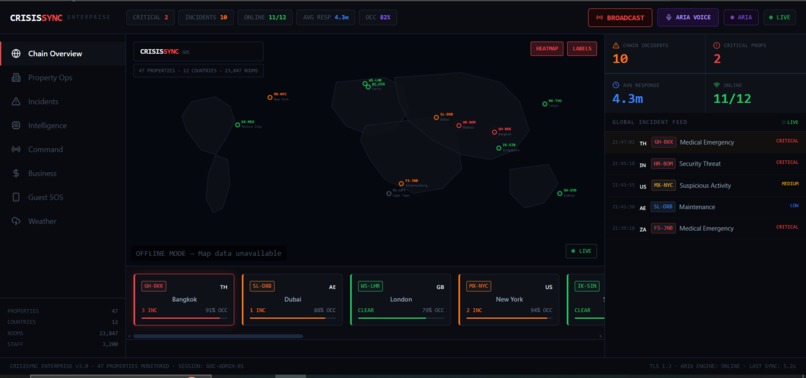
Chain overview
-
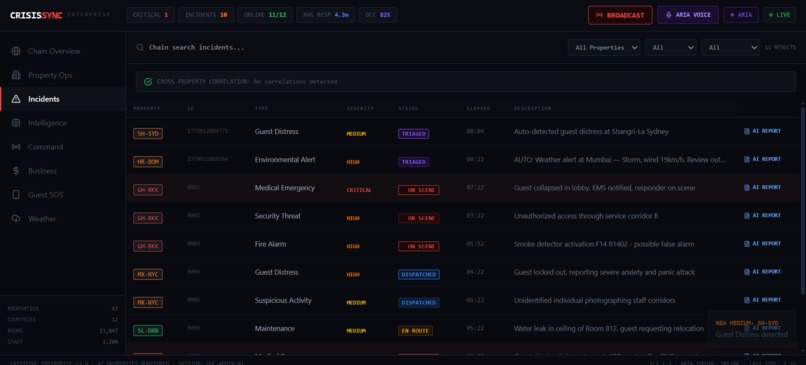
Incidents
-
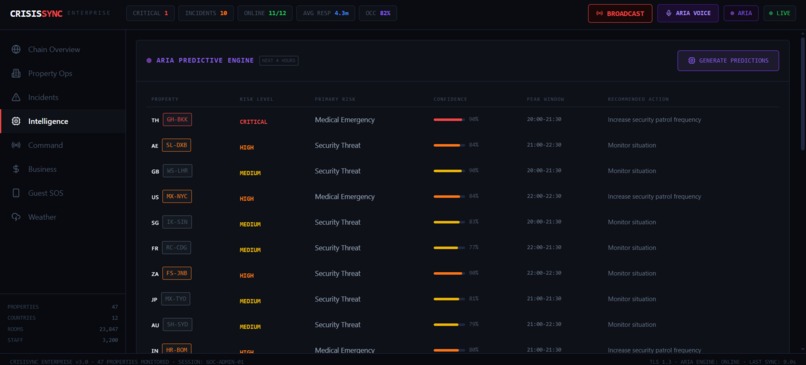
Intellegence
-
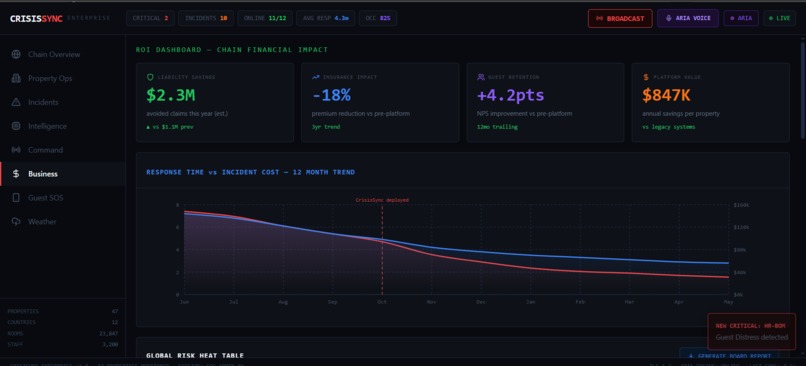
Buisness
-
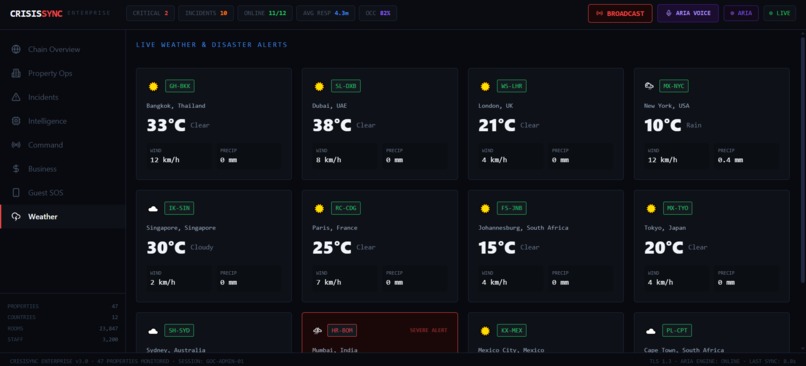
Weather
-
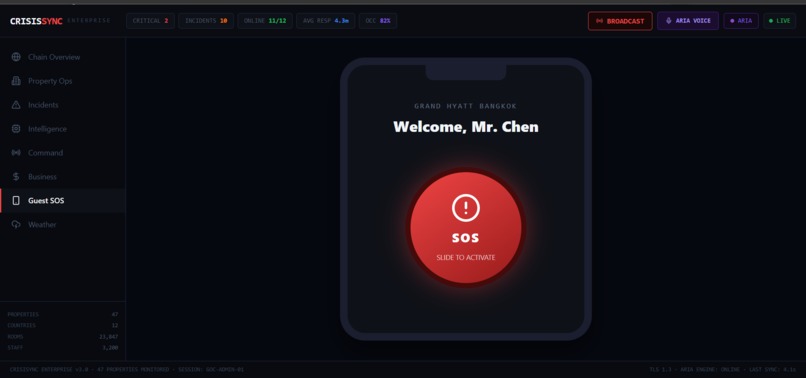
Guest SOS
CrisisSync Enterprise — AI-Native Global Crisis Intelligence Platform
Inspiration
Large hospitality chains operate like miniature smart cities. Thousands of guests, hundreds of staff members, multiple floors, and constantly changing operational conditions create an environment where even a small delay during an emergency can escalate into a major crisis.
We were inspired by the idea of creating a centralized AI-powered command platform capable of coordinating crisis response across not just one hotel, but an entire global hospitality network. Existing systems are often fragmented — relying on radio communication, spreadsheets, disconnected incident tools, or manual escalation workflows.
We wanted to build something that felt like the future: an intelligent operational layer capable of visualizing, predicting, coordinating, and optimizing emergency response in real time.
This led to the creation of CrisisSync Enterprise — an AI-native global crisis intelligence platform for hospitality operations.
What it does
CrisisSync Enterprise is a real-time AI-powered crisis coordination platform designed for global hospitality chains.
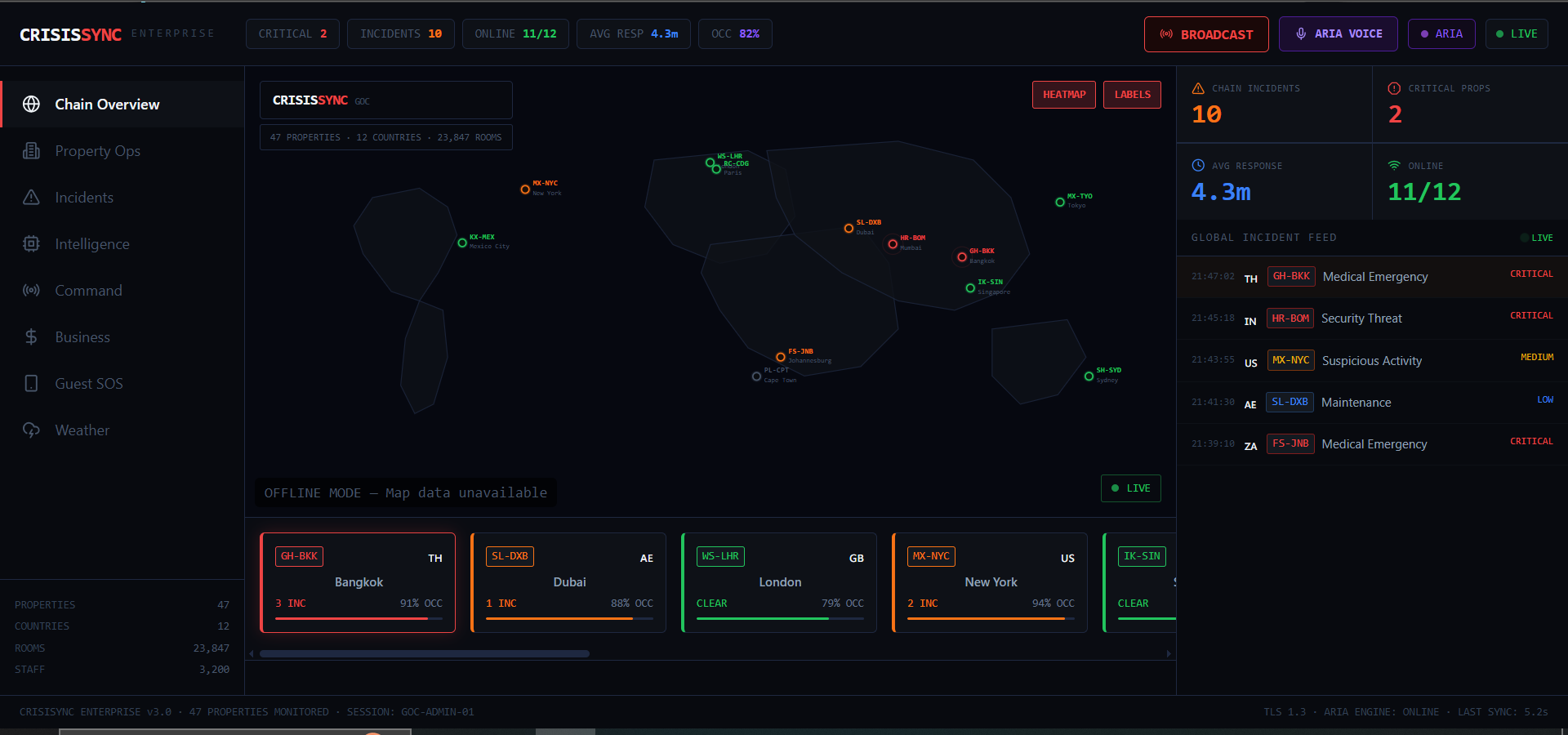
The system acts as a centralized command center that provides live operational visibility across multiple hotel properties simultaneously.
Key capabilities include:
- Global multi-property monitoring dashboard
- Interactive live Google Maps intelligence layer
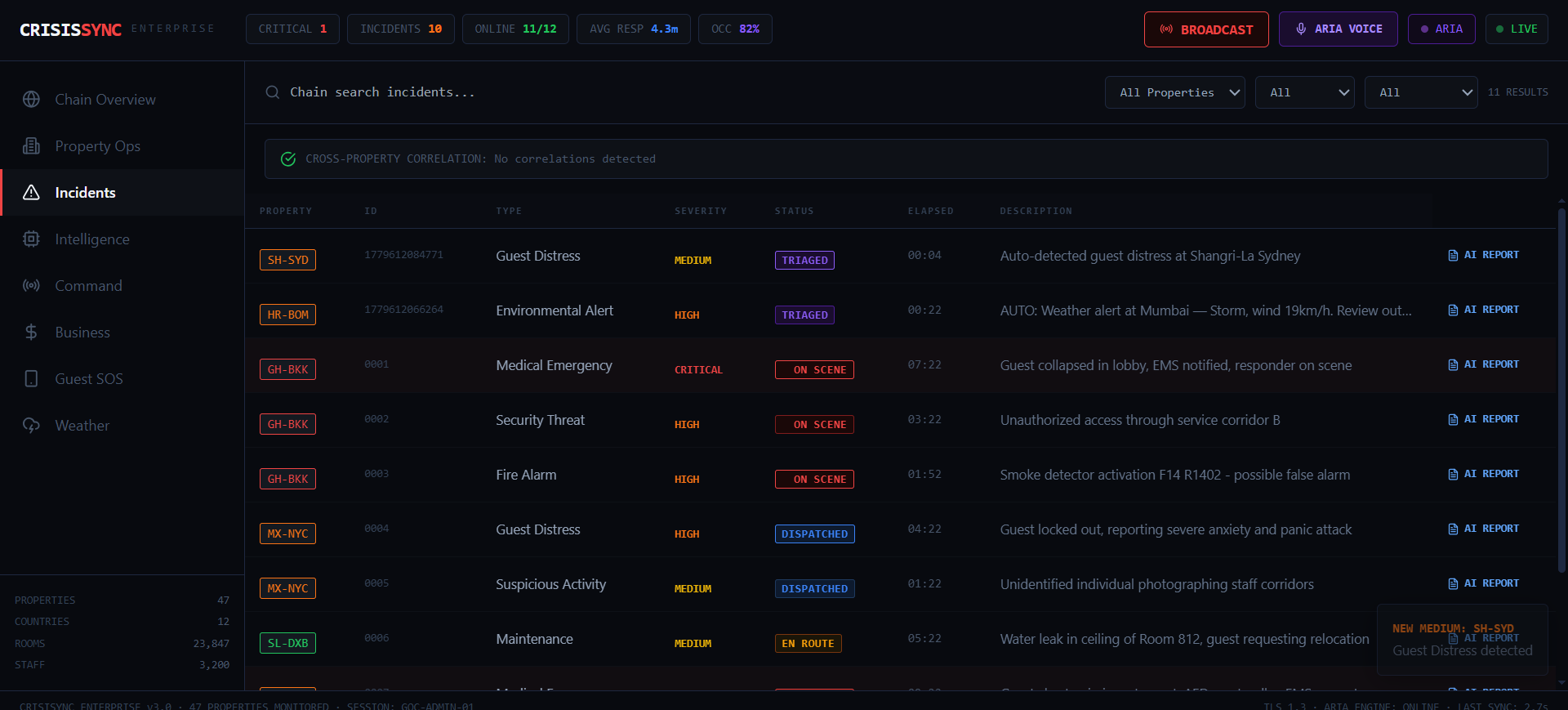
- Real-time incident generation and tracking
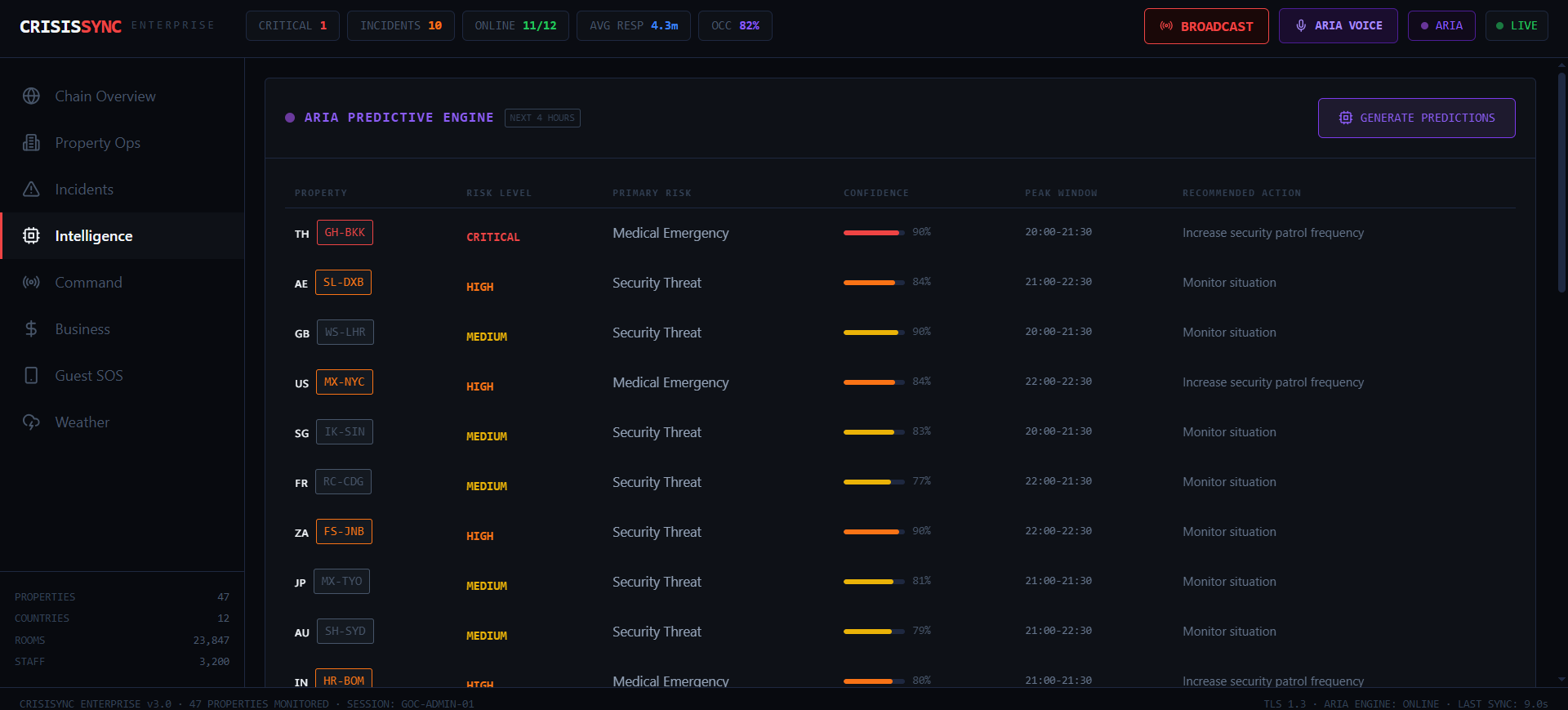
- AI-powered predictive risk analysis
- Cross-property incident correlation detection
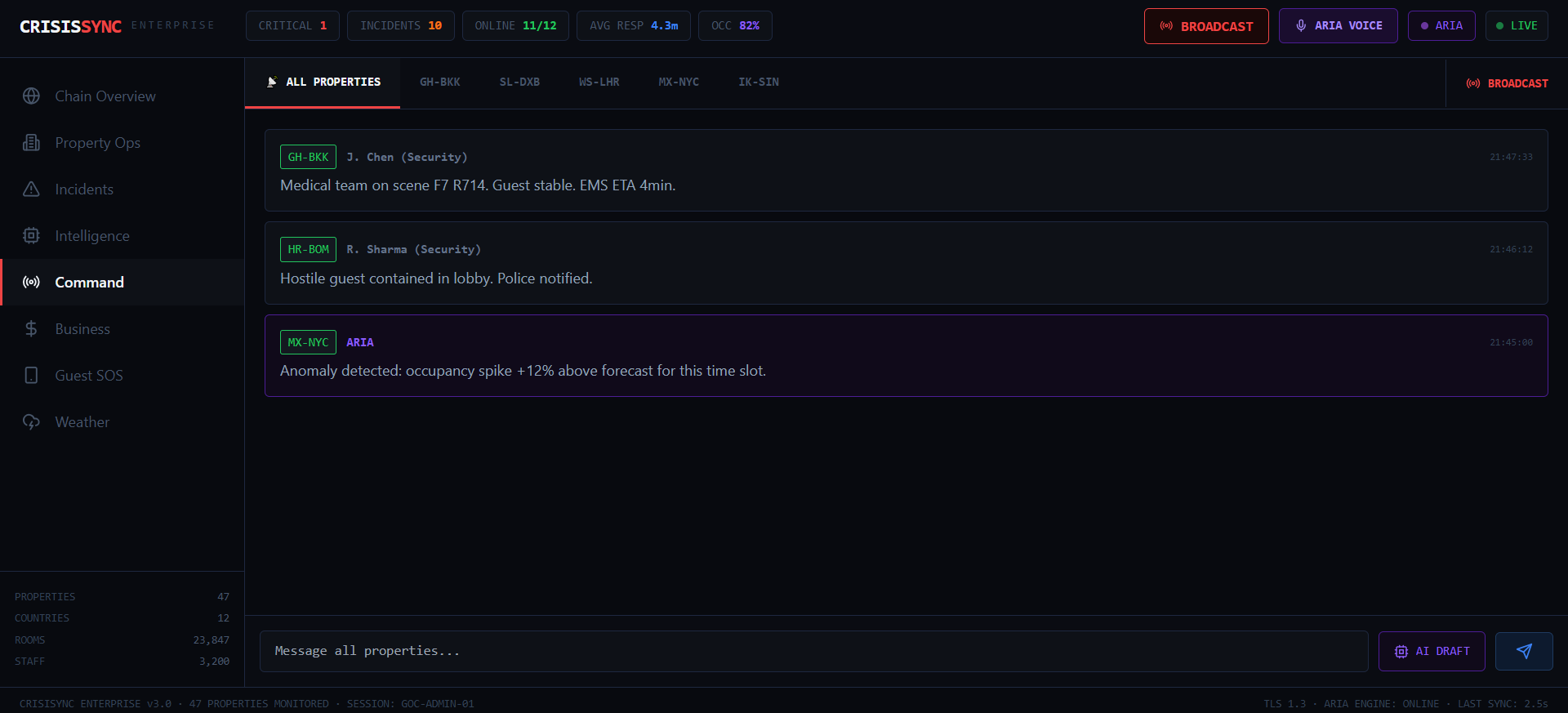
- AI-assisted emergency broadcasts and communications
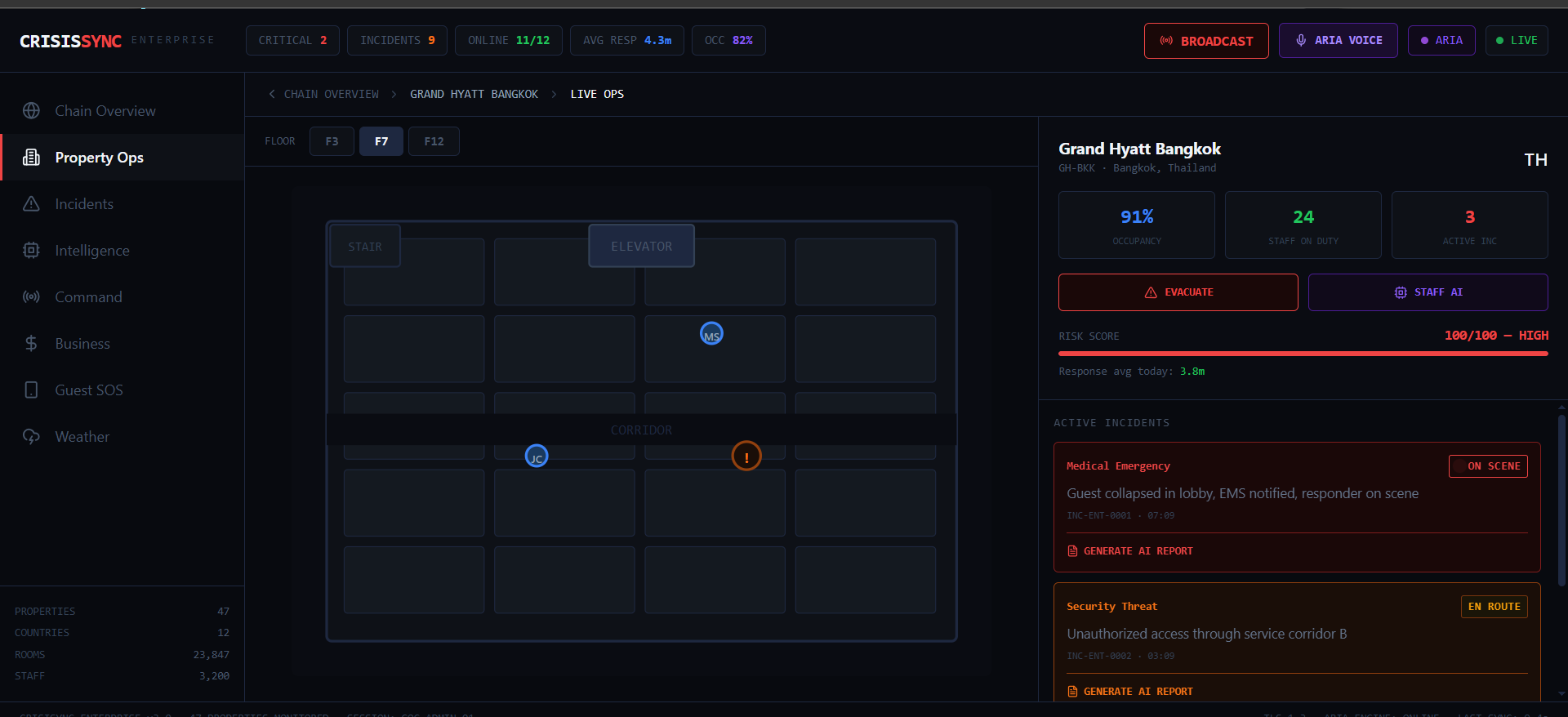
- Interactive floor-level emergency visualization
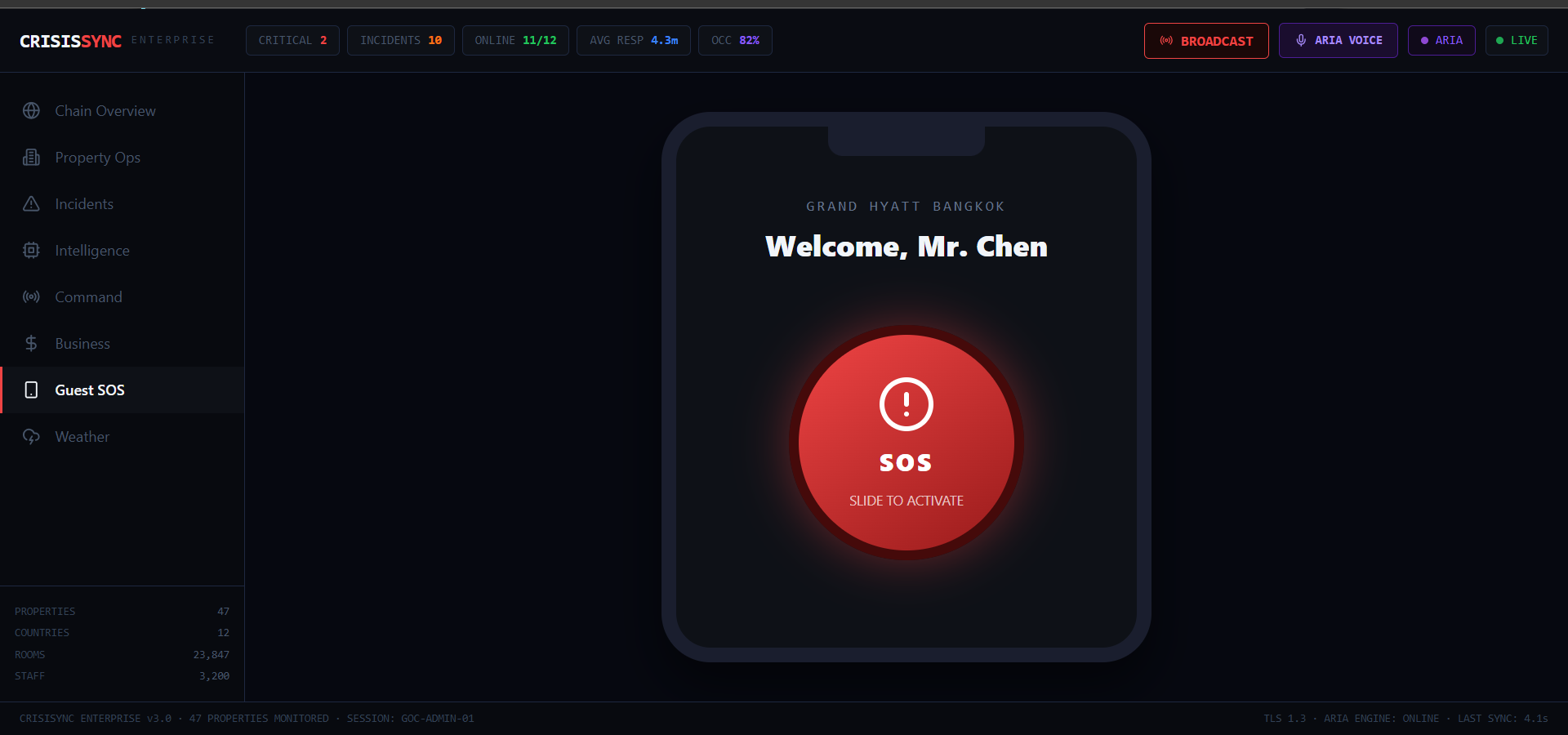
- Guest SOS emergency integration
- Voice-command operational control
- AI staffing optimization
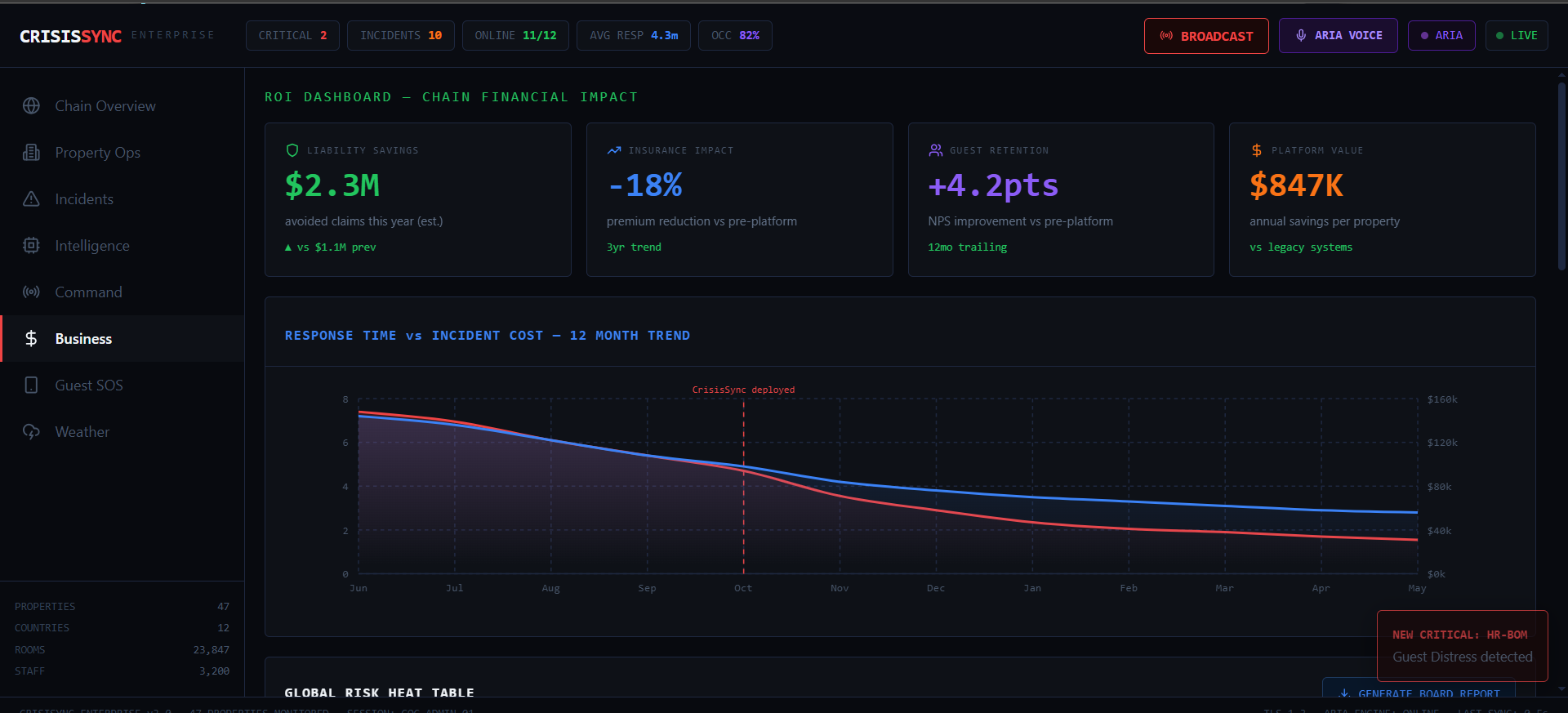
- Executive business intelligence and ROI analytics
- Real-time evacuation coordination simulation
The platform continuously simulates operational telemetry across:
- 47 properties
- 12 countries
- 23,847 rooms
- 3,200 staff members
ARIA, the platform’s AI engine powered by Google Gemini 2.5 Flash, actively analyzes incidents, predicts operational risks, drafts emergency communications, and assists operators with intelligent recommendations.
How we built it
CrisisSync Enterprise was developed as a highly responsive React-based application focused on real-time operational intelligence and immersive visualization.
Frontend & Visualization
- React 18
- Vite 5
- Tailwind CSS
- Lucide React
- Recharts
- Custom SVG floor mapping system
- Google Maps JavaScript API
The UI was designed to resemble enterprise-grade command center software with:
- live telemetry feeds,
- animated alerts,
- dynamic operational dashboards,
- and responsive multi-view navigation.
AI Integration
We integrated Google Gemini 2.5 Flash as the core intelligence engine powering ARIA.
AI features include:
- predictive risk generation,
- anomaly detection,
- staffing optimization,
- executive board reporting,
- incident pattern correlation,
- and emergency broadcast drafting.
All AI calls were designed with fallback mechanisms to ensure the platform remains operational even during API failures.
Simulation Engine
To make the system feel operationally alive, we built a custom real-time simulation engine using timed intervals that dynamically generate:
- incidents,
- staffing movement,
- risk fluctuations,
- anomaly events,
- and telemetry updates.
The simulation engine continuously updates:
- property alert levels,
- incident statuses,
- floor activity,
- and operational analytics.
State Management
The entire platform uses a unified reactive architecture powered by:
- React useState
- useRef
- in-memory synchronized state systems
This allowed real-time updates across maps, incident feeds, floor plans, and analytics dashboards without backend latency.
Deployment & Containerization
The platform was containerized using Docker with an nginx-based production deployment strategy for scalable cloud deployment.
Challenges we ran into
One of the biggest challenges was designing a system that simultaneously feels:
- visually cinematic,
- operationally realistic,
- and technically responsive.
Additional challenges included:
- Managing synchronized state updates across multiple dashboards
- Simulating real-time operational telemetry
- Creating scalable interactive map systems
- Designing responsive layouts for dense enterprise data
- Preventing UI overload during high-alert conditions
- Handling AI request latency gracefully
- Building fallback systems when APIs fail
- Simulating realistic cross-property operational intelligence
Balancing realism, usability, and performance required significant architectural iteration.
Accomplishments that we're proud of
We are especially proud of:
- Building a global-scale hospitality crisis intelligence simulation
- Designing a highly immersive enterprise command-center UI
- Successfully integrating AI into operational workflows
- Creating predictive risk analysis systems powered by Gemini
- Developing real-time multi-property coordination dashboards
- Implementing live map intelligence and floor drill-down systems
- Creating a realistic AI-assisted evacuation and staffing workflow
- Designing a polished responsive experience across desktop and mobile
Most importantly, we transformed a traditionally reactive emergency workflow into a proactive AI-assisted operational platform.
What we learned
Through building CrisisSync Enterprise, we learned:
- How to architect large-scale reactive operational systems
- Advanced UI/UX principles for enterprise dashboards
- Real-time telemetry simulation techniques
- AI-assisted workflow integration strategies
- Practical approaches to scalable visualization systems
- The importance of operational clarity during emergencies
- How predictive intelligence can improve response coordination
We also gained valuable experience designing software for high-pressure environments where reliability, speed, and clarity are critical.
What's next for CrisisSync-Rapid-Crisis-Response-System-for-Hospitality
Future plans for CrisisSync Enterprise include:
- Real-time WebSocket infrastructure
- Multi-user collaborative operations
- Persistent cloud-based telemetry storage
- IoT integration for smoke, heat, and occupancy sensors
- GPS-based responder tracking
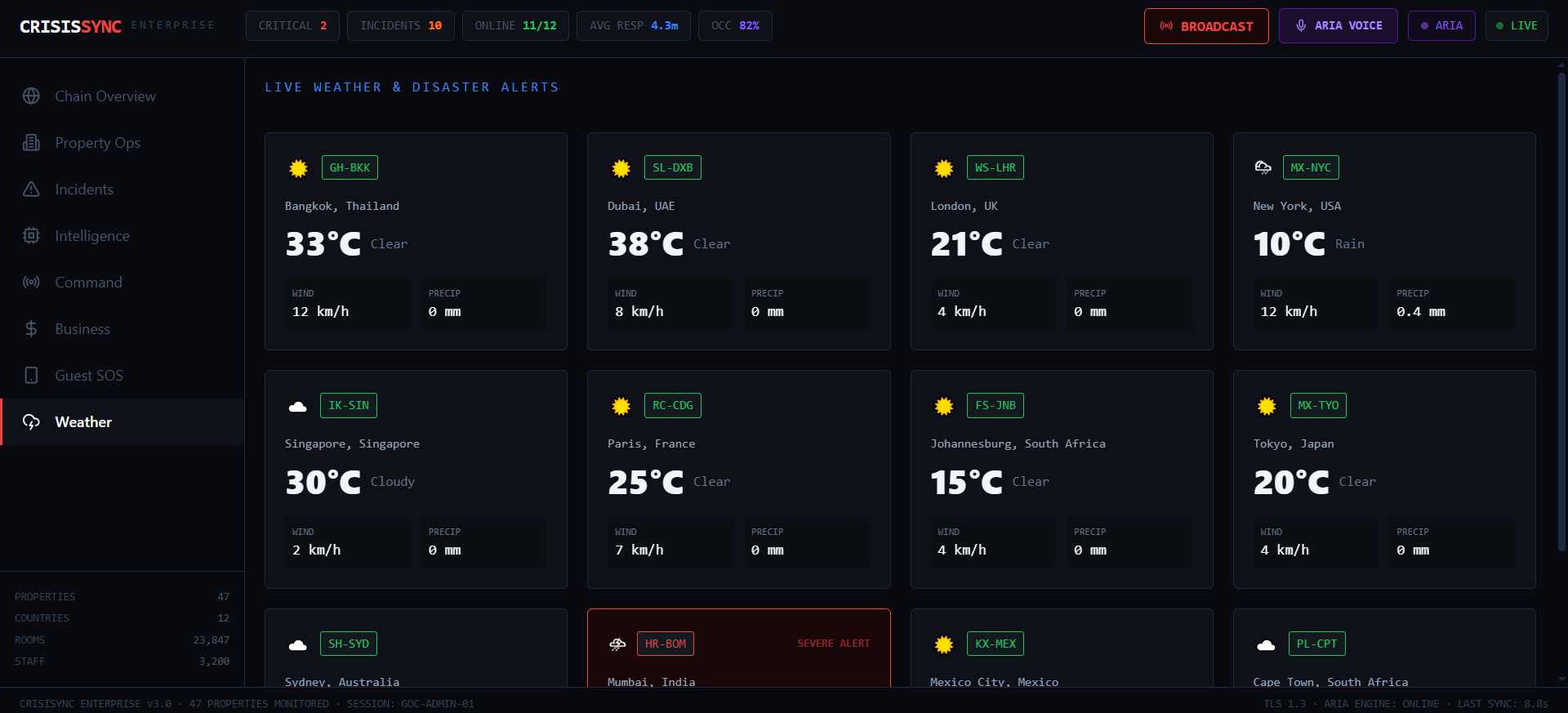
- Real-time weather and disaster intelligence APIs
- AI-powered evacuation route optimization
- Digital twin infrastructure visualization
- Voice distress detection and multilingual speech processing
- Integration with enterprise PMS and security systems
- Native mobile applications for responders and supervisors
- Predictive chain-wide crisis forecasting models
Our long-term vision is to evolve CrisisSync Enterprise into a global AI-powered operational safety platform capable of supporting hospitality, smart cities, airports, healthcare systems, and critical infrastructure environments.

Log in or sign up for Devpost to join the conversation.